
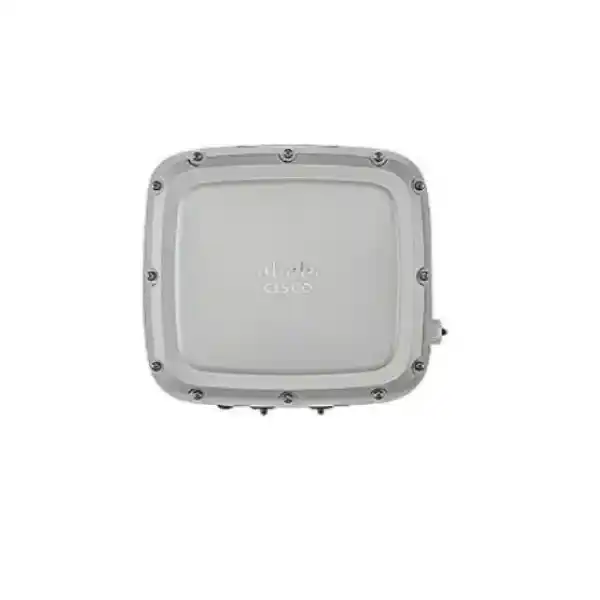
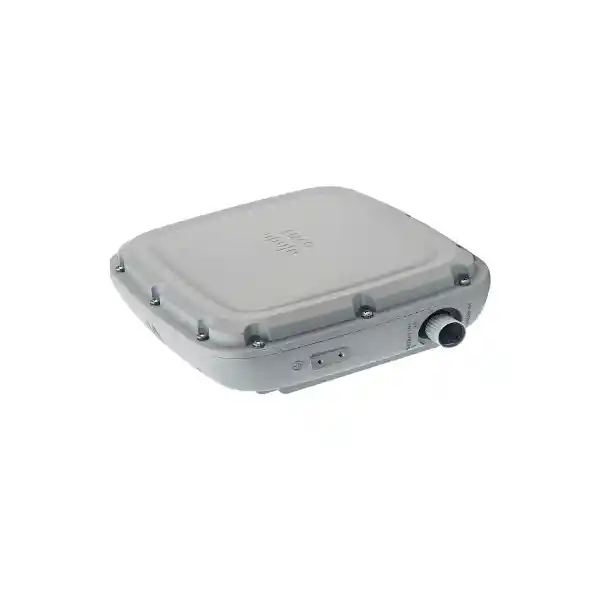
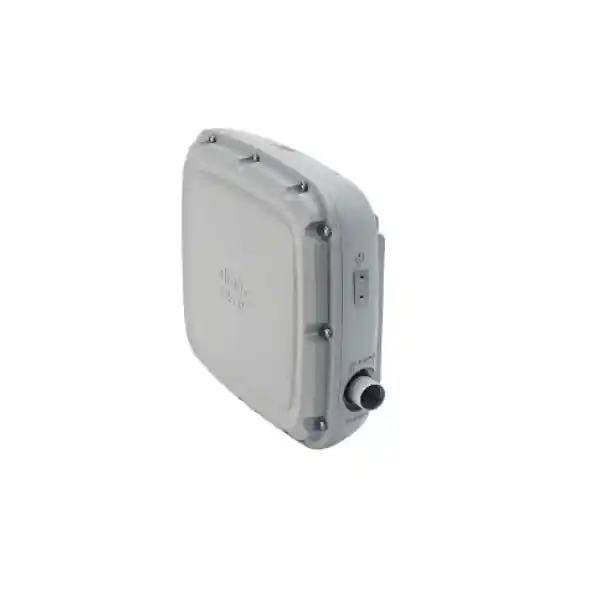
Cisco Catalyst C9124AXD Outdoor Access Point
The Cisco Catalyst C9124AXD is an enterprise outdoor Wi-Fi 6 access point built for organizations that need controlled, directional wireless coverage in exposed locations. It combines integrated high-gain directional antennas, 4×4:4 radio operation on both 2.4 GHz and 5 GHz, a 2.5 Gigabit multigigabit uplink, rugged IP66/IP67 environmental protection, flexible power choices, Cisco RF intelligence, and centralized management through the Catalyst 9800 wireless architecture. For UAE projects, the C9124AXD is especially relevant where wireless coverage must be projected along a yard, roadway, loading area, perimeter, outdoor seating zone, campus path, process area, or open industrial space without wasting RF energy behind the access point.
Direct answer: what is the Cisco Catalyst C9124AXD?
The Cisco Catalyst C9124AXD is the integrated directional-antenna model in the Catalyst 9124AX outdoor access point family. It is intended for outdoor enterprise and service-provider deployments where the radio energy should be concentrated toward a defined service area instead of radiating equally in every horizontal direction. The access point contains 2.4 GHz and 5 GHz Wi-Fi radios, each supporting a 4×4:4 configuration, and incorporates directional antennas with a peak gain of 9 dBi on both bands. Cisco specifies an approximate 70-degree azimuth by 65-degree elevation beamwidth on 2.4 GHz and an approximate 55-degree azimuth by 50-degree elevation beamwidth on 5 GHz. These patterns make the unit suitable for deliberate sector coverage, point-to-area service, edge-of-building mounting, aisle-like outdoor spaces, and perimeter-facing placements.
The C9124AXD is not simply an indoor access point placed in a weatherproof shell. Its mechanical, environmental, power, mounting, grounding, cabling, and thermal characteristics are designed for exposed infrastructure. Cisco specifies IP66/IP67 ingress protection, a broad operating temperature range, tolerance for condensing humidity, substantial wind resistance, corrosion testing, solar-radiation testing, vibration testing, and multiple powering methods. That matters in the UAE because outdoor wireless equipment may experience high ambient heat, strong solar loading, airborne dust, salt exposure near coastal installations, rapid temperature changes, and maintenance conditions that differ greatly from a climate-controlled office.
For buyers, the key design question is not merely whether the C9124AXD has enough radio performance. The more important question is whether its directional RF pattern matches the geometry of the required coverage area. If the project needs 360-degree coverage around a pole, an internal omnidirectional model may be more appropriate. If the project needs custom external antennas, an external-antenna model may be preferable. The C9124AXD is strongest when planners can aim its integrated antenna face toward a specific outdoor zone and use survey data, mounting height, channel planning, client capability, and regulatory transmit-power limits to validate the final design.
Why directional RF matters in outdoor wireless design
Outdoor Wi-Fi design is governed by geometry. A conventional omnidirectional access point is useful when clients surround the mounting position, but it can be inefficient when users exist primarily in one direction. A directional access point changes that relationship. By concentrating antenna gain over a narrower azimuth and elevation pattern, the designer can direct more of the available RF energy toward the target area and reduce unnecessary radiation behind or far outside the intended zone. The result can be a cleaner cell boundary, better usable signal at planned distances, reduced overlap with adjacent sectors, and more predictable channel reuse. These benefits are conditional on correct placement and alignment; directional gain does not replace an RF survey or eliminate the need to consider interference.
The C9124AXD therefore works well in environments such as logistics yards where access points are mounted along a building facade and aimed across vehicle lanes, warehouses with outdoor staging aprons, campus boundaries where coverage needs to face inward, resort pathways, parking zones, transportation compounds, utility areas, construction or manufacturing campuses, and outdoor event spaces with defined audience directions. In these designs, the antenna pattern becomes a planning tool. Instead of treating the access point as a point source, engineers work with the horizontal and vertical coverage lobes, mounting height, downtilt or uptilt, client height, obstructions, Fresnel effects, and expected roaming direction.
A common mistake is to select directional antennas only to maximize distance. Outdoor WLAN design is rarely about maximum range. It is about delivering adequate signal, signal-to-noise ratio, modulation performance, client return-path reliability, airtime capacity, and roaming behavior within a controllable cell. A smartphone or handheld scanner typically transmits at much lower effective power than a high-gain access point can radiate. Extending AP transmit coverage too far can therefore create an asymmetric link where the client hears the network but cannot reliably transmit back. The correct design balances access-point power, antenna gain, minimum data rates, client characteristics, and cell overlap so the weakest relevant client can participate reliably.
For UAE deployments, FourTeck engineers can combine the directional characteristics of the C9124AXD with structured LAN and outdoor cabling planning. Organizations evaluating a broader switching, WLAN, security, and connectivity project can review FourTeck UAE for enterprise infrastructure coverage, while complex deployment, survey, migration, and support requirements can be aligned through FourTeck IT Services UAE. The objective is to treat the access point as one component of a complete RF, wired, power, security, and operational design rather than as an isolated hardware purchase.
Wi-Fi 6 architecture: OFDMA, MU-MIMO, BSS coloring, and Target Wake Time
The Catalyst C9124AXD implements IEEE 802.11ax, commonly known as Wi-Fi 6, while retaining compatibility with earlier Wi-Fi generations supported by the platform. Wi-Fi 6 is especially important outdoors because the design problem often involves many heterogeneous clients: modern laptops, phones, ruggedized handhelds, scanners, tablets, cameras, sensors, service terminals, and IoT devices may all share the same spectrum. Traditional WLAN operation can become inefficient when numerous low-throughput clients contend with a smaller number of high-throughput devices. 802.11ax introduces mechanisms intended to improve airtime utilization and efficiency under contention.
Orthogonal Frequency Division Multiple Access, or OFDMA, allows a Wi-Fi channel to be subdivided into resource units that can be allocated to multiple clients within a transmission opportunity. Rather than each small packet necessarily consuming the scheduling overhead associated with a full-channel transaction, the system can serve multiple devices more efficiently. The practical advantage appears in busy cells where many clients are active at the same time. OFDMA does not magically create spectrum, but it can reduce inefficiency and improve latency behavior when the wireless controller, access point, and clients support the feature and traffic patterns benefit from it.
Multi-User MIMO complements this by allowing multiple spatial streams to serve different compatible clients. The C9124AXD’s 4×4:4 architecture gives the radio four transmit/receive chains and four spatial streams. A single client does not need to support four streams for the AP to be useful; in real networks, many phones are two-stream devices. The access point can use its radio resources to manage multiple clients and exploit diversity, beamforming, and scheduling capabilities. The value of 4×4 hardware is therefore not limited to a headline peak-rate calculation. It also contributes to a more capable RF platform for mixed-client deployments.
BSS coloring adds a logical identifier to overlapping basic service sets so 802.11ax devices can better distinguish between transmissions from their own cell and transmissions from neighboring cells. In dense outdoor campuses, where multiple APs may be visible over long distances because there are fewer walls to attenuate RF, this can be operationally useful. Correct channel and power planning remain essential, but BSS coloring provides another mechanism for improving spatial reuse when the environment and client population permit it.
Target Wake Time is designed primarily to schedule when compatible clients wake for communication, potentially improving power behavior for certain device classes and reducing contention. In outdoor IoT-heavy deployments, this capability can be useful when battery-powered endpoints support the relevant mechanisms. The broader design principle is that Wi-Fi 6 should be assessed as a set of efficiency tools rather than only as a maximum-speed upgrade. For a C9124AXD project, the engineer should evaluate channel width, client density, expected traffic, minimum RSSI targets, roaming, interference, retry rates, and wired uplink capacity together.
Radio and antenna technical profile
The integrated directional design is a major operational benefit because there is no separate external antenna selection and matching exercise for the primary Wi-Fi radios. The antenna elements are part of the access point assembly, so installation teams focus on mounting orientation, height, azimuth, elevation, grounding, sealing, and cable routing. This simplifies the bill of materials compared with an external-antenna deployment, but it also means the antenna pattern is fixed. If the project requires a narrow high-gain sector, a special downtilt pattern, a remote antenna placement, or another custom radiation pattern, the external-antenna member of the family may be a better engineering fit.
Channel width should be selected according to spectrum conditions and density, not by automatically choosing the largest possible width. Wide channels can increase peak PHY rate for a compatible client, but they consume more spectrum and reduce the number of non-overlapping channel choices. In an outdoor enterprise campus with multiple APs, 20 MHz or 40 MHz channels may provide a better balance of capacity and reuse than 80 MHz, depending on interference and client requirements. The 5 GHz band generally provides more planning flexibility than 2.4 GHz, while 2.4 GHz remains useful for range, legacy devices, and certain IoT classes. A professional design should identify which devices genuinely require 2.4 GHz, how much 5 GHz capacity is needed, and whether band steering, minimum data rates, or WLAN policy can improve the client mix.
Wired interfaces, multigigabit Ethernet, SFP, and local connectivity
The C9124AXD provides a 100/1000/2500BASE-T Ethernet uplink interface, giving the access point a copper multigigabit path of up to 2.5 Gbps when the upstream switch port and power mode support the required operating profile. This is important because a modern 4×4 Wi-Fi 6 AP can aggregate traffic from many clients. Even though real application throughput is lower than theoretical wireless PHY rates, a 1 Gbps wired link can become restrictive in high-utilization designs. A 2.5GbE access layer allows the organization to exploit existing Category 5e or better cabling capabilities in many cases while moving beyond classic Gigabit Ethernet.
Cisco also provides a Gigabit Ethernet SFP interface for uplink scenarios where fiber is preferred. Fiber can be attractive outdoors because long copper runs have distance limitations and can create electrical paths between structures. In campuses, industrial compounds, and remote outdoor poles, fiber may help separate buildings electrically and extend uplink distance. However, the physical and power design must be considered carefully. An optical uplink does not itself power the access point; the installation still requires an appropriate DC or power architecture. The access point also includes a 10/100/1000BASE-T downlink interface that can provide local Ethernet connectivity, and under suitable high-power input conditions it can offer 802.3af-compliant PoE output to a downstream device.
This combination can be useful in remote mounting positions where an outdoor AP and another low-power Ethernet device share the same infrastructure point. Examples might include a sensor gateway, selected camera, or other edge endpoint, subject to complete power-budget and environmental validation. The engineer should never assume PoE output is available under every input-power condition. On the 9124AX family, feature availability changes with the power source. Under 802.3at PoE+, the radios operate in a reduced 2×2 mode and the multigigabit port operates at 1 Gbps. Full 4×4 operation, 2.5GbE, SFP availability, and PoE output require a higher-power mode such as 802.3bt, Cisco UPOE, or appropriate DC power.
This power-dependent feature matrix is critical during procurement. A project may technically power on the AP using a lower PoE class yet fail to deliver the intended radio performance or port functionality. For new deployments, the access switch, injector, or DC design should therefore be selected at the same time as the AP. When the installation uses an existing switch, the exact switch model, line card, software, per-port power capability, and total PoE budget should be verified. Where a rugged power injector is required, environmental placement and enclosure considerations are also relevant.
The outdoor cabling path deserves equal attention. Weatherproof cable glands, drip loops, grounding, surge protection strategy, bend radius, connector sealing, UV resistance, conduit, and service loops can determine long-term reliability. The access point’s unused ports must remain correctly sealed to preserve the enclosure’s environmental integrity. FourTeck can combine the AP with switching, fiber, structured cabling, and security design through FourTeck’s broader enterprise technology portfolio, allowing the WLAN edge to be engineered as part of the overall network rather than treated as a standalone radio purchase.
Power design: why 802.3bt or UPOE matters for full capability
Power planning is one of the most important technical aspects of the C9124AXD. Cisco lists support for 802.3af, 802.3at, 802.3bt, Cisco UPOE, compatible power injectors, and auxiliary DC input in the broader platform power model, but the feature set varies significantly by available power. Under insufficient power, the access point can restrict radios or wired interfaces. A design that focuses only on whether a switch advertises PoE can therefore produce an underperforming deployment.
For full 4×4 radio operation and 2.5GbE multigigabit connectivity, a high-power source such as 802.3bt, Cisco UPOE, or suitable DC power should be planned. This is particularly important when the project expects high client density or when the AP’s downlink and PoE-out functions are part of the architecture. Power is also a system-level capacity issue. An access switch may support high-power PoE on individual ports but not simultaneously on every port if the chassis power-supply configuration does not provide enough aggregate budget. Engineers should calculate the number of APs, maximum expected draw, redundancy mode, switch PoE budget, and any powered downstream devices before finalizing the bill of materials.
In outdoor environments, there may be long distances between the access switch and the mounting point. Standard copper Ethernet channel-length limits still apply, and voltage drop, connector quality, intermediate patching, surge protection, and cable temperature can complicate the design. If the AP is mounted on a remote pole or structure beyond practical copper distance, fiber plus local power can be a cleaner architecture. If a local DC power system already exists, its voltage range, grounding, protection, available wattage, and environmental rating must be validated. Cisco specifies auxiliary DC input in the 24 V to 56 V range for the 9124AX family, but the complete project should follow Cisco installation guidance and local electrical requirements.
Redundancy expectations should also be explicit. Wireless coverage may be designed with overlapping cells so that a single AP failure does not create a total outage, but that does not automatically protect against a failed access switch, tripped power circuit, damaged fiber path, or upstream controller issue. High-availability WLAN projects in airports, logistics operations, industrial facilities, and large hospitality estates should map wireless redundancy to the wired and power topology. This may mean distributing adjacent APs across separate access switches, providing redundant uplinks, using resilient controller pairs, and monitoring PoE health and AP reachability from the network operations platform.
Rugged outdoor construction for UAE climate and exposed locations
Cisco designed the Catalyst 9124AX family for outdoor and industrial conditions. The C9124AXD carries IEC 60529 IP66/IP67 ingress ratings, indicating protection against dust and demanding water exposure when installed with the required seals and hardware. The enclosure is specified for an operating temperature range from -40°C to 65°C without solar loading and from -40°C to 55°C with solar loading. Storage temperature extends from -40°C to 85°C. Cisco also specifies operation in 0 to 100 percent condensing humidity, which is relevant to installations exposed to moisture and temperature transitions.
For the UAE, the solar-loading figure deserves special attention. Outdoor air temperature alone does not describe the thermal stress on equipment mounted in direct sun. A dark or metal enclosure can absorb solar energy and reach a surface temperature considerably above ambient. Cisco’s separate solar-loading operating limit highlights why shade, mounting position, airflow, structural materials, and orientation matter. The access point should not be treated as thermally identical in every outdoor location. A unit mounted on a shaded north-facing wall experiences different conditions from one installed on an exposed rooftop, mast, or south-facing surface.
Wind loading and mechanical installation are similarly important. Cisco specifies resistance to sustained winds up to 100 mph, approximately 161 km/h, and gusts up to 165 mph, approximately 266 km/h, under its test profile. The access point’s capability does not replace structural engineering for the pole, bracket, tower, wall, fasteners, or mounting substrate. A complete installation must consider local wind requirements, lever arm, vibration, mounting height, cable movement, bracket torque, corrosion compatibility, and maintenance access. In rooftop and tower environments, safe work procedures and lightning protection practices are part of the project scope.
Coastal UAE deployments create an additional corrosion challenge because salt aerosols can accelerate degradation of exposed metal and connectors. Cisco’s platform lists corrosion testing aligned to NEMA 250-2008 test conditions, but installers must still protect the entire assembly: mounting brackets, fasteners, cable shields, grounding hardware, glands, conduits, enclosures, and nearby support equipment. Dissimilar metals, damaged protective coatings, and poorly sealed connectors can become failure points even if the AP enclosure itself is robust.
Dust is another operational reality. IP ratings address ingress at the enclosure level, yet heavy dust can still accumulate on surfaces, block drainage paths, increase thermal insulation, or contaminate external cabling and adjacent power components. A maintenance plan should include periodic visual inspection, verification of cable glands and plugs, checking bracket tightness, inspection for corrosion or UV damage, and confirmation that nothing has physically shifted the directional antenna alignment. The directional pattern means a small mechanical rotation can materially change which area receives the strongest coverage.
Security architecture: WPA3, 802.1X, segmentation, and policy
The C9124AXD participates in Cisco’s enterprise wireless security architecture rather than operating as an isolated consumer-grade access point. The platform supports WPA2 and WPA3 security families, 802.1X-based enterprise authentication, AES encryption, and a range of Extensible Authentication Protocol methods when integrated with the WLAN controller and identity infrastructure. For business environments, the usual goal is to map each user or device class to a defined identity, authorization policy, VLAN or fabric segment, quality-of-service profile, and security posture rather than relying on one shared outdoor password.
An outdoor network may carry several very different trust levels. Employees may require authenticated access to internal applications; contractors may need restricted Internet and selected operational systems; guests may require captive-portal Internet access; scanners and industrial devices may need tightly constrained network reachability; cameras or sensors may need device-specific segmentation. The wireless AP provides the RF edge, but enforcement depends on controller policy, AAA services, firewall rules, switching segmentation, DHCP/DNS services, and identity systems. Cisco Identity Services Engine can be part of this architecture where profiling, authorization, guest workflows, posture, or policy orchestration are required.
WPA3 improves modern Wi-Fi security, but migration must account for the actual client estate. Outdoor operational environments often contain long-lived devices whose WLAN capabilities lag behind current laptops and phones. A rugged handheld or embedded scanner may support only older cipher or EAP combinations. Engineers should inventory client chipsets, drivers, operating systems, supplicant settings, and certificate capabilities before enforcing a policy that could disconnect critical devices. Where legacy support is unavoidable, it should be segmented and planned deliberately rather than allowing the weakest device to dictate security for every user.
For sites exposing Wi-Fi beyond the physical building boundary, the security perimeter deserves extra care. A directional antenna can limit unnecessary radiation compared with an omnidirectional design, but RF cannot be treated as a physical wall. Attackers may still receive frames from outside the intended service area. Strong authentication, management-plane hardening, trusted certificates, rogue AP detection, secure controller administration, logging, and firewall policy remain essential. Outdoor management interfaces should never rely on obscurity or physical distance for protection.
Organizations building WLAN and perimeter-security projects together can align the wireless design with next-generation firewall policy through Firewall Dubai by FourTeck. This is especially relevant when guest, IoT, operations, surveillance, and corporate SSIDs need different east-west and north-south access rules. A well-engineered outdoor WLAN should preserve the same identity and segmentation principles used indoors even when the AP is physically mounted on a pole, roof, facade, or yard structure.
Catalyst 9800 controller, FlexConnect, SD-Access, and assurance
Cisco positions the Catalyst 9124AX Series for use with Catalyst 9800 Series Wireless Controllers. In a centralized architecture, access points establish CAPWAP control relationships with the controller, and WLAN configuration, policy, RF settings, software, telemetry, and operational state can be managed consistently across the estate. This is a major advantage for enterprises with multiple outdoor APs because configuration drift is reduced and administrators can monitor both indoor and outdoor cells through a common operational model.
FlexConnect is relevant to branches, distributed sites, campuses, and other designs where local data forwarding or site survivability is desired. The C9124AXD can participate in centralized and FlexConnect modes, allowing designers to decide where client traffic should be tunneled and where it should be switched locally. The right choice depends on WAN bandwidth, security architecture, application locality, site resilience, segmentation, and controller placement. A warehouse complex in Dubai with a local data center may choose a different forwarding model from a remote industrial site connected over a constrained WAN link.
The 9124AX platform also supports Cisco’s software-defined access architecture. In SD-Access environments, wireless access can integrate with fabric-based segmentation and policy to deliver consistent identity across wired and wireless connectivity. This can simplify large campus policy, but it introduces dependencies on fabric design, Catalyst switching, controller capabilities, Cisco ISE, software versions, licensing, and operational skill. Organizations should not select SD-Access simply because the AP supports it; the business should determine whether the fabric architecture improves segmentation, automation, mobility, and operations enough to justify its platform requirements.
Cisco assurance and analytics capabilities can help operations teams move beyond simple up/down monitoring. Wireless problems are often experiential rather than binary: an AP may be online while clients encounter high retries, poor roaming, DNS failures, DHCP delay, authentication timeouts, weak RSSI, interference, or application latency. Controller telemetry and assurance tooling can help correlate events and client journeys. This is especially valuable outdoors because technicians may not be physically close to the user when an issue occurs and because RF conditions can change with vehicles, temporary structures, weather, crowds, or industrial activity.
Software lifecycle planning is essential. Cisco’s controller and AP feature support evolves across IOS XE releases, and enterprises should maintain a validated software train rather than upgrading opportunistically. Before a rollout, verify AP model support, controller hardware or virtual platform support, feature compatibility, regulatory channel tables, security advisories, field notices, and recommended release guidance. Staged upgrades with pilot APs and rollback planning are preferable for operationally critical networks.
RF design methodology for a C9124AXD deployment
A successful C9124AXD design begins with requirements, not with an AP count. The planner should identify the physical coverage boundary, expected users, device types, applications, peak concurrent clients, target throughput, latency sensitivity, roaming paths, mounting options, wired access points, power sources, and operational constraints. Drawings should show buildings, yards, roads, containers, racks, metal structures, landscape features, gates, parking rows, machinery, and other objects that can absorb, reflect, or block RF. Outdoor propagation can appear simple on a floor plan but become complex when vehicles and temporary structures change the environment.
The next step is defining design thresholds. Common WLAN projects specify a target received signal strength, minimum signal-to-noise ratio, maximum channel utilization, acceptable retry percentage, and required secondary coverage for roaming or resiliency. The correct numbers depend on applications and client hardware. Voice, real-time industrial mobility, and location services typically require more disciplined RF design than casual guest browsing. A barcode scanner with a small antenna may need stronger AP proximity than a laptop. Designers should therefore base cell size on the least capable critical client, not on the most powerful test device.
Directional antenna geometry should then be modeled. The 2.4 GHz and 5 GHz patterns are not identical; the 5 GHz beam is narrower. Mounting height and vertical angle determine where the main lobe intersects the client plane. If an AP is mounted too high and aimed horizontally, nearby users may sit below the strongest portion of the pattern. If it is tilted too far downward, distant areas may receive inadequate signal. The correct angle depends on the intended near and far boundaries, height of the AP, height of clients, and local obstructions. Engineers should avoid relying only on two-dimensional maps because the vertical plane can be decisive.
Channel planning must account for adjacent APs and neighboring networks. In 2.4 GHz, the limited number of non-overlapping channels means co-channel interference is often a larger problem than coverage. Many enterprise designs reduce 2.4 GHz transmit power, disable some 2.4 GHz radios, or prioritize 5 GHz for capable clients. In 5 GHz, the available channels are broader, but regulatory domain rules, DFS behavior, radar events, channel widths, and local interference affect the usable plan. Outdoor networks often have longer line-of-sight visibility between APs, so co-channel cells can hear each other over surprising distances.
Capacity sizing follows. A cell serving 100 clients that each transfer tiny telemetry bursts is very different from a cell serving 100 users on video calls. Airtime consumption, not just client count, determines capacity. Planners should estimate application throughput per active user, concurrency, protocol overhead, retry margin, contention, and realistic PHY rates at the edge of the cell. Peak advertised PHY rates should never be used as guaranteed user throughput. In practical Wi-Fi, medium access, protocol overhead, half-duplex operation, client capability, environmental conditions, and shared airtime substantially reduce application throughput from theoretical values.
A predictive survey can create an initial AP placement and antenna-orientation model. For new construction, this may be the only option before physical infrastructure exists. For an operating site, an on-site survey adds valuable data about attenuation, noise, external WLANs, radar behavior, physical obstructions, and feasible mounting positions. A temporary AP-on-a-stick test can be particularly useful for outdoor directional designs because it validates real propagation at a proposed height and angle before permanent drilling, mast work, or trenching.
After installation, validation should confirm coverage, roaming, throughput, channel reuse, power, and actual client performance. Survey measurements should be taken with devices representative of the production client base. A high-end survey adapter can see better RF than a small scanner, and a laptop speed test alone cannot prove voice or IoT performance. The completed survey becomes a baseline for future troubleshooting and expansion. Any later construction, new metal racking, container stacking, landscape change, or building extension can then be compared with the original design assumptions.
Deployment scenarios where the C9124AXD fits particularly well
Logistics and distribution yards
Mounting directional APs on warehouse facades and aiming them across loading bays or vehicle lanes can produce more controlled outdoor cells than placing omnidirectional APs at every open-space position. The design can support scanners, tablets, vehicle-mounted terminals, staff devices, and selected IoT systems. Container stacks, trailers, trucks, and forklifts can change RF paths dynamically, so overlap and mounting height should be validated during busy operational conditions.
Industrial and manufacturing compounds
Outdoor process zones often require reliable mobility between buildings, utility areas, service roads, and production support spaces. Directional APs can be aimed along corridors between structures or across a process yard while limiting energy toward unrelated areas. Industrial designs must account for moving metal machinery, electromagnetic noise, safety zoning, explosion-risk restrictions where applicable, and resilient power and fiber paths.
Hospitality and resort estates
Large hotels, resorts, beach facilities, pool areas, garden venues, and outdoor restaurants need guest coverage without allowing cell boundaries to become uncontrolled. A directional AP mounted on a building edge can project coverage toward terraces, paths, or activity zones. Guest capacity, aesthetics, roaming, captive portal behavior, outdoor cabling concealment, and coastal corrosion all influence the final architecture.
Education and enterprise campuses
Universities, schools, corporate campuses, healthcare estates, and government sites may need Wi-Fi across courtyards, walkways, parking edges, transport pickup areas, and open common spaces. The C9124AXD can extend a managed Catalyst WLAN into these zones while retaining the same controller, identity, security, and assurance model used by indoor APs.
Transportation and parking areas
Bus depots, parking structures, service lanes, fleet staging areas, and transport yards often have elongated coverage requirements. Directional cells can be aligned to lanes or bays, with careful consideration of vehicle shadowing and client movement. Roaming settings should be tested at real travel speeds because stationary survey results do not always predict handoff behavior for moving clients.
Perimeter-facing enterprise coverage
Some sites need managed connectivity near gates, security posts, external waiting areas, or defined property edges. The C9124AXD can be oriented inward or along the perimeter, helping control the RF footprint compared with a broadly radiating antenna. Security design must still assume signals can be received outside the property and should enforce strong enterprise authentication and segmentation.
UAE deployment considerations: heat, dust, coast, regulation, and site access
Deploying the Cisco Catalyst C9124AXD in the UAE requires more than choosing an outdoor-rated AP. The country’s combination of high summer temperatures, strong solar radiation, dust, coastal salt exposure, construction activity, and diverse building materials creates site-specific engineering constraints. A rooftop installation in central Dubai, a port-side facility in Jebel Ali, a shaded campus in Abu Dhabi, and an inland industrial yard may all use the same AP model but require different mounting, cable protection, maintenance intervals, and RF settings.
Thermal planning begins with the distinction between ambient temperature and solar loading. Cisco publishes separate operating limits with and without solar loading for the 9124AX family. Engineers should therefore document whether the AP will be exposed to direct sun during the hottest part of the day, whether nearby metal or concrete surfaces will radiate additional heat, and whether any enclosure or architectural screen will impede airflow. Putting an outdoor AP inside a non-ventilated decorative box can create a hotter environment than the AP was designed to tolerate. If aesthetics require concealment, the material’s RF attenuation and thermal impact should be tested.
Dust management is both a mechanical and operational issue. Correctly installed IP-rated equipment can resist ingress, but maintenance teams must still inspect seals, glands, drainage paths, cable jackets, and mountings. Dust buildup on adjacent power supplies, media converters, or switch enclosures can cause failures even when the AP remains sealed. Outdoor cabinets need their own environmental design, including ventilation or cooling strategy, filters, ingress rating, grounding, surge protection, and access for service personnel.
Coastal and marine-adjacent locations should be reviewed for salt and corrosion. Stainless hardware grades, anti-corrosion treatment, compatible metals, and connector sealing can matter as much as the AP’s own corrosion test credentials. Grounding conductors and cable shields must remain electrically reliable over the service life. Periodic inspection is preferable to discovering degradation only after a network outage. Sites with high-pressure washdown, chemical exposure, or unusual industrial contaminants require additional review because a generic outdoor rating may not cover every local substance or cleaning process.
Regulatory domain selection is mandatory. Cisco uses region-specific regulatory domain codes for Wi-Fi equipment, and customers must verify that the exact part number is approved for operation in the intended country. The UAE order should therefore be matched to current Cisco regulatory documentation and local requirements before purchase. Channel availability, maximum transmit power, DFS behavior, and permitted frequency use are regulatory matters; an AP should not be imported or configured based solely on what is allowed in another country. This is one reason the SKU in a project quotation must include the exact Cisco orderable suffix rather than only the C9124AXD family name.
Site access is another practical consideration. Outdoor APs may be mounted on high facades, poles, rooftops, or towers where a future service visit requires a lift, permit, safety escort, or shutdown window. Design should reduce avoidable maintenance. Use high-quality outdoor cable, seal every penetration correctly, label both ends, document mounting angle, record switchport and controller assignments, and photograph the completed installation. If an AP later needs replacement, technicians can reproduce the original directional alignment from documented azimuth, elevation, and mounting references instead of guessing.
For procurement in Dubai and across the Emirates, the most reliable approach is to quote the complete solution: AP model and regulatory suffix, mounting kit, PoE or DC method, switch capacity, optics if required, outdoor cable and glands, grounding and surge-protection components, controller or cloud/software entitlements where applicable, survey services, installation, validation, and support. This prevents a low initial hardware price from concealing missing infrastructure that later delays deployment.
Recommended outdoor network topologies
The simplest topology places each C9124AXD on a powered multigigabit copper link to an indoor Catalyst access switch. This works when the mounting distance is within Ethernet limits and the cable path can be protected. The switch provides 802.3bt or Cisco UPOE so the AP can operate with full radio and 2.5GbE capability. The switch uplinks to the campus core or distribution layer, and the AP joins a redundant Catalyst 9800 controller pair. This architecture keeps active electronics indoors while extending only the rugged AP and cable into the environment.
A second topology uses fiber to remote outdoor zones. The AP’s SFP option can provide a fiber uplink while local DC power supplies the unit. This can be useful across large campuses, between structures, or where electrical isolation is desirable. The remote location may include a protected power circuit, industrial DC supply, or outdoor-rated cabinet depending on site standards. Fiber topology can reduce copper surge exposure and extend reach, but it increases the importance of local power availability and physical protection of optical connectors and splices.
A third topology uses the AP’s wired downlink to connect a local Ethernet endpoint. When the AP receives sufficient power, the downlink can provide 802.3af PoE output. This must be engineered from the end device backward: confirm the downstream device power requirement, AP power mode, uplink type, total cable length, and security segmentation. The fact that a port can provide PoE does not mean every camera or edge device is an appropriate load, and the design should preserve reserve capacity and supported combinations.
Wireless mesh or relay use can reduce dependency on wired backhaul in selected outdoor scenarios, but wired backhaul remains preferable when feasible because every wireless hop consumes spectrum and introduces additional performance variables. Mesh designs need clear line of sight or adequate RF paths between nodes, dedicated planning for backhaul channels, and realistic capacity expectations. They are useful when trenching or cabling is impossible, not as a default substitute for Ethernet or fiber.
For high-availability environments, adjacent coverage zones should not share every failure domain. Where practical, distribute APs across switches, power supplies, uplinks, and controller nodes so one infrastructure fault does not remove all coverage from a critical yard. The design should also consider DHCP, DNS, RADIUS/ISE, firewall, WAN, and controller redundancy. Wireless resilience is end-to-end: an AP that remains powered but cannot reach authentication or gateway services does not provide usable business connectivity.
Capacity sizing: how many C9124AXD access points are required?
There is no reliable universal AP-per-square-meter number for outdoor Wi-Fi. Coverage area depends on mounting height, antenna orientation, regulatory transmit power, client antenna quality, channel width, interference, obstructions, and target data rate. Capacity depends on active user count and traffic demand. The correct quantity comes from a design model that satisfies both coverage and capacity; the higher AP count of the two becomes the starting point, followed by survey validation.
Coverage sizing starts by defining a minimum signal level at the cell edge and checking the return path from the weakest client class. A handheld scanner, IoT terminal, or phone may have lower transmit power than the AP. Engineers should therefore calculate or model both downlink and uplink. The 9 dBi directional antenna gain can improve focused coverage, but AP transmit power may need to be reduced to maintain balanced cells and avoid overshooting. The objective is a predictable service area, not the longest possible reach.
Capacity sizing requires an application model. Suppose a yard has 180 associated devices but only 30 are actively transferring data during a busy interval. If those active devices are scanners and transaction terminals using small bursts, airtime demand may be modest. If the same 30 active devices are uploading inspection video, joining video meetings, or transferring large files, demand changes dramatically. Engineers should estimate average and peak throughput per active client, concurrency, protocol overhead, retries, and expected PHY rate distribution. Then add headroom for growth and unpredictable traffic.
Channel width is a sizing variable. An 80 MHz channel offers higher peak rate but uses four times the spectrum of a 20 MHz channel. In a multi-AP outdoor deployment, narrower channels can create more reusable cells and reduce co-channel contention. A design with more APs on 20 MHz channels can outperform a smaller AP count using very wide channels when user density is high. Conversely, a low-density area with clean spectrum and high-throughput clients may benefit from wider channels. The right answer comes from spectrum conditions and application requirements.
Roaming adds another constraint. If the design has only enough signal for coverage with no planned overlap, mobile clients may experience gaps during handoff. Adjacent directional sectors should overlap sufficiently at the intended roaming threshold while avoiding excessive overlap that increases contention or creates sticky-client behavior. Features such as 802.11k, 802.11v, and 802.11r can support roaming, but client behavior ultimately varies. Critical handhelds and voice devices should be tested with the actual WLAN security method and production application.
The wired network must then be sized for aggregate demand. Full-power operation permits the C9124AXD to use a 2.5GbE multigigabit uplink, but the access switch uplink, distribution network, firewall, WAN, Internet circuit, and application servers must also sustain the total traffic. Outdoor guest Wi-Fi can create very different north-south traffic from an operational scanner WLAN. Network segmentation and QoS should reflect those distinctions.
FourTeck typically recommends treating predictive design, on-site validation, and post-install acceptance as separate but connected stages. Predictive planning decides where equipment should go; validation measures what the actual site does; acceptance compares results with agreed thresholds. This approach gives stakeholders objective evidence that the deployment meets the intended coverage and capacity requirements instead of relying on a simple speed test beneath the access point.
C9124AXD versus C9124AXI versus C9124AXE
| Design point | C9124AXD | C9124AXI | C9124AXE |
|---|---|---|---|
| Primary antenna approach | Integrated directional | Integrated omnidirectional | External antennas |
| Best geometry | Sector, facade, lane, perimeter, point-to-area | Clients around a central mounting position | Special antenna patterns or remote antenna placement |
| Antenna selection effort | Low; pattern integrated into AP | Low; omni pattern integrated | Higher; antenna and cabling must be engineered |
| Design flexibility | Focused, fixed directional pattern | Broad, fixed omnidirectional pattern | Highest antenna-pattern flexibility |
Choose the C9124AXD when the mounting point sits at the edge of the service area and the antenna should face toward clients. Choose the C9124AXI when the AP is near the center of the intended zone and clients need coverage around it. Choose the C9124AXE when the deployment calls for specialized external antennas, unusual mounting separation, or a pattern unavailable from the integrated models. These are design choices rather than performance tiers: the best model is the one whose antenna system fits the site geometry and regulatory plan.
The distinction also affects installation risk. Integrated antennas reduce connector count and remove the need to select RF jumpers or external antenna models, while external antennas can solve specialized coverage problems. A directional integrated AP such as the C9124AXD provides a useful middle ground: it offers focused coverage without the additional external antenna bill of materials. However, because the antenna is fixed, the installer must orient the entire AP correctly. Site drawings should include the face direction, azimuth, mounting height, and vertical angle for each unit.
Installation engineering: mounting, grounding, sealing, and commissioning
Outdoor access-point reliability depends heavily on installation quality. Before mounting a C9124AXD, confirm that the selected structure can support the equipment, bracket, cable loads, and local environmental forces. The location must provide the designed RF view of the service area while remaining accessible enough for safe maintenance. Avoid positions where large metal objects, signage, air-conditioning equipment, or moving machinery immediately block the antenna face. If mounted to a pole, document which direction the antenna faces using a physical landmark or compass bearing.
Grounding is not optional. The AP includes a grounding point, and the installation should follow Cisco instructions and applicable local electrical practices. Proper grounding can reduce the risk associated with static buildup and surge events and helps create a controlled electrical installation. Outdoor copper Ethernet paths may require surge-protection planning at building entry points. The grounding design should encompass the AP, mast or structure where required, cable shielding, surge devices, cabinets, and upstream infrastructure rather than treating each component independently.
Unused connectors must remain sealed with their specified covers. Cable glands and liquid-tight adapters should be fitted according to the installation guide so the enclosure maintains its weather resistance. A common field failure occurs when a technician temporarily opens a port, removes a protective plug, or installs a cable without the correct gland and later exposes the equipment to rain or condensation. Every penetration should be treated as part of the IP-rated system. Cable entry should include a drip loop where appropriate so water does not run directly along the cable into the connector area.
Commissioning should begin before the lift or scaffolding leaves the site. Verify the AP serial number, switchport, PoE class, negotiated Ethernet speed, controller join state, software version, country/regulatory settings, channel, transmit power, radio state, and downlink ports if used. Confirm that the AP is operating at full intended power and has not fallen into a reduced radio profile. Validate the intended SSIDs and security policies at ground level across the target area.
For directional APs, perform an alignment check. A survey engineer should measure signal at near, mid, far, and lateral boundary points. If the strongest region is offset from the intended coverage area, adjust the AP before final handover. The vertical pattern should also be checked near the mounting structure and at the far edge. Photographs should show the final angle, mounting hardware, cable routing, grounding, labels, and surrounding landmarks so future technicians can recreate the original orientation.
Documentation should include an AP name that encodes location, a floor or site plan, GPS or map reference if appropriate, mounting height, azimuth, controller tags and profiles, switch name and port, cable identifier, IP addressing where relevant, power source, fiber/SFP details, and the date of validation. This level of documentation turns an outdoor WLAN from a set of devices into an maintainable enterprise system.
Operations, monitoring, and lifecycle management
After deployment, the operational goal is to detect degradation before users report it. Baseline metrics should include AP uptime, Ethernet negotiation speed, PoE mode, controller reachability, radio utilization, noise floor, interference, client count, retries, data rates, roaming events, authentication failures, DHCP performance, and application experience where assurance tools are available. A sudden change in RSSI across many clients may indicate that the AP has physically shifted. A rise in retries at one time of day may reflect interference, moving vehicles, temporary equipment, or new neighboring WLANs.
Software management should follow a controlled lifecycle. Review Cisco recommended releases, security advisories, field notices, bug fixes, and compatibility matrices. Catalyst 9800 and AP software should be tested in a representative pilot before fleet deployment. Outdoor APs can be harder to physically access than indoor units, so remote upgrade reliability is especially important. Configuration backups, controller redundancy, and staged change windows reduce the risk of turning a routine update into an onsite recovery visit.
Physical inspections should be scheduled according to environmental severity. Coastal and dusty sites may need more frequent checks than sheltered campuses. Inspect connectors, seals, mounting brackets, cable jackets, conduits, grounding, corrosion, physical impact, bird or pest damage, and accumulated debris. Confirm that landscaping, new signage, scaffolding, stored materials, or construction has not obstructed the antenna path. If a site frequently rearranges containers or equipment, RF validation may need to be part of operational change management.
Capacity trends should be reviewed over time. A cell that was correctly sized at launch can become congested as headcount, devices, or applications grow. Look at busy-hour airtime, throughput, client distribution, and channel utilization rather than only average daily statistics. If one directional sector becomes overloaded, the solution may be an additional AP, a revised channel plan, a narrower cell, changed power, or an application policy. Increasing transmit power is rarely the right first response to capacity problems.
FourTeck can support this lifecycle from initial survey and design through installation, controller integration, security alignment, optimization, and ongoing support. The strongest projects define acceptance criteria and operational ownership before hardware arrives, so network, security, facilities, and field teams know who is responsible for power, mounting, cabling, RF, controller configuration, and software maintenance.
Procurement and licensing checklist for UAE buyers
A correct C9124AXD quotation should identify more than the base access point. Cisco ordering involves regulatory-domain variants, software and network licensing considerations, mounting accessories, power method, and controller architecture. The exact commercial bundle can change over time, so buyers should request a current, project-specific bill of materials instead of reusing an old SKU list. The product family name confirms the hardware type, but the final orderable code must match UAE regulatory requirements and the customer’s Cisco software environment.
Start by documenting the exact AP quantity and model: C9124AXD for integrated directional coverage. Then record each proposed mounting location, the power source, whether 2.5GbE is required, whether the SFP interface will be used, whether PoE output is needed, and whether the AP is joining an existing Catalyst 9800 controller. If the customer already owns Catalyst licensing, determine the current entitlement and renewal position. If the project introduces a new controller or subscription, include those commercial items explicitly rather than assuming they are bundled.
Next, quote physical infrastructure. The AP may require the appropriate mounting bracket or kit for the selected pole or wall design, outdoor-rated cable and connectors, glands, grounding hardware, surge protection, fiber and optics where used, power injectors or DC supplies, and weather-rated enclosures for any non-rugged support equipment. The switch must provide the desired PoE class and multigigabit interface. If a switch upgrade is required, its uplink capacity and power supplies should be sized for the full AP count plus growth.
Services should be visible in the quotation when they matter. Predictive RF design, onsite survey, installation, structured cabling, fiber work, controller configuration, SSID and policy migration, ISE integration, firewall segmentation, testing, heat maps, documentation, training, and support are separate workstreams. A low-cost hardware-only quotation can look attractive until the customer discovers that the APs cannot be powered at full capability or that no approved mounting path exists.
For enterprises that operate across multiple countries, purchasing strategy should also recognize that regulatory-domain codes and local certifications differ. Do not assume an AP ordered for one region can be legally or technically redeployed into another. Global organizations can coordinate standardized architecture and support processes through FourTeck global while ensuring each country’s hardware suffix, channels, power settings, and procurement documents are validated locally.
Technical specification summary
Frequently asked technical questions
Is the C9124AXD omnidirectional?
No. The C9124AXD uses integrated directional Wi-Fi antennas. It is designed to project coverage toward a defined area. If clients surround the AP in all directions, an omnidirectional model such as the C9124AXI may better match the geometry.
Does it support Wi-Fi 6?
Yes. The platform supports 802.11ax capabilities including OFDMA, uplink/downlink MU-MIMO, BSS coloring, Target Wake Time, beamforming, packet aggregation, DFS, and WPA3 features.
Does it have a 2.5GbE port?
Yes. The primary copper uplink is 100/1000/2500BASE-T. To obtain the intended multigigabit and full radio feature profile, the AP should be supplied with an appropriate high-power PoE or DC source.
Can it use fiber?
The 9124AX family includes a Gigabit Ethernet SFP interface. Fiber can be useful for remote outdoor locations, but it does not supply power, so the project must include an appropriate local power architecture.
Is it suitable for UAE heat?
Cisco specifies a broad outdoor operating range and a separate limit for conditions with solar loading. UAE deployments should still assess direct sun, reflective surfaces, airflow, mounting position, and any enclosure or architectural screening.
Can it power another device?
The wired downlink can provide 802.3af-compliant PoE output when the AP receives a supported high-power input, such as 802.3bt/UPOE or suitable DC. Power budgets and supported combinations must be verified.
Which controller does it use?
Cisco documents support for Catalyst 9800 Series Wireless Controllers. Deployment can be centralized or use FlexConnect depending on branch, WAN, forwarding, and policy requirements.
Do I need a wireless survey?
For professional outdoor projects, yes. Directional coverage is sensitive to mounting height, azimuth, elevation, obstructions, client capability, and interference. A predictive design plus onsite validation is the preferred approach.
Decision recap: when to specify the C9124AXD
Specify the Cisco Catalyst C9124AXD when the project requires rugged outdoor Wi-Fi 6, enterprise Catalyst controller integration, and a defined directional coverage pattern. It is an especially strong fit when the AP mounts on the edge of the service area and must face into a yard, lane, courtyard, perimeter, terrace, pathway, or other bounded zone. The integrated 9 dBi directional antennas reduce the complexity of external antenna selection while retaining a focused pattern on both 2.4 GHz and 5 GHz.
Do not specify it solely because a directional antenna appears to provide longer range. The final decision should follow an RF model that considers client return path, capacity, interference, roaming, mounting height, and regional transmit limits. If the service area surrounds the AP, evaluate an omnidirectional model. If the site needs a specialized antenna pattern or remote antenna placement, evaluate an external-antenna model. If the existing switch supplies only lower-power PoE, confirm whether the reduced radio and Ethernet profile meets the business requirement or include a power upgrade.
For most UAE enterprise deployments, the best commercial outcome comes from specifying the complete architecture at the quotation stage: correct regulatory-domain AP, mounting hardware, high-power PoE or DC, switching, fiber or copper uplink, grounding and surge protection, controller and software requirements, survey, installation, post-deployment validation, and ongoing support. This avoids later redesign and gives the customer a measurable path from product selection to production-ready outdoor WLAN.
Quotation input checklist
FourTeck consultation for Cisco outdoor Wi-Fi
FourTeck can assist UAE organizations with product selection, regulatory-domain verification, predictive design, site survey, switching and PoE assessment, controller integration, cabling, installation, segmentation, validation, and support for the Cisco Catalyst C9124AXD.
Bring the site drawing, expected client count, existing switch and controller details, and desired coverage area. The technical team can convert those inputs into a deployment approach and bill of materials rather than relying on a generic access-point quantity.
What you should receive from the design process
A professional outdoor WLAN proposal should identify AP locations and direction, mounting height, channel and power assumptions, wired uplink and PoE requirements, controller dependencies, licensing considerations, security architecture, environmental accessories, and validation methodology.
Where business operations depend on mobile connectivity, request explicit acceptance thresholds for coverage, SNR, roaming, and capacity so the final installation can be tested objectively.
Final project recommendation
The Cisco Catalyst C9124AXD is a technically strong choice for outdoor enterprise Wi-Fi when the site needs focused directional coverage and already uses, or plans to use, Cisco Catalyst wireless management. Its Wi-Fi 6 radios, integrated directional antenna system, multigigabit uplink, rugged environmental design, and flexible power and uplink options make it well suited to serious campus and industrial deployments. The value of the platform is maximized when AP orientation, power class, channel plan, controller software, regulatory suffix, and wired infrastructure are engineered together.
For UAE projects, prioritize a site-specific RF design and correct regulatory ordering over a generic online specification comparison. Confirm high-power PoE if full 4×4 and 2.5GbE capability is required, document all outdoor sealing and grounding work, and validate the installed coverage with production-representative client devices. With those controls in place, the C9124AXD can provide a durable and manageable outdoor extension of the enterprise WLAN.

Reviews
There are no reviews yet.