
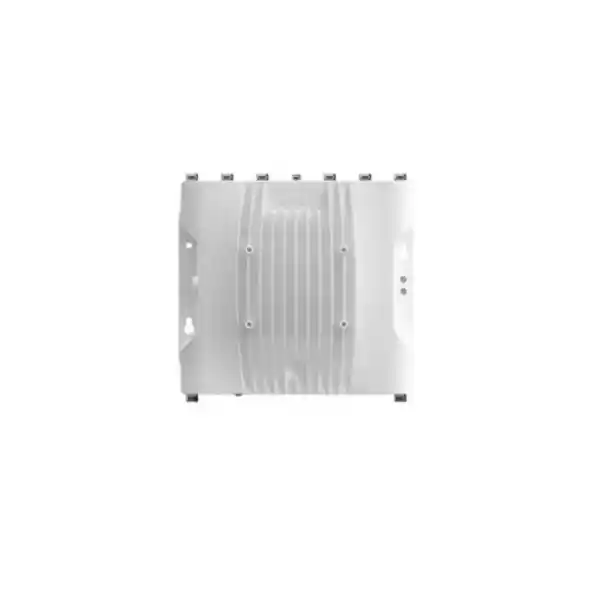
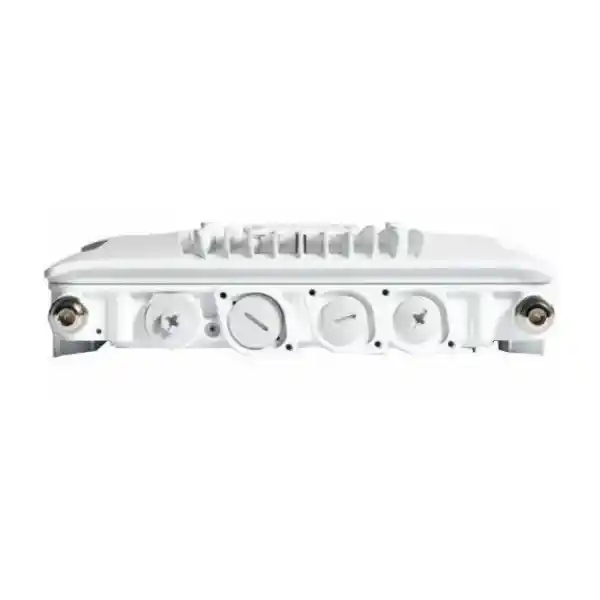
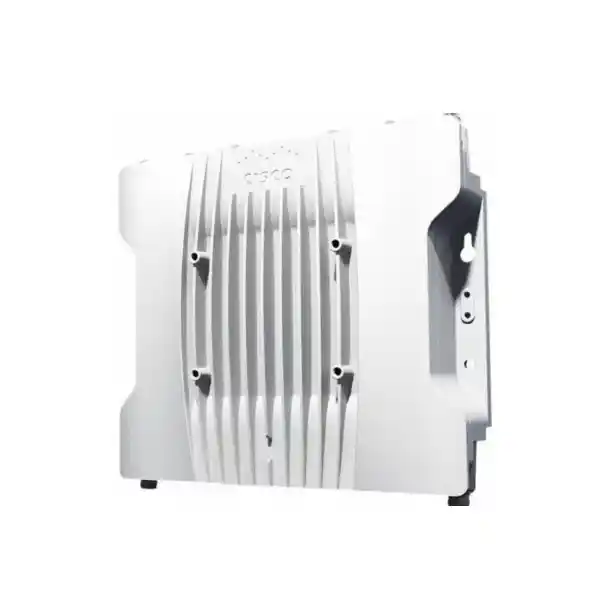
Cisco Catalyst IW9167E-HZ Industrial Access Point
The Cisco Catalyst IW9167E-HZ is the hazardous-location version of Cisco’s heavy-duty IW9167E industrial wireless platform. It combines Wi-Fi 6 and Wi-Fi 6E hardware capability, Cisco Ultra-Reliable Wireless Backhaul, Workgroup Bridge functionality, three 4×4 radios, external antenna flexibility, multigigabit wired connectivity and a rugged IP67 enclosure with hazardous-location certifications intended for environments where explosive gas, vapor or dust risk changes the design rules for every installed electrical device.
For UAE projects, this model is especially relevant to oil and gas production, refineries, petrochemical plants, fuel terminals, chemical processing, pharmaceutical manufacturing, utility sites and other industrial facilities where wireless must be engineered as part of the operational technology infrastructure rather than treated as ordinary office Wi-Fi.
Direct answer
Choose the IW9167E-HZ when the location requires a Cisco industrial access point that can be designed for hazardous-area deployment while still providing modern high-efficiency WLAN, external antennas and URWB-based industrial mobility or backhaul.
The exact regulatory domain, permitted 6 GHz operation, antenna selection, cable-gland method, power design and hazardous-area installation practice must be validated for the specific UAE site and project classification before ordering.
Three 4×4 radios
Dedicated 2.4 GHz, 5 GHz and 5/6 GHz radio capability supports four spatial streams and high-efficiency 802.11ax operation.
C1D2, Zone 2/22
The HZ model is the purpose-built variant for Class I Division 2 and Zone 2/22 deployments with ATEX and IECEx certification coverage.
IP67 heavy duty
Cast-aluminum industrial construction, sealed interfaces, vibration and shock qualification and a wide operating-temperature envelope address harsh plant conditions.
Wi-Fi, WGB and URWB
A single hardware family can support standard Wi-Fi, Workgroup Bridge and Cisco Ultra-Reliable Wireless Backhaul operating models.
What the IW9167E-HZ is designed to solve
Industrial wireless design becomes materially different when the access point must live close to process equipment, tank farms, loading areas, production lines, rotating machinery, pipelines or outdoor assets. The challenge is not only RF coverage. The device must tolerate heat, dust, moisture, condensation, vibration and electrical disturbances, while the installation method must also respect hazardous-area rules. Ordinary indoor enterprise access points can provide excellent WLAN performance in controlled buildings, but they are not engineered to be mounted in locations where the enclosure, cable entries, antenna system and electrical interfaces can become part of a hazardous-area compliance assessment.
The Cisco Catalyst IW9167E-HZ addresses this gap by starting with the IW9167E heavy-duty platform and adding the hardened port implementation and certification scope required for hazardous locations. Cisco positions the HZ model for Class I Division 2, Zone 2/Zone 22, ATEX and IECEx environments. That makes it appropriate to evaluate for industries in the UAE where hazardous zoning appears in the project documentation, including oil and gas, hydrocarbon handling, petrochemical operations, chemical manufacturing, pharmaceutical facilities and selected utility or industrial process areas.
The result is an access point that can participate in a modern Cisco wireless architecture without forcing the project to choose between industrial ruggedness and contemporary wireless capabilities. It can support Wi-Fi 6-class client access, 6 GHz hardware capability where locally permitted, external high-gain or directional antennas, dedicated spectrum functions, Bluetooth Low Energy, GNSS-related functions, Workgroup Bridge operation and Cisco URWB. This breadth matters because an industrial site rarely has only one wireless requirement. A single plant may need handheld scanner connectivity, engineering laptops, mobile HMIs, cameras, autonomous vehicles, PLC connectivity through a bridge, backhaul between remote assets and resilient links for latency-sensitive operational traffic.
Radio architecture: why three 4×4 radios matter
The IW9167E platform uses three 4×4 radio chains. In Wi-Fi operation, Cisco documents a 2.4 GHz 4×4 radio, a 5 GHz 4×4 radio, and a third 5/6 GHz 4×4 radio. Four spatial streams give the access point a strong physical-layer foundation for high-capacity client service, diversity and beamforming behavior. The architecture is useful in industrial networks because the designer can separate client populations and applications across frequency bands instead of forcing every device onto one overloaded cell.
2.4 GHz radio
The 2.4 GHz radio is useful for legacy industrial clients, sensors and endpoints that prioritize reach and compatibility over maximum channel bandwidth. Cisco specifies 20 MHz channels for the 802.11ax 2.4 GHz radio. In a plant, limiting 2.4 GHz width is normally desirable because only a small number of non-overlapping channels exist and interference can travel farther than expected through open process areas.
5 GHz radio
The 5 GHz 4×4 radio supports 20, 40 and 80 MHz operation and is typically the main workhorse for contemporary industrial WLAN clients. It offers more channel-planning flexibility than 2.4 GHz and can be engineered for roaming, higher client density, video traffic and process applications while maintaining a practical balance between capacity and cell size.
5/6 GHz radio
The third radio can support 20, 40, 80 and 160 MHz channels on the applicable 5/6 GHz configuration. This enables higher potential PHY throughput and gives designers an additional RF resource. In Wi-Fi 6E deployments, 6 GHz can provide cleaner spectrum and more channels, but its actual use is subject to the regulatory approval and outdoor standard-power rules of the country where the access point is installed.
Cisco lists aggregate 802.11ax PHY data rates up to 7.8 Gbps under the documented combination of a 4×4 160 MHz 6 GHz radio, a 4×4 80 MHz 5 GHz radio and a 4×4 20 MHz 2.4 GHz radio. That figure is a physical-layer maximum rather than an application throughput guarantee. Real industrial throughput depends on client radio capability, channel width, modulation and coding rate, airtime contention, distance, antenna system, RF attenuation, interference, roaming behavior, controller policy and wired uplink capacity. For project sizing, FourTeck treats the published PHY capability as an upper engineering reference and designs around measured application requirements and RF survey data rather than assuming headline speed is continuously achievable.
Wi-Fi 6 and Wi-Fi 6E capabilities in industrial networks
IEEE 802.11ax improves wireless efficiency in dense or contention-heavy environments. The IW9167E-HZ supports uplink and downlink MU-MIMO, uplink and downlink OFDMA, Target Wake Time, BSS coloring, beamforming and modern packet aggregation functions. These mechanisms are important in industrial spaces because performance is not determined only by raw signal strength. A cell may serve handheld computers, tablets, sensors, cameras, autonomous vehicles and maintenance laptops at the same time. Efficient airtime scheduling and the ability to divide channel resources can help the WLAN accommodate many traffic patterns without treating every client exchange as a large single-user transmission.
OFDMA is especially useful conceptually because it allows a channel to be divided into resource units so multiple clients can be served more efficiently when traffic consists of many smaller exchanges. MU-MIMO can improve parallelism when compatible clients and RF conditions permit. BSS coloring helps networks distinguish overlapping basic service sets, which can reduce unnecessary deferral in dense designs. Target Wake Time can help compatible battery-operated devices manage their radio wake schedules, although the practical benefit depends on the endpoint implementation.
Wi-Fi 6E extends 802.11ax operation into 6 GHz. This additional band can reduce dependence on crowded legacy spectrum and make wide channels more practical. However, 6 GHz is not a universal switch that should be assumed active everywhere. Cisco explicitly notes that 6 GHz operation is subject to country regulatory approval, and outdoor standard-power operation may involve Automated Frequency Coordination requirements. UAE procurement therefore needs the correct regulatory domain and confirmation of allowed operation for the exact project date, location and antenna arrangement. FourTeck does not recommend purchasing a regulatory-domain SKU merely because the radio hardware supports 6 GHz.
For facilities that cannot use 6 GHz outdoors, the IW9167E-HZ still remains a strong industrial platform because its 2.4 and 5 GHz capabilities, external antennas, URWB functions and hazardous-location design are independent reasons to select it. The practical architecture should be chosen according to client compatibility and spectrum policy, not marketing labels.
External antenna architecture and RF design freedom
A defining advantage of the IW9167E-HZ is its external-antenna design. Cisco specifies eight N-type antenna connectors plus a TNC connector for GNSS. External antennas allow the RF design to match the geometry of the site instead of accepting the radiation pattern of an integrated antenna. That distinction is critical in industrial facilities where steel structures, pipe racks, process vessels, tanks, cranes, shelving, blast walls and machinery create highly directional shadowing and reflection patterns.
Directional antennas can be used to project coverage along a roadway, conveyor, tunnel-like corridor, pipe rack or process line while limiting RF energy toward unwanted areas. Sector antennas can support broad outdoor cells without radiating equally in all directions. Omnidirectional antennas can be appropriate around open yards or central mounting points. High-gain choices can extend usable links, but they also narrow beamwidth and alter regulatory EIRP calculations. The correct selection must therefore consider antenna gain, cable loss, polarization, mounting height, mechanical wind load, hazardous-location certification and local transmit-power limits together.
Cisco also supports Self-Identifiable Antennas on this platform, which can simplify certain operational workflows by allowing compatible antenna information to be recognized by the system. For hazardous locations, only antennas, cables, lightning protection components and installation methods that are permitted for the certified deployment should be used. An access point carrying a hazardous-location certificate does not automatically make an arbitrary third-party antenna assembly suitable for the same classified area.
Cisco notes compatibility with a broad selection of HAZLOC-certified antennas and highlights reuse possibilities for antennas associated with the prior IW6300H generation. This can be valuable in brownfield modernization projects, but reuse should never be assumed from connector type alone. The engineering team should confirm the exact antenna part number, frequency coverage, certification, gain, cable assembly and regulatory-domain implications before approving an existing antenna for an IW9167E-HZ upgrade.
Hazardous-location engineering: certification is part of the design
The HZ suffix is not cosmetic. Cisco documents the IW9167E-HZ for hazardous-location standards including Class I Division 2, Zone 2 and Zone 22, together with UL/cUL, ATEX, IECEx and related 60079-series requirements. These classifications are used in industries where flammable gases, vapors or combustible dusts may be present under defined abnormal or limited conditions. The project engineer must still determine whether the access point’s exact certificate and protection concept align with the site’s hazardous-area classification.
A correct deployment begins with the hazardous-area dossier or area-classification drawing. The wireless team should not guess the zone from the appearance of the location. The document set must identify the zone or division, gas or dust group where applicable, temperature class or maximum surface-temperature constraints, equipment protection level requirements, ambient-temperature range and any local electrical installation standard imposed by the authority, EPC or plant owner. The access point can then be matched to that requirement together with the antenna and cable-entry system.
The IW9167E-HZ uses permanent M25 port structures and metal caps for sealed interfaces. Cisco’s documentation specifically distinguishes the HZ model from the standard IW9167E and notes that M12 converters are not compatible with the HZ variant. This affects bill of materials and field installation. Cable glands, sealing practices, unused-port caps, grounding and connector torque become part of the compliance and reliability workflow, not simple accessories chosen after the access point arrives.
For UAE industrial sites, the best procurement process is to involve the plant’s electrical or hazardous-area authority before final order release. FourTeck can help align the wireless BOM with the requested zone and network function, but formal hazardous-area acceptance remains a site engineering and compliance responsibility. This approach prevents a common project failure: selecting the correct access point family but the wrong regulatory domain, gland, antenna, power method or installation accessory.
Environmental durability for UAE outdoor and process conditions
IP67 enclosure
IP67 protection addresses dust ingress and temporary water immersion under the conditions defined by the ingress-protection standard. This is suitable for exposed industrial locations, but the rating depends on correct port sealing, glands, caps and installation. A poorly terminated cable entry can compromise the effective field protection even when the access point enclosure itself is certified.
Wide temperature range
Cisco specifies the IW9167E family for operation from -40°C to +70°C with solar load and still air, and extended DC-powered operation to -50°C to +75°C without solar loading, with the cold-start limitation documented by Cisco. This matters in UAE outdoor cabinets and exposed structures where enclosure heating and direct sun can create temperatures above ambient weather readings.
Shock and vibration
Industrial and rail-related qualification includes vibration and shock standards that are far more relevant to plants, vehicles and wayside assets than normal office WLAN testing. Mount design must still be engineered for the local structure, vibration profile and wind load, especially where directional antennas add leverage to the bracket.
Humidity and exposure
Cisco publishes support for condensing humidity conditions on the IW9167E platform. In coastal UAE facilities, designers should additionally consider salt-laden air, connector weatherproofing, galvanic interaction between mounting materials, periodic inspection and cable routing that prevents water from following the cable toward the enclosure.
The operating-temperature specification should be interpreted in context. Solar load, mounting surface temperature, airflow, radio activity and power method can all affect thermal behavior. A plant design should avoid locating the access point directly above hot process equipment merely because the published maximum temperature appears high enough. Thermal margin improves reliability. Where possible, use structural shading, stand-off brackets and cable routes that keep the electronics away from radiant heat while preserving antenna line of sight.
Multigigabit uplinks, SFP/SFP+ and industrial cabling
The IW9167E-HZ is designed so its wired side does not become an unnecessary bottleneck. Cisco specifies one autosensing 100 Mbps/1 Gbps/2.5 Gbps/5 Gbps multigigabit Ethernet interface that can accept PoE power, plus a second interface that can operate with copper SFP at 100 Mbps, 1 Gbps or 10 Gbps multigigabit behavior, or fiber SFP/SFP+ at 1 Gbps or 10 Gbps according to the supported module and configuration. Cisco also describes the platform as providing dual multigigabit connectivity up to 5 Gbps in its feature summary.
The practical choice between copper and fiber depends on distance, lightning exposure, grounding architecture, electromagnetic environment, available switch ports and the hazardous-area cable path. Copper can simplify PoE delivery and short local runs, while fiber is attractive for long distances, electrical isolation and high-noise environments. The HZ model’s permanent M25 port arrangement means the cable-entry solution must be selected with the enclosure and certification requirements in mind from the beginning.
For brownfield projects, the installed cable plant deserves a detailed audit. A cable may be labeled Category 6A yet still be unsuitable because of degraded shielding, damaged glands, excessive length, unsuitable industrial jacket material, poor bonding or routing next to high-current conductors. Multigigabit links are more sensitive to cabling quality than a simple 100 Mbps industrial connection. Before committing to 2.5 or 5 Gbps over existing copper, validate the complete channel rather than only the patch cord.
Fiber planning likewise needs a complete link budget. Confirm SFP type, wavelength, fiber mode, connector system, loss, temperature rating and switch compatibility. In a hazardous area, the optical cable entry and enclosure transition remain part of the site installation method even though the fiber itself does not conduct lightning current in the same way as copper.
Power design: PoE+, UPOE and DC change available performance
Power method is a functional design choice on the IW9167E-HZ. Cisco supports 802.3at PoE+, 802.3bt/UPOE-class power and a 24 to 48 VDC input, with a documented maximum DC voltage range of 18 to 60 VDC. The access point’s available radio chains and wired speed can change with the power budget. Cisco specifies 48 W operation with DC or 802.3bt/UPOE while running all three radios at 4×4, with 5 Gbps RJ-45 and SFP/SFP+ support. Under 802.3at PoE+, Cisco documents a reduced 25 W operating state with the radios at 2×2, the RJ-45 side limited to 1 Gbps and SFP operation constrained to 1 Gbps.
This has a direct procurement implication: buying a premium 4×4 access point does not automatically deliver the full 4×4 performance if the switch or injector can provide only lower-power PoE. The project must examine the PSE output, cable length, voltage drop, switch power budget across all ports, redundancy requirements and any environmental derating. In remote outdoor cabinets, designers often overlook the aggregate power demand of access points, heaters, cameras, industrial switches and media converters. A proper DC load schedule prevents nuisance shutdowns when the cabinet is fully populated.
For process sites with established 24/48 VDC distribution, direct DC power can integrate the access point into existing industrial UPS or backed control-power systems. This can improve resilience during AC events, but only if the DC source, overcurrent protection, surge protection, grounding and hazardous-area cable entry are designed correctly. Cisco also publishes surge-protection characteristics for the IW9167E family, yet site-level surge and lightning protection must still reflect local exposure and plant standards.
FourTeck recommends deciding the required radio performance first, then choosing the power architecture. If the design depends on four spatial streams, 5 Gbps copper or full interface capability, the bill of materials should reserve the appropriate power source from day one instead of discovering during commissioning that the installed switch forces the AP into a reduced-power profile.
Cisco Ultra-Reliable Wireless Backhaul for moving and remote assets
URWB is one of the features that separates the IW9167 family from a conventional rugged access point. Cisco Ultra-Reliable Wireless Backhaul is designed for applications that need highly reliable wireless connectivity for moving assets or fixed links where fiber is impractical or too expensive. Cisco documents near-zero latency below 10 ms and seamless handoffs with zero packet loss in the intended URWB operating context. These characteristics target industrial systems where even short interruptions can disturb video, telemetry, control visibility or automated vehicle behavior.
Typical UAE applications include moving cranes, yard vehicles, autonomous or remotely operated equipment, AGVs, AMRs, mobile process skids and wireless backhaul between remote structures. A traditional Wi-Fi client roaming event can be acceptable for office traffic yet problematic for a continuously streamed industrial application. URWB uses Cisco’s industrial wireless mechanisms to maintain connectivity across movement and interference conditions, including MultiPath Operations in applicable deployments.
MultiPath Operations can duplicate high-priority traffic across multiple wireless paths so the receiving side can continue to obtain frames when one path is affected by interference, obstruction or a hardware issue. This is valuable around metal-heavy facilities where RF reflections and temporary line-of-sight blockage are normal. The network designer should still validate application latency, packet-loss tolerance, path diversity and handoff geometry with a pilot. URWB is not a substitute for RF engineering; it is a technology that can deliver higher resilience when the physical design provides adequate independent paths.
Cisco’s software model allows the IW9167E hardware family to support different modes, including Wi-Fi, WGB and standalone URWB, and newer software can enable Cisco Wireless with URWB capabilities in Wi-Fi mode. Licensing and software release requirements differ by operating model. A quotation therefore needs the intended mode, not only the hardware SKU, so the correct Cisco DNA or URWB entitlement can be included.
Workgroup Bridge mode for Ethernet-only industrial devices
Many operational-technology devices were never designed with enterprise WLAN radios. PLCs, HMIs, controllers, industrial PCs, analyzers, cameras and specialty instruments may provide only an Ethernet port. Workgroup Bridge mode allows the IW9167E platform to associate to another access point as a wireless client and provide network connectivity to equipment attached to its Ethernet interface. This can be useful when equipment is moving, when trenching is impractical or when a temporary industrial skid needs to join the plant network.
The design should treat WGB as a bridge architecture rather than a simple client adapter. Determine how many downstream MAC addresses must traverse the link, what VLANs are required, whether spanning-tree behavior matters, how authentication is handled, and how the connected industrial device recovers after roaming or power loss. The access point’s rugged enclosure and external antenna system can make WGB viable in locations where small commercial Ethernet-to-Wi-Fi bridges would not survive.
For mobile machinery, antenna placement is often more important than access-point transmit power. The antenna must remain clear of the machine’s own metal body, moving booms, containers or loads. Diversity can be undermined if all antenna elements are installed together behind the same obstruction. During site trials, the engineering team should test the full motion path, including turns, loading positions and locations where the vehicle briefly passes behind large steel objects.
Where deterministic handoff behavior is the primary requirement, URWB may be a better fit than conventional WGB. Where the device simply needs Ethernet access over an existing Cisco WLAN, WGB can be easier. FourTeck can help map the application to the right operating mode so the site does not over-engineer a straightforward link or under-engineer a mission-critical one.
Security foundation for industrial wireless
Industrial access points operate at a security boundary between physical infrastructure and the IP network. The IW9167 Series incorporates Cisco Trust Anchor technologies, including secure boot, image signing and the Cisco Trust Anchor module. These mechanisms help establish confidence that the device boots authorized software and provide hardware-based roots of trust for platform integrity. They complement, rather than replace, network-level security controls.
For WLAN security, Cisco lists WPA3, WPA2, 802.1X and a broad set of EAP methods. Enterprise deployments should normally use certificate-based or centrally managed authentication instead of pre-shared keys for critical operational devices whenever endpoint support permits. Segmentation should separate operational technology, engineering access, corporate clients, contractors, cameras, sensors and guest traffic according to risk. Wireless VLANs should map to firewall and policy zones rather than landing every endpoint in a flat plant network.
The access point also includes scanning and spectrum-management capability. This matters in noisy industrial environments where interference can be caused by other WLANs, process equipment, temporary radios or unauthorized devices. A spectrum event should be correlated with plant operations before engineers simply increase transmit power. High power can enlarge contention domains and worsen roaming. Good designs use RF telemetry, channel planning and disciplined power levels to maintain predictable cells.
Customers planning an end-to-end industrial security program can coordinate the wireless layer with FourTeck’s broader Firewall Dubai portfolio so access-point authentication, network segmentation and industrial firewall policy are designed as one architecture rather than disconnected purchases.
Controller, software and licensing considerations
In Wi-Fi access-point mode, Cisco specifies support for Catalyst 9800 Series Wireless Controllers, physical or virtual. The published software baseline for IW9167E AP operation begins with Cisco IOS XE 17.9.4 or later, while URWB and WGB use Cisco Unified Industrial Wireless software baselines. Software support evolves over time, so a production deployment should validate the exact release train against the selected controller, desired feature set and Cisco recommended release guidance at the time of implementation.
Cisco lists Industrial Wireless Cisco DNA Essentials and Cisco DNA Advantage licenses for Wi-Fi operation. Standalone URWB licensing includes Network Essentials, Network Advantage and Network Premier tiers, along with service entitlements. The correct combination depends on the operating mode, management architecture and features required. Licensing should be priced at the beginning of the project, not added after hardware selection, because enterprise WLAN functionality is delivered through the combined hardware, software and subscription model.
A Cisco Smart Account is also relevant for ordering and centrally managing software entitlements. Organizations with an existing global Smart Account should provide the account details through their procurement process so new licenses are assigned correctly. For multi-site UAE groups, consistent Smart Account ownership avoids orphaned subscriptions when different contractors purchase hardware for separate facilities.
FourTeck can support controller, switch, firewall and industrial wireless integration through the IT Services UAE practice. For a quotation, specify whether the site already has Catalyst 9800 infrastructure, whether the APs will join an existing WLAN, and whether URWB or WGB is required. Those answers materially affect licensing and implementation scope.
Industrial use cases in the UAE
Oil and gas facilities
Well pads, processing facilities, tank farms and hydrocarbon handling areas often combine hazardous zoning with large outdoor distances and limited cable routes. IW9167E-HZ can provide WLAN access, WGB connectivity or URWB links while allowing directional antennas to shape coverage around steel structures and process equipment.
Refineries and petrochemical plants
Maintenance teams need tablets, scanners and voice devices across units with dense piping and severe multipath. Hazardous-location APs can reduce the need to place consumer-grade enclosures around ordinary hardware, while external antennas allow RF energy to be aimed through accessible corridors.
Chemical and pharmaceutical sites
Selected production or storage zones can require certified equipment while also demanding traceability, mobile data capture and secure maintenance access. The AP’s WPA3-capable WLAN and industrial protection help connect authorized endpoints without bringing unqualified network equipment into the classified area.
Ports and logistics terminals
Container yards, fuel handling zones and remote gantries need coverage across moving equipment and large open spaces. URWB can be evaluated for cranes and vehicle mobility, while multigigabit uplinks and fiber options support high-capacity aggregation where cable routes are available.
Utilities and infrastructure
Power, water and district-cooling assets may require rugged outdoor Wi-Fi even when hazardous classification applies only to specific process areas. A common industrial wireless family simplifies support across ordinary outdoor and classified zones while still allowing the HZ variant where required.
Mobile automation
AGVs, AMRs, remotely operated devices and maintenance vehicles need stable coverage along a route rather than at isolated desk locations. The IW9167 architecture supports Wi-Fi, WGB and URWB choices so mobility can be matched to application criticality and handoff tolerance.
RF sizing methodology for a plant, yard or terminal
Industrial Wi-Fi should not be sized by square metres alone. Two facilities of identical area can require completely different AP counts because one is an open warehouse and the other contains tanks, pipe racks and metal process modules. FourTeck begins with the application map: identify client types, minimum RSSI target, required SNR, data rate, roaming sensitivity, channel-band support, antenna orientation, mobility paths and areas that need redundant coverage.
The next step is to model physical attenuation. Metal vessels can create sharp RF shadows; mesh fencing can behave differently depending on frequency and angle; stacked containers can turn a clear yard into a canyon; water-rich process materials can absorb RF; and large machinery can change position during operations. A predictive survey helps establish initial AP placement, but final validation should be performed with on-site measurements. In hazardous areas, temporary survey equipment may itself require work permits or certified alternatives, so survey planning must be coordinated with site safety.
Coverage targets should reflect the weakest important client, not the access point. An AP with four radio chains and a high-gain antenna can hear and transmit very well, but a small handheld device may have a lower-power two-stream radio. If the design is based only on AP capability, the downlink may appear strong while the client cannot reliably transmit back. This creates asymmetric cells and roaming instability. The correct link budget uses client transmit power, client antenna gain and receiver sensitivity as part of the calculation.
For URWB or high-availability mobility, the survey also needs path diversity. The question becomes not only whether one AP is visible, but whether multiple independent paths exist where MultiPath or make-before-break behavior is expected. Strategic overlapping coverage is useful; uncontrolled same-channel overlap is not. Channel and antenna planning must therefore be completed together.
Channel planning, interference and 6 GHz governance
The three-radio architecture creates capacity only when channels are planned intelligently. In 2.4 GHz, conservative 20 MHz channels reduce overlap and preserve compatibility. In 5 GHz, 20 or 40 MHz channels are often preferable for large industrial deployments because they provide more reusable channels and stronger link budgets than wide 80 MHz channels. An 80 MHz channel can deliver more peak speed to a capable client but consumes four times the spectrum of a 20 MHz channel and may increase co-channel contention across a sprawling plant.
The 5/6 GHz radio adds flexibility. When 6 GHz is legally available for the intended outdoor standard-power deployment, the additional spectrum can support wider channels or cleaner cells. Yet a designer should verify that the actual industrial clients support 6 GHz. Many scanners, PLC bridges and rugged handhelds remain 5 GHz devices. A 6 GHz cell that serves only a small number of endpoints may still be useful for high-capacity applications, but it should not be counted as a universal replacement for 5 GHz coverage.
Interference analysis should distinguish between Wi-Fi contention and non-Wi-Fi RF energy. Co-channel Wi-Fi can often be corrected by channel reuse and transmit-power tuning. Non-Wi-Fi interference may require a different channel, antenna direction or physical relocation. Industrial sites can produce periodic interference linked to machinery or temporary operations, so a single survey snapshot may not represent the worst case. Spectrum monitoring over a production cycle can reveal patterns invisible during a quiet maintenance window.
For UAE projects, channel plans should be locked to the regulatory domain and current local rules at commissioning. Cisco explicitly states that customers are responsible for verifying approval for use in each country. This is particularly important for 6 GHz because regulations continue to evolve internationally. Procurement and commissioning documentation should therefore record the exact AP regulatory SKU and approved channel set.
High-availability topology options
A resilient industrial wireless network is built from several layers. At the RF layer, critical work areas should have intentional overlapping coverage from more than one AP so maintenance or local obstruction does not create a total outage. At the wired layer, access switches can use redundant uplinks and industrial power sources. At the controller layer, Catalyst 9800 architectures can be designed for high availability. At the application layer, URWB MultiPath can provide additional protection for selected traffic where the topology supports independent paths.
For a fixed plant WLAN, a common architecture uses fiber-fed industrial switches distributed across process zones, with IW9167E-HZ access points powered by suitable PoE or local DC. Fiber aggregation helps isolate distant areas electrically and reduces copper distance limitations. Each AP can then use directional or sector antennas to serve defined cells. Redundant switch paths are valuable where the site has ring or parallel fiber infrastructure.
For yards or mobile assets, URWB cells can be arranged along the movement path with enough overlap for seamless transitions. Two independent RF paths may be engineered where the application justifies the cost. The same physical access-point platform can reduce spare-part complexity, although software mode and licensing must still be managed correctly.
High availability should be quantified. Specify the maximum acceptable outage, packet loss and recovery time for each application. A handheld maintenance application may tolerate several seconds. Remote control or machine vision may not. The IW9167E-HZ provides tools for demanding architectures, but the project team must define what “reliable” means in measurable application terms.
Physical dimensions, mounting and structural planning
Cisco lists the IW9167E and IW9167E-HZ at approximately 29.2 cm by 26.7 cm by 7.1 cm, with the HZ model weighing about 4.3 kg. The permanent M25 port structures extend from the bottom while remaining within Cisco’s stated overall dimensional envelope. These values are important for bracket design, service clearance, cable bend radius and lifting practices on elevated structures.
The structural design must include the antenna system, not only the access point. Eight N-type antenna connectors can support a substantial antenna and cable assembly. A sector or high-gain directional antenna may have a far larger wind area than the AP enclosure itself. Cisco specifies wind resistance up to 160 mph for the access-point platform under its test conditions, but the complete installed system is only as strong as the antenna brackets, pole, fasteners, cable supports and structure.
Mounting location should provide safe access for inspection without placing technicians unnecessarily close to process hazards. Antenna cables should be short enough to control RF loss but routed with drip loops and mechanical protection. The AP should be oriented according to Cisco installation guidance so drainage, venting and cable entries behave as intended. Unused ports should retain the approved caps rather than improvised tape or sealant.
Before fabrication, coordinate with electrical, instrumentation, mechanical and process teams. A technically ideal RF mounting point can be rejected because it blocks a walkway, violates clearance from a relief device, conflicts with crane movement or sits inside a higher hazardous zone than expected. Early multi-discipline review saves rework during construction.
GNSS, BLE and IoT capabilities
The IW9167E-HZ includes GNSS-related capability with an external TNC GNSS antenna interface and additional impact protection called out for the hazardous-location model. GNSS is relevant to location reporting and can support the regulatory framework required for Automated Frequency Coordination in standard-power outdoor 6 GHz scenarios where applicable. The presence of GNSS hardware should not be confused with a general-purpose asset tracking service; its operational use depends on software and feature context.
Bluetooth Low Energy is integrated for IoT-oriented use cases and the platform includes scanning-radio functions for spectrum management. Cisco also describes an IoT radio capable of supporting potential container-based industrial protocol applications. This makes the hardware a flexible edge radio platform, but individual protocols and application containers should be validated against the software release and Cisco support matrix before being written into an RFP.
In industrial design, auxiliary radios can deliver value when they reduce the number of separate devices mounted in a classified area. However, consolidation should be deliberate. The security team must know which radios are enabled, the OT team must understand their purpose and the change-management process should control future activation. A BLE radio that is technically present but not required for the project can be disabled according to policy if the software architecture supports that approach.
For projects requiring broader network and infrastructure integration, customers can review FourTeck’s UAE technology coverage at FourTeck UAE, where industrial wireless can be coordinated with switching, security, servers and site services rather than treated as an isolated AP purchase.
Migration from older industrial wireless platforms
The IW9167E-HZ can be particularly attractive in plants modernizing from older Cisco industrial wireless generations because it introduces Wi-Fi 6-class capabilities, 6 GHz hardware support and URWB flexibility while preserving an external-antenna architecture. Cisco states that the hazardous-location model can use a broad range of HAZLOC-certified antennas, including antennas associated with the prior IW6300H series. This can reduce migration cost where existing antenna assets remain supported and serviceable.
A migration should still verify every component. Older antenna cables may have excessive loss at 6 GHz even if they perform well at 2.4 or 5 GHz. Lightning protection devices may not pass the new frequency band. Connectors may be corroded, and legacy brackets may not have the correct bolt pattern or load rating. A site survey should document each antenna part number, cable length, arrestor, grounding point and mounting assembly before the BOM assumes reuse.
Software migration also requires planning. New APs may need controller upgrades, new licensing and policy templates. If the existing WLAN relies on legacy security or authentication methods, the project should use the hardware refresh as an opportunity to move toward WPA3 and certificate-based access where endpoints support it. For mobile WGB or URWB systems, perform coexistence testing before removing the old infrastructure.
A phased cutover is usually safest: deploy a limited pilot cell, validate RF, power, controller integration, antenna behavior and application performance, then replicate the proven design. This is preferable to replacing every AP in one maintenance window based only on predictive modeling.
Switching, VLAN and firewall integration
The wired network behind an IW9167E-HZ should be engineered for the same reliability level as the radio. A 5 Gbps-capable AP connected to a 1 Gbps industrial switch may still work well, but the bottleneck should be intentional rather than accidental. For high-capacity WLAN or aggregated backhaul, select switch ports that support the required multigigabit rate and sufficient PoE power. For remote process units, fiber uplinks and industrial switches with redundant power can improve resilience.
VLAN design should align with security zones. A common architecture separates corporate mobile clients, OT engineering access, production devices, cameras, voice, contractors and management traffic. Dynamic policy can be applied through the Cisco wireless architecture, while upstream firewalls enforce zone boundaries and inspection. This avoids the insecure practice of using one SSID and one flat subnet simply because all devices are in the same physical facility.
Management traffic deserves special treatment. The AP and controller interfaces should use controlled management networks, authenticated administrator access, centralized logging, NTP and monitored software versions. Industrial networks often keep equipment in service for many years; a documented patch and lifecycle process is necessary to prevent the wireless layer from becoming an unmanaged legacy island.
For multi-country groups that want consistent architecture beyond the UAE, FourTeck’s global technology site provides a broader route for coordinated network infrastructure planning. This can be useful when the same Cisco industrial wireless standard is intended for facilities in several regions.
How to build the correct UAE bill of materials
The access point SKU is only one line in a complete hazardous-location wireless BOM. Cisco uses IW9167EH-x-HZ ordering syntax, where the regulatory-domain letter or ROW designation must match the destination. The correct domain should be validated for the UAE and for the intended frequency use. Do not substitute a domain because it is immediately available from another region. Regulatory mismatches can block legal channel operation and complicate support.
Next select antennas. The RF design should define the frequency bands, gain, polarization, beamwidth, connector, cable length and hazardous-location certification. Then select the cable-entry system required for the permanent M25 interfaces. Include approved caps for unused entries, grounding hardware, mounting brackets, antenna mounts, RF jumpers, lightning/surge protection where required and weatherproofing materials appropriate to the certified installation method.
Power components come next. If the project requires full 4×4 radio operation and 5 Gbps copper capability, provide 802.3bt/UPOE-class power or DC as documented by Cisco. If PoE+ is intentionally used, acknowledge the reduced operating profile. For DC installations, include the proper power cable, protection and industrial power source. For PoE, confirm the switch or injector environmental rating if it is mounted outside a controlled cabinet.
Add software and licensing according to Wi-Fi, WGB or URWB mode. Include controller capacity if the APs will join Catalyst 9800 infrastructure. Include SFP/SFP+ modules and fiber patching if the second uplink is used. Finally, add commissioning services for software loading, controller onboarding, RF validation, roaming tests, performance tests and documentation.
A complete quote should therefore list hardware, antennas, installation accessories, power, optics, licenses and services as one engineered package. This avoids a common procurement problem where the access point arrives first and cannot be installed because the hazardous-location glands or correct antennas were not ordered.
UAE environmental and procurement factors
UAE outdoor wireless design must account for solar heating, airborne dust, coastal humidity, salt contamination, rapid temperature changes between day and night and occasional heavy rain. The IW9167E-HZ’s IP67 and wide temperature specifications provide a strong hardware foundation, but installation practice determines whether that capability is preserved in service. Cable glands must be tightened correctly, unused ports capped, connectors weatherproofed and brackets selected for corrosion resistance.
Direct sun deserves particular attention. Cisco’s published environmental values distinguish operation with solar load from extended conditions without solar loading. A weather station’s ambient air temperature does not represent the temperature of a dark metal object mounted on a sun-facing structure. Thermal design should therefore include solar exposure and radiant heat from process equipment. Where the RF design permits, shading or stand-off mounting can improve temperature margin.
Procurement lead time can be affected by the exact hazardous-location regulatory SKU, antenna certification and industrial accessories. Early BOM freeze is preferable to last-minute substitution. A non-HZ IW9167E may look similar and share many specifications, but it does not replace the HZ model in a classified area simply because delivery is faster. Likewise, an antenna with the correct N-type connector is not automatically acceptable for hazardous use.
For projects involving regional operations across Africa or wider Middle East supply routes, FourTeck also maintains an Africa infrastructure presence. The engineering principle remains the same across regions: regulatory domain, hazardous certification and RF design must be confirmed for the actual country of installation.
What Cisco does not publicly specify: avoiding invented architecture claims
Technical procurement documents sometimes request processor model, packet-processing ASIC, memory size or internal CPU architecture even when the manufacturer does not publish those details for an access point. Cisco’s public IW9167 Series material focuses on radio architecture, interfaces, environmental ratings, software, security, licensing and certifications; it does not provide a detailed merchant-silicon or ASIC block diagram for the IW9167E-HZ. FourTeck therefore does not invent an ASIC name, core count or memory figure to make the specification table appear more complete.
For performance sizing, the relevant published architecture is the three 4×4 radio design, the supported 802.11ax features, wired multigigabit interfaces and power-dependent operating modes. For security, the relevant architecture includes secure boot, image signing and Cisco Trust Anchor. For industrial reliability, the relevant architecture includes IP67 construction, hardened ports, environmental qualification and hazardous-location certifications. These are verifiable capabilities that can be mapped directly to project requirements.
If an EPC, consultant or customer RFP requires internal component details not available in the public documentation, the correct process is to request an official Cisco response through the account team under the appropriate disclosure terms. This protects the project from accepting unsupported third-party claims and keeps submittals aligned with manufacturer documentation.
The same discipline applies to throughput, latency and range. Published maximums are useful references, but final engineering values should be validated with the intended software release, antenna system, regulatory domain and application test. A professional industrial WLAN design is based on measurable acceptance criteria rather than extrapolating laboratory specifications into guaranteed site performance.
IW9167E-HZ compared with the standard IW9167E and IW9167I
| Design point | IW9167E-HZ | IW9167E | IW9167I |
|---|---|---|---|
| Primary purpose | Hazardous-location heavy-duty external-antenna deployments | Heavy-duty external-antenna industrial/outdoor deployments | Heavy-duty integrated-antenna industrial/outdoor deployments |
| Antenna approach | Eight N-type external RF ports plus GNSS | Eight N-type external RF ports plus GNSS | Integrated omnidirectional antennas |
| Hazardous-area ratings | C1D2, Zone 2/22, ATEX, IECEx and related HZ certification set | Not the HZ certified variant | Not the HZ certified variant |
| Cable entry | Permanent rugged M25 arrangement; M12 converters not compatible | Standard heavy-duty gland/M12 accessory options per installation guide | Integrated-antenna platform with heavy-duty interfaces |
| Best fit | Classified process areas requiring external antenna control | Unclassified harsh areas needing directional or specialized antennas | Unclassified harsh areas where simple integrated coverage is preferred |
The HZ model should not be chosen merely because it is more rugged on paper. If the location is unclassified and an integrated antenna suits the RF plan, IW9167I may simplify installation. If the site needs external antennas but no hazardous certification, the standard IW9167E may be more cost-efficient. The IW9167E-HZ is justified when hazardous-area compliance and hardened M25 interfaces are part of the real installation requirement.
Deployment workflow from design to commissioning
1. Define the operational application. Document every client type, traffic profile, roaming path, required availability, latency tolerance and security requirement. Decide whether the network is standard Wi-Fi, WGB, URWB or a mixed architecture. The application determines how much redundancy and which wireless mode are justified.
2. Validate hazardous-area classification. Obtain the official area-classification drawing and certificate requirements. Confirm zone/division, gas or dust parameters, temperature constraints and ambient conditions. This step determines whether the HZ model is required and which accessories can be installed.
3. Complete RF design. Perform predictive modeling followed by on-site validation. Select antenna type, gain, orientation and mounting height. Plan channels and transmit power with consideration for client capability, metal obstructions and roaming. If 6 GHz is intended, confirm UAE regulatory approval and regulatory-domain support.
4. Engineer power and wired connectivity. Choose 802.3bt/UPOE or DC for full performance where required. Validate switch power budget, multigigabit port capability, fiber optics, grounding, surge protection and cabinet UPS capacity. Decide whether both wired interfaces will be used.
5. Build the certified installation BOM. Include the correct IW9167EH-x-HZ regulatory SKU, approved antennas, M25 glands or required cable-entry components, mounts, caps, RF cables, surge components, SFPs, power accessories, licenses and controller capacity.
6. Stage and preconfigure. Load the approved software, assign licenses, onboard the AP to the controller or URWB management environment, apply naming conventions, verify radio policy and record serial numbers. Staging reduces time spent troubleshooting in a restricted process area.
7. Install under site permit controls. Follow the approved mechanical and electrical method statement. Maintain certified sealing, grounding and cable-entry requirements. Verify antenna orientation and torque values. Photograph completed installations for as-built documentation.
8. Commission against acceptance criteria. Measure RSSI, SNR, roaming, throughput, packet loss, latency and application behavior. Test redundant paths where required. Confirm controller alarms, logging, switch power status and failover. Update RF drawings and the final configuration backup before handover.
Frequently asked technical questions
Does the IW9167E-HZ support Wi-Fi 6E?
Yes, the hardware supports Wi-Fi 6E capability through the 5/6 GHz radio. Actual 6 GHz operation depends on country regulatory approval, selected regulatory domain, software and the rules governing outdoor standard-power devices.
Is it suitable for Zone 1?
Cisco positions the IW9167E-HZ for Class I Division 2 and Zone 2/22 use. Do not assume it is suitable for Zone 1. The project’s hazardous-area authority must match the exact certificate to the required zone and protection concept.
Can PoE+ power the AP?
Yes. Cisco documents 802.3at PoE+ support, but with a reduced 25 W profile: radios operate at 2×2 and wired performance is reduced compared with the 48 W DC or 802.3bt/UPOE configuration.
How many antenna ports are provided?
The IW9167E and HZ variant provide eight N-type antenna ports plus a TNC GNSS antenna connector. Antenna choice must follow Cisco support and hazardous-location certification requirements.
Can it provide wireless backhaul?
Yes. Cisco URWB can be used for fixed or moving backhaul scenarios where fiber is impractical, with features intended for low-latency, highly reliable handoffs and multipath resilience.
Does it require a Catalyst 9800 controller?
In Wi-Fi AP mode, Cisco lists Catalyst 9800 Series Wireless Controllers as supported. URWB and WGB use their corresponding software and management architecture. The required controller and licenses depend on the selected operating mode.
Support, lifecycle and operational ownership
Industrial wireless hardware can remain installed for far longer than office WLAN generations, so lifecycle planning should begin with procurement. Cisco publishes a one-year limited hardware warranty for the IW9167 Series, but production sites often require a support contract that covers software access, technical assistance and replacement targets aligned with the plant’s criticality. The exact support SKU should be quoted with the AP and licenses.
Operational ownership should be clear between IT and OT. The wireless LAN team may own controller policy and software, while plant maintenance owns physical inspections, glands, antenna mounts and cable condition. Cybersecurity may own segmentation and authentication, and process engineering may control outage windows. A shared maintenance plan prevents gaps where each team assumes another group is checking the AP.
Recommended routine checks include controller health, radio utilization, interference events, client failure rates, PoE draw, software compliance, certificate status, port errors and environmental alarms where available. Physical inspections should look for loose mounts, cable movement, corrosion, damaged caps, water ingress indicators and antenna misalignment. After major plant modifications or new steel structures are installed, repeat RF validation because the propagation environment may have changed.
Spare strategy should include more than one access point. Critical sites may keep approved antennas, glands, RF jumpers, optics and power components in stock because a spare AP cannot be installed quickly if a unique certified accessory is unavailable. Keep the spare in the same regulatory domain and maintain a staging process so it can be loaded with the correct software and configuration before field deployment.
Technical specification summary
| Product | Cisco Catalyst IW9167E-HZ Industrial Access Point |
| Hazardous-location scope | Class I Division 2, Zone 2/22, ATEX, IECEx and related published HZ standards; exact site acceptance must be validated. |
| Ingress protection | IP67, with correct installation and sealing. |
| Radios | Three 4×4 radios: 2.4 GHz, 5 GHz and 5/6 GHz. |
| Spatial streams | Up to four spatial streams per supported 4×4 radio configuration. |
| 802.11ax channel widths | 20 MHz at 2.4 GHz; 20/40/80 MHz at 5 GHz; 20/40/80/160 MHz on the 5/6 GHz radio as supported. |
| Maximum published PHY rate | Up to 7.8 Gbps under Cisco’s documented tri-radio 802.11ax configuration; not an application throughput guarantee. |
| Antenna interfaces | Eight N-type RF ports plus one TNC GNSS antenna port. |
| Primary wired interface | 100M/1G/2.5G/5G multigigabit Ethernet with PoE input capability. |
| Secondary wired interface | Copper SFP multigigabit or 1G/10G fiber SFP/SFP+ depending on module and configuration. |
| Power | 802.3at PoE+, 802.3bt/UPOE-class power or 24–48 VDC nominal input with Cisco’s published 18–60 VDC maximum range. |
| Full-performance power profile | 48 W with DC or 802.3bt/UPOE, supporting 4×4 radios and high-speed interfaces as documented. |
| Reduced PoE+ profile | 25 W with 2×2 radio operation and reduced wired-interface speed according to Cisco’s power table. |
| Dimensions | Approximately 29.2 × 26.7 × 7.1 cm. |
| Weight | Approximately 4.3 kg for the IW9167E-HZ. |
| Operating environment | -40°C to +70°C with solar load and still air; extended DC-powered range to -50°C to +75°C without solar loading under Cisco’s stated conditions. |
| Wireless modes | Wi-Fi 6/6E, Workgroup Bridge and Cisco Ultra-Reliable Wireless Backhaul, subject to software and licensing. |
| Controller support | Cisco Catalyst 9800 Series Wireless Controllers for Wi-Fi AP mode. |
Decision recap: when the IW9167E-HZ is the right choice
Choose it for classified areas
The strongest reason to choose the HZ model is the need to install Cisco industrial wireless in a location that falls within the model’s supported hazardous classifications. If the area is not classified, evaluate standard IW9167E or IW9167I alternatives before paying for features the project does not need.
Choose it for external antennas
Eight N-type RF ports make the platform appropriate where directional, sector or specialized certified antennas are required to shape coverage around tanks, pipe racks, machinery or long outdoor corridors.
Choose it for industrial mobility
Wi-Fi, Workgroup Bridge and URWB options allow the same rugged hardware family to support handheld clients, Ethernet-only equipment, mobile machinery and resilient backhaul. Select the software mode according to the application’s tolerance for handoff delay and packet loss.
Choose it for harsh UAE exposure
IP67 construction and the wide published temperature envelope are suitable foundations for outdoor process environments. Correct shading, sealing, grounding, corrosion control and cable installation remain essential to preserve field reliability.
Do not choose the IW9167E-HZ solely because its model number is the newest in the range. Industrial network value comes from matching hardware to a specific compliance, RF and application problem. If an indoor enterprise AP is acceptable, it will usually be simpler. If an unclassified outdoor AP is sufficient, the non-HZ model may be more economical. The IW9167E-HZ earns its place when hazardous-area certification, external antennas, industrial environmental resistance and modern Cisco wireless capabilities are all part of the same project requirement.
Quotation input checklist for FourTeck UAE
A precise quotation can be prepared faster when the engineering inputs are supplied together. The checklist below is designed to prevent missing accessories, incorrect regulatory SKUs and power mismatches.
Site and compliance
Provide UAE site location, hazardous zone/division, gas or dust classification, required ATEX/IECEx/UL acceptance, ambient temperature, indoor/outdoor status and any plant-specific electrical standards.
Wireless application
List handhelds, scanners, cameras, AGVs, AMRs, PLCs, mobile machines or backhaul links. Include bandwidth, latency, roaming and availability targets and whether Wi-Fi, WGB or URWB is expected.
RF and antennas
Provide area drawings, mounting heights, route maps and known obstructions. State whether existing IW6300H antennas are proposed for reuse so each part number can be validated.
Power and wired network
Specify available 24/48 VDC, PoE+/UPOE capability, switch model, copper or fiber uplinks, required SFP speed, UPS arrangement and expected cable distances.
Cisco platform
State whether Catalyst 9800 controllers already exist, current software release, Smart Account ownership, required DNA tier and any existing industrial wireless licenses.
Implementation scope
Confirm whether FourTeck should supply hardware only, staging, controller integration, RF survey, installation supervision, commissioning, acceptance testing, documentation and post-deployment support.
Structured consultation plan
For a new IW9167E-HZ project, FourTeck recommends beginning with a short engineering workshop rather than a price-only request. The first objective is to confirm whether the site truly needs the hazardous-location variant. The second is to define the wireless operating mode. The third is to freeze the antenna, power and cable-entry design before procurement. These three decisions remove most of the risk from the final BOM.
Requirement validation
Review hazardous-area documents, applications, existing Cisco infrastructure and required availability. Output: validated use case and preliminary operating mode.
RF and infrastructure design
Create antenna plan, AP positions, channel strategy, power design, uplink design and controller integration. Output: engineered BOM and implementation drawings.
Pilot and commissioning
Stage software, install a representative cell, test roaming or URWB behavior, validate acceptance metrics and replicate the proven configuration across the site.
The most useful pre-sales package is a plant layout with the target coverage areas marked, the hazardous classification sheet, a list of client devices and the existing controller/switch information. With those inputs, FourTeck can identify whether the requirement is best served by IW9167E-HZ, a non-HZ IW9167E/IW9167I design, or a combination of models across classified and unclassified zones.
A well-engineered Cisco industrial wireless deployment should be easy to explain: every AP has a defined purpose, every antenna has a coverage objective, every power source supports the required radio mode, every regulatory SKU is approved for its country, and every critical application has measurable acceptance criteria. That is the standard FourTeck applies when preparing a production-ready IW9167E-HZ solution for UAE industrial environments.
Final procurement note
The Cisco Catalyst IW9167E-HZ should be ordered only after confirming the regulatory domain, hazardous-area certificate fit, antenna system, cable-gland method, software mode and power source. The published hardware capability is strong enough for demanding industrial Wi-Fi and URWB applications, but the final result depends on correct system engineering around the access point.
FourTeck UAE can prepare an engineered quotation that includes the correct AP variant, certified antenna options, power accessories, optics, licensing and implementation scope. The goal is to deliver a complete installable package rather than an isolated hardware SKU that leaves critical accessories or compliance details unresolved.

Reviews
There are no reviews yet.