
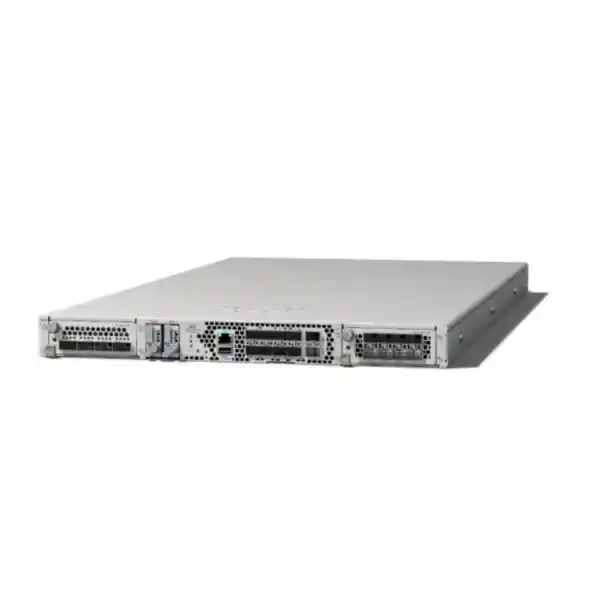
High-capacity enterprise and service-provider security platform
Cisco Secure Firewall 4245 in Dubai, UAE
The Cisco Secure Firewall 4245 is the top-performance model in the Secure Firewall 4200 Series. It is designed for environments where firewall throughput is only one part of the decision: encrypted traffic, intrusion prevention, connection scale, VPN demand, interface density, high availability, licensing and migration all have to be sized together.
Direct answer for buyers evaluating the Cisco Secure Firewall 4245
What exactly is it? The Cisco Secure Firewall 4245 is a 1RU high-end hardware firewall in Cisco’s Secure Firewall 4200 family. It can run Cisco Secure Firewall Threat Defense or ASA software, so the exact software image and licensing model must be part of the order design rather than treated as a minor afterthought.
What is it mainly used for? It is primarily suited to high-throughput enterprise data centers, service-provider networks, large campus aggregation points, Internet edges, security segmentation projects and VPN environments where connection rate, encrypted-traffic inspection and interface scale can be as important as headline firewall throughput.
Who should consider it? Organizations expecting sustained multi-tens-of-gigabits security workloads, very large session tables, high new-connection rates, significant IPSec VPN traffic, 25/40/100/200/400G interface requirements, or future clustering should place the 4245 on the shortlist. Smaller environments should also compare the 4215 or 4225 instead of assuming the largest model is automatically the best value.
What is the most important factor to confirm? Confirm the real traffic profile with the security services that will be enabled. Cisco explicitly notes that measured performance varies with packet size, protocol mix, software release and activated features. A 140 Gbps published Threat Defense figure is therefore a sizing reference, not a promise that every production policy will sustain the same number.
What can FourTeck help determine? FourTeck can translate the current and projected traffic profile into a chassis, software image, network-module, optic, subscription, management, high-availability and implementation bill of materials for Dubai and UAE deployments.
Where the 4245 fits in Cisco Secure Firewall 4200
The 4245 is not simply a 4200 chassis with a different badge. It occupies the highest performance position in a three-model family that also includes the 4215 and 4225. That distinction matters because Cisco publishes materially higher capacity figures for the 4245: up to 140 Gbps for Firewall plus Application Visibility and Control with IPS in the Threat Defense data sheet, 60 million concurrent sessions with AVC, 800,000 new connections per second with AVC, 45 Gbps of TLS hardware decryption, 140 Gbps of IPSec VPN throughput under Cisco’s stated Threat Defense test and a maximum of 30,000 VPN peers. The same hardware family supports multiple software and licensing paths, so the buyer should compare the exact operational design, not only chassis throughput.
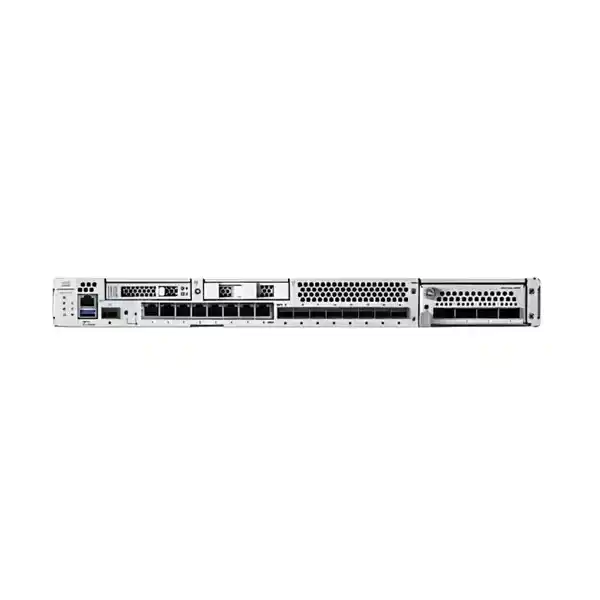
Cisco positions the 4200 Series as a high-end platform for large enterprises, data centers and service providers. The physical architecture supports this role with a 1RU chassis, eight fixed 1/10/25 Gigabit Ethernet SFP28 ports, two integrated 1/10/25G SFP28 management ports and two hot-swappable network-module slots. Depending on the selected modules, the family can add 1G copper fail-to-wire, 1/10G SFP+, 1/10/25G SFP28, 40G, 100G, 200G or 400G connectivity. The point is not that every buyer needs 400G interfaces. The value is that interface strategy can be matched to the data-center fabric, carrier handoff, core network or migration plan instead of forcing a complete platform replacement when link speeds change.
For Dubai buyers, the practical question is usually whether the 4245 is a right-sized security platform for the next three to five years. A business with 10 Gbps of average Internet traffic may still justify a 4245 if it has extreme bursts, heavy east-west segmentation, large VPN aggregation, rapid growth, encrypted inspection, multi-tenant requirements or a cluster roadmap. Conversely, an organization with predictable 20 Gbps traffic and modest security-service use may achieve a better commercial outcome with a lower 4200 model. Oversizing can increase hardware, licensing, optics, power and support costs without improving the actual security design.
The purchasing discussion should therefore begin with a workload model. Document Internet and private-WAN peaks, encrypted percentage, average packet size where known, east-west inspection, number of routed or transparent segments, remote-access and site-to-site VPN counts, new connection rates, expected policy complexity, retention requirements and growth. The 4245 becomes compelling when several of these factors are high at the same time and when resilience requirements make capacity headroom important during failover.
Performance figures: how to read them correctly
| Cisco 4245 metric | Published figure | Buyer interpretation |
|---|---|---|
| FTD Firewall + AVC | 140 Gbps | Useful baseline for Threat Defense policy sizing at Cisco’s 1024-byte test profile; production results depend on traffic and enabled services. |
| FTD Firewall + AVC + IPS | 140 Gbps | Shows the platform’s strong intrusion-prevention capacity, but rule complexity, file inspection, encryption and traffic characteristics still affect real deployments. |
| Concurrent sessions with AVC | 60 million | Important for carrier-scale NAT, large data centers, consumer services and applications that create many simultaneous flows. |
| New connections per second with AVC | 800K | Critical for short-lived web, API, DNS, CDN, hosting or service-provider workloads where connection creation can be the bottleneck before aggregate bandwidth. |
| TLS hardware decryption | 45 Gbps | A key planning number when security policy depends on inspecting encrypted sessions. Cipher choices, TLS versions and certificate strategy still matter. |
| Threat Defense IPSec VPN | 140 Gbps | Relevant to large site-to-site VPN hubs and encrypted WAN designs; actual design should account for tunnel count, crypto settings and failover behavior. |
| Maximum VPN peers | 30,000 | A platform ceiling that should be compared with license, authentication, management and operational limits in the intended VPN architecture. |
Cisco also publishes ASA-mode performance for the 4245. In the 2024 data sheet, stateful inspection firewall throughput is listed at 180 Gbps under an ideal 1500-byte UDP test, while multiprotocol stateful inspection is listed at 100 Gbps, maximum concurrent firewall connections at 180 million, new connections per second at 2.0 million and ASA IPSec VPN throughput at 70 Gbps under Cisco’s stated 450-byte UDP site-to-site test. These numbers should not be mixed with Threat Defense figures as though they describe one identical test. They represent different software modes and traffic methodologies.
This is why a proper quotation should state the intended software image. A buyer who expects advanced Threat Defense services should size from FTD performance and subscription requirements. A buyer maintaining an ASA-oriented architecture may evaluate the ASA figures, security-context requirements and management model separately. The same physical 4245 family can support either direction, but the operational experience, feature set and license choices are not interchangeable.
Interfaces, network modules and optics: the part of the bill of materials that is easy to underestimate
The fixed-port specification of the Secure Firewall 4245 is unusually important because it determines whether the appliance can be inserted into the existing network without unnecessary adapters or module costs. Cisco documents eight fixed 1/10/25G Ethernet ports using SFP28 form factor. It also provides two integrated 1/10/25G SFP28 management ports. The chassis includes two network-module slots, which are central to the platform’s flexibility. A buyer can add port types that match current uplinks, high-speed core connections, carrier circuits or fail-to-wire designs.
Supported module categories documented by Cisco include an eight-port 1 Gbps copper fail-to-wire module; eight-port 1/10G SFP+ modules; eight-port 1/10/25G SFP28 modules; four-port 40G QSFP+ modules; four-port 40/100/200G QSFP28 modules; two-port 100G modules; two-port 400G QSFP-DD modules; and six-port 10G or 25G short-reach or long-reach fiber fail-to-wire modules. The correct module is not selected merely by choosing the highest speed. Port count, connector and optic type, breakout requirements, peer-device capabilities, redundancy, bypass behavior and future topology all affect the choice.
A common procurement error is to order the chassis and then discover that the required transceivers were not included, the selected optics do not match the switch side, or the fiber plant uses a different reach and wavelength than expected. For a 25G SFP28 link, for example, the firewall port speed alone does not tell you whether the deployment needs short-reach multimode optics, long-reach single-mode optics, direct-attach cabling or another supported medium. The switch interface, patching, distance and Cisco compatibility should be checked as one end-to-end link.
The same principle applies to 100G, 200G and 400G. High-speed interfaces often involve breakout and lane considerations that influence how many usable logical links can be created. Cisco’s data sheet notes that maximum interface counts do not factor in breakout capability. Therefore, a design that says “four 100G ports” should be translated into exact module, optic, breakout and neighboring-switch requirements before ordering. This matters even more in a high-availability pair because each unit usually needs equivalent interface hardware so that the standby or cluster member can take over cleanly.
Fixed connectivity
Eight 1/10/25G SFP28 data ports are built into the chassis. These can cover many 10G and 25G designs without consuming a module bay, leaving both bays available for higher-density or higher-speed expansion.
Two network-module bays
The module bays are where the 4200 family’s interface strategy becomes customizable. Cisco supports copper, fiber, fail-to-wire and high-speed QSFP-class options. Identical modules can be hot-swapped; changing to another module type requires a reboot so the new module is recognized.
Optics are a design item
Treat optics as part of the firewall architecture, not an accessory line to add at the end. Reach, fiber type, connector, peer equipment, speed, redundancy and Cisco supportability should all be documented.
Fail-to-wire options
Fail-to-wire modules are useful where physical bypass behavior is part of the availability strategy. Their role should be understood in the exact topology because bypass behavior and security policy objectives must not work against each other.
High-speed growth path
The 4200 platform can accommodate module options up to 400G. That does not mean a 400G module is required for a 140 Gbps security workload; it means the physical interconnect can be designed for modern fabrics and future aggregation patterns.
A useful procurement worksheet lists every firewall interface by name, purpose, speed, media, optic, remote device, remote port, VLAN or routing role and redundancy partner. That one document often prevents more installation delays than a generic firewall checklist because it converts logical architecture into orderable hardware.
Threat Defense licensing: what is required and what changes the security capability
For a Cisco Secure Firewall 4245 running Firewall Threat Defense, licensing should be designed at the same time as the policy. Cisco’s current 4200 getting-started documentation lists Essentials as required, with additional license categories for IPS, Malware Defense, URL Filtering, Cisco Secure Client and Carrier capabilities. Cisco also documents a 4245 combination PID for IPS, Malware Defense and URL services, with term-based subscription options. Because Cisco product packaging evolves, the final quote should be built from the current Cisco ordering system rather than copied from an old bill of materials.
Essentials covers foundational firewall capabilities, including the core functions needed to build the security policy. The important buyer decision is what advanced controls are expected after deployment. If the project scope says “next-generation firewall” but the security team expects intrusion prevention, reputation-based URL categorization and malware inspection, then the relevant subscriptions need to be included. Otherwise the hardware may be physically capable while the desired policy functions are unavailable or incomplete.
The IPS subscription enables intrusion detection and prevention along with related file-control and Security Intelligence capabilities documented by Cisco. This is usually central to the business case for Threat Defense at an Internet edge or data-center boundary. Malware Defense adds malware-detection and analysis capabilities and has an IPS prerequisite in Cisco’s licensing documentation. URL Filtering enables category- and reputation-based web controls; Cisco notes that IPS is also a prerequisite for this license. Without URL Filtering, administrators can still create rules around individual URLs or URL groups, but they do not get the same category and reputation intelligence.
Cisco Secure Client licensing is a separate consideration for remote-access use cases. The maximum VPN peer figure of the appliance is not the same thing as the right to use every remote-access feature for an unlimited user population. The remote-access architecture should therefore specify concurrent users, authentication design, MFA integration, posture or endpoint requirements, split-tunnel policy, geographic distribution and support expectations before license quantities are selected.
Carrier licensing applies to specialized protocol inspection such as Diameter, GTP/GPRS, M3UA and SCTP. This is not a standard requirement for most enterprise buyers, but it can be critical for telecom and service-provider environments. The 4245’s scale and Cisco’s own service-provider positioning make that distinction particularly relevant. A carrier network team should not assume those protocol inspections are automatically available simply because the platform is appropriate for high-volume traffic.
Define policy first
Write down the required outcomes: IPS, web categorization, malware inspection, remote access, carrier protocols and centralized management. Licensing is then mapped to a known security requirement instead of purchased by guesswork.
Match term to lifecycle
Subscription term should align with budget, planned hardware lifecycle and renewal process. A lower first-year cost can create operational friction if renewal timing is not budgeted or ownership is unclear.
Verify Smart Account readiness
License entitlement and device registration depend on the Cisco Smart Software environment. Confirm the customer Smart Account, Virtual Account and responsible administrators before cutover so activation does not become a project blocker.
Threat Defense or ASA on the 4245?
The Secure Firewall 4245 can support Cisco Secure Firewall Threat Defense or ASA software. Choosing between them is an architectural decision. Threat Defense is the natural path for organizations that want Cisco’s integrated next-generation firewall services, Snort-based intrusion prevention, application visibility, malware-related controls, URL filtering and Firewall Management Center workflows. ASA remains relevant where the network design, operational tooling, configuration model or migration path depends specifically on ASA behavior and features.
Do not make this decision by comparing one headline throughput number. The Cisco data sheet publishes separate performance sections for Threat Defense and ASA because the workloads and tests differ. Threat Defense buyers should consider the complete inspection stack and encrypted-traffic behavior. ASA buyers should consider firewall, VPN, security contexts and the operational model they already use. If a project is replacing an older ASA estate, the migration plan may make ASA on the new hardware a transitional step, but that should be intentional and tied to a longer-term security architecture.
Cisco’s 4200 documentation also notes that the appliance operates in appliance mode rather than using platform mode as a chassis-management approach. Operational teams familiar with older Firepower platforms should review the current 4200 workflow, software release and management documentation rather than assume every command path is identical. This is especially important during upgrades, reimaging and troubleshooting because the process can differ from legacy appliances.
For new security designs in Dubai, the useful question is often: “Which software best supports the required inspection, automation, reporting and operational model?” That question should be answered before the hardware order is finalized. FourTeck can scope either direction, but the quote should clearly identify the intended application image, management platform and related license set.
Management, visibility and day-two operations
A high-capacity firewall is an operational system, not only a packet-processing appliance. The 4245 therefore needs a management design that covers configuration ownership, logging, event review, alert handling, change control, upgrades, backups and incident response. Cisco supports centralized management for Threat Defense through Firewall Management Center, and current Cisco material also describes cloud-delivered management options. The right choice depends on the existing Cisco estate, data-residency expectations, connectivity, operational model and internal support skills.
Central management becomes more important as the number of devices, policies and locations grows. A 4245 deployed as a single Internet-edge firewall can still generate substantial event data when application control, IPS, URL, file and malware functions are enabled. In a high-availability pair or cluster, operational consistency matters even more. Policy deployment, health monitoring, event correlation and software maintenance should be designed so administrators have one reliable source of truth.
Logging capacity should be treated separately from packet throughput. Security teams may want connection events, intrusion events, file events, malware events, VPN events and administrative audit records retained for different periods. A firewall can process traffic successfully while the logging architecture becomes the bottleneck. Before deployment, decide which events must be stored, where they will be stored, how long they must remain searchable and whether a SIEM or SOC platform will receive them. The decision affects management sizing, integration work and the amount of data traversing management networks.
Cisco’s 4200 hardware includes two SSDs for event storage and malware-analysis-related use, and the 4245 is documented with substantial local storage. That hardware capability does not remove the need for retention planning. Local storage is not a substitute for organizational requirements around centralized security analytics, compliance retention or cross-platform correlation. If the organization uses Splunk, Microsoft Sentinel, QRadar, another SIEM or a managed SOC, event format, volume and transport should be included in implementation testing.
Change management is another day-two issue. Security policy changes can affect throughput, access, application behavior and threat visibility. A mature operating model includes pre-change review, staged deployment where practical, rollback planning, clear object naming and policy ownership. For an appliance capable of carrying a major share of an enterprise or provider network, small policy errors can have large blast radiuses. The technology’s scale makes operational discipline more important, not less.
Software maintenance should also be planned from the beginning. Cisco regularly publishes release notes, compatibility guidance, upgrade instructions, security advisories and field notices for the 4200 family. Production teams should select a supported software train, verify manager compatibility, review known issues, test upgrades and maintain support entitlement. A firewall procurement that ends at installation leaves the organization exposed to avoidable operational risk during the product’s actual lifecycle.
High availability, clustering and resilience planning
Cisco documents active/standby high availability for the 4200 family and clustering up to 16 chassis in Threat Defense. The ASA data sheet also describes active/active and active/standby options in its own operating model. These capabilities create several possible resilience architectures, but they do not remove the need to design failure domains. A high-availability pair is usually the starting point for mission-critical Internet-edge and data-center deployments because it protects against a single appliance failure and simplifies planned maintenance.
Sizing an HA pair requires more than buying two identical units. The surviving unit must be able to carry the required workload during maintenance or failure. If normal production load regularly consumes most of a single 4245’s effective capacity after inspection, then an active/standby pair has little safe failover headroom. Capacity planning should therefore include a failure-state target, not only a normal-state target. The same principle applies to uplinks, switches, power feeds and upstream routers.
Physical symmetry matters. Both firewalls should normally have matching network modules, compatible optics, cabling, software versions and license design. The surrounding network should provide redundant paths so that the firewall pair is not protected by a single top-of-rack switch, a single carrier handoff or a single power distribution point. Dual power supplies in the appliance contribute to resilience only if they are connected to genuinely independent power sources where the site design supports that.
Clustering can extend scale and availability beyond a traditional pair. Cisco lists support for up to 16 chassis in the 4200 family, which can be relevant to very high-volume provider and data-center environments. Clustering should not be chosen merely because it is available. It introduces network, state, operations and failure-behavior considerations that need to be understood by the architecture and support teams. When a pair already meets capacity and resilience objectives with comfortable headroom, the simpler design may be operationally preferable.
The right resilience design therefore starts with service requirements: maximum acceptable downtime, maintenance windows, failover expectations, geographic redundancy, carrier diversity, routing convergence, application behavior and security-session impact. From those requirements, the team can decide whether a single appliance, HA pair, local cluster or broader multi-site architecture is appropriate.
Encrypted traffic: why the 45 Gbps TLS figure deserves its own sizing discussion
Most modern enterprise and Internet traffic is encrypted, so a firewall’s ability to inspect TLS can determine whether security controls see the content they are expected to protect. Cisco publishes 45 Gbps of TLS hardware-decryption throughput for the 4245 under a specific test profile. That figure is significantly lower than the 140 Gbps Threat Defense firewall-plus-IPS figure, which illustrates an important planning reality: decrypting and re-encrypting traffic is computationally expensive.
A buyer should estimate what percentage of traffic will actually be decrypted. Some encrypted traffic may be exempt for privacy, legal, technical or application-compatibility reasons. Other traffic may be prioritized for inspection because it carries high security risk. A broad “decrypt everything” policy can create performance pressure and application issues, while a policy that decrypts too little can leave major inspection gaps. The correct design balances risk, privacy, performance and operational supportability.
Cipher suites, TLS versions, certificate key sizes, session reuse, application behavior and traffic direction influence real decryption performance. Certificate management is equally important. Outbound decryption generally requires trusted internal certificate distribution so endpoints accept the inspection chain. Inbound decryption requires secure handling of server certificates and private keys. Applications using certificate pinning or unusual TLS behavior may need exemptions or special handling.
For environments with 50 Gbps or more of encrypted traffic, the architecture should model the inspection policy in detail rather than assuming the 4245’s headline firewall capacity covers it. If the required decrypted volume approaches or exceeds Cisco’s stated TLS performance, options include narrowing decryption scope, using additional appliances, clustering, redistributing inspection points or evaluating a higher-capacity platform. This is one of the cases where buying the largest model in a family may still not satisfy the real workload if the security policy is unusually decryption-heavy.
During proof-of-concept or staging, test representative applications, not synthetic traffic alone. Banking, ERP, SaaS, APIs, software updates, mobile applications, development tooling and certificate-pinned services can behave differently under decryption. A controlled exception process should be documented before production so troubleshooting does not turn into uncontrolled bypass rules.
Physical deployment requirements in UAE data centers and server rooms
The 4245 is a 1RU appliance, but it is a deep, high-performance chassis rather than a lightweight branch firewall. Cisco’s current hardware guide lists the 4245 at approximately 46 lb or 20.8 kg when populated with two power supplies, two network modules and three fan modules. It is designed for a standard 19-inch four-post rack and uses front-to-rear airflow, moving air from the I/O side toward the non-I/O side. Rack depth, rail compatibility, cold-aisle/hot-aisle orientation and cable management should be checked before delivery.
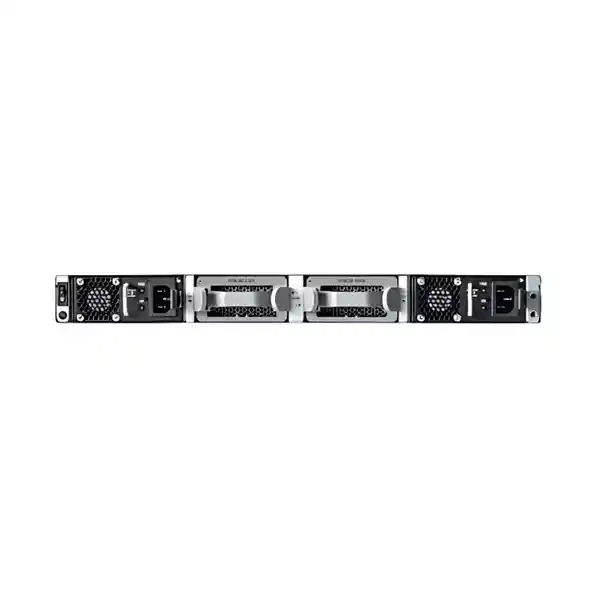
Cisco lists system power for the 4245 at 1380 W in the current hardware documentation and documents dual power supplies with 1+1 redundancy in the data sheet. Power input requirements vary by line voltage, and the appliance should be provisioned according to the official installation guide and local electrical design. For a resilient deployment, each PSU should connect to the appropriate independent PDU or UPS feed when the facility provides redundant power. The project team should not assume that two PSUs automatically create power-path diversity.
Operating temperature in Cisco documentation is 0 to 40 degrees Celsius for the 4245 under the standard specification. UAE deployments therefore depend on controlled indoor cooling and proper airflow. The outside climate is not the operating environment, but it increases the importance of reliable cooling, environmental monitoring and well-managed racks. A firewall positioned in a poorly ventilated wall cabinet or mixed-airflow rack can create avoidable thermal risk.
Cable density should be planned early. Eight fixed data ports, two management ports and two network modules can produce a dense front-panel cabling requirement, especially when redundant links and high-speed optics are used. Document cable type and length, label both ends, maintain bend radius for fiber and leave service loops that do not obstruct airflow. In a paired deployment, consistent port mapping between units reduces troubleshooting time during failover or hardware replacement.
Management connectivity deserves independent treatment. The appliance provides two 1/10/25G SFP28 management ports, and Cisco highlights dual management interfaces as a resilience feature. Decide whether management will use a dedicated out-of-band network, a production management VLAN or another protected path. The management design should allow administrators to reach the firewall during data-plane incidents, because losing both production traffic and administrative access at the same time makes recovery significantly harder.
For colocated environments, include remote-hands requirements in the implementation plan. Console access, smart-PDU access, management reachability, spare optics, documented patching and asset labels can turn a critical incident from an on-site emergency into a controlled remote recovery. These details are operationally small but disproportionately valuable for infrastructure that protects major network paths.
Migration from an existing Cisco firewall
A 4245 is often purchased as part of a migration rather than a greenfield deployment. Cisco provides migration tooling and current migration documentation for moving supported configurations between firewall platforms. The existence of a tool is helpful, but it should not be treated as evidence that every rule, object, VPN, NAT statement, routing feature or platform-specific behavior will transfer without review. Migration is an opportunity to remove obsolete objects and rationalize policy, not only to reproduce the old firewall line by line.
Begin with discovery. Export the existing configuration and document interface assignments, zones, routing, NAT, access rules, object groups, VPN tunnels, authentication, certificates, identity integrations, logging destinations, high-availability settings and management dependencies. Then classify each item as migrate, redesign, retire or validate. This prevents years of accumulated configuration from being copied into a new appliance without business justification.
Interface mapping is a frequent migration challenge because the new platform may use different physical port names, speeds or module layouts. The migration plan should map each old interface to a new 4245 port and verify the corresponding switch or carrier configuration. When link speed changes from 10G to 25G or 100G, the migration also involves optics, switch capabilities and potentially cabling. A logical firewall migration can therefore become a physical network change.
Policy conversion should be validated against application behavior. Rules that were broad enough to work on an older platform may not align with a modern application-aware security model. NAT order, object definitions and asymmetric routing are particularly important to test. VPN migrations require attention to encryption domains, IKE/IPSec parameters, certificates, peer coordination and remote maintenance windows.
A staged cutover is preferable where topology allows it. Build and license the new 4245, register it to the management system, load the migrated configuration, validate routing and policy in a controlled environment, connect non-production or limited traffic, then execute the final change with a documented rollback plan. The rollback should specify exactly what must be reconnected or restored and how long the business will tolerate troubleshooting before reverting.
FourTeck can include migration engineering in the UAE project scope when the buyer provides the current model, software version, configuration size, VPN count, topology and desired target design. That information is more useful for estimating effort than simply saying “replace old firewall with Cisco 4245.”
When the Cisco Secure Firewall 4245 is a strong fit
Large enterprise Internet edge
Organizations with very high Internet bandwidth, major SaaS use, substantial encrypted traffic and strict IPS requirements can use the 4245 as a high-capacity perimeter platform. The deciding factors are decryption volume, policy complexity and failure-state headroom rather than ISP circuit speed alone.
Data-center segmentation
The platform’s connection scale and high-speed interface choices suit environments where the firewall protects data-center zones or large application estates. East-west traffic often contains many short-lived sessions, so new-connections-per-second and inspection policy can matter more than simple bandwidth.
Service-provider security
Cisco specifically positions the 4245 for service providers handling high traffic volumes. Large session tables, high connection rates, VPN scale, optional Carrier protocol licensing and 100G-plus interfaces make it relevant where customer or service aggregation produces demanding traffic patterns.
Large VPN aggregation
With Cisco publishing up to 140 Gbps FTD IPSec VPN throughput and 30,000 maximum VPN peers, the 4245 can be evaluated for large site-to-site designs. Remote-access use additionally requires Secure Client licensing and authentication architecture.
Growth-focused 25G/100G environments
The fixed 25G-capable ports and optional high-speed network modules help buyers align firewall connectivity with modern data-center switching. This can be valuable where present traffic is lower but planned fabric speeds would otherwise force an early hardware replacement.
Consolidation with multi-instance requirements
Cisco documents up to 34 Threat Defense instances on the 4245. This can support organizational or service separation scenarios, provided the architecture accounts for resource allocation, management, failure domains and operational ownership rather than treating instances as free capacity.
When a different model may be the better purchase
The 4245 is a powerful platform, but it is not automatically the best recommendation for every firewall project. A smaller 4215 or 4225 may be more cost-efficient when the organization does not need the 4245’s session scale, connection rate, decryption capacity or high throughput. Selecting the largest chassis only for perceived future proofing can tie budget to unused capacity while also increasing subscription and support costs.
Within the 4200 family, Cisco publishes 65 Gbps Threat Defense firewall-plus-IPS throughput for the 4215 and 80 Gbps for the 4225, compared with 140 Gbps for the 4245 under the same data-sheet metric. The 4215 and 4225 also have lower session and new-connection ceilings. If the expected security workload sits comfortably below those limits with realistic growth and HA headroom, they deserve comparison.
A larger Cisco platform should be evaluated if the project’s decrypted traffic, cluster design, interface requirements or projected security throughput exceeds what a 4245 can safely support. The 45 Gbps TLS hardware-decryption figure is particularly important here. An organization expecting 70 Gbps of traffic to be decrypted and deeply inspected should not assume the 140 Gbps firewall-plus-IPS number solves the problem. The encryption workload can become the governing constraint.
There are also architectural cases where a different product category is appropriate. A smaller distributed-firewall design can sometimes reduce blast radius and east-west hairpinning compared with one very large central appliance. Cloud workloads may require virtual or cloud-native enforcement points. Branch offices may benefit from smaller platforms with different WAN and local-port characteristics. The correct recommendation follows the traffic and operational model, not the prestige of the highest model number.
4245 versus 4215 and 4225: a practical family comparison
| Decision metric | 4215 | 4225 | 4245 |
|---|---|---|---|
| FTD FW + AVC + IPS | 65 Gbps | 80 Gbps | 140 Gbps |
| Concurrent sessions with AVC | 15 million | 30 million | 60 million |
| New connections/sec with AVC | 350K | 600K | 800K |
| TLS hardware decryption | 20 Gbps | 30 Gbps | 45 Gbps |
| FTD IPSec VPN throughput | 45 Gbps | 80 Gbps | 140 Gbps |
| FTD multi-instance maximum | 10 | 15 | 34 |
The three models share the basic 1RU family architecture and interface strategy, so the comparison is predominantly about performance, scale and resulting commercial fit. The 4245 makes the strongest case when several high-capacity requirements converge. If only one metric is high, a design adjustment or lower model may still meet the project objective.
Procurement checklist for an accurate Dubai quotation
Cisco firewall quotes can look deceptively simple when they contain only a chassis line. In practice, the order may require a specific bundle or chassis PID, software image, subscription term, network modules, transceivers, accessories, support entitlement and high-availability quantity. Cisco’s ordering guide lists model-specific 4200 master-bundle and chassis part numbers, including FPR4245-BUN and separate 4245 ASA and NGFW chassis identifiers. The exact PID should be selected from the current Cisco ordering system because packaging can change.
The quote should also make clear whether the deployment is one appliance, two units for high availability or more devices for clustering. Cisco documents a two-unit 4200 Threat Defense HA bundle in its ordering guide, but the project still needs to confirm matching hardware and software components. If the customer already owns compatible licenses or management infrastructure, those entitlements should be validated rather than assumed reusable.
Traffic and growth
Provide current average and peak traffic, projected growth, expected encrypted percentage, east-west inspection volume and any unusually high connection-rate applications.
Security services
State whether the policy requires IPS, malware defense, URL categories, application visibility, TLS decryption, remote access, carrier protocols or other advanced functions.
Interfaces and optics
List port quantity, speed, fiber or copper medium, reach, switch-side interfaces, breakout needs and whether fail-to-wire functionality is required.
Availability target
Confirm single appliance, HA pair or cluster; maintenance expectations; acceptable failover behavior; redundant switching; carrier diversity and independent power feeds.
Management and support
Identify Firewall Management Center or cloud-delivered management requirements, Smart Account ownership, SIEM integration, support level, installation, migration and post-cutover assistance.
If these inputs are available, the quotation can distinguish required items from optional ones and reduce last-minute changes. It also makes competitor comparisons more meaningful because two firewall quotes that use the same chassis model can have very different subscription terms, optics, support coverage and implementation scope.
Implementation journey: from sizing to production
1. Discovery and capacity model
Collect current and forecast traffic, sessions, connections per second, encryption, VPN, zones, routes, applications and availability objectives. Use the same metrics to compare 4215, 4225, 4245 and any larger alternative so the model choice can be defended technically.
2. Architecture and bill of materials
Choose Threat Defense or ASA, management model, subscriptions, chassis quantity, network modules, optics, power, support and accessory requirements. Map every production interface and management path.
3. Staging
Rack or bench the appliance, confirm software version, register licensing, configure management, install baseline policy, validate optics and links, load migration content where applicable and document final physical port mapping.
4. Functional testing
Validate routing, NAT, access control, IPS behavior, decryption exceptions, VPN, logging, management reachability, failover and application functionality. Where performance is critical, test representative production traffic patterns rather than relying only on vendor lab figures.
5. Cutover and rollback readiness
Execute a controlled change plan with pre-checks, stakeholder contacts, clear decision points and a timed rollback. Preserve access to the previous configuration and network state until the new platform is stable.
6. Operational handover
Hand over backups, diagrams, license records, software versions, support details, administrator access, monitoring integration, upgrade guidance and an agreed process for policy changes and incident escalation.
UAE availability, supply and deployment planning
For Dubai and UAE projects, availability should be confirmed against the exact bill of materials rather than the base chassis name. A 4245 project can involve the chassis, subscription term, network modules, optics, power accessories, support and implementation services. One component with a longer lead time can govern the delivery schedule even when the main appliance is available.
FourTeck can prepare a UAE-focused quotation that separates hardware, software subscriptions, support and professional services. Buyers can also review broader infrastructure capabilities through FourTeck UAE, while organizations planning operational support, monitoring or broader IT assistance can use FourTeck IT Services UAE. For regional or multinational procurement context, FourTeck provides the global company presence.
When timing matters, provide the required delivery location, target cutover date and whether partial shipment is acceptable. A realistic schedule should include order processing, licensing, shipment, staging, migration preparation, change approval and testing, not only the physical delivery date.
Frequently asked buyer questions
Is the Cisco Secure Firewall 4245 a 140 Gbps or 180 Gbps firewall?
Both numbers appear in Cisco documentation, but they refer to different operating modes and test methods. Cisco’s Threat Defense data sheet lists 140 Gbps for Firewall + AVC and 140 Gbps for Firewall + AVC + IPS at its stated 1024-byte test profile. The ASA performance table lists up to 180 Gbps stateful inspection under an ideal 1500-byte UDP test and 100 Gbps under Cisco’s multiprotocol profile. Do not use the 180 Gbps ASA figure to size a Threat Defense deployment with advanced inspection.
Does the 4245 include IPS, malware and URL filtering automatically?
The hardware supports those functions when running Threat Defense, but Cisco licenses advanced services separately. Current Cisco documentation lists Essentials as required and identifies additional licenses for IPS, Malware Defense, URL Filtering, Cisco Secure Client and Carrier features. The quotation should therefore state which subscriptions are included and their term.
Can the 4245 use 100G or 400G interfaces?
Yes, Cisco documents optional network modules that include high-speed QSFP-class connectivity up to 400G. The exact supported module, optic, breakout and peer-device compatibility must be selected for the intended network. A high-speed physical interface does not increase the firewall’s security-processing capacity beyond the platform’s documented performance.
How many fixed data ports does it have?
Cisco documents eight fixed 1/10/25G SFP28 data ports. The 4200 chassis also provides two integrated 1/10/25G SFP28 management ports and two network-module slots for additional connectivity. The final usable port design depends on transceivers, modules, breakout and topology.
Is the Cisco Secure Firewall 4245 suitable for service providers?
Yes. Cisco specifically describes the 4245 as designed for service providers supporting high traffic volume. Its 60-million-session FTD capacity, 800K new connections per second with AVC, optional high-speed interfaces, VPN scale, multi-instance capability and optional Carrier protocol licensing are relevant to provider environments. The exact fit still depends on traffic profile, subscriber behavior and service architecture.
Can it be deployed as a high-availability pair?
Yes. Cisco documents high-availability support for the 4200 family, including active/standby for Threat Defense, and its ordering guide includes a two-unit Threat Defense HA bundle for the series. Both members should be sized so one unit can safely carry the required workload during failure or maintenance.
Does it support clustering?
Cisco documents clustering up to 16 chassis for Secure Firewall 4200. Clustering is appropriate when the architecture needs more scale or resilience than a conventional pair, but it introduces additional design and operational considerations. The organization should compare the complexity of clustering with the capacity and simplicity of an HA pair.
What does the 45 Gbps TLS decryption figure mean?
It is Cisco’s published hardware-decryption performance under a specified test. It demonstrates that encrypted inspection is a different workload from ordinary firewall forwarding. If the security policy plans to decrypt a large percentage of traffic, the decrypted volume should be sized separately from the 140 Gbps firewall-plus-IPS figure.
Can the 4245 replace an older Cisco ASA or Firepower appliance?
Potentially, yes, but the migration should be validated against the exact source model, software version and configuration. Cisco provides migration guidance for supported platforms. Interfaces, NAT, routing, VPN, policy objects, licensing and management workflows all need review. A direct model replacement based only on throughput can miss feature or operational dependencies.
How should I choose between 4215, 4225 and 4245?
Use the highest governing requirement after inspection is enabled. Compare expected firewall-plus-IPS throughput, encrypted-traffic volume, sessions, connection rate, VPN throughput, interface needs, multi-instance requirements and failover headroom. If the 4215 or 4225 comfortably meets all of those with growth, it may be the better commercial choice. The 4245 is justified when the workload needs its additional scale.
What information is needed for a FourTeck quote?
Provide quantity, deployment location, target software image, current and projected traffic, encrypted percentage, VPN requirements, interface speeds and media, security services, preferred subscription term, HA or cluster requirement, management platform, existing Cisco Smart Account details, migration source model and whether installation or ongoing support is required.
Are optics included with the firewall?
Do not assume that every required transceiver is included. Optics are selected according to port speed, module, fiber type, reach and peer-device compatibility. The quotation should list every required optic explicitly so the delivered hardware can be cabled without a second procurement cycle.
Decision recap before you approve a 4245 order
Model fit
Use the 4245 when its 140 Gbps FTD inspection capacity, 60-million sessions, 800K connection rate, 45 Gbps TLS decryption, VPN scale or multi-instance headroom are justified by the workload. Compare smaller models when they are sufficient.
Licensing
Confirm Essentials and every required advanced Threat Defense subscription. Do not assume IPS, Malware Defense, URL Filtering, Secure Client or Carrier inspection is included merely because the chassis supports it.
Interfaces
Map fixed SFP28 ports and optional module ports to real switch and carrier connections. Include the exact optics, reach and breakout design in the bill of materials.
Resilience
Decide between single appliance, HA pair and cluster. Size the failure state and make the surrounding network, power and management paths resilient as well.
Implementation
Allow time for staging, licensing, software validation, configuration, migration, functional testing, failover testing, cutover and operational handover. Delivery date alone is not a production-readiness date.
Lifecycle
Plan support entitlement, software upgrades, subscription renewals, field-notice review, configuration backup, logging retention and ownership of day-two policy changes.
What FourTeck needs from you for a precise quotation
A technically complete quote can usually be prepared faster when the following information is provided in the first request. Not every item is mandatory, but each one reduces assumptions and helps distinguish required components from optional upgrades.
- Required quantity and whether the units form an HA pair or cluster.
- Dubai or other UAE delivery and installation location.
- Threat Defense or ASA software preference.
- Current firewall model and software version if this is a migration.
- Average and peak traffic, plus expected three-to-five-year growth.
- Percentage of traffic expected to undergo TLS decryption.
- Site-to-site and remote-access VPN requirements.
- Required IPS, Malware Defense, URL Filtering, Secure Client or Carrier features.
- Port speeds, media type, optic reach and neighboring switch models.
- Need for 1G copper, 10/25G fiber, 40/100/200/400G or fail-to-wire modules.
- Preferred license term and support coverage.
- Firewall Management Center or cloud-delivered management requirements.
- SIEM, SOC, identity, MFA or certificate integrations.
- Installation, migration, testing and post-cutover support scope.
Plan the Cisco Secure Firewall 4245 around your real traffic, not a headline number
A strong 4245 deployment starts with the correct operating mode, inspection workload, interface architecture, license set and resilience plan. FourTeck can turn those requirements into a Dubai/UAE bill of materials and implementation scope, including hardware, subscriptions, network modules, optics, high availability, management, migration and support.

Reviews
There are no reviews yet.