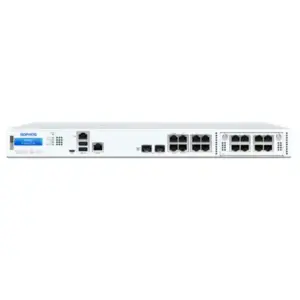
MikroTik hEX E50UG in Dubai, UAE
A compact Gigabit Ethernet router for organisations that need capable policy control, VLAN routing, VPN options and flexible network management without paying for integrated wireless hardware they do not require.
Copper wired connectivity
950 MHz platform
Improved refreshed hardware
Quiet indoor operation
No integrated Wi-Fi
Direct answer: what is the MikroTik hEX?
The MikroTik hEX E50UG is a small, wired, five-port Gigabit Ethernet router running RouterOS v7. It is mainly used to control internet access, route traffic between local networks, apply firewall policies, create VLANs, establish supported VPN connections, shape bandwidth and provide structured management at a branch, small office, retail outlet, lab or technically managed residence. Buyers who already use separate wireless access points, or who need no Wi-Fi at all, should consider it. Before proceeding, confirm the exact E50UG model code, WAN speed, expected traffic load, number of physical ports, VLAN design, VPN method, power source and whether configuration assistance is required.
What it does
The hEX acts as the traffic-control point between an internet service and local wired or wireless infrastructure. Its five Gigabit ports can be assigned as WAN, LAN, trunk, management or dedicated network interfaces. RouterOS provides the tools needed to build firewall rules, network address translation, DHCP services, static or dynamic routing, VLAN segmentation, queues, monitoring and supported tunnel configurations.
Its strength is flexibility. The same physical device can be configured as a conventional edge router, a small branch gateway, a lab router, a VLAN-aware control point or a specialised appliance within a larger network. Actual performance depends heavily on the enabled features, packet sizes, firewall complexity, encryption method and configuration quality.
Who it suits
The E50UG may suit small businesses, independent branches, shops, restaurants, clinics, professional offices, training rooms, property networks, test environments and managed home offices. It is particularly relevant where a separate access-point system already provides Wi-Fi and the buyer wants a dedicated router with deeper controls than a basic consumer gateway.
It is less suitable when the project needs integrated wireless, more than five copper ports without an additional switch, SFP fibre connectivity, PoE output, rack mounting, high-density VPN termination or predictable high throughput under complex security policies. In those cases, another MikroTik platform or a different security appliance may be more appropriate.
Business challenges the hEX can help address
Unstructured internet sharing
A simple modem may provide connectivity but limited control. The hEX can introduce defined LAN addressing, DHCP policies, firewall rules and managed routing between the provider handoff and internal systems.
Mixed business traffic
Voice, office applications, guest access, cameras and cloud services may compete for bandwidth. RouterOS queues and policy tools can help administrators apply an intentional traffic approach, subject to correct sizing and configuration.
Flat network exposure
Putting every endpoint on one LAN can create operational and security concerns. VLAN-aware routing and firewall policy can separate staff, guest, management, IoT or surveillance traffic when compatible switches and access points are used.
Limited remote administration
RouterOS offers multiple management methods and monitoring options. Secure access must be deliberately configured, unnecessary services disabled and software maintained rather than exposing default management directly to the internet.
Core capabilities at a glance
Assign ports according to WAN, LAN, VLAN trunk, management or segment requirements.
Build routing, firewall, NAT, DHCP, queue and monitoring functions appropriate to the deployment.
The platform supports IPsec hardware acceleration; achieved results remain configuration and workload dependent.
A fanless enclosure can fit small indoor network locations where rack equipment is unnecessary.
MikroTik hEX E50UG fit matrix
| Requirement | Suitable when | Confirm before ordering |
|---|---|---|
| Small-office edge routing | Five Gigabit ports and RouterOS functions meet the planned topology. | Internet speed, concurrent sessions, firewall complexity and growth. |
| VLAN segmentation | Managed switches and access points support the proposed VLAN design. | Trunk ports, tagged networks, DHCP scopes and inter-VLAN policy. |
| VPN connectivity | The selected RouterOS VPN method matches endpoint and performance needs. | Protocol, encryption, users, traffic volume, public IP and peer compatibility. |
| Dual-WAN policy | A suitable failover or policy-routing design is configured. | Provider handoffs, health checks, NAT behaviour and failover expectations. |
| Wireless network gateway | Separate access points will provide Wi-Fi. | AP power, switching, VLAN integration and central management requirements. |
Verified technical information
| Brand | MikroTik |
|---|---|
| Product | hEX refresh |
| Product code | E50UG |
| Architecture | ARM 32-bit |
| CPU | EN7562CT, 2 cores, 2 threads, 950 MHz nominal frequency |
| Memory | 512 MB RAM |
| Storage | 128 MB NAND |
| Ethernet | 5 × 10/100/1000 Ethernet ports |
| USB | 1 × USB Type-A, USB 2.0 |
| Operating system | RouterOS v7 |
| RouterOS licence | Level 4 |
| Power inputs | DC jack and passive PoE-in; supported voltage depends on the current official specification and supplied power arrangement |
| Cooling | Passive |
| Dimensions | 113 × 89 × 28 mm |
| Wireless | Not integrated |
| SFP port | Not included |
| PoE output | Not included |
| Availability | Contact FourTeck for current UAE model, quantity and lead-time confirmation |
Specifications should be checked against the latest manufacturer documentation at quotation time. RouterOS features, performance and compatibility can change with software versions and configuration choices.
Compatibility and dependency notice
The hEX is not a plug-and-forget substitute for network design. Firewall effectiveness depends on the rule set, management exposure, software maintenance, credential practice and surrounding architecture. VPN performance depends on the selected protocol, encryption, packet size and concurrent traffic. VLAN deployment depends on compatible switches, access points and endpoint design. USB functions depend on supported devices and RouterOS behaviour. Multi-WAN resilience depends on correct health checks and failover logic. Before purchase, document the complete topology rather than evaluating the router in isolation.
A practical purchase and deployment journey
Define the network role
State whether the E50UG will be the primary internet edge, a branch router, a VLAN gateway, a VPN endpoint, a lab device or part of a multi-router design.
Confirm capacity and interfaces
Review internet bandwidth, expected users, traffic types, five-port allocation, switch requirements, WAN handoff and whether fibre, PoE output or integrated wireless is needed.
Design the RouterOS configuration
Prepare addressing, DHCP, VLAN, firewall, NAT, DNS, VPN, routing, queue, monitoring, backup and administrator-access requirements before the device reaches site.
Stage and test
Update RouterOS through an approved change process, secure management, apply configuration, test provider connectivity, verify VLAN isolation and validate failover or tunnels where included.
Document and maintain
Record port roles, IP addressing, credentials process, configuration backups, software version, recovery method and responsibility for ongoing monitoring and updates.
Routing and segmentation control
A small office may begin with one local network and later add guest access, IP phones, cameras or building devices. The hEX can route between defined subnets and enforce rules that determine which networks may communicate. This is useful when the switching and wireless layer supports VLAN tagging and the design is documented consistently.
Segmentation should be based on business need, not merely on the number of available VLAN IDs. Administrators must decide which services each segment needs, where DNS and DHCP will operate, which devices may reach management interfaces and how logs will be reviewed. Complex inter-VLAN filtering adds processing work, so performance must be tested using the intended policy.
For businesses replacing a consumer router, this capability can provide considerably more control, but it also requires competent configuration. FourTeck can help translate the required user groups and devices into a practical topology and configuration scope.
VPN and branch connectivity
RouterOS supports several tunnelling and VPN technologies. The right choice depends on the remote peer, user devices, security policy, public addressing, encryption requirement and expected throughput. A tunnel that is suitable for occasional administration may not be the right option for continuous branch traffic or many remote users.
The E50UG includes hardware support that can accelerate appropriate IPsec workloads, but buyers should not interpret a theoretical figure as a guaranteed business result. Packet size, rules, concurrent services and encryption settings all affect performance. The internet connection at each end and the quality of the provider path also matter.
Before quoting, provide the number of sites or users, remote endpoint type, required applications, authentication expectations and whether failover connectivity is part of the design. This allows the router to be assessed against real traffic rather than a generic VPN requirement.
Management and operational visibility
RouterOS provides detailed control, but operational quality depends on how that control is managed. A good deployment limits administrative services, uses strong credentials, restricts management sources, maintains backups and records configuration changes. Remote access should use a protected method rather than exposing administration interfaces indiscriminately.
Monitoring can include interface status, traffic counters, logs, resource use and service checks. External systems may be integrated where supported, but the monitoring design should match the organisation’s capability to act on alerts. Collecting data without ownership or response procedures adds little value.
Businesses should decide who owns RouterOS updates, configuration review, backup testing and incident response. FourTeck can include staging, baseline hardening, configuration documentation or support coordination in the quotation when these activities are required.
Ideal environments and use cases
Small office gateway
Connect a provider handoff to a managed switch and separate access points while applying local firewall, DHCP and routing policy.
Retail or restaurant branch
Separate point-of-sale, staff, guest and operational devices, subject to a correctly designed VLAN and security policy.
Technical lab
Create routing, tunnel, VLAN, firewall and protocol test scenarios in a compact platform suited to learning or controlled development.
Managed residence
Provide a dedicated wired gateway for separate Wi-Fi access points, home-office systems, media and connected-device networks.
Branch VPN endpoint
Connect a modest remote location to another supported gateway after tunnel type, traffic profile and resilience needs are assessed.
Special-purpose router
Use the device for policy routing, monitoring, service isolation or another defined network role within a wider architecture.
Integration and operational considerations
The router should be selected with the rest of the network in mind. A five-port router can work efficiently with a managed switch, but the switch must provide enough access ports, uplink capacity, VLAN support and PoE budget for connected access points, phones or cameras. Because the E50UG does not provide PoE output, powered devices generally need a PoE switch, injector or their own approved adapters.
For Wi-Fi, choose access points based on coverage, client density, radio environment, roaming needs and management preference. The hEX handles routing but does not solve wireless design. For fibre handoffs, confirm whether the service provider presents copper Ethernet through an optical network terminal. If a direct SFP connection is mandatory, the E50UG is not the correct physical platform.
Power and installation location also matter. Use the approved input range and compatible power method, provide ventilation even though cooling is passive, avoid unsuitable outdoor or dusty locations, and protect the network equipment through appropriate electrical design. Where continuity is important, discuss UPS support, dual-WAN architecture and spare-device strategy.
Security responsibilities continue after installation. RouterOS should be updated through a controlled process, unused services disabled, management restricted, backups protected and logs reviewed. No router can compensate for weak credentials, unmanaged endpoints or an undocumented network.
Questions to resolve before ordering
State the product code because older RB750Gr3 stock and listings may also use the hEX name.
Share WAN speed, users, applications, VPN traffic and firewall complexity rather than only the provider’s headline bandwidth.
Map WAN, LAN, trunks and management connections, then include a suitable managed switch when more ports are needed.
The hEX has no integrated wireless. Separate access points and their power arrangement must be included.
Confirm peer compatibility, authentication, encryption, remote-user count and expected tunnel throughput.
Define responsibility for staging, cutover, documentation, updates, backup, monitoring and future changes.
Procurement checklist
☐ Exact E50UG product code
☐ Required quantity and destination
☐ Internet provider handoff and speed
☐ Number and role of Ethernet ports
☐ Managed-switch and VLAN requirements
☐ Separate wireless access-point plan
☐ VPN protocol and remote endpoints
☐ Firewall and traffic-control scope
☐ Multi-WAN or failover requirement
☐ Power input and UPS arrangement
☐ RouterOS staging and hardening
☐ Installation, testing and cutover scope
☐ Documentation and administrator handover
☐ Warranty and current availability confirmation
How FourTeck can assist
FourTeck can help a buyer turn a product request into a complete requirement. Assistance may include confirming whether E50UG is the intended generation, reviewing the port layout, checking whether a switch or access point is also required, defining the RouterOS configuration scope and coordinating a quotation. Where requested, the project can consider VLAN planning, firewall policy, WAN addressing, DHCP, VPN, failover, traffic control, staging, installation and handover as separately defined activities.
An accurate quotation normally requires the destination, quantity, internet speed, provider handoff, number of users, key applications, VLANs, VPN endpoints, required accessories and expected service scope. Compatibility should be evaluated before purchase when the router will connect to third-party gateways, managed switches, authentication systems or monitoring platforms.
Visit the FourTeck product catalogue for related infrastructure, review available network services, or send your requirement to FourTeck for model and scope confirmation.
UAE availability and support guidance
Contact FourTeck to confirm current MikroTik hEX E50UG availability in the UAE. Supply conditions may depend on the exact model, quantity, distributor position, vendor lead time and destination. The quotation should name E50UG clearly so it is not confused with the older RB750Gr3 hardware generation or with hEX S products that include different interfaces.
Delivery and project coordination can be discussed after the requirement is confirmed. Installation and configuration are not assumed to be included with hardware supply; they should appear in the quotation when required. Buyers in Dubai, Abu Dhabi, Sharjah and Ajman can provide the site location, quantity, desired network role and implementation expectations for coordinated guidance. For broader business technology enquiries, the FourTeck UAE website provides additional company and service information.
GCC Availability
FourTeck can assist organisations planning MikroTik hEX requirements across GCC markets by reviewing the destination, model code, quantity, network purpose and required configuration scope. A branch rollout in Saudi Arabia, Kuwait, Qatar, Bahrain or Oman may involve different provider handoffs, power arrangements, procurement processes and implementation responsibilities, even when the same E50UG router is proposed. Product availability, licensing conditions, delivery schedules, service visits and vendor lead times can vary by country and requirement. Buyers should provide the destination country, required quantity, WAN service details, VPN or VLAN needs, deployment location and expected project schedule. FourTeck can then help coordinate model confirmation, quotation planning, accessory requirements and an appropriate configuration or installation scope. For Kuwait-related technology enquiries, buyers may also review FourTeck Kuwait resources. No local inventory, customs outcome or fixed delivery date should be assumed until confirmed in writing.
Africa Availability
Organisations evaluating the MikroTik hEX for African branches, service locations, laboratories or managed networks can ask FourTeck for regional procurement and deployment guidance. The correct design depends on more than the router model. Destination country, quantity, internet handoff, power stability, switching requirements, VPN architecture, local technical resources and implementation scope should all be reviewed. Availability and fulfilment can vary according to vendor lead time, shipping arrangements, product generation, regional requirements and local project conditions. Buyers should share the exact E50UG requirement, preferred deployment schedule, configuration expectations and any need for remote or on-site coordination. FourTeck resources for Africa technology projects, Kenya enquiries and Uganda enquiries can support requirement discussions. Local stock, customs clearance, delivery dates and country-wide service coverage must be confirmed for each request.
Related options and services
MikroTik hEX S
Consider an hEX S model when an SFP-family uplink or PoE-out capability is required. Confirm the exact current generation and specification.
Managed Gigabit switch
Add a VLAN-capable switch when the project needs more access ports, PoE for endpoints or a structured distribution layer.
Business wireless access points
Use separately selected access points for Wi-Fi coverage, capacity and roaming. The E50UG itself has no wireless radio.
RouterOS configuration support
Define firewall, VLAN, DHCP, routing, VPN, queue and monitoring tasks as a documented service scope.
Network assessment
Review topology, bandwidth, user groups, endpoint types and resilience expectations before selecting the final bill of materials.
Installation and handover
Plan staging, physical connection, testing, cutover, backup and administrator documentation as explicit project deliverables.
Why businesses contact FourTeck
A router purchase often raises practical questions that a model name alone does not answer. Businesses contact FourTeck for requirement clarification, model-generation confirmation, bill-of-material guidance, compatibility review, quotation coordination and deployment planning. This can reduce the risk of ordering a wired router when integrated wireless was expected, selecting five ports when the topology needs more, or overlooking a managed switch and PoE power for access points.
FourTeck can also help define which tasks belong in the project quotation. Hardware supply, RouterOS configuration, site installation, migration, testing, documentation and ongoing support are different work items and should be agreed clearly. The objective is a suitable, supportable network design rather than an unsupported promise based on a single specification.
Frequently asked questions
Is the MikroTik hEX E50UG the same as RB750Gr3?
No. Both products use the hEX name, but E50UG is the refreshed hardware platform with a different CPU architecture, more memory and more storage. Put the exact model code on the quotation and purchase order.
Does the hEX E50UG include Wi-Fi?
No. It is a wired router. A wireless network requires separate access points, suitable switching and an appropriate power arrangement.
How many Ethernet ports does it have?
It has five 10/100/1000 Ethernet ports. Their roles are configured in RouterOS, so buyers should map WAN, LAN and trunk connections before ordering.
Can it be used for VLANs?
Yes, RouterOS supports VLAN configurations. The connected switches and access points must also support the intended design, and firewall rules should define permitted inter-VLAN communication.
Can the hEX provide VPN access?
RouterOS supports multiple VPN and tunnelling methods. Suitability and performance depend on the protocol, encryption, users, peers, traffic profile and configuration.
Does it have an SFP port?
No. Buyers needing a direct SFP-family connection should consider another model and confirm transceiver and provider compatibility.
Does it power access points through PoE?
The E50UG supports passive PoE input but does not provide PoE output. Access points normally require a PoE switch, injector or approved adapter.
Is RouterOS configuration included?
Configuration should not be assumed. State the required firewall, VLAN, VPN, routing, failover, queue and documentation scope so it can be included separately in the quotation.
How can I confirm Dubai availability?
Send FourTeck the E50UG code, required quantity, destination and preferred timeline. Availability and lead time must be confirmed for the specific request.
What details are needed for a quotation?
Provide quantity, site, WAN speed, users, port layout, VLANs, VPN needs, accessories, configuration requirements, installation scope and expected schedule.
Confirm the right MikroTik hEX configuration
Share your site, quantity, WAN speed, port plan, VLAN and VPN requirements. FourTeck can help confirm E50UG suitability, current UAE availability and the required supply or configuration scope.