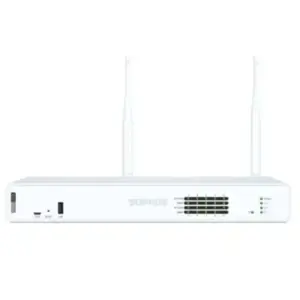
B38 and B39 TDD
Dual carrier, 2×2 MIMO
Gigabit Ethernet and SFP
Outdoor, qualified installation
Direct answer for buyers
The MikroTik Intercell 10 B38+B39 is an outdoor TDD-LTE dual-carrier base station built for band 38 and band 39 networks. Its main role is to provide the radio access portion of a private or operator LTE deployment where these frequencies are permitted and correctly planned. It is most relevant to telecom operators, industrial network owners, utilities, transport projects, integrators and organisations with an experienced cellular engineering team. Before proceeding, a buyer should confirm spectrum rights, the exact frequency plan, channel bandwidth, antenna system, backhaul, EPC or core arrangement, power source, mounting structure, environmental exposure, licensing obligations and local regulatory approval.
What it does
The unit creates LTE radio cells for compatible user equipment operating on the configured TDD frequencies. It supports two carriers, each with 2×2 MIMO, and connects to the wider network through IP backhaul. In a complete architecture, it works alongside the necessary management, gateway, subscriber, routing, security and service components selected for the project. It is not a consumer router and should not be treated as a simple plug-in broadband device.
Who it suits
This model is suited to technically managed environments where LTE coverage must be engineered rather than merely extended. Typical buyers include wireless internet service providers, private mobile network planners, oil and gas operators, ports, logistics sites, mines, manufacturing plants, utilities, campuses and specialised public infrastructure projects. Organisations without radio-planning expertise should include professional design, configuration and commissioning in the project scope.
Business challenges this platform can help address
Controlled wide-area wireless coverage
Industrial and campus environments sometimes need greater range, mobility support and device management than ordinary Wi-Fi can provide. A correctly designed LTE cell can support moving or distributed endpoints while maintaining centrally planned radio coverage.
Capacity in specialised spectrum
Where band 38 or band 39 spectrum is lawfully available, dual-carrier operation can provide additional design flexibility. Capacity still depends on spectrum width, radio conditions, scheduler behaviour, user equipment, interference and the complete network architecture.
IP-based transport integration
Ethernet and optical SFP backhaul options allow the base station to connect into a planned IP transport network. Buyers must still validate VLANs, addressing, MTU, latency, timing, redundancy, security and upstream capacity.
Outdoor infrastructure deployment
The enclosure is designed for outdoor use and can be mounted on a wall or mast. Proper load assessment, grounding, lightning protection, cable routing, weather sealing and safe access remain essential parts of the installation.
Core capabilities at a glance
Designed for simultaneous operation across bands 38 and 39, subject to the approved radio plan.
Uses two transmit and receive paths per LTE cell when paired with a suitable antenna system.
Maximum output is specified at 40 dBm per antenna, requiring careful engineering and compliance review.
Supports 5, 10, 15 and 20 MHz operation, depending on spectrum and configuration.
Provides one Gigabit Ethernet interface and one SFP interface for IP transport.
IP66-rated mounting design with wall and pole accessories supplied for qualified installation.
Product-fit decision matrix
| Requirement | Suitable when | Confirm before ordering |
|---|---|---|
| Private or operator LTE | A planned LTE radio access layer is required. | Core-network design, subscriber management and legal authority. |
| Bands 38 and 39 | The project has lawful access to the relevant TDD spectrum. | Exact EARFCN, bandwidth, regional limits and approvals. |
| Outdoor coverage | A mast, wall or suitable support structure is available. | Wind loading, access, grounding, cable runs and weather exposure. |
| High user count | Traffic engineering supports the intended subscriber profile. | Active users, traffic mix, device capability and service levels. |
| Optical backhaul | Fibre transport is preferred or required at the site. | SFP compatibility, fibre type, distance and upstream design. |
Verified technical information
| Brand | MikroTik |
|---|---|
| Product name | Intercell 10 B38+B39 |
| Product code | P02003-B38B39-10W |
| Product type | Outdoor dual-carrier TDD-LTE base station |
| Frequency bands | B38: 2570–2620 MHz; B39: 1880–1920 MHz |
| Channel bandwidth | 5, 10, 15 or 20 MHz |
| MIMO | 2×2 per carrier |
| Maximum output | 40 ±1 dBm per antenna |
| Peak rate per carrier at 20 MHz | Downlink 140 Mbps; uplink 30 Mbps under specified modulation and subframe conditions |
| Peak carrier aggregation rate at 20 MHz | Downlink 280 Mbps; uplink 60 Mbps under specified conditions |
| User capacity | Official product page states up to 2 × 192 RRC-connected users and 2 × 96 active users; practical capacity is deployment dependent |
| Backhaul interfaces | 1 × RJ45 Gigabit Ethernet and 1 × optical SFP |
| Synchronisation | GPS, IEEE 1588v2 and network listening |
| Power input | 48 V DC; power unit must be planned separately |
| Maximum power consumption | Up to 200 W |
| Outdoor rating | IP66 |
| Tested ambient temperature | -40°C to +55°C |
| Mounting | Wall or pole; supported pole diameter 50–120 mm |
| Weight | Approximately 25 kg |
| Software | Intercell HeNB software; RouterOS is not supported |
| Availability | Contact FourTeck to confirm current UAE options, lead time and project scope |
Configuration, compatibility and regulatory dependencies
This is a specialised radio product whose successful use depends on more than the hardware specification. Buyers must confirm that the selected frequencies may legally be used at the intended site. Spectrum assignment, EIRP limits, antenna gain, tower approval, installation safety, electromagnetic compliance and operator obligations may apply. The base station must also be incorporated into a complete LTE architecture, with the relevant EPC or core functions, subscriber credentials, IP transport, management platform, routing, security, monitoring and service policies.
The official documentation describes web-based configuration and advises that setup be carried out by a qualified person. The unit does not run RouterOS, so organisations familiar with MikroTik routing products should not assume the same administration model. Antenna type, feeder loss, connector selection, MIMO spacing, azimuth, downtilt and RF exposure calculations must be engineered for the site. Likewise, SFP selection, fibre type, VLAN design, timing source, MTU, network addressing and upstream resilience should be validated before purchase.
A practical purchase and deployment journey
Define the service objective
Document the coverage area, mobility requirement, device types, service priorities, expected users and target applications. A telemetry network, workforce broadband service and public-access network have very different design needs.
Confirm spectrum and compliance
Verify the permitted band, channel width, transmit conditions and authority requirements. Do not order the radio solely because the frequency appears technically suitable.
Complete the RF design
Use site surveys and propagation modelling to determine location, antenna pattern, height, feeder arrangement, expected signal levels, interference and handover strategy.
Plan core and backhaul
Confirm how the cell connects to the EPC or core, management environment and enterprise network. Include addressing, security, QoS, timing, monitoring and resilience.
Build the bill of materials
Include the base station, approved power solution, antennas, RF jumpers, surge protection, grounding materials, fibre modules, mounting hardware, cables and any required services.
Install, test and document
Qualified engineers should mount, ground, power, configure and commission the unit. Acceptance testing should cover RF status, connectivity, user registration, throughput, mobility, alarms and recovery procedures.
Dual-carrier capacity with realistic engineering limits
The attraction of the Intercell 10 B38+B39 is its ability to provide two LTE carriers in one outdoor platform. The official specification lists peak data rates for each carrier and aggregated peak figures under defined modulation and subframe conditions. Those numbers are useful for understanding the theoretical platform ceiling, but they should not be used as guaranteed user throughput. Real performance is shaped by channel width, TDD uplink-downlink configuration, radio signal quality, interference, antenna design, scheduler load, user-equipment category, protocol overhead, backhaul capacity and the number of active sessions.
A responsible design therefore starts with an application profile rather than a peak-speed target. Industrial telemetry may need modest throughput but strong availability and predictable latency. Video or mobile workforce applications may create bursty downlink demand. Vehicle connectivity may add mobility and handover concerns. Engineers should model busy-hour traffic, concurrent devices and cell-edge conditions, then decide whether one or both carriers are needed and how spectrum should be allocated. Capacity planning should also include the upstream network, because a powerful radio cell cannot compensate for constrained backhaul, oversubscribed routing, weak timing or an under-sized core.
Outdoor radio design, antenna selection and installation discipline
The base station is designed for outdoor operation, but that does not make every outdoor location suitable. At approximately 25 kg, it requires a structurally appropriate wall or pole, safe lifting procedures and secure hardware. The official manual specifies installation with cable feeds facing downward and supports pole diameters from 50 to 120 mm. A site survey should confirm wind exposure, corrosion risk, lightning environment, service access, cable routing, grounding potential and separation from other antennas.
Antenna selection is central to coverage. The unit provides multiple RF connectors and supports 2×2 MIMO per cell, so the antenna system must be matched to the required band, polarisation, gain and coverage shape. Directional sectors may suit a corridor, yard, road or perimeter, while wider patterns may be more appropriate for compact campuses. Feeder loss and connector loss must be included in the link budget, and maximum permitted radiated power must be respected. Mounting height, mechanical downtilt and electrical downtilt affect both useful coverage and interference. These decisions should be made by a radio engineer, not by trial and error after installation.
Power and lightning protection deserve equal attention. The unit requires 48 V DC and can draw up to 200 W under maximum load. The supplied cable is not the same as a complete site power design. Buyers should determine whether a regulated DC supply, battery backup, rectifier, surge protection or remote power monitoring is required. Proper grounding of the mast, enclosure and cable protection is essential. Where fibre backhaul is available, it may reduce conductive paths between the radio site and network room, but fibre equipment and power infrastructure still need protection and environmental planning.
Management, backhaul and operational control
The Intercell platform is configured through a web interface and uses Intercell HeNB software. This is a crucial buying point because it differs from the RouterOS experience associated with many MikroTik products. Operational teams should review administrator access, credential handling, management addressing, encrypted access, change control, firmware procedures, backup methods, alarm visibility and integration with the broader network-management environment.
The official documentation identifies an SFP interface for WAN use and an Ethernet interface for LAN or maintenance functions. The project design should confirm which interface carries production backhaul, the required optical module, fibre reach, duplex type and compatibility. VLAN tagging, QoS, IP addressing, DNS, NTP, MTU and firewall policy must be defined. Timing is particularly important in TDD deployments; the platform supports GPS, IEEE 1588v2 and network listening. The selected method should be validated against site conditions and the rest of the network.
Security architecture should cover both management and subscriber traffic. The base station must not be placed on an untrusted network without access controls. Management interfaces should be restricted, default credentials changed, and remote access governed by the organisation’s security policy. Logging should be retained where practical, and operational staff should know how to identify cell-state problems, backhaul failures, timing faults, registration issues and unusual traffic. FourTeck can help scope network integration, but the exact deliverables should be defined in the quotation.
Ideal business environments and use cases
Industrial campuses
Factories, warehouses and processing sites may use private LTE for mobile terminals, scanners, cameras, sensors or operational communications where coverage and mobility must be centrally engineered.
Utilities and remote infrastructure
Power, water and energy operators may evaluate LTE for telemetry, maintenance teams and distributed assets. Frequency authority, site power, environmental hardening and backhaul resilience are key.
Ports and logistics yards
Large outdoor zones can require connectivity for vehicles, handheld terminals and operational systems. The RF design must account for containers, cranes, buildings, traffic and changing obstructions.
Transport corridors
Road, rail or fleet projects may need planned mobility and coverage. A single cell may not cover the full route, so handover, overlap and multi-site synchronisation should be studied.
Wireless service providers
Operators may use the platform to extend or create service in supported bands. Subscriber equipment, lawful spectrum, billing, customer support and network-scale management must be included.
Temporary project networks
Construction, events or emergency operations may benefit from a deployable LTE layer, provided spectrum, mounting, power, backhaul and safe commissioning are available for the planned period.
Integration and operational considerations
A base station is only one part of an LTE service. The final system may require an EPC or core, subscriber database, SIM provisioning, DNS, DHCP or IP address allocation, routing, firewalling, traffic policies, monitoring, authentication, lawful controls and application integration. The correct architecture depends on whether the network is isolated, enterprise-connected, internet-facing, operator-managed or shared across sites.
User equipment must support the selected band and channel configuration. A device that supports LTE generally may not support band 38 or band 39 in the required regional variant. Antenna performance and transmit capability of the endpoint also affect coverage. Before rollout, test representative routers, modems, handhelds, sensors and vehicle terminals under real conditions. Confirm SIM profiles, APN settings, roaming behaviour, IP assignment and failover logic.
Operational ownership should be assigned before commissioning. Decide who monitors alarms, changes radio parameters, manages subscriber credentials, renews any dependent services, handles firmware, replaces failed parts and coordinates site access. A clear responsibility matrix avoids a technically successful installation becoming difficult to support after handover.
Buyer questions to resolve before ordering
Which exact spectrum will be used?
Confirm band, EARFCN, channel width, permitted output and authority conditions for the destination site.
What coverage outcome is required?
Provide maps, site coordinates, antenna heights, obstruction details and target signal levels.
How many users will be active?
Separate registered devices from simultaneous traffic users and define the application mix.
What core network is planned?
Identify EPC, subscriber management, gateway, IP addressing and security architecture.
Which antenna system is needed?
Confirm gain, pattern, connectors, MIMO arrangement, mounting and feeder length.
How will the site be powered?
Plan 48 V DC supply, capacity, backup, surge protection and remote power monitoring.
What backhaul is available?
Choose copper or fibre and define capacity, latency, redundancy, SFP type and VLAN design.
What support scope is expected?
Clarify whether the quotation should include design, installation, configuration, testing, documentation or ongoing assistance.
Procurement checklist
☐ Confirm product code P02003-B38B39-10W
☐ State the required quantity and destination
☐ Verify lawful use of band 38 and band 39
☐ Define channel width and radio plan
☐ Confirm target coverage and active-user profile
☐ Select compatible external antennas and RF cables
☐ Confirm 48 V DC power supply and backup design
☐ Select Ethernet or SFP backhaul and optical modules
☐ Confirm EPC or core-network architecture
☐ Review timing and synchronisation method
☐ Assess wall or pole structure and site access
☐ Include grounding and lightning protection
☐ Define installation and configuration responsibilities
☐ Confirm warranty terms, lead time and support scope
How FourTeck can assist
FourTeck can support the commercial and technical preparation needed before purchasing the MikroTik Intercell 10 B38+B39. The process can begin with requirement clarification: intended country, use case, site count, frequency plan, coverage target, user devices, backhaul, power and core-network approach. From there, FourTeck can help verify the exact model and product code, structure the bill of materials, identify information still required from the radio engineer and coordinate a quotation.
Where deployment services are needed, buyers can request separate scope for installation planning, configuration assistance, IP integration, testing and documentation. The final scope depends on site access, regulatory responsibility, antenna design, tower work, travel, safety requirements and existing infrastructure. For broader networking and security planning, review FourTeck’s technology services, browse related network products, or contact the Dubai team with your project details.
UAE availability and support guidance
Contact FourTeck to confirm current UAE availability for the MikroTik Intercell 10 B38+B39. Availability can depend on quantity, production status, regional supply, vendor lead time and the completeness of the project requirement. Delivery and project coordination can be discussed after the exact product, accessories, power solution, antenna arrangement and service scope are confirmed. Installation and configuration should be included in the quotation when required rather than assumed to be part of the hardware price.
For deployments across Dubai, Abu Dhabi, Sharjah and Ajman, FourTeck can coordinate requirement review, quotation preparation and project discussions through one commercial process. Site visits, tower access, installation dates, regulatory tasks and specialist radio work remain scope dependent. Buyers should provide the site address, contact person, expected project timeline, number of cells and any existing design documents. This information helps separate hardware supply from engineering, installation and commissioning responsibilities.
GCC Availability
FourTeck can assist GCC organisations that are evaluating the MikroTik Intercell 10 B38+B39 for private LTE, operator expansion, industrial connectivity or specialist infrastructure projects. Support can include requirement review, model confirmation, quotation coordination, accessory planning, configuration-scope discussion and delivery planning for projects in the United Arab Emirates, Saudi Arabia, Kuwait, Qatar, Bahrain and Oman. Availability, spectrum rules, licensing, customs arrangements, delivery schedules, service visits and vendor lead times can differ by country and project. Buyers should therefore share the destination, required quantity, intended band, deployment location, expected timeline, antenna and power requirements, core-network plan and any installation expectations. FourTeck can then help organise the commercial response and identify technical points that must be resolved before an order is placed. For Kuwait-related technology coordination, buyers may also review FourTeck Kuwait resources.
Africa Availability
Organisations in Africa can contact FourTeck for assistance evaluating this MikroTik LTE base station, its accessories and the wider deployment requirement. Projects in East Africa, West Africa, Southern Africa and Central Africa may involve different spectrum assignments, power standards, import processes, logistics, tower conditions and local support arrangements. FourTeck can help buyers review the exact model, quantity, antenna plan, backhaul, power system, core-network dependency, installation scope and preferred project schedule before preparing a quotation. Availability and fulfilment depend on the destination country, vendor lead time, license region, shipping route and site conditions. Buyers should not assume immediate local inventory or country-wide onsite coverage. Share the destination, exact application, required quantity and support expectations so suitable options can be discussed. Regional information is available through FourTeck Africa, FourTeck Kenya and FourTeck Uganda.
Related options and complementary services
LTE core and subscriber planning
Assess EPC, SIM profiles, addressing, security and management dependencies before radio deployment.
RF survey and antenna design
Define cell location, pattern, gain, height, cabling, MIMO arrangement and expected coverage.
Fibre and Ethernet backhaul
Plan SFPs, fibre paths, VLANs, routing, timing, redundancy and upstream capacity.
Outdoor power protection
Coordinate 48 V DC supply, backup power, grounding, surge protection and safe cable routing.
Network security integration
Protect management access and subscriber traffic with appropriate routing and firewall policy.
Installation and commissioning
Define site work, mounting, configuration, acceptance testing, documentation and handover.
Why businesses contact FourTeck
The value of the procurement process is not simply finding a part number. Buyers often need help turning a network objective into a complete and reviewable requirement. FourTeck can assist with model confirmation, bill-of-material guidance, accessory discussions, backhaul and power questions, quotation coordination and the separation of hardware supply from professional services. This approach helps procurement teams understand which assumptions remain open before issuing a purchase order.
FourTeck can also coordinate conversations between commercial stakeholders and technical teams. Radio engineers may focus on spectrum, antennas and cell performance, while IT teams focus on routing, security, management and service integration. Procurement teams need quantities, terms, lead times and clearly stated scope. Bringing these points together early reduces ambiguity and helps the final quotation reflect the real project rather than a single hardware line item.
Frequently asked questions
Is the Intercell 10 B38+B39 a normal MikroTik router?
No. It is an outdoor TDD-LTE base station. It uses Intercell HeNB software, and the official documentation states that RouterOS is not supported.
Which LTE bands does it support?
The model is designed for TDD band 38 at 2570–2620 MHz and band 39 at 1880–1920 MHz. Use of these frequencies must be confirmed for the destination and project.
Does it include an antenna?
The base station requires an external antenna system selected for the bands, coverage pattern, gain, MIMO configuration and site conditions. Confirm the complete RF bill of materials before ordering.
Is the power supply included?
The official manual states that a power cable is included but the 48 V power unit must be provided as part of the deployment design. Maximum consumption can reach 200 W.
Can it use fibre backhaul?
Yes. The unit provides an optical SFP interface as well as Gigabit Ethernet. Confirm module compatibility, fibre type, distance and network design.
How many users can it support?
The official product page lists up to 2 × 192 RRC-connected users and 2 × 96 active users. Real capacity depends on traffic, spectrum, radio conditions, devices, backhaul and core performance.
Can it operate without external LTE core components?
The documentation references built-in EPC guidance and wider HeNB architectures. The correct approach is configuration dependent. Confirm the intended architecture, scale, feature needs and support model with a qualified LTE engineer.
Is professional installation required?
Qualified installation is strongly recommended. The unit weighs about 25 kg and requires proper mounting, grounding, lightning protection, RF design, power planning and configuration.
How can I request a Dubai quotation?
Send FourTeck the required quantity, deployment site, intended band, coverage objective, antenna plan, power and backhaul details, core architecture and required services.
What warranty and delivery terms apply?
Warranty, delivery timing and availability should be confirmed in the current quotation because they can vary by supply route, destination, quantity and vendor policy.
Plan the LTE requirement before placing the order
Share the site, band, coverage target, user profile, backhaul, power arrangement and required services. FourTeck can help prepare a clearer product and project quotation for the UAE.