

MikroTik SXT LTE7 Kit in Dubai, UAE
The MikroTik SXT LTE7 Kit is built for organisations that need to bring a mobile broadband connection into a site from an outdoor mounting point. Its directional design, integrated LTE Category 7 modem and dual Ethernet arrangement make it a practical option for remote facilities, temporary operations, backup connectivity and locations where indoor mobile reception is unreliable.
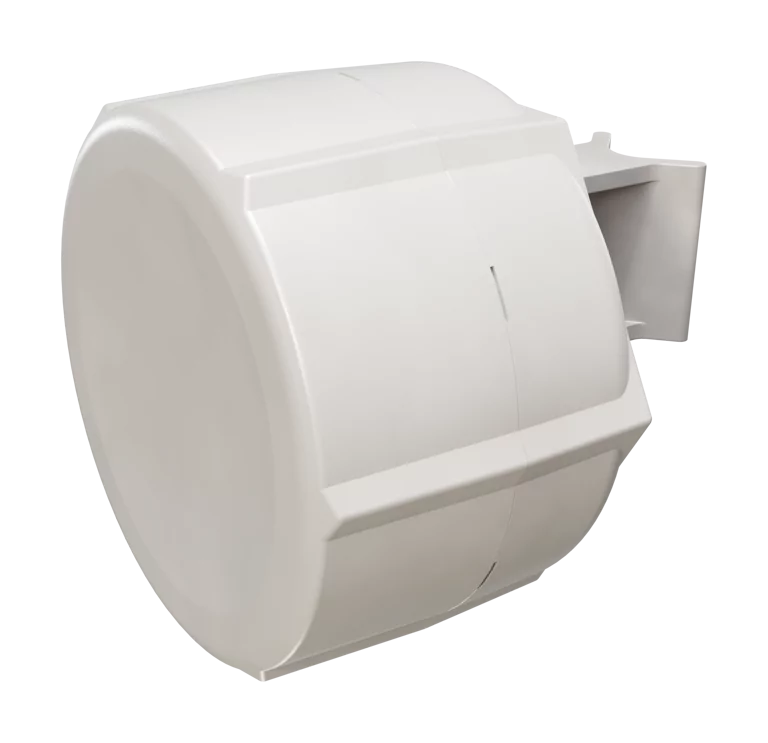
Product code: SXTR&R11e-LTE7. Confirm operator compatibility, available LTE bands, mounting position and current UAE supply before purchase.
Direct answer for buyers
The SXT LTE7 Kit is an outdoor directional LTE router and customer-premises device intended to capture a mobile signal from a suitable tower and deliver connectivity into a building over Ethernet. It is mainly used where an indoor mobile router struggles, where fixed broadband is not available, or where an organisation needs an independently routed cellular link. It suits remote offices, farms, utility locations, warehouses, temporary sites, construction areas and continuity projects. Before proceeding, a buyer should confirm the mobile operator, usable LTE bands, physical line of sight or likely tower direction, mounting height, cable route, power method, data-plan terms and realistic throughput expectations.
What it does
Mounted on a pole or external structure, the unit points toward the most suitable cellular base station and places the LTE radio outside the building, where signal conditions are often better. A single Ethernet cable can carry data and power to the device, reducing the need for a separate outdoor electrical connection.
RouterOS v7 provides routing, firewall, monitoring and network-management functions, while the integrated R11e-LTE7 modem supports carrier aggregation across compatible LTE bands. Actual speed remains dependent on the operator network, frequency availability, tower capacity, signal quality and selected configuration.
Who should consider it
The device is appropriate for organisations that can identify a workable outdoor mobile signal but cannot obtain consistent performance from an indoor modem. It is also relevant where a business needs a separate cellular path for a branch, remote asset or temporary project.
It may not be the correct choice where 5G is mandatory, where the network handoff must exceed Fast Ethernet limits, where an omnidirectional mobile router is required, or where the installation location cannot be safely aligned toward a tower. These points should be reviewed before purchase.
Business challenges the SXT LTE7 Kit can address
Weak indoor mobile reception
Walls, glazing, steelwork and building layout can reduce usable mobile signal indoors. Locating the LTE radio outside can improve the signal conditions available to the modem, provided the site is within network coverage and the unit is correctly aimed.
No practical fixed broadband
Some farms, compounds, remote branches and temporary facilities cannot obtain a suitable wired service within the required project timeline. An LTE link can provide a workable alternative where coverage and data plans support the intended workload.
Need for a second connection
The SXT LTE7 Kit may serve as an independent cellular path for selected continuity designs. Automatic failover, health checks and routing policy must be configured correctly, and the cellular service should use infrastructure that is genuinely diverse from the primary connection.
Difficult outdoor cabling
PoE input allows power and data to share the same Ethernet run. The second Ethernet port can provide passive PoE output for a compatible nearby device, subject to voltage, current and total power-budget checks.
Core capability band
Product-fit matrix
| Requirement | Suitable when | Confirm before ordering |
|---|---|---|
| Outdoor LTE access | A usable mobile signal is available outside and a directional mounting point can be selected. | Operator bands, tower direction, mounting height and cable route. |
| Primary connection for a small site | The expected application load fits LTE capacity and the Fast Ethernet interfaces. | User count, traffic profile, data allowance, latency needs and peak usage. |
| Backup WAN | A separate cellular path is acceptable for failover or selected critical traffic. | Failover logic, NAT, public-IP needs, service diversity and test plan. |
| Powering a nearby device | The second device accepts compatible passive PoE and remains within the total power budget. | Required voltage, current, cable length, connector standard and surge protection. |
| Multi-operator planning | Two Micro-SIM slots are useful for planned SIM switching or service flexibility. | Configuration method, operator APNs, SIM restrictions and switching policy. |
Verified technical information
| Brand | MikroTik |
|---|---|
| Product name | SXT LTE7 Kit |
| Product code | SXTR&R11e-LTE7 |
| Product type | Outdoor LTE customer-premises equipment / access point |
| CPU and platform | QCA9531, single core, 650 MHz, MIPSBE architecture |
| Memory and storage | 64 MB RAM and 16 MB flash storage |
| Operating system | RouterOS v7, License level 3 |
| LTE modem | R11e-LTE7, LTE Category 7 |
| Modem data rates | Up to 300 Mbps downlink and 100 Mbps uplink at modem category level; real service performance varies. |
| MIMO | 2×2 downlink and 1×1 uplink |
| LTE FDD bands | 1, 3, 5, 7, 8, 20, 28 and 32 |
| LTE TDD bands | 38, 40 and 41 |
| 3G support | Category R8 with bands 1, 3, 5 and 8 |
| Ethernet | Two 10/100 Ethernet ports |
| SIM slots | Two Micro-SIM slots |
| PoE input | 802.3af/at, 12–57 V |
| PoE output | Passive PoE up to 57 V on Ether2; compatibility and power budget must be checked. |
| Power consumption | 7 W without attachments; 24 W maximum |
| Dimensions | 140 × 140 × 56 mm |
| Environmental rating | IP54; tested ambient temperature from -40°C to +60°C |
| Included parts | 24 V 1.2 A power adapter, PoE injector, metal ring and pole-mounting bracket. Confirm current package contents at order time. |
Compatibility and dependency notice
LTE performance is not determined by the router alone. The mobile operator must support a compatible band and, for carrier aggregation, a compatible band combination at the serving site. Signal strength, signal quality, tower loading, backhaul capacity, APN policy, data-plan restrictions, public or private addressing and operator traffic management can all change the result.
The two Ethernet interfaces are Fast Ethernet ports. This is important when evaluating end-to-end throughput. Although the LTE modem is rated for higher theoretical downlink capacity, the wired handoff and actual network conditions may limit usable speed. Buyers who require Gigabit Ethernet, 5G, Wi-Fi access built into the same unit or higher routing capacity should compare another model rather than assume the SXT LTE7 Kit covers those needs.
Passive PoE output on Ether2 must only be connected to a device that accepts the supplied voltage and power method. Incorrect PoE assumptions can damage equipment. Cable category, total length, outdoor UV resistance, grounding, surge protection and local installation practice should form part of the design.
Purchase and deployment journey
Confirm the service objective
Define whether the link will be the primary connection, a backup path, a temporary project service or connectivity for a remote asset. This determines data-plan choice, routing policy, monitoring and support requirements.
Survey signal and tower direction
Check the likely operator, available bands and usable outdoor mounting locations. A formal or practical site survey can reduce the risk of choosing a location that is obstructed, unsafe or poorly aligned.
Build the bill of materials
Confirm the router quantity, outdoor cable, surge protection, mast or bracket, enclosure accessories if needed, upstream switch or firewall connection, SIMs, power source and any installation consumables.
Configure and test
Apply APN settings, credentials, firewall rules, routing, failover logic, monitoring and secure management. Test under realistic traffic and verify recovery behaviour rather than relying on a single speed test.
Install and align
Mount the device securely, route and protect the cable, aim the unit using measured radio values, and document the final position. Alignment should be based on signal quality and stability, not visual guesswork alone.
Monitor operation
Track LTE registration, signal readings, traffic consumption, uptime and failover events. Mobile conditions can change over time, so periodic review is important for business use.
Directional LTE performance where placement matters
The main value of the SXT format is not simply that it contains an LTE modem. It allows the modem and integrated directional antenna system to be positioned outside and oriented toward the most suitable serving cell. This can be useful where a phone shows an unstable signal inside a warehouse, prefab office or rural building but receives a more usable connection on the roof or an external wall. By keeping the radio close to the antenna and carrying Ethernet back into the building, the design avoids the losses and practical complexity associated with long RF coaxial cable runs.
Correct placement still requires judgement. The strongest signal reading is not always the best overall service. Signal quality, interference and cell congestion matter, and a nearby tower may not deliver the most consistent throughput. During commissioning, installers should compare relevant LTE readings, test at different times and verify application performance. In Dubai and the UAE, buildings, industrial structures, terrain, temporary works and local network loading can all affect the result. The model should therefore be selected as part of a site-specific connectivity plan, not as a guaranteed cure for every weak-signal location.
The Category 7 modem supports carrier aggregation, allowing compatible bands to be used together when the operator network provides the required combination. This can improve spectral efficiency and responsiveness, particularly where a single LTE carrier is busy. It does not mean that every site will provide aggregated service, nor does it guarantee the modem’s maximum category rate. Buyers should base decisions on expected business applications, local measurements and operator compatibility rather than headline figures alone.
RouterOS control for managed connectivity
RouterOS v7 turns the SXT LTE7 Kit into more than a basic modem bridge. Depending on the chosen design and administrator skill, the platform can provide IP routing, NAT, firewall policy, DHCP, VPN-related functions, traffic queues, monitoring, logs and automated responses. This is useful for remote business sites that need a controlled handoff rather than an unmanaged consumer mobile hotspot.
The configuration should remain appropriate to the hardware resources and the site role. The unit uses a single-core 650 MHz processor with 64 MB of RAM and two Fast Ethernet interfaces. It is well suited to focused LTE CPE duties, but buyers should not assume it will replace a high-capacity enterprise firewall, advanced security appliance or large branch router. Where extensive inspection, multiple encrypted tunnels, heavy filtering or large user counts are required, the SXT can terminate the cellular link and pass traffic to a more capable internal gateway.
Remote administration must be secured. Management access should be limited to trusted networks or protected paths, unnecessary services should be disabled, credentials should be strong, software maintenance should follow an agreed process and configuration backups should be stored safely. A deployment used for backup WAN should also be tested periodically. A failover path that has not been exercised may have an expired SIM, exhausted data allowance, changed APN, poor signal or incorrect route state when it is finally needed.
Power and cabling flexibility for outdoor sites
PoE input on Ether1 allows the device to receive power over the same cable that carries network traffic. The supported 12–57 V input range and 802.3af/at capability provide flexibility when integrating the unit with an injector or compatible switch. The package includes a 24 V power adapter and PoE injector, but the final power arrangement should still be checked against cable distance, surge protection, grounding and the rest of the network design.
Ether2 offers passive PoE output up to 57 V. This can reduce cabling where a compatible device, such as a suitable access point or small outdoor network component, is located nearby. It is not universal PoE negotiation. The receiving device must accept the supplied passive voltage, and the current limits and total 24 W maximum consumption must be respected. The SXT itself consumes up to 7 W without attachments, leaving the remaining budget dependent on input voltage, cable loss and the powered device.
Outdoor Ethernet runs should be treated as infrastructure, not as temporary patch cables. Use suitable UV-resistant cable, maintain bend radius, seal entries, provide drip loops where appropriate and follow local grounding and lightning-protection practice. The IP54 enclosure supports outdoor use, but installation quality remains essential. Water ingress often results from damaged cable glands, incorrect orientation or poorly sealed connections rather than the enclosure specification alone.
Ideal environments and practical use cases
Remote office or guard facility
Provide internet access to a small remote office, security post or operational cabin where an outdoor LTE signal is available and traffic demand fits the platform.
Farm and agricultural site
Connect monitoring systems, staff devices or selected applications at a site beyond practical wired broadband coverage, subject to operator service and power availability.
Construction or temporary project
Establish a relocatable LTE link for site offices and project coordination while fixed connectivity is unavailable or pending.
Warehouse edge connection
Place the modem outdoors to avoid attenuation from metal cladding and deliver the connection to an internal router, switch or firewall.
Secondary branch WAN
Use the unit as an independent LTE path for continuity planning, with routing and health checks designed for the branch environment.
Remote camera or telemetry network
Backhaul selected low-to-moderate traffic from a remote site, while confirming upload demand, data allowance, addressing and security requirements.
Integration and operational considerations
Decide whether the SXT will act as the site router or as the mobile edge device in front of another firewall. The second design is common when the organisation needs central security policy, SD-WAN, advanced VPN, detailed logging or a standard branch architecture. Addressing also matters: many mobile services use carrier-grade NAT, which can affect inbound connections and some VPN designs. A public or private APN may be required and is controlled by the mobile operator, not by the hardware.
Data plans should be selected around the actual application. Video, cloud backup, operating-system updates and remote desktop can consume considerably more data than telemetry or basic business browsing. Upload performance is particularly important for cameras, file synchronisation and remote support. The Category 7 uplink capability is useful, but service performance must be validated at the site.
Monitoring should include more than simple reachability. Useful indicators can include LTE registration status, radio measurements, interface traffic, packet loss, latency, route state and data use. Define who receives alerts, who can access the device and how configuration changes are documented. For critical sites, keep a tested spare strategy and record the SIM, APN, mounting direction and cable path.
Questions to resolve before requesting a quote
Procurement checklist
☐ Exact product code SXTR&R11e-LTE7
☐ Required quantity and target deployment date
☐ Destination and installation address
☐ Selected mobile operator and SIM format
☐ Confirmed LTE bands or site-survey findings
☐ Data allowance and APN requirements
☐ Mounting surface, pole size and access method
☐ Outdoor cable length and surge protection
☐ PoE source and any Ether2 powered-device requirement
☐ Router, firewall or switch connection at the indoor end
☐ Routing, firewall, failover and monitoring scope
☐ Installation, alignment, testing and handover requirements
☐ Warranty terms and return process confirmation
☐ Current UAE availability and vendor lead time
How FourTeck can assist
FourTeck can help convert a general request for outdoor LTE into a more complete purchasing requirement. This may include reviewing the intended application, user load, mobile operator, site location, mounting conditions, power method, indoor handoff and required configuration. The aim is to identify whether the SXT LTE7 Kit is a reasonable fit or whether a model with Gigabit Ethernet, a higher-gain antenna, integrated Wi-Fi, 5G or a different form factor should be considered.
For an accurate quotation, share the quantity, destination, preferred operator, expected applications and any installation requirement. FourTeck can coordinate product supply, compatible accessories, configuration scope, delivery planning and project handoff. Visit the FourTeck technology product catalogue to review related infrastructure, or use the network services overview when planning installation and configuration. Complex requirements can be discussed through the FourTeck contact team.
UAE availability and support guidance
Contact FourTeck to confirm current UAE availability for the MikroTik SXT LTE7 Kit. Supply can depend on required quantity, vendor lead time and the exact commercial request. Delivery and project coordination can be discussed once the model, accessories and installation scope are confirmed. For deployments across Dubai, Abu Dhabi, Sharjah and Ajman, FourTeck can help review site requirements, quotation details, configuration needs and delivery planning as one combined project. Installation and alignment should be included in the quotation when required, because outdoor mounting, cable routing, power protection and tower orientation directly affect the outcome. No fixed delivery or installation date should be assumed until availability and site conditions have been reviewed.
GCC Availability
FourTeck can assist organisations planning SXT LTE7 Kit deployments across GCC markets, including requirements that involve the United Arab Emirates, Saudi Arabia, Kuwait, Qatar, Bahrain or Oman. Regional coordination may cover model review, quotation preparation, compatible accessories, power and mounting requirements, configuration scope, installation planning and delivery scheduling. Mobile network conditions and available frequency bands must be assessed for the destination country and operator. Product availability, service visits, delivery schedules and vendor lead times can vary by country, quantity and project scope. Buyers should provide the destination, required units, intended operator, deployment environment, expected timeline and any need for preconfiguration or onsite work. For Kuwait-related coordination, the FourTeck Kuwait resource may also help begin the discussion. Current supply and regional service arrangements must be confirmed before the project schedule is finalised.
Africa Availability
Organisations planning remote LTE connectivity in Africa can contact FourTeck for product evaluation, accessory selection, configuration guidance and regional procurement planning. The SXT LTE7 Kit may be relevant to farms, remote offices, project compounds, security locations and utility sites, but the exact LTE bands, operator coverage and installation environment must be checked for each destination. Availability and fulfilment may depend on the country, quantity, power arrangement, mobile operator, shipping route, vendor lead time and local installation conditions. Buyers should share the destination country, required quantity, preferred deployment schedule, operator information and support expectations. FourTeck’s Africa technology resource, Kenya team page and Uganda team page can support relevant regional enquiries. Local inventory, customs outcomes and onsite coverage should not be assumed without confirmation.
Related options and services
Higher-gain LTE options
For more difficult or distant tower conditions, compare larger directional LTE antenna platforms. Suitability depends on band support, Ethernet requirements and mounting environment.
Gigabit LTE routers
Where the Fast Ethernet handoff is a constraint, consider a MikroTik LTE model with Gigabit Ethernet and the required antenna characteristics.
Branch firewall integration
Use the SXT as the cellular edge in front of an enterprise firewall when central security policy, SD-WAN or advanced VPN is required.
Outdoor installation service
Include mounting, cable routing, surge protection, alignment, configuration and testing in the project scope where internal resources are unavailable.
Why businesses contact FourTeck
Businesses contact FourTeck when they need more than a product code. Outdoor LTE projects involve radio conditions, operator services, mounting, power, routing and operational ownership. A purchasing error can occur even when the hardware itself is genuine and correctly specified, simply because the chosen model does not match the site or network architecture.
FourTeck can assist with requirement clarification, model comparison, bill-of-material guidance, operator and band questions, accessory selection, quotation coordination, installation planning, RouterOS configuration scope, backup-link design and support coordination. This practical review helps the buyer define what must be delivered and tested. Learn more about FourTeck’s business technology approach or submit a regional enquiry.
Frequently asked questions
Is the MikroTik SXT LTE7 Kit suitable for weak-signal sites?
It is designed for outdoor directional LTE use and may improve results where a usable signal exists outside but indoor reception is poor. A survey and correct alignment are still needed, and it cannot create coverage where no compatible network signal is available.
Does it support 5G?
No. The integrated R11e-LTE7 modem is an LTE Category 7 device with 3G fallback support on listed bands. Buyers requiring 5G should select another platform.
Can it deliver 300 Mbps to the LAN?
The modem category supports up to 300 Mbps downlink under suitable network conditions, but the unit has 10/100 Ethernet ports. Actual end-user throughput is affected by the Ethernet handoff, operator network, radio conditions and configuration.
Are two mobile connections active at the same time?
The unit has two Micro-SIM slots, but the intended SIM-selection behaviour should be configured and tested. The slots provide service flexibility; they should not be assumed to create two simultaneous LTE modems.
Is a RouterOS license included?
Yes. MikroTik specifies RouterOS v7 with License level 3 preinstalled for this model. No separate RouterOS purchase is normally required for basic device operation.
Can Ether2 power another device?
Ether2 provides passive PoE output up to 57 V. The receiving device must be compatible with passive PoE at the supplied voltage, and the current and total power limits must be respected.
What is included in the package?
The manufacturer lists a 24 V 1.2 A power adapter, PoE injector, metal ring and pole-mounting bracket. Package contents should be reconfirmed with the quotation.
Can FourTeck configure it as a backup link?
Configuration support can be scoped for LTE settings, routing, health checks, failover and monitoring. The exact design depends on the primary router or firewall, addressing, APN and business requirements.
Is it available in Dubai now?
Current availability must be confirmed with FourTeck because supply can vary by quantity and vendor lead time. Share the required quantity and target date for an updated quotation.
What information is needed for a quote?
Provide the quantity, destination, intended operator, use case, mounting conditions, cable distance, power method, configuration needs and whether installation or testing should be included.
Plan the SXT LTE7 Kit around your actual site
Share the deployment location, mobile operator, required quantity and intended network role. FourTeck can help confirm product fit, current UAE availability, accessory requirements, configuration scope and quotation details.
