

MikroTik wAP ax LTE7 Kit in Dubai, UAE
A compact, weather-resistant connectivity platform for locations that need wireless access, mobile broadband and flexible routing in one manageable device. The wAP ax LTE7 Kit brings together dual-band Wi-Fi 6, LTE Category 7, two Gigabit Ethernet interfaces and the control of RouterOS v7 for branch, outdoor, temporary and hard-to-reach deployments.
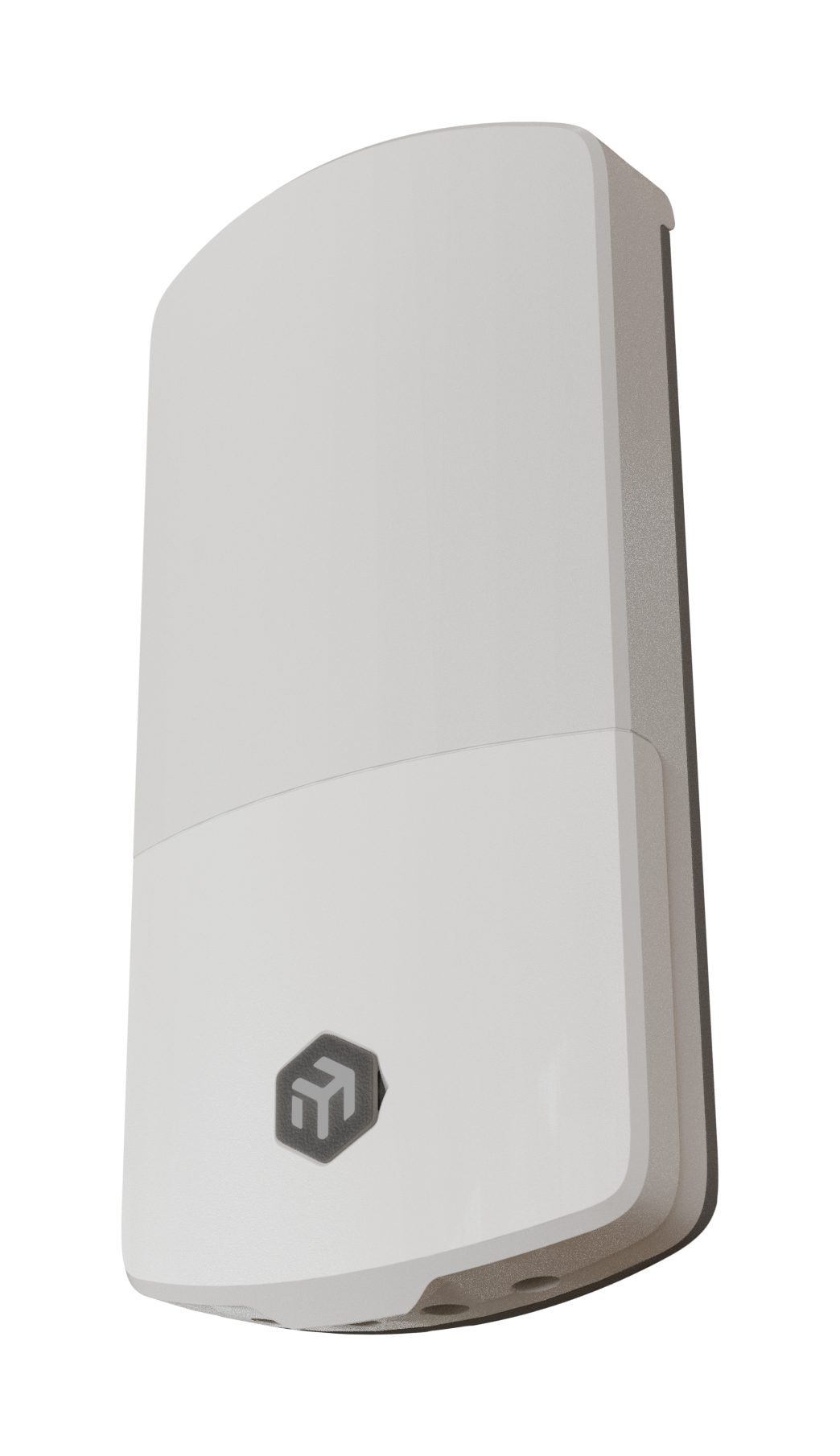
Exact model: wAPGR-5HaxD2HaxD&R11e-LTE7
Direct answer for buyers
The MikroTik wAP ax LTE7 Kit is a combined outdoor-capable Wi-Fi 6 access point, LTE router and RouterOS networking appliance. It is mainly used to deliver mobile broadband and local wireless access at branch sites, outdoor areas, temporary facilities, rural premises, kiosks and locations where a fixed internet circuit is unavailable or where a cellular backup path is required. It suits buyers comfortable with managed networking or organisations working with an integrator. Before ordering, confirm LTE band compatibility with the intended UAE operator, signal conditions at the mounting point, required SIM format and data plan, expected client count, power source, Ethernet topology and whether installation, RouterOS configuration or central management is needed.
What it does
The device receives mobile broadband through its integrated R11e-LTE7 modem, routes traffic through RouterOS v7, provides dual-band Wi-Fi 6 to nearby users and equipment, and connects wired devices through two Gigabit Ethernet ports. It can serve as the primary internet edge for a small location, a secondary path behind another router, or a managed wireless node within a broader MikroTik deployment. Its enclosure and mounting options make it suitable for positions where an indoor desktop router would be impractical.
Who it suits
It may suit retail outlets, construction offices, workshops, farms, logistics yards, gatehouses, service stations, event sites, villas, warehouses, remote monitoring locations and small business branches. It is particularly relevant when the buyer wants one compact platform rather than separate LTE modem, router and access point hardware. Larger sites or high-density environments may need additional access points, external switching, stronger directional LTE equipment or a higher-capacity gateway after a proper site review.
Business challenges this model can address
No fixed-line service
A mobile data connection can give a remote or newly opened location internet access while a permanent circuit is unavailable. Actual throughput depends on the operator, tower load, radio conditions, selected band and service plan.
Outdoor mounting requirement
The IP66 enclosure supports correctly installed outdoor placement, allowing the unit to be positioned where LTE reception and Wi-Fi coverage may be better than inside a cabinet or office.
Need for cellular failover
RouterOS can be configured to use LTE as a backup route, although the exact failover logic, health checks and policy routing should be planned around the existing WAN design.
Limited installation space
Its integrated format reduces the need for multiple enclosures and power adapters. Cabling, surge protection, weather sealing and access for maintenance still need to be considered.
Core capability band
LTE Cat 7 with supported FDD and TDD bands, including Bands 28 and 32.
Dual-chain Wi-Fi 6 radios for 2.4 GHz and 5 GHz client connectivity.
RouterOS v7 with firewall, VPN, routing, monitoring and management functions.
Wall, ceiling or pole mounting with PoE-in or DC power options.
Product-fit matrix
| Requirement | Suitable when | Confirm before ordering |
|---|---|---|
| Primary LTE internet | The site has good operator coverage and moderate traffic needs. | Signal level, operator bands, data allowance and expected concurrent usage. |
| Backup WAN | A secondary cellular path is required for continuity. | Failover design, NAT, public IP needs, VPN behaviour and monitoring. |
| Outdoor Wi-Fi coverage | The coverage area is modest and the device can be positioned well. | Obstructions, client density, radio survey, mounting height and local rules. |
| Central management | The network uses MikroTik CAPsMAN or RouterOS administration. | Software version, configuration standards, controller location and support ownership. |
| High-density public Wi-Fi | Only after capacity planning and possibly with multiple APs. | User count, authentication, bandwidth control, roaming and RF design. |
Verified technical information
| Brand | MikroTik |
|---|---|
| Product name | wAP ax LTE7 Kit |
| Product code | wAPGR-5HaxD2HaxD&R11e-LTE7 |
| Product type | Weather-resistant Wi-Fi 6 access point, LTE router and RouterOS appliance |
| CPU | IPQ-5010, dual-core, 800 MHz, ARM 64-bit |
| Memory and storage | 256 MB RAM and 128 MB NAND storage |
| Operating system | RouterOS v7, license level 4 |
| LTE modem | R11e-LTE7, LTE Category 7 |
| LTE class rates | Up to 300 Mbps downlink and 100 Mbps uplink; real results depend on network and radio conditions |
| LTE FDD bands | 1, 3, 5, 7, 8, 20, 28 and 32 |
| LTE TDD bands | 38, 40 and 41 |
| 3G support | Category R8; bands 1, 3, 5 and 8 |
| Wi-Fi 2.4 GHz | 802.11b/g/n/ax, dual-chain, maximum data rate 574 Mbit/s |
| Wi-Fi 5 GHz | 802.11a/n/ac/ax, dual-chain, maximum data rate 1200 Mbit/s |
| Antenna gain | 6.9 dBi at 2.4 GHz and 7 dBi at 5 GHz according to the current product page |
| Ethernet | Two 10/100/1000 Ethernet ports |
| SIM slot | One Micro SIM slot |
| Power input | DC jack 12–57 V or 802.3af/at PoE-in 18–57 V |
| Maximum power consumption | 13 W |
| Cooling | Passive |
| Enclosure rating | IP66 |
| Dimensions | 229 × 113 × 43 mm |
| Tested ambient temperature | -30°C to 70°C |
| Included components | 24 V 0.8 A power adapter, Gigabit PoE injector, hose clamp and fastening set |
| Availability | Contact FourTeck for current UAE options, quantity and lead time |
Compatibility and dependency notice
LTE compatibility is not determined by the modem category alone. The buyer should verify the operator’s active bands at the deployment address, the intended SIM and account type, APN requirements, public or private IP behaviour, carrier-grade NAT, any inbound service requirements, antenna orientation and expected signal quality. The listed maximum mobile rates are radio-category limits rather than a guaranteed user experience.
Wi-Fi performance also depends on client capability, channel width, interference, distance, construction materials, mounting direction and the number of connected devices. RouterOS features are powerful but configuration dependent. VPN throughput, firewall performance, QoS, hotspot services and central management results vary with rules, encryption, traffic mix and software version. FourTeck can review these dependencies before quotation or deployment.
Purchase and deployment journey
Define the site role
Decide whether LTE will be primary internet, emergency backup, temporary connectivity or a dedicated path for remote devices. This choice affects routing, SIM plan and monitoring.
Validate radio conditions
Check operator coverage and, where practical, test signal quality at the proposed mounting location. A strong outdoor position can materially improve consistency.
Confirm network design
Map WAN, LAN, Wi-Fi, VLAN, DHCP, firewall, VPN and failover requirements. Confirm whether both Ethernet ports will be used and how power will reach the unit.
Plan installation
Choose wall, pole or ceiling placement, route outdoor-rated cable, protect the cable path, maintain safe access and follow local electrical and mounting requirements.
Configure and test
Update RouterOS, set strong administrator credentials, configure country settings, apply firewall policy, test LTE, Wi-Fi, failover and remote management, then document the final setup.
LTE Cat 7 for practical primary or secondary connectivity
The R11e-LTE7 modem gives the wAP ax LTE7 Kit a mobile broadband interface capable of two-carrier aggregation and an LTE Category 7 radio profile. The practical business value is not simply a headline speed. It is the ability to place a managed router close to a usable signal and build a complete local network around that connection. For a new shop awaiting fibre, a temporary project office, a remote gatehouse or a telemetry location, this can shorten the gap between site activation and permanent connectivity.
For backup use, the unit can provide a separate carrier path that is physically and operationally different from a wired circuit. RouterOS can monitor routes and direct traffic according to configured policy. The design still needs care. A backup path sharing the same upstream dependencies, power source or physical cable route may not provide the resilience the buyer expects. The SIM plan must also support the likely traffic during an outage, and applications relying on fixed public addressing may require additional design.
Band support includes common FDD and TDD ranges, but a frequency list does not guarantee service at every address. Operators use different bands by area, capacity demand and network generation. Building materials, equipment rooms, metal cladding and nearby structures can weaken the signal. FourTeck can help the buyer interpret site information and decide whether the integrated LTE design is appropriate or whether a more directional outdoor LTE product should be considered.
Dual-band Wi-Fi 6 for local access
The 2.4 GHz and 5 GHz radios allow the device to serve a mix of modern and legacy wireless clients. Wi-Fi 6 can improve airtime efficiency and client handling when supported by the endpoint, while the 2.4 GHz band remains useful for longer reach and many IoT devices. The 5 GHz band generally offers more capacity and less congestion, though range and wall penetration vary by environment.
The integrated antennas and wall-oriented form factor are designed for broad local coverage, but the wAP ax LTE7 Kit should not automatically be treated as a complete wireless design for a large warehouse, hotel, school or busy public venue. Coverage and capacity are different questions. A signal may be visible throughout an area while airtime, interference or backhaul becomes the limiting factor. High-density deployments should be based on user count, application mix, channel planning and roaming requirements.
RouterOS gives administrators control over SSIDs, security settings, VLAN integration, bandwidth policies and guest access architecture. These capabilities are configuration dependent and should be matched to the organisation’s security policy. Default settings should be reviewed, administrator and wireless credentials changed, unnecessary services disabled and software kept current. For multiple MikroTik access points, CAPsMAN may simplify central policy, but controller design and version compatibility should be checked before rollout.
RouterOS control and integration flexibility
RouterOS v7 is a major reason to choose this model over a simple consumer LTE hotspot. The platform can handle routing, firewall policy, NAT, DHCP, VLANs, VPNs, traffic shaping, monitoring and scripting in one device. This gives technical teams flexibility to adapt the wAP ax LTE7 Kit to a branch standard, remote-access design or managed-service framework.
That flexibility carries a responsibility to define and maintain the configuration. Complex firewall rules, multiple tunnels, detailed queues or advanced routing can consume processor resources and increase operational risk if they are not documented. The published Ethernet test results represent specific laboratory conditions and should not be interpreted as guaranteed performance for every feature combination. Encrypted VPN throughput, many small packets and extensive rules can produce different outcomes.
Integration planning should identify who owns the device, who can administer it, how backups are stored, how updates are approved, how alerts are received and how the site can be recovered after a configuration error. Remote management should never be exposed casually to the public internet. A secure management VPN, restricted source addresses and controlled credentials are preferable. FourTeck can assist with a configuration scope that aligns the device with the buyer’s existing addressing, VLAN, firewall and monitoring standards.
Suitable business environments
Remote branch or kiosk
Provides local Wi-Fi and wired connectivity through a mobile operator where leased-line access is uneconomical or unavailable. Confirm transaction traffic, VPN design and remote support needs.
Construction and temporary sites
Can support project offices, access-control terminals and operational devices during a limited deployment. The mount, cable route, power stability and protection from accidental damage should be included in planning.
Agriculture and remote property
May provide connectivity for staff, cameras, sensors or maintenance systems when cellular coverage is suitable. Wider estates may need point-to-point links or additional access points.
Retail or service outlet backup
Can provide a secondary path for essential applications during a fixed-line interruption. Payment processing and corporate VPN requirements should be tested with the mobile operator’s network behaviour.
Gatehouse and perimeter location
Its discreet weather-resistant enclosure can fit security posts and perimeter points. Confirm safe mounting, local Wi-Fi footprint and whether camera traffic will exceed the available LTE plan.
Events and mobile operations
Useful for temporary connectivity where setup flexibility matters. Venue congestion can affect LTE and Wi-Fi, so testing and realistic user limits are important.
Installation and operational considerations
Outdoor networking equipment performs best when physical installation is treated as part of the network design. The wAP ax LTE7 Kit supports wall, ceiling and pole mounting, but the selected orientation should consider LTE signal, Wi-Fi coverage, cable access and future maintenance. The manufacturer’s mounting instructions, safety distance and electrical guidance should be followed. The IP66 rating relates to the enclosure under correct installation; a poorly routed cable, open cover or unsuitable connector can compromise the result.
Use appropriate Ethernet cabling for the environment and consider surge protection, grounding practices and separation from high-voltage cabling according to local regulations. PoE can simplify the installation by carrying power and data through one cable, but the power source, voltage range and total cable length must remain within supported limits. The included PoE injector is useful for a standalone deployment, while a managed PoE switch may be preferable in a larger network.
Operationally, create a record of the SIM ICCID, mobile account, APN, device serial number, RouterOS version, administrator ownership, IP addressing and recovery process. Schedule configuration backups and software review. Monitor LTE metrics such as RSRP, RSRQ and SINR rather than relying only on a simple signal-bar display. Changes in tower load, new obstructions or operator optimisation can affect performance over time.
Questions to resolve before ordering
Confirm service at the actual address, not only general coverage maps.
This affects routing policy, SIM allowance and monitoring.
Include busy-hour usage, not just the number of registered devices.
Carrier-grade NAT may prevent direct inbound services without a VPN or suitable operator plan.
Review signal, radio coverage, access, cable route and weather exposure.
Define credentials, updates, backups, change control and support ownership.
Procurement checklist
☐ Confirm exact product code wAPGR-5HaxD2HaxD&R11e-LTE7
☐ Record required quantity and deployment locations
☐ Confirm Micro SIM availability and operator account
☐ Validate required LTE bands and signal conditions
☐ Estimate concurrent Wi-Fi users and traffic profile
☐ Decide primary, backup or temporary WAN role
☐ Define Ethernet, VLAN, DHCP and firewall design
☐ Confirm PoE-in or DC power arrangement
☐ Select wall, ceiling or pole mounting method
☐ Include outdoor cable and protection requirements
☐ Define RouterOS configuration and testing scope
☐ Confirm remote management and support responsibility
☐ Request current availability and vendor lead time
☐ Clarify warranty handling in the final quotation
How FourTeck can assist
FourTeck can help turn a product request into a complete, orderable requirement. The review can include the intended location, LTE operator, expected users, business applications, primary or backup role, mounting conditions, power source, network topology and required RouterOS functions. This reduces the risk of buying a correct device for the wrong role or overlooking accessories and deployment work.
For quotation, share the exact quantity, destination, expected timeline and whether configuration, installation or remote support should be included. FourTeck can coordinate product availability, provide model and bill-of-material guidance, discuss suitable alternatives and define a service scope. More information about available technology categories is available through the FourTeck product catalogue, while implementation assistance can be reviewed on the networking and security services page.
Configuration support can cover secure initial setup, software update, administrator access, LTE APN, Wi-Fi networks, VLANs, DHCP, firewall rules, failover logic, VPN integration and handover documentation, subject to an agreed scope. Buyers can contact FourTeck for product consultation before ordering.
UAE availability and support guidance
Contact FourTeck to confirm current UAE availability of the MikroTik wAP ax LTE7 Kit. Supply can depend on quantity, product release timing, distributor allocation and vendor lead time. Delivery and project coordination can be discussed after the exact requirement is confirmed. Installation and configuration should be stated in the quotation when required, because product supply alone does not automatically include site survey, cabling, mounting, SIM activation or RouterOS engineering.
For projects in Dubai, Abu Dhabi, Sharjah and Ajman, FourTeck can review the requested quantity, deployment locations, operator choice, power arrangement and support expectations as one coordinated requirement. Site access, installation timing, travel, permits and local conditions can affect service scope. A complete request allows the team to separate product cost, optional accessories, engineering work and delivery coordination clearly.
GCC Availability
FourTeck can assist organisations planning MikroTik wAP ax LTE7 Kit deployments across GCC markets, including the United Arab Emirates, Saudi Arabia, Kuwait, Qatar, Bahrain and Oman. The starting point is a review of the destination country, mobile network environment, required quantity, site role and expected project timeline. LTE band use, SIM policies, power requirements, delivery arrangements and installation scope can differ between markets, so a configuration that works in one country should not be assumed to transfer unchanged to another.
For regional projects, FourTeck can coordinate model confirmation, quotation preparation, accessory review, RouterOS configuration scope, installation planning and support handover. Product availability, licensing where applicable, delivery schedules, service visits and vendor lead times vary by country, quantity and requirement. Buyers should provide the exact destination, quantity, preferred operator, deployment location and target date. For Kuwait-related coordination, the FourTeck Kuwait technology resource may also be useful.
Africa Availability
Organisations planning connectivity in Africa can ask FourTeck to assess whether the wAP ax LTE7 Kit fits the intended mobile network, site conditions and operating model. The device may be relevant to remote branches, field offices, logistics facilities, hospitality sites, farms and service locations, but LTE band use, SIM registration, power stability, climate exposure, shipping arrangements and local installation resources need to be reviewed for each destination.
FourTeck can help evaluate the exact model, quantity, accessories, RouterOS configuration, support needs and regional procurement plan. Availability and fulfilment may depend on destination, vendor lead time, local requirements and project scope. Buyers should share the country, mobile operator, expected deployment schedule, power method and any onsite or remote support expectations. Regional information is available through the FourTeck Africa technology portal, with additional resources for Kenya technology projects and Uganda business technology requirements.
Related options and services
Directional outdoor LTE
Consider a directional MikroTik LTE product when the tower is distant or signal direction matters more than local Wi-Fi coverage. Suitability must be checked against operator bands and site geometry.
Additional Wi-Fi access points
Larger or busier premises may need separate indoor or outdoor APs connected to the wAP ax LTE7 Kit or another gateway. A coverage and capacity plan should define quantity.
Managed PoE switching
A compatible PoE switch can simplify powering and monitoring when multiple network devices share the site. Voltage, PoE standard and power budget must be verified.
RouterOS configuration service
FourTeck can define and implement an agreed setup covering LTE, Wi-Fi, routing, VLANs, firewall, VPN, failover and documentation.
Why businesses contact FourTeck
The value of consultation is practical: confirming that the exact model, operator, site and configuration fit together. FourTeck can help clarify requirements, compare suitable connectivity approaches, identify required accessories, prepare a bill of materials, coordinate a quotation and separate product supply from optional services. This is particularly useful for LTE deployments because the same device can produce very different results at different locations.
Businesses also contact FourTeck when they need a repeatable branch configuration, secure remote management, integration with an existing firewall, documented failover behaviour or installation planning. The engagement does not rely on unsupported availability or performance promises. Instead, it focuses on the information needed to make a responsible purchase decision. Learn more about FourTeck’s business technology approach or discuss the requirement directly with the sales and technical coordination team.
Frequently asked questions
Is the MikroTik wAP ax LTE7 Kit suitable as a primary internet router?
Yes, it can serve as a primary LTE router for a small or remote site when operator coverage, data allowance and performance expectations are suitable. Actual speed and consistency depend on the mobile network and local signal conditions.
Can it be used as backup internet?
Yes. RouterOS can be configured for failover or policy-based routing. The existing WAN design, health-check method, application requirements and SIM plan should be reviewed before implementation.
Does it support Wi-Fi 6 on both bands?
Yes. The device supports 802.11ax on 2.4 GHz and 5 GHz using dual-chain radios. Client performance depends on device capability, distance, interference and configuration.
Is the device intended for outdoor installation?
The enclosure is rated IP66 and supports outdoor use when mounted and sealed according to the manufacturer’s instructions. Cabling, surge protection and safe access must also be planned.
Which SIM card does it use?
It has one Micro SIM slot. The buyer must obtain a compatible activated SIM and data plan from the intended mobile operator.
Are the power adapter and PoE injector included?
The official package list includes a 24 V 0.8 A power adapter and Gigabit PoE injector, together with mounting components. The final quotation should still confirm package contents.
Does RouterOS require a separate license?
The device is supplied with RouterOS v7 and a Level 4 license preinstalled. Optional external services, SIM plans or third-party systems are separate.
Can FourTeck configure the router before deployment?
Configuration assistance can be included in an agreed scope covering LTE, Wi-Fi, routing, firewall, VLANs, VPN, failover and documentation. The buyer should provide the required network information.
What information is needed for a quotation?
Provide quantity, destination, target date, intended operator, deployment role, mounting location, power method and whether configuration, installation or support is required.
How can I confirm current UAE availability?
Contact FourTeck with the exact product name and quantity. Availability may vary with vendor supply and lead time, so it should be confirmed when the quotation is prepared.
Plan the right LTE and Wi-Fi deployment
Share the intended site, operator, quantity and network role. FourTeck can confirm the model, review the bill of materials and prepare a quotation with optional configuration or installation support.
