
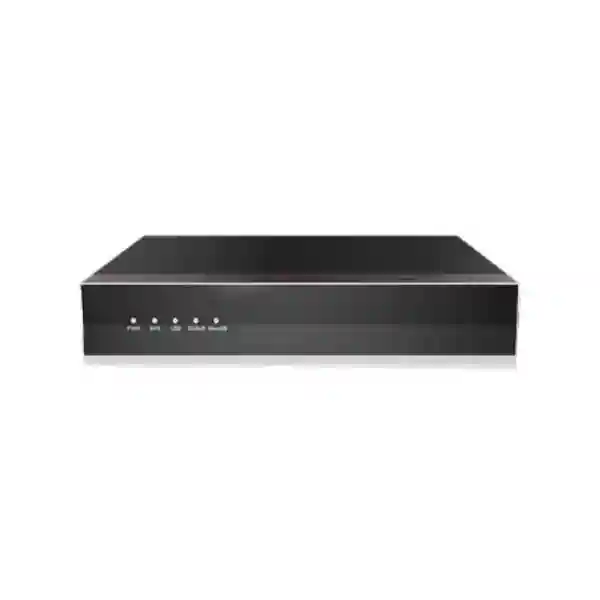
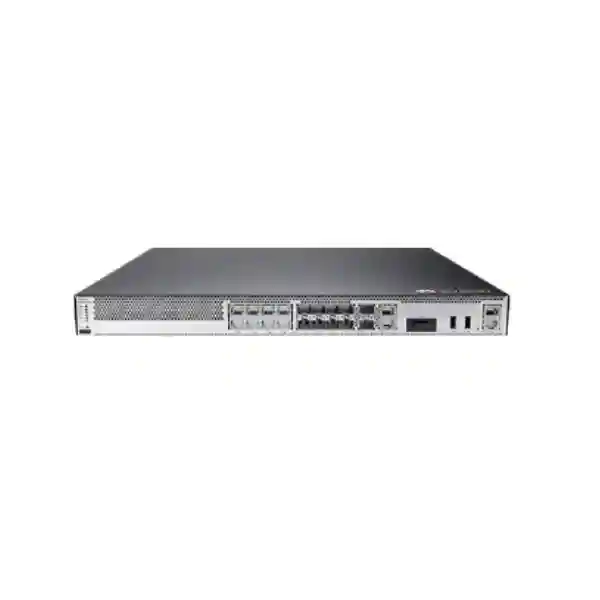
Huawei HiSecEngine USG6580F
A technical procurement and deployment guide for UAE organizations evaluating the Huawei HiSecEngine USG6580F name for perimeter security, branch aggregation, secure Internet access, VPN services, segmentation, threat prevention, and centrally managed policy enforcement.
FourTeck can assist with requirement discovery, Huawei BOM validation, solution sizing, license selection, high-availability architecture, migration planning, implementation, documentation, and post-deployment operations.
Important model-verification note
Huawei’s currently published HiSecEngine USG6500F portfolio materials list models such as USG6525F, USG6555F, USG6565F, USG6585F, and USG6585F-B. The exact USG6580F designation is therefore treated on this page as a customer-supplied product reference that requires commercial and technical validation before an order is placed.
We do not infer or invent exact USG6580F throughput, interface counts, storage options, power values, concurrent-session capacity, VPN limits, or licensed security entitlements. Those values must be confirmed against the Huawei part number, sales BOM, software train, license bundle, and regional availability presented for the UAE project.
What the Huawei HiSecEngine USG6580F project should deliver
For a UAE enterprise, the practical objective is not merely to install a firewall appliance. The objective is to create a controlled security enforcement point that can maintain predictable application access, protect users and published services, support encrypted connectivity, isolate risk domains, provide usable security telemetry, and remain operational during failures or planned maintenance. A well-designed HiSecEngine deployment should connect security policy to real business traffic rather than becoming a collection of permissive rules accumulated over time.
Secure Internet edge
Control north-south traffic with stateful policies, NAT, application awareness, security inspection, web access governance, and clearly separated trust zones. The design should account for normal business traffic, cloud access, SaaS usage, remote administration, published applications, and encrypted flows.
Threat prevention
Use the security services that are licensed for the selected Huawei BOM to reduce exposure to malware, exploit traffic, malicious web activity, botnet communication, command-and-control behavior, and other threats that can cross the enterprise perimeter.
Protected connectivity
Create resilient site-to-site IPsec connectivity, secure remote-access workflows where supported and licensed, and deterministic routing between headquarters, branches, data centers, cloud environments, and partner networks.
Segmentation
Separate user, server, voice, wireless, guest, OT, management, partner, and DMZ traffic into enforceable policy zones. Good segmentation reduces the blast radius of compromised credentials, infected endpoints, and misconfigured services.
Operational visibility
Preserve logs, alarms, traffic records, policy-hit information, and security events in a form that network and security teams can investigate. Centralized management should be considered when multiple sites or multiple security devices are part of the operating model.
Resilience
Engineer the firewall tier around real failure modes: appliance failure, power loss, ISP loss, upstream switch failure, interface failure, routing instability, certificate expiration, license expiry, and configuration error. High availability is a system design, not only a checkbox.
HiSecEngine USG6500F architecture context
Huawei positions the HiSecEngine USG6500F family as next-generation AI firewalls for small enterprises, industry branches, and chain organizations. The published family architecture emphasizes separate forwarding and control functions, an Adaptive Security Engine concept, and dedicated acceleration resources for packet forwarding, content inspection, pattern matching, encryption, and decryption. In practical terms, the architecture is intended to keep security inspection from depending only on general-purpose CPU processing and to allocate resources according to enabled services.
That distinction matters during sizing. A firewall data sheet may contain a large headline forwarding figure, but production capacity is shaped by the traffic mix, packet sizes, encrypted sessions, enabled threat services, application identification, logging rate, VPN cryptography, concurrent connections, session creation rate, routing features, and redundancy design. For an enterprise proposal, FourTeck therefore sizes the project around the security profile that will actually be enabled, not around an isolated laboratory throughput number.
The USG6500F software feature set published by Huawei combines traditional firewall functions with VPN, intrusion prevention, antivirus, bandwidth management, Anti-DDoS capabilities, URL filtering, application identification, IPv4/IPv6 networking, centralized security management, and integrations that can expand threat detection workflows. Exact availability remains dependent on the model, software version, license entitlement, subscription status, and regional sales bundle. This is especially important for the user-supplied USG6580F designation because current portfolio material should be cross-checked with the offered BOM.
Threat prevention and content security
A modern perimeter firewall must do more than allow or deny traffic by source address, destination address, and port. Business applications routinely share HTTPS, use distributed cloud infrastructure, change IP addresses, embed third-party services, and communicate through encrypted tunnels. For that reason, the security policy should combine network identity, application context, user or group context where available, destination category, zone, service, and threat profile. Huawei’s published USG6500F capabilities include application identification, intrusion prevention, antivirus functions, URL filtering, bandwidth controls, and integrated policy management, providing the building blocks for a more contextual policy model.
Intrusion prevention should be deployed with an understanding of the protected assets. A generic “block everything” profile can create false positives, while an overly relaxed policy provides little protection. The better approach is to classify server exposure, client traffic, critical applications, operating systems, externally reachable services, and known business dependencies. Signatures can then be tuned so that high-confidence exploit traffic is blocked while suspicious but uncertain patterns are logged for investigation. Change records should document any signature exceptions so that temporary troubleshooting decisions do not become permanent blind spots.
Antivirus and malicious-content inspection also require policy-aware deployment. File transfer, web downloads, email relays, software repositories, and application update services can have very different traffic characteristics. Inspection coverage should be aligned with legitimate workflows, certificate requirements, privacy obligations, and performance expectations. If encrypted traffic inspection is part of the design, the organization must consider certificate distribution, unsupported applications, pinned certificates, privacy-sensitive categories, server-side decryption for published services, and capacity impact. These decisions should be approved by security, IT operations, and business stakeholders before production enforcement.
Threat controls are only effective if updates remain healthy. Subscription status, signature update success, time synchronization, DNS reachability, management-plane connectivity, and outbound access required by security services should all be monitored. A firewall that is online but unable to obtain threat intelligence or license updates can gradually lose defensive value. Operational checks should therefore include security database age, license expiry dates, update errors, HA synchronization state, disk or log capacity, and system resource utilization.
Application visibility, web governance, and bandwidth control
Application-aware enforcement helps an enterprise distinguish between traffic that happens to use the same TCP or UDP port. Instead of treating all TLS traffic as equivalent, the security team can build policies around business applications, collaboration platforms, remote administration tools, consumer services, storage applications, social media, file-sharing services, and higher-risk categories. The value is not simply blocking; it is understanding what the network is carrying and aligning bandwidth and security decisions with organizational requirements.
URL filtering can complement application identification by applying web-access policy to categories and destinations. A UAE organization may need different profiles for general staff, finance, contact-center users, contractors, guest networks, servers, and privileged administrators. Category filtering should be coupled with an exception process because business-relevant sites can sometimes be newly registered, miscategorized, or hosted on shared cloud infrastructure. Exceptions should use the narrowest possible scope and include an owner and review date.
Bandwidth management is useful when expensive WAN or Internet circuits carry mixed critical and noncritical traffic. Rather than throttling whole subnets blindly, application-aware traffic management can help preserve interactive business systems, voice, virtual desktop services, collaboration, backups, and bulk transfers according to policy. The quality-of-service model should still be coordinated end to end: the firewall can prioritize or shape flows, but upstream carrier queues, SD-WAN policies, switches, wireless systems, and application servers also influence user experience.
Reporting is most useful when it answers operational questions: Which applications consume peak bandwidth? Which users or systems generate denied traffic? Which destinations are associated with threat alerts? Which policies never receive hits? Which temporary rule is still active? Which remote site experiences recurring tunnel instability? These questions turn firewall telemetry into an improvement loop rather than a passive archive.
VPN architecture for UAE headquarters, branches, cloud, and partners
IPsec VPNs remain a common requirement for organizations that connect offices, warehouses, retail sites, industrial facilities, data centers, and cloud networks. The encryption domain should be planned alongside routing. Overlapping address spaces, asymmetric paths, NAT before encryption, route redistribution, dual ISP links, dynamic routing, cloud VPN limits, and third-party cryptographic settings can all cause intermittent or one-way communication if they are not designed before implementation.
A sound site-to-site design documents the local and remote prefixes, tunnel peers, IKE version, authentication method, encryption algorithms, integrity algorithms, Diffie-Hellman groups, lifetime values, perfect forward secrecy policy, dead-peer detection, NAT exemptions, routing preference, failover behavior, monitoring method, and business owner for each tunnel. Interoperability with non-Huawei devices should be tested using a mutually supported cryptographic set rather than assuming vendor defaults will match.
For multi-branch environments, route-based tunnels can simplify scaling and support dynamic routing designs, depending on the exact platform and software capabilities. A routed approach can make it easier to introduce a secondary path, migrate subnets, or advertise summarized prefixes, but route design must avoid accidental transit, routing loops, or unintended reachability between branches. Security policy still needs to control which applications are allowed across the tunnel; encryption does not replace segmentation.
Remote-access VPN planning must consider user identity, multifactor authentication, endpoint posture expectations, split tunneling, DNS behavior, address pools, certificate lifecycle, access to internal applications, and help-desk support. Because licensing and supported remote-access features can vary by exact Huawei model and software release, the UAE quotation should explicitly state default and maximum user entitlements, any subscription dependencies, authentication integration requirements, and whether the proposed design uses SSL VPN, IPsec remote access, or another supported Huawei access method.
Segmentation: turning the firewall into a policy enforcement point
Segmentation is one of the most valuable capabilities of an enterprise firewall because it limits implicit trust. A flat LAN lets compromised endpoints discover and reach more services than necessary. By dividing the network into security zones or routed segments and then permitting only documented business flows, the organization creates containment boundaries. Typical zones include corporate users, privileged administrators, servers, guest Wi-Fi, voice, printers and IoT devices, building systems, CCTV, OT networks, backup infrastructure, management interfaces, partner connections, public DMZ services, and quarantine networks.
The policy model should be application-driven. For example, a user segment may need DNS, DHCP relay, identity services, specific SaaS applications, approved web access, and a limited set of internal applications. It should not automatically require unrestricted access to every server VLAN. Likewise, printers may need print-server connectivity but not direct Internet access; cameras may need NTP, DNS, and recording-server access but not lateral communication to user endpoints. Each permitted path should have an owner and business justification.
East-west inspection has capacity implications. If traffic that previously switched locally is moved through the firewall, the inspection load can rise dramatically even though the Internet circuit has not changed. The sizing exercise must include internal application traffic, storage or backup paths, virtualized workloads, large file transfers, and inter-VLAN communication. Interface design must also prevent the firewall uplinks from becoming a bottleneck. This is why a proposal should distinguish Internet-edge throughput from aggregate inspected throughput across all security zones.
Migration should happen in controlled phases. Existing access control lists, switch routing, server dependencies, and undocumented legacy services should be discovered before cutover. A practical approach is to establish visibility first, create new zones, implement narrowly scoped policies, validate application owners, then progressively remove broad temporary rules. Logging denied traffic during the transition can identify legitimate dependencies, but denial logs must be interpreted carefully because scanning, misconfiguration, and background discovery traffic can create noise.
High availability and failure-domain engineering
A firewall cluster should be designed around the failure domains that matter to the business. Two appliances connected to the same single power circuit, the same single switch, and the same single ISP still contain several single points of failure. For critical UAE environments, redundancy planning should examine appliance pairs, dual power where the selected hardware supports it, separate PDUs, redundant switching, diverse ISP links, redundant upstream routers, HA heartbeat links, synchronized configuration, routing convergence, and monitored failover.
State synchronization is especially important for long-lived sessions, voice traffic, remote desktop applications, ERP systems, database connections, and VPN tunnels. During a failover, some sessions may survive while others may need to reconnect, depending on feature state synchronization and the specific service. The acceptance plan should therefore test representative applications rather than declaring success merely because a standby unit became active.
HA also affects upgrades. A maintenance procedure should document configuration backup, compatibility checks, license status, image integrity, recommended upgrade path, cluster health, session impact, rollback criteria, management access during failover, and post-upgrade validation. If the firewall protects remote offices or critical production systems, out-of-band access should be considered so that administrators are not locked out by a routing or policy error during maintenance.
Business continuity testing should include more than pulling a cable. Useful tests include loss of the active firewall, failure of a monitored interface, loss of an ISP, upstream gateway failure, HA heartbeat failure, routing-protocol loss, DNS dependency failure, power restoration, and a configuration synchronization check. The results should record convergence times, user-visible impact, tunnel recovery, monitoring alarms, and any manual action required.
Routing, NAT, and multi-ISP design
A perimeter firewall is often also a routing boundary, which means network design choices directly affect security behavior. Static routing may be sufficient for a small branch, while larger campuses, data centers, or multi-site environments may require dynamic routing. The selected Huawei software release and license bundle should be checked for the required protocol support, route scale, policy-based routing capabilities, IPv6 requirements, and interaction with HA.
NAT should be treated as a service map rather than a collection of ad hoc rules. Source NAT for users, static NAT for published servers, destination NAT, NAT exemption for VPN traffic, hairpin access, and multiple public IP pools all need deterministic ordering. Documentation should map each public address to the internal service, security policy, DNS record, certificate owner, monitoring target, and business owner. When public services are migrated, stale NAT objects should be removed so that unused exposure does not remain silently available.
Multi-ISP designs require a clear inbound and outbound strategy. Outbound sessions can be distributed or prioritized according to link health and policy, but inbound services depend on public addressing, DNS, BGP or provider routing, and failover mechanisms. Simply adding a second default route does not create end-to-end resilience. The solution must determine how remote systems will reach the service after a carrier failure and how return traffic will follow a symmetric path through the correct firewall and provider.
Health checks should test meaningful reachability. A carrier interface can remain electrically up while upstream Internet service is unavailable. Monitoring multiple reliable destinations or next-hop conditions can produce better failover decisions, provided the checks are tuned to avoid flapping. Route preference, preemption behavior, session handling, DNS TTLs, VPN peer settings, and cloud route tables should all be reviewed as part of the same design.
IPv6 readiness and dual-stack security
IPv6 should be addressed explicitly even when the current production network is predominantly IPv4. Modern operating systems, cloud platforms, mobile networks, and service providers increasingly support IPv6, and unmanaged IPv6 can create paths that fall outside an IPv4-only security design. A firewall policy should define whether IPv6 is permitted, where it is routed, how it is inspected, how addresses are assigned, how DNS records are managed, and how monitoring tools interpret dual-stack traffic.
Dual-stack migration introduces operational differences. Administrators need to understand neighbor discovery, router advertisements, prefix delegation, address selection, DNS behavior, ICMPv6 dependencies, extension headers, and the fact that NAT is not normally used as the default security boundary. Security policy must therefore be explicit and stateful. Blocking essential ICMPv6 indiscriminately can break path MTU discovery and other network functions, while permissive policies can leave unexpected reachability.
The procurement stage should confirm IPv6 feature support on the exact proposed Huawei software train, including routing, VPN interoperability, application inspection, logging, management, and any threat-prevention functions that the organization plans to use. The test plan should include both IPv4 and IPv6 paths where dual stack is enabled so that one protocol does not become a less monitored bypass around the other.
Management plane, logging, and centralized operations
The firewall management plane deserves stronger protection than ordinary user traffic. Administrative access should originate only from designated management networks or secure jump hosts, use strong authentication, follow least privilege, and be logged. Direct exposure of the web or SSH management interface to the public Internet should be avoided unless there is a carefully controlled and justified architecture. Management services that are not required should be disabled.
Time synchronization is essential because firewall logs are used to correlate security events with servers, identity platforms, EDR systems, switches, wireless controllers, cloud services, and SIEM platforms. A few minutes of clock drift can make investigations significantly harder. NTP sources should therefore be redundant and monitored. DNS, certificate validation, and management-route dependencies should also be documented because they can affect cloud-connected security services and administrator access.
Huawei positions SecoManager and related management platforms as options for centralized security operations within supported deployments. Centralization can help standardize policy, collect events, coordinate changes, and reduce the burden of administering many firewalls individually. The value increases as the number of branches grows, but a management platform itself becomes critical infrastructure. It needs secure access, backup, monitoring, capacity planning, certificate maintenance, role-based administration, and a recovery procedure.
Log retention should be chosen based on investigative, operational, contractual, and regulatory requirements rather than device storage alone. High-volume threat and traffic logs can consume local capacity quickly. Enterprises often forward logs to a central syslog, SIEM, security analytics, or Huawei management platform. The design should define which log types are required, how long they are retained, who can access them, how clock consistency is maintained, and what alarms require immediate action.
How to size the Huawei HiSecEngine project correctly
Firewall sizing begins with traffic, but circuit speed is only one input. A 1 Gbit/s Internet connection does not automatically mean that a 1 Gbit/s security appliance is adequate, and a device with a high headline firewall throughput is not automatically suitable for a 1 Gbit/s protected environment. Security services reduce throughput, encrypted traffic adds processing cost, east-west inspection may add internal bandwidth, and the organization needs growth margin. Capacity should be measured against the service mix that will actually run.
Traffic baseline
Record average and peak Internet traffic, WAN traffic, inter-zone traffic, backup windows, SaaS usage, cloud connectivity, and expected growth. Use monitoring data where possible instead of relying on purchased circuit bandwidth.
Security profile
Define which flows will use application control, IPS, antivirus, URL filtering, encrypted traffic inspection, anti-bot protections, sandbox integrations, or other licensed services. A protected throughput target is more useful than raw forwarding capacity.
Session behavior
Estimate concurrent sessions and new sessions per second for offices, guest Wi-Fi, contact centers, proxies, servers, IoT devices, and public services. Large user counts and machine-generated connections can stress session tables differently from bandwidth.
VPN load
Count site-to-site tunnels, remote users, cryptographic algorithms, cloud links, expected encrypted throughput, and failover scenarios. VPN capacity should be checked separately from generic firewall throughput.
Interface plan
Map copper, fiber, SFP/SFP+ requirements, link speeds, LAGs, WAN handoffs, DMZ links, HA interfaces, management ports, and future capacity. Transceivers and cabling are part of the BOM.
Headroom
Allow operational margin for growth, new security services, bursts, additional branches, cloud migration, SSL inspection expansion, logging increases, and failover. Operating permanently near platform limits reduces resilience.
For the USG6580F reference specifically, the final sizing sheet should not copy performance numbers from a different member of the USG6500F family. The offered Huawei part number must be matched to the manufacturer data sheet and software release, then validated against the proposed subscriptions. If the exact name is a legacy or channel designation, the quote should also identify the currently supported successor so that the customer understands lifecycle, support, and feature implications.
Interface and physical-design checklist
The physical interface plan should be completed before purchase because the right firewall model can still be the wrong BOM if required optics, port speeds, redundant links, or rack requirements are omitted. Document each carrier handoff and LAN connection with media type, speed, duplex expectations, VLAN mode, LACP requirements, transceiver type, cable type, connector type, and peer device. If a provider supplies a copper Ethernet handoff but the design expects fiber, that mismatch should be identified before the maintenance window.
High-speed uplinks should be sized for aggregate traffic, not just Internet access. If the firewall performs inter-VLAN security, a 10 Gbit/s LAN uplink can become heavily utilized even when the external Internet circuit is far smaller. Redundant uplinks may use link aggregation or separate routed paths depending on the topology. The design must define how a member link failure affects throughput and whether both links can carry traffic during normal operation.
Power and rack planning should include chassis depth, rail or shelf requirements, front-to-back airflow, cable clearance, PDU sockets, power-cord type, UPS capacity, redundant power availability for the exact model, and access for service replacement. Environmental temperature and humidity limits should be checked against the equipment room, especially for remote UAE sites where cooling may be constrained or where telecommunications cabinets are installed outside a full data-center environment.
The precise USG6580F physical specification must come from the validated Huawei BOM. Do not assume that port maps, power supplies, USB ports, storage modules, dimensions, or transceiver support are identical to the currently documented USG6585F or another family member simply because model names are similar. A line-by-line BOM review prevents last-minute procurement and installation problems.
Security policy engineering and rule-base quality
A firewall policy should be readable enough that an engineer can understand why a rule exists without reverse engineering the entire network. Use clear object names, service groups, application groups, address groups, and descriptions. Avoid rules such as “any to any allow” except where a temporary and formally approved migration condition requires them. Even then, attach an expiry date and monitoring plan. Broad rules placed above specific controls can shadow them and make later policy additions ineffective.
Policy order matters because most firewalls evaluate rules from top to bottom until a match is found. The rule base should therefore be structured by traffic class or security zone, with explicit denies or special controls where needed. Frequently changed partner or cloud objects should be grouped so that updates do not require rewriting many rules. Where supported, application-based controls can reduce reliance on large service-port lists, but they still need testing for fallback behavior and unknown applications.
Change management should record requester, approver, business purpose, source, destination, application or service, schedule, expected traffic, security profile, implementation date, validation method, and rollback plan. Emergency changes should be reviewed after the incident. Temporary vendor access should automatically expire when possible. A quarterly or semiannual policy review can remove stale objects, expired exceptions, unused rules, disabled rules, and duplicate entries.
Logging every allowed packet is not always practical, but important security and administrative events should be retained. The policy design should identify where session logging is required for investigations, where only threat logs are necessary, and where high-volume telemetry should be sampled or forwarded to a scalable collector. Log policy should support the organization’s incident-response process rather than generating unmanageable noise.
DMZ and published-application protection
Internet-facing services should be separated from internal user and server networks. A DMZ gives the organization a policy boundary around web servers, reverse proxies, mail relays, API gateways, VPN services, partner portals, and other externally accessible applications. The firewall should permit only the public ports that are genuinely required and restrict the DMZ’s access back into internal networks to the minimum application dependencies.
Publishing a server requires more than destination NAT. The project should confirm ownership of the public IP address, external DNS record, TLS certificate, backend target, health monitoring, security policy, threat inspection profile, logging, upstream DDoS considerations, and rollback procedure. If the public service is migrated between sites or providers, DNS TTL and NAT coexistence periods should be planned in advance.
Where an application can be placed behind a reverse proxy, web application firewall, or cloud security service, the architecture may gain additional protection and operational flexibility. The network firewall still enforces the connection paths around those services, but application-layer defenses can inspect HTTP-specific behavior in greater depth. The correct combination depends on threat model, regulatory requirements, application architecture, and budget.
Published management interfaces deserve special caution. Exposing hypervisor consoles, storage management, switch administration, server remote-control interfaces, or firewall administration directly to the public Internet is high risk. Prefer a controlled VPN, privileged access gateway, jump host, or equivalent secure administrative path with strong authentication and logging.
Migration from an existing firewall
Firewall replacement projects succeed when the existing environment is discovered before configuration begins. The migration inventory should include physical interfaces, VLANs, IP addresses, routes, dynamic routing neighbors, NAT policies, security rules, VPN tunnels, user authentication, certificates, DHCP services if present, DNS dependencies, management settings, SNMP, syslog, NTP, monitoring integrations, HA behavior, public IP assignments, and external partner requirements.
Do not treat automated rule conversion as a substitute for design review. Legacy policies often contain years of stale objects, duplicate rules, disabled entries, temporary exceptions, shadowed rules, and descriptions that no longer match the traffic. A migration is an opportunity to normalize objects, validate application owners, remove unused access, and document the final architecture. However, aggressive cleanup immediately before cutover can introduce risk, so changes should be staged and validated.
A pre-cutover test plan should validate interface status, routing, DNS, NTP, management access, license status, signature updates, HA state, NAT behavior, site-to-site VPNs, remote access, critical applications, public services, email flow, cloud connectivity, and monitoring. The rollback plan should define the exact point at which the team returns traffic to the old firewall and how configuration changes made during the window will be handled.
Post-cutover monitoring is critical because some dependencies are periodic. Payroll, backups, software updates, supplier transfers, monthly reports, vulnerability scanners, remote maintenance, and disaster-recovery jobs may not run during the immediate validation window. For that reason, the migration record should include an observation period and a method for business owners to report issues with enough technical detail for engineers to trace the affected policy or route.
Licensing, subscriptions, and lifecycle questions to resolve before purchase
The appliance hardware is only one component of a next-generation firewall purchase. The quotation should state which security services are included, which require subscriptions, how long the subscription term runs, what support entitlement applies, what software upgrade rights are included, and what happens when a subscription expires. The customer should also know whether remote-access user counts, virtual systems, advanced threat services, cloud management, or other features require separate licenses.
Support and lifecycle are especially important for the USG6580F name because the exact designation is not present in the current public USG6500F model list reviewed for this page. The supplier should provide the manufacturer part number, lifecycle status, warranty or support coverage, software version, recommended release, replacement model if applicable, and regional availability. This avoids procuring a model name that may refer to an older revision, market-specific label, or an incorrectly transcribed part.
Subscriptions should be aligned with the deployment date. Starting a security subscription months before the appliance is installed wastes entitlement, while beginning production without active updates creates risk. The project schedule should coordinate procurement lead time, delivery, support registration, license activation, configuration, testing, and go-live. Renewal dates should be recorded in the customer’s asset and contract system with sufficient advance notice for budget approval.
For multi-year projects, consider the cost of operations rather than only acquisition. Logging infrastructure, management platforms, support contracts, spare optics, implementation services, change support, upgrades, renewals, and eventual replacement all contribute to total cost. A lower initial hardware price can be misleading if required security subscriptions or support services are omitted from the comparison.
Deployment patterns for Dubai and UAE organizations
Single-office Internet edge
A headquarters or large office can use the firewall between redundant LAN switching and one or more Internet circuits. The design typically includes user egress, guest access, public NAT, VPN services, threat inspection, logging, and secure management. Capacity should include SaaS growth and encrypted traffic.
HQ with multiple branches
The central firewall can aggregate site-to-site VPNs while enforcing access between branch networks and data-center services. Route summarization, tunnel monitoring, secondary links, address planning, and centralized policy management become increasingly important as branch count grows.
Data-center perimeter
A data-center deployment may protect public services, partner connections, private WAN links, and server segments. Throughput requirements can be much higher than the Internet circuit because east-west and backup traffic may also cross security zones. Interface and HA architecture become critical.
Hybrid cloud connectivity
The firewall can participate in encrypted connectivity to cloud VPCs/VNets and enforce policy around on-premises workloads. Cloud route tables, overlapping subnets, tunnel limits, BGP, DNS resolution, and asymmetric traffic must be planned jointly with the cloud design.
Retail or distributed operations
Organizations with many sites need repeatable templates, centralized monitoring, standardized VPNs, secure remote support, controlled Internet breakout, and reliable configuration backup. Operational simplicity becomes as important as individual appliance capability.
OT and IoT segmentation
Factories, logistics sites, buildings, CCTV environments, and connected devices can use firewall zones to restrict communications between operational assets and corporate networks. Policy should be based on documented protocol needs and maintenance workflows, with careful change control.
UAE procurement and implementation considerations
UAE projects often involve multiple stakeholders: the customer, IT integrator, local distributor, Internet service provider, data-center operator, cloud provider, application owner, and security team. Procurement should therefore verify responsibilities before the installation date. The firewall may be delivered on time while the ISP public subnet, fiber cross-connect, rack space, PDU socket, access permit, or cloud VPN configuration is still pending. A coordinated readiness checklist reduces this common source of delay.
For data-center installations, confirm rack unit allocation, depth, power feeds, remote-hands procedures, cross-connect identifiers, patch-panel ports, optic type, labeling, and access approvals. For office environments, confirm cabinet ventilation, UPS capacity, ISP CPE location, cable routes, and whether the LAN switching design can support redundant firewall connections. For branches, remote recovery may be limited, making console access or out-of-band management especially valuable.
Commercial evaluation should compare like-for-like BOMs. One quote may include only hardware while another includes threat subscriptions, support, optics, implementation, and management licenses. Each proposal should be normalized into appliance, power components, interface modules or optics, subscriptions, support term, management software, professional services, and optional spares. Lifecycle and replacement planning should also be considered for long-term deployments.
FourTeck can coordinate firewall requirements with broader infrastructure projects through FourTeck UAE, specialized perimeter-security engagements through Firewall Dubai, implementation and managed support through FourTeck IT Services UAE, and cross-border technology requirements through FourTeck Africa. These internal resources help customers align firewall procurement with servers, switching, wireless, voice, cloud, and support requirements without treating network security as an isolated purchase.
Implementation methodology
A structured deployment reduces risk and creates documentation that can be used after the installation team leaves. The first phase is discovery: collect network diagrams, IP plans, existing firewall exports, ISP details, public addresses, VPN peers, applications, security requirements, compliance obligations, monitoring systems, and maintenance-window constraints. Any ambiguity about the USG6580F model designation should be resolved at this phase by validating the Huawei BOM.
The second phase is low-level design. Engineers define interfaces, zones, VLANs, routing, NAT, HA, management addresses, administrator access, NTP, DNS, logging, security profiles, application controls, VPN settings, monitoring, and backup. The design should clearly separate required day-one controls from later optimization so that the initial cutover remains manageable.
The third phase is staging. The firewall is upgraded to the approved software release if required, licensed, configured, backed up, and tested offline. Interface labels, optics, transceivers, cabling, power components, and HA links are prepared. VPN configuration can be prebuilt where remote peer information is available. Security databases are updated before the device enters production.
The fourth phase is cutover and validation. Traffic is moved according to a written sequence, with checkpoints after each major change. Engineers validate routing, NAT, critical applications, Internet access, VPNs, public services, monitoring, logging, HA state, and security updates. Business owners test representative workflows. The team should have a clear rollback trigger and retain a known-good configuration from both old and new environments.
The final phase is stabilization and handover. Engineers review logs for unexpected denies, tune security profiles, remove temporary migration rules, confirm backups, document the final topology, record license and support details, export the configuration securely, and train the customer’s administrators. A formal handover prevents operational knowledge from remaining only with the implementation engineer.
Operational hardening after go-live
Security hardening is an ongoing process. Administrator accounts should be reviewed regularly, obsolete accounts removed, strong authentication enforced, management access restricted, and configuration backups tested. Certificate expiry dates should be tracked for VPNs, published services, inspection functions, and management interfaces. Unused services and interfaces should remain disabled or placed in controlled zones.
Firmware and signature maintenance should follow a tested change process. Security teams need timely fixes, but production upgrades should also consider release notes, feature changes, upgrade paths, HA compatibility, configuration conversions, and rollback. A lab or representative test environment is useful for complex networks. For smaller environments, a documented backup and maintenance window can still provide basic risk control.
Policy reviews should focus on both security and correctness. Rules with zero hits may be obsolete, but a rarely used disaster-recovery rule could be essential. Rules with extremely high traffic may need performance review. Broad rules should be narrowed where possible. Threat alerts should be correlated with endpoint, server, identity, and application information so that the firewall is part of incident response rather than a standalone log source.
Capacity trends should be monitored over months. Rising session counts, CPU or memory utilization, encrypted traffic, log volume, or inter-zone throughput can indicate that the environment is outgrowing the original design. Early visibility gives the organization time to upgrade circuits, change inspection policies, add management capacity, or plan a firewall refresh without an emergency procurement cycle.
Troubleshooting approach for production firewalls
Effective troubleshooting starts by identifying the exact flow: source IP, destination IP, source port, destination port, protocol, ingress interface, expected egress interface, application, time of failure, and whether the problem is one-way or bidirectional. Guessing from a high-level statement such as “the application is down” often leads to unnecessary policy changes. Packet captures, session tables, route lookup, NAT translation, policy-hit logs, and application logs can narrow the fault quickly.
The troubleshooting sequence should normally verify physical status, ARP or neighbor discovery, interface addressing, routing, security-zone assignment, policy match, NAT, VPN state if applicable, application inspection, and return path. Asymmetric routing is a frequent cause of confusing behavior because the firewall may see only one direction of a stateful session. In multi-ISP or multi-firewall networks, routing symmetry should be checked before security policy is relaxed.
For VPN problems, compare both peers line by line: IKE version, peer address, authentication, encryption, integrity, DH group, lifetimes, traffic selectors or route configuration, NAT-T behavior, PFS, and routing. A tunnel can appear established while interesting traffic still fails because routes, policies, or selectors do not match. Test with packet counters and logs rather than relying only on tunnel status.
Temporary troubleshooting changes should be controlled. Broadening a policy to any service, disabling threat inspection, or bypassing certificate checks may prove a hypothesis but can create security exposure if left in place. Every diagnostic exception should have an owner, reason, start time, and removal step. After resolution, the final fix should restore the intended security posture.
Security monitoring and incident response integration
A firewall can detect and block activity, but investigation often requires context from other systems. Security teams benefit when firewall events can be correlated with endpoint detection, identity logs, email security, DNS, proxy activity, cloud audit logs, vulnerability data, and server telemetry. A malicious outbound connection, for example, becomes far more actionable when the source device, logged-in user, process, destination reputation, and preceding authentication events can be correlated.
Alerting should distinguish urgent security events from routine noise. High-confidence exploit attempts against an exposed server, repeated command-and-control traffic from an internal endpoint, administrative login anomalies, HA failure, license expiration, signature-update failure, and unusual VPN authentication may require different response paths. The monitoring platform should send alerts to teams that have authority and information to act.
Incident response procedures should include containment actions that the network team can perform safely. Examples may include blocking a malicious destination, isolating a compromised subnet, disabling a partner VPN, revoking a remote user, redirecting traffic to a clean service, or restricting access to an affected server. These actions should be pre-approved where possible because improvising policy changes during an incident can cause unnecessary business interruption.
Retention and chain-of-custody expectations should be discussed with the organization responsible for investigations. Local firewall logs may roll over quickly under heavy load. Centralized logging can preserve evidence, but access controls and time synchronization must be maintained. The firewall configuration itself should also be backed up so that investigators can understand what policy was active at the time of an event.
What to verify specifically because the model name is USG6580F
The first verification item is the manufacturer part number. The customer, distributor, or sales quotation should provide the exact Huawei product code and full description. That code should be matched to an official manufacturer data sheet or ordering guide. If the offered unit maps to a different public model, such as a USG6585F-family device or a legacy product, the proposal should use the official designation in the final BOM while keeping any internal customer reference for traceability.
The second verification item is performance. Confirm raw firewall throughput, threat-protection throughput under the required services, IPsec throughput, SSL VPN capacity where relevant, concurrent sessions, new connections per second, and any limits for virtual systems or policy counts. Performance testing methodologies differ, so the proposed capacity should include margin rather than treating every published maximum as a guaranteed mixed-traffic production value.
The third verification item is hardware. Confirm fixed ports, interface speed, copper/fiber combination, supported transceivers, expansion options, storage, USB, console and management interfaces, rack dimensions, weight, airflow, power input, redundant power availability, maximum power consumption, environmental limits, and included accessories. Similar family members can have materially different port maps.
The fourth verification item is software and licensing. Confirm the recommended Huawei software release, feature availability, security subscription package, IPS and antivirus updates, URL filtering services, centralized management compatibility, VPN entitlements, support contract, warranty, and lifecycle status. Also confirm whether the quoted licenses are perpetual, subscription-based, capacity-based, or term-limited.
The fifth verification item is regional support. Confirm UAE availability, lead time, authorized distribution path, support registration, return-material procedure, replacement service level, subscription renewal route, and whether any components have different regional ordering codes. These checks protect the customer from receiving an appliance that is technically usable but difficult to support through the intended local channel.
Technical acceptance test plan
A completed firewall installation should be accepted through measurable tests. The first group validates infrastructure: appliance health, software version, license state, date and time, NTP synchronization, DNS reachability, management access, configuration backup, HA synchronization, interfaces, LAGs, VLANs, routes, and monitoring. The second group validates traffic: user Internet access, DNS, cloud applications, internal systems, guest access, server segments, and any special protocols.
The third group validates security controls. Confirm that denied applications are blocked, required applications are allowed, threat profiles are attached to the correct rules, test malware or security-validation traffic is handled according to policy, URL categories behave as expected, and logs reach the monitoring destination. Testing should use safe validation methods approved by the customer; production systems should not be exposed to real malware simply to prove inspection.
The fourth group validates connectivity services. Confirm every site-to-site VPN, remote-access method, cloud tunnel, partner connection, public NAT, published application, and routing adjacency. Test both directions where applicable. If there are secondary links, force a controlled failover and observe convergence. If HA is deployed, trigger an appliance failover during the agreed test window and validate representative sessions.
The fifth group validates operations. Administrators should be able to identify policy hits, search logs, create backups, restore documented settings in a controlled manner, view security events, check subscription status, verify signature updates, and follow the escalation procedure. Acceptance is not complete until the customer can operate the platform, not merely pass traffic through it.
FAQ: Huawei HiSecEngine USG6580F in Dubai
Is USG6580F in Huawei’s current public USG6500F model list?
The current public portfolio materials reviewed for this page list USG6525F, USG6555F, USG6565F, USG6585F, and USG6585F-B. The exact USG6580F designation should therefore be validated against the Huawei BOM before purchase.
Can FourTeck quote an equivalent current Huawei firewall?
Yes. Once the required throughput, ports, users, VPNs, security services, availability design, and lifecycle needs are known, FourTeck can map the requirement to an available Huawei model and provide the exact commercial BOM.
Should sizing use Internet bandwidth only?
No. Sizing should include enabled security inspection, encrypted traffic, inter-zone flows, sessions, connection rate, VPN traffic, internal segmentation, growth, and failover requirements. Circuit bandwidth alone is not a sufficient capacity model.
Can the firewall support multiple ISPs?
Multi-WAN designs are common, but the exact routing and traffic-steering features must be checked for the proposed Huawei model and software. Inbound resilience also depends on public addressing, DNS, provider routing, and application architecture.
Is high availability recommended?
For business-critical locations, an HA pair is usually considered because a single firewall creates a single appliance failure point. The full design should also address switches, power, WAN links, and management access so redundancy is end to end.
Can existing firewall rules be migrated?
Yes, but existing policies should be reviewed rather than copied blindly. Migration is a good opportunity to remove stale objects, normalize names, validate NAT, document VPNs, and narrow overly broad access while preserving business continuity.
Decision recap: when this project is a fit
A Huawei HiSecEngine USG6500F-class deployment can be a strong architectural fit when an organization wants integrated stateful firewalling, application-aware policy, threat prevention, VPN connectivity, web governance, segmentation, and centralized operations in a Huawei security ecosystem. The decision should be based on the exact validated model and BOM rather than the product-family name alone. For the USG6580F reference, model validation is the first procurement gate.
Good project indicators
You have documented WAN and LAN traffic, a clear security policy, known VPN requirements, identifiable application owners, a defined HA target, monitoring requirements, and a support model. These inputs make sizing and BOM selection evidence-based.
Items that require validation
The exact USG6580F part number, lifecycle, port map, performance, subscriptions, remote-access limits, storage, redundant power options, environmental specifications, and UAE availability should be confirmed before a purchase order is issued.
Quotation input checklist
Final consultation panel
To turn the Huawei HiSecEngine USG6580F reference into an orderable UAE solution, FourTeck will first confirm the exact Huawei model and part number, then build the BOM around your real throughput, security services, ports, VPNs, availability, management, and support requirements. This prevents model-name ambiguity from becoming a deployment risk.
For an existing firewall replacement, provide a sanitized configuration export or a technical inventory of interfaces, routes, NAT, policies, VPNs, public services, and licenses. For a new deployment, provide a network diagram, ISP details, user count, branch count, security-service requirements, and expected traffic. FourTeck can use that information to prepare the low-level design and a migration or implementation plan.
The final quotation should explicitly identify hardware, optics, power components, license bundles, security subscriptions, support duration, implementation services, management requirements, delivery assumptions, and lifecycle status. Technical acceptance criteria can be agreed before implementation so that the customer knows exactly how the solution will be validated at handover.

Reviews
There are no reviews yet.