
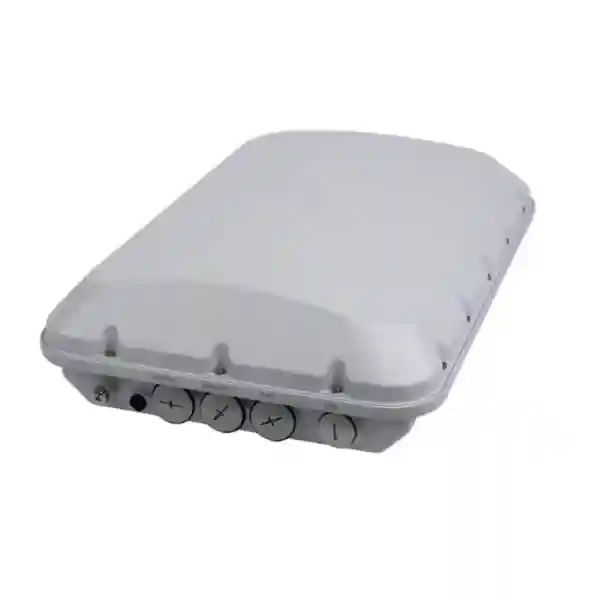
RUCKUS T670sn Outdoor Access Point
The RUCKUS T670sn Outdoor Access Point is designed for outdoor wireless projects where capacity, directional control and operational flexibility matter as much as raw coverage. RUCKUS positions the T670sn as a Wi-Fi 7 outdoor access point with a programmable sector antenna that can be switched by software between wide and narrow beam patterns. This makes the model especially relevant when a venue needs to focus RF energy into a defined seating zone, street corridor, platform, courtyard, loading area, resort space or event section instead of broadcasting evenly in every direction. It is a practical option for planners comparing high-density outdoor Wi-Fi, sector access points, Wi-Fi 7 campus coverage and managed public-venue wireless.
FourTeck supports buyers who are searching for a RUCKUS T670sn supplier, RUCKUS T670sn price, outdoor Wi-Fi 7 access point, enterprise sector Wi-Fi or a quotation for RUCKUS outdoor wireless. The correct design should be based on local regulatory rules, expected client density, coverage geometry, wired uplink capacity, PoE budget, mounting position and management platform. RUCKUS identifies a dual-band 2.4 GHz and 5 GHz configuration for global use, while tri-band 2.4/5/6 GHz operation is associated with specific regulatory domains. For that reason, FourTeck does not assume that 6 GHz operation is available in every requested country; the regional SKU, permitted bands and configuration should be confirmed before ordering.
What buyers should know before requesting a RUCKUS T670sn quote
The T670sn is not simply an outdoor access point with a faster radio. Its differentiator is the programmable sector antenna. RUCKUS describes the antenna as software defined so an administrator can move between a wide pattern and a narrower pattern without physically changing the antenna assembly. For a stadium, the narrow pattern can help concentrate coverage toward a seating block. For a courtyard, campus path, pool deck or transport platform, a broader pattern may be more appropriate. The buying decision therefore starts with geometry: where are the users, what areas must be served, which areas should receive less energy, and what obstructions or reflective surfaces affect the RF environment?
RUCKUS lists the T670sn with a maximum antenna gain up to 12.8 dBi, support for ChannelFly, SmartMesh and PD-MRC, and a published concurrent-user figure of 768. The manufacturer also lists tri-radio capability and a combined maximum PHY rate of 9.34 Gbps for configurations that use all three bands. Those figures are useful for product comparison but they are not a promise of application throughput. Real performance depends on channel width, regulatory domain, client capability, interference, airtime contention, backhaul, switch capacity, power mode, mounting and network design. In global deployments, RUCKUS specifically describes a dual-band 2.4 GHz and 5 GHz configuration with a maximum physical data rate of 6.454 Gbps. Buyers in Dubai, the wider UAE, Africa, Kuwait and Seychelles should therefore ask for regulatory-domain confirmation instead of assuming that every published band is enabled locally.
Power and switching should be checked at the same time as the access point. A 5 GbE uplink is only useful when the upstream switch port, cabling and power budget support the intended design. Where the AP is deployed in a larger secured network, VLANs, guest access, firewall policy and internet capacity should be designed together. The FourTeck firewall deployment guidance explains how wireless networks, VLANs, policies and upstream security fit into a wider site design.
Verified RUCKUS T670sn specifications and planning implications
| Specification | Verified product detail | What it means when planning |
|---|---|---|
| Product type | Outdoor Wi-Fi 7 access point | Designed for outdoor enterprise and public-venue use rather than a consumer outdoor extender. |
| Programmable antenna | Software-switchable sector coverage, described by RUCKUS with narrow and wide patterns; ordering information identifies 30-degree and 120-degree modes. | Useful when an RF plan needs directional coverage that may change without a physical antenna swap. |
| Antenna gain | Up to 12.8 dBi | Site survey and local EIRP rules still matter; do not use gain alone to estimate coverage distance. |
| Ethernet | 1 x 1/2.5/5 GbE plus 1 x 1 GbE | Review multigig switch support, PoE capability and copper cabling before installation. |
| Concurrent users | RUCKUS lists 768 | Treat this as a platform maximum, not a recommended design target; application demand and airtime determine usable capacity. |
| Management | RUCKUS One, SmartZone and Unleashed | Choose based on estate size, cloud preference, controller architecture, licensing and operations. |
| Environmental range | -40°C to +65°C published operating range; RUCKUS describes the enclosure as IP67 | Outdoor suitability still requires correct mounting, cable weatherproofing, surge planning and site-specific installation practice. |
| Radio configuration | Tri-radio hardware; RUCKUS also documents a global dual-band 2.4/5 GHz operating configuration | Confirm permitted bands and correct country code before quoting or configuring a regional deployment. |
High-density outdoor areas
Consider the T670sn where users are concentrated in stands, plazas, event areas, transit waiting zones or outdoor hospitality spaces and a directional sector is more useful than a broad omnidirectional cell.
Campus and smart-space design
The model can fit campus pathways, courtyards, outdoor learning areas and public spaces when AP placement, roaming, PoE switching and management are planned as one WLAN rather than isolated coverage islands.
Transport, logistics and operational zones
Directional outdoor Wi-Fi may support yards, terminals, loading lanes and operational areas, but scanner roaming, vehicle movement, interference, mounting height and protected cabling should be validated through an RF design.
RUCKUS T670sn controller, switching and security planning
A complete outdoor WLAN quotation normally includes more than the AP itself. Confirm the RUCKUS management model, required subscription or controller entitlement, PoE source, switch uplink speed, mounting hardware, surge protection approach, structured cabling, fiber extension if copper distance is unsuitable, and the security policy applied to staff, guests and operational devices. For larger estates, naming standards, firmware governance, monitoring, configuration backup and fault escalation should be agreed before the first AP is installed.
If the new WLAN connects to an existing internet edge, review guest isolation, internal VLAN routing and application access with the firewall team. The perimeter firewall planning page explains the role of segmentation and controlled traffic flows. Buyers evaluating a compact security gateway with PoE-capable ports can also review the Palo Alto Networks PA-415 page; larger Wi-Fi projects will generally use dedicated multigig PoE switching rather than relying on a small firewall’s integrated power budget.
FourTeck can coordinate the product conversation around WLAN design and upstream security without presenting unrelated firewall hardware as a direct substitute for a wireless controller or PoE switch. The goal is to make the bill of materials coherent: the AP, controller, switch, security gateway, internet capacity and cabling should be able to support the same target user experience.
RUCKUS T670sn Outdoor Access Point Dubai
Customers searching for a RUCKUS T670sn Outdoor Access Point Dubai supplier are usually trying to solve one of three problems: extend enterprise Wi-Fi into a heat-exposed outdoor area, improve capacity in a busy hospitality or public venue, or replace a conventional fixed-sector design with a more adaptable Wi-Fi 7 platform. In Dubai, likely projects include resort grounds, pool and terrace areas, campus courtyards, logistics yards, event venues, transport zones, outdoor retail spaces and large commercial properties. The T670sn’s software-defined sector antenna is particularly relevant where the RF footprint must be aimed toward a defined user zone rather than spread equally around the AP. A wide sector can serve a broad space, while a narrow sector can focus coverage into a more concentrated direction when the design calls for it.
A Dubai quotation should begin with the outdoor location and mounting plan. High ambient temperature, direct sun, roof or pole exposure, long cable runs and surge risk all affect installation quality. RUCKUS publishes an operating temperature range from -40°C to +65°C and describes the T670sn as IP67, but those ratings do not remove the need for weatherproof cable entries, correct mounting hardware, grounded infrastructure and protected network cabling. The switch design matters too: the AP offers a 1/2.5/5 GbE port, so buyers planning high-capacity Wi-Fi should verify that the access switch supports the required multigig speed and PoE mode. A basic 1 GbE PoE port may create an avoidable bottleneck or power limitation depending on the selected configuration.
Dubai buyers should also confirm the regulatory domain and permitted radio configuration. RUCKUS markets a tri-band configuration for certain regions and a dual-band 2.4 GHz plus 5 GHz configuration for global use. FourTeck will therefore treat 6 GHz as a country- and configuration-dependent capability rather than promising that it can be enabled on every UAE deployment. Share the intended location, approximate coverage area, expected peak users, device types, internet speed, switch model and whether the network already uses RUCKUS One, SmartZone or Unleashed. That information makes a RUCKUS T670sn price request much more useful than asking for a bare unit price.
For wider UAE infrastructure planning, buyers can review FourTeck UAE IT and networking solutions. If the outdoor WLAN will be segmented through a next-generation firewall, the PA-Series firewall planning resource provides related guidance on security sizing, interfaces and deployment scope. The access point and firewall should be selected for their own roles and connected through a properly sized switching layer.
RUCKUS T670sn Outdoor Access Point UAE
The RUCKUS T670sn Outdoor Access Point UAE requirement is broader than a single Dubai site. Organisations may be planning outdoor Wi-Fi for Abu Dhabi campuses, Sharjah industrial facilities, Ajman commercial properties, Ras Al Khaimah resorts or distributed locations that need a common WLAN standard. The T670sn can be considered when the design calls for a high-performance outdoor Wi-Fi 7 AP with directional sector coverage that can be changed through software. This can simplify RF operations in locations where the active user area changes over time, such as events, seasonal hospitality areas, temporary queue zones, multipurpose courtyards or sites that are expanded in phases.
For a UAE-wide rollout, standardisation is usually more important than the headline maximum data rate. The network team should decide which controller path is preferred, which AP naming and firmware policy will be used, how switches will provide multigig PoE, which VLANs are standard across sites, and how guest or contractor traffic will be isolated. The T670sn supports RUCKUS One, SmartZone and Unleashed according to current RUCKUS product information, giving buyers more than one operational model. The best choice depends on the scale of the estate, central-management requirements, subscription preferences and the existing RUCKUS environment. A buyer replacing older outdoor APs should also verify whether current mounting hardware, switch power and cable quality can be reused instead of assuming physical compatibility.
Country radio rules are a procurement item, not an afterthought. RUCKUS describes the global configuration as dual-band Wi-Fi 7 on 2.4 GHz and 5 GHz, while its tri-band configuration includes 6 GHz in supported domains. FourTeck will confirm regional ordering and configuration rather than promising a 6 GHz channel plan before the exact UAE SKU and regulatory support are established. This is especially important for projects that are copied from a US reference architecture, because a design that relies on 6 GHz channels or AFC assumptions may not map directly to the UAE version.
When requesting a UAE quote, provide quantity, site cities, estimated client counts, area drawings, existing switch models, cable distances, controller preference and target project schedule. Buyers can use FourTeck UAE for wider infrastructure coordination. For organisations that need to secure multiple wireless VLANs behind a central policy point, review the FourTeck Firewall Dubai network-security site and the deployment guidance before finalising the end-to-end design.
RUCKUS T670sn Outdoor Access Point Uganda
A RUCKUS T670sn Outdoor Access Point Uganda project may serve very different environments: university campuses, hotels, hospitals, business compounds, schools, warehouses, public facilities, industrial yards or multi-building organisations. Uganda buyers often need a wireless design that remains manageable when sites combine indoor offices with courtyards, parking areas, walkways and detached buildings. The T670sn is relevant where outdoor coverage should be directional and where a software-switchable wide or narrow sector can make the AP easier to adapt after installation. Instead of treating outdoor Wi-Fi as a single long-range cell, the RF plan can divide the site into controlled coverage zones that reduce unnecessary overlap and concentrate airtime where users actually gather.
For Uganda procurement, wired infrastructure readiness deserves early attention. A 5 GbE-capable access point can only deliver its intended backhaul potential when the upstream switch, cable and PoE system support the selected operating mode. If a campus has older Cat5e runs, unmanaged switches or limited PoE budgets, the project should identify upgrade areas before equipment arrives. Where APs are located far from the communications room, fiber-fed outdoor cabinets or intermediate switching may be more practical than stretching copper beyond its supported distance. Power stability, surge protection and secure mounting should be planned for exposed outdoor positions, especially where equipment is installed on poles, perimeter walls or elevated structures.
Uganda buyers should also ask how the WLAN will be managed. RUCKUS lists RUCKUS One, SmartZone and Unleashed support for the T670sn. A small standalone property may value a simpler management model, while a university, multi-branch enterprise or managed network may prefer centralised control and monitoring. The selection affects licensing, administration, troubleshooting and expansion. Radio configuration must be confirmed for the local regulatory domain; the T670sn hardware supports 6 GHz capability in certain configurations, but RUCKUS describes dual-band 2.4/5 GHz operation for global use, so no Uganda project should be based on assumed 6 GHz availability without confirmation.
For Uganda-focused infrastructure support, visit FourTeck Uganda networking and IT solutions. When asking for a quote, provide the city, site type, approximate outdoor area, number of expected users, current switch and firewall models, controller environment, preferred mounting points and whether guest Wi-Fi, staff mobility or operational scanners are the priority. These details help turn a general RUCKUS T670sn price request into a usable bill of materials.
RUCKUS T670sn Outdoor Access Point Kampala
The RUCKUS T670sn Outdoor Access Point Kampala use case is often urban and mixed-density. Kampala organisations may need wireless coverage across office compounds, schools, hospitality properties, shopping areas, clinics, training centres, apartment common areas or event grounds where indoor and outdoor client populations overlap. A directional outdoor AP can be useful when a building already has indoor coverage but a specific courtyard, driveway, terrace or open-air customer area remains weak. The T670sn’s software-defined sector pattern gives the network team a way to choose a wider or narrower coverage shape without replacing the antenna system, which can be valuable when a site changes layout or adds a new user zone.
Kampala deployments should avoid the common mistake of selecting AP quantity only from square metres. Building walls, metal roofs, trees, vehicles, elevation changes, neighboring networks and user concentration all affect RF behavior. A busy outdoor restaurant may need more capacity than a larger but lightly used compound. A school assembly yard may experience sharp peaks at break time. A clinic may need dependable roaming for staff devices but strict isolation for visitors. The T670sn can be part of these designs, but the project should define the number of simultaneously active devices, application mix, roaming paths, expected uplink traffic and acceptable coverage at the edges of each sector.
The upstream network should be prepared for multigigabit connectivity. RUCKUS lists one 1/2.5/5 GbE port plus one 1 GbE port on the T670sn. If the network switch has only 1 GbE ports, the AP can still be discussed as part of a phased upgrade, but the buyer should understand the backhaul limitation. PoE mode, switch power budget, surge protection, cable route and weatherproof termination should be included in the quote scope. For controller planning, choose between RUCKUS One, SmartZone and Unleashed based on the size and support model of the network rather than assuming one platform fits every Kampala customer.
Kampala customers can use FourTeck Uganda as the regional enquiry route. Send a simple site sketch showing buildings, outdoor zones, likely mounting points and any areas that should not receive strong coverage. Include switch model, internet speed, estimated peak users and whether this is a new RUCKUS installation or an expansion. That information helps FourTeck discuss antenna mode, AP count, controller path and accessories with less guesswork.
RUCKUS T670sn Outdoor Access Point Arua
A RUCKUS T670sn Outdoor Access Point Arua enquiry may come from an education campus, health facility, NGO compound, hospitality property, government site, logistics location or business that needs dependable wireless across multiple buildings and outdoor spaces. In such environments, the network is often expected to serve both normal office traffic and operational users moving between buildings. The T670sn can be considered when coverage needs to be projected toward a defined sector such as a courtyard, access road, waiting area or outdoor work zone. The ability to change between broad and narrow software-defined patterns helps the design team adapt the AP to the site instead of relying on a fixed physical antenna configuration.
For Arua, resilient infrastructure planning can matter as much as Wi-Fi generation. Outdoor APs need stable power, protected cable routes and a clear maintenance path. If the access point is mounted on a high pole or remote building, troubleshooting becomes expensive when basic items such as PoE budget, connectors or surge protection were not planned. A practical bill of materials should identify the switch port type, power source, mounting method, cable distance, grounding approach and whether a weather-protected intermediate cabinet is required. The T670sn’s multi-gigabit port can provide useful headroom, but only when the backhaul network is capable of carrying that traffic.
Where a site has intermittent or constrained WAN bandwidth, WLAN performance should not be confused with internet performance. Wi-Fi 7 can improve local radio efficiency and client service, but cloud applications remain limited by the available internet circuit. This is especially important for remote or regional sites where a very fast access layer may connect to a smaller upstream link. Network teams should decide which local applications, cloud services, guest users and operational devices receive priority, and they should apply VLANs and policy controls accordingly. The T670sn supports established RUCKUS management platforms, so it can fit into a centrally monitored estate even when individual sites have different uplink conditions.
Arua buyers can submit requirements through FourTeck Uganda. For a useful quotation, include the purpose of the outdoor network, coverage direction, number of buildings, approximate user count, current switch type, available internet connection, preferred management platform and any requirement for staff/guest separation. FourTeck can then help verify whether the T670sn is a sensible fit and what related infrastructure must be included.
RUCKUS T670sn Outdoor Access Point Mbarara
The RUCKUS T670sn Outdoor Access Point Mbarara requirement can arise in universities, healthcare campuses, hotels, agribusiness facilities, warehouses, corporate compounds and public institutions that need stronger coverage beyond indoor walls. Mbarara sites may include open land, detached buildings and outdoor circulation areas where users move between indoor and exterior networks. The T670sn is well suited to evaluation when the RF design needs a sector rather than a full omnidirectional cell. Its programmable antenna can switch between a wider and narrower pattern through software, giving administrators flexibility when the physical environment changes or when one part of the site becomes more heavily used.
For campus-style Mbarara deployments, roaming and handoff planning should be considered early. Adding a powerful outdoor AP without coordinating channels, transmit power and neighboring indoor cells can create sticky-client behavior or unnecessary co-channel interference. A proper plan maps the outdoor T670sn sectors against nearby indoor APs, identifies expected walking paths and tests common client devices. ChannelFly and other RUCKUS radio-management features can assist the network, but they do not replace a sensible physical design. The objective is not maximum signal everywhere; it is controlled coverage with enough capacity and predictable roaming.
Switching is another practical issue. The T670sn includes a multigigabit Ethernet interface capable of 1, 2.5 or 5 GbE plus an additional 1 GbE port. Buyers should confirm whether existing access switches support the required speed and power level. If the site is refreshing the wired network at the same time, the WLAN project can be used to standardise multigig PoE ports, VLANs and uplinks. If not, FourTeck can help identify where the existing infrastructure limits the benefit of a Wi-Fi 7 AP. Radio regulations should also be confirmed: RUCKUS documents a global dual-band configuration, so 6 GHz should not be assumed available in Uganda without the correct regulatory confirmation.
Mbarara organisations can contact FourTeck Uganda and share the site type, AP quantity being considered, outdoor dimensions, mounting height, switch model and controller environment. If the project includes internet-edge security and segmented wireless networks, use the FourTeck perimeter firewall guide as a checklist for upstream policy questions before finalising the WLAN design.
RUCKUS T670sn Outdoor Access Point Gulu
A RUCKUS T670sn Outdoor Access Point Gulu project may be driven by education, healthcare, hospitality, administration, logistics or multi-building enterprise requirements. The city-level buying question is usually not simply whether Wi-Fi reaches outdoors, but whether the network can support mobile users consistently across courtyards, walkways, waiting areas, parking zones and separate buildings. The T670sn adds value when the outdoor coverage area has a clear direction. Its internal sector antenna can be software switched between broad and narrow patterns, so the AP can be aimed conceptually at the user zone without requiring a separate external sector antenna for every change in coverage strategy.
Gulu buyers should treat outdoor mounting as part of the network design. AP height influences cell size and signal angle; mounting too high can create strong coverage at distance but poor service directly below, while mounting too low may increase obstruction by vehicles, walls or vegetation. A site survey should therefore consider the user plane, not just the easiest pole or roof position. The published IP67 enclosure and wide operating-temperature range make the T670sn appropriate for outdoor consideration, but exposed cable connections, lightning risk, mechanical security and accessible maintenance remain installation responsibilities.
Management choice is another procurement factor. An organisation with several Gulu and Kampala sites may want central policy and monitoring through RUCKUS One or SmartZone, whereas a smaller network may evaluate Unleashed depending on scale and feature requirements. The correct software and licensing should be quoted alongside the AP so the buyer understands the complete operating cost. Similarly, the 5 GbE interface should be matched to a suitable PoE switch and uplink. If a site uses older switches, FourTeck can identify whether a switch refresh is required now or can be staged later.
For Gulu enquiries, use FourTeck Uganda and provide a short description of the site, number of expected users, applications, internet capacity, existing RUCKUS environment and proposed mounting locations. This helps distinguish a capacity problem from a coverage problem and makes the RUCKUS T670sn quotation more accurate. Radio-band support will be confirmed for the Uganda regulatory domain rather than inferred from a datasheet published for multiple global markets.
RUCKUS T670sn Outdoor Access Point Kenya
The RUCKUS T670sn Outdoor Access Point Kenya market includes enterprise campuses, universities, resorts, business parks, logistics facilities, manufacturing sites, stadium-style venues and public spaces in Nairobi, Mombasa, Kisumu, Nakuru, Eldoret and other locations. Kenya buyers looking for an outdoor Wi-Fi 7 access point frequently need a design that supports high user counts while controlling interference between adjacent cells. The T670sn is particularly interesting for this requirement because its programmable sector antenna can change between wide and narrow coverage through software. In a venue with defined seating, queueing, terrace or yard zones, directional coverage can be more useful than an omnidirectional AP that sends energy into areas with few users.
For coastal or exposed locations, the environmental installation should be reviewed carefully. RUCKUS lists IP67 and an operating range extending to +65°C, but enclosure rating alone does not guarantee a trouble-free deployment. Mounting hardware, cable glands, UV exposure, surge protection, salt-laden air, grounding and maintenance access should all be considered. In Nairobi or inland campuses, interference and density may be the bigger challenge. A survey should identify neighboring WLANs, event peaks, client capabilities and whether directional sectors can be reused across repeating outdoor layouts.
The wired edge must also keep up with the radio. The T670sn offers a 1/2.5/5 GbE interface and a secondary 1 GbE interface, so a high-capacity deployment should use a switch with suitable multigigabit PoE support and adequate uplink bandwidth. For a campus, it may be sensible to place the outdoor AP on dedicated wireless VLANs and use central security policy for staff, visitors and operational devices. The firewall or gateway must then be sized for the aggregate traffic, not just the speed of one AP. Buyers evaluating wider network upgrades can review FourTeck Kenya enterprise networking solutions.
A Kenya quotation should state the deployment city, number of APs, preferred management model, switch type, estimated active users per area, mounting height, backhaul topology and whether this is a new WLAN or an expansion of an existing RUCKUS network. RUCKUS documents global dual-band operation on 2.4 and 5 GHz and tri-band capability for supported domains; FourTeck will therefore verify local regulatory configuration before treating 6 GHz as part of the Kenya design. This avoids building an RF plan around channels that may not be available for the quoted regional model.
RUCKUS T670sn Outdoor Access Point Kuwait
A RUCKUS T670sn Outdoor Access Point Kuwait deployment must account for outdoor heat, direct solar exposure, dust, large paved spaces and the RF characteristics of commercial, hospitality, education and industrial environments. Potential use cases include resort grounds, hotel pools, university courtyards, logistics yards, compounds, transport areas, event zones and outdoor retail. The T670sn’s software-switchable sector antenna is useful when the design needs to direct coverage toward a particular area instead of relying on a fixed omnidirectional pattern. A narrow sector may serve a concentrated user zone, while a wider sector can cover a broader open space when client density is lower.
The manufacturer publishes an operating temperature range up to +65°C and describes the T670sn as IP67, which makes it suitable for evaluation in challenging outdoor environments. Even so, installers should minimise unnecessary solar loading where practical, use appropriate weatherproof cabling, protect exposed Ethernet routes and plan surge protection and grounding. Dust and heat can also affect upstream cabinets and PoE switches, so the environmental rating of the entire chain matters. A rugged AP connected to an unsuitable switch enclosure does not create a rugged system.
Kuwait buyers asking for RUCKUS T670sn price should specify whether they need the AP only or a complete wireless package. A complete scope may include controller or cloud management, support entitlement, multigig PoE switching, mounting hardware, cable work, VLAN design, firewall policy and post-installation testing. The T670sn supports RUCKUS One, SmartZone and Unleashed, so management should be selected to fit the organisation’s scale and existing RUCKUS estate. For organisations with more than one Kuwait site, central visibility and standard configuration may be more valuable than a standalone management approach.
Radio configuration requires regional confirmation. RUCKUS describes dual-band 2.4/5 GHz operation as the global-use configuration, while tri-band operation with 6 GHz is tied to supported regulatory domains. FourTeck will not assume that every 6 GHz feature shown in international specifications is enabled in Kuwait. Share the required coverage geometry, expected clients, mounting locations, switch details and management preference so the correct regional part and software path can be discussed. If the WLAN feeds segmented corporate and guest networks, the Sophos XGS 88 planning page illustrates the sort of gateway-interface and security questions that should be considered for smaller sites, while larger estates require a correspondingly larger security design.
RUCKUS T670sn Outdoor Access Point Ghana
The RUCKUS T670sn Outdoor Access Point Ghana opportunity includes hotels, universities, corporate campuses, schools, logistics facilities, warehouses, industrial compounds, hospitals and event spaces that need managed Wi-Fi beyond building interiors. Ghana buyers may be comparing RUCKUS outdoor access point suppliers, Wi-Fi 7 outdoor APs, sector antennas or enterprise wireless solutions for Accra, Tema, Kumasi, Takoradi and other cities. The T670sn is a strong candidate when coverage must be directed into a defined zone. Its software-defined sector antenna can change between broad and narrow patterns, helping network teams tune coverage for a courtyard, loading area, outdoor guest space, campus path or concentrated crowd without replacing the antenna assembly.
In Ghana, outdoor Wi-Fi planning should account for both RF and physical infrastructure. Tropical rain, humidity, heat and lightning exposure make cable termination, surge protection, grounding and mounting important. RUCKUS lists IP67 and a wide operating-temperature range for the T670sn, but installation quality remains essential. Sites near the coast should also consider the broader environmental condition of mounting hardware and network cabinets. The AP may be weather rated, while an upstream junction box, patch lead or switch enclosure is not. A resilient design evaluates the complete path from the AP back to the network core.
The switch should be checked for 2.5/5 GbE and the required PoE standard if the deployment is intended to use the AP at full capability. Existing 1 GbE switches may still be part of a phased design, but the buyer should know that the wired edge can limit aggregate throughput. Client density is another sizing input. RUCKUS publishes a maximum concurrent-user figure, yet a busy hotel event or university gathering should be designed based on actual application demand, not the maximum association count. Video, cloud collaboration, guest browsing, payment systems and operational devices all create different airtime and WAN requirements.
Ghana customers can review FourTeck Ghana networking and Wi-Fi services and submit site details for quotation. Include the city, user zones, expected peak clients, existing access switches, internet bandwidth, controller preference and whether the project needs staff/guest segmentation. The correct local radio configuration will be verified before quotation; 6 GHz should be treated as regulatory-domain dependent rather than assumed from the hardware’s global specification set.
RUCKUS T670sn Outdoor Access Point Nigeria
The RUCKUS T670sn Outdoor Access Point Nigeria is relevant to enterprise wireless projects in Lagos, Abuja, Port Harcourt and other commercial centres where organisations need dependable outdoor coverage for campuses, hotels, industrial sites, logistics yards, schools, hospitals, mixed-use developments or event areas. Nigeria buyers often need wireless networks that handle both normal daily traffic and short high-density peaks. The T670sn’s software-switchable sector antenna can help a designer create more deliberate RF cells, using a wide pattern where users are spread across a broad area and a narrow pattern where demand is concentrated along a corridor, seating block, loading zone or defined outdoor venue section.
Power and backhaul resilience should be part of the Nigeria design discussion. The AP has a multigigabit 1/2.5/5 GbE interface plus a secondary 1 GbE interface, so a modern PoE switch can provide both power and a high-capacity wired path. If the site relies on power backup, the switch and any intermediate cabinets should be included in the UPS or generator plan according to the organisation’s uptime goals. Long outdoor cable routes may require fiber or distributed switching rather than oversized copper runs. Surge protection and grounding are important where APs are mounted on rooftops, poles or exposed structures.
Nigeria enterprises with multiple branches should also decide how the WLAN will be operated centrally. RUCKUS lists support for RUCKUS One, SmartZone and Unleashed. A national retail, education or hospitality organisation may value central templates, monitoring and firmware governance, while a single independent site may prefer a smaller operational model. Management choice should be agreed before ordering because it influences subscriptions, controller requirements, administrator workflow and support. Firewall segmentation should separate guest, employee, IoT and operational devices where the business risk requires it.
For Nigeria-specific enquiries, use FourTeck Nigeria IT solutions. Share the target city, quantity, outdoor areas, expected peak users, current switching, internet bandwidth, controller platform and deployment timeline. FourTeck will verify the appropriate regulatory configuration rather than assuming that 6 GHz operation shown in some international T670sn material applies to every Nigeria installation. This matters when translating a global reference design into a locally compliant bill of materials.
RUCKUS T670sn Outdoor Access Point Seychelles
A RUCKUS T670sn Outdoor Access Point Seychelles deployment is likely to be shaped by hospitality, resort, campus and public-space requirements. Hotels and resorts may need Wi-Fi across pool decks, beachfront activity areas, garden paths, restaurants, event lawns and detached accommodation blocks. The T670sn is useful to evaluate where the network should project coverage toward a specific guest or staff area rather than radiating equally in every direction. Its software-controlled wide and narrow sector patterns can support changing venue layouts, seasonal activity zones or phased property expansions without requiring a technician to replace the antenna each time the desired coverage shape changes.
Island and coastal environments place special emphasis on installation quality. RUCKUS publishes IP67 and a wide outdoor operating-temperature range, but buyers should still specify weather-resistant Ethernet components, protected cable routing, suitable mounts, grounding and surge protection. Salt air can affect exposed metal and connectors over time, so inspection and maintenance should be part of the operational plan. If APs are mounted away from the main building, planners should verify whether copper distance is acceptable or whether fiber-fed remote switching is a better architecture. The objective is to make the entire network path as reliable as the access point itself.
Guest Wi-Fi in hospitality also creates capacity and security questions. A pool or beach zone may have many phones using social media, video and cloud backup at the same time. Staff devices, point-of-sale terminals and operational systems should not automatically share the same access policy as visitors. The WLAN controller, switch VLANs, DHCP, firewall and internet circuit should be designed together. RUCKUS One or SmartZone may be attractive where several properties or many APs require central operations, while Unleashed can be evaluated for suitable smaller environments. The right choice depends on estate size and feature requirements.
For Seychelles procurement, provide island or property location, the type of venue, outdoor map, mounting options, expected guest count, backhaul and internet capacity, current RUCKUS environment and any central-management requirement. Radio operation must be confirmed against the local regulatory domain. RUCKUS describes a global dual-band configuration, so 6 GHz should not be treated as automatically available. FourTeck can use these inputs to prepare a clearer T670sn quotation and identify whether multigig PoE switching, mounting, controller licensing or security work should be added to the bill of materials.
Selection guide: when the T670sn is the right type of outdoor AP
Good fit
Outdoor venues where directional coverage is desirable, client density is meaningful, Wi-Fi 7 is part of the lifecycle plan, multigig backhaul is available or planned, and the organisation values centrally managed enterprise WLAN features.
Needs review
Sites with only 1 GbE non-PoE switching, uncertain mounting, no survey, long unsupported copper runs, highly constrained internet bandwidth or no plan for controller/licensing should address those dependencies before ordering.
May be excessive
A small low-density outdoor area with modest bandwidth and no need for sector control may be served by a simpler outdoor AP. FourTeck can compare the project requirement rather than assuming the newest model is automatically the best economic choice.
Related FourTeck network and security resources
Outdoor Wi-Fi usually touches switching, cabling, firewall segmentation and internet-edge policy. The following verified FourTeck pages are useful when building the wider project scope. The Palo Alto Networks PA-410 page illustrates a compact firewall without integrated Wi-Fi or PoE and explains why separate access points and switching may be required. The PA-415 page discusses limited integrated PoE in a branch-security context, useful for understanding why higher-density WLANs normally use dedicated PoE switching.
For rugged or industrial-edge security projects, review the PA-400R rugged firewall guidance. For broader enterprise policy and lifecycle planning, use the PA-Series planning page. These products are not substitutes for the RUCKUS T670sn; they are examples of the upstream security decisions that often sit behind an enterprise WLAN.
FourTeck also provides a general company and supported-platform overview, a firewall deployment guide, and the perimeter firewall resource for segmentation, VPN and policy planning. Use the FourTeck contact page to share the final RUCKUS requirement.
Frequently asked questions about the RUCKUS T670sn
Is the RUCKUS T670sn a Wi-Fi 7 outdoor access point?
Yes. RUCKUS classifies the T670sn as an outdoor Wi-Fi 7 access point supporting IEEE 802.11be along with earlier Wi-Fi standards listed in its product specifications.
What is special about the T670sn antenna?
The T670sn uses a programmable internal sector antenna. RUCKUS describes software-defined narrow and wide coverage patterns, and ordering information identifies sector modes around 30 degrees and 120 degrees. This allows coverage shape to be changed without replacing the physical antenna.
Does the T670sn support 6 GHz everywhere?
No universal assumption should be made. RUCKUS documents tri-band operation for supported regulatory domains and a dual-band 2.4/5 GHz configuration for global use. The permitted radio configuration must be confirmed for the country and ordering code.
What Ethernet ports does it have?
RUCKUS lists one Ethernet port supporting 1, 2.5 and 5 GbE speeds plus one 1 GbE Ethernet port. The upstream switch and cabling should be selected accordingly.
How many users can the T670sn support?
RUCKUS publishes a concurrent-user figure of 768. This is a platform maximum rather than a recommended capacity target. Real design capacity depends on applications, client radios, airtime, channel plan and service expectations.
Can it be managed with RUCKUS One?
Yes. Current RUCKUS product information lists RUCKUS One, SmartZone and Unleashed as controller or management options for the T670sn.
Is it suitable for stadiums and public venues?
RUCKUS positions the T670sn for high-density outdoor environments including large public venues. Suitability for a specific stadium, arena or event site still requires an RF design based on seating geometry, interference, expected devices and backhaul.
Is the T670sn weather resistant?
RUCKUS describes the T670sn as IP67 and publishes an operating temperature range from -40°C to +65°C. Correct outdoor mounting, weatherproof cabling, surge protection and grounding are still required.
Do I need a multigig PoE switch?
A multigig PoE switch is strongly worth evaluating because the AP includes a 5 GbE-capable interface. The exact PoE mode, switch port capability and power budget should be confirmed against the intended configuration and RUCKUS deployment documentation.
How do I get a RUCKUS T670sn quotation?
Send the country, city, quantity, coverage area, expected peak users, existing switch model, controller environment, mounting details and project schedule. FourTeck can then verify the regional part, management path and related infrastructure before quoting.
Decision recap
Choose the RUCKUS T670sn for evaluation when you need enterprise outdoor Wi-Fi 7, directional sector coverage, software flexibility and multigigabit wired connectivity. Do not select it only because of the 9.34 Gbps headline PHY figure. The better decision comes from matching the antenna pattern to the physical user zone, confirming the regulatory-domain radio configuration, sizing PoE and switch uplinks, selecting the correct RUCKUS management platform and securing each wireless network appropriately.
Quotation checklist
Talk to FourTeck about the RUCKUS T670sn
A useful quotation should identify the correct regional product, intended controller path, PoE and multigig requirements, mounting approach and the surrounding network services. FourTeck can help structure those inputs for Dubai, UAE, Uganda, Kampala, Arua, Mbarara, Gulu, Kenya, Kuwait, Ghana, Nigeria and Seychelles without assuming stock, delivery time or unsupported regional radio capability.
For network-security integration, review the Firewall Dubai solution site. For regional IT enquiries use the linked FourTeck country resources above. When ready, send the site details through the sales contact page so the RUCKUS T670sn can be quoted against the actual deployment rather than as an isolated hardware line.

Reviews
There are no reviews yet.