
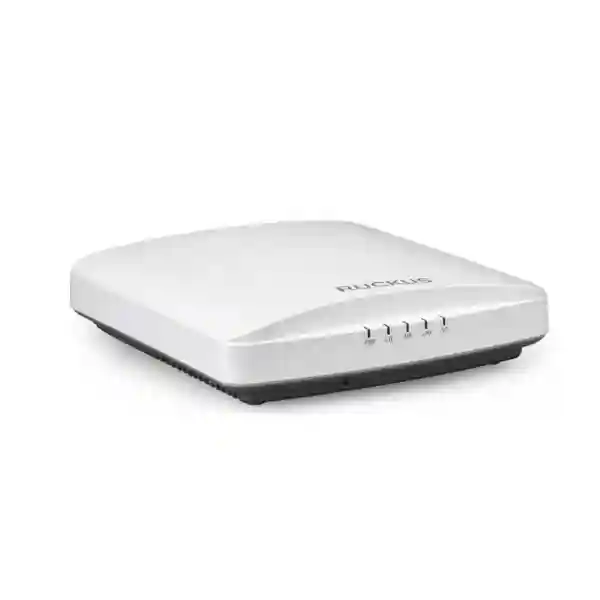
RUCKUS R650 Indoor Access Point
The RUCKUS R650 is designed for organizations that need stronger wireless capacity than a basic small-office access point can provide, but still want a practical indoor platform for offices, education, retail, hospitality work areas and other medium-density environments. RUCKUS positions the R650 as a Wi-Fi 6 dual-band access point with six spatial streams, combining 4×4:4 operation on 5 GHz with 2×2:2 on 2.4 GHz. It also brings a 2.5GbE Ethernet interface, a second Gigabit Ethernet interface, BeamFlex+ adaptive antenna technology, SmartMesh, onboard Bluetooth Low Energy and Zigbee, and multiple management approaches. FourTeck can help buyers turn those platform capabilities into a deployable bill of materials that accounts for PoE, switching, cabling, management, mounting, regulatory domain and the number of access points required for the site.
Wi-Fi generation: Wi-Fi 6 (802.11ax)
Radio design: 4×4:4 at 5 GHz and 2×2:2 at 2.4 GHz
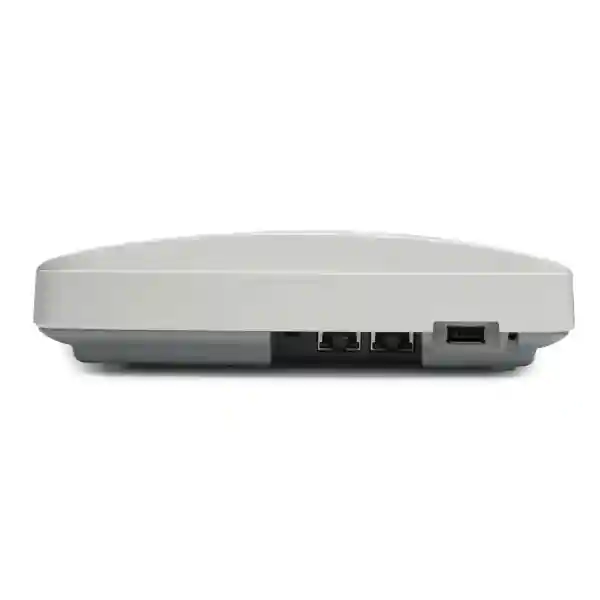
Wired interfaces: 2.5GbE plus 1GbE
IoT radios: onboard BLE and Zigbee
Management: controller, cloud or controller-less options depending on software choice
What the RUCKUS R650 is designed to solve
Business Wi-Fi planning is no longer only about providing a signal. A modern office or campus may have laptops, phones, scanners, video endpoints, meeting-room devices, printers, tablets, guest clients and IoT equipment competing for airtime. The access point must also cope with neighboring networks, changing channel conditions, user movement and applications such as cloud collaboration, video calls and SaaS platforms. The RUCKUS R650 addresses this class of requirement with Wi-Fi 6 features and RUCKUS radio technologies aimed at improving efficiency and coverage in busy indoor environments.
The 5 GHz radio supports four spatial streams while the 2.4 GHz radio supports two, giving the platform six spatial streams in total. RUCKUS BeamFlex+ uses adaptive antenna patterns to help optimize the RF path, while ChannelFly can assist channel selection based on observed conditions. SmartMesh can be useful where an Ethernet drop is difficult to provide to every location, although wired backhaul remains the preferred design for predictable capacity when cabling is practical. For converged environments, the onboard BLE and Zigbee capabilities can support IoT-related use cases without requiring a separate radio in the basic access point design.
A successful deployment still depends on design. The number of clients a platform can theoretically manage is not the same as the number that should be planned for one access point in a production network. Device mix, channel width, application demand, wall construction, neighboring RF activity, roaming behavior, uplink design and QoS all affect user experience. FourTeck therefore recommends reviewing the floor plan, expected device count, application profile and existing switch infrastructure before fixing access-point quantity or placement.
BeamFlex+ RF intelligence
Adaptive antenna patterns help the access point respond to real RF conditions rather than relying on a single fixed antenna pattern.
2.5GbE uplink
The multi-gigabit Ethernet interface helps avoid a basic 1GbE uplink becoming an unnecessary wired bottleneck in higher-demand deployments.
Flexible management
R650 deployments can be planned around RUCKUS management choices such as SmartZone, supported controller-less options and cloud-oriented management, subject to software and licensing requirements.
Integrated IoT radio
Onboard Bluetooth Low Energy and Zigbee support helps consolidate wireless infrastructure where business or building use cases require those technologies.
Verified RUCKUS R650 specification highlights
| Area | Published R650 capability | Planning note |
|---|---|---|
| Wireless standard | IEEE 802.11a/b/g/n/ac/ax, Wi-Fi 6 generation | Client capability and channel plan determine the performance users actually see. |
| Radio chains and streams | 4×4:4 on 5 GHz and 2×2:2 on 2.4 GHz | Design should normally prioritize 5 GHz capacity for capable business clients. |
| Ethernet | One 2.5GbE port and one 1GbE port | Confirm switch port speed, PoE budget, cabling and VLAN design before installation. |
| PoE | 802.3af/at support | Published datasheet behavior differs by supplied power level; PoE+ should be reviewed where full functionality is required. |
| Client scale | Up to 512 concurrent client connections listed by RUCKUS | This is a platform maximum, not a recommended per-AP design target for every application. |
| IoT | Onboard BLE and Zigbee; USB 2.0 interface | Confirm application, module and management compatibility for the intended IoT workflow. |
| RF technologies | BeamFlex+, ChannelFly and SmartMesh | RF survey and placement still matter; automatic features do not replace site design. |
Manufacturer documentation can be revised over a product lifecycle. Published peak PHY-rate and environmental figures can differ between document revisions, so procurement teams should confirm the current regional datasheet, firmware support and ordering code before purchase.
Who should consider the R650?
The R650 is especially relevant where a business is upgrading from older 802.11ac access points, adding more wireless clients, increasing use of video and cloud applications, or standardizing Wi-Fi 6 across multiple locations. Typical environments include office floors, classrooms, libraries, retail spaces, branch offices, clinics, training rooms and customer-facing indoor areas. Its value is strongest when the wired network can support the access point correctly: appropriate PoE, reliable Category cabling, VLANs, DHCP, DNS, authentication services and an uplink architecture that does not constrain the wireless layer.
For a new project, share the number of users, expected devices per user, floor plans, wall construction, ceiling height, internet bandwidth, existing switch models, PoE budget, guest Wi-Fi requirement, authentication method, controller preference and any roaming-sensitive applications. These details allow a more useful discussion than asking only for the lowest unit price.
RUCKUS R650 Indoor Access Point Dubai
Customers searching for a RUCKUS R650 Indoor Access Point in Dubai are often planning a new office, upgrading an existing wireless network, improving coverage in a busy commercial floor, or replacing older access points that were designed for lower device density. Dubai deployments can vary from compact professional offices to education spaces, retail outlets, clinics, hospitality back-office areas, warehouses with indoor administrative zones and multi-floor corporate sites. The most useful first step is not to assume an access-point count from floor area alone. Building materials, glass partitions, reinforced walls, ceiling layout, neighboring Wi-Fi networks and the number of active devices can change the RF requirement significantly. A site with many meeting rooms and video calls may need a different design from an open office with the same square meter area.
For a Dubai R650 project, the wired side deserves equal attention. The access point includes a 2.5GbE interface, so buyers should check whether the access switch provides multi-gigabit ports where that capacity is needed. PoE should also be validated against the switch budget. The RUCKUS datasheet describes reduced functionality under lower-power 802.3af operation and full functionality with 802.3at PoE+, which makes power planning important when onboard IoT, the second Ethernet port or USB functions form part of the deployment. Existing Category 5e or better cabling may be reusable in many environments, but cable condition, run length and termination quality should be tested rather than assumed.
Management choice is another common Dubai buying question. A single site may prefer a simpler controller-less design, while a company with several offices may want centralized policy, monitoring and reporting through a RUCKUS management platform. Procurement should therefore confirm whether the quote includes only the access point hardware or also controller licensing, cloud subscriptions, support, mounting accessories, injectors or switching. FourTeck can coordinate the R650 discussion with broader UAE network requirements through FourTeck UAE IT and networking solutions.
Organizations also need to decide how the wireless network will be segmented and protected. Corporate SSIDs, guest Wi-Fi, IoT traffic and management access should not automatically share the same trust level. The wireless design should align with VLANs, DHCP, authentication and firewall policy. Buyers reviewing their security edge can also use the perimeter firewall planning guide to consider how guest and business WLAN traffic will be controlled. For a quotation, provide the Dubai site location, number of access points, switch model, management preference, expected users and whether installation or RF planning is required.
RUCKUS R650 Indoor Access Point UAE
For UAE organizations, the RUCKUS R650 is relevant to projects that need a consistent Wi-Fi 6 platform across a head office, branch network or distributed business environment. A UAE buyer may be comparing the R650 with lower-density models for smaller rooms or with higher-capacity models for auditoriums, larger training centers and demanding public areas. The correct decision depends on more than the headline radio specification. The number of active clients, application mix, roaming requirements, physical layout and the desired failure tolerance should be considered together. In multi-site environments, standardizing on one management approach and one configuration template can reduce operational variation, but each site may still need a different access-point count and channel plan.
UAE procurement teams should request the exact regional ordering code rather than assuming that every R650 part number is interchangeable. Wireless products operate under country-specific regulatory rules, so the quote should identify the appropriate regional model and ensure that firmware and regulatory-domain settings are suitable for the intended location. Power accessories also need attention. The base access point may not include an AC adapter, and PoE may be supplied by the access switch or a separate injector. A complete bill of materials should therefore show access points, mounting requirements, PoE source, switch uplinks, controller or cloud subscription where applicable and support coverage.
The R650 can be valuable in offices where 5 GHz usage is prioritized and client density has grown beyond what older Wi-Fi generations handled efficiently. Wi-Fi 6 features such as OFDMA and MU-MIMO are designed to improve multi-client efficiency, while BeamFlex+ provides RUCKUS-specific adaptive antenna behavior. These features are useful, but they do not eliminate the need for careful SSID design. Too many SSIDs can consume airtime, while unmanaged transmit power and channel width can create co-channel interference. A deployment review should therefore cover SSID count, authentication, roaming, guest access, RF settings and wired VLANs.
FourTeck’s network security and deployment services can be reviewed alongside the access-point project when the WLAN must integrate with segmentation, internet security and VPN infrastructure. The security product catalogue is also relevant where a new wireless rollout is part of a broader network refresh. UAE buyers should ask for a scoped quotation that identifies hardware, licensing, services and support separately so commercial comparisons remain clear.
RUCKUS R650 Indoor Access Point Uganda
Organizations evaluating the RUCKUS R650 Indoor Access Point in Uganda often need dependable wireless coverage for offices, schools, training facilities, hospitality properties, clinics, NGOs, retail environments and growing branch networks. The important buying question is whether the R650 matches the intended density and management model. For a single small office, a lower-capacity access point may be sufficient; for a busier floor with many devices, video meetings and shared cloud applications, the R650’s six spatial streams and Wi-Fi 6 features can provide a stronger foundation. A buyer should estimate active devices during peak periods rather than using employee count alone because phones, laptops, printers, scanners and guest devices can multiply the real client load.
Uganda deployments should also consider power continuity and switching. An access point can only remain available if the PoE switch, upstream network and internet equipment have appropriate backup power for the site’s needs. Where the R650 is connected to a PoE switch, confirm both per-port power and the total switch PoE budget across all connected devices. If CCTV cameras, IP phones and access points share the same PoE switch, the aggregate budget becomes especially important. If 2.5GbE backhaul is required, verify that the chosen switch supports multi-gigabit Ethernet; otherwise the R650 can still operate over a lower-speed uplink, but the wired path may limit peak aggregate traffic.
Cabling quality is another procurement factor. Structured cabling should be tested, labelled and documented before access points are mounted in hard-to-reach ceiling positions. In buildings with thick walls, metal roofing, long corridors or separated blocks, a survey can help decide whether additional wired access points are preferable to relying on mesh. SmartMesh is useful when cabling is difficult, but every wireless mesh hop consumes airtime and should be planned with the expected application load in mind.
For country-specific coordination, buyers can review FourTeck Uganda IT solutions, which covers networking and related infrastructure topics. When requesting an R650 quotation, include the city, project quantity, intended management platform, PoE switch details, floor plan availability and whether the requirement includes installation, configuration or only hardware supply. That information helps avoid incomplete quotes that omit controllers, subscriptions, injectors or supporting network upgrades.
RUCKUS R650 Indoor Access Point Kampala
Kampala buyers commonly search for enterprise access points when office growth, shared buildings, education environments or customer-facing spaces place more demand on Wi-Fi than a consumer router can handle. The RUCKUS R650 can fit these projects when the goal is a managed Wi-Fi 6 design with strong 5 GHz capacity, multi-gigabit wired connectivity and adaptive RF behavior. In dense commercial areas, nearby wireless networks can create a crowded radio environment. That makes channel planning, transmit-power strategy and access-point placement more important than simply buying the model with the highest advertised speed.
A Kampala office in a multi-tenant building may encounter neighboring SSIDs on several floors. In that situation, more access points are not always better. Poor placement or excessive transmit power can increase co-channel interference and roaming problems. A practical design aims for adequate signal where users work while encouraging clients to move cleanly between access points. RUCKUS BeamFlex+ and ChannelFly can help the radio respond to conditions, but site design should still account for wall materials, meeting-room density, elevator cores, corridors and high-use areas such as reception zones or training rooms.
Procurement teams should confirm the switching path before ordering. If an existing switch provides only 1GbE and limited PoE, decide whether it will remain in service or be upgraded. The 2.5GbE port on the R650 is valuable only when the upstream switch and cabling support the desired link rate. PoE+ is also worth planning for full access-point functionality. Where power continuity is a business requirement, place the PoE switch and upstream firewall/router on a UPS sized for the required runtime. This approach can keep Wi-Fi available during short power interruptions more effectively than using local power adapters at each access point.
Kampala customers should also define guest access, staff authentication and management responsibilities before deployment. A hotel, school and professional office may all use the same R650 hardware but require very different SSID, VLAN and policy designs. The FourTeck deployment planning approach illustrates the importance of assessing switching, VLANs, Wi-Fi and security together. For local-market context and networking inquiries, FourTeck Uganda provides the appropriate regional starting point.
RUCKUS R650 Indoor Access Point Arua
For organizations in Arua, a RUCKUS R650 project may be driven by the need to improve indoor Wi-Fi in administrative offices, education facilities, healthcare sites, NGO operations, retail locations or accommodation environments. Buyers should begin by defining which areas require business-critical connectivity and which areas only need basic guest access. This distinction matters because a single access point should not be expected to cover every room simply because its signal can be detected. Reliable business Wi-Fi requires usable signal quality, controlled interference and enough airtime capacity where people actually work.
The R650’s 5 GHz 4×4:4 radio is useful for modern laptops and phones that can take advantage of higher-capacity spectrum, while the 2.4 GHz 2×2:2 radio provides compatibility for devices that still depend on the lower band. In an Arua deployment with older handhelds, printers or IoT devices, it is worth identifying which clients are 2.4 GHz-only before narrowing channels or changing SSID settings. Device compatibility should be tested before a full rollout, especially if the organization uses specialized scanners, medical equipment, payment devices or legacy wireless adapters.
Logistics and support planning are also important for projects outside the largest commercial centers. A buyer can reduce future disruption by including a small spare strategy where the site depends heavily on wireless connectivity, maintaining configuration backups and documenting access-point locations, switch ports, cable IDs and mounting details. If an access point fails, the support team should know which switch port powers it and which VLANs or controller group it uses. This operational documentation often creates more long-term value than a lowest-price hardware purchase without deployment records.
Before requesting an Arua quotation, list the number of buildings, approximate floor areas, expected peak devices, internet link capacity, existing switch brand and model, PoE availability, ceiling type and preferred management method. If the project spans several Uganda cities, a common RUCKUS configuration can be considered while preserving site-specific RF settings. Regional technology information and inquiry routing is available through FourTeck Uganda. Final product availability, shipment timing and support scope should be confirmed in the quotation rather than assumed from generic online listings.
RUCKUS R650 Indoor Access Point Mbarara
Mbarara organizations considering the RUCKUS R650 may be upgrading wireless infrastructure for offices, campuses, clinics, hospitality properties, retail operations or expanding branch networks. The right deployment starts with application priorities. If the WLAN primarily supports email and web access, capacity requirements are different from a site where staff use cloud ERP, voice over Wi-Fi, video meetings, digital learning, large file synchronization or guest internet simultaneously. Mapping these workloads helps decide whether the R650 is the right access-point class and how many units should be installed.
Wireless design should also reflect building layout. A long single-storey facility with several partitioned rooms may need more access points at lower transmit power than one open hall. Thick masonry and reinforced structures can attenuate 5 GHz signals more strongly, so placing one powerful access point centrally may not create reliable edge coverage. The R650’s BeamFlex+ technology helps adapt antenna patterns, but it cannot eliminate the physical effects of walls and distance. A predictive design or survey is useful when the network will carry operationally important applications.
Mbarara buyers should pay particular attention to the PoE source and power resilience. The R650 supports standard PoE modes, but full feature availability depends on sufficient power. A managed PoE+ switch with monitoring can make support easier because administrators can see whether the access point is drawing power and can remotely cycle a port when troubleshooting. The total PoE budget must include every powered device on the switch. Where uptime matters, connect the switching stack, controller if local, firewall and internet equipment to suitable backup power rather than protecting only one part of the network.
For procurement, ask the supplier to identify the exact R650 regional ordering code, included mounting bracket, power method, management license or subscription, support entitlement and any professional services. Avoid assuming that an online listing using “R650” includes the same accessories or management rights as another listing. FourTeck Uganda networking solutions can be used for regional coordination, while broader project requirements such as segmentation and security policy can be reviewed through the FourTeck network-security service framework.
RUCKUS R650 Indoor Access Point Gulu
A RUCKUS R650 deployment in Gulu can suit institutions and businesses that need managed indoor Wi-Fi across offices, classrooms, meeting spaces, guest areas and operational work zones. The first design question should be where users need reliable connectivity at peak time. A school may concentrate hundreds of devices around classrooms at specific periods, while an office may spread users across smaller rooms throughout the day. Hospitality environments can have a different pattern again, with guest devices moving between rooms and common areas. Each usage pattern affects access-point placement, radio settings and bandwidth planning.
The R650 supports both 2.4 GHz and 5 GHz, but modern deployments generally gain capacity by steering capable clients toward 5 GHz. The lower band remains important for compatibility and longer reach, yet it offers fewer non-overlapping channels and can become congested quickly. Buyers should identify legacy devices before reducing 2.4 GHz coverage or changing security modes. If the WLAN must support voice handsets, barcode scanners or specialized equipment, test roaming and authentication with the actual client models instead of relying solely on laptop tests.
For Gulu sites where new cable runs are difficult, SmartMesh may help connect selected access points wirelessly. Mesh should be treated as a design choice rather than a substitute for all cabling. Every wireless backhaul path shares radio capacity with client traffic, so a heavily used access point may perform better with a wired Ethernet connection. Where possible, plan structured cabling to strategic ceiling locations and reserve mesh for areas where cable installation is impractical. Label every cable and switch port so future maintenance can be done without tracing runs from scratch.
A complete quotation should state the quantity, management approach, power method, mounting accessories, software or subscription requirements and support scope. It should also clarify whether configuration and installation are included or separately priced. Organizations with several Uganda locations may benefit from centralized monitoring and consistent SSID/VLAN naming while keeping site-specific RF settings. FourTeck Uganda provides a regional route for IT and networking requirements. For wider African project coordination, buyers can also review FourTeck Africa technology solutions.
RUCKUS R650 Indoor Access Point Kenya
Kenya buyers searching for the RUCKUS R650 often encounter listings that focus on unit price or a short feature list. For a business deployment, the more important question is whether the access point fits the site and whether the quotation includes the components needed to operate it correctly. The R650 is a Wi-Fi 6 indoor model with a 4×4:4 5 GHz radio, 2×2:2 2.4 GHz radio, multi-gigabit Ethernet, adaptive antenna technology and onboard IoT radios. Those capabilities can suit office floors, education environments, retail sites, hospitality work areas and branch locations that need greater capacity than entry-level access points.
In Nairobi and other busy commercial areas, RF congestion from neighboring networks can influence performance. A site survey is valuable where the network supports voice, cloud applications, examinations, point-of-sale or other business-critical traffic. Access-point count should be based on capacity as well as coverage. One access point may provide a visible signal to many rooms while still offering poor user experience because too many clients share the same radio airtime. Conversely, installing too many APs without a coordinated channel and power plan can create interference. RUCKUS RF features can assist, but good placement remains fundamental.
Kenyan procurement teams should verify the regional ordering code and compare like-for-like quotations. One supplier may quote hardware only, another may bundle support or a management subscription, while another may exclude the PoE injector or switch. The R650’s 2.5GbE interface also means an organization should check whether its access switches support multi-gigabit links. A network refresh may therefore involve access points, PoE+ switching and uplink capacity together. Existing cabling should be tested for link quality before assuming it will operate reliably at the intended speed.
For business inquiries and regional infrastructure context, FourTeck Kenya covers enterprise networking and security solutions. Buyers integrating the R650 with a secure gateway can also review the PA-415 branch firewall example with PoE-capable networking or the broader FourTeck firewall product range. These references help frame the access point as part of the full LAN, WLAN and security design rather than an isolated device.
RUCKUS R650 Indoor Access Point Kuwait
For Kuwait businesses, the RUCKUS R650 can support indoor Wi-Fi 6 projects in corporate offices, education spaces, retail environments, clinics, hospitality operations and branch locations. Commercial buildings often combine open work areas with meeting rooms, enclosed offices, corridors and customer zones, so a useful design should consider both capacity and RF obstruction. Glass, concrete, metal partitions and dense furniture can all change signal behavior. The objective is consistent usable connectivity, not simply maximizing transmit power or placing the fewest possible access points.
Kuwait buyers should define how the R650 will be managed before finalizing a quote. If the organization already operates a RUCKUS controller environment, compatibility and software version should be confirmed. New sites may evaluate controller-less or cloud-oriented management depending on scale and operational preference. Management affects licensing, monitoring, configuration workflow and support, so it belongs in the bill of materials. Procurement should also confirm the appropriate country/regional SKU and should not assume a model imported for another regulatory domain is the correct choice for Kuwait.
PoE and cooling around the switch infrastructure are practical deployment considerations. The R650 is powered over Ethernet or supported DC arrangements depending on the final design, and the access switch may power many APs, cameras and phones at once. Check the total PoE budget and the switch’s operating environment. A telecom cabinet with inadequate ventilation can become a reliability problem even when the wireless units themselves are mounted in conditioned indoor spaces. Uplink planning is equally important: if several R650 units feed one access switch, ensure the switch uplinks have enough aggregate capacity for the intended application load.
Organizations can use FourTeck Kuwait IT and network-security resources for country-focused coordination. When requesting a quote, specify access-point quantity, site type, expected clients, existing switches, management preference, guest access needs and whether installation or configuration is required. If the WLAN will be segmented behind a business firewall, the PA-410 branch-security reference shows why a separate access point is often planned alongside the security gateway rather than assuming the firewall includes enterprise Wi-Fi.
RUCKUS R650 Indoor Access Point Ghana
In Ghana, the RUCKUS R650 is relevant for buyers who need business-grade Wi-Fi in offices, campuses, hospitality environments, retail sites, clinics and distributed branch networks. Online product listings may show different prices and ordering codes, so procurement teams should focus on a verified commercial configuration rather than a generic model name. The quote should identify the exact R650 regional unit, quantity, included mounting hardware, PoE source, management software or subscription, support term and any installation or configuration services. This makes it easier to compare offers and reduces the risk of receiving hardware that still needs unplanned accessories before it can be deployed.
For Accra and other dense business areas, neighboring Wi-Fi can be a meaningful design factor. The R650’s adaptive antenna technology and channel-selection features are designed to help in complex RF conditions, but a survey remains useful for high-value sites. A survey can identify dead zones, strong external interference, high-noise channels and areas where users cluster. It can also reveal whether the organization needs more Ethernet drops or whether a mesh link is practical for an isolated area. Capacity planning should include guest devices because customer or visitor traffic can significantly increase the active client count during events, training sessions or peak service periods.
Ghana deployments should also review backup power for the network stack. Protecting access points through PoE is convenient, but if the PoE switch or router loses power, the WLAN will still go down. Where uptime matters, include the access switch, firewall/router, controller if local and ISP equipment in the power-continuity plan. Document cable paths and switch ports so a support team can isolate faults quickly. This is particularly important when access points are ceiling-mounted in large facilities.
Regional buyers can start with FourTeck Ghana IT product and solution resources. For projects that combine wireless and security, the Sophos XGS 88 branch-firewall reference is useful when considering 2.5GbE LAN connectivity near modern access points. Final suitability depends on the overall network design, so quote requests should include internet speed, user count, VLAN requirements and the existing switching environment.
RUCKUS R650 Indoor Access Point Nigeria
Nigeria organizations evaluating the RUCKUS R650 may be planning connectivity for corporate offices, schools, hotels, healthcare facilities, retail branches, financial-service locations, training centers or multi-site enterprises. These environments can place very different demands on Wi-Fi. An office may prioritize Teams or Zoom sessions and cloud applications, while a hotel may emphasize guest density and roaming, and a school may experience sharp peaks when classes begin. The R650 offers a strong Wi-Fi 6 feature set, but access-point quantity should be sized to the real device and application profile rather than using a fixed coverage radius from a product listing.
In larger Nigerian sites, switching and uplink design can determine whether the wireless network reaches its potential. The R650 includes a 2.5GbE Ethernet interface, so a multi-gigabit PoE+ switch may be appropriate where high aggregate throughput is expected. If many access points connect to one switch, the switch uplink to the core should be reviewed as well. Power planning is equally important. PoE simplifies ceiling installations, and centralized UPS protection for the switch can help keep multiple access points online during short outages. The UPS should be sized for the real PoE load and network equipment, not only the switch chassis rating.
Multi-site Nigerian organizations should consider centralized management to reduce configuration drift. Common SSID naming, authentication methods, VLAN standards and monitoring policies can make support easier across branches. At the same time, radio settings may need to vary by site because Lagos, Abuja, Port Harcourt and other locations can have different building layouts and RF conditions. Templates are useful, but they should not override site-specific channel and power requirements. Support documentation should record each AP’s location, MAC address, switch port, cable label and management group.
For Nigeria-focused technology inquiries, visit FourTeck Nigeria IT services. Buyers can also review the PA-Series firewall planning guide when the wireless project is part of a broader branch-security standard. An R650 quote should clearly separate hardware, licensing, accessories, support and professional services so each line can be evaluated against project requirements.
RUCKUS R650 Indoor Access Point Seychelles
Seychelles buyers may consider the RUCKUS R650 for hotels, offices, education facilities, government or institutional buildings, healthcare environments and customer-facing indoor spaces where consistent managed Wi-Fi is required. Island deployments benefit from careful procurement because replacement hardware, specific mounting accessories or compatible PoE components may not be as immediately accessible as they are in a large distribution hub. A project should therefore aim to get the bill of materials right before shipment. Confirm the exact access-point quantity, regional ordering code, management approach, PoE source, switch capacity, mounting hardware and support entitlement at quotation stage.
Hospitality is one use case where capacity planning matters. Guest rooms, conference areas, restaurants and back-office spaces can have very different device densities and wall structures. A signal that reaches several rooms may still provide poor service if too many clients compete for the same radio. The R650’s Wi-Fi 6 features and adaptive antenna technology can help in busy indoor environments, but predictive design or an onsite survey is valuable for larger properties. Access-point locations should also be coordinated with interior finishes, ceiling access and cabling routes so the final installation is serviceable without unnecessary disruption.
Power and network resilience deserve attention in remote or island contexts. PoE allows access points to be backed up centrally through the access switch. Where continuity is required, the design can include UPS protection for the PoE switch, firewall/router and upstream network components. For multi-building properties, fiber or protected inter-building links may be preferable to extending copper beyond its practical limits. SmartMesh can solve selected cabling challenges, but a wireless backhaul should be capacity-tested before it is used for a high-demand area.
FourTeck does not claim a local Seychelles office on this page. Regional buyers can use FourTeck Africa for broader technology coordination and should confirm shipping, lead time, warranty route, country-specific regulatory requirements and support arrangements in the commercial quotation. For a useful R650 request, provide the island/site, building count, floor plans if available, expected users, internet capacity, switch model and whether the project requires installation guidance, configuration support or hardware supply only.
R650 deployment decisions to resolve before purchase
1. Coverage versus capacity
Decide whether the design is driven by signal reach, dense client areas or both. High-capacity rooms may need additional APs even when signal coverage appears adequate.
2. Management platform
Confirm whether the project will use an existing RUCKUS controller, a supported controller-less option or cloud-oriented management. Licensing and operations differ.
3. PoE and switching
Check per-port PoE, total PoE budget, 2.5GbE capability, uplink capacity and whether existing cabling will support the intended Ethernet link rate.
4. Security segmentation
Plan corporate, guest and IoT networks with appropriate VLANs, authentication and firewall policy instead of placing every wireless device on one flat LAN.
Compatibility, controller and licensing guidance
The R650 hardware is only one part of the wireless system. Before purchase, confirm whether the access point must join an existing RUCKUS management platform and whether the software release in that environment supports the model. Organizations with older controllers should not assume compatibility without checking the controller version and the intended R650 firmware branch. New installations should decide who will manage the WLAN, how configurations will be backed up, how guest access will be handled and which monitoring or analytics functions are required.
Security design should include WPA2/WPA3 policy choices as supported by the environment, enterprise authentication where required, guest isolation, management access restrictions and integration with the upstream firewall. The wireless access point does not replace a perimeter firewall. It provides WLAN access and policy capabilities within the RUCKUS ecosystem, while internet-edge security, VPN, application control and broader segmentation may be handled by a dedicated security gateway. Buyers can review FourTeck Firewall Dubai solutions when planning this wider architecture.
IoT functions should be scoped separately. The R650 includes onboard BLE and Zigbee, but a project should confirm what application will use those radios, whether extra software or services are required, and how the devices will be monitored and secured. Avoid purchasing around a generic “IoT-ready” label without matching it to a real business workflow.
Frequently asked questions about the RUCKUS R650
Is the RUCKUS R650 a Wi-Fi 6 access point?
Yes. RUCKUS identifies the R650 as an indoor Wi-Fi 6 access point supporting IEEE 802.11ax along with earlier compatible Wi-Fi standards.
Does the R650 support 2.5GbE?
Yes. The published hardware specification includes one 2.5GbE Ethernet port and one 1GbE port. To benefit from a multi-gigabit link, the upstream switch port and cabling must also support the required speed.
Can the R650 be powered by PoE?
Yes. RUCKUS documentation lists 802.3af and 802.3at PoE operation. Feature availability can change with the supplied power level, so PoE+ should be reviewed when full functionality is required.
How many users can the R650 support?
RUCKUS lists up to 512 concurrent client connections. That figure is a platform maximum, not a universal design recommendation. Real access-point loading should reflect application demand, client capabilities, RF conditions and expected service levels.
Does the R650 include Bluetooth and Zigbee?
Yes. The platform includes onboard Bluetooth Low Energy and Zigbee capability. Any actual IoT deployment should confirm the required software, services and application compatibility.
Can R650 access points use mesh?
Yes. RUCKUS SmartMesh is supported. Mesh can be useful where cabling is difficult, but wired backhaul is usually preferable for predictable capacity when Ethernet can be installed.
Do I need a controller for the R650?
RUCKUS provides several management approaches, including controller-based and supported controller-less or cloud-oriented options. The correct method depends on site scale, existing infrastructure and required operations. Confirm management compatibility and licensing before ordering.
Is the R650 suitable for hotels or schools?
It can be suitable for medium-density indoor environments such as education, office and retail scenarios. Hotels and schools should still perform capacity and coverage planning because room layout, wall construction, client density and roaming requirements can vary widely.
Related FourTeck products and network planning resources
Firewall product catalogue
Review business firewall platforms when the R650 will carry staff, guest and IoT traffic that needs policy enforcement at the network edge.
PA-415 with PoE capability
Useful as a branch-design reference where a compact firewall and selected powered network devices share a limited-site infrastructure.
PA-410 branch firewall
A compact security gateway example for sites that use separate enterprise wireless access points such as the R650.
Sophos XGS 88 with 2.5GbE
Consider LAN interface speed when a modern Wi-Fi 6 access layer connects to a compact branch security platform.
Firewall deployment service
Use a structured deployment approach when integrating WLANs, VLANs, switching, guest access and internet security.
About FourTeck Firewall Dubai
Learn how FourTeck approaches network-security consultation, deployment, migration and operational support.
Quotation checklist for RUCKUS R650 projects
Sending the information below with your enquiry makes it easier to prepare a useful bill of materials and identify design gaps before purchase.
- Country, city, site name and required access-point quantity.
- Floor plan, approximate area, wall construction and ceiling type if available.
- Expected peak users, devices per user and important applications.
- Existing access switch model, available PoE budget and uplink speed.
- Current RUCKUS controller or preferred management method.
- Corporate, guest, IoT and voice SSID requirements.
- Authentication requirements such as PSK, enterprise identity or captive portal.
- Installation, configuration, survey, documentation and support scope.
- Required delivery destination and target project schedule, to be confirmed commercially.
Decision recap
Choose the RUCKUS R650 when the project needs a business-grade indoor Wi-Fi 6 access point with six spatial streams, adaptive RUCKUS antenna technology, multi-gigabit wired connectivity and integrated BLE/Zigbee capability, and when the environment can support it with suitable PoE, switching and management. Do not select it only from a headline speed figure or a generic coverage estimate. The strongest deployments start from a floor plan, client-density estimate and switching review.
For multi-site organizations, standardize management, SSID naming, security policy and documentation while still allowing each site to have its own RF plan. For regional procurement, confirm the exact country-appropriate ordering code, software compatibility, included mounting hardware, power method, support term and lead time in the quote. FourTeck regional resources include Kenya, Uganda, Kuwait, Ghana, Nigeria and Africa-wide IT solutions.
To discuss the final bill of materials, use the FourTeck contact page and include your site, quantity, switch details and management preference. This allows the commercial response to address the complete deployment rather than only the access-point unit price.

Reviews
There are no reviews yet.