

5 GHz point-to-point wireless backhaul
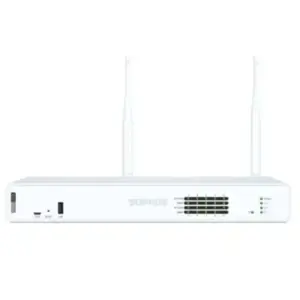
Ubiquiti airFiber 5XHD AF-5XHD in Dubai, UAE
A compact carrier radio for building high-capacity fixed wireless links between sites, with flexible channel planning, GPS synchronisation and antenna choices that can be matched to the path.
Planning a new link?
Share the two site locations, target capacity, tower heights and preferred installation scope so the complete requirement can be reviewed.
Direct answer for buyers
The AF-5XHD is a Ubiquiti UISP airFiber radio used in pairs to form a fixed wireless bridge between two locations. Its main role is to carry network traffic across a clear outdoor path, commonly for internet backhaul, campus interconnection, CCTV transport or business continuity links. It should be considered by organisations with suitable line of sight and a requirement that justifies professional path design. Before proceeding, confirm the distance, expected throughput, antenna gain, channel availability, tower or rooftop mounting, local regulatory limits, power and surge protection, and whether installation and alignment are included. A radio-only quotation is not necessarily a complete operational link.
What the AF-5XHD does
The radio converts Ethernet traffic into a highly directional wireless link when connected to a compatible external antenna. One unit operates as the point-to-point master and the other as the slave. The link can be configured with selectable channel widths from 10 to 100 MHz, allowing the designer to balance capacity, noise tolerance and spectrum availability. GPS synchronisation supports more disciplined timing in networks with several nearby links, while programmable uplink and downlink duty cycles help match traffic patterns. These capabilities are useful only when the physical path, antenna selection and RF plan are suitable.
Who it may suit
The model may suit WISPs, enterprise campuses, logistics parks, schools, hotels, construction compounds, industrial operators and public-sector networks that need a fixed link between buildings or remote facilities. It is most relevant where there is clean line of sight, adequate mounting height and an engineer who can plan the path. It may not be the right choice for obstructed urban paths, mobile connections, indoor Wi-Fi coverage or projects where a complete pre-integrated radio-and-antenna assembly is preferred. Buyers should compare it with fibre, licensed microwave and other Ubiquiti bridge options based on capacity, interference and lifecycle needs.
Business challenges and practical responses
Fibre is difficult to extend
A correctly designed AF-5XHD link can bridge two sites without trenching. The decision still requires a path survey, legal access to mounting locations and a comparison of long-term maintenance costs.
Existing wireless capacity is limited
The platform supports wide channel options and more than 1 Gbps rated throughput, but actual capacity depends on signal quality, interference, modulation, traffic direction and Ethernet overhead.
Several links share one tower
GPS synchronisation and planned channel reuse can help organise dense deployments. They do not eliminate the need for spectrum analysis, antenna isolation and disciplined frequency coordination.
A remote site needs resilient access
The radio can form a primary or secondary path, but redundancy requires appropriate routing, power backup, switching and monitoring beyond the radio pair itself.
Core capabilities that matter during selection
Flexible channel widths
Selectable 10, 20, 30, 40, 50, 60, 80 and 100 MHz channels let the link designer trade spectrum usage against potential throughput and noise resilience.
GPS timing
An external magnetic-base GPS antenna is included. Synchronisation can support cleaner timing plans where multiple airFiber links operate from common or nearby sites.
Programmable traffic ratio
Uplink and downlink duty cycles can be configured to reflect asymmetric traffic requirements rather than applying one fixed traffic split to every deployment.
Outdoor-ready radio
The unit can achieve IP67 weatherproofing after installation of the included upgrade kit. Correct glands, cable routing, grounding and sealing remain essential.
Product-fit matrix
| Requirement | Suitable when | Confirm before ordering |
|---|---|---|
| Building-to-building connectivity | Both endpoints have clear or engineered line of sight. | Path clearance, Fresnel zone and mounting height. |
| Gigabit-class backhaul | Spectrum and link budget support a high modulation rate. | Required net capacity and acceptable fade margin. |
| Long outdoor span | Appropriate antenna gain and tower alignment are feasible. | Wind loading, antenna size, local EIRP rules and access. |
| Dense tower deployment | Frequency coordination and GPS timing are designed together. | Channel plan, antenna separation and interference survey. |
| Simple indoor Wi-Fi | Not the intended use. | Consider a suitable UniFi access point or indoor bridge instead. |
Verified AF-5XHD specifications
| Brand and model | Ubiquiti airFiber 5XHD, model AF-5XHD |
|---|---|
| Product type | Outdoor point-to-point carrier radio |
| Wireless modes | PtP master or slave |
| Maximum stated throughput | 1+ Gbps; actual results vary with environmental and link conditions |
| Maximum stated range | 100+ km; path, antenna and regulatory conditions apply |
| Operating frequency | Worldwide 4800–6200 MHz, dependent on regional regulations |
| Channel bandwidths | 10/20/30/40/50/60/80/100 MHz selectable |
| Maximum transmit power | Up to 29 dBm, subject to regional regulations |
| Encryption | AES-256 |
| Network interfaces | Two Gigabit Ethernet RJ45 ports |
| Power | Passive PoE; 24 V, 1 A Gigabit PoE adapter included; supported input 18–54 V DC |
| Maximum power consumption | 12 W |
| Dimensions and weight | 224 × 82 × 48 mm; approximately 0.4 kg |
| Mounting | airFiber X mount, Rocket mount compatible; GPS pole mount included |
| Weatherproofing | IP67 after installation of the included IP67 upgrade kit |
| Operating temperature | -40 to 55°C |
| Antenna requirement | External compatible antenna selected separately; verify complete link bill of materials |
Important compatibility and scope notice
The AF-5XHD is not a self-contained bridge with an integrated high-gain dish. A normal point-to-point deployment requires two AF-5XHD radios, one suitable antenna for each endpoint, RF jumpers where required, shielded outdoor Ethernet cable, grounding and surge protection, mounting hardware, suitable power, and network equipment at each site. Compatible airFiber X antennas include models such as AF-5G23-S45, AF-5G30-S45 and AF-5G34-S45. Certain RocketDish options can also be used with the appropriate mounting or conversion components. Compatibility should be checked against the current Ubiquiti documentation and the proposed path.
Operating frequencies, permitted channel widths and transmit power are region dependent. A radio may expose different settings according to its regulatory domain. Do not order solely from an overseas model reference without confirming the region, destination and compliance requirements. Link performance, including the advertised throughput and range, must be treated as conditional rather than guaranteed.
A practical purchase and deployment journey
Define the traffic requirement
State the current and future bandwidth, traffic direction, application sensitivity, expected growth and whether the link is primary, backup or temporary. Net application throughput is more useful than a vague request for the fastest radio.
Check the path
Use coordinates, elevations, proposed antenna heights and terrain data to examine line of sight and Fresnel clearance. A desk study should be followed by a site survey when buildings, cranes, trees or rooftop restrictions may affect the path.
Select antennas and accessories
Antenna gain should match distance, interference conditions and legal EIRP limits. The bill of materials should also include brackets, jumpers, cable, surge protection, earthing, weather sealing and any tower-specific hardware.
Plan channels and configuration
Review local spectrum, neighbouring links and required fade margin. Set an appropriate channel width and duty cycle, assign management addressing, apply secure administration practices and decide how the link will be monitored.
Install, align and validate
Professional mounting and fine alignment are critical. Acceptance testing should record signal levels, modulation, error rates, latency, throughput, Ethernet negotiation, grounding, cable condition and performance under representative load.
Capacity with realistic expectations
The 1+ Gbps figure describes the platform’s maximum stated throughput under suitable conditions. A commercial design should begin with the required net throughput and then account for channel width, modulation, interference, frame overhead, traffic symmetry, fade margin and Ethernet limitations. Wide channels can increase capacity but consume more spectrum and may be harder to operate in congested areas.
For shorter clean paths, the designer may have several antenna and channel choices. For long or noisy paths, a narrower channel, higher-gain antenna or lower target modulation may provide better stability. FourTeck can help translate business traffic requirements into a practical link objective rather than treating a laboratory maximum as a guaranteed field result.
Spectrum discipline and GPS synchronisation
A radio link is only as dependable as its RF environment allows. The AF-5XHD provides selectable channels and GPS timing features that can support a structured deployment, particularly for operators with several links on one tower. The benefit is strongest when every link is planned as part of one frequency and timing strategy.
GPS synchronisation does not make interference disappear. Antenna front-to-back ratio, physical separation, channel reuse, power control, side-lobe exposure and neighbouring networks still matter. Buyers operating in crowded 5 GHz environments should include spectrum analysis and post-installation monitoring in the project scope. Where interference cannot be controlled, alternative bands or licensed systems may deserve evaluation.
Outdoor installation and operational resilience
The compact radio is designed for outdoor deployment and supports IP67 weatherproofing when the included upgrade kit is installed correctly. Environmental rating alone does not protect a poorly executed installation. Cable loops, connector sealing, grounding, surge arrestors, bracket torque and safe tower practices should be documented and inspected.
Remote sites also need dependable power and network architecture. Consider UPS or DC backup, protected PoE, cabinet ventilation, switch redundancy and an out-of-band recovery method. Monitoring should alert the operations team to declining signal, changing modulation, packet loss, power instability or Ethernet errors before users notice a service failure.
Ideal environments and use cases
WISP backhaul
Transport traffic between a tower, point of presence or aggregation location where a disciplined frequency plan and professional alignment are available.
Campus interconnection
Connect offices, warehouses, accommodation blocks or education buildings across roads or open land without trenching a new fibre route.
CCTV transport
Carry aggregated video traffic from a remote security location when bandwidth, latency, power resilience and switch design are correctly sized.
Industrial and logistics sites
Bridge separated compounds, yards or remote operational buildings where mounting access and environmental planning can be controlled.
Temporary project connectivity
Support construction or event-related links where the mounting design, approvals and later removal are included in the project plan.
Secondary WAN path
Provide route diversity when the two endpoints, upstream circuits, power systems and failover configuration avoid shared failure points.
Integration and operational considerations
The AF-5XHD supplies Ethernet connectivity at each endpoint, but the wider network design determines how that bridge behaves in production. Decide whether the link carries one untagged network, several VLANs, routed traffic or provider transport. Confirm maximum transmission unit requirements, spanning-tree behaviour, loop prevention and quality-of-service policies. For security-sensitive deployments, place management access on a controlled network, use strong unique credentials, restrict administration sources and maintain an approved firmware process.
Monitoring should be part of the handover rather than an afterthought. Record a baseline for received signal, noise floor, modulation, capacity, latency and packet loss. Set sensible thresholds that identify deterioration without creating constant false alarms. UISP or another appropriate monitoring method can be considered depending on the operator’s environment and support model.
The link should also fit the organisation’s change-management and maintenance procedures. Document radio addresses, channel configuration, antenna details, cable routes, grounding points, access arrangements and rollback settings. Schedule inspections after severe weather or construction changes near the path. A high-performing link can degrade later if a new obstruction, competing transmitter, loose mount or damaged cable is not detected.
Questions to resolve before requesting a quotation
Provide coordinates, roof or tower heights and any known obstructions so path feasibility can be reviewed.
State present traffic, growth expectation and whether uplink and downlink demand are balanced.
The gain and physical dish size affect link budget, wind load, mounting and approvals.
Share existing links or request an RF survey where neighbouring 5 GHz activity may be significant.
Clarify tower access, civil works, brackets, cable routes, grounding, testing and safety requirements.
Define monitoring ownership, spares, escalation, remote access and acceptable service restoration targets.
Procurement checklist
☐ Exact AF-5XHD regional model confirmed
☐ Two radios or required quantity confirmed
☐ Endpoint coordinates and mounting heights supplied
☐ Required net throughput and traffic ratio defined
☐ Antenna model and gain selected for each side
☐ Brackets, RF jumpers and conversion kits reviewed
☐ Outdoor Ethernet cable and surge protection included
☐ Grounding and lightning-protection scope documented
☐ Power and UPS arrangements checked
☐ Regulatory frequency and transmit-power limits checked
☐ Installation, alignment and acceptance testing priced
☐ Monitoring and support responsibilities agreed
How FourTeck can assist
FourTeck can review the intended use, path distance, capacity target, antenna options and accessories before preparing a commercial proposal. This helps reduce the risk of ordering only the radio when the project also requires dishes, mounts, protected cabling, surge components or installation work.
Assistance can also cover quotation coordination, bill-of-material review, configuration scope, deployment planning and handover expectations. Site survey, tower work, cabling, grounding, alignment and network configuration should be stated clearly because they may be separate project items rather than automatically included with hardware.
Explore other business technology products or discuss a scoped requirement through the FourTeck contact team.
UAE availability and support guidance
Contact FourTeck to confirm current UAE availability for the AF-5XHD, compatible antennas and required accessories. Availability may depend on the exact regional model, quantity, vendor lead time and whether the request includes installation or configuration services. A quoted hardware lead time should not be treated as a confirmed project completion date.
For projects in Dubai, Abu Dhabi, Sharjah and Ajman, FourTeck can coordinate requirement review and discuss delivery or installation scope after the two endpoints and complete bill of materials are confirmed. Rooftop permissions, tower access, working-at-height arrangements, cable routes and site readiness can affect project planning.
Review available technology services when link installation, configuration or support coordination is required.
GCC availability
FourTeck can assist organisations planning AF-5XHD deployments across GCC markets by reviewing the exact link requirement before quotation. The destination country, regional radio version, frequency rules, antenna choice, quantity, proposed installation site and desired project schedule should be supplied at the beginning. Requirements in the United Arab Emirates, Saudi Arabia, Kuwait, Qatar, Bahrain and Oman may differ in regulatory settings, import process, site access and installation coordination, so one country’s configuration should not automatically be applied to another.
Product availability, permitted channels, transmit-power settings, delivery schedules, field-service scope and vendor lead times can vary by country and project. FourTeck can help organise model and accessory selection, quotation coordination, delivery planning, configuration scope and installation discussions, but local stock or a fixed completion date should be confirmed only in the final proposal. Buyers should share the full endpoint information, quantity, antenna preference, support expectation and target timeline. For regional enquiries, the FourTeck Kuwait resource may also be relevant.
Africa availability
Organisations planning fixed wireless links in Africa can contact FourTeck for product evaluation, antenna guidance, accessory review and regional procurement planning. An AF-5XHD requirement should identify the destination country, exact number of links, endpoint coordinates, required throughput, preferred deployment date and whether local installation or remote configuration guidance is expected. Conditions can differ substantially between metropolitan rooftops, coastal sites, inland towers, mines, farms and remote service areas.
Fulfilment may depend on the destination, radio region, quantity, power standards, shipping route, vendor lead time, tower hardware, licensing or frequency rules and local project conditions. FourTeck does not assume immediate inventory, customs outcomes or country-wide onsite coverage. The team can instead help define a realistic bill of materials and coordinate suitable next steps. Buyers in East Africa may consult the Kenya technology page or Uganda technology page, while broader enquiries can use the FourTeck Africa resource.
Related products and services to consider
airFiber X antennas
Choose a compatible gain and physical size based on path length, link budget, wind loading and local EIRP limits.
Outdoor surge protection
Protect Ethernet and power paths with suitable grounding and surge components as part of the site design.
UISP monitoring
Consider central visibility for link health, configuration records and operational alerts where it fits the management environment.
Link survey and planning
A path profile and RF review can identify clearance, mounting and spectrum risks before equipment is installed.
Installation and alignment
Professional mounting, weather sealing, earthing and fine alignment help the selected hardware reach its designed operating level.
Alternative bridge platforms
Compare integrated 5 GHz, 60 GHz, licensed microwave or fibre options when interference, distance or capacity makes another platform more suitable.
Why businesses contact FourTeck
A fixed wireless project contains more decisions than the radio model alone. Businesses contact FourTeck to clarify whether the AF-5XHD is appropriate, identify a compatible antenna, review the required quantity, organise a complete bill of materials and coordinate a quotation. The same discussion can include site-survey needs, installation boundaries, configuration responsibilities, monitoring expectations and support arrangements.
This practical approach is useful for procurement teams that need one commercial view of hardware and services, and for technical teams that want key dependencies documented before purchase. It does not replace a professional RF design where the path is complex, but it helps move the requirement from a model name to a deployable scope. Learn more about FourTeck or submit the proposed endpoints through the contact page.
Frequently asked questions
Is the AF-5XHD a complete point-to-point link?
No. A normal link requires two radios plus compatible antennas, mounting and RF components, shielded outdoor Ethernet cabling, surge protection, grounding and power at both endpoints. Installation and configuration may be separate scope items.
Does the AF-5XHD include an antenna?
The high-gain link antenna is selected separately. The radio includes its external magnetic-base GPS antenna and mounting components stated by the manufacturer, but buyers should verify the exact package contents at quotation stage.
Can it really provide more than 1 Gbps?
Ubiquiti states a maximum throughput above 1 Gbps. Actual field throughput depends on channel width, signal quality, modulation, interference, duty cycle, distance, antenna choice, environmental conditions and protocol overhead.
Which antenna should be used?
The answer depends on distance, required fade margin, interference, physical mounting limits and regional EIRP rules. Compatible airFiber X antenna options include 23, 30 and 34 dBi models, but the path design should determine the choice.
Does it require a software subscription?
The radio’s normal operation is not presented as requiring a paid throughput licence. Management platform choices, support services and future vendor policies should still be confirmed for the intended deployment.
Is the operating frequency the same in every country?
No. The hardware supports a broad worldwide range, but available frequencies and transmit power depend on the regional model and local regulations. Confirm the destination before ordering.
Can the AF-5XHD be used without clear line of sight?
It is intended for directional fixed links and should be planned with clear line of sight and adequate Fresnel-zone clearance. Obstructions can reduce signal stability and may make another technology more appropriate.
What information is needed for a Dubai quotation?
Provide the two site locations, distance, target throughput, available mounting height, quantity, preferred antenna or physical limits, installation scope, timeline and any monitoring or support requirements.
Is installation available?
Installation planning can be discussed with FourTeck. The quotation should clearly define survey, tower access, mounts, cable, grounding, configuration, alignment, testing and handover because site conditions affect scope.
How can current UAE availability be checked?
Contact FourTeck with the exact quantity and required accessories. Availability can vary with regional model, vendor lead time and project scope, so it should be confirmed in the current quotation.
Turn the model request into a complete link plan
Send the endpoint details, throughput target and installation expectations. FourTeck can help review the AF-5XHD radio pair, antennas, accessories and quotation scope for your Dubai or regional project.

Reviews
There are no reviews yet.