

Enterprise Edge Security Planning
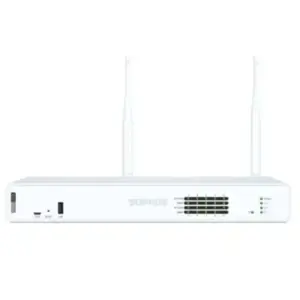
Fortinet FortiGate 400G Firewall in Dubai, UAE
The FortiGate 400G is designed for organisations whose security edge must handle dense user traffic, encrypted applications, branch connectivity and internal segmentation at the same time. Fortinet positions the 400G in its modern mid-range enterprise segment, with FortiOS providing firewall, intrusion prevention, secure SD-WAN, VPN, application control and broader Security Fabric integration. FourTeck can help translate those capabilities into a practical UAE bill of materials by checking performance headroom, interfaces, subscriptions, high availability, migration requirements and support expectations before a quotation is finalised.
Direct answer for buyers evaluating the 400G
Fortinet FortiGate 400G is a 1RU next-generation firewall aimed at demanding enterprise-edge deployments. It is mainly used to control and inspect internet traffic, protect applications, connect sites over IPsec, segment internal networks and combine networking functions such as secure SD-WAN with FortiOS security policy. It should be considered by organisations that have outgrown smaller branch appliances or that need high-speed 25GE and 10GE connectivity with substantial inspected-traffic headroom. Before proceeding, confirm the exact model, whether local storage is required, the security subscription, traffic that will undergo SSL inspection, VPN scale, transceiver requirements, high-availability design and the software version approved for the environment.
What the FortiGate 400G does
The appliance operates as a security enforcement point between trusted and untrusted networks, between internal security zones, or at a regional WAN edge. FortiOS brings routing, firewall policy, secure SD-WAN, IPsec VPN, application awareness, intrusion prevention and other security functions into one operating environment. This can reduce the number of separate appliances required at a large office or regional hub, but consolidation should still be planned around real performance requirements and organisational policy.
Fortinet’s current product matrix lists 164/163/145 Gbps firewall throughput for different packet sizes, with 25 Gbps IPS, 14 Gbps NGFW and 13 Gbps threat protection. Those figures are laboratory maximums under stated test conditions, not a promise that every production network will achieve the same rate. Encrypted traffic ratios, logging, policy complexity, inspection profiles and application behaviour all influence sizing.
Who should shortlist it
The 400G is most relevant where a business needs a substantial step above branch-class performance but does not need a much larger data-centre platform. Typical candidates include enterprise headquarters, regional offices, campus internet edges, shared-service locations, SD-WAN hubs, secure aggregation points and environments where internal segmentation traffic is considerable.
It may be excessive for a smaller office whose inspected traffic and future growth fit comfortably within a lower model. It can also be the wrong choice when the design requires capacities, interface densities or specialised data-centre functions better addressed by a higher FortiGate platform. FourTeck can compare the 400G with nearby models rather than assuming that a larger number automatically means a better purchase.
Business problems the 400G can help address
Buyers normally reach this class of firewall because the existing edge is becoming a constraint. The decision is less about replacing one box with another and more about removing specific technical and operational bottlenecks.
Encrypted traffic is consuming capacity
TLS is now normal for business applications, SaaS and web traffic. A replacement firewall must be sized on the amount of traffic that will actually be inspected, the chosen certificate strategy and the exceptions required for privacy or application compatibility. Fortinet publishes an SSL inspection throughput figure of up to 11.5 Gbps for the 400G under its defined test profile.
WAN and security are managed separately
Organisations with multiple internet or private WAN links often want path selection, application steering and security policy to operate under one platform. FortiGate can be used for secure SD-WAN, although the final design depends on circuit diversity, application objectives, routing, monitoring thresholds and whether central orchestration is required.
The network needs stronger segmentation
A flat internal network makes it harder to control lateral movement and to apply differentiated policy to servers, user VLANs, guests, operational systems and third-party access. The 400G can act as a high-capacity segmentation point where interfaces, routing and policy architecture are designed for that role.
The current firewall is difficult to scale operationally
Growth often means more policies, more VPNs, more branches and more administrators. FortiOS can integrate with FortiManager and FortiAnalyzer where centralised management, workflow control, log analysis or broader fleet visibility is needed. Those platforms and their licensing should be scoped separately rather than assumed to be included with the base appliance.
Core capabilities to evaluate
Product-fit decision matrix
| Requirement | Suitable when | Confirm before ordering |
|---|---|---|
| Enterprise internet edge | Inspected traffic and growth need mid-range enterprise capacity. | Peak throughput, TLS ratio, policy stack and ISP handoff. |
| SD-WAN hub | Many sites or WAN links need central policy and traffic steering. | Tunnel count, routing design, monitoring and orchestration needs. |
| Internal segmentation | Large east-west flows require security boundaries between zones. | VLAN plan, application dependencies and aggregate internal traffic. |
| High availability | A single appliance is an unacceptable edge failure point. | Second unit, cabling, HA ports, session requirements and failover testing. |
| Local log storage | The design needs onboard storage in this appliance family. | The base FG-400G is not the storage variant; evaluate FG-401G or external logging where appropriate. |
Verified FortiGate 400G technical information
The following values are based on current Fortinet model information. Performance figures are stated as “up to” values and vary with configuration. Buyers should use them as sizing inputs rather than as production guarantees.
| Brand | Fortinet |
|---|---|
| Product / model | FortiGate 400G / FG-400G |
| Product type | Next-generation firewall for enterprise edge and segmentation use |
| Firewall throughput | Up to 164 / 163 / 145 Gbps for 1518 / 512 / 64-byte UDP |
| IPsec VPN throughput | Up to 55 Gbps using Fortinet’s stated test profile |
| IPS throughput | Up to 25 Gbps, enterprise mix |
| NGFW throughput | Up to 14 Gbps, enterprise mix |
| Threat protection throughput | Up to 13 Gbps, enterprise mix |
| Firewall latency | 2.51 microseconds under Fortinet’s stated test conditions |
| Concurrent sessions | Up to 28 million |
| New sessions per second | Up to 580,000 |
| Firewall policies | Up to 10,000 |
| Gateway-to-gateway IPsec tunnels | Up to 2,000 |
| Client-to-gateway IPsec tunnels | Up to 50,000 |
| SSL-VPN throughput | Up to 6.1 Gbps |
| Recommended maximum concurrent SSL-VPN users | Up to 5,000 in tunnel mode, subject to software and design considerations |
| SSL inspection throughput | Up to 11.5 Gbps, IPS average HTTPS test |
| Application control throughput | Up to 50 Gbps under Fortinet’s stated HTTP 64K test |
| Interfaces | 4 × 25GE SFP28, 4 × 10GE SFP+, 16 × 1GE SFP, 8 × 5GE RJ45, 1 × 2.5GE RJ45 and 1 × 1GE RJ45 |
| FortiAP capacity | Up to 512 total / 256 tunnel |
| FortiSwitch capacity | Up to 96 |
| Virtual domains | 10 default / up to 50 maximum |
| Local storage | Base FG-400G: no onboard storage specified; the FG-401G is the storage-equipped variant in the family |
| Power | Dual AC power supply design |
| Form factor | 1RU rack mount |
| Operating system | FortiOS; confirm the approved FortiOS release for the intended deployment |
| Warranty and support | FortiCare and hardware support terms depend on the purchased support package and region; confirm in the quotation |
Licensing, compatibility and configuration dependencies
The base appliance should not be treated as a complete security subscription. FortiGuard services, support entitlement, advanced security functions, logging architecture and central management can involve separate licenses or subscription bundles. The right package depends on which protections the organisation intends to enable and how long the support term should run. Buyers should confirm the exact Fortinet SKU rather than ordering only by the model name.
Interface planning is another common source of purchasing errors. The firewall has a mix of 25GE, 10GE, 1GE fibre and multi-gigabit copper interfaces, but a physical port does not automatically mean the correct optics, DACs, fibre type or switch-side modules are included. The bill of materials should identify each WAN and LAN handoff, required speed, media type and transceiver on both ends. If FortiLink is planned for FortiSwitch integration, the topology and port allocation should be confirmed before installation.
Software compatibility should be checked at the project level as well. FortiOS features can change across releases, and connected products such as FortiManager, FortiAnalyzer, FortiClient, authentication systems and third-party services have their own compatibility matrices. A migration plan should therefore specify the target FortiOS release, management platform versions, VPN methods, identity integrations and any features that rely on a particular release branch.
A practical purchase and deployment journey
Measure the present network
Collect current WAN utilisation, peak sessions, packet and application mix, SSL inspection coverage, VPN usage, branch count, internal routing, link speeds and expected growth. If the existing firewall exports utilisation reports, use them as evidence rather than estimating purely from user count.
Define the inspection policy
List the security profiles that must be active on normal traffic. IPS, malware protection, web controls, application inspection and TLS inspection affect the performance envelope differently. This is where the published threat protection and NGFW figures become more useful than raw firewall throughput.
Build the exact bill of materials
Select FG-400G or another model, then define quantity, support term, FortiGuard bundle, optics, rack accessories, HA requirements, logging platform, central management and implementation services. If onboard storage is important, compare the family’s storage variant instead of assuming the base 400G contains an SSD.
Plan migration and change control
Inventory existing security rules, NAT, public addresses, routing, VPNs, authentication, certificates and exceptions. Decide what should be migrated, redesigned or removed. A clean migration usually requires testing and stakeholder approval rather than a blind configuration copy.
Validate before production
Test routing, failover, name resolution, key business applications, VPN tunnels, identity services, logging and security profiles. For HA deployments, perform controlled failover tests. For SD-WAN, verify link health metrics and application steering under realistic conditions.
Document operations and renewal dates
Record administrator roles, backup process, firmware policy, support details, subscription expiry, configuration standards and escalation contacts. Operational discipline after installation is as important as the initial hardware selection.
Capability focus: security performance under real inspection
The most important sizing question for an enterprise firewall is not “What is the fastest number on the data sheet?” but “What does the firewall need to do to the traffic?” A stateful firewall forwarding relatively simple flows has a very different workload from a policy set that enables intrusion prevention, application control, malware protection, certificate inspection and detailed logging. Fortinet publishes several separate performance figures for that reason.
For the 400G, the difference between raw firewall throughput and threat protection throughput is significant. That is normal for security platforms because deeper inspection consumes processing resources. Buyers comparing the 400G with another appliance should compare like-for-like test categories and should leave headroom for traffic bursts, software changes and future service activation. If the business expects a rapidly increasing amount of encrypted traffic, SSL inspection throughput and certificate-management design deserve particular attention.
FourTeck can use the published figures as a starting point, then align them to the organisation’s actual circuits, growth targets and enabled controls. This prevents two common errors: oversizing on raw firewall throughput alone, or undersizing by assuming that every security function can run at the same rate as basic packet forwarding.
Capability focus: high-density connectivity and segmentation
The FortiGate 400G’s interface mix is useful in designs that combine high-speed uplinks with multiple security zones. The 25GE SFP28 and 10GE SFP+ interfaces can connect to capable core, distribution or WAN infrastructure, while the 1GE SFP and multi-gigabit copper ports give flexibility for other handoffs. The correct value comes from planning the ports around topology rather than simply counting them.
For example, an organisation may reserve high-speed interfaces for redundant core connections, dedicate specific links to upstream ISPs, separate management traffic and use other ports for DMZ or service zones. Where east-west inspection is substantial, the aggregate traffic across internal interfaces can be as important as internet bandwidth. Inter-VLAN routing through the firewall should therefore be modelled so that inspection policies do not unintentionally become a bottleneck.
Optics and cabling are dependencies. SFP, SFP+, SFP28 and DAC requirements vary with distance, fibre plant, switch vendor and port speed. A quotation should identify each required module and should not assume that all transceivers needed for the final design are bundled with the appliance.
Capability focus: secure WAN and distributed operations
For a distributed organisation, the firewall may also become part of the WAN control plane. FortiGate secure SD-WAN can use multiple links and policy-based steering to direct traffic according to business rules and measured link conditions. This can be relevant to organisations using a mix of private circuits, broadband and internet-based connectivity for branches and cloud services.
The technical design should define how links are monitored, which applications receive priority, how routing converges, what happens during partial degradation and whether internet-bound traffic is inspected locally or backhauled. If the 400G acts as a regional hub, VPN tunnel count, aggregate encryption throughput and central logging become important. Fortinet lists up to 55 Gbps of IPsec VPN throughput for the model under its stated test method, but production expectations should still include protocol overhead and the chosen cryptography.
Management can be expanded through FortiManager and analysis through FortiAnalyzer where the organisation wants central policy workflows and consolidated reporting across multiple FortiGate devices. These are separate architecture and licensing decisions, so buyers should include them in the project scope rather than assume that the firewall alone delivers every central-management function.
Ideal business environments and use cases
Enterprise headquarters
A headquarters may need to inspect high internet volumes, terminate site-to-site VPNs, separate server and user zones, support resilient WAN links and integrate security logs with central operations. The 400G can be evaluated for this role when the combined inspected traffic fits its performance envelope with suitable headroom.
Campus security edge
Education, healthcare, hospitality and corporate campuses often have many device classes and complex internal zones. The firewall can enforce policy between segments and at the internet edge, but the design must account for east-west traffic, identity, guest access and the number of connected switching and wireless components.
Regional SD-WAN hub
A central site aggregating many branches can use FortiGate for IPsec and SD-WAN policy. The deciding factors are aggregate tunnel throughput, branch count, routing design, failover behaviour and whether central management is required for consistent policy across the fleet.
Segmentation gateway
The appliance may sit between data, user, DMZ, guest, partner or operational zones where large volumes of internal traffic need policy enforcement. This use case demands careful routing and interface design because internal traffic can exceed the internet circuit by a wide margin.
Firewall refresh programme
Organisations replacing an older FortiGate or another vendor’s firewall can use the project to clean obsolete rules, simplify NAT, review VPNs and move to a current FortiOS baseline. Migration should be treated as a controlled change rather than a direct copy of every historical configuration item.
Integration and operational considerations
A firewall at this scale normally participates in a wider architecture. Upstream routing may involve BGP, static routes or other protocols; internal connectivity may depend on resilient switching; authentication may connect to directory, MFA or identity services; and logs may need to be forwarded to FortiAnalyzer, SIEM or another approved platform. Each dependency should be captured in the implementation design.
Policy design deserves special attention when migrating from a mature environment. Old rules frequently contain redundant objects, broad service groups, expired temporary exceptions and NAT behaviour that nobody wants to preserve. A structured rule review can reduce complexity before cutover. The same applies to VPNs: document peers, proposals, selectors, routing and failover requirements rather than simply recreating every tunnel without validation.
For high availability, identify which interfaces are duplicated, how upstream and downstream devices react to failover, whether link monitoring is required and how sessions should be handled. Power diversity should be planned at the rack level as well; dual appliance power supplies are only useful when they connect to appropriately resilient electrical paths.
Operations teams should also agree on firmware governance. FortiOS updates can contain security fixes, behaviour changes and new features. The process should include backup, release-note review, compatibility checks, a maintenance window and a tested rollback approach. The target release for the 400G should be chosen according to current Fortinet support and the connected environment rather than by version number alone.
Questions buyers should resolve before requesting a quote
Provide peak internet, internal and VPN flows plus the percentage expected to use full security inspection. This is more useful than user count alone.
List each WAN, core, DMZ and HA connection with speed, connector type and media so optics and patching can be included correctly.
Security services and support vary by bundle. Define required protection functions, support level and subscription term before comparing prices.
The FG-400G base model should not be confused with the storage-equipped FG-401G. Logging design may also use an external analysis platform.
If the firewall protects a critical edge, consider whether an HA pair, redundant links and dual power paths are required.
Count security policies, NAT, address objects, routes, VPNs, certificates, users, SD-WAN rules and integrations so implementation effort can be estimated.
Procurement checklist for the FortiGate 400G
- Confirm exact model: FG-400G versus storage-equipped family variant
- Required appliance quantity and whether an HA pair is planned
- Peak inspected throughput and growth target
- WAN, 25GE, 10GE, SFP and copper interface requirements
- Required optics, DACs, patch leads and switch-side modules
- FortiGuard security bundle and subscription duration
- FortiCare support level and region-specific terms
- Target FortiOS release and connected-platform compatibility
- VPN tunnel, user and remote-access requirements
- FortiManager, FortiAnalyzer or external logging requirements
- Rack space, power diversity and cabling readiness
- Migration, configuration, testing and handover scope
- Delivery destination and required project schedule
How FourTeck can assist
FourTeck can help turn a general “400G firewall” requirement into an orderable configuration. Assistance can include workload review, model comparison, subscription selection, interface and transceiver planning, HA discussion, central-management options and migration scope. This is particularly useful when procurement needs a commercial quote while the technical team is still validating the design.
You can review broader firewall product options or discuss implementation through FourTeck technology services. The final scope should identify what is included in supply, licensing, configuration, migration and post-deployment support.
UAE availability and support guidance
Contact FourTeck to confirm current UAE availability. Availability can vary with exact SKU, subscription bundle, quantity, distributor allocation, transceiver requirements and vendor lead time. A quote should therefore state the requested hardware, license duration, accessories, support package and service scope rather than relying on a generic model price.
Delivery and project coordination can be discussed after the exact requirement is confirmed. If installation or migration is needed, include it in the quotation so rack preparation, configuration, change windows and testing can be planned separately from hardware delivery. Use the FourTeck firewall enquiry page to share project details.
Dubai, Abu Dhabi, Sharjah and Ajman coverage
FourTeck can coordinate FortiGate 400G enquiries for organisations with projects in Dubai, Abu Dhabi, Sharjah and Ajman as part of one UAE requirement. For multi-site deployments, it helps to provide a consolidated location list showing which site will host the primary firewall, whether branch VPN or SD-WAN connectivity is required, what rack and power arrangements are available, and whether the deployment must be standardised across several facilities. Hardware availability, installation scope and travel or site-access requirements can differ by project, so they should be confirmed in the quotation rather than assumed. A unified bill of materials can also help procurement keep subscription terms, optics, support and implementation tasks consistent across the participating locations.
GCC Availability
For GCC projects, FourTeck can assist with requirement review, exact model and license selection, quotation coordination, delivery planning and deployment-scope discussion for FortiGate 400G requirements. Organisations operating across the United Arab Emirates, Saudi Arabia, Kuwait, Qatar, Bahrain or Oman may want one firewall standard while maintaining country-specific procurement and service arrangements. Availability, licensing, delivery schedules, service visits and vendor lead times can vary by destination, quantity, requested bundle and project conditions. Buyers should therefore provide the destination country, required appliance quantity, subscription term, interface or transceiver needs, deployment location and expected timeline. Where configuration or installation assistance is required, that scope should be identified before the commercial proposal is finalised. For related regional planning, buyers can also use FourTeck’s Kuwait technology resource alongside the main UAE consultation process.
Africa Availability
FourTeck can support organisations evaluating FortiGate 400G for African operations by reviewing the intended role, security subscriptions, accessories, WAN design, configuration scope and support expectations before procurement. Regional projects may involve headquarters-to-branch VPN, secure SD-WAN, internet-edge replacement or common security standards across several operating sites. Availability and fulfilment depend on the destination, product model, quantity, license region, shipping arrangements, power and regulatory considerations, vendor lead time and whether onsite services are part of the project. Buyers should share the destination country, exact appliance and license requirement, required quantity, preferred deployment schedule, expected traffic and any installation or migration needs. FourTeck’s Africa technology resource and Kenya project resource can support the regional discussion without implying local inventory or guaranteed delivery.
Related products, platforms and services to consider
FortiGate 200G
Worth comparing when the organisation needs a current G-series edge platform but the 400G’s performance or port scale is beyond the actual requirement. Sizing should be based on inspected traffic, not only purchase budget.
FortiGate 700G
A higher model can be evaluated when threat-inspection demand, growth projections or interface requirements exceed the practical headroom of the 400G. It should not be treated as automatically equivalent or necessary.
FortiManager and FortiAnalyzer
Centralised policy administration and dedicated log analytics may be important in multi-firewall environments. Licensing, storage, retention and platform sizing should be scoped independently.
Migration and configuration services
Configuration review, rule cleanup, VPN migration, HA setup, SD-WAN policy, testing and handover can be added to the project where the internal team needs implementation assistance.
Why businesses contact FourTeck before ordering
The value of consultation is avoiding a technically incomplete purchase. A FortiGate quotation can involve hardware, FortiGuard services, FortiCare, optics, HA quantity, logging, management, migration and implementation. If only the appliance SKU is discussed, important dependencies may appear later in the project.
FourTeck can help clarify requirements, compare nearby models, review license terms, build a bill of materials, identify compatibility questions and coordinate a quotation around the actual deployment. This assistance does not replace vendor compatibility documentation or an organisation’s security policy, but it gives procurement and technical teams a common checklist before purchase. For more background, see FourTeck Firewall Dubai or contact the team with the intended topology and timeline.
What buyers are trying to understand before choosing the FortiGate 400G
Current buyer research around the FortiGate 400G tends to cluster around a few practical decisions: how much performance is available once security inspection is enabled, what changed compared with an earlier mid-range model, whether the base appliance includes storage, how licensing affects the final price, and whether the platform can support a high-availability or SD-WAN design. These questions matter because the model name by itself does not define the complete solution.
Which throughput figure should I use?
Use the performance category that best matches the intended policy. Raw firewall throughput is useful for basic forwarding, but a business enabling IPS, application control, malware protection and logging should look much more closely at NGFW and threat-protection values. If a large share of traffic will undergo TLS inspection, the published SSL inspection figure and the chosen certificate strategy are also important. Always include headroom rather than planning exactly to a laboratory maximum.
Is the 400G a direct replacement for every 400F?
No single replacement rule is safe. The 400G is a newer mid-range FortiGate and offers higher published figures in several areas, but the correct migration choice depends on interface use, subscriptions, software compatibility, existing configuration, rack and power requirements, and the amount of security inspection in production. A refresh project should verify the whole design rather than treating the model number as a drop-in guarantee.
Why do 400G prices vary so widely online?
Listings may refer to hardware only, hardware with one-year or multi-year FortiGuard services, different FortiCare levels, or bundles that include additional security subscriptions. Region and reseller terms also change pricing. A meaningful comparison must use the exact Fortinet SKU and the same support period. FourTeck can prepare a UAE quotation after the license term, quantity and service scope are known.
What is the 400G versus 401G difference that matters most?
For buyers focused on local storage, the difference is important. Current Fortinet model information identifies the 401G as the storage-equipped variant in this family, while the base 400G should not be assumed to provide the same onboard storage. If local logging capacity is part of the design, confirm whether the 401G or a separate logging platform is the better approach.
Another common question is whether the firewall can be purchased now and licensed later. Technically, an appliance can exist without every security service, but that does not make hardware-only the right production choice. Advanced inspection, threat intelligence and support entitlements depend on the purchased services. If the project intends to use those functions from day one, the subscription should be part of the original bill of materials. This also makes renewal dates easier to track and gives procurement a clearer lifecycle cost.
Buyers also ask how many users the 400G can support. User count is not a reliable sizing metric by itself. Two organisations with the same number of staff can produce very different loads depending on SaaS usage, video, backups, guest access, VPNs, server traffic and inspection policy. Published session limits show platform scale, but the better sizing inputs are peak bandwidth, concurrent sessions, application mix, encrypted-traffic percentage and enabled security services.
For HA, the key question is not only whether FortiGate supports clustering, but how the surrounding network behaves during a failure. The second appliance, HA links, upstream and downstream topology, routing, session expectations and power paths all influence resilience. A pair of firewalls connected to one switch and one power circuit still contains avoidable single points of failure.
Finally, buyers evaluating the 400G for a new project should prepare enough information for a quote to be technically meaningful. Useful inputs include the exact deployment role, current and planned WAN speeds, inspection requirements, number of sites, VPN type, interface media, HA requirement, support term, logging platform and whether migration services are needed. Supplying these details helps FourTeck distinguish between the base appliance, the correct subscription bundle, related accessories and any implementation work.
Decision questions that deserve a clear answer
Do we need 400G capacity if the internet line is much slower?
Possibly, but not automatically. Internal segmentation, VPN aggregation, future links and heavy inspection can create workloads above the current internet bandwidth. Conversely, a lower model may be sufficient if inspected traffic is modest. Build the sizing case from measured traffic and growth rather than the circuit label alone.
Should we buy hardware only or a security bundle?
Choose according to the controls the production policy requires. If the project needs active threat intelligence, IPS updates, malware-related services, web controls or broader FortiGuard functions, the applicable subscription should be included. Hardware-only and bundled offers should not be compared as though they deliver the same security coverage.
Can the existing firewall configuration simply be copied?
Some configuration can often be migrated, but a direct copy is not always desirable or compatible. Policy syntax, interfaces, NAT, VPNs, deprecated features and object structure should be reviewed. A refresh is a useful opportunity to remove obsolete rules and document why remaining access is required.
How do we know whether the 400G or 401G is appropriate?
Start with the logging architecture. If local onboard storage is required, review the storage-equipped family variant and its current ordering information. If logs will be centralised externally, the base model may fit. Other hardware and licensing requirements should still be compared independently.
What should be tested before the production cutover?
Test business-critical applications, DNS, routing, NAT, VPNs, authentication, logging, security profiles and any SD-WAN rules. In HA designs, test failover. Validate that TLS inspection does not break approved applications and that exceptions are documented rather than added informally during the change window.
What information helps FourTeck produce an accurate quotation?
Provide quantity, exact deployment role, WAN and LAN speeds, required subscription term, HA requirement, interface and optic needs, logging or management platforms, migration scope, destination and desired project timeline. This lets the commercial quote reflect the intended solution rather than only the appliance model.
Frequently asked questions
Is the FortiGate 400G suitable for an enterprise headquarters?
It can be a strong candidate for enterprise headquarters, regional hubs and large campus edges when the organisation’s inspected traffic, VPN demand and interface requirements fit the model with adequate headroom. Sizing should use real traffic and enabled security services rather than user count alone.
What are the main published performance figures for FG-400G?
Fortinet currently lists up to 164/163/145 Gbps firewall throughput, 55 Gbps IPsec VPN, 25 Gbps IPS, 14 Gbps NGFW and 13 Gbps threat protection for the 400G, with performance dependent on configuration and Fortinet’s stated test conditions.
Does the FortiGate 400G include onboard storage?
The base FG-400G should not be treated as the storage model. Current Fortinet information identifies the FG-401G as the family variant with onboard storage. Confirm the exact SKU and logging design before ordering.
Does the 400G support high availability?
FortiGate can be designed for high-availability deployments, but the project should include a second compatible appliance where required, HA connectivity, redundant upstream and downstream design, power diversity and failover testing. Exact configuration depends on the architecture.
Which FortiGuard subscription should be purchased?
There is no single correct bundle for every buyer. The selection depends on required security services, support expectations and term length. FourTeck can help compare the current Fortinet bundle options against the organisation’s intended policy.
Can FortiGate 400G be used for secure SD-WAN?
Yes, FortiOS supports secure SD-WAN use cases. The final design should define WAN links, link-health measurements, routing, application steering, failover behaviour and any central-management or orchestration requirements.
Can FourTeck help migrate from an older firewall?
FourTeck can discuss migration and configuration scope, including review of policies, NAT, routing, VPNs, interfaces, authentication and testing. The exact effort depends on the source platform, configuration complexity and change-window requirements.
How can I get FortiGate 400G pricing and UAE availability?
Contact FourTeck with the quantity, exact model or bundle, subscription duration, required accessories, delivery destination and any installation requirement. Current price and availability can then be confirmed for the project rather than inferred from unrelated online listings.
Confirm the right FortiGate 400G configuration before ordering
Share your throughput, VPN, interface, subscription, HA and migration requirements with FourTeck. The team can help prepare a Dubai/UAE quotation around the actual appliance, licenses, accessories and service scope required for your deployment.

Reviews
There are no reviews yet.