

Fortinet FortiADC 420F in Dubai, UAE
FortiADC 420F is a 1U application delivery controller designed for organisations that need controlled application traffic distribution, SSL/TLS processing, application availability features and security services in an on-premises appliance. The right purchase depends on traffic profile, encryption load, interface design, high-availability requirements and the FortiADC security bundle selected for the project.
What is the FortiADC 420F?
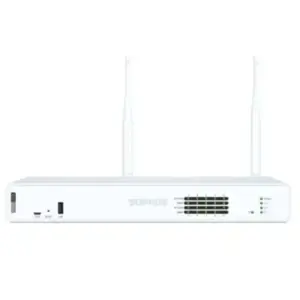
The Fortinet FortiADC 420F is a dedicated hardware Application Delivery Controller positioned in Fortinet’s FortiADC portfolio for organisations that want an on-premises platform for L4-L7 server load balancing, SSL/TLS handling, application availability, traffic control and selected application-security functions. It is mainly considered for production applications that need more control than a simple reverse proxy or basic load balancer. Buyers should confirm whether the 420F’s current performance figures, physical interfaces, high-availability design and chosen FortiADC bundle match the project. They should also confirm optics, redundant power requirements, support term, security subscriptions and the software release planned for deployment before placing an order.
What it does in an application path
FortiADC 420F can sit between clients and application servers so traffic is directed according to server health, application rules and configured load-balancing logic. That role can reduce dependence on one backend server and provide a controlled point for SSL offload, application delivery policies and visibility.
The appliance is not a substitute for sound application architecture. Capacity planning still needs to consider request rates, concurrent connections, encrypted sessions, application behaviour, backend response time, persistence requirements and the effect of security inspection.
Who should consider it
The 420F can be relevant to enterprise IT teams, data-centre operators, online businesses, service providers and organisations with multiple web or application servers that require controlled traffic distribution and stronger application availability. It is especially worth evaluating when TLS traffic, 10GbE uplinks, health checking, high availability or integrated application security are part of the design.
Smaller environments with modest traffic may find a lower-capacity FortiADC model sufficient. Projects that require materially greater throughput, interfaces or scale should compare higher FortiADC hardware models or virtual and cloud deployment options.
Business problems the 420F can help address
Uneven server utilisation
Application traffic can be distributed across multiple real servers according to configured policies and health status, reducing reliance on manual traffic steering and helping keep healthier servers in service.
Encrypted-session processing
Hardware SSL acceleration is a core 420F characteristic. In suitable designs, SSL/TLS offload can move cryptographic work away from application servers, though actual performance depends on cipher choice, key type and traffic conditions.
Application availability planning
Health checks, local load balancing and high-availability features can form part of a resilient application-delivery design. Resilience still depends on redundant servers, network paths, power, data services and sound operational processes.
Application-layer security gaps
FortiADC supports web application firewall and other security capabilities, but service availability depends on the selected license or security bundle. Buyers should map required protections to the exact subscription before purchasing.
Core capabilities buyers normally evaluate
Is FortiADC 420F a suitable fit?
| Requirement | Suitable when | Confirm before ordering |
|---|---|---|
| Application traffic distribution | You need a dedicated ADC for multiple backend servers. | L4/L7 throughput, RPS, persistence and health-check requirements. |
| Encrypted applications | SSL/TLS offload and hardware acceleration are useful to the design. | Cipher mix, key type, TPS, certificates and inspection requirements. |
| 10GbE connectivity | The appliance will connect to 10GbE network infrastructure. | Exact SFP+ port requirement, optic type, fibre type and switch compatibility. |
| Power resilience | The project requires redundant appliance power. | Optional redundant hot-swap PSU and data-centre power design. |
| Application security | WAF or additional FortiGuard services are required. | Exact bundle, service term and which features are included. |
| Multi-site resilience | The architecture uses multiple locations or application sites. | GSLB design, DNS architecture, application dependencies and failover policy. |
Performance figures published by Fortinet are measured under controlled test conditions. Actual results can vary with traffic mix, enabled services, encryption parameters, network conditions and configuration. Confirm sizing against the intended production workload.
Licensing, bundle and compatibility dependencies
The hardware appliance and the security-service scope should be treated as separate procurement decisions. Fortinet’s current FortiADC ordering guide identifies Network Security, Application Security and AI Security bundles for hardware appliances. The included services differ by bundle, and optional FortiGuard services may require an active subscription. Do not assume that every security function shown in FortiADC documentation is included with a bare hardware purchase.
For projects requiring WAF signatures, adaptive learning, credential-stuffing defence, sandbox integration, data loss prevention, threat analytics or advanced bot protection, confirm the exact bundle SKU and service term. The desired FortiADC software release also matters because features and integrations can change across releases. If the appliance will connect to FortiGate, FortiAnalyzer, FortiSIEM, cloud platforms, orchestration tools or a hardware security module, verify the supported versions and integration method for the planned release.
Optical transceivers and cabling are another practical dependency. Having SFP and SFP+ ports does not mean every optic is automatically suitable. Match fibre type, wavelength, reach, connector, switch-side requirements and Fortinet-supported transceiver options to the exact network design.
A practical purchase and deployment journey
Profile the application workload
Document average and peak throughput, HTTP request rates, concurrent connections, TLS session rates, application protocols, persistence needs, health-check logic and expected growth. This avoids selecting an ADC by one headline throughput number alone.
Map interfaces and network topology
Confirm whether the project needs copper GE, fibre GE, 10GbE SFP+ or a mixture. Record VLAN design, routing, NAT, upstream and downstream switch connections, management network requirements, and whether separate paths are required for redundancy.
Choose availability and power architecture
Decide whether a single appliance is acceptable or whether paired FortiADC units are required. If power resilience is part of the design, include the optional redundant PSU and confirm PDU feeds, rack capacity and maintenance procedures.
Select security services and support
Identify whether the design needs only core ADC functions or additional FortiGuard application-security services. Confirm the required support level, service term and renewal expectations at quotation stage so the bill of materials is complete.
Plan configuration, testing and handover
Define virtual servers, real-server pools, health checks, certificates, persistence, security policies, logging, monitoring and rollback plans. Test failover, application behaviour and certificate handling before moving critical production traffic.
Load balancing with room for application logic
A production ADC is valuable when traffic decisions need to consider more than simple round-robin distribution. FortiADC supports L4-L7 load balancing, custom health checks and scripting. That gives application teams a place to define how client sessions reach backend servers, how unhealthy nodes are handled and how traffic can be manipulated under controlled rules.
The business value comes from predictable application behaviour during normal operation and failure conditions. For example, an e-commerce platform might use health checks that verify a meaningful application response rather than merely checking whether a TCP port accepts a connection. An internal business system may need persistence so a user remains tied to a particular server during a workflow.
These functions require design work. A badly chosen health check can remove healthy servers or leave failed application nodes in rotation. Persistence can also reduce load-distribution efficiency. FourTeck can help translate the application requirement into configuration scope before deployment.
SSL acceleration and encrypted application planning
Encrypted traffic is often one of the main reasons to compare FortiADC models carefully. The 420F includes a hardware SSL accelerator, and Fortinet’s detailed data sheet reports dedicated TLS performance metrics in addition to the current ordering guide’s SSL throughput figure. This is useful because the same aggregate traffic rate can create very different appliance loads depending on how frequently sessions are established and which cryptographic algorithms are used.
A buyer should therefore estimate both bulk encrypted throughput and transaction rates. A site with many short-lived HTTPS connections may stress TLS transactions per second, while a platform with longer sessions and large transfers may be more sensitive to encrypted throughput. Certificate key type, cipher suites and whether traffic is terminated, re-encrypted or inspected also matter.
SSL offload can reduce cryptographic processing on backend servers, but it introduces certificate-management responsibilities. Plan certificate ownership, renewal, private-key protection, change control and failover behaviour as part of the ADC project rather than after installation.
Visibility, integration and operational control
FortiADC includes FortiView and supports management through HTTPS, SSH CLI, console and SNMP. Fortinet also documents API, scripting and automation options. For larger operations teams, these capabilities matter because an ADC is not only a forwarding device; it becomes part of the application operations workflow.
Monitoring should track backend health, virtual-server state, traffic trends, error conditions and security events. Logs may need to feed into a broader observability or security platform. Integration with FortiAnalyzer, FortiSIEM or third-party systems should be evaluated against the exact FortiADC release and organisational logging standards.
Automation can improve consistency, but it also increases the importance of access control and change governance. Define who can edit ADC policies, how configuration changes are reviewed, how backups are stored and how an emergency rollback is performed. These process decisions are as important as the appliance specifications.
Where the FortiADC 420F can make sense
Enterprise web applications
Business portals and customer-facing applications running across multiple backend servers can use the 420F for load distribution, health checks and encrypted-session handling.
E-commerce and digital services
Sites with variable transaction volumes may benefit from a dedicated ADC, provided the expected TLS and application-request profile fits the appliance’s tested capacity.
Private data centres
The 1U format and mix of copper, fibre and 10GbE interfaces make it a candidate for rack-based application-delivery designs where on-premises control is preferred.
Multi-site applications
Organisations operating services across multiple sites can evaluate GSLB alongside local load balancing, DNS architecture and disaster-recovery procedures.
Integration and operational considerations
A FortiADC appliance is usually inserted into an existing application and network environment, so integration planning should start with the current traffic flow. Map client networks, firewall rules, routers, switches, server VLANs, DNS records, certificate locations and monitoring tools. Identify whether the ADC will operate in a routed, one-arm, transparent or other supported design appropriate to the project. The target configuration should preserve application requirements such as source-IP visibility, session persistence and backend authentication where needed.
High availability should be designed as a system rather than as a checkbox. A pair of ADCs still depends on redundant switching, power, application servers and upstream connectivity. If the service spans more than one site, GSLB and DNS failover behaviour should be tested against realistic failure scenarios. Application teams should also agree how long health checks wait before declaring a backend unavailable and how quickly recovered servers rejoin service.
Operational ownership should be clear. Network teams may manage routing and interfaces, security teams may own WAF policy, and application teams may own pools, certificates and health checks. Establish a joint change process so a traffic-policy change does not unintentionally affect application availability or security.
Questions to resolve before you order
Record both throughput and request rates instead of relying on one bandwidth figure.
Estimate TLS throughput, new-session rates, certificate type and whether re-encryption is required.
Confirm GE copper, GE SFP, 10GbE SFP+, fibre type, transceivers and switch-side compatibility.
Map WAF, IPS, antivirus, sandbox, DLP, bot protection and other requirements to the correct bundle.
Decide whether you need two ADC appliances and whether optional redundant PSUs are part of the bill of materials.
Define installation, migration, testing, documentation, support and renewal responsibilities before purchase.
FortiADC 420F procurement checklist
A complete quotation request is easier to prepare when the commercial and technical details are captured together.
How FourTeck can assist with the requirement
FourTeck can help turn an application-delivery requirement into a clearer bill of materials. The discussion can cover model sizing, FortiADC bundle selection, support term, interface requirements, compatible accessories, power redundancy and whether installation or configuration services should be included in the quotation. This is particularly useful when procurement teams receive a model name without the operational context needed to confirm the right license or accessories.
For broader Fortinet projects, buyers can review FourTeck Fortinet UAE solutions or explore business security and networking products. If the ADC deployment also requires firewall design, the Fortinet firewall guidance for Dubai can help connect application-delivery decisions with the surrounding security architecture.
Where professional assistance is needed, discuss the project through FourTeck technology services and include configuration, migration, testing and handover requirements in the same commercial scope.
UAE availability and support guidance
Contact FourTeck to confirm current UAE availability for the Fortinet FortiADC 420F. Availability may depend on the exact hardware SKU, selected bundle, support term, quantity, optional power components, transceivers and vendor lead time. A quotation should identify whether the request is for bare FAD-420F hardware or for a hardware-plus-services bundle, because the commercial package and included security services can differ.
Delivery and project coordination can be discussed after the exact requirement is confirmed. If installation, high-availability configuration, certificate migration, application onboarding or testing is required, ask for that scope to be included rather than treating it as implicit in the hardware purchase.
Dubai, Abu Dhabi, Sharjah and Ajman project coordination
Businesses planning FortiADC 420F deployments across Dubai, Abu Dhabi, Sharjah and Ajman can coordinate requirement review, quotation preparation and project scoping with FourTeck. Share the destination, quantity, deployment environment, expected application traffic, security bundle and installation expectations so the commercial response reflects the actual project. Physical appliance availability, licensing, delivery timing and engineering scope should be confirmed for each requirement rather than assumed from a previous order or a different FortiADC model.
GCC Availability
For FortiADC 420F requirements in the wider GCC, FourTeck can assist with requirement review, model and bundle selection, quotation coordination, delivery planning, configuration scope and regional project preparation. Organisations in the United Arab Emirates, Saudi Arabia, Kuwait, Qatar, Bahrain and Oman may have different purchasing, service and fulfilment requirements, so the destination should be confirmed early. Product availability, licensing terms, delivery schedules, service visits and vendor lead times can vary by country, quantity and requested bundle. Buyers should provide the exact FortiADC model, quantity, security-service term, destination site, required optics or accessories and expected deployment timeline. For Kuwait-focused coordination, you can also review FourTeck Kuwait technology assistance. No regional stock or fixed delivery date should be assumed until the requirement has been checked.
Africa Availability
FourTeck can also help organisations planning Fortinet application-delivery projects in Africa evaluate the FortiADC 420F, its bundle options, accessories, support terms and deployment requirements. Procurement conditions differ significantly by destination, so buyers should share the country, exact model, quantity, required subscription term, power and rack requirements, shipping expectations and any installation or support scope. Availability may depend on vendor lead time, license region, local import conditions, project timing and the suitability of the selected hardware for the site. For regional technology planning, FourTeck Africa solutions provides a relevant starting point. Projects in markets such as Kenya and Uganda can be discussed individually, but local inventory, customs outcomes, delivery dates and on-site coverage should always be confirmed for the specific requirement rather than presumed.
Related products and services to consider
FortiADC 320F
A lower-capacity hardware model to compare where the 420F offers more headroom than the application requires.
Higher FortiADC appliances
Current FortiADC G-series hardware should be evaluated where throughput, interface scale or application growth exceeds the 420F design target.
FortiADC security bundles
Network Security, Application Security and AI Security bundles provide different service combinations. Confirm the exact bundle SKU and term.
Deployment and configuration support
Application onboarding, certificates, health checks, HA, testing and documentation can be scoped as professional services when required.
How buyers are evaluating FortiADC 420F in real projects
Most buyers searching for the FortiADC 420F are not only asking whether it is a load balancer. They are trying to work out whether the model has enough encrypted-traffic capacity, whether the required interfaces are present, which security features need a subscription, whether redundant power is included, and what information is necessary for a reliable quotation. These questions are important because an ADC sits on a critical application path. A model that looks adequate from a single throughput figure may still be wrong if the project has a large TLS connection rate, unusually high request rate, complex persistence, or application-security inspection enabled.
Do I size by throughput or connections?
Use both. Fortinet publishes L4/L7 performance, connection rates, request rates, concurrent connections and TLS metrics for the 420F. A web service with many small transactions may reach a request or TLS-session limit before it reaches aggregate bandwidth, while a bulk-transfer application can behave differently.
Does 10GbE mean four 10GbE links can all run at line rate?
Physical port count and system throughput are separate specifications. The current FortiADC data sheet lists four 10 GE SFP+ ports on the 420F, while system performance remains governed by the appliance’s published performance metrics and the active traffic profile.
Is WAF automatically included?
FortiADC supports WAF capabilities, but service entitlement should be checked against the selected bundle and term. Buyers should avoid assuming that a bare hardware SKU includes every FortiGuard security service shown in product literature.
Should I buy one unit or an HA pair?
That depends on the application’s tolerance for a single appliance failure and maintenance interruption. FortiADC supports high-availability modes, but an HA design normally also requires redundant network paths, switches, power and backend services.
A second common evaluation question is how the 420F compares with the 320F. The current Fortinet portfolio places the 420F above the 320F, with higher performance and a stronger hardware profile. The correct comparison is not simply “which one is faster?” Buyers should compare projected peak traffic, TLS processing, concurrency, interface requirements and growth. If the 320F satisfies the workload with safe operational margin, the 420F may be unnecessary. If the project already approaches the 320F envelope or needs the 420F’s published characteristics, the larger model can provide more room. Conversely, projects expecting continued growth should also compare the next relevant FortiADC hardware tier so the purchase does not become a short-lived sizing decision.
Buyers also ask whether FortiADC is only for public websites. It is not. The same application-delivery concepts can apply to internal business systems, APIs, private portals and enterprise applications, provided the protocols and architecture are supported. Agentless Application Gateway functions can also be relevant to controlled access scenarios. The use case should be defined by application behaviour and business requirements rather than by whether the service is public or private.
Another important topic is migration. Replacing an existing ADC requires more than installing a new rack appliance. Teams should inventory virtual servers, pools, persistence rules, health checks, certificates, redirects, header manipulation, security policies, DNS dependencies and monitoring integration. Some policies may need to be redesigned because products express traffic logic differently. A staged test environment is usually more useful than trying to replicate a legacy configuration mechanically. FourTeck can help scope migration assistance when the existing configuration and intended cutover approach are known.
Finally, online price listings for the 420F can vary widely because sellers may show bare hardware, hardware with support, different bundles, different contract terms or older price references. A meaningful Dubai or UAE quotation should identify the exact FAD-420F hardware, required FortiADC bundle, support period, optional PSU, optics, quantity and services. That makes commercial comparisons more useful and reduces the risk of comparing unlike configurations.
Practical questions that shape the final design
How much headroom should we leave?
Do not size a production ADC so projected peaks consume the full published capacity. Allow room for traffic bursts, growth, failover, additional services and differences between laboratory and production traffic. The amount of headroom depends on the business risk and growth profile, so it should be agreed during sizing rather than chosen by a fixed percentage.
What changes when WAF or other security services are enabled?
Security inspection adds processing work and policy complexity. Exact performance impact depends on the services enabled, rule set and traffic characteristics. Confirm the FortiADC bundle and test the expected security policy with representative traffic instead of assuming the base load-balancing figure will remain unchanged.
What should we provide for a quotation?
Provide model, quantity, destination, required bundle, support term, redundancy requirement, optics, expected application traffic and whether configuration or migration services are needed. If sizing is not complete, share the workload information instead of guessing a bundle or accessory list.
Can the 420F protect APIs as well as websites?
FortiADC application-security capabilities include web and API-oriented functions in current product documentation, but the exact feature and entitlement depend on software release and bundle. Define the API protection requirement, authentication model and traffic volume before deciding whether those services will be used on the ADC.
Does the optional redundant PSU remove all power risk?
No. A second hot-swap PSU can reduce dependence on one appliance power module, but resilient power also requires separate PDU feeds, suitable circuits and data-centre procedures. Application availability should be designed across power, network, ADC, server and storage layers.
When should a higher FortiADC model be evaluated?
Compare a higher model when projected traffic, TLS processing, port requirements, growth or redundancy strategy approaches the 420F’s practical operating envelope. It can be more efficient to select the next tier during design than to replace an undersized ADC shortly after deployment.
Why businesses contact FourTeck for FortiADC projects
The value of a procurement discussion is not simply locating a hardware SKU. Buyers often need help clarifying whether the specified model fits the workload, what licenses should accompany it, whether an HA pair is required, which optics and power components belong in the bill of materials, and whether professional services should be included. FourTeck can coordinate these questions into one requirement so the quotation is easier to evaluate.
This approach is particularly useful when application owners, network teams, security teams and procurement are working from different assumptions. A short sizing and scope review can expose missing details before an order is placed. To discuss the project directly, use the FourTeck contact page.
Frequently asked questions
What is the Fortinet FortiADC 420F?
It is a 1U hardware Application Delivery Controller for L4-L7 load balancing, SSL/TLS services, application availability and supported application-security functions. It is intended for on-premises enterprise application delivery.
Is FAD-420F the same model as FortiADC 420F?
Yes. FAD-420F is the Fortinet hardware SKU used for the FortiADC 420F appliance. Bundle SKUs add different security-service and support terms.
What performance does Fortinet currently list for the 420F?
Fortinet’s current ordering guide lists 30 Gbps L4/L7 performance and 10 Gbps SSL throughput. The detailed data sheet also lists 20 Gbps TLS bulk encryption throughput, 900,000 L4 connections per second and up to 25 million L4 concurrent connections.
Does the FortiADC 420F support 10GbE?
Yes. The current FortiADC data sheet and ordering information list four 10 GE SFP+ interfaces along with four GE SFP ports and four GE RJ45 ports. Confirm the required optics separately.
Is a redundant power supply included?
The appliance is listed with a single power supply and support for an optional dual hot-swap PSU configuration. Include the redundant PSU in the quotation when required.
Which FortiADC bundle should I choose?
That depends on the security services and support term required. Fortinet’s current ordering guide identifies Network Security, Application Security and AI Security bundles. Confirm the exact service inclusion and duration before purchase.
Can FortiADC 420F be deployed in high availability?
FortiADC supports VRRP active/active and active/passive failover modes. A resilient production design should also include suitable network, power and backend redundancy.
What information should I send for a FortiADC 420F quotation?
Send the appliance quantity, destination, peak traffic, TLS workload, interface and optic needs, HA requirement, FortiADC bundle, support term and any installation or migration scope.
Is FortiADC 420F available in Dubai and the UAE?
Contact FourTeck to confirm current UAE availability. Hardware, bundle licenses, optional accessories, quantity and vendor lead time can affect availability and delivery planning.
Need a FortiADC 420F quotation built around your application?
Share the expected workload, quantity, bundle requirements, optics, redundancy and project location. FourTeck can help review the requirement and coordinate the current UAE quotation and deployment scope.

Reviews
There are no reviews yet.