
Low to medium density room and branch coverage
Connect local Ethernet devices without a separate room switch in many layouts
HPE Aruba Networking platform dependent
Regional SKU, mounting and power must be confirmed
Direct answer for buyers
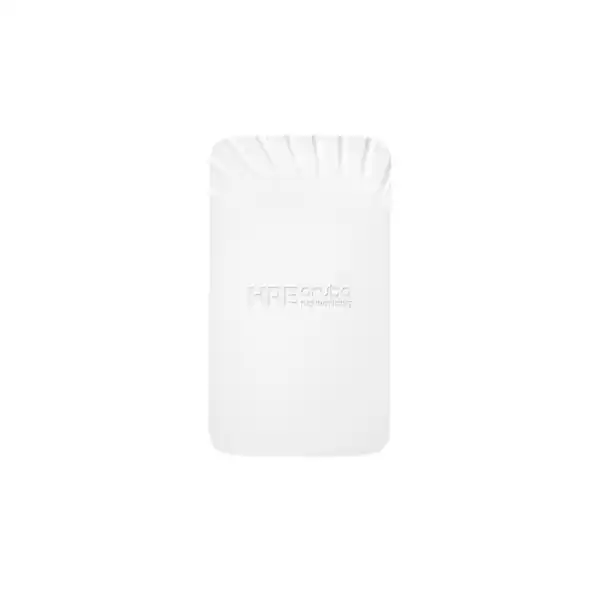
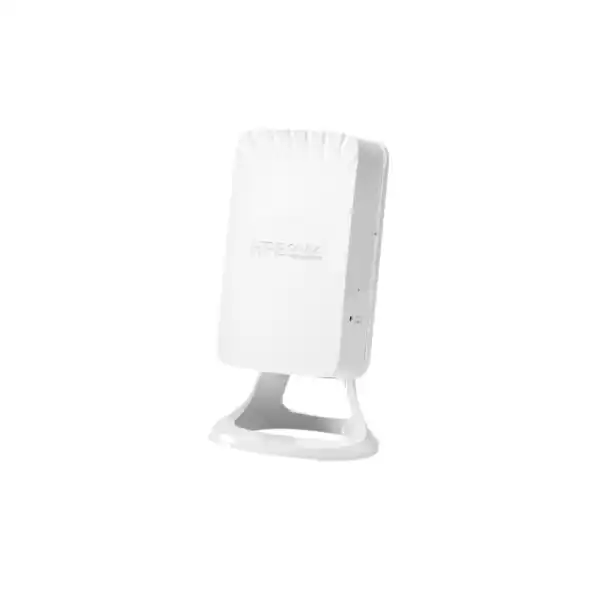
The HPE Aruba Networking AP-505H is a Wi-Fi 6 hospitality access point designed to place wireless connectivity and multiple wired Ethernet ports close to the user, typically in a hotel room, residence unit, branch workspace or remote-office setting. It is mainly used where one access point should provide both wireless service and local wired device connections. Buyers should consider it when wall-oriented or desk-oriented coverage, four local Ethernet ports, a 2.5GbE uplink, integrated Bluetooth/Zigbee capability or controlled PoE output are useful. Before proceeding, confirm the regional part number, mounting kit, upstream switch and PoE class, management architecture, required software or subscriptions, local RF requirements, downstream PoE needs and total project quantity.
What the AP-505H does
The AP-505H provides dual-band 802.11ax service using two spatial streams on both the 2.4 GHz and 5 GHz radios. HPE specifies up to 287 Mbps on the 2.4 GHz radio using HE20 and up to 1.2 Gbps on the 5 GHz radio using HE80, producing a maximum combined wireless data rate of about 1.49 Gbps under supported conditions.
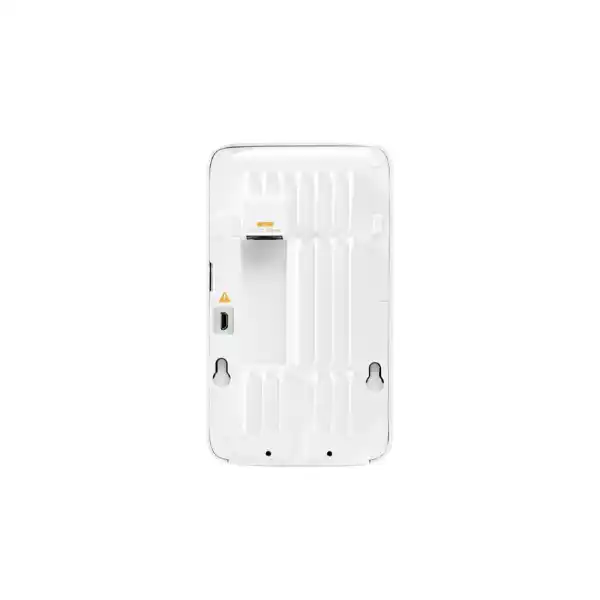
Its design goes beyond wireless. The AP includes one Smart Rate Ethernet uplink capable of 100 Mbps, 1 Gbps or 2.5 Gbps operation and four local 10/100/1000 Ethernet ports. In practical room deployments, those ports can reduce the need for a separate small access switch where the port count and power design are appropriate.
Who should consider it
It is a strong candidate for hotel rooms, serviced apartments, residence halls, clinic rooms, compact offices, branch workspaces and teleworker deployments where coverage is more naturally provided from the wall or desk position than from a conventional ceiling AP. The four local wired ports can support devices such as IPTV endpoints, desk phones, printers, workstations or room-control gateways, subject to the site design.
It is less appropriate when the requirement is a large open hall, very high client density, wide outdoor coverage, specialized external antennas or a need for newer 6 GHz Wi-Fi. Those scenarios should be evaluated against other HPE Aruba Networking AP families rather than forcing a hospitality AP into the wrong RF role.
Business problems this model can help address
Too many room-edge devices
A room may require wireless coverage while also hosting wired endpoints. Four local Ethernet ports allow the AP to act as the connectivity point for several devices, reducing cabling complexity in suitable designs.
Uplink bottleneck concerns
The Smart Rate E0 port supports 2.5GbE, which can help prevent the uplink from being limited to 1GbE when the upstream switching and cabling support the higher rate.
Separate IoT overlay planning
Integrated Bluetooth 5 and 802.15.4/Zigbee capability can support IoT-oriented applications and services, although the actual solution still depends on software, application compatibility and project design.
Remote deployment overhead
HPE positions the 500H family for zero-touch provisioning scenarios. That can be useful for branch and remote-site rollouts when the chosen management and provisioning workflow is prepared correctly.
Core capabilities at a glance
Supports 802.11ax features including OFDMA, MU-MIMO and Target Wake Time for improved multi-client efficiency and low-power device behavior.
Four local Gigabit Ethernet ports connect wired endpoints close to the user while the Smart Rate port provides the network uplink.
E1 and E2 support PoE-PSE modes, but the usable output depends on how the AP itself is powered and on the available power budget.
Bluetooth 5 Low Energy and Zigbee support can simplify selected location, sensor and IoT use cases.
Supports WPA3, Enhanced Open and hardware-backed credential protection through a Trusted Platform Module.
Separate mount kits support wall-box, direct-wall and desk deployment options, subject to the chosen accessory.
Product-fit decision matrix
| Requirement | Suitable when | Confirm before ordering |
|---|---|---|
| Hotel or room-level Wi-Fi | A wall or desk AP is preferred close to occupants and devices. | Room materials, AP location, RF plan and expected client count. |
| Multiple local Ethernet devices | Up to four local wired ports match the room requirement. | VLAN design, speed needs and whether a separate switch is still required. |
| PoE-powered endpoint in the room | A phone, sensor or other endpoint can use the available PSE output. | AP input power class, downstream wattage and whether one or two PSE ports are needed. |
| Centralized operations | The organization wants HPE Aruba Networking management workflows. | Current platform, software release, subscriptions and migration method. |
| 6 GHz Wi-Fi requirement | Not a fit if 6 GHz is mandatory. | Consider a newer Wi-Fi 6E or Wi-Fi 7 family instead. |
Power budget is a design dependency, not a minor detail
The AP-505H can be powered by DC or PoE, but the available features change with the input power class. HPE states that the unit can operate without restrictions when powered by DC or 802.3bt class 6 PoE. Under 802.3at class 4, restrictions may apply when PoE-PSE is enabled, including reduced downstream PSE capability. Under 802.3af class 3, USB and PoE-PSE capability can be disabled when Intelligent Power Monitoring is not being used. This means a design that requires the AP to power a desk phone or another downstream device should not be quoted from the AP model alone.
The upstream switch model, switch PoE budget, cable path, number of APs per switch, downstream endpoint wattage and use of USB should all be reviewed together. If the project uses a DC adapter instead, confirm the correct 48V power option and regional cord requirements. FourTeck can include power and accessory review as part of the bill-of-material discussion.
A practical purchase and deployment journey
Count wireless clients, local Ethernet devices, IPTV endpoints, phones and any devices needing PoE.
Review room construction, corridor layout, mounting height and the fact that the integrated antennas are optimized for vertical wall or desk orientation.
Check Smart Rate capability, PoE class, switch power budget, VLAN design and cabling.
Confirm the HPE Aruba Networking software architecture, versions, subscriptions and configuration method.
Confirm AP SKU, mount kit, adapter if needed, quantity, support option and any associated licenses or subscriptions.
Wi-Fi 6 efficiency in room-centric deployments
The AP-505H uses 2×2 radios rather than the larger spatial-stream configurations found in some campus APs, and that is consistent with its intended role. In a guest room, small residence, branch workspace or compact office, the design objective is often predictable coverage and efficient client handling rather than maximizing aggregate capacity in a large open venue. OFDMA allows the radio to divide channel resources among clients more efficiently, while MU-MIMO can improve simultaneous communication with compatible devices. Target Wake Time can help supported low-power clients schedule communications more efficiently.
The important buyer point is that the headline wireless rate is not a real-world throughput promise. Wall materials, neighboring APs, channel width, client capability, regulatory limits, uplink speed, interference and network policy all affect actual performance. A proper room-by-room RF plan remains more valuable than comparing only theoretical rates.
Local Ethernet without treating the AP as a full switch
The four local 1GbE ports are a significant reason buyers shortlist the AP-505H. In a hotel room, those ports might serve an IPTV endpoint, VoIP phone, work desk connection and another room device. In a branch or teleworker setting, they can connect a PC, printer, phone and local appliance. This can simplify the physical design because the access point becomes a combined wireless and room-edge connectivity point.
However, the AP should not automatically be treated as a substitute for a managed access switch in every scenario. Confirm port policy requirements, segmentation, power, troubleshooting workflows, monitoring, redundancy and the number of wired devices. If the room requires more ports, higher wired speeds on several endpoints or complex switch features, a dedicated switch may still be appropriate.
IoT capability that still needs application planning
Bluetooth Low Energy 5.0 and Zigbee support allow the AP-505H to participate in selected IoT and location-service designs without requiring a completely separate radio overlay. Potential applications include sensors, asset-tracking workflows, room controls and location-related services. HPE also provides a USB host interface that can connect certain compatible peripherals or cellular modems, subject to power and software support.
The presence of an IoT radio does not guarantee compatibility with every sensor or application. Buyers should identify the exact device ecosystem, management platform, software integration, data flow and security policy before assuming the AP can replace a dedicated gateway. FourTeck can help collect these dependencies before quotation so the wireless BOM does not get separated from the actual IoT use case.
Ideal business environments and use cases
Hotels and resorts
Room-level AP placement can provide wireless service while local ports support devices such as IPTV, phones or guest desk connections. The design should still be based on an RF survey, room construction and central network capacity.
Serviced apartments and residences
A compact wall or desk AP can serve mixed personal, work and room-connected devices while keeping local wired connectivity in one unit.
Student accommodation
The AP can support a room with both wireless clients and wired devices, but the network should be designed for privacy, segmentation and high concurrency across many rooms.
Small branches
When a compact office needs Wi-Fi plus several local Ethernet connections, the AP-505H may reduce the equipment footprint compared with separate devices.
Remote and teleworker spaces
The model can fit remote office designs that require centrally managed wireless and wired connectivity. Confirm management, tunneling and security architecture for the intended deployment.
Clinics and room-based environments
The compact format can suit room-centric connectivity where the project team has validated RF, device compatibility, operational policy and any applicable local standards.
Integration and operational considerations
A successful AP-505H deployment depends on more than mounting the device and connecting a cable. The upstream network should provide the intended VLANs, DHCP, routing, firewall policy, DNS, authentication services and management reachability. Where 2.5GbE is required, verify that the switch port and horizontal cabling support the rate. Where PoE output is required, confirm that the upstream switch can supply the AP at the necessary PoE class and that the total switch power budget remains sufficient across all ports.
Management architecture should also be defined before the purchase order. HPE Aruba Networking deployments can differ depending on software generation, Central use, controller or gateway architecture, site type and licensing. Existing customers should confirm that their current platform supports the intended AP software release and feature set. New customers should decide how APs will be provisioned, monitored, upgraded and supported before scaling across many rooms.
Operational teams should document the physical AP location, local port assignments, downstream endpoint types, VLAN mapping and power behavior. Room-facing installations are easy for users to see and touch, so mounting security, cable management and support procedures also deserve attention. A clear template for repeated rooms can make deployment and troubleshooting far more consistent.
Questions to resolve before requesting a quote
Use floor plans, room count and RF design rather than assuming one AP per space without validation.
For UAE, HPE lists the RW AP-505H as R3V46A, but the destination and regulatory requirement should still be confirmed.
List each endpoint, speed, VLAN and whether PoE is needed.
Confirm 802.3af, 802.3at, 802.3bt or 48V DC and understand resulting feature restrictions.
Identify the HPE Aruba Networking software platform, current versions and subscription requirements.
Wall box, direct wall and desk scenarios use separately orderable mounting options.
Procurement checklist for AP-505H projects
- Confirm exact AP-505H regional part number.
- State total quantity and deployment sites.
- Provide room or floor plans where RF sizing is required.
- Confirm upstream switch model and available Smart Rate ports.
- Check available PoE class and total switch PoE budget.
- List downstream devices requiring PoE.
- Choose wall-box, direct-wall or desk mounting.
- Confirm HPE Aruba Networking management platform and software version.
- Identify license or subscription requirements.
- Confirm cabling capability for 2.5GbE where needed.
- Define installation, configuration and testing scope.
- Confirm support entitlement and warranty terms for the supplied SKU.
How FourTeck can assist with selection and rollout
FourTeck can help buyers turn a model request into a deployable bill of materials. For AP-505H projects, that usually starts by confirming whether the hospitality form factor matches the physical space and whether the required wired endpoints fit the four local-port design. The next step is to verify the regional SKU, upstream switching, power class, cabling, mounting option, software architecture and any license or subscription dependencies.
For multi-room projects, buyers can share room counts, floor plans, device lists and the desired network policy. That allows the quotation discussion to include practical dependencies rather than only an AP quantity. If installation or configuration support is required, that scope can be discussed separately and reflected in the quotation rather than assumed to be included with hardware.
Explore more enterprise networking products through FourTeck technology products, review available implementation and support services, or contact FourTeck with the project details.
Information that improves quote accuracy
Send the expected quantity, destination, number of rooms or offices, existing switch models, available PoE class, management platform, mount preference, local devices and any requirement for installation or configuration.
If the project is replacing an existing Aruba hospitality AP, include the current model and how its local ports are being used. That helps avoid accidental loss of a port, PoE or management function during migration.
UAE availability and support guidance
Contact FourTeck to confirm current UAE availability for the HPE Aruba Networking AP-505H. HPE’s UAE catalogue lists the AP-505H (RW) with part number R3V46A, but availability can change with quantity, lead time, regional ordering policy and vendor supply. A project quotation should therefore confirm the exact SKU rather than relying on a generic AP-505H label.
Delivery coordination, mounting accessories, power options, management subscriptions, support services and installation scope should be reviewed as part of the same requirement. If the project includes many rooms or branches, share the expected deployment schedule so procurement and technical planning can be aligned. For broader company information, visit FourTeck UAE or the UAE contact page.
Dubai, Abu Dhabi, Sharjah and Ajman project coverage
For organisations deploying AP-505H units across Dubai, Abu Dhabi, Sharjah and Ajman, FourTeck can coordinate requirement review around a common bill of materials while still allowing site-specific differences in room count, switching, power and installation scope. This is useful for hospitality groups, serviced-apartment operators, education organisations and businesses with multiple branches. The project team should identify which sites share the same room template and which locations have different switch models, cabling or mounting conditions. Availability, delivery planning and service scope should be confirmed after the exact quantities and destinations are known.
GCC Availability
FourTeck can assist organisations planning HPE Aruba Networking AP-505H requirements across the GCC, including the United Arab Emirates, Saudi Arabia, Kuwait, Qatar, Bahrain and Oman. Regional projects benefit from confirming the destination country early because wireless regulatory domains, part numbers, licensing arrangements, shipping schedules and service scope can vary. A buyer requesting the same model for multiple countries should not assume that one SKU is valid everywhere. The practical approach is to provide the destination country, quantity, room or branch count, management platform, expected deployment period and whether mounting, configuration or installation assistance is required.
FourTeck can help review the model choice, clarify regional ordering references, prepare quotation information and coordinate related requirements such as switches, PoE capacity, mounts, support and management subscriptions. Product availability, license terms, vendor lead times, delivery schedules and onsite service options can vary by country and project. Confirm these points before purchase rather than basing a cross-border rollout on one market’s catalogue. Buyers with Kuwait requirements can also review FourTeck Kuwait resources for regional contact context.
Africa Availability
Organisations evaluating the AP-505H for African hospitality, education, residence or branch projects can use FourTeck for requirement review and regional procurement planning. The destination country matters because the correct wireless variant, power accessories, shipping arrangements, support options and local deployment conditions may differ. For multi-site projects, buyers should share the country, number of rooms or offices, total quantity, existing HPE Aruba Networking environment, switch and PoE design, preferred mounting method, expected deployment schedule and any need for installation or configuration assistance.
FourTeck can help compare product, accessory, subscription and support dependencies before a quote is prepared. Availability and fulfilment may depend on destination, model, quantity, vendor lead time, license region, regulatory requirements, shipping arrangements and local project conditions. No assumption should be made about local inventory or guaranteed delivery. For region-specific information, buyers can consult FourTeck Africa, FourTeck Kenya or FourTeck Uganda as appropriate.
Related products, services and alternatives to discuss
A related 500H hospitality model with fewer local Ethernet ports. Consider it when the room requires a simpler wired edge and the exact feature set is sufficient.
Remote-access bundles exist for selected regions with desk mount and power components. Confirm whether a bundle is available and appropriate for the destination.
A management option for unified operations. Subscription and feature requirements should be reviewed against the current architecture.
Upstream switching should be sized for Smart Rate needs and the total PoE budget, especially where AP downstream PSE is planned.
Useful when the project needs mounting, VLAN configuration, provisioning, testing, documentation or migration support.
What buyers are really trying to decide before choosing AP-505H
Most AP-505H research starts with a simple product question but quickly becomes a design question: can one device provide the wireless coverage, room-edge Ethernet connectivity and power behavior needed at a reasonable level of operational complexity? The answer depends on the room or branch template. A buyer with one wireless client and one wired endpoint may not need the AP-505H’s full port set. A hotel room with IPTV, a desk phone, a guest Ethernet jack and a room-control endpoint can make much better use of the four local ports. The model is therefore easier to evaluate by mapping each room connection than by comparing only wireless speed.
No. HPE positions the 500H family for hospitality, residence halls and remote-office scenarios. The form factor and local ports make it useful anywhere a room or compact workspace benefits from wireless plus local Ethernet. What matters is whether its antenna orientation, capacity, port count and management model match the actual space.
Sometimes it can reduce the need for a separate small room switch, but not in every design. The local ports are convenient, yet a dedicated switch may still be required for higher port counts, advanced switching features, different resilience requirements or more complex power needs.
Another frequent buyer concern is the difference between the AP-505H model name and the regional part number. HPE lists several country and regulatory variants. For UAE projects, the HPE UAE catalogue identifies the RW version as R3V46A. That is important because a quotation should use the correct orderable SKU, not simply the family name. Buyers working across multiple countries should treat the regional SKU as a project variable and confirm it per destination.
Power is also widely misunderstood. The AP can receive PoE from the uplink and can provide PoE to selected local ports, but those two statements do not mean every power combination produces the same result. If the upstream switch provides only 802.3af, the AP may disable USB and downstream PSE capability. With 802.3at, the AP can operate with different PSE constraints. Full operation is available under the supported higher power condition or suitable DC power. Any quotation that includes a downstream PoE phone, camera or other device should therefore include an explicit power-budget check.
Buyers also ask whether the 2.5GbE uplink is useful when the wireless maximum is around 1.49 Gbps. It can be, because the AP is not only carrying wireless traffic; wired local-port traffic may also traverse the uplink. Whether 2.5GbE is necessary in a particular room depends on the aggregate traffic pattern and upstream design. In some deployments, 1GbE may still be adequate; in others, using the Smart Rate capability provides additional headroom. The correct choice is a capacity decision, not a checkbox.
Management and licensing questions are equally important. The AP belongs to the HPE Aruba Networking ecosystem and can be used with supported management architectures, but the correct software release, subscription and provisioning method should be confirmed against the customer’s current platform. A buyer adding AP-505H units to an existing estate should share the existing controllers, gateways, Central subscription status and software release before purchasing. This prevents a hardware-only order from creating a software compatibility problem later.
For hotels and serviced residences, placement is a practical design issue. The AP’s integrated antennas are optimized for vertical wall or desk orientation, which aligns with the product’s hospitality role. That does not remove the need for an RF plan. Construction materials, mirrors, bathrooms, neighboring rooms, corridor geometry and furniture can all affect propagation. A repeated room template can simplify planning, but corner rooms, suites and public areas may need different AP placement or different AP models.
The most useful quote request therefore includes more than a quantity. Share the destination, room count, floor plans where available, desired local-port use, upstream switch model, PoE class, management platform, mount preference and target deployment schedule. FourTeck can use that information to review the AP-505H requirement as a system rather than a standalone device, helping the buyer identify missing accessories or dependencies before purchase.
Detailed buyer questions that affect the final design
Can the AP-505H power a desk phone and another PoE device at the same time?
Potentially, but only under supported power conditions. HPE specifies PSE on E1 and E2 with dual 802.3af output possible under the appropriate power budget, while a single 802.3at output is supported on E1. The AP’s own input power class matters. Before relying on dual downstream PoE, identify each endpoint’s draw and confirm the upstream switch power class and available wattage.
Should every hotel room receive one AP-505H?
Not automatically. One-per-room can be a practical architecture in some properties, especially where the local Ethernet ports are used, but RF design should determine the final count. Room size, wall attenuation, corridor layout, suite configuration and expected client density can change the requirement. Public areas may also need different AP models or placements.
Can an existing 1GbE switch be used?
Yes, the Smart Rate uplink auto-senses 100 Mbps, 1 Gbps and 2.5 Gbps, so 1GbE can work. The design question is whether 1GbE provides enough aggregate capacity and whether the switch supplies the required PoE class. If wired local ports, heavy Wi-Fi use and downstream PoE are all expected, a switch refresh may be worth evaluating.
Is the power adapter included?
Do not assume so. The standard AP-505H is generally ordered as the access point, while power sources and mounting accessories are separate orderable items unless a specific bundle states otherwise. HPE offers AP-505HR remote bundles in selected regions that include desk-mount and power components. Confirm the exact SKU and included items in the quotation.
What should an existing Aruba customer provide to check compatibility?
Share the current management platform, controllers or gateways, software release, Central subscription details, switch models and the AP models already deployed. Also state whether the new APs will join existing sites or create new remote locations. This gives the technical team enough context to confirm software and configuration dependencies.
What information helps FourTeck quote faster?
Provide the quantity, UAE or other destination, required installation date range, room count, local Ethernet device list, PoE requirements, existing switch model, management platform, desired mount type and whether installation or configuration is needed. For large properties, a sample room diagram or floor plan can remove ambiguity early.
Why businesses contact FourTeck for AP-505H requirements
The main value of a product consultation is not repeating the datasheet; it is connecting the datasheet to the project. Buyers often know they want an AP-505H but have not yet confirmed the correct regional SKU, mount, power source, switch PoE class, downstream PSE need, software architecture or support option. Those details can materially change the bill of materials.
FourTeck can assist with requirement clarification, product sizing, regional part-number review, accessory selection, compatibility questions, quotation coordination, installation planning and configuration scope. Where a different AP family would be a better match because of client density, 6 GHz requirements, outdoor placement or antenna needs, the discussion can shift toward a more suitable option rather than forcing the AP-505H into an unsuitable role.
Frequently asked questions
What is the HPE Aruba Networking AP-505H used for?
It is a Wi-Fi 6 hospitality access point for room-level and compact-site deployments that also need multiple local Ethernet connections. Common environments include hotels, residence halls, serviced apartments, remote offices and small branches.
What is the UAE part number for AP-505H?
HPE’s UAE catalogue lists the AP-505H (RW) as R3V46A. The exact part number should still be confirmed for the destination, quantity and current regional ordering policy before purchase.
How many Ethernet ports does the AP-505H have?
It has one Smart Rate uplink port supporting up to 2.5GbE plus four local Gigabit Ethernet ports, for five RJ-45 Ethernet interfaces in total.
Does AP-505H support PoE output?
Yes. E1 and E2 support PoE-PSE modes, including dual 802.3af or single 802.3at on E1 under supported power conditions. The available downstream power depends on how the AP itself is powered.
Does it support Bluetooth and Zigbee?
Yes. The AP-505H includes Bluetooth Low Energy 5.0 and IEEE 802.15.4 radio support for Zigbee-oriented IoT applications. Actual application compatibility depends on the software and device ecosystem.
Can the AP-505H be desk mounted?
Yes. HPE provides separately orderable mounting options for wall-box, direct-wall and desk installation. Some regional remote bundles include desk-mount and power components, but standard AP orders should not be assumed to include them.
Does AP-505H support Wi-Fi 6?
Yes. It is a dual-radio 802.11ax access point with two spatial streams on both 2.4 GHz and 5 GHz, with a maximum combined wireless data rate of about 1.49 Gbps.
Is HPE Aruba Networking Central required?
Management depends on the chosen HPE Aruba Networking architecture and software generation. Central is a common management option, but the exact software, subscription and deployment model should be confirmed for the customer’s environment.
Is AP-505H currently available in Dubai?
Availability can change with quantity, vendor lead time and regional supply. Contact FourTeck to confirm current Dubai and UAE availability for the required regional SKU and accessories.
What should I send for an accurate quotation?
Provide quantity, destination, room or branch count, mounting preference, upstream switch model, PoE class, local device list, management platform, software details and whether installation, configuration or support services are required.
Confirm the AP-505H design before you order
Share your quantity, deployment type, existing switch and management environment. FourTeck can help confirm the regional model, mounting, power, local-port use, licenses or subscriptions and installation scope before quotation.

Reviews
There are no reviews yet.