
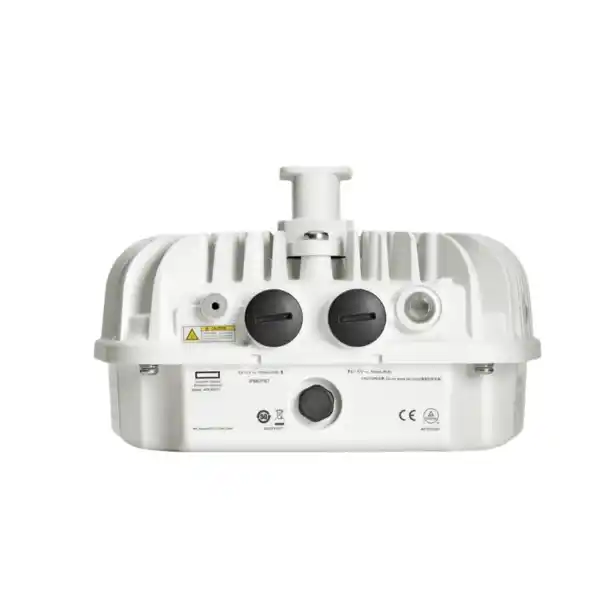
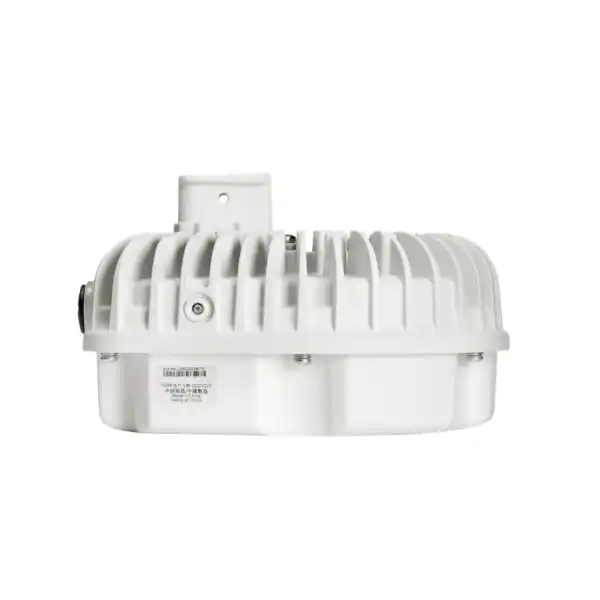
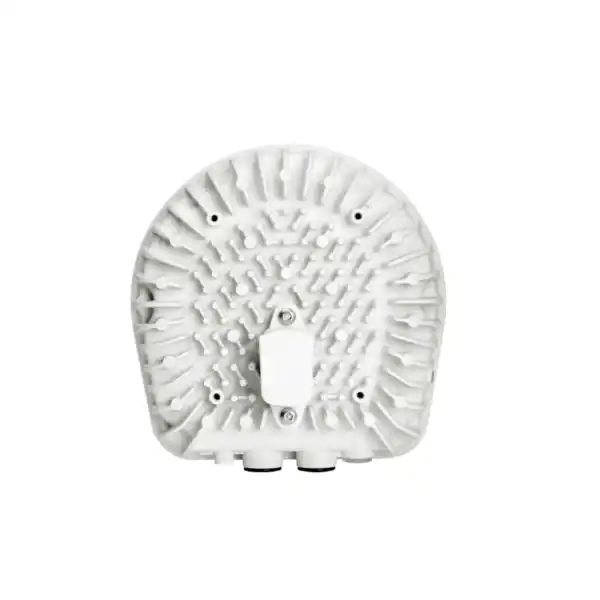
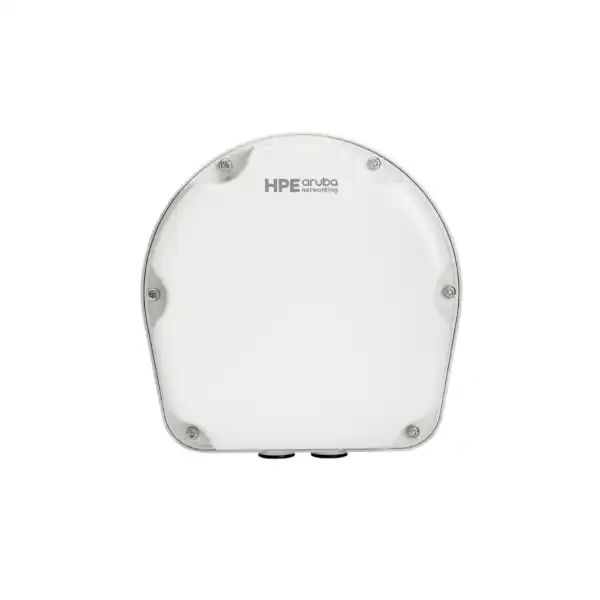
HPE Aruba Networking AP-577EX in Dubai, UAE
The AP-577EX is built for outdoor industrial areas where a directional coverage pattern, rugged environmental protection and hazardous-location approvals are part of the wireless design. It combines Wi-Fi 6 radios, integrated directional antennas, dual Ethernet interfaces and Power over Ethernet in a sealed platform intended for demanding field installations.

Direct answer for buyers
The HPE Aruba Networking AP-577EX is a directional, hazardous-location outdoor Wi-Fi 6 access point in the 570EX family. It is mainly used to extend enterprise WLAN coverage into industrial outdoor areas where environmental sealing and hazardous-area approvals are required. Organisations in oil and gas, mining, process manufacturing, utilities, logistics and similar environments should consider it when their RF design benefits from a defined directional sector. Before proceeding, the buyer should confirm the local hazardous-area classification, regional SKU, required antenna orientation, mounting accessory, PoE source, Ethernet design, management mode, software version and whether HPE Aruba Networking Central subscriptions are part of the operational plan.
What the AP-577EX does
The AP-577EX provides enterprise wireless access in locations that are more demanding than a normal office, warehouse or campus courtyard. Its sealed construction is designed for outdoor exposure, while its hazardous-location certifications address deployment scenarios where flammable gases or vapours may be present under the classifications covered by the product. This is different from simply buying a weather-resistant access point: hazardous-location projects usually involve site engineering, compliance review, grounding, cable entry, power-source placement and installer competence as well as the wireless design itself.
Within the WLAN, the AP supplies concurrent 2.4 GHz and 5 GHz connectivity using Wi-Fi 6 technology. The directional antenna system concentrates coverage into a defined sector rather than radiating evenly in all horizontal directions. That makes the model useful where a yard, corridor between process areas, loading zone, outdoor operational lane, mining work area or another defined field of coverage needs to be reached from an edge position.
Who should consider it
The strongest fit is an organisation that already knows the installation belongs in a hazardous or harsh outdoor environment and requires enterprise Wi-Fi rather than a consumer or light-commercial wireless bridge. Typical stakeholders include IT managers, OT teams, plant engineers, HSE teams, system integrators, project consultants and procurement teams working together on industrial connectivity.
The AP-577EX should not be selected simply because it is rugged. If the area is not classified and does not need hazardous-location approvals, another outdoor Aruba access point may be simpler or more economical. Similarly, if the RF requirement calls for broad omnidirectional coverage around a mounting point, the AP-575EX family member may be more appropriate. FourTeck can help compare the RF pattern, hazardous-area requirement and bill of materials before a purchase decision.
Business problems this model helps address
Wireless beyond safe indoor zones
Industrial operations often need mobile data, voice, handheld scanning, maintenance applications or telemetry in areas where ordinary indoor hardware cannot be deployed. The AP-577EX provides a platform designed specifically for the environmental and hazardous-location conditions documented for the 570EX series.
Focused RF coverage
A directional access point can be placed so that its main coverage lobe serves a defined work zone. This may reduce the need to radiate equally behind the access point and can support more deliberate RF design in open industrial areas, subject to a proper site survey and local radio regulations.
Uplink and power flexibility
Two Ethernet interfaces allow design options that include SmartRate connectivity on E0 and Gigabit connectivity on E1. Link aggregation is supported, and PoE can be supplied through one or both ports within the documented requirements. This lets network designers align uplink, resilience and power decisions with the site.
Unified WLAN operations
The 570EX platform can operate in controller-based or controllerless environments and can participate in HPE Aruba Networking management architectures. The operational model, licenses and software version should be confirmed against the wider network standard before ordering.
Capability band
OFDMA, MU-MIMO and modern modulation help the AP serve mixed client populations more efficiently when clients and channel conditions support those capabilities.
Built-in 90° horizontal by 90° vertical antennas allow a sector-focused design without external Wi-Fi antenna selection for the main radios.
IP66/67 protection, broad operating temperature range, salt-spray testing and documented wind survival support difficult outdoor placements.
Integrated Bluetooth 5 and 802.15.4/Zigbee radios can support IoT and location-related use cases when the chosen Aruba architecture and applications require them.
AP-577EX fit matrix
| Requirement | Suitable when | Confirm before ordering |
|---|---|---|
| Hazardous outdoor Wi-Fi | The site classification aligns with the AP’s documented Class 1 Division 2 or ATEX Zone 2 approvals. | Project HSE/engineering approval, local regulations and installation practice. |
| Directional sector coverage | A defined work zone or corridor benefits from the integrated 90° x 90° antenna pattern. | Mounting height, downtilt, obstruction, client density and RF survey results. |
| Multigig uplink | The switching design can use the E0 SmartRate port up to 2.5GbE. | Switch port speed, cable quality, PoE class and end-to-end bandwidth need. |
| Dual Ethernet resilience | The design values a second wired interface and supported LACP options. | Switch configuration, cabling path, PoE arrangement and software support. |
| Centralised management | The organisation uses Aruba controller, Instant or Central-based operations. | Target software train, management architecture and subscription entitlement. |
Verified technical information
The table below focuses on the AP-577EX and the current HPE Aruba Networking 570EX QuickSpecs and installation guidance. Wireless performance values are PHY or platform capabilities rather than a promise of application throughput. Local radio rules, channel width, client capability, interference, PoE design and software configuration can materially change real results.
| Field | AP-577EX detail |
|---|---|
| Brand | HPE Aruba Networking |
| Product family | 570EX Series Hazardous Location Access Points |
| Model | AP-577EX; regulatory model APEX0577 |
| UAE / worldwide ordering option | R4W38A (RW), subject to current HPE ordering rules and local availability |
| Product type | Outdoor hardened dual-radio Wi-Fi 6 hazardous-location access point |
| Radio architecture | 5 GHz 4×4 MIMO and 2.4 GHz 2×2 MIMO |
| Antenna | Integrated 90° H x 90° V directional antennas; 5 GHz 5.6 dBi and 2.4 GHz 6.8 dBi; BLE/Zigbee integrated antenna peak gain 8.4 dBi |
| Wi-Fi standards | 802.11a/b/g/n/ac/ax with HE20/40/80/160 support where allowed |
| Aggregate radio capability | Current 570EX QuickSpecs state up to 3 Gbps maximum aggregate on-air data rate in the HE80/HE40 reference configuration; actual throughput is lower and deployment dependent |
| Client scale | Up to 512 associated client devices per radio and up to 16 BSSIDs per radio at platform level; practical design density should be sized to application and RF conditions |
| E0 Ethernet | 100/1000/2500BASE-T HPE SmartRate RJ-45, PoE-PD, 802.3az |
| E1 Ethernet | 100/1000BASE-T RJ-45, PoE-PD, 802.3az |
| Link aggregation | LACP support between both network ports |
| PoE requirement | 802.3at/802.3bt Class 4 or higher on E0 and/or E1; 802.3af operation is not supported for startup |
| Maximum power consumption | 32.0 W dual-port PoE; 26.1 W single-port full-function PoE |
| IoT radios | Bluetooth 5 and 802.15.4/Zigbee radio |
| Console | USB-C console interface |
| Dimensions | 23 cm W x 22 cm D x 14 cm H, excluding mount |
| Weight | 2.1 kg, excluding mount |
| Operating temperature | -40°C to +65°C with full solar loading |
| Environmental protection | IP66/67; rated for all-weather operation; salt-spray testing to ASTM B117-07A for 200 hours |
| Wind survival | Up to 165 mph |
| Hazardous-location certifications | Class 1 Division 2 and ATEX Zone 2, subject to installation and regional compliance requirements |
| Management / software | Controller-based ArubaOS or controllerless Aruba Instant deployments are supported for the 570EX series; Central options are subscription dependent |
| Minimum software reference | HPE Aruba Networking Wireless Operating System / InstantOS 8.7.0.0; Wireless Operating System 10.2.0.0 per current QuickSpecs |
| Included hardware items | Access point, two cable glands, USB Type-C console cable, grounding lug and M4x6 screw; packaging may change, so verify current contents |
| Mounting | Mounting kit is not included and must be selected separately |
| Warranty guidance | Current HPE QuickSpecs references a hardware limited lifetime warranty; confirm the actual entitlement, support service and regional terms on the quotation |
Configuration, licensing and hazardous-area dependencies
The AP-577EX is not a complete deployment by itself. A working and compliant installation depends on the surrounding bill of materials and on the site design. The mounting bracket is ordered separately. Power can be provided through documented PoE options, but HPE’s ordering information notes that listed PoE injectors are not hazardous-location certified and must be located outside classified areas. Grounding must be completed correctly before power is connected. Outdoor Ethernet cabling, glands, conduit approach, surge protection and installation practice should all be reviewed against project specifications.
Management is another dependency. The access point can participate in controller-based or controllerless Aruba designs, and HPE Aruba Networking Central can be used when the appropriate architecture and subscriptions are selected. Central Foundation and Advanced AP subscriptions are separate commercial items with multiple term lengths. Do not assume a cloud subscription, controller license or support contract is included with the hardware. FourTeck can help identify which software, subscription and support components need to appear on the quotation.
Regional radio compliance also matters. The AP family has different regional SKUs. For Dubai and the wider UAE, the R4W38A worldwide model is the relevant current ordering option under HPE’s listed rules, but buyers should still confirm regulatory domain and current vendor policy at the time of purchase. Frequency availability, channel selection and transmit power are controlled by local regulatory requirements and software configuration.
A practical purchase and deployment journey
Classify the environment
Confirm whether the exact mounting point is within a hazardous area and which classification applies. The product certifications must match the engineering and compliance requirements of the project.
Design the RF coverage
Use a site survey or RF plan to decide whether the 90° directional pattern is appropriate, where the access point should be mounted and how many APs are required.
Build the bill of materials
Select the regional SKU, mount, PoE source, cables, surge-protection approach, switch ports and any management subscriptions or support services.
Plan implementation
Define cable routes, grounding, installer responsibilities, configuration method, controller or Central onboarding, security policy and acceptance testing.
Validate after installation
Check RF coverage, client roaming, uplink speed, PoE state, configuration, logs and operating performance under the real site conditions.
Directional coverage is the defining AP-577EX choice
The most important model-specific difference is not simply that the AP-577EX is an outdoor access point. It is the 570EX hazardous-location model with integrated directional antennas. HPE specifies a 90-degree horizontal by 90-degree vertical pattern for the Wi-Fi radios, with 5.6 dBi gain on 5 GHz and 6.8 dBi on 2.4 GHz. That pattern makes the access point suitable for aiming coverage toward a particular operational area, but it also means placement errors can leave intended users outside the strongest portion of the RF footprint.
A directional AP can be useful on the side of a process area, along a perimeter, facing a loading zone, aimed toward a mining work section, serving a defined yard, or covering an industrial corridor where it would be inefficient to radiate equally in every direction. It can also help the RF designer control where useful energy is concentrated. However, metal structures, tanks, pipework, containers, vehicles and machinery can reflect or block radio signals. Outdoor RF design should therefore be based on the real physical environment rather than only on a nominal antenna angle.
The AP-575EX is the related omnidirectional 570EX model. Buyers who are unsure whether to choose AP-575EX or AP-577EX should start with the coverage requirement: broad coverage around the mounting point usually favours an omnidirectional model, while coverage focused in a known sector can favour the AP-577EX. FourTeck can help review drawings, intended mounting points and client locations before the quotation is finalised.
Wi-Fi 6 capacity should be sized around real applications
The AP-577EX uses a 4×4 MIMO 5 GHz radio and a 2×2 MIMO 2.4 GHz radio. The platform supports Wi-Fi 6 features such as OFDMA, MU-MIMO and 1024-QAM, along with previous Wi-Fi generations for compatibility. HPE’s current QuickSpecs states up to 3 Gbps maximum aggregate on-air data rate for the 570EX series in its HE80/HE40 reference. Detailed PHY capabilities can be higher at particular channel widths and spatial-stream configurations, but those numbers should not be treated as real user throughput.
Industrial WLAN performance is usually constrained by a combination of client capability, channel plan, interference, roaming behaviour, application traffic and the physical environment. A handheld scanner may use modest bandwidth but require reliable roaming and low packet loss. A maintenance tablet may need access to large drawings or video. Voice devices may need predictable latency. Cameras or high-volume sensors can create sustained traffic. A correct design maps these application needs to client density, RF cells, uplinks and the wired switching network.
The AP can support many associated devices at the platform level, but the practical number of active users per cell should be determined by workload and service-level expectations. For procurement, ask how many simultaneous active clients will use the area, what applications they run, whether voice is critical, what roaming is expected and which client bands they support. FourTeck can use that information to discuss AP quantity, placement and supporting switch requirements.
Power, uplink and installation engineering matter as much as radio features
The AP-577EX has two wired network ports. E0 is a SmartRate RJ-45 port that supports 100 Mbps, 1 Gbps and 2.5 Gbps operation. E1 supports 100 Mbps and 1 Gbps. Both can accept PoE within the documented 802.3at/802.3bt requirements, and the two ports can participate in LACP. This gives network teams options for uplink capacity and redundancy, but the benefits depend on switch configuration, cabling and the power design.
Power design deserves special attention. HPE documents 32.0 W maximum worst-case consumption with dual-port PoE and 26.1 W with single-port full-function PoE. A single 802.3at feed can operate the AP, but Intelligent Power Monitoring may dynamically apply restrictions depending on available power. With IPM disabled on a single 802.3at feed, the other Ethernet port is disabled. 802.3af is not supported for startup. If the design includes PoE injectors, HPE’s ordering guidance specifically says the listed injectors are not hazardous-location certified and must be placed outside classified areas.
Installation also requires a separately ordered mount, correct grounding and appropriate outdoor cable handling. The installation guide calls for Cat5e or better network cabling and emphasizes grounding before power-up. In hazardous and exposed sites, the project specification may call for additional conduit, surge protection, bonding, certified installation methods or local approvals. Those requirements should be resolved before materials are shipped to site.
Ideal business environments and use cases
Oil, gas and petrochemical sites
Field staff may need secure WLAN access around process zones, tank farms, service areas or outdoor operational corridors. The exact hazardous classification of each mounting location must be validated by the project team.
Mining and heavy industry
Directional coverage can support selected work zones where tablets, maintenance terminals and operational devices need enterprise Wi-Fi under dust, temperature and weather exposure.
Industrial logistics yards
A focused antenna pattern can be useful for loading or transfer areas where scanners, mobile terminals or workstations operate in a defined outdoor sector.
Utilities and process facilities
Maintenance teams may need WLAN access near outdoor equipment, pumps, treatment assets or utility infrastructure. RF, hazardous-area and network-security requirements should be considered together.
Integration and operational considerations
An industrial access point has to fit the wider WLAN and operational environment. Start by identifying the organisation’s current Aruba architecture. If the site uses controller-based WLAN, verify the supported ArubaOS release and controller design. If the deployment uses Aruba Instant, verify the software version and cluster or site design. If management through HPE Aruba Networking Central is planned, include the correct AP subscription and term. The 570EX family also appears in supported-device guidance for Central On-Premises, but software compatibility changes over time, so a current version matrix should be checked before implementation.
Security policy is equally important. The 570EX platform supports modern WLAN security capabilities including WPA3 and device-assurance features such as a trusted platform module. Actual authentication and policy behaviour depends on the WLAN architecture, identity services and configuration. In an industrial site, the design may separate corporate users, contractors, operational devices and IoT endpoints using different SSIDs, roles or policies. This should be planned before installation so that coverage expansion does not create an unmanaged path into the enterprise or operational network.
The wired network must also be prepared. The E0 port can use 2.5GbE when the switch and cabling support it. If LACP or a second uplink is required, both cable routes and switch configuration should be designed accordingly. PoE budget must be reserved on the chosen ports. Where the AP is mounted far from indoor network equipment, cable distance, surge protection and intermediate infrastructure become part of the engineering decision.
Finally, operational teams should define how firmware, configuration, monitoring and fault response will be handled after handover. A rugged AP can still fail because of cabling, power, grounding, switch configuration or environmental damage. Monitoring should therefore cover the whole path, not just whether the radio is online.
Buyer questions to resolve before ordering
Confirm the exact hazardous-area requirement rather than assuming that an industrial site automatically needs an EX-rated AP.
If users surround the mounting point, an omnidirectional model may be more suitable. If users are concentrated in front of the AP, AP-577EX may be a stronger fit.
Identify the switch or injector, available PoE class, cable route and whether the power source will remain outside any classified zone as required.
The AP does not ship with a mounting bracket. Wall, pole, flush or tilt requirements change the accessory selection.
Confirm controller-based, Instant, Central cloud or Central On-Premises requirements and the supported software release.
Provide quantity, regional destination, installation location, switch model, cable route, mounting style, subscriptions, support needs and target project schedule.
Procurement checklist for AP-577EX projects
✓ Confirm AP-577EX rather than AP-575EX.
✓ Confirm R4W38A or the correct regional SKU for the destination.
✓ Confirm hazardous-area classification with the project engineer.
✓ Confirm the directional coverage plan and mounting orientation.
✓ Select the required mounting bracket separately.
✓ Confirm PoE source, PoE class and switch power budget.
✓ Confirm outdoor Ethernet cable, gland and conduit requirements.
✓ Confirm grounding and surge-protection design.
✓ Decide whether one or two Ethernet uplinks are required.
✓ Confirm ArubaOS, Instant or Central management architecture.
✓ Add any required Central subscription term to the BOM.
✓ Define installation, configuration and acceptance-test scope.
✓ Confirm support entitlement and warranty terms on the quotation.
✓ Confirm UAE availability and vendor lead time before project commitment.
How FourTeck can assist with specification and quotation
FourTeck can support the buyer before the purchase order is issued by turning a model request into a practical bill of materials. For an AP-577EX requirement, that means confirming the expected regional SKU, quantity, mounting approach, PoE source, switching interface, management platform, subscription term and installation scope. This is particularly important on hazardous-location projects because the access point is only one part of the deployment. Cable routing, grounding, injector placement, network design and the site’s engineering rules can affect both the materials and the implementation plan.
A useful quotation request should include a brief description of the site, whether the mounting area is classified, the planned AP locations, number of access points, current Aruba controller or Central environment, existing switch model and available PoE, preferred project date and whether FourTeck should include installation or configuration assistance. Buyers can also share RF drawings or site maps where available. FourTeck can then help separate mandatory items from optional accessories rather than quoting a bare chassis that cannot be installed as expected.
For broader wireless projects, buyers can review FourTeck networking products, discuss implementation through the technology services team, or send the project requirement through the FourTeck contact page.
UAE availability and support guidance
Contact FourTeck to confirm current UAE availability for the HPE Aruba Networking AP-577EX. Availability may depend on the regional SKU, quantity, vendor lead time, accessory selection and the exact commercial channel used for the project. For UAE requirements, the current HPE QuickSpecs lists the R4W38A worldwide variant as the AP-577EX option available outside the specifically separated US, Israel, Egypt, Indonesia and Japan markets, which makes it the relevant starting point for a Dubai or UAE quotation. Final regional suitability should still be confirmed at order time.
Delivery and project coordination can be discussed after the exact requirement is confirmed. If installation or configuration is required, include that scope in the quotation rather than assuming it is bundled with hardware. Site readiness, access permits, hazardous-area work procedures, mounting, cabling, grounding and change windows can all affect the project plan. FourTeck can coordinate requirement review and commercial quotation for UAE organisations without making unverified promises about stock or fixed delivery dates.
Dubai, Abu Dhabi, Sharjah and Ajman coverage
FourTeck can discuss AP-577EX requirements with organisations planning industrial wireless projects across Dubai, Abu Dhabi, Sharjah and Ajman in one coordinated UAE engagement. The practical scope may range from hardware-only quotation to help with model selection, mounting accessories, PoE planning, Aruba management subscriptions, configuration preparation and installation coordination. Because hazardous-location work can be site-specific, buyers should provide the deployment emirate, physical site type, hazardous classification, number of APs and expected timeline early in the discussion. On-site activities, permits and installation methods should be confirmed as part of the project scope rather than assumed from the hardware purchase alone.
GCC Availability
FourTeck can help organisations planning HPE Aruba Networking AP-577EX deployments in GCC markets review the product requirement before a quotation is finalised. For hazardous-location Wi-Fi projects in the United Arab Emirates, Saudi Arabia, Kuwait, Qatar, Bahrain or Oman, the destination country matters because the correct radio regulatory domain, hazardous-area standards, import requirements, power design and project practices may differ. A buyer should provide the destination, quantity, installation environment, preferred management platform, required mount type and expected schedule so the bill of materials can be reviewed correctly.
Where required, FourTeck can assist with model and license selection, quotation coordination, delivery planning, configuration scope, installation planning and renewal guidance for associated Aruba management subscriptions. Availability, licensing, delivery schedules, service visits, project scope and vendor lead times can vary by country, model, quantity and requirement. The AP-577EX also has region-specific hardware variants, so the country must be confirmed before ordering. Buyers should not assume that a SKU quoted for one market can be deployed unchanged in another.
For regional projects involving multiple sites, FourTeck can help structure the requirement around common standards while still confirming local differences. The most useful information is a site list, target deployment date, number of APs per site, switching platform, PoE capability, Aruba management architecture and any need for installation or post-deployment support. For Kuwait-focused coordination, buyers can also review FourTeck Kuwait resources.
Africa Availability
FourTeck can support organisations evaluating AP-577EX deployments for industrial and outdoor projects in Africa by reviewing the exact product, accessories, subscriptions and implementation expectations before procurement. Hazardous-location Wi-Fi requirements may arise in mining, oil and gas, processing, utilities, ports and logistics environments, but the correct equipment and project method depend on the destination, site classification and local radio rules. Buyers should share the destination country, quantity, expected mounting locations, required coverage direction, switch and PoE environment, management platform and preferred deployment schedule.
Availability and fulfilment can depend on product model, quantity, license region, power and regulatory requirements, shipping arrangements, vendor lead time, installation scope and local project conditions. FourTeck can help separate the AP chassis from the supporting bill of materials so that mounts, PoE, cabling, subscriptions and support needs are not overlooked. Where installation is expected, the site should also confirm whether local hazardous-area work procedures, permits or certified installers are required.
For East Africa enquiries, FourTeck maintains resources for Kenya technology projects and Uganda requirements, while broader regional discussions can begin through the FourTeck Africa site. Current stock, customs outcomes, country-wide site coverage and delivery dates should be confirmed for each request rather than assumed.
What buyers are trying to work out before choosing AP-577EX
A buyer researching the AP-577EX is usually not deciding between two ordinary office access points. The questions are more specific: Is this the directional model? Does it carry hazardous-location approvals? Which regional SKU is correct for the UAE? Can it be powered from the existing switch? Does it need a separate mount? Can it be managed in the organisation’s existing Aruba environment? These questions matter because a mistake can create a procurement delay even when the access point itself is technically suitable.
Directional versus omnidirectional is the first decision
The AP-577EX has built-in directional Wi-Fi antennas with a 90° horizontal by 90° vertical pattern. This makes it different from AP-575EX, which uses omnidirectional antennas. A common field scenario is mounting an AP on the edge of a work area and aiming the RF energy into that area. If the requirement is to serve users all around a pole or central location, the directional AP can be the wrong physical choice even though its radio specifications look attractive. A site plan that shows client locations and obstructions can often resolve this quickly.
The EX suffix is about the environment, not extra Wi-Fi speed
The value of the 570EX family is its suitability for hazardous and harsh outdoor locations. The AP-577EX carries Class 1 Division 2 and ATEX Zone 2 certifications and has IP66/67 environmental protection. That does not mean every industrial site needs it. The project’s HSE or engineering team should determine whether the mounting point is within a classified area and whether the product’s certifications and installation method are acceptable. Selecting an EX model without confirming site classification can add unnecessary cost; selecting a standard outdoor model where EX compliance is required can create a much larger problem.
Power design is a hidden source of surprises
The AP supports PoE on both Ethernet ports, but it is not an 802.3af device. For full operation, the design should use supported 802.3at or 802.3bt power. The access point can combine or prioritise power from two ports, and Intelligent Power Monitoring can adjust behaviour when available power is limited. This is useful, but it means the buyer should not simply count available RJ-45 ports and assume the switch is ready. Check the switch model, PoE class, per-port budget, total chassis budget and cable run. If a midspan injector is proposed, note HPE’s guidance that the listed injectors are not HazLoc certified and must sit outside the classified area.
The access point does not include the mount
The 570EX installation guide and current QuickSpecs make the mounting dependency clear: a mount is a separate accessory. HPE lists several options for pole, wall, flush and tilt installations. The choice should follow the RF plan and the physical mounting asset. For the AP-577EX, the H1 bracket is commonly referenced for wall mounting with tilt capability, while other brackets can be used in different orientations. A complete quotation should therefore show the selected mount rather than leaving the installer to source it later.
Management and licensing must match the existing network
The AP can be used in controller-based and Aruba Instant environments, and HPE Aruba Networking Central can provide centralised management when the correct service is selected. Buyers should check their current WLAN standard before adding new hardware. If the organisation already has Central, confirm whether an AP Foundation or Advanced subscription is required and which term aligns with the project. If the site uses a controller or an on-premises management platform, confirm software compatibility before scheduling installation. Hardware can be physically installed but remain unusable in production if software or entitlement planning is left until the end.
Real throughput is not the same as the headline radio rate
HPE’s current QuickSpecs describes up to 3 Gbps maximum aggregate on-air data rate for the 570EX family in its stated HE80/HE40 reference. That is useful for understanding platform class, but an industrial wireless design should be sized around actual applications. Client radios may use fewer spatial streams, channel width may be reduced to improve frequency reuse, and metal structures can create multipath or shadowing. Voice, scanners, tablets and OT devices often need reliable coverage and roaming more than extreme headline speed. When requesting a quote, include active user counts, device types and key applications so AP quantity and RF design can be discussed on practical terms.
Buyer insight
The AP-577EX is usually selected because the installation environment and antenna pattern require it, not because it is the fastest Aruba outdoor AP.
Quotation note
Ask for the AP, mount, PoE approach, subscriptions, support and deployment scope in one bill of materials. This reduces late accessory changes.
Regional note
For UAE projects, R4W38A is the current worldwide AP-577EX variant under HPE’s listed regional ordering rules, subject to confirmation at purchase.
Questions that improve an AP-577EX project decision
Do I need AP-577EX if the site is simply outdoors?
Not necessarily. AP-577EX is a hazardous-location model. If the site only needs weather protection, another outdoor AP may be appropriate. The decision should begin with the environmental and hazardous-area classification, then move to antenna pattern, client density and management compatibility.
Can I use a normal PoE injector beside the AP?
Not in a classified area unless the specific power device and installation method are approved for that environment. HPE’s current ordering notes state that its listed power injectors are not HazLoc certified and must be located outside classified areas. The project engineer should define the compliant power topology.
Will a 1GbE switch port be enough?
It can be, depending on traffic, client mix and design. E0 supports 2.5GbE and E1 supports 1GbE. A multigig uplink may be useful where aggregate traffic is high, but real industrial workloads vary widely. Size the uplink from measured or expected application demand rather than choosing 2.5GbE automatically.
Can the AP be aimed after installation?
Orientation depends on the selected mounting hardware. Tilt-capable mounts can help align the coverage sector, but the physical installation must remain within the product and project requirements. The target angle should ideally come from an RF plan rather than trial and error after commissioning.
Should the quotation include HPE Aruba Networking Central?
Include Central only if it is part of the intended management architecture. Foundation and Advanced subscriptions are separate options with different terms. Existing customers should confirm whether their current subscription pool covers the new APs. New deployments should decide cloud, on-premises or controller management before the BOM is closed.
What should I send FourTeck for an accurate quote?
Send the destination, required quantity, hazardous-area classification, site drawing if available, intended mounting method, switch model, PoE capability, existing Aruba management environment, subscription preference, support requirement and target schedule. If installation is needed, include cable distances and site-access constraints.
Related options and services to consider
HPE Aruba Networking AP-575EX
Consider the related hazardous-location model when an omnidirectional antenna pattern is more suitable than the AP-577EX directional sector. Do not treat the two antenna patterns as interchangeable.
Aruba Central subscriptions
Foundation or Advanced subscriptions may be part of the management design. The required tier and term depend on the organisation’s operating model and existing entitlements.
Mounting and PoE accessories
Select the mount, PoE source and cable components with the site engineer. Mounts are separate, and power-source placement must respect hazardous-area requirements.
Wireless design and implementation
RF planning, switch configuration, Aruba onboarding and acceptance testing can be discussed as project services where required. Visit the FourTeck services page for wider support options.
Why businesses contact FourTeck for AP-577EX projects
The value in an industrial wireless purchase often comes from getting the details right before the order is placed. FourTeck can assist with requirement clarification, correct model and regional SKU selection, accessory identification, compatibility review, quotation coordination and implementation planning. For AP-577EX projects, the most common avoidable gaps are missing mounts, unsuitable PoE assumptions, incomplete management licensing, uncertain RF orientation and failure to separate hazardous-area responsibilities from normal network installation.
FourTeck can also help connect the AP requirement to the rest of the network. That may include PoE switching, firewall segmentation, identity services, controller or Central management, cabling and support. The exact scope should be agreed in the quotation. Buyers who need a broader view of FourTeck can review the company information page or the wider FourTeck technology website.
Frequently asked questions
What is the HPE Aruba Networking AP-577EX designed for?
It is a hazardous-location outdoor Wi-Fi 6 access point with integrated directional antennas, intended for industrial and exposed environments where the documented Class 1 Division 2 or ATEX Zone 2 certifications and a focused RF coverage sector are appropriate.
What is the difference between AP-577EX and AP-575EX?
The main buyer-facing difference is antenna pattern. AP-577EX uses integrated 90° x 90° directional antennas, while AP-575EX uses integrated omnidirectional antennas. The correct choice depends on the required RF footprint and mounting position.
Which AP-577EX SKU is relevant for the UAE?
HPE’s current QuickSpecs lists R4W38A as the worldwide AP-577EX variant for markets outside the specifically separated US, Israel, Egypt, Indonesia and Japan options. FourTeck should confirm the correct UAE ordering code at quotation time.
Does the AP-577EX include a mounting bracket?
No. HPE documentation states that mounting kits are sold separately. The bracket should be selected according to wall, pole, flush or tilt requirements and the intended antenna orientation.
What PoE does AP-577EX require?
The access point supports 802.3at/802.3bt PoE on E0 and E1. HPE does not support startup from 802.3af. Available power and Intelligent Power Monitoring settings can affect port behaviour and feature restrictions.
Can AP-577EX be managed with HPE Aruba Networking Central?
Yes, the 570EX family can be used with Aruba management architectures that include Central. The specific Foundation or Advanced subscription, term and software compatibility should be confirmed for the customer’s environment.
Is AP-577EX weather protected?
HPE specifies IP66/67 protection and an operating range from -40°C to +65°C with full solar loading. The product is also tested for salt spray and high wind survival. Correct installation remains essential to preserve the intended environmental performance.
Is a Central license included with the AP?
Do not assume it is included. HPE lists Central subscriptions separately in multiple tiers and term lengths. The required entitlement should be added to the quotation when Central is the chosen management platform.
How can I get a Dubai price and availability check?
Send FourTeck the quantity, deployment location, regional destination, mounting requirement, PoE design, management platform and required project services. FourTeck can then confirm current UAE availability, lead time and a project-specific quotation.
Plan the AP-577EX requirement before the purchase order
Share the site type, hazardous-area classification, quantity, intended coverage direction, switch and PoE environment, management platform and installation scope. FourTeck can help confirm the bill of materials and current UAE quotation conditions.

Reviews
There are no reviews yet.