
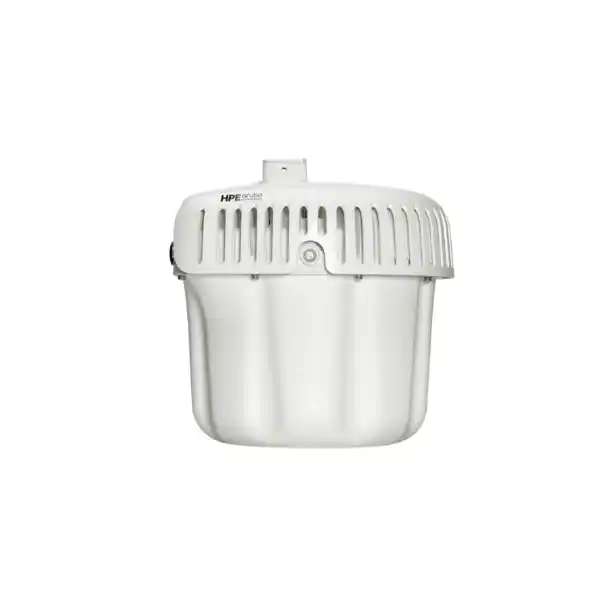
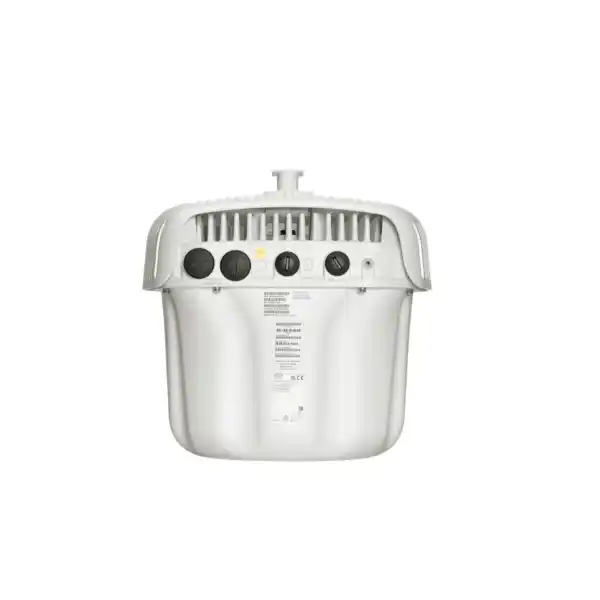
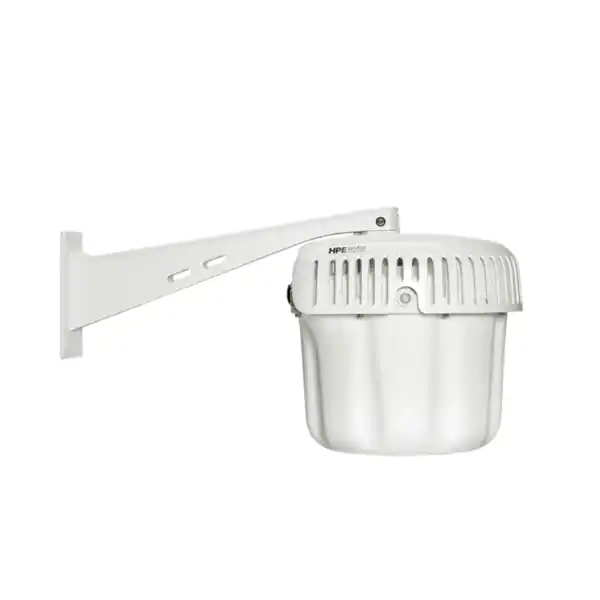
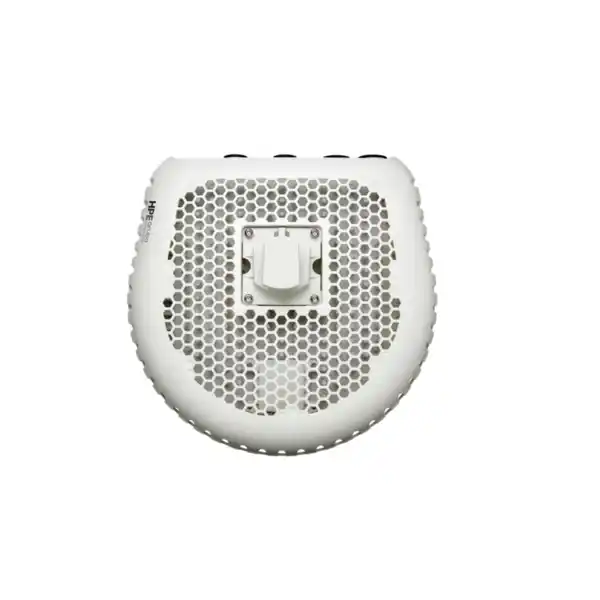
HPE Aruba Networking AP-585EX in Dubai, UAE
The AP-585EX is designed for wireless projects where the access point must tolerate demanding outdoor or industrial conditions while providing modern 802.11ax connectivity. Its integrated omni-directional antennas make it particularly relevant when coverage is required around the mounting position rather than concentrated in one direction. For procurement teams, the important decision is not simply whether the model has enough wireless speed; it is whether the hazardous-location classification, regulatory-domain SKU, antenna pattern, uplink, power method, mounting hardware, software train and management approach all align with the site design.
Share the site type, quantity, preferred management model, power availability and target deployment date. FourTeck can help translate those details into a practical quotation request.
Direct answer: what is the AP-585EX?
The HPE Aruba Networking AP-585EX is a 580EX Series hardened access point for hazardous indoor and outdoor environments. It uses dual 2.4 GHz and 5 GHz 802.11ax radios with 4×4 MIMO and integrated omni-directional antennas, while its enclosure and certifications are intended for conditions beyond those addressed by normal campus access points. Organisations should consider it when they need Wi-Fi 6 coverage around a ruggedised mounting point in industrial, transport, energy or similarly demanding locations. Before proceeding, confirm that the RW regulatory-domain variant is correct for the country of use, that the site hazardous-area classification matches the product certification, and that power, mounting, uplink, management, subscription and software requirements are included in the bill of materials.
What it does in an industrial network
The AP-585EX extends enterprise wireless networking into places where temperature, moisture, airborne contaminants or hazardous-area requirements make a standard indoor access point unsuitable. It provides Wi-Fi 6 features such as OFDMA and MU-MIMO, supports enterprise security functions including WPA3, and includes wired interface choices that can be matched to copper or fibre-oriented designs.
The access point also includes high-power Bluetooth and 802.15.4/Zigbee radios. Those capabilities can support an industrial IoT architecture when the chosen IoT application, software platform and policy design are compatible. They should be treated as integration capabilities rather than an automatic guarantee that every sensor or tracking application will work without additional design work.
Who should shortlist it
This model is most relevant to organisations planning wireless coverage at oil and gas locations, manufacturing facilities, industrial yards, transportation infrastructure, utility environments, process sites or other projects where a hazardous-location-rated access point is required. It can also be considered for harsh outdoor sites that need the 580EX platform’s rugged construction and internal omni antenna pattern.
It is not automatically the right choice for every outdoor project. If the area is not hazardous, a standard outdoor access point may be more economical. If the design needs a concentrated directional pattern, AP-587EX is the related directional model. If 6 GHz operation or Wi-Fi 6E is mandatory, a newer hazardous-location family may be more appropriate and should be evaluated separately.
Business challenges the AP-585EX can help address
Wireless coverage beyond the office
Industrial mobility projects often extend into loading areas, processing zones, plant walkways, transport yards and other spaces where conventional indoor APs are not designed to operate. A hardened access point creates a more appropriate foundation for these coverage zones.
Hazardous-area deployment requirements
The AP-585EX carries hazardous-location certifications including Class 1 Division 2, ATEX Zone 2 and IECEx. The site engineer must still verify that the exact certification and installation practice are appropriate for the classified area.
Dense mobile and IoT activity
Wi-Fi 6 scheduling technologies can improve airtime efficiency when many compatible clients share the RF environment. The model also includes Bluetooth and Zigbee radios, giving design teams more options for IoT-related workflows.
Wired uplink flexibility
The platform supports a 5 Gb SmartRate copper interface, a 10G SFP+ interface and an additional 1 Gb Ethernet interface. This can help when the physical network design requires different uplink media or resiliency options.
Core capabilities buyers should understand
AP-585EX deployment-fit matrix
| Requirement | Suitable when | Confirm before ordering |
|---|---|---|
| Hazardous-location Wi-Fi | The classified area aligns with the product’s certified hazardous-location scope. | Site classification, regional approvals, installation method and engineering sign-off. |
| Omni-directional coverage | Clients need coverage around a horizontally mounted AP location. | RF survey, mounting height, obstructions, client types and roaming design. |
| Wi-Fi 6 client estate | The project needs 2.4/5 GHz 802.11ax capacity and efficiency. | Whether 6 GHz or Wi-Fi 6E is a requirement; AP-585EX does not provide a 6 GHz radio. |
| Multi-gigabit uplink | The switching design can support 5 Gb SmartRate copper or an appropriate SFP/SFP+ option. | Cable category, fibre type, industrial-temperature transceiver and surge requirements. |
| PoE-powered deployment | The upstream power source can supply an appropriate 802.3bt power class. | Full-function power budget, PSE-out requirement and any Intelligent Power Monitoring policy. |
| Industrial IoT integration | Bluetooth or Zigbee radio support is useful within the planned IoT architecture. | Application compatibility, device onboarding, security policy and management integration. |
Configuration, licensing and compatibility dependencies
The AP-585EX should be treated as one component in a larger wireless solution. The access point hardware does not remove the need to define how it will be managed, powered, mounted and connected. HPE lists HPE Aruba Networking Central Foundation and Advanced subscription options for the 580EX family, with multiple terms. Whether a particular subscription is required depends on the chosen management architecture and feature set; do not assume a Central license is automatically included with the AP.
Power planning also changes the available feature set. HPE documents full-function operation with suitable 802.3bt power, while lower PoE classes can impose radio-chain reductions or disable downstream PSE functionality. A site that expects to power an attached device from the AP’s E2 interface must therefore review upstream power capacity carefully. AC operation is another option, but connector kits, electrical installation standards and hazardous-area practices should be confirmed before the quotation is finalised.
Software support deserves the same attention. Current HPE support documentation lists AP-585EX in Central and Central On-Premises support tables, but supported and validated software versions can differ by management mode. Existing Aruba estates should confirm controller, gateway, InstantOS or AOS compatibility before introducing the model. For a brownfield project, provide FourTeck with the existing management platform and software version so the compatibility discussion starts from the actual environment rather than from a generic product specification.
A practical purchase and deployment journey
Classify the environment
Document the hazardous-area classification, temperature range, exposure, mounting location, height and physical constraints. This determines whether AP-585EX is appropriate at all and whether additional certified installation materials are required.
Validate the RF design
Decide whether an omni antenna pattern fits the coverage objective. Review client density, roaming paths, interference, mounting orientation and whether directional coverage would be more suitable. A survey is valuable for high-risk industrial deployments.
Choose power and uplink
Select 5 Gb copper, SFP+ or the appropriate resilient design. Confirm PoE class, switch power budget, fibre transceivers, surge protection and whether downstream PoE is expected from the AP.
Confirm management and subscriptions
Identify the existing Aruba architecture or new management target. Then select the required Central subscription, gateway components or on-premises management elements as applicable, including term length and renewal expectations.
Build the exact BOM
Include APs, mounts, injectors or power accessories, cabling or transceivers, strain-relief components, subscriptions and professional services. The goal is to avoid receiving access points that cannot be installed because one supporting item was omitted.
Coordinate installation and validation
Plan physical installation, hazardous-area procedures, network configuration, RF validation, client testing and documentation. Any installation or configuration service should be explicitly included in the quotation rather than assumed.
Capability focus: Wi-Fi 6 capacity without confusing headline speed with application throughput
HPE specifies the 580EX series for a maximum aggregate on-air data rate of 2.97 Gbps. That figure is useful for comparing the radio platform, but it is not a promise that a single application or endpoint will receive 2.97 Gbps. Client radio capability, channel width, RF conditions, distance, interference, protocol overhead, uplink design and concurrent client load all influence actual performance. The AP-585EX supports four spatial streams on each radio and HPE documents up to 2.4 Gbps on 5 GHz and up to 1,150 Mbps on 2.4 GHz in specific client and channel configurations.
For real-world industrial design, the more valuable Wi-Fi 6 features may be airtime efficiency and scheduling rather than peak rate alone. OFDMA divides a channel into resource units so compatible clients can be served more efficiently, while MU-MIMO can allow simultaneous spatial-stream use by multiple capable clients. This can be useful where handheld terminals, tablets, vehicle-mounted devices, sensors and industrial endpoints coexist in the same coverage area.
Client capacity also needs interpretation. HPE states support for up to 1,024 associated clients per radio but notes that a typical recommended limit for active outdoor clients is substantially lower and depends on distance. For a serious deployment, plan around application traffic, client behaviour and RF geometry instead of using the association ceiling as a design target. FourTeck can use estimated active-client counts and application types to make the sizing discussion more realistic.
Capability focus: environmental hardening and hazardous-location planning
An industrial access point is selected for more than radio performance. The AP-585EX is designed to operate from -40°C to +65°C with full solar loading, is rated IP66, and is fully sealed against airborne contaminants. HPE also documents industrial-strength surge protection, salt-spray testing and high wind-survival figures for the 580EX platform. These characteristics are relevant to exposed UAE sites where heat, dust, moisture, electrical events and mounting conditions can be more demanding than a typical office environment.
Hazardous-location certification is equally important but should never be treated as a generic statement that the AP is suitable for every dangerous area. HPE lists Class 1 Division 2, ATEX Zone 2 and IECEx certifications. Project engineers must still match the exact equipment marking and installation method to the site classification, gas group, temperature class, local regulatory requirements and owner engineering standards. A procurement team should ask the consultant or site authority to confirm the required certification before placing the order.
The distinction between the AP-585EX and a standard AP-585 matters here: the EX model is built for hazardous-location use, while a non-EX outdoor access point should not be substituted merely because the wireless specification looks similar. Conversely, if the site is not classified as hazardous, an EX model may add cost and installation complexity without providing a necessary business benefit. The correct decision is driven by the site requirement, not by the assumption that more rugged always means more appropriate.
Capability focus: IoT radios, policy control and operational management
The AP-585EX includes high-power Bluetooth and 802.15.4/Zigbee radios, which can be useful when an industrial network is expected to support location services, asset-tracking concepts or compatible sensor deployments. HPE positions the 580EX as an IoT platform and provides coexistence functions intended to reduce interference between the Wi-Fi and IoT radios. The practical value depends on the application ecosystem: an integrated radio does not replace the need for supported devices, an application platform, onboarding rules, security policy and operational ownership.
Wireless management can be centralised through HPE Aruba Networking Central or other supported HPE Aruba architectures. Capabilities such as AirMatch and ClientMatch are designed to help with RF optimisation and client steering. In a distributed industrial estate, central management can reduce the operational burden of treating every rugged AP as an isolated device. The procurement implication is that the management model and subscription term need to be priced alongside the hardware, especially if a new Central tenant or expanded subscription count is required.
Security functions also sit within the larger architecture. The platform supports WPA3 and Enhanced Open, and HPE describes policy-enforcement and dynamic-segmentation capabilities in the 580EX family. The exact behaviour depends on how the AP is deployed with gateways, identity services and policy components. Buyers should therefore ask for an architecture-level review if the goal is network segmentation, contractor access control or separate treatment of operational technology, enterprise users and IoT devices.
Where the AP-585EX can fit best
Oil and gas facilities
Wireless coverage may be needed around processing areas, yards, maintenance zones or field locations where hazardous-area requirements apply. The AP-585EX can be considered when the exact area classification and certification markings match.
Industrial manufacturing
Rugged Wi-Fi can support mobile work instructions, handheld terminals, maintenance applications, tablets and connected equipment. RF planning should account for metal structures, moving machinery and changing inventory.
Transportation environments
Yards, depots and operational transport areas can combine outdoor exposure with high mobility. An omni AP may suit central coverage points, but roaming and directional coverage requirements must be validated.
Utilities and process sites
Field technicians and operational systems may need connectivity where conventional enterprise hardware is not physically suitable. Power availability, surge protection and fibre reach can be as important as radio capacity.
Industrial IoT projects
Integrated Bluetooth and Zigbee can be relevant to compatible sensors or tracking use cases. Confirm application support and security architecture rather than assuming the radio alone delivers an IoT solution.
Harsh outdoor enterprise zones
Where exposure conditions are severe and the project specifically needs the EX model’s certifications, AP-585EX can extend the same enterprise WLAN design into difficult physical locations.
Integration and operational considerations
Start with the wired network. A 5 Gb SmartRate copper uplink can be attractive where suitable structured cabling and a compatible switch port already exist. For longer industrial runs or electrically noisy environments, the SFP+ interface may be more suitable, but fibre type, transceiver temperature rating, connector protection and installation method all need to be specified. HPE lists industrial-temperature SFP and SFP+ options in the 580EX QuickSpecs rather than recommending arbitrary optics.
Next, validate power. If the network relies on PoE, make sure the switch or midspan can deliver the required 802.3bt class and that the power budget is available across all planned APs. A design that only provides 802.3at may allow the AP to operate with reduced radio chains, which can materially change the intended performance. If AC power is preferred, coordinate the electrical design and the appropriate outdoor/hazardous-location connector kit.
Finally, treat RF and hazardous-area installation as separate specialist disciplines that must meet in the final design. The best RF mounting point may not be acceptable from a classified-area, structural or maintenance-access perspective. The selected location should satisfy coverage, certification, cable routing, grounding, serviceability and safety requirements together.
Buyer questions to resolve before requesting a quote
A useful quotation begins with the deployment requirement, not just the model name. Confirm whether the AP is being added to an existing HPE Aruba estate or used in a new network, and share the current management platform if one already exists. State the country of deployment so the regulatory-domain part number can be checked. For a UAE project, the RW variant R7T30A is the relevant part reference to evaluate, but local radio and project approvals still need to be confirmed.
The installation team should also define the mounting surface or pole, approximate height, orientation, power source, copper or fibre uplink, surge and grounding requirements, and whether an attached device needs PoE from the AP. If the deployment is in a hazardous area, provide the area classification and any owner-specific engineering standard that affects equipment selection.
For the wireless side, provide the expected number and type of clients, required applications, roaming areas, coverage boundaries, and whether 6 GHz is required. These details help determine whether AP-585EX is the right model, whether AP-587EX or another outdoor family should be compared, and whether a survey or more detailed design stage is advisable before hardware is ordered.
Procurement checklist for AP-585EX
How FourTeck can assist with sizing, quotation and deployment planning
FourTeck can help buyers turn a model request into a more complete purchasing requirement. That can include confirming whether AP-585EX is being used for its hazardous-location certification, its omni antenna pattern, its environmental hardening, or a combination of those needs. From there, the discussion can cover quantity, regulatory-domain SKU, power source, uplink media, mounts, Central subscriptions and supporting accessories so the quotation reflects the intended installation.
For project teams that are still comparing options, FourTeck can also help frame the decision between related HPE Aruba outdoor models and newer platforms. The purpose is not to force the AP-585EX into a project where it does not fit. If the requirement is directional coverage, non-hazardous outdoor use or 6 GHz operation, a different model family may make more sense and should be evaluated on its own merits.
Installation, configuration, migration and validation services can be discussed as separate quotation items where required. Share any existing Aruba controller, gateway, Central tenant, switch model, software version or network drawing that affects the deployment. You can also review FourTeck product options, explore networking and implementation services, or send the requirement to FourTeck.
UAE availability and support guidance
For UAE projects, contact FourTeck to confirm current availability of HPE Aruba Networking AP-585EX, the correct RW part number, required quantity and any vendor lead time. HPE’s UAE product catalogue lists the AP-585EX (RW) under part R7T30A, but a catalogue listing should not be interpreted as a promise of immediate local stock. Availability may change with quantity, regional supply, project timing and accessory requirements.
A complete request should include the deployment location, site classification, expected AP count, power method, uplink type, required mounts, management approach and whether Central subscriptions are needed. If installation or configuration is required, ask for that scope to be separated clearly in the quotation. This allows procurement to compare hardware, subscription and service costs without assuming that engineering work is bundled into the access point price.
For broader infrastructure planning, the FourTeck UAE technology portfolio and FourTeck UAE contact team can be used to discuss switching, fibre, security or related project requirements alongside the wireless deployment.
Dubai, Abu Dhabi, Sharjah and Ajman project coverage
FourTeck can coordinate requirement review and quotation discussions for organisations planning AP-585EX projects across Dubai, Abu Dhabi, Sharjah and Ajman. The practical questions remain the same regardless of emirate: the destination site must be matched to the correct regulatory domain, hazardous-area requirements must be verified by the project team, and the bill of materials must include the right mounts, power method, uplink components and management subscriptions. Delivery coordination and any installation or configuration activity should be planned only after the quantity, site access, deployment conditions and required services are clear. For multi-site UAE rollouts, provide a site-by-site quantity and schedule rather than one combined number so the project can be planned more accurately.
GCC Availability
FourTeck can assist organisations evaluating HPE Aruba Networking AP-585EX for projects across the GCC by reviewing the intended country, required radio-domain variant, quantity, hazardous-area requirement, management architecture and supporting accessories before a commercial request is finalised. Projects in the United Arab Emirates, Saudi Arabia, Kuwait, Qatar, Bahrain and Oman can have different regulatory, licensing, logistics and site-access considerations, so a single regional bill of materials should not be assumed to work unchanged everywhere. Product availability, subscription options, delivery schedules, service visits and vendor lead times can vary by country, model and quantity. Share the destination country, exact AP requirement, preferred power and uplink method, Central subscription term if applicable, deployment location and expected timeline. FourTeck can then coordinate quotation and project-planning discussions without making assumptions about local inventory or guaranteed delivery dates. For Kuwait-related enquiries, buyers may also review FourTeck Kuwait resources.
Africa Availability
For African projects, FourTeck can help organisations evaluate the AP-585EX alongside its required accessories, subscriptions, power design and deployment services. A hazardous-location wireless project in East Africa, West Africa, Southern Africa or Central Africa may need country-specific radio approvals, suitable power accessories, industrial-temperature optics, shipping coordination and a different support model from a UAE installation. Availability and fulfilment can depend on destination, quantity, regulatory domain, vendor lead time, project schedule and local site conditions. Buyers should provide the destination country, exact model, quantity, management approach, expected deployment date and whether installation or configuration assistance is required. This makes it easier to discuss an appropriate bill of materials and quotation rather than treating the AP as a stand-alone box. For regional enquiries, FourTeck Africa, FourTeck Kenya and FourTeck Uganda provide additional contact paths.
Related HPE Aruba options and supporting components
AP-587EX
The directional 580EX hazardous-location model. Consider it when the RF design needs focused coverage rather than the AP-585EX omni pattern. Exact SKU and regional approvals must be confirmed.
AP-585
A related non-EX outdoor model for harsh environments where hazardous-location certification is not required. It should not be substituted for AP-585EX in a classified area.
670EX Series
A newer HPE Aruba hazardous-location outdoor family that introduces Wi-Fi 6E options. It is worth comparing when 6 GHz operation or a newer platform is part of the requirement.
Central subscriptions
Foundation and Advanced AP subscription terms are listed for the 580EX family. Select the tier and term only after the required management features are defined.
Power and mounting accessories
HPE lists 802.3bt midspan injectors, outdoor power accessories and multiple mounting brackets. The exact combination depends on the site design and should be confirmed in the BOM.
Why businesses contact FourTeck for this type of requirement
Industrial wireless purchases can fail for reasons that have little to do with the headline AP specification. A correct AP can arrive with the wrong regulatory domain, insufficient PoE, missing mounts, unsupported optics, an unsuitable antenna pattern or no management subscription. FourTeck’s role in the buying process can include clarifying these dependencies before a quotation is treated as final.
Buyers can ask for help reviewing the model choice, creating a bill of materials, checking supporting accessories, aligning HPE Aruba Central licensing, planning configuration scope and identifying where a site survey or specialist hazardous-area review is needed. Where an organisation is replacing or expanding an existing Aruba deployment, sharing the current software version and management platform can help avoid compatibility assumptions.
FourTeck does not need to turn every request into a larger project. Some customers only need a correctly specified hardware quotation; others need design, installation or configuration coordination. State the desired scope at the start so the commercial response can distinguish product supply from professional services.
What buyers commonly need to know before choosing AP-585EX
Is AP-585EX an outdoor AP or an industrial AP?
It is both in the sense relevant to product selection: HPE describes the 580EX as outdoor-hardened and intended for hazardous indoor and outdoor environments. The EX designation matters because the model carries hazardous-location certifications that a standard outdoor AP may not have. A buyer should therefore start with the environmental and area-classification requirement, then confirm that the wireless and antenna design also fits.
Does it provide Wi-Fi 6E or 6 GHz?
No. AP-585EX is a dual-radio 2.4 GHz and 5 GHz Wi-Fi 6 access point. This distinction is important because newer outdoor HPE Aruba families include Wi-Fi 6E and 6 GHz options. If a project specification explicitly calls for 6 GHz spectrum, AP-585EX should not be selected just because it is rugged and high performance.
Why does the RW part number matter?
Wireless access points are sold in regional regulatory variants because permitted channels, transmit power and approval requirements differ between countries. HPE lists R7T30A as the AP-585EX RW variant and includes AP-585EX in its UAE regulatory tables. The destination country still needs to be supplied during procurement so the correct variant is confirmed rather than assumed.
Is the maximum data rate the most important sizing number?
Not usually. The 2.97 Gbps aggregate figure describes the radio platform, but industrial wireless design is often constrained by coverage geometry, client radio capability, roaming, interference, channel availability, application latency and the number of simultaneous active devices. A lower-throughput application can still need careful RF design if clients move quickly or operate around metal structures.
Power is a design choice, not an afterthought
One of the most common questions around rugged APs is whether an existing PoE switch can power them. With AP-585EX the answer depends on the PoE standard and class. HPE documents 802.3bt power for full-function operation and describes functional reductions at lower PoE classes. A project that intends to use the E2 port as a power source for another device has an additional power-budget dependency. Before buying, check the exact switch model, available per-port power, total switch budget and cable run.
A midspan injector can be part of the design when the existing switch cannot provide the required PoE class, but the injector itself must suit the environmental and installation conditions. HPE lists outdoor 802.3bt SmartRate midspan options for the family. Treat that as a component choice to verify, not as something automatically included with the AP.
Omni versus directional: the practical difference
AP-585EX uses integrated omni-directional antennas and is optimised for horizontal mounting. It is well suited to designs that need coverage distributed around the AP location. The related AP-587EX uses integrated directional antennas and can be better where coverage needs to project toward a yard, corridor, lane or defined zone. Choosing between them is an RF design decision rather than a comparison of which model is stronger.
Mounting height and nearby structures can reshape the effective coverage in practice. Pipes, tanks, metal cladding, vehicles, containers and machinery can reflect or block RF energy. For that reason, a drawing-only design should be validated when the wireless service is operationally important.
What should be included in the quotation request?
Give the supplier enough information to quote the entire installation path: exact model, destination country, quantity, mounting location, mount type, power source, switch model, uplink medium, fibre type if relevant, management platform, Central subscription term, hazardous-area classification and whether installation or configuration is required. If the project has a mandatory completion date, state it as a target for planning rather than assuming product availability.
This information also helps separate hardware cost from subscription and service cost. A low unit price for the AP can be misleading if required injectors, transceivers, licences or installation items are missing. Procurement comparisons should use equivalent bills of materials rather than comparing only the access point line.
How does the AP-585EX fit into an existing Aruba environment?
HPE’s current support documentation continues to list AP-585EX among supported outdoor AP platforms, but the exact validated software versions depend on the management mode. That makes brownfield compatibility a useful pre-purchase check. An organisation running an older controller or a newer software train should not rely only on the AP’s original minimum-version information.
Provide the current software version, gateway or controller model, Central use and intended operating mode. FourTeck can then include compatibility verification as part of requirement clarification. If the AP is being introduced as part of a wider lifecycle refresh, compare the cost and operational impact of staying with the 580EX platform versus moving to a newer outdoor family instead of making the decision on AP price alone.
Decision questions buyers ask when the project becomes specific
Can AP-585EX replace a normal outdoor AP one-for-one?
Not automatically. Physical mounting, antenna pattern, power draw, uplink interfaces and software support must all be compared. The EX model is selected for hazardous-location requirements, so a one-for-one swap should be treated as an engineering change rather than a cosmetic replacement.
Do we need HPE Aruba Networking Central?
It depends on the management architecture. The AP can operate in supported unified modes, while Central provides centralised management when the correct subscription and platform design are used. Existing customers should confirm whether they already have subscription capacity and the right tier.
Will an 802.3at switch power it?
It can operate with restrictions. HPE documents reduced radio-chain operation and no PSE-out when powered at 802.3at without IPM adjustments. If the design expects full radio capability, plan for suitable 802.3bt power or AC power rather than relying on a lower PoE class.
Should we use copper or fibre for the uplink?
Choose according to distance and site conditions. 5 Gb SmartRate copper may work well where suitable cabling and switch ports are available. SFP+ can be preferable for longer runs or electrical isolation, but the correct industrial-temperature optics and outdoor fibre protection should be included.
How many APs are required for a plant or yard?
Area size alone is not enough to answer. Mounting height, obstructions, client radios, required data rate, roaming paths, channel plan and interference all affect AP count. For operationally important coverage, use a predictive design and validate it onsite.
What does FourTeck need for an accurate quote?
Provide the exact deployment context. Quantity, destination, site classification, mounting, power, uplink, current Aruba environment, subscription term, accessory needs and service scope allow a quotation to be built around the real project instead of only the AP part number.
When is a newer model worth comparing?
Compare a newer hazardous-location platform when the project specifically requires 6 GHz operation, a newer software lifecycle, different radio capacity or a longer expected deployment horizon. HPE’s 670EX family is one example to evaluate for Wi-Fi 6E hazardous-location use. That does not make AP-585EX unsuitable by default: if the existing network, client estate and project requirements align well with 580EX, staying on the same platform can have operational advantages. The comparison should include lifecycle, management compatibility, client capability and total bill of materials rather than focusing only on the wireless generation label.
Frequently asked questions about HPE Aruba Networking AP-585EX
1. What is the AP-585EX designed for?
It is a ruggedised Wi-Fi 6 access point for hazardous indoor and outdoor environments. HPE positions the 580EX series for demanding industrial locations such as oil and gas, manufacturing and transportation sites. The exact hazardous-area certification still needs to be matched to the project.
2. Which AP-585EX part number is relevant for the UAE?
HPE lists R7T30A as the AP-585EX RW variant, and current HPE regulatory documentation includes AP-585EX support for the United Arab Emirates. Confirm the destination country and regional SKU with FourTeck before ordering.
3. Does AP-585EX support Wi-Fi 6E?
No. AP-585EX is a Wi-Fi 6 / 802.11ax access point using 2.4 GHz and 5 GHz radios. If 6 GHz operation is required, compare a newer HPE Aruba outdoor hazardous-location platform such as the 670EX family, subject to regional support.
4. What antenna type does AP-585EX use?
It uses four integrated dual-band omni-directional antennas for 4×4 MIMO. HPE states that the antennas are optimised for horizontal mounting. Projects needing a directional pattern should compare the AP-587EX rather than assuming an external directional antenna can be added.
5. What power source is recommended?
HPE supports 802.3bt PoE and AC power. Full functionality depends on receiving sufficient power; lower PoE classes can reduce radio capability or disable PSE-out functions. Confirm the switch or injector power class and total power budget during design.
6. Does the AP include HPE Aruba Networking Central licensing?
Do not assume a Central subscription is included. HPE lists Foundation and Advanced AP subscriptions in multiple terms for the 580EX family. The required license tier and duration depend on the chosen management architecture and should be quoted separately when needed.
7. Can the AP use a fibre uplink?
Yes. AP-585EX includes a 10GBASE-R SFP+ cage in addition to its multi-gigabit copper interface. HPE recommends suitable industrial-temperature SFP/SFP+ modules for optimal operation. Fibre type, optics and outdoor strain relief should be confirmed in the BOM.
8. Is AP-585EX currently available in Dubai?
Availability can change with quantity and vendor lead time. HPE lists the RW model in its UAE catalogue, but that does not establish local ready stock. Contact FourTeck with quantity and timing to confirm current UAE availability and quotation options.
9. What information should be sent for a quotation?
Send the quantity, destination, hazardous-area classification, mounting location, power source, uplink type, current Aruba management platform, subscription requirement, accessories and required service scope. This helps FourTeck prepare a more complete bill of materials and commercial response.
Prepare the AP-585EX requirement before you order
For a useful quotation, send FourTeck the required quantity, destination, hazardous-area classification, mounting method, power source, uplink preference, management platform, software version and subscription term. FourTeck can help confirm the model and supporting bill of materials, then discuss installation or configuration as a separate scope if needed.

Reviews
There are no reviews yet.