
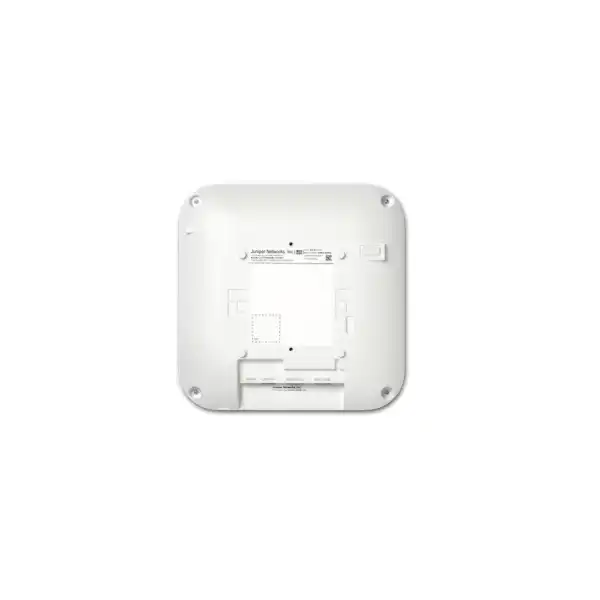
Juniper AP47 Access Point Dubai
The Juniper AP47 is a flagship-class indoor Wi-Fi 7 access point for high-density enterprise networks that need 4×4 radio capacity, multigigabit wired uplinks, cloud-driven assurance, advanced location services, and room to adopt 6 GHz client connectivity.
For a successful UAE deployment, the purchase decision should cover more than the access point hardware. Power class, 10GbE switch capability, Mist licensing, antenna pattern, regulatory domain, ceiling placement, cable plant, client capability, RF design, and the amount of usable 6 GHz spectrum all influence the real result. FourTeck can prepare a hardware, subscription, switching, installation, and deployment scope around the actual site rather than treating the AP47 as a simple standalone device.
Direct answer: what is the Juniper AP47?
Why the AP47 is a different purchasing decision from a basic office access point
The Juniper AP47 sits at the high-performance end of the indoor enterprise WLAN conversation. Its value is not simply that it carries a Wi-Fi 7 label. The platform combines three data-serving radios with four spatial streams, a dedicated tri-band scan radio, flexible radio modes, dual 10 gigabit Ethernet interfaces, hitless PoE support, a Trusted Platform Module, integrated sensors, virtual Bluetooth Low Energy, dual 802.15.4 radios, GNSS/GPS capability, and support for advanced location functions. Those characteristics make it relevant where wireless is treated as production infrastructure rather than convenient best-effort connectivity.
That distinction matters during procurement. A branch office with light traffic and mostly legacy 2×2 clients may not need the AP47’s radio density, switch requirements, or location features. A dense office floor with hundreds of devices, high-resolution collaboration, local application traffic, demanding guest services, IoT endpoints, and a roadmap toward Wi-Fi 7 clients can make much better use of the hardware. The AP47 should therefore be selected against traffic behavior, concurrent client demand, application sensitivity, cable availability, switch port speed, PoE headroom, and expected service life rather than by headline throughput alone.
The most important architectural advantage is that the AP47 is designed to collect detailed operational telemetry while serving clients. Its dedicated scanning radio performs functions such as WIDS/WIPS scanning, spectrum analysis, sensor work, and location analytics without relying on the serving radios to carry every monitoring task. In a large environment, that separation supports more consistent visibility into interference, client experience, and RF conditions. It also aligns with the Juniper Mist operational model, where cloud analytics and service-level expectations are used to expose user-impacting issues rather than forcing administrators to interpret isolated counters from each access point.
For Dubai and wider UAE projects, there is also a regulatory consideration that can materially change expectations. The AP47 hardware supports broad 6 GHz capabilities globally, including Wi-Fi 7 features such as 320 MHz channels where permitted, but a local deployment must follow the UAE spectrum rules actually in force. Current TDRA short-range device regulations allocate a more limited indoor Wi-Fi portion of the 6 GHz range than the full 1.2 GHz available in some other markets. This means the AP47 remains a powerful platform in the UAE, but a design should not assume that every global 6 GHz channel or every example from a United States deployment guide can be reproduced locally.
Radio architecture and what it means in practice
The AP47 Series uses four Wi-Fi radios. Three radios serve client traffic and can operate with up to four spatial streams, while the fourth radio is dedicated to scanning and analytics. In the standard tri-band operating model, the serving radios can cover 2.4 GHz, 5 GHz, and 6 GHz simultaneously. Juniper also documents dual-5 GHz and dual-6 GHz operating options, allowing a designer to prioritize spectrum differently when the environment and local regulations support the chosen mode.
Maximum theoretical per-band data rates published for the AP47 are up to 1,376 Mbps on 2.4 GHz, 5,764 Mbps on 5 GHz, and 11,528 Mbps on 6 GHz. These figures describe PHY capability under ideal conditions; they are not a promise that one client will receive those rates as application throughput. Real performance is shaped by client radio design, channel width, signal quality, interference, airtime sharing, retransmissions, protocol overhead, wired bottlenecks, security processing, local spectrum rules, and application behavior.
The 4×4 design is particularly useful when the AP must serve many clients or benefit from additional spatial diversity. Many phones and laptops remain 2×2 devices, so a single endpoint will not suddenly become a 4×4 client because the access point has four chains. The business value is better understood as capacity, flexibility, and resilience across the cell rather than a simple doubling of one user’s speed.
AP47 radio buyer signals
- 4×4:4 data-serving radios for high-performance enterprise cells.
- Dedicated tri-band scan radio for security, spectrum, analytics, and location functions.
- Wi-Fi 7 features include Multi-Link Operation, Multi-RU, preamble puncturing, OFDMA, MU-MIMO, and 4K QAM support where client and regulatory conditions allow.
- Backward compatibility with 802.11a/b/g/n/ac/ax helps mixed estates migrate gradually.
- 6 GHz only benefits compatible Wi-Fi 6E or Wi-Fi 7 clients; older clients remain on 2.4 or 5 GHz.
- Radio design should be based on measured coverage and capacity, not solely on maximum theoretical data rates.
Juniper AP47 key specifications
The following table highlights decision-relevant hardware characteristics for the AP47 internal-omnidirectional model. Country-specific operation, ordering codes, power behavior, subscriptions, and accessory requirements should be validated against the final bill of materials.
| Specification area | AP47 detail |
|---|---|
| Wireless standard | Wi-Fi 7 / IEEE 802.11be, backward compatible with 802.11a/b/g/n/ac/ax clients. |
| Serving radios | Three data-serving radios with up to 4×4:4 operation, supporting 2.4, 5, and 6 GHz configurations. |
| Dedicated scan radio | Tri-band radio for WIDS/WIPS, spectrum analysis, sensor functions, and location analytics. |
| Maximum published PHY rates | Up to 1,376 Mbps at 2.4 GHz, 5,764 Mbps at 5 GHz, and 11,528 Mbps at 6 GHz under supported configurations and conditions. |
| Antennas | AP47 uses internal omnidirectional antennas: four 2.4 GHz antennas with 4 dBi peak gain and four 5 GHz plus four 6 GHz antennas with 6 dBi peak gain. |
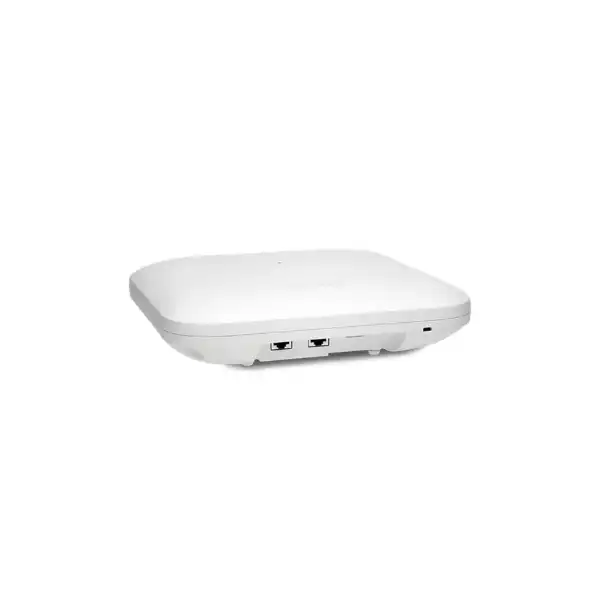
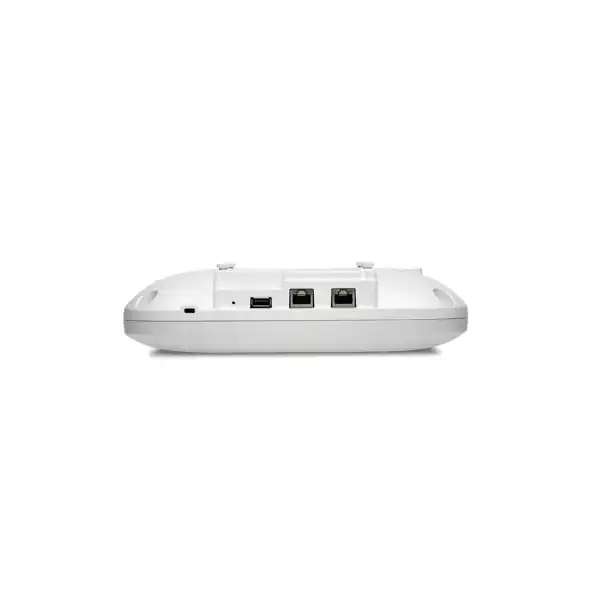
| Ethernet | Two RJ45 ports supporting 100/1000/2500/5000/10000Base-T; both accept PoE input. Eth0 additionally supports MACsec. |
| Power | 802.3bt Class 6 provides full functionality. Juniper documents approximately 29.3 W for full functionality. Lower PoE classes reduce available functions. |
| Redundancy | Dual Ethernet and hitless PoE support can be used for resilient data and power designs when the switching architecture is configured accordingly. |
| IoT and location | vBLE directional antenna array, Bluetooth 5.4 in current specifications, dual 802.15.4-capable radios, UWB capability, GNSS/GPS L1/L5, pressure, temperature, and accelerometer sensors. |
| USB | USB 2.0 interface with up to 900 mA output; availability depends on supplied PoE class. |
| Dimensions | Approximately 254 × 254 × 60 mm for AP47. |
| Weight | Approximately 2.0 kg. |
| Environment | AP47 operating range is listed as 0°C to 40°C with 10% to 90% non-condensing relative humidity and up to 3,048 m altitude. |
| Security hardware | Integrated Trusted Platform Module for infrastructure security. |
Wi-Fi 7 capability: where the performance comes from
Wi-Fi 7 adds several mechanisms that can improve capacity, latency behavior, and spectrum efficiency, but each one has conditions. The AP47 supports 802.11be capabilities such as Multi-Link Operation, Multi-Resource Units, 4K QAM, preamble puncturing, OFDMA, MU-MIMO, and wider channel operation. The practical gain depends on client support and on how much clean spectrum is available. A Wi-Fi 7 laptop close to an AP may use features that a Wi-Fi 6 client cannot, while older endpoints continue to operate using earlier standards.
Multi-Link Operation is especially relevant to Wi-Fi 7 because compatible endpoints can coordinate more than one link. Depending on implementation and client support, this can improve throughput, responsiveness, or resilience. It is not a reason to abandon sound RF planning. A client still needs usable signal quality, manageable contention, suitable channel allocation, and adequate wired backhaul. In dense buildings, poorly chosen channel widths can create more co-channel competition than benefit. A professional design therefore treats 320 MHz as an available tool, not as a default setting for every AP.
Preamble puncturing can help a wide Wi-Fi 7 channel remain useful when part of that channel experiences interference, while Multi-RU can give the scheduler more flexibility in how resource units are allocated. OFDMA improves the efficiency of serving multiple devices with smaller traffic demands, and MU-MIMO allows simultaneous transmission opportunities for compatible clients. These capabilities are valuable in busy WLANs where the challenge is often airtime efficiency rather than just peak data rate.
4K QAM can raise the information carried in each symbol when signal quality is excellent. That qualifier is important. High-order modulation needs a clean RF environment and favorable signal-to-noise ratio, so it is typically associated with clients that are relatively close to the AP and experiencing strong conditions. Buyers should not translate a 4K QAM specification into a promise of building-wide maximum throughput. Wall materials, floor construction, glass coatings, metal shelving, furniture, neighboring networks, and endpoint antenna design all affect the attainable rate.
The AP47’s value is therefore broader than any single Wi-Fi 7 feature. It combines new PHY capabilities with a strong radio platform and cloud operations. An organization upgrading from Wi-Fi 5 or early Wi-Fi 6 can use the AP47 to create a platform that continues serving existing devices while newer Wi-Fi 6E and Wi-Fi 7 endpoints gradually move onto 6 GHz. That can relieve some pressure on 5 GHz, but only if the 6 GHz coverage plan is dense enough and the client estate actually supports the band.
Power and switch design can decide whether you receive full AP47 functionality
The AP47 is not an access point to connect to an arbitrary PoE port without checking the power budget. Juniper specifies 802.3bt Class 6 for full functionality and lists approximately 29.3 watts for the fully enabled operating state. With adequate 802.3bt power, the design can use the full tri-radio 4×4 configuration together with scanning, dual IoT radios, UWB, GPS, both 10GbE Ethernet interfaces, and USB. This is the power condition a buyer should plan around when the intention is to use the hardware as designed.
Under 802.3at, Juniper documents a reduced operating profile: the AP can support either two radios at 4×4 or three radios at 2×2, while scan, IoT, UWB, GPS, and the two 10GbE Ethernet interfaces remain enabled; USB is not available in that mode. With only 802.3af, the radios are disabled and the AP is limited to cloud connectivity. Those details are commercially important because an existing switch may technically power the AP47 but still prevent it from delivering the expected wireless configuration.
For a multi-AP project, power must be checked at switch level rather than one port at a time. A switch may provide 802.3bt on selected ports but lack enough total PoE budget to run dozens of AP47 units at their intended profile. Redundant power design adds another layer: if both AP Ethernet ports are used for hitless PoE and data resilience, the upstream switching, link architecture, spanning or link behavior, VLAN design, and power sources must be coordinated. A resilient AP does not create resilient service if both cables terminate on the same single point of failure.
Dual 10GbE uplinks: useful headroom, but the cable path must support them
Both AP47 Ethernet interfaces support 100 Mbps, 1 Gbps, 2.5 Gbps, 5 Gbps, and 10 Gbps over copper. This gives network designers flexibility when the switching layer and structured cabling cannot immediately move to 10GbE everywhere. It also reduces the risk that a high-capacity Wi-Fi 7 access point is constrained by a single legacy gigabit link. Eth0 additionally supports MACsec, which can be relevant to organizations requiring link-layer protection between the AP and compatible switching infrastructure.
The presence of 10GbE ports does not mean every AP47 requires a sustained 10 Gbps application load. Wireless airtime, client capabilities, channel plans, and real traffic patterns usually produce lower aggregate throughput than PHY sums imply. The reason for multigigabit uplinks is headroom and architectural balance. A high-density cell with multiple active Wi-Fi 6E and Wi-Fi 7 clients can exceed what a 1GbE uplink comfortably handles, particularly during short bursts, large local transfers, high-resolution collaboration, or content distribution. A 2.5, 5, or 10GbE design gives the WLAN more room to grow.
Cabling quality should be validated, especially in older buildings. Existing Category 5e runs may support some multigigabit rates under favorable conditions, but cable length, termination quality, bundling, patch panels, electromagnetic environment, and historical workmanship can influence achievable link speed. A Wi-Fi 7 refresh is often the right moment to certify cable runs rather than assuming that an old installation will negotiate the intended rate reliably.
Switch selection should also consider more than port speed. The required PoE class, total PoE budget, uplink capacity from access switches to the distribution layer, VLAN and segmentation design, redundancy model, monitoring, and Mist Wired Assurance strategy can all affect the final architecture. Where AP47 is being introduced into an existing non-Juniper switching estate, compatibility is still possible at Ethernet level, but operational integration and feature expectations should be scoped carefully.
6 GHz in the UAE: design to local spectrum, not to global marketing examples
The AP47 supports a broad 6 GHz frequency range as a global hardware platform, but the usable channels are controlled by the regulatory domain. In the UAE, current TDRA short-range device rules list Wireless Access Systems for indoor use in the 5945–6425 MHz range with a maximum effective isotropic radiated power of 200 mW under the stated conditions. This is narrower than the 5925–7125 MHz range often discussed in generic Wi-Fi 6E and Wi-Fi 7 material from other markets.
This difference affects channel planning. A 320 MHz channel consumes a large amount of spectrum, so a country with a smaller available 6 GHz allocation has fewer non-overlapping wide-channel choices. In dense enterprise environments, smaller channels may be preferable because they provide more reuse opportunities and reduce contention between neighboring cells. The right channel width is therefore a design decision based on available spectrum, AP density, traffic type, interference conditions, and client behavior.
The quotation should use the correct world or regional ordering code supported for the UAE and should not assume a United States regulatory profile. During deployment, the Mist organization and AP country settings must match the legal operating environment. Because spectrum policy can evolve, a current compliance check should be included in the project process rather than relying on an old screenshot or a channel list copied from another country.
UAE 6 GHz planning questions
- Which AP47 regulatory SKU is being supplied?
- Which 6 GHz channels are permitted by current TDRA rules?
- How many client devices actually support 6 GHz?
- Should the design use 80, 160, or 320 MHz channels?
- Does the floor plan need additional AP density because 6 GHz attenuates more through obstacles?
- Are all WLAN security settings compatible with Wi-Fi 7 and 6 GHz requirements?
Juniper Mist management and the mandatory Wi-Fi Assurance subscription
The AP47 is designed around Juniper Mist cloud operations. Juniper states that Mist is a subscription-based service and that Wi-Fi Assurance is a mandatory subscription when using Juniper access points. This is an important bill-of-materials requirement: purchasing the AP hardware without the intended subscription term is not the same as purchasing a complete managed WLAN solution. For budgeting, buyers should decide whether the project needs one-, three-, or five-year subscription coverage and should align the subscription quantity with the AP estate.
Wi-Fi Assurance provides the foundation for day-to-day WLAN operations, including service-level expectations, radio resource management, dynamic packet capture, guest Wi-Fi functions, and WLAN policy creation. The cloud model also enables access points to be claimed into an organization using claim or activation codes, receive configuration, and participate in centralized monitoring. For a multi-site business, this can simplify standardization because WLAN templates, policies, monitoring, and operational workflows can be managed across locations instead of treating every site as a separate manual controller deployment.
Service-level expectations are one of the more useful differences between a telemetry-rich platform and a basic access point dashboard. Rather than simply showing that an AP is online, the management system can evaluate user-facing stages such as connectivity and service behavior. This helps operations teams distinguish whether a complaint is tied to coverage, association, authorization, DHCP, DNS, WAN conditions, or another part of the service path. The result is not that troubleshooting becomes automatic in every case, but that the available evidence is more structured and can reduce time spent reproducing intermittent problems.
Optional subscriptions should be chosen only where their outcomes are needed. Asset Visibility can support location workflows based on vBLE and tags. User Engagement can support location-driven mobile experiences. Premium Analytics extends reporting and historical analysis beyond the baseline analytics included with core services, and Marvis adds a natural-language and AI-assisted operational layer. Access Assurance is a separate cloud-based access control capability for identity and policy use cases. Not every AP47 deployment needs every service, so licensing should be mapped to business requirements instead of automatically bundling all available subscriptions.
Subscription planning also has lifecycle implications. The renewal date, ownership of the Mist organization, administrator roles, support contacts, and transfer procedures should be documented during handover. A project can be technically successful on installation day and still become difficult to operate later if nobody knows which account owns the organization or when subscriptions expire. For larger deployments, renewal co-termination and consistent subscription terms can simplify procurement and reduce the risk of scattered expiry dates.
Location, vBLE, UWB and IoT capabilities
The AP47 is more than a radio endpoint for laptops and phones. Its integrated location and IoT functions can support workflows that would otherwise require additional overlay infrastructure. Juniper’s vBLE technology uses a directional antenna array that is controlled through the Mist platform. The manufacturer describes location accuracy in the one-to-three-meter range for supported use cases and emphasizes the ability to create virtual beacons rather than deploying large numbers of battery-powered physical BLE beacons.
For a business buyer, the important question is what location outcome is needed. Room-level asset visibility, turn-by-turn navigation, visitor engagement, equipment finding, workflow analytics, and electronic shelf label integration are different projects even if they share wireless infrastructure. Location accuracy is influenced by floor maps, AP placement, environmental geometry, tag characteristics, calibration approach, mobile application integration, and the selected Mist service. A buyer should not assume that installing the AP47 automatically delivers a finished location application.
The AP47 also includes dual 802.15.4-capable radios, which Juniper positions for IoT-related functions such as Thread, Zigbee, Matter, and electronic shelf label scenarios as supported by software and ecosystem integration. UWB capability broadens the location technology options, while GNSS/GPS and onboard sensors such as pressure, temperature, and accelerometer provide additional device context. These features are particularly interesting in modern campuses and operational environments where the wireless infrastructure is expected to become a platform for more than standard WLAN access.
A sensible procurement process separates hardware capability from enabled service. The AP47 may contain the radios and sensors, but specific workflows can require subscriptions, supported tags, applications, APIs, software versions, mobile SDK integration, third-party systems, or additional accessories. FourTeck can scope the wireless hardware and network dependencies, while the business team should define the location or IoT objective in measurable terms such as required accuracy, tag count, update frequency, reporting needs, and integration endpoints.
AP47, AP47D or AP47E: choose the antenna format before the quantity is finalized
AP47
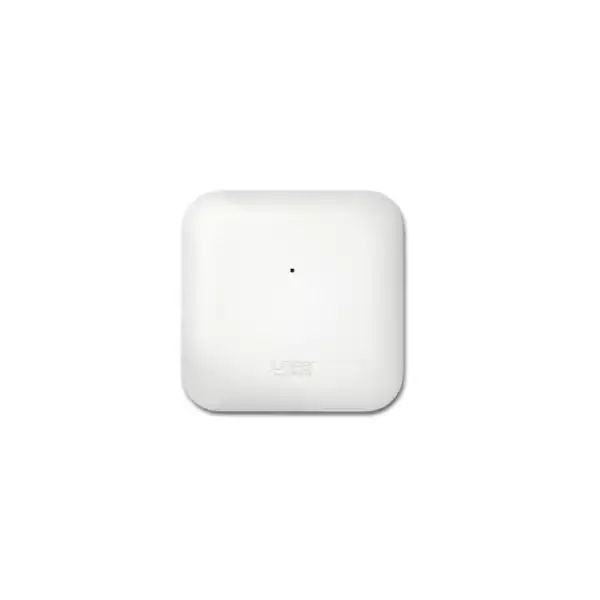
The standard AP47 uses internal omnidirectional antennas. This is the natural starting point for typical ceiling-mounted enterprise coverage where the access point is positioned to serve users around the installation point. Its integrated antenna design simplifies ordering and avoids the external antenna selection process.
AP47D
The AP47D uses internal directional antennas with an approximately 60 by 60 degree pattern. It is useful where coverage should be aimed into a defined area rather than distributed evenly around the AP, such as certain auditoriums, warehouses, corridors, high-ceiling zones, or edge-of-area placements.
AP47E
The AP47E provides external antenna connectivity for specialized designs. It is appropriate only when the project needs an antenna pattern or installation arrangement that integrated antennas cannot provide. External antenna selection, regulatory power calculations, connector compatibility, mounting, and cable loss become part of the design.
The three models share the AP47 high-performance platform but solve different RF-placement problems. Substituting one model for another after a survey can change coverage substantially. For that reason, a bill of materials should identify the exact variant at each AP location rather than treating AP47, AP47D, and AP47E as interchangeable stock codes.
Site survey and AP quantity: why square metres alone are not enough
A reliable AP47 quantity cannot be calculated from floor area alone. Coverage is shaped by construction materials, ceiling height, room layout, wall density, glass, metal, machinery, shelving, furniture, neighboring WLANs, user distribution, application load, and the client devices themselves. A 1,000-square-metre open office and a 1,000-square-metre clinic with many small rooms can require very different AP counts even when both use the same model.
Capacity planning adds another dimension. An access point may provide strong signal over a large area but still be overloaded if too many active users share the same cell. Conference rooms, training areas, auditoriums, cafeterias, event spaces, and open collaboration zones often need designs based on peak concurrency rather than average occupancy. The AP47’s four-spatial-stream radio platform gives substantial capacity, yet RF reuse and airtime remain finite resources.
The 6 GHz band also encourages more deliberate placement. Higher-frequency signals generally experience greater attenuation through common building materials than lower-frequency Wi-Fi, so a design that previously produced acceptable 5 GHz coverage may not provide the same usable 6 GHz footprint. If Wi-Fi 7 and Wi-Fi 6E clients are expected to rely heavily on 6 GHz, AP density and placement should be validated for that objective rather than simply reusing old AP locations.
A predictive survey uses an accurate floor plan and material assumptions to estimate coverage and capacity before installation. An on-site survey can validate RF behavior in the actual environment. Post-installation validation confirms whether the completed WLAN meets the agreed service targets. For migration projects, temporarily testing an AP47 in representative locations can reveal cable, power, mounting, interference, and coverage issues before the full purchase is committed.
The survey output should be translated into an installation drawing that shows AP model, location, mounting orientation, cable path, switch destination, port assignment, VLAN or network role, and any special antenna requirement. This prevents a common project failure where the RF design is correct but installers place APs several metres away from the intended location because the drawing was not specific enough.
Security design for Wi-Fi 7 and mixed client estates
Wi-Fi 7 introduces security requirements that can expose compatibility issues in older device estates. Juniper’s current deployment guidance notes that WPA3 or OWE is mandatory for WLANs using Wi-Fi 7, together with management frame protection and the required modern cipher and authentication behavior. Mist enables the mandatory Wi-Fi 7 security features when Wi-Fi 7 is configured, but the client population still needs to be evaluated.
Some legacy IoT, industrial, or embedded devices cannot support modern security settings. These endpoints may need a separate SSID or policy using a compatible radio band and security model rather than being forced onto the same profile as current corporate laptops. Segmentation matters because maintaining compatibility should not mean weakening every user network. Role-based access, VLAN strategy, firewall policy, NAC, private or multiple pre-shared keys, and certificate-based authentication can be combined according to the organization’s security architecture.
The AP47 itself includes a Trusted Platform Module, and Eth0 supports MACsec for environments that want link-layer protection on compatible wired infrastructure. Those are useful building blocks, but security remains an end-to-end design. Identity stores, RADIUS or Access Assurance, certificate lifecycle, guest onboarding, DNS security, firewall policy, endpoint posture, logging, and administrator access all need to be considered.
A migration should therefore include a client compatibility matrix. Record device type, operating system or firmware, supported bands, maximum channel width, WPA3 capability, 802.1X method, and business criticality. Testing a small representative sample before a large cutover reduces the risk that specialized printers, scanners, sensors, payment terminals, or building systems fail when the new WLAN security policy is enabled.
Operational advantages of a dedicated scan radio and Mist telemetry
Wireless problems are often intermittent. A user reports that a call dropped yesterday, a meeting room became slow for ten minutes, or a device failed to obtain an address during a busy period. Traditional troubleshooting can require engineers to recreate the issue with packet capture tools or spectrum analyzers while the problem is still occurring. The AP47’s dedicated scanning capability and the Mist operational model are designed to provide more continuous evidence.
Juniper documents dynamic packet capture and dynamic spectrum capture that can be triggered when significant issues are detected, allowing data to be streamed to the cloud for analysis. It also describes dynamic debugging, where services running on the AP are monitored for abnormal behavior. These capabilities can reduce the need for engineers to travel to a site simply to connect a sniffer or reproduce a brief event. They are especially relevant across multi-site businesses where wireless specialists are not physically present in every branch.
Radio Resource Management uses the dedicated sensor radio and cloud intelligence to make channel and power decisions. That can be valuable in buildings where neighboring networks, temporary events, tenant changes, or new devices alter the RF environment over time. Automation does not remove the need for good initial design. An AP cannot compensate for being installed inside a metal cabinet, too far from users, or on a switch without enough power. It can, however, help optimize an adequately designed environment as conditions change.
Marvis can add a conversational and AI-assisted interface for network operations when the appropriate subscription is included. It can help administrators investigate issues and identify likely causes without navigating every dashboard manually. Buyers should view this as an operational capability rather than a replacement for network engineering. The strongest results come when telemetry, configuration standards, accurate site data, and trained support processes are all present.
Where the AP47 fits well
Dense corporate offices
Large open floors, collaboration zones, executive areas, training rooms, and meeting-heavy workplaces can benefit from high-capacity radios, 6 GHz support for modern clients, and centralized experience monitoring. The AP47 is especially appropriate when the wired edge is already moving toward multigigabit Ethernet and high-output PoE.
Education and campus environments
Classrooms, lecture halls, libraries, laboratories, and common areas create changing concentrations of users. AP47 can provide a strong platform where the design combines capacity planning, resilient uplinks, cloud operations, and phased adoption of Wi-Fi 7 endpoints across a large campus.
Hospitality and premium venues
Hotels, conference facilities, event venues, and large guest environments can use the AP47 where high device concurrency, guest experience, operational visibility, and location-based services justify a high-performance platform. Back-of-house coverage and IoT should be treated as separate design requirements from guest-facing areas.
Healthcare and operational campuses
Hospitals and complex facilities often combine mobile clinical devices, voice, guest access, staff systems, IoT, and asset-location requirements. AP47 capabilities can be relevant, but device validation, security segmentation, redundancy, and RF design are essential because application criticality is high.
Retail and location-aware spaces
Large stores, premium retail, and customer-experience environments may value vBLE, asset visibility, engagement services, electronic shelf label integrations, and strong guest Wi-Fi. The WLAN can become a shared platform for connectivity and location workflows when the licensing and application stack are planned together.
High-density specialist environments
Command centres, engineering floors, media production areas, design studios, and technology-intensive workplaces may justify AP47 when many modern devices exchange large files or run latency-sensitive applications. Wired multigigabit design is especially important in these deployments.
When another model may be a better choice
The AP47 should not be recommended automatically. If the environment has modest client density, limited bandwidth needs, no requirement for advanced location services, and an access switching layer built around lower PoE classes and 1GbE ports, a smaller Wi-Fi 7 model may deliver a better cost-to-requirement fit. Conversely, if the location is outdoors, the AP47 is the wrong form factor and an outdoor-rated model should be evaluated.
Within the AP47 family, directional or external antenna variants may solve coverage problems more efficiently than the standard omnidirectional model. AP47D is better suited where a defined directional pattern is needed, while AP47E is for specialized external antenna designs. Installing the standard AP47 simply because it is easier to source can lead to excessive AP counts or poor coverage geometry in unusual spaces.
An organization that already has a mature Wi-Fi 6E estate should also compare the business value of replacing functioning APs immediately versus introducing AP47 only in new buildings, high-demand zones, or refresh cycles. Wi-Fi 7 delivers meaningful technical improvements, but the gain depends on Wi-Fi 7 clients, switching capacity, local 6 GHz spectrum, and application demand. A phased migration can sometimes provide better return on investment than a blanket replacement.
FourTeck can compare the AP47 against nearby Juniper indoor Wi-Fi 7 alternatives after the site requirements are known. The comparison should consider radio stream count, antenna type, power class, wired interface speed, location functions, deployment density, and price rather than using model hierarchy alone.
Migration from older Juniper or third-party WLANs
A Wi-Fi 7 upgrade is an opportunity to correct accumulated design assumptions. Existing AP locations may have been chosen for a Wi-Fi 5 or early Wi-Fi 6 radio pattern, 1GbE cabling, different client density, and different security requirements. Reusing every mounting point can save installation effort, but it can also carry old coverage compromises into the new platform. The migration plan should distinguish locations that can be reused from areas that need redesigned placement.
Switch readiness is often the first infrastructure check. Record current access-switch model, software version, number of multigigabit ports, PoE capability per port, total available PoE budget, uplink capacity, redundancy, and spare ports. If the switching edge cannot provide the AP47’s intended power and bandwidth, decide whether to replace switches, add targeted multigigabit switches in high-demand areas, or initially operate AP47 at a reduced profile. The trade-off should be explicit so stakeholders understand what performance has been deferred.
The cable plant should be tested where 2.5, 5, or 10GbE is expected. This includes permanent link quality, patch cords, patch panels, maximum length, and any problematic routes near sources of electromagnetic interference. In some buildings, recabling a small number of AP47 locations produces a more reliable result than trying to force multigigabit operation over marginal legacy runs.
WLAN configuration should be reviewed rather than copied without question. Old SSIDs, VLANs, authentication methods, guest portals, band-steering policies, minimum rates, and security settings may no longer reflect current requirements. Wi-Fi 7 security expectations and 6 GHz client behavior can justify changes. At the same time, specialized legacy devices must be identified so the migration does not disrupt operational systems that cannot support the new policy.
A staged cutover reduces risk. Pilot representative zones, validate client roaming and application behavior, observe Mist service-level metrics, confirm PoE and Ethernet negotiation, test failover where dual uplinks are used, and check coverage against the survey. Only after the pilot meets the acceptance criteria should the design be replicated across the wider site.
Installation details that should appear in the project scope
Mounting and orientation
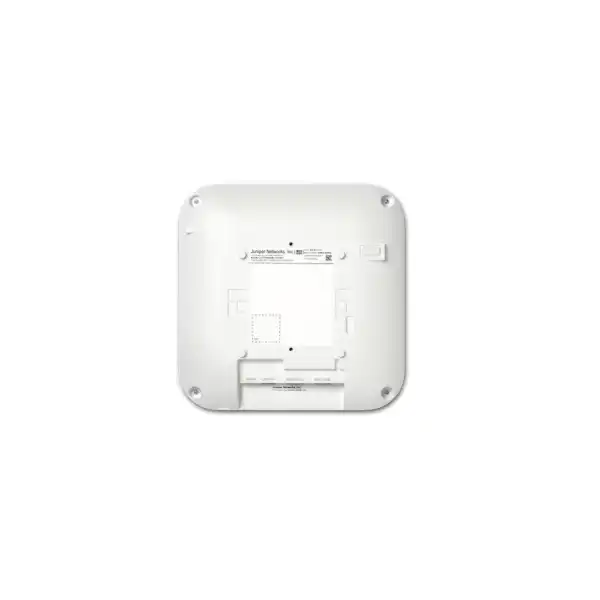
Confirm the ceiling or wall structure, approved bracket, orientation, access for maintenance, distance from obstructions, and whether the selected AP47 antenna pattern matches the mounting geometry. Decorative placement should never override RF performance.
Structured cabling
Define new versus existing cable runs, certification standard, patching, labels, rack termination, cable management, fire-stopping, and expected Ethernet speed. Dual-uplink designs need two planned cable paths rather than one cable plus an unimplemented future option.
Switch and PoE assignment
Document switch name, port number, negotiated speed, PoE class, VLAN or trunk role, LLDP behavior, and whether redundant links terminate on separate infrastructure. Validate total PoE budget during the busiest operating condition.
Mist onboarding
Decide who owns the Mist organization, who will claim the devices, how activation codes are stored, which site and WLAN templates apply, and which administrator roles are created. Handover should include access ownership and subscription information.
Validation and acceptance
Define measurable acceptance criteria such as coverage, channel plan, client onboarding, roaming, service-level metrics, authentication, guest access, redundancy behavior, and throughput at representative locations. A deployment is complete when it meets the agreed design, not when the AP LEDs turn green.
Procurement and quotation considerations in Dubai and the UAE
An accurate AP47 quote should identify the exact hardware variant, regulatory ordering code, quantity, Mist subscription SKU and term, mounting requirements, switching dependencies, cabling scope, installation labor, configuration scope, survey requirement, and support expectations. Listing only “Juniper AP47” leaves several commercial questions unresolved and makes competing quotations difficult to compare on a like-for-like basis.
The regulatory SKU matters because access points enforce country-specific radio rules. A model intended for another market may not be appropriate for UAE deployment even when the physical hardware appears identical. The project should also confirm that the supplied hardware is eligible for the intended Juniper support and cloud onboarding process and that serial numbers, claim codes, and subscriptions are provided through a legitimate supply chain.
Subscription term should be shown separately from hardware so the buyer understands the recurring component of the solution. If the organization expects a five-year WLAN lifecycle but quotes include only one year of Wi-Fi Assurance, the apparent purchase price understates the full operating cost. Conversely, a longer subscription can improve commercial predictability when it aligns with the planned hardware lifecycle and budget policy.
For large deployments, spare strategy is another useful decision. Holding a small number of configured spare units can reduce downtime when an AP fails or a new temporary area must be covered. The number of spares depends on site criticality, total AP count, replacement service level, and how quickly replacement hardware can be obtained. Spares should use the correct regulatory model and be included in asset and subscription planning.
Installation pricing should reflect real site conditions. High ceilings, access restrictions, night work, permits, boom lifts, occupied offices, heritage interiors, data-centre controls, healthcare infection-control procedures, or complex cable routes can materially affect labor. A site visit before final quotation is often more valuable than providing a low estimate that later requires change orders.
Frequently asked buyer questions about the Juniper AP47
Is the AP47 a Wi-Fi 7 access point?
Yes. The AP47 is an IEEE 802.11be Wi-Fi 7 indoor access point. It also supports earlier Wi-Fi standards so older clients can continue to connect on compatible bands and security profiles. The presence of Wi-Fi 7 capability does not mean every endpoint gains Wi-Fi 7 features; the client radio and software must support them.
Does AP47 need a controller?
AP47 is managed through Juniper Mist cloud services rather than a traditional on-premises WLAN controller architecture. Juniper Mist Edge can be introduced for specific data-plane and tunneling use cases, but ordinary cloud management is handled through Mist. The network should have the required connectivity and subscription entitlement for this operating model.
Is a Mist subscription required?
Yes. Juniper documentation identifies Wi-Fi Assurance as a mandatory subscription when using Juniper access points. Optional services such as Asset Visibility, User Engagement, Premium Analytics, Access Assurance, or Marvis should be added only when the project needs their capabilities.
What PoE is needed for full AP47 operation?
Juniper specifies 802.3bt Class 6 for full functionality and publishes approximately 29.3 W for the full-function profile. 802.3at can run the AP with radio or USB limitations, while 802.3af is restricted to cloud connectivity with radios disabled. Switch PoE budget should therefore be checked before purchase.
Does AP47 have 10GbE?
Yes. AP47 has two multigigabit RJ45 Ethernet interfaces supporting up to 10GbE. Both can accept PoE input and be used in resilient designs. Eth0 additionally supports MACsec. Actual negotiated speed depends on the switch port and cabling.
Can I connect AP47 to a 1GbE switch?
The Ethernet interfaces support 1GbE, so the link can negotiate at that speed when the switch supports it. However, a 1GbE uplink may become a performance bottleneck in a busy Wi-Fi 7 deployment and the switch may also lack the 802.3bt power needed for full operation. The wired edge should be assessed as part of the upgrade.
Can AP47 use the full 6 GHz Wi-Fi band in the UAE?
Operation is limited by UAE regulations, not by global hardware capability. Current TDRA short-range device rules list indoor Wireless Access Systems in the 5945–6425 MHz range under the specified power conditions. A UAE design should therefore use the permitted local channel set rather than a wider channel plan copied from another country.
What is the difference between AP47 and AP47D?
The standard AP47 uses internal omnidirectional antennas. AP47D uses an internal directional antenna pattern of approximately 60 by 60 degrees. AP47D can be better for targeted coverage, while AP47 is more natural for conventional ceiling placement serving users around the AP.
What is AP47E for?
AP47E supports external antennas for specialized RF designs. It should be selected only after the required antenna pattern, mounting method, connector solution, cable loss, and regulatory power constraints are understood. External antennas add flexibility but also add design responsibility.
Does AP47 support location services?
Yes. AP47 includes Juniper’s vBLE directional antenna array and related location capabilities, and current specifications also include UWB capability and IoT radios. Specific outcomes such as asset visibility or user engagement can require the appropriate Mist subscription, tags, mobile applications, or integration work.
How many users can one AP47 support?
There is no single responsible user-count figure that applies to every site. Required AP density depends on active client count, traffic mix, channel width, RF conditions, security, roaming, application requirements, and service expectations. Capacity planning and a survey provide a better answer than a fixed maximum-user claim.
Is Wi-Fi 7 useful if most clients are Wi-Fi 6?
It can be, because AP47 remains backward compatible and provides a modern platform that can serve current clients while the device estate evolves. The immediate Wi-Fi 7 benefit is smaller when few endpoints support the new standard, so the business case should include lifecycle, density, operational visibility, and future client refresh plans.
A practical AP47 deployment journey
Define outcomes
Document user density, applications, Wi-Fi 7 goals, location or IoT use cases, security, redundancy, and support expectations.
Survey and design
Create RF placement, select AP47 versus AP47D/AP47E, plan channels, confirm UAE regulatory settings, and determine quantity.
Validate infrastructure
Check switch port speed, 802.3bt availability, total PoE budget, uplink capacity, cable certification, VLANs, and redundancy.
Build the BoM
Include exact AP SKUs, subscriptions, mounts, switching, optics or uplinks, cabling, spares, installation, configuration, and support.
Pilot and verify
Claim APs in Mist, apply WLAN policies, test client compatibility, check coverage, observe service levels, and validate failover.
Roll out and hand over
Complete installation, document ports and AP locations, confirm subscriptions, record administrators, and provide operational handover.
Decision recap before ordering Juniper AP47
What FourTeck needs for an accurate AP47 quotation
Share the target AP count if already known, or provide plans so the required quantity can be designed.
Provide expected users, device types, Wi-Fi generations, voice/video needs, guest usage, and high-bandwidth applications.
List switch models, PoE capability, free ports, multigigabit support, uplinks, and any planned switch refresh.
Confirm desired Wi-Fi Assurance term and whether Marvis, Asset Visibility, User Engagement, Premium Analytics, or Access Assurance is required.
State whether mounting, new cabling, certification, switch configuration, WLAN configuration, survey, testing, and handover are required.
Describe uptime requirements, dual-uplink expectations, spare strategy, maintenance coverage, and any restricted service windows.
Plan the Juniper AP47 as a complete Wi-Fi 7 system
The AP47 can deliver a strong enterprise wireless foundation, but its real value depends on the surrounding design. Correct UAE regulatory settings, 802.3bt power, multigigabit switching, suitable cabling, Mist Wi-Fi Assurance, client compatibility, RF placement, security policy, and acceptance testing should all be part of the same purchasing decision.
Share your floor plan, user profile, current switch information, preferred subscription term, and installation requirements. FourTeck can turn those inputs into an AP47-focused bill of materials and deployment scope that identifies the hardware, licensing, infrastructure dependencies, and implementation work needed for the site.

Reviews
There are no reviews yet.