
Juniper ME-X2-M Mist Edge Dubai
A high-capacity Mist Edge appliance for enterprises that need on-premises tunnel termination, centralized wireless data paths, seamless campus mobility and flexible traffic redirection while keeping control, management and analytics in the Juniper Mist cloud.
Direct answer: what the ME-X2-M is and when it makes sense
What exactly is it?
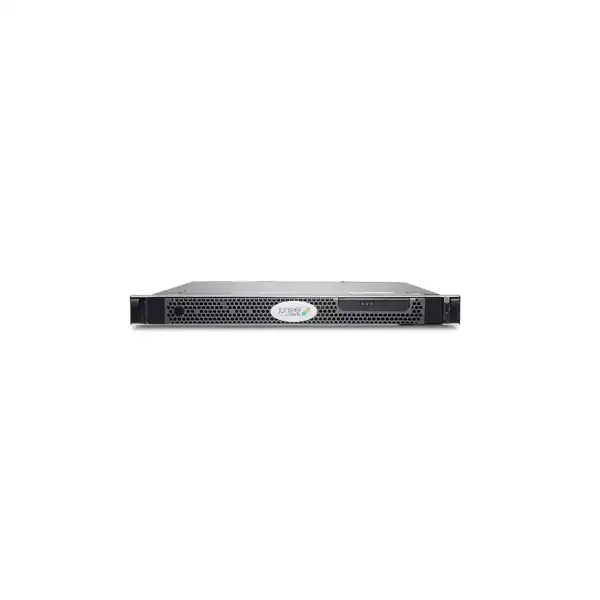
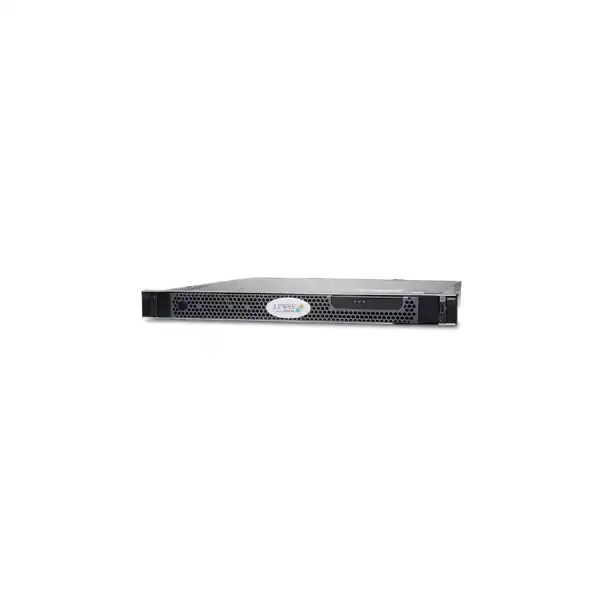
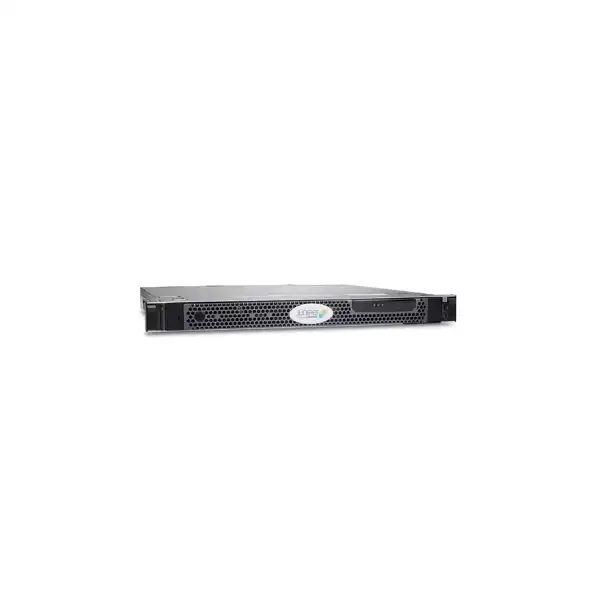
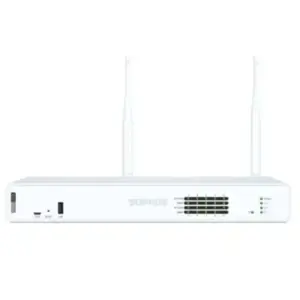
The Juniper ME-X2-M is a physical Juniper Mist Edge appliance. It extends selected Mist microservices to the customer premises and provides an on-premises data-path point for traffic tunneled from Juniper access points. Unlike a legacy WLAN controller, it operates as part of the cloud-managed Mist architecture rather than becoming the central control plane for the wireless network.
What is it mainly used for?
Its principal uses are centralized tunnel termination, seamless mobility across large campus WLANs, selective redirection of guest or corporate traffic, dynamic IoT segmentation, VLAN extension and deployment designs that require a localized data plane while keeping management and analytics in Juniper Mist cloud services.
Who should consider it?
Organizations with a sizeable Juniper wireless estate, multiple buildings or campuses, controller-migration requirements, centralized guest DMZ designs, demanding mobility needs or data-center-based traffic policies should evaluate the ME-X2-M. It is especially relevant when the smaller 4 Gbps ME-X1-M is too limited but the 100 Gbps ME-X6 would be excessive.
What must be confirmed first?
Do not size the appliance from access-point count alone. The design should also account for concurrent clients, aggregate tunneled traffic, WLANs that remain locally bridged, resilience objectives, optics and uplinks, rack environment, growth and the capacity that must remain available after a node or site failure.
What can FourTeck help determine?
FourTeck can help convert the campus design into a practical UAE bill of materials: appliance quantity, primary and backup cluster arrangement, supported 10GbE optics or DAC choices, subscription requirements, rack and power checks, migration scope, support term and quotation inputs for a deployable ME-X2-M solution.
Why the Juniper ME-X2-M exists in a modern Mist architecture
Many enterprise wireless networks still carry architectural assumptions inherited from controller-based WLANs. In those designs, a centralized controller often combined management, control and data-plane functions. That made it possible to tunnel wireless traffic into a central location, but it also concentrated operational dependencies around a device or controller cluster. Juniper Mist separates those concerns differently. Access points are managed through the Juniper Mist cloud, and the ME-X2-M is introduced when a customer still has a reason to centralize selected wireless data paths locally.
This distinction matters to a buyer. The ME-X2-M is not simply a new box replacing an old controller one-for-one. Its role is narrower and more architectural: it terminates tunnels and extends selected services on premises while the Mist cloud continues to provide control, management, troubleshooting and analytics functions. That allows a campus to retain centralized forwarding where it is genuinely useful without forcing every WLAN and every packet through an appliance. A deployment can combine locally bridged WLANs with tunneled WLANs, so the network can keep local breakout for traffic that benefits from it while directing other traffic to a central data center, DMZ or service location.
For a Dubai enterprise, that can solve several practical design problems. A large office campus may want corporate SSIDs tunneled to data-center security services while allowing some internal or internet-oriented traffic to remain local. A hospitality or education environment may want guest traffic delivered to a dedicated DMZ even when APs are spread across many buildings. An organization migrating from a conventional controller estate may want to preserve familiar VLAN boundaries while changing the management architecture. A distributed business may want selected VLANs or services extended to branch or teleworker environments without designing the wireless system around a traditional remote-access controller.
The purchasing implication is that ME-X2-M value comes from a defined traffic and mobility requirement. If every WLAN is already designed for local bridging and there is no requirement for centralized tunneling, guest redirection, campus-wide mobility anchoring or similar services, an appliance may not be necessary. If centralized traffic is essential, the appliance should be sized for the traffic that will actually traverse it, not merely the number printed on an AP inventory sheet.
ME-X2-M verified capacity and interface profile
| Specification | ME-X2-M value | Buyer relevance |
|---|---|---|
| Maximum throughput | 40 Gbps | Use this as an appliance ceiling, then design for actual tunneled load, redundancy and growth rather than assuming the full figure is available to every traffic class under every failure condition. |
| Maximum access points | 2,000 APs | Useful for campus-scale planning, but the AP limit is only one sizing dimension. Client concurrency and traffic profile can become the binding constraint first. |
| Maximum clients | 20,000 clients | High-density campuses should estimate real concurrent associations and growth, especially where many IoT or BYOD devices increase client count faster than employee headcount. |
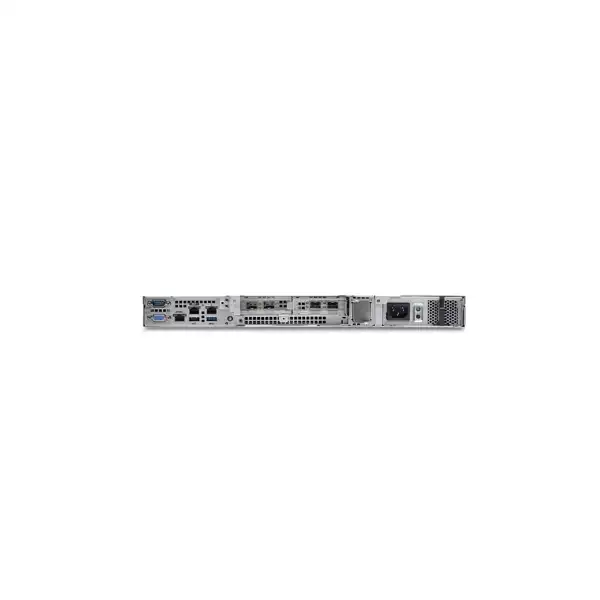
| Data interfaces | 4 × 10GbE SFP+ | The uplink design must include compatible SFP+ optics or supported direct-attach cabling and enough switching capacity on the adjacent network. |
| Management interfaces | 2 × 1GbE RJ-45 | Juniper identifies the first management port as the MIST out-of-band management interface; the second is documented as unused on the appliance rear-panel guide. |
| Form factor | 1U | Plan rack-unit allocation, rail compatibility, front/rear clearance, cable bend radius and service access before the installation window. |
| Power supply | Single cabled 450 W AC PSU | A single-PSU appliance changes the way resilience should be designed. Device-level power redundancy may need to come from cluster architecture and upstream facility design rather than dual PSUs inside one chassis. |
| Maximum / idle draw | 176 W / 95 W estimated | Use these values for preliminary UPS and heat planning, then confirm actual site standards, power cord type and rack PDU compatibility. |
| Operating temperature | 10–35°C standard; 30°C ambient restriction listed | This is a serious UAE deployment check. The appliance belongs in a controlled equipment room or data-center environment; it should not be treated as tolerant of uncontrolled Dubai ambient temperatures. |
Juniper documentation currently presents slightly different chassis width and weight values across the product datasheet and hardware guide. The product datasheet lists approximately 17.1 in width and 9.44 kg, while the hardware guide lists 18.97 in width and 12.2 kg. Treat final rack and shipping dimensions as a quotation-stage verification item tied to the exact hardware revision and supplied rail kit rather than relying on one secondary listing.
Sizing the ME-X2-M: AP count is only the starting point
The headline limits of 2,000 access points, 20,000 clients and 40 Gbps are useful because they establish the model class, but an enterprise design should not be built by choosing whichever appliance has an AP limit above the current inventory. Mist Edge sizing is an aggregate-capacity exercise. The correct question is how many APs will tunnel to the appliance, how many clients will be active, how much traffic those tunneled WLANs will generate, and what performance must remain after a node failure or an entire cluster failure.
Start by separating WLANs by forwarding behavior. A locally bridged SSID does not create the same Mist Edge data-path demand as a WLAN tunneled into a data center. If only guest traffic is centralized, the sizing model should focus on guest concurrency, application patterns, internet bandwidth and peak-event behavior. If corporate traffic is also tunneled, the design must account for application access, video meetings, cloud SaaS traffic, internal services and any east-west or north-south policy chain the traffic enters after leaving the appliance. That distinction often changes a project from an AP-count conversation into a real capacity-engineering exercise.
Client count also deserves careful treatment. A campus with 4,000 employees may easily have far more than 4,000 wireless clients because users carry phones, laptops, tablets, wearables and occasionally multiple corporate devices. Add printers, scanners, cameras, sensors, handheld terminals and other IoT endpoints, and the associated-client count can rise significantly without any change in employee headcount. Peak concurrency during office hours, examinations, conferences, hotel events or shift changes is more meaningful than a nominal user figure.
Throughput must be considered as a traffic envelope rather than a marketing number. The 40 Gbps maximum provides a ceiling for the platform. A resilient design should not normally plan to operate at that ceiling in steady state if another node must absorb traffic during maintenance or failure. In an active/active cluster, surviving capacity matters. If two appliances are carrying a combined production load and one becomes unavailable, the remaining design should still support the traffic level that the business considers acceptable. That can mean buying capacity for failure conditions rather than normal conditions.
Growth is another important input. Wireless refresh cycles can add faster APs and higher client demand without necessarily increasing AP count. A building that moves from older Wi-Fi generations to current high-capacity access points can push more traffic toward the aggregation and tunnel infrastructure. If the organization expects new buildings, acquisitions, more guest services or a broader IoT program, include those requirements before deciding that one ME-X2-M is sufficient. Buying a chassis that is technically large enough on day one but leaves no practical failure headroom can create an avoidable redesign later.
FourTeck can work from a simple sizing worksheet: current and planned AP count, peak associated clients, WLANs to be tunneled, estimated or measured peak throughput, target resiliency level, number of sites, data-center locations and growth horizon. That produces a more defensible answer than choosing an appliance purely by the 2,000-AP headline.
10GbE SFP+ connectivity: specify the optics, not just the appliance
The ME-X2-M provides four 10GbE SFP+ data ports. Those ports are the tunnel endpoints on the appliance side and they are one of the clearest differences between this model and the smaller ME-X1-M, which uses 1GbE data interfaces. For procurement, however, “four SFP+ ports” is not a complete bill of materials. The physical medium between the appliance and the adjacent switch must be decided, and the selected transceiver or direct-attach cable must be supported for the ME-X2-M.
SFPP-10G-T
Juniper lists this 10G copper SFP+ option as supported on ME-X2-M data ports. Use it only where the switching side, cabling category, distance and thermal conditions suit 10GBASE-T operation.
SFPP-10G-SR-C
A supported short-reach 10GbE optical choice for appropriate multimode fibre environments. Confirm fibre type, connector presentation and path length rather than ordering optics independently of the installed cabling plant.
SFPP-10G-LR-C
A supported long-reach 10GbE optical option for suitable single-mode fibre. It can be the right choice between racks, rooms or buildings when the fibre path requires LR characteristics.
EX-SFP-10GE-DAC-3M
Juniper also lists a 3 m direct-attach cable as supported for data ports. DAC can simplify short in-rack or adjacent-rack connections when distance and switch compatibility align.
The out-of-band MIST management interface is native copper, so the supported-optics list is relevant to the data ports rather than the 1GbE management connection. During design, keep management and data-path requirements separate. The MIST OOBM port needs the appropriate management VLAN, IP reachability and upstream network path for the appliance to be managed as intended. The four 10GbE data ports need a switching architecture capable of carrying the expected tunneled traffic and any resilience design, including link aggregation where supported by the deployment design.
A quotation request should therefore state the preferred medium for every active data connection, the distance, the adjacent switch model and port type, whether the link crosses a patch-panel system, and whether redundant switch attachment is required. That prevents a common enterprise procurement gap: the appliance arrives, but the required optics or compatible switching-side components were not included.
Tunneled WLANs, local bridging and traffic redirection
One of the strongest reasons to deploy Mist Edge is the ability to decide where individual WLAN traffic should be forwarded. Juniper describes a design in which access points can use standards-based L2TPv3 tunnels to Mist Edge for selected WLANs, while teleworker scenarios can use IPsec. This lets the network combine distributed and centralized forwarding rather than enforcing one architecture across every SSID.
Consider a corporate campus with three broad wireless services. The first is an employee WLAN that needs access to applications and security controls hosted in a central data center. The second is a guest WLAN that should be isolated and delivered to an internet-facing DMZ. The third is a specialized operational WLAN whose traffic is best bridged locally because the application server sits in the same building and local latency matters. Mist Edge supports a design in which those forwarding behaviors can coexist. The result is not merely “centralized wireless”; it is selective centralization based on business policy.
The flexibility to form multiple tunnels to different Mist Edge appliances is especially useful when guest and corporate traffic should terminate in different security zones. Instead of sending all wireless traffic to one generic controller path, the network can direct the guest overlay toward a DMZ-oriented Mist Edge service and the corporate SSID toward a data-center-oriented service. This can simplify how wireless segmentation maps to existing firewall, routing and security architecture, although the downstream network still has to be designed correctly.
The appliance can also help organizations preserve VLAN concepts during a migration from a centralized controller environment. Juniper explains that traffic can be tunneled through a centralized Mist Edge cluster while SSIDs and users remain separated onto different VLANs. That can reduce the need to redesign every edge-switch VLAN at the same time as the wireless management architecture changes. It does not eliminate migration planning, but it allows a phased approach in which the operational model changes without forcing an immediate redesign of every downstream dependency.
For seamless mobility, centralized tunnel termination provides a consistent data path as a client roams across a large campus. This is valuable for latency-sensitive applications such as voice, collaboration, clinical workflows, handheld logistics applications and real-time operational tools. The exact user experience still depends on RF design, AP placement, client behavior, authentication and upstream network performance; Mist Edge does not compensate for poor radio planning or an overloaded core. Its role is to provide a scalable tunnel endpoint and data-plane architecture that supports mobility requirements.
The practical design step is to classify each SSID before specifying appliances. For every WLAN, document whether it is locally bridged or tunneled, the expected client count, security zone, destination networks, policy enforcement point, peak throughput and resilience requirement. With that map, the ME-X2-M can be sized around real services rather than a generic “wireless controller replacement” assumption.
High availability and clustering: design for surviving capacity
Juniper Mist Edge supports active/active tunneling clusters and backup clusters. Juniper describes the cluster as elastically scalable, with multiple nodes able to share service load and access points able to associate with surviving nodes when failures occur. The architecture is intended to avoid the waste of a traditional standby appliance that sits idle until a primary fails. That does not mean resiliency appears automatically; the cluster has to be sized and connected so that a failure leaves enough usable capacity.
The first decision is node redundancy inside one data center. If two ME-X2-M appliances form the production cluster, both can be active in normal operation. The critical sizing question is whether one remaining node can sustain the required subset of service if the other is unavailable. If normal demand already consumes most of the combined capacity, the cluster may be redundant at the node-count level but under-sized at the surviving-throughput level. Capacity planning therefore needs a failure-state target: full performance, reduced but acceptable performance, or only critical-service continuity.
The second decision is site redundancy. Juniper supports backup clusters and documents a model in which APs can fail over to a different cluster hosted in another data center if an entire cluster becomes unavailable. This can protect the wireless service from a broader facility or network failure, but only if the alternate location has sufficient appliance capacity, WAN reachability, routing, security policy and service dependencies. A backup cluster should not be treated as a checkbox. It must be part of the end-to-end disaster-recovery path.
A useful architectural detail is that a cluster acting as backup for one site can be primary for another, improving utilization. That may appeal to organizations with two UAE data centers or geographically separated campus hubs because equipment does not necessarily have to remain idle. The trade-off is more complex capacity planning. Each location must be sized for its normal production role plus the additional load it could receive during a peer-site failure.
Power architecture deserves attention because the ME-X2-M is documented with a single cabled 450 W AC power supply rather than a dual hot-plug redundant PSU design. Cluster-level redundancy can therefore be particularly important. Put clustered nodes on appropriately independent rack PDUs or facility circuits where the data-center design supports it, and avoid creating a shared power dependency that can take down every node simultaneously. Redundant upstream switching and diverse network paths should be considered with the same discipline.
Juniper also separates AP control and management functions from the data plane and states that APs continue to function if the connection to Mist Edge goes down. For a tunneled WLAN, however, the business should validate the expected client traffic behavior under each failure scenario rather than assuming every service continues unchanged. A proper acceptance test should cover a single node loss, uplink loss, management-path failure and, where implemented, primary-cluster loss.
Where ME-X2-M fits: practical enterprise use cases
Large campus roaming
Universities, hospitals, corporate campuses and large hospitality estates often need clients to roam across many APs without a disruptive change in the data path. ME-X2-M can centralize tunneled WLAN traffic and support seamless mobility while Mist cloud retains management and analytics. The appliance should be considered together with RF design, authentication, switching and WAN/core performance, because roaming quality is an end-to-end outcome rather than an appliance-only feature.
Guest traffic to a DMZ
A common enterprise policy is to keep visitor traffic separate from corporate systems and carry it toward a controlled internet edge or DMZ. Mist Edge can terminate guest tunnels in that zone while other WLANs use different forwarding paths. The design should define IP addressing, firewall policy, DNS, captive portal dependencies, internet egress, logging and failover so the guest experience remains predictable during maintenance.
Corporate traffic to a data center
Enterprises that want wireless users to enter an established data-center security stack can tunnel selected corporate WLAN traffic to a Mist Edge located near that environment. This can preserve existing segmentation or service-chaining logic while the WLAN management plane moves to Mist. Validate firewall throughput, routing, DHCP, authentication and return-path design so centralization does not create an avoidable bottleneck.
IoT segmentation
Mist Edge supports dynamic traffic segmentation use cases for IoT devices. That can help separate device classes with different trust levels and application destinations, but segmentation policy still depends on accurate identity, network policy and downstream security enforcement. Procurement should therefore include the surrounding design rather than treating the appliance as an isolated IoT-security product.
Controller migration
Organizations replacing a legacy centralized WLAN can use Mist Edge to retain a centralized data plane for selected services while adopting cloud-managed access points and Mist microservices. This is useful where VLAN boundaries, application paths or security controls cannot be changed at the same time as the AP platform. A migration plan should identify what is preserved temporarily and what will be modernized later.
Licensing, subscriptions and support: include the commercial layer in the design
The hardware appliance is only one part of a Mist Edge deployment. Juniper’s ordering information identifies a Mist Edge Assurance subscription family, shown as S-ME-S-x and described as a standard per-AP subscription. The exact term code, quantity and commercial entitlement should be confirmed against the current Juniper price list and the APs that will use the Mist Edge service. Because subscription structures can change over time, the safe procurement approach is to quote the hardware and required service entitlements together rather than buying an appliance first and deciding licensing later.
The wider Mist environment also requires the relevant wireless management and assurance subscriptions for the AP deployment. Those subscriptions are not interchangeable with Mist Edge-specific service entitlement. A buyer should state the existing Juniper Mist organization, current AP subscription status, renewal dates and whether the project is a new deployment, expansion or migration. This helps prevent duplicate terms, mismatched renewal dates or a solution that has hardware capacity but lacks the entitlement required to operate the intended service.
Juniper also lists annual extended hardware support for Mist Edge under the ME-ADV-XCH-xx family. The exact service level and term should be mapped to the organization’s support policy. A mission-critical hospital or 24-hour logistics site may have a different replacement requirement from a standard office campus. The correct support selection should account for business hours, spares strategy, local replacement logistics, change-window restrictions and whether the deployment is clustered enough to tolerate a hardware outage while replacement is arranged.
For quotation accuracy, provide the number of APs that will use Mist Edge, required subscription term, existing entitlement details if this is an expansion, requested hardware support period, and any preference for co-terminating new licenses with the rest of the Juniper estate. That commercial context is as important as the appliance SKU itself.
Installation planning for Dubai and UAE data-center environments
The ME-X2-M is a 1U rack appliance and should be treated as data-center or communications-room equipment, not as an edge device to be installed in uncontrolled environmental conditions. Juniper lists a standard operating range of 10°C to 35°C and an ambient temperature restriction of 30°C in current documentation. In the UAE, where external temperatures can be far above those values, this makes cooling and inlet-air control a fundamental installation requirement rather than a minor facilities note.
Check the selected rack before delivery. Confirm available rack units, usable depth, rail compatibility, rear clearance, front-to-back airflow expectations, cable-management space and the bend radius required for fibre patch leads or DAC assemblies. The current Juniper datasheet and hardware guide show different width and weight values for the ME-X2-M, so procurement and installation teams should verify the exact chassis revision and rail kit during the order process. This is especially important where racks use non-standard posts, high-density cable managers or shallow enclosures.
Power planning should use the documented single 450 W AC PSU and estimated 176 W maximum draw as the starting point. Verify 100–240 V AC availability, 50/60 Hz, the rack PDU connector standard and the correct country-specific power cord. Juniper notes that cords are available for homologated countries, while its datasheet shows a North American NEMA cord as the default reference. A UAE order should therefore explicitly state the required cord rather than assuming the generic default is appropriate.
If the design uses more than one appliance for resilience, place nodes so that a single rack PDU, breaker, top-of-rack switch or patch-panel failure does not defeat the intended availability model. Where practical, distribute clustered nodes across independent power and switching paths. If the organization has two data centers, a backup-cluster design may provide broader protection, but it also creates WAN and routing dependencies that should be tested.
The management network must be ready before the change window. Juniper documents two 1GbE RJ-45 management interfaces, with the first labeled MIST used for out-of-band management and the second not used. Confirm IP addressing, DNS, default gateway, firewall egress, Mist cloud reachability and any proxy or security inspection requirements. A zero-touch or cloud-managed system is only as reliable as the network path it uses for management.
Finally, document the 10GbE data links in advance. Confirm which ports will connect, the switch model, transceiver part numbers, fibre type or DAC length, VLAN/trunk requirements, LACP intent where applicable and MTU expectations. A well-prepared rack-and-cabling plan can turn the installation into a controlled configuration exercise rather than a troubleshooting session driven by missing optics or incompatible patching.
Migration from a traditional WLAN controller: what changes and what should stay stable
A legacy-controller migration is one of the most compelling ME-X2-M use cases because it allows the wireless management architecture to modernize without forcing every downstream network dependency to change on the same day. Juniper’s tunneling model can preserve a centralized data path and existing VLAN separation while AP management moves into the Mist cloud. The important word is “can”: the success of the migration depends on identifying exactly which controller functions are being replaced by Mist cloud, which data-plane functions move to Mist Edge, and which services remain in the surrounding network.
Begin with an inventory of current SSIDs, VLANs, DHCP scopes, authentication methods, RADIUS servers, captive portals, firewall zones, ACLs, QoS requirements, multicast dependencies and applications that rely on stable IP mobility. For each WLAN, decide whether it will remain locally bridged or become tunneled to Mist Edge. Do not assume every existing centrally switched SSID must stay centralized forever. Migration is an opportunity to retain centralization where it provides security, mobility or operational value and use local breakout where it simplifies the path.
Next, map the old controller’s high-availability model to the Mist Edge cluster design. A pair of controllers in active/standby mode is not directly equivalent to an active/active Mist Edge cluster. Determine the expected load on each node during normal operation, the load after one node fails, and whether a second data-center cluster is required. If the old platform provided centralized guest anchoring, identify the new DMZ termination point and verify that firewall rules, NAT, DNS and internet routing are ready.
Authentication should be validated early. If the WLAN uses enterprise 802.1X, certificate-based access, identity stores or policy servers, test the end-to-end authentication flow before moving production users. If the project will use Mist Access Assurance or an Access Assurance Proxy use case, confirm the precise design and entitlements rather than assuming the ME-X2-M automatically replaces every AAA component. Mist Edge can participate in cloud-driven access architectures, but the appliance is not a generic substitute for all identity infrastructure.
Plan a pilot with a representative set of APs and clients. Test association, DHCP, DNS, authentication, roaming, application access, voice or video quality, guest internet access, IoT segmentation, logging and failover. If the deployment spans multiple buildings, include cross-building roaming. If a backup cluster exists, test the behavior when the primary path is deliberately removed. The pilot should generate evidence that the architecture works under realistic conditions, not just confirm that the appliance appears online in the portal.
A good migration ends with rollback criteria and operational handover. Define what measurements constitute success, how long the pilot will run, which alarms will be monitored, and what triggers a rollback. Update network diagrams and runbooks so the support team understands that control and management are cloud based while selected data paths terminate on the ME-X2-M. That conceptual clarity is essential for troubleshooting after the old controller is removed.
Operations, monitoring and troubleshooting after deployment
Mist Edge is designed to be managed within the Juniper Mist environment, which gives operations teams a different workflow from appliance-centric WLAN controllers. Current Juniper product updates show model-aware Mist Edge device views, health gauges for CPU, memory, temperature, power supplies and fans, plus organized sections for device and tunnel management. Port views can expose information such as LLDP, LACP and port statistics and can provide operational actions including packet capture and port bounce where supported by the software experience.
For day-two operations, build monitoring around service outcomes as well as hardware health. A green appliance is not sufficient proof that users have a good wireless experience. Track tunnel status, AP association to the expected Mist Edge cluster, client connectivity, upstream switch errors, packet loss, authentication delay, DHCP response, application reachability and throughput. Mist’s broader assurance capabilities can help correlate user experience with network behavior, but the support team should still understand the underlying traffic path so it can isolate faults quickly.
Change management is also important. Because Mist Edge services and the AP environment are tied to a cloud-managed architecture, software lifecycle processes differ from traditional controllers. Juniper documentation includes procedures for upgrading Mist Edge tunnel services and the base operating system. Organizations with strict maintenance controls should define test, approval and rollback procedures, particularly when a cluster carries critical WLAN traffic. Active/active design can reduce disruption, but only if there is enough surviving capacity during maintenance.
Logging and event retention should fit the organization’s operational and compliance requirements. Determine which events remain in Mist cloud, which need to be exported, which security systems consume them, and how long they must be retained. For incident response, ensure teams know how to identify the AP, WLAN, client, tunnel and appliance involved in a transaction. This is especially important in large deployments where a problem reported as “Wi-Fi is slow” can originate in RF conditions, authentication, a tunnel path, a switch uplink, a firewall or the application itself.
Before production acceptance, create a runbook that covers node failure, uplink failure, management reachability loss, high temperature, failed optics, overloaded interfaces and subscription or entitlement issues. A technically capable appliance becomes operationally valuable when the support process is prepared to diagnose the entire path.
Security and segmentation considerations
The ME-X2-M can support traffic-separation designs, but the appliance should be understood as part of the network architecture rather than as a complete security stack. Juniper describes split tunneling that can separate guest and corporate traffic and dynamic traffic segmentation for IoT devices. These capabilities are valuable because they let the wireless forwarding path align with different trust zones, yet they still depend on the policies and controls implemented around Mist Edge.
For guest access, define where the tunnel terminates, which VLAN or routing instance receives the traffic, which firewall enforces policy, how NAT is performed, which DNS resolvers are available and whether the captive portal has any external dependencies. For corporate users, document identity, authentication, segmentation and application paths. For IoT, avoid putting every non-user device into one broad segment; cameras, sensors, printers and industrial devices can have very different destination requirements and risk profiles.
The management plane should be restricted like any critical network infrastructure. Use a dedicated management network where appropriate, control access to the Mist organization with strong administrative practices, and ensure cloud reachability is allowed only as required by the documented service. The MIST out-of-band interface is not a reason to expose the appliance to an unrestricted management network. Administrative roles, logging and change controls should be aligned to the enterprise security policy.
When security architecture is a major buying driver, include the firewall and identity teams in the Mist Edge design workshop. The appliance determines where tunneled wireless traffic arrives, but those teams determine what happens next. A joint design avoids a situation where the wireless deployment is technically complete yet traffic cannot reach the required services because security zones, routing or authentication dependencies were not prepared.
ME-X2-M compared with other Mist Edge options
| Model | Max APs | Max clients | Max throughput | Data interface |
|---|---|---|---|---|
| ME-X1-M | 500 | 5,000 | 4 Gbps | 4 × 1GbE |
| ME-X2-M | 2,000 | 20,000 | 40 Gbps | 4 × 10GbE SFP+ |
| ME-X6 | 5,000 | 100,000 | 100 Gbps | 4 × 25GbE SFP28 |
When the ME-X1-M may be enough
If the design is comfortably below 500 APs, 5,000 clients and 4 Gbps of required Mist Edge throughput, and 1GbE appliance interfaces are suitable, the smaller ME-X1-M deserves evaluation. Buying ME-X2-M solely because it is the larger model can increase cost without improving the actual service. The failure-state capacity and growth plan still need to be checked.
Why ME-X2-M is a strong middle option
The 2,000-AP, 20,000-client and 40 Gbps profile is a substantial step above ME-X1-M without moving to the 100 Gbps ME-X6. Four 10GbE SFP+ data ports also align with many existing enterprise distribution and data-center switching environments, making this model attractive for medium-to-large campus tunneling.
When ME-X6 should be assessed
If the design is approaching ME-X2-M capacity, requires much higher surviving throughput, has more than 20,000 clients, more than 2,000 APs or benefits from 25GbE SFP28 interfaces, the ME-X6 is the appropriate comparison. Oversubscription at the tunnel layer can be difficult to repair later, so expected growth should influence the model decision.
Juniper also offers virtual Mist Edge options. Current Juniper deployment guidance states that the ME-VM is not a supported tunnel-termination platform for production environments and describes specialized proxy use cases separately. For a production design that depends on high-scale tunnel termination, the physical appliance family is therefore the relevant comparison unless Juniper confirms a different supported architecture for the project.
Procurement checklist: information needed for an accurate UAE quotation
A product request that contains only “ME-X2-M” is enough to identify the chassis but not enough to build a deployment-ready quotation. The following inputs reduce the risk of missing subscriptions, optics, support or resilience components.
1. Appliance quantity
State whether the request is for one standalone unit, an active/active cluster, an expansion node or a primary-plus-backup cluster design.
2. AP and client scale
Provide current and planned AP totals, peak client associations and the growth horizon used for sizing.
3. Tunneled throughput
Estimate measured or expected peak traffic for the WLANs that will actually use Mist Edge, including the required failure-state headroom.
4. Optics and cabling
Identify fibre type, link distance, preferred supported SFP+ optic or DAC and the adjacent switch model.
5. Subscription term
Specify the AP count requiring Mist Edge entitlement, desired term and any existing Juniper subscriptions that should align or co-terminate.
6. Support requirement
State the desired hardware support period, replacement expectations and whether the project requires spares or enhanced service coverage.
7. Rack and power
Confirm rack type, rail constraints, UAE power cord requirement, PDU connector and whether cluster nodes will use independent facility power paths.
8. Migration scope
List the existing WLAN platform, SSIDs, centralized VLANs, guest DMZ design, authentication services and target change window.
Important limitations and design cautions
The first limitation is that published maximums are not a substitute for architecture. A single ME-X2-M may be rated for 40 Gbps, 2,000 APs and 20,000 clients, but a business that needs uninterrupted service during a node failure should not design normal operation so close to those maximums that there is no surviving capacity. Capacity, resilience and growth must be considered together.
The second limitation is physical redundancy inside the chassis. The documented power architecture uses one cabled 450 W AC power supply. If the deployment requires high availability, redundancy should be achieved through multiple appliances, independent power feeds where available, resilient upstream switching and, for broader failure protection, an alternate cluster location. One appliance cannot provide the same power-supply resilience as a dual-PSU chassis.
The third limitation is environmental. The appliance has a controlled operating-temperature envelope and a listed 30°C ambient restriction. It should not be placed in an unconditioned warehouse cabinet, rooftop enclosure or other UAE location where inlet temperature can exceed those limits. If the project requires harsh-environment equipment, Mist Edge should be installed in an appropriate conditioned room and connected to the wider network rather than exposed directly to the ambient site.
The fourth caution is optics. The four data interfaces are SFP+ ports, so the transceiver choice matters. Juniper maintains a supported-optics list. Generic assumptions about any 10GbE module working should be avoided in production procurement. Use the supported part numbers appropriate to copper, multimode, single-mode or direct-attach requirements and verify switching-side compatibility.
The fifth caution is that Mist Edge is not a conventional security appliance or full WLAN controller. It provides on-premises tunnel termination and selected edge microservices within the Mist architecture. Firewalls, routing, DHCP, DNS, identity services and application connectivity still need to be designed. A buyer should not expect the appliance alone to solve problems that belong to those systems.
Finally, product documentation can evolve. Juniper currently shows different physical width and weight figures across the ME-X2-M datasheet and hardware guide. That inconsistency does not change the capacity or interface positioning of the model, but it reinforces a basic enterprise procurement rule: verify exact shipping, mounting, rail, support and subscription details against the current quotation and hardware revision before final approval.
Buyer questions about Juniper ME-X2-M Mist Edge
Is ME-X2-M a wireless LAN controller?
Not in the traditional architectural sense. It provides a centralized data path and tunnel termination on premises, while Juniper Mist cloud continues to provide control, management, troubleshooting and analytics. That separation is one of the reasons organizations can retain centralized forwarding without reproducing the full legacy-controller model.
How many APs can ME-X2-M support?
Juniper documents a maximum of 2,000 access points. The design should also remain below the 20,000-client and 40 Gbps limits, and it should preserve enough headroom for growth and the chosen high-availability strategy.
Does every WLAN have to tunnel through Mist Edge?
No. Juniper supports a combination of locally bridged and tunneled WLANs. This makes it possible to centralize only the traffic that needs a data-center, DMZ, mobility or segmentation path while leaving other services locally bridged.
What network ports are on ME-X2-M?
The appliance provides four 10GbE SFP+ data interfaces and two 1GbE RJ-45 management interfaces. Juniper identifies the first management interface as the MIST out-of-band management port and documents the second as unused.
Are SFP+ optics included?
Do not assume they are. The quotation should explicitly identify the required supported optics or DACs. Juniper lists SFPP-10G-T, SFPP-10G-SR-C, SFPP-10G-LR-C and EX-SFP-10GE-DAC-3M among supported ME-X2-M data-port options.
Can ME-X2-M be clustered?
Yes. Mist Edge supports active/active clustering and backup clusters. The cluster should be sized around aggregate AP, client and throughput requirements and should leave enough capacity for the failure scenarios the business expects to survive.
Does ME-X2-M support guest traffic separation?
Yes. Mist Edge can support flexible traffic redirection so a guest WLAN can be tunneled to a DMZ while corporate traffic follows a different path, and other WLANs can remain locally bridged. The downstream firewall and routing policy still has to enforce the intended separation.
Can it help with IoT segmentation?
Juniper identifies dynamic traffic segmentation for IoT as a Mist Edge use case. The complete outcome depends on identity, policy and downstream security enforcement, so an IoT project should define device classes and required destinations before implementation.
What is the power requirement?
The ME-X2-M uses a single cabled 450 W AC power supply, supports 100–240 VAC at 50/60 Hz and has a documented estimated maximum draw of 176 W. Confirm the correct UAE power cord and PDU interface during ordering.
Is the appliance suitable for an uncontrolled Dubai equipment cabinet?
It should not be treated that way. Juniper lists a 10–35°C standard operating range and a 30°C ambient restriction. A conditioned data-center or communications-room environment is the appropriate assumption for UAE deployment planning.
What subscription should be quoted?
Juniper ordering information lists Mist Edge Assurance under the S-ME-S-x family as a standard per-AP subscription. The exact term, quantity and current ordering code should be confirmed with the quote, together with the AP management and assurance entitlements already in the Mist environment.
When should ME-X6 be considered instead?
Evaluate ME-X6 when the expected design approaches ME-X2-M limits, when significantly more than 20,000 clients or 2,000 APs are expected, when 40 Gbps does not provide enough resilient capacity, or when 25GbE SFP28 connectivity is more appropriate.
A practical design sequence for an ME-X2-M project
Step 1 — Map WLAN forwarding
List each SSID and decide whether it is locally bridged or tunneled. Record its client population, destination zone, authentication method, application requirements and expected throughput. This defines the actual Mist Edge workload.
Step 2 — Size normal and failure states
Model APs, clients and traffic during normal operation and after one node or one cluster becomes unavailable. Decide how much performance must remain during maintenance and failures.
Step 3 — Build the physical BOM
Add appliances, supported optics or DACs, rails, correct power cords, subscription quantities and the required support term. Verify switch-side ports and fibre paths.
Step 4 — Prepare dependencies
Confirm Mist organization configuration, management reachability, VLANs, routing, DHCP, DNS, RADIUS, firewalls, guest DMZ services and any logging or monitoring integrations.
Step 5 — Pilot and failover test
Use representative APs and clients, then test roaming, application access, segmentation and performance. Intentionally test node and uplink failures so the resiliency design is proven rather than assumed.
Step 6 — Handover with a runbook
Document topology, tunnel paths, management access, subscriptions, optics, normal health indicators, escalation paths, backup-cluster behavior and the maintenance process used for software updates.
Decision recap for Juniper ME-X2-M buyers
Model fit
Choose ME-X2-M when a 40 Gbps, 2,000-AP, 20,000-client class appliance fits the expected tunneled workload and offers sensible growth and failure headroom.
Connectivity
Plan four 10GbE SFP+ data interfaces around supported optics or DACs and a 1GbE MIST management path. Verify adjacent switch compatibility.
Resilience
Use active/active and backup-cluster design when required, sizing for surviving capacity rather than simply counting nodes.
Commercial completeness
Include Mist Edge subscriptions, existing Mist entitlement context, optics, country-specific power cord and appropriate hardware support in the quote.
What FourTeck needs from you for the quotation
For a precise Dubai or UAE proposal, send the information you already have. FourTeck can help fill the remaining design gaps rather than requiring a finished architecture before the discussion begins.
Number of ME-X2-M units being considered and the campus or data-center locations.
Current totals, expected growth and any high-density venues or event peaks.
Which SSIDs need central forwarding, guest DMZ delivery, corporate data-center access or IoT segmentation.
Measured or estimated peak traffic and the level that must survive a node failure.
Multimode fibre, single-mode fibre, copper or DAC, plus link distances and switch models.
Desired subscription duration, existing Mist subscriptions and hardware support expectation.
Existing controller platform, VLANs, authentication, firewall zones and planned cutover window.
Rack type, power/PDU standard, cooling conditions and any requirement for diverse power or racks.
Build the right ME-X2-M configuration before you order
The Juniper ME-X2-M is a strong fit when a campus genuinely needs centralized tunnel services at a scale beyond the ME-X1-M, but the appliance should be bought as part of an engineered design. Confirm the WLANs that will tunnel, surviving throughput, supported 10GbE media, Mist subscriptions, rack environment, power resilience and migration dependencies. FourTeck can turn those inputs into a Dubai/UAE quotation that includes the correct appliance quantity and supporting components rather than a chassis-only estimate.

Reviews
There are no reviews yet.