
Juniper MX480 Universal Routing Platform Dubai
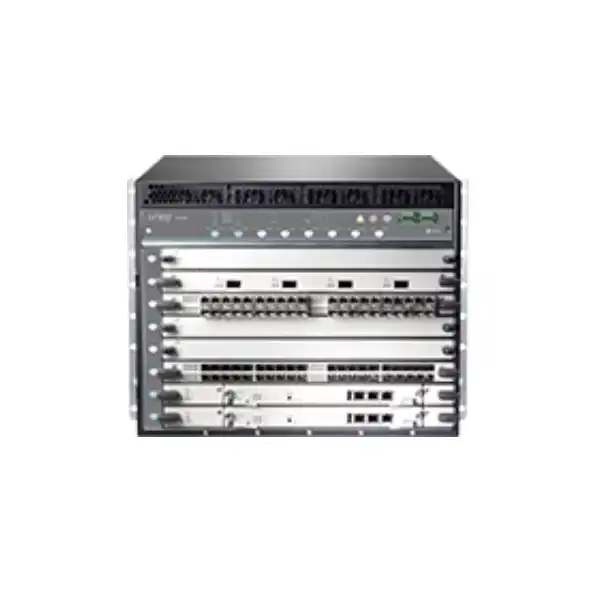
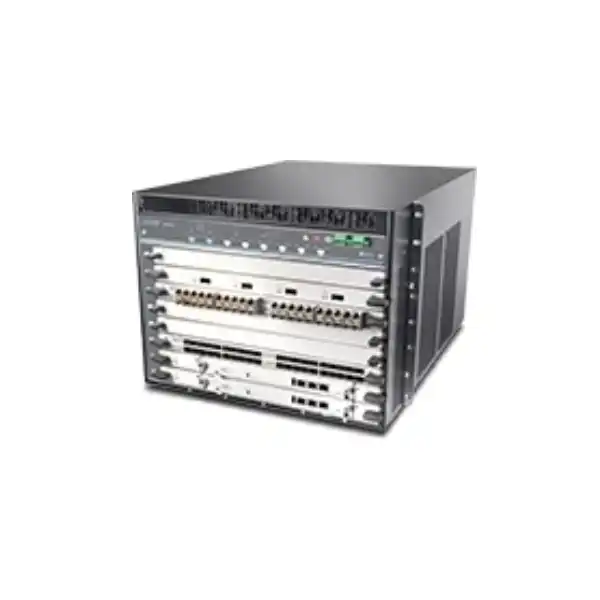
The MX480 is a six-slot, 8U modular routing platform for organisations that need scalable service-edge, aggregation, peering, broadband or high-value enterprise routing without moving to the physical size of the MX960. The most important purchasing decision is not the chassis alone: performance, port mix, resilience and software entitlement depend on the selected Switch Control Boards, Routing Engines, MPC line cards, optics, power supplies and Junos licensing.
Direct answer: what is the Juniper MX480 and who is it for?
The Juniper MX480 is a modular member of the MX Series Universal Routing Platforms. It is mainly used where routing capacity, service scale, interface flexibility and hardware redundancy must be built from field-replaceable modules rather than delivered by a fixed-port appliance. Typical roles include provider edge, Internet peering, metro aggregation, broadband service edge, data-centre interconnection and large enterprise WAN or campus-core routing where Junos-based operational consistency matters.
It should be considered by network operators that need more modularity than compact fixed platforms provide, but do not necessarily require the larger slot count of an MX960 or MX2000-class chassis. The most important factor to confirm is the complete bill of materials. An MX480 chassis by itself does not define the usable port count, forwarding capacity, resilience level or licensed feature set.
FourTeck can help determine the appropriate chassis bundle, SCB generation, Routing Engine pair, MPC type, port media, optics, power arrangement, software entitlement, migration scope and support requirement for a Dubai or wider UAE deployment.
Why the MX480 remains relevant in a modern routing design
The value of the MX480 is its modular architecture. A fixed-port router forces the buyer to accept a particular set of interfaces, forwarding resources and replacement boundaries. The MX480 separates the chassis, switch fabric, control plane, power, cooling and forwarding interfaces into serviceable components. That gives architects more freedom to match the platform to the actual network role and to replace or upgrade individual elements when the supported hardware combination allows it.
Juniper currently documents the MX480 as an eight-rack-unit system with six line-card slots. Modern configurations using SCBE3 fabric and MPC10E line cards can provide up to 1.5 Tbps per slot in the appropriate architecture. That headline figure should be treated as a configuration-dependent ceiling rather than a promise for every legacy MX480. Older SCB generations and older MPCs have different fabric bandwidth, interface density and feature scale. A brownfield MX480 therefore needs an inventory review before capacity planning.
For UAE service providers and large organisations, this distinction is particularly important when an existing chassis is being refreshed instead of replaced. A used or installed MX480 might contain a valid chassis but an older Routing Engine, older switch fabric, lower-density line cards, a normal-capacity fan tray or power supplies that are unsuitable for the intended upgrade. Treating every MX480 as equivalent can create unexpected power, cooling, software and interoperability work.
The platform is strongest when the buyer values long-lived modular infrastructure and already has operational competence with Junos OS. It is less attractive when the requirement is modest, fixed and unlikely to expand, or when a 1U/2U platform can meet throughput, interface and redundancy needs with less rack, power and integration complexity.
MX480 hardware architecture at a glance
Six line-card slots
The chassis has six dedicated slots, numbered from 0 through 5. Depending on the supported configuration, these can accept MPCs and certain earlier DPC/FPC hardware. For new designs, the line-card family should be chosen around required Ethernet speed, queuing, feature scale and lifecycle rather than simply physical fit.
Switch Control Boards
The SCB provides switch fabric, chassis control and the carrier for a Routing Engine. Juniper documents SCB, SCBE, SCBE2 and SCBE3 generations. Fabric capability is therefore a first-order design variable, especially when pairing the chassis with modern high-capacity MPCs.
Routing Engines
The Routing Engine runs Junos OS and control-plane processes. A redundant design normally uses two host subsystems so a backup can take over if the primary fails. Compatibility between the chosen Routing Engine and SCB generation must be checked explicitly.
Power and cooling
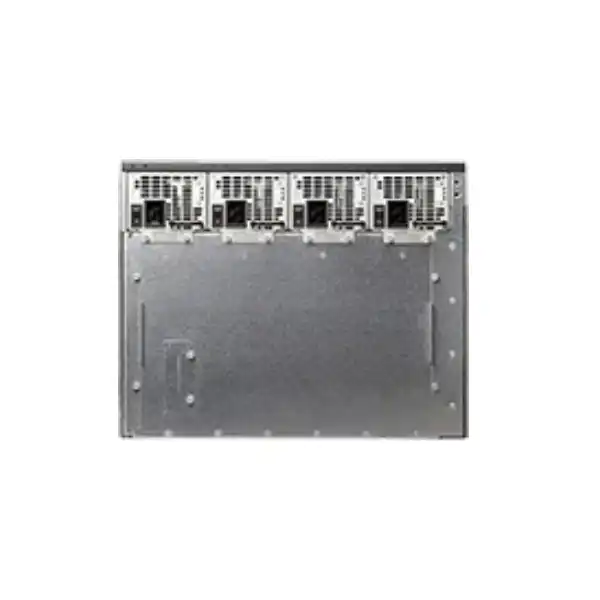
The platform supports AC or DC power systems, but the two types are not mixed in one router. The exact number and class of power supplies must cover the installed cards with the intended redundancy. High-density MPC deployments require the high-capacity cooling system.
Field-replaceable modules
Many line cards, power supplies and redundant control components can be serviced without shutting down the entire router when the architecture and operational state support it. This modular service model is one reason the MX480 is used in networks where maintenance windows are expensive.
Verified physical and platform specifications
| Specification | MX480 detail | Buyer relevance |
|---|---|---|
| Rack height | 8U | Reserve rack space plus service clearance, cable routing and power distribution capacity. |
| Line-card slots | Six dedicated slots | Defines the modular expansion envelope, but usable bandwidth depends on the installed SCB and MPC generation. |
| Chassis width | 17.45 in / 44.3 cm | Suitable for standard equipment racks when installation requirements are met. |
| Chassis depth | 24.5 in / 62.2 cm chassis; about 27.75 in / 70.5 cm including cable-management brackets | Rack depth and rear/side clearance should be verified before delivery. |
| Base chassis weight | About 65.5 lb / 29.7 kg with midplane, fan tray, filter and cable-management brackets | Installation planning must consider lifting, rack loading and the significantly higher weight of a populated system. |
| Maximum documented configuration weight | About 221.03 lb / 100.26 kg | A populated MX480 is a substantial rack load; floor, rack and handling practices matter. |
| Modern per-slot fabric capability | Up to 1.5 Tbps per slot with SCBE3 in the applicable non-redundant fabric configuration and MPC10E; redundant fabric mode has different bandwidth | Do not size from chassis name alone. Fabric mode and card combination determine delivered capacity. |
| Power type | AC or DC configurations; not simultaneous mixed AC/DC operation | Data-centre power feeds and redundancy policy must be known before the bill of materials is finalised. |
Understanding performance: chassis capacity is configuration dependent
A common procurement error is to treat the published MX480 throughput figure as if every MX480 chassis automatically delivers it. The physical chassis is only the foundation. The switch-fabric generation, the number of active fabric planes, the installed MPC types and the way redundancy is configured determine the effective forwarding path. Juniper’s documentation shows large differences between SCB generations, which is why a simple request for “one MX480” is incomplete.
SCBE3 is the current high-capacity option for MX240, MX480 and MX960 deployments that need to exploit newer MPCs such as MPC10E. Juniper documents up to 1.5 Tbps of fabric bandwidth per slot in an applicable non-redundant configuration with MPC10E, while the redundant fabric configuration is documented at a lower per-slot figure. This is a design trade-off rather than an anomaly: a highly resilient architecture can reserve fabric resources differently from a maximum-throughput non-redundant configuration.
For business buyers, the useful question is therefore “what traffic pattern and failure state must the router sustain?” A design that looks adequate at normal load may not be adequate after a card, fabric or upstream link failure. Capacity planning should include peak traffic, expected growth, oversubscription policy, route scale, services enabled on the forwarding path, QoS requirements and the intended maintenance model.
FourTeck can translate those requirements into a proposed slot plan rather than quoting an arbitrary chassis. That slot plan should identify each MPC, expected interface speed, breakout requirement, optic class, fabric generation and the headroom retained for future growth.
MPC line-card selection: where most MX480 designs are won or lost
The Modular Port Concentrator is the forwarding and interface workhorse in a modern MX480. Different MPC generations support different port speeds, densities, queue scale, service capabilities and software requirements. The right choice depends on the intended role. A peering router may prioritise high-speed Ethernet and route scale, while a broadband edge design may care more about hierarchical QoS, subscriber functions and service scale. A DCI or metro aggregation deployment may be driven by 100GbE or 400GbE uplinks and a mixture of lower-speed handoffs.
MPC10E represents the high-capacity direction for the platform. Juniper lists MPC10E-10C and MPC10E-15C variants with multi-rate Ethernet connectivity that includes 10/40/100GbE and selected 400GbE-capable ports. The 10C base bundle is documented with eight QSFP28 multi-rate ports plus two QSFP56-DD multi-rate ports, while the 15C variant increases those counts. Those details matter because a “400G-ready MX480” still requires the correct MPC, transceiver type, fabric, software and licensing combination.
Earlier MPC generations remain relevant in brownfield estates, spares strategies and cost-sensitive upgrades. However, a quote should not mix generations casually. Some cards have reduced Layer 3 scale unless paired with a particular software entitlement or bundle; some support enhanced queuing options; some require specific cooling and power capacity; and some depend on a minimum Junos release. Optics are commonly separate items, so the port count on a line card should not be confused with a complete link-ready solution.
Choose by interface plan
List every required 10G, 40G, 100G and 400G link, including breakout expectations, spare ports and media type. Port planning should reflect the real topology, not only today’s active links.
Choose by service scale
Confirm BGP, MPLS, EVPN, L3VPN, subscriber, QoS, telemetry or security requirements against the exact MPC and Junos release. Feature names alone do not prove equal scale on every card.
Choose by lifecycle
For a new deployment, compare the operational life and software support of candidate cards. For an expansion, confirm that new MPCs are compatible with installed fabric, Routing Engines and power/cooling systems.
Switch Control Board choices and fabric compatibility
The MX480 supports multiple generations of Switch Control Board: SCB, SCBE, SCBE2 and SCBE3. The SCB is not simply a management module. It contains the switch fabric that interconnects forwarding cards, controls power to MPCs, monitors system functions and houses a Routing Engine. This makes SCB selection central to both performance and control-plane design.
Older SCB generations were created for earlier line cards and lower fabric rates. SCBE and SCBE2 expanded fabric capability for subsequent MPC generations. SCBE3 is designed for newer high-capacity forwarding, including the MPC10E direction. When an organisation plans to reuse an existing MX480 chassis, identifying the exact SCB generation should happen before any line-card order is placed.
Redundancy also changes the bill of materials. Juniper’s platform documentation states that MX240 and MX480 require two SCBs for 1+1 redundancy. A fully redundant MX480 design combines duplicated host subsystems with redundant power and other appropriate components. Merely installing a second component is not the whole story: software features such as graceful Routing Engine switchover and nonstop routing must be designed and tested according to the network’s operational policy.
An upgrade from an older Routing Engine can introduce an SCB dependency. For example, Juniper’s maintenance guidance states that the RE-S-X6-64G Routing Engine requires SCBE2 or SCBE3 and is not compatible with the older SCB or SCBE. This is a good illustration of why chassis reuse should be treated as a compatibility project rather than a simple component swap.
Routing Engine design and control-plane resilience
The Routing Engine runs Junos OS and the routing protocol processes that form the MX480 control plane. It also manages system processes, communicates with forwarding hardware and provides administrative access. In a production edge or core role, control-plane resilience is usually as important as raw forwarding throughput because a control-plane outage can disrupt route learning, protocol adjacencies and operational visibility even when some forwarding state remains.
A redundant host subsystem uses a primary and backup Routing Engine associated with redundant SCBs. When supported features are configured correctly, the backup can synchronise relevant state and take over after a failure. The design objective should be stated explicitly: is the requirement simple hardware redundancy, graceful Routing Engine switchover, nonstop active routing, in-service software upgrade behaviour, or a combination? These terms affect both configuration and validation.
For an existing MX480, FourTeck recommends collecting the exact Routing Engine model, memory/storage condition, SCB generation, current Junos release and target release before proposing an upgrade. Legacy Routing Engines may be listed in historical support tables but no longer make sense for a new build. A modern control-plane refresh can require changes elsewhere in the chassis, so a component-by-component compatibility matrix is safer than assuming all host modules are interchangeable.
Operationally, buyers should also plan console access, out-of-band management, configuration backup, authentication integration, time synchronisation and logging destinations. These items rarely appear in a chassis quote, yet they determine whether the router can be safely introduced into a managed production environment.
Power planning for Dubai data centres and telecom rooms
The MX480 can be built with AC or DC power supplies. Juniper explicitly warns that AC and DC power supplies are not used simultaneously in the same router. The power architecture must therefore match the facility’s feeds, breaker design and redundancy policy. A basic chassis power number is not enough because line cards and control components contribute significant additional load.
Juniper’s power-planning documentation lists a 40 W base-system requirement and separate cooling-system consumption, with the high-capacity cooling system drawing more than the normal-capacity version. Individual SCBs and MPCs add their own requirements, and SCBE3 consumption varies by slot and ambient temperature. The correct calculation is a sum of the actual planned components, divided across the platform’s power zones and then checked against the selected power-supply capability and redundancy target.
This is especially important in warm climates. The router is expected to operate in a controlled equipment environment, not in an unconditioned room simply because the regional climate is hot. Cooling margin, inlet temperature, airflow clearance and filter maintenance all affect reliability. A data-centre design should confirm available kW per rack, A/B feed capacity, PDU connector type, breaker rating and whether both feeds can independently sustain the required failure condition.
The MX480 supports multiple AC supply counts and either two or four DC supplies depending on the configuration. Redundant supplies are designed to be hot-removable and hot-insertable, but removing a supply from a nonredundant design can shut down the router. Therefore, “redundant PSU” should be defined in the context of the complete installed load, not merely as “two power supplies present.”
For quotation, provide the facility voltage, AC or DC preference, number of independent feeds, target redundancy level and planned line cards. FourTeck can then calculate a more credible power bill of materials instead of using a generic chassis bundle.
Cooling and airflow are configuration requirements, not accessories
Juniper documents the MX480 cooling system as a fan tray plus air filter. The fan tray contains six fans, and the chassis monitors internal temperature so fan speed can be adjusted as conditions change. High-density DPCs and MPCs require the high-capacity fan tray. This requirement is easy to miss when a buyer is expanding an older chassis that may still contain a normal-capacity cooling assembly.
Air moves through the chassis in a defined path. Intake and exhaust locations must not be obstructed by rack side panels, neighbouring equipment, bundled cabling or room layouts that recirculate hot exhaust into the intake. Because the MX480 exhaust path differs from simple front-to-back 1U equipment, rack-placement decisions should be made after reviewing the site guide rather than assuming standard airflow.
The air filter is also operationally meaningful. Juniper’s maintenance guidance warns against running the router for more than a few minutes without the filter installed. UAE environments can expose facilities to fine dust, especially during maintenance or when room sealing is imperfect. Filter inspection and replacement should therefore be part of the preventive maintenance schedule rather than treated as a cosmetic task.
When quoting an MX480 refresh, FourTeck should be told whether the existing chassis already has the high-capacity fan tray and whether spare filters are required. That small detail can prevent a technically compatible line-card upgrade from becoming an installation-day problem.
Junos OS, licensing and feature entitlement
The MX480 runs Junos OS, but the available feature set is not defined by the operating system name alone. Juniper’s current MX licensing model includes standard software plus Advanced and Premium feature tiers for selected capabilities, available through subscription and perpetual structures depending on the SKU. Some high-capacity modular cards also use bandwidth-oriented license SKUs. A precise quote therefore needs both the desired hardware and the intended features.
Juniper’s licensing documentation identifies modular MX products including MX240, MX480 and MX960 in Flex licensing tables. It also notes that the presence of a feature in a license tier does not guarantee that every hardware model or card supports that feature. This is a crucial distinction. Software entitlement and hardware capability are two separate checks. The buyer should confirm both in Juniper Feature Explorer or current product documentation for the intended Junos release.
Examples of features that may have specific license implications include enhanced QoS, higher-scale services, MACsec bandwidth and advanced routing/service functions. Juniper documentation notes that Layer 2 and Layer 3 QoS support on listed MX platforms is part of the Advanced license model in relevant releases. MACsec on supported MX hardware uses bandwidth-based licenses in current licensing guidance. These are not reasons to over-license every router; they are reasons to define the feature requirement before procurement.
Subscription term also matters commercially. Some buyers prefer perpetual entitlements for long-lived infrastructure, while others want subscription alignment with support and lifecycle planning. The available SKU structure can vary by line card, bandwidth and feature tier. A correct bill of materials should identify the exact term, tier and throughput basis, not simply say “license included.”
For UAE projects, FourTeck can build the quotation around the intended use case—such as peering, MPLS VPN services, broadband edge or enterprise aggregation—then identify which features are standard and which require additional licensing. This helps avoid both under-entitlement and unnecessary licensing cost.
Optics, cabling and interface media planning
An MX480 line card with open ports is not a complete physical network design. Transceivers, breakout cables, fibre type, patch panels and reach requirements need to be defined per link. Juniper line-card descriptions frequently state that optics are sold separately, and the exact supported transceiver list depends on the card, port mode and Junos release.
Start with a port map. For each link, record speed, media, connector, distance, single-mode or multimode requirement, wavelength if relevant, peer device and redundancy relationship. A 100GbE interconnect inside the same facility has different optic economics from a long-reach metro link. A 400GbE port may be used natively or in a breakout pattern only when the line card, optic and configuration support the intended mode.
Third-party optics can introduce support-policy and interoperability considerations. Buyers should decide whether vendor-qualified optics are required by the organisation’s support standard. If DWDM transport is involved, the optical design may require coordination with a separate transport platform rather than treating the router optic as an isolated part.
Cable management is also practical rather than cosmetic. The MX480’s cable-management brackets increase the total front-to-rear depth, and dense high-speed cards can produce substantial fibre counts. Patch planning should avoid bend-radius violations, blocked airflow and service loops that make FRU replacement difficult. Label conventions should match the logical interface naming used in configuration and monitoring.
For quotation accuracy, provide a link schedule rather than just a quantity of transceivers. FourTeck can then distinguish short-reach, long-reach, breakout and spare optics, reducing the risk of receiving a chassis that cannot be connected on installation day.
Common deployment roles for the MX480
Provider edge
The MX480 can terminate high-capacity provider-edge connectivity while supporting service-aware routing, MPLS and VPN functions when the chosen hardware and software entitlements support the required scale. It suits operators that want modular interfaces and redundant control infrastructure.
Internet peering
With appropriate high-speed MPCs, the chassis can aggregate multiple peering and transit links. Route scale, policy complexity, RPKI workflow, telemetry and failure-state traffic should be sized together rather than judging fit only by port speed.
Metro aggregation
The six-slot form factor can be attractive where a metro site needs modular high-speed uplinks, resilient routing and a mix of downstream handoffs. Rack, power and fibre density should be checked against the site’s physical constraints.
Broadband service edge
MX platforms are widely used in broadband architectures, but subscriber scale, hierarchical QoS, service features and licensing must be validated against the exact MPC and software release. A generic chassis specification is not sufficient for BNG sizing.
Large enterprise edge
For very large enterprises, the MX480 can serve as a resilient WAN, campus-core or data-centre edge router when service-provider-class modularity is justified. Smaller environments should compare compact MX alternatives before accepting the operational overhead of an 8U chassis.
Migration anchor
An installed MX480 can sometimes be modernised with newer fabric, control and line-card components. The business case depends on compatibility, remaining support life, power/cooling changes and whether the refreshed chassis meets the future interface roadmap.
High availability: define the failure you intend to survive
The MX480 is designed for redundant architectures, but high availability is not a single checkbox. A complete configuration can include redundant Routing Engines, Switch Control Boards and power supplies. Juniper notes that only a fully configured router provides complete redundancy; partial configurations provide partial redundancy. Buyers should therefore document which failures must be non-service-affecting.
Start with power. If the router has redundant supplies but both are connected to the same PDU or upstream breaker, the practical redundancy is weaker than the component count suggests. Next consider control plane. Redundant Routing Engines and SCBs need the appropriate Junos configuration and operational procedures. Finally, consider interfaces. Two line cards do not create path diversity if both connect to the same upstream chassis, the same fibre route or the same remote power domain.
Fabric redundancy deserves particular attention because the available bandwidth in a failure state can differ from the non-redundant maximum. The network should be sized for the traffic that remains after the intended failure, not only normal operation. This is especially important at peering or aggregation points where surviving links may suddenly carry redistributed traffic from failed paths.
Operational testing should include controlled Routing Engine switchover, line-card removal where appropriate, upstream link failure and power-feed isolation. The objective is to verify that routing adjacencies, forwarding behaviour, monitoring and alarms behave as expected. A design that has never been tested under failure is not fully validated merely because every component is duplicated.
FourTeck can help turn a desired availability target into a hardware and test plan, including which spare components are worth holding locally for a Dubai deployment and which failures can reasonably rely on vendor replacement logistics.
Operations, telemetry and lifecycle management
An MX480 should be purchased as an operational system, not only as forwarding hardware. Juniper documents streaming telemetry capabilities that can expose component and network metrics such as utilisation, loss, delay, traffic volume and buffer occupancy. In practice, the usefulness of telemetry depends on integration with a collector, time-series platform, alerting policy and capacity-management process.
Configuration management should also be planned before deployment. Large routing platforms are poor candidates for manual, undocumented change. At minimum, maintain version-controlled configuration backups, standardised interface descriptions, route-policy templates, AAA integration and clear rollback procedures. Organisations with automation practices can extend this into API-driven provisioning and compliance checks, but the operating model should fit the team’s skills.
Software lifecycle is another dependency. The best Junos release is not always the newest available release. Production networks commonly use vendor-recommended trains after evaluating feature requirements, hardware support, defect history and interoperability. The selected release must support the installed Routing Engines, SCBs, MPCs and intended features. When upgrading a long-lived chassis, older modules can become the limiting factor.
Hardware lifecycle matters equally. Some older MX480-compatible modules have historical end-of-life notices even though the chassis family itself remains documented. Buyers considering refurbished parts should distinguish physical compatibility from current supportability. A cheap legacy card may create future software restrictions or support gaps that cost more than the initial saving.
A sensible procurement pack therefore includes the proposed Junos version, support contract level, software entitlements, hardware serial-number policy, spares approach and an upgrade path. That turns the router from a one-time purchase into a maintainable network asset.
Migration planning for an existing MX or multivendor network
Replacing or introducing an MX480 is often more complex than installing a new chassis and copying a configuration. The migration plan should separate physical, control-plane, service and operational dependencies. Physical work covers rack space, power, fibre, optics and cabling. Control-plane work covers routing protocols, policy, route scale and convergence. Service work covers MPLS, VPNs, QoS, subscriber functions or other enabled services. Operational work covers monitoring, logging, authentication, backup and support handover.
For an existing Juniper environment, configuration syntax may be familiar, but feature behaviour can still change with hardware generation and software release. A legacy MX configuration may reference interfaces or services that need modification on newer MPCs. A clean migration should map every logical service to its new physical interface and confirm that the target MPC supports the needed feature set.
In a multivendor migration, protocol standards help but do not remove interoperability testing. BGP timers and communities, LACP behaviour, MPLS labels, EVPN route types, MTU, QoS marking, LLDP, BFD and optical parameters should be reviewed at each handoff. The safest approach is to document the current-state topology, build the target-state topology, identify transition states and define a rollback path for each migration window.
Large routing migrations also need traffic engineering. If links are moved incrementally, the remaining paths must carry the temporary load. Route preference changes should be staged so traffic moves predictably. Monitoring thresholds may need temporary adjustment to avoid noise while still detecting genuine errors.
FourTeck can scope supply-only projects or combine the hardware quotation with migration planning and installation requirements. The more clearly the current topology and target state are described, the more accurately the required modules, optics and services can be estimated.
When the MX480 may be the wrong choice
The MX480 is a capable modular system, but a good product page should not recommend it automatically. The chassis consumes eight rack units and can approach roughly 100 kg when fully configured. It also requires deliberate power, cooling, fabric and line-card design. If the requirement is a small number of fixed high-speed ports, the additional operational and capital complexity may not be justified.
A compact MX platform may be more suitable when rack density, lower power and simpler deployment matter more than six-slot modular expansion. Conversely, a larger MX960 or MX10000-class platform may be more appropriate if the forecast demands more slots, greater chassis-scale growth, different fabric architecture or a longer runway for very high-density interfaces.
A buyer should also reconsider the MX480 if the intended design relies heavily on legacy line cards purely to reduce acquisition cost. The platform can physically support older modules, but software, support and scale consequences may outweigh the saving. New projects should be built around a supportable lifecycle, not the lowest-cost compatible component found in secondary inventory.
Another warning sign is unclear requirements. If the organisation cannot state target throughput, route scale, port mix, service features, redundancy level or growth horizon, selecting a modular chassis is premature. The correct first step is a network requirement document. From there, MX480 can be compared with smaller and larger alternatives on measurable criteria.
FourTeck can provide that comparison without assuming the MX480 must win. The objective is to select the smallest architecture that meets the required scale, resilience and lifecycle with sensible headroom.
MX480 versus nearby MX platform choices
| Decision area | MX240 | MX480 | MX960 |
|---|---|---|---|
| Rack size | 5U class | 8U | 16U |
| MPC slot count | 2 | 6 | 11 |
| Best fit | Smaller modular deployments with limited slot growth | Mid-size modular edge/aggregation where six slots create useful growth room | Larger modular edge/core environments requiring more line-card positions |
| Key trade-off | Lower rack footprint but fewer slots | Balance of rack size and modular capacity | More expansion capacity with substantially larger footprint |
These comparisons are architectural starting points, not substitutes for line-card and feature sizing. The same MPC generation can behave differently in practical system design because slot count, fabric configuration, power budget and growth targets differ between chassis.
Procurement risks that should be resolved before issuing a purchase order
Modular routers create more procurement variables than fixed appliances. The first risk is incomplete scope. A chassis SKU may not include the exact control, fabric, power, line-card, optic or licensing items needed for operation. The quotation should make clear what is included in each bundle and what remains separate.
The second risk is mixed-generation compatibility. A buyer expanding a used or installed MX480 may assume a newer MPC can simply be inserted into any free slot. In reality, the target MPC can require a particular SCB generation, high-capacity cooling, sufficient power and a compatible Junos release. The Routing Engine may also need to be upgraded, and that upgrade itself can introduce SCB requirements.
The third risk is unsupported optics or media. High-speed ports require transceivers with the correct electrical and optical characteristics. A physically fitting module is not automatically a supported module. Link distance, fibre plant and peer-device support must be checked.
The fourth risk is licensing ambiguity. Terms such as “Junos included” do not define Advanced or Premium entitlements, bandwidth licenses or feature-specific requirements. The quotation should list license SKU, term and coverage when those items are required.
The fifth risk is regional service expectation. Buyers should state whether they need supply only, vendor-backed support, local installation, spares, next-business-day replacement, migration assistance or ongoing managed support. These are different commercial outcomes. The cheapest hardware-only quote may be unsuitable for a critical router if the organisation lacks the staff and spare inventory to recover from failures.
A good MX480 order is therefore a validated bill of materials linked to a topology, not a single-line request for a router chassis.
Suggested deployment journey
Define traffic and service requirements
Capture current and three-to-five-year bandwidth, route scale, required port speeds, MPLS/EVPN/VPN/subscriber functions, QoS policy, telemetry and security requirements. State what must remain available during a component failure.
Build the hardware matrix
Choose the chassis bundle, SCB generation, Routing Engines, MPCs, power supplies, high-capacity cooling and required blanks/spares. Validate cross-component compatibility against current Juniper documentation.
Design the physical layer
Prepare rack elevation, power feeds, airflow clearance, fibre schedule, optics list and cable-management plan. Confirm the maximum populated weight against rack and facility limits.
Map software and licenses
Select a supported Junos release and map each required feature to standard, Advanced, Premium or specific bandwidth licensing as applicable. Confirm feature support on the exact MPC and release.
Stage, migrate and test failure states
Pre-stage base configuration, validate management and routing, move services in controlled steps, and test switchover or failure scenarios. Keep a documented rollback path until the new router has passed acceptance criteria.
Questions buyers frequently ask about the Juniper MX480
How many line-card slots does the MX480 have?
The chassis has six dedicated line-card slots. The usable combination depends on the specific MPC, DPC or FPC type, SCB generation, software release and platform support. For new designs, current MPC options are generally the more important comparison than older DPC/FPC compatibility.
Can an MX480 support 400GbE?
Yes, with the appropriate modern line cards and system configuration. Juniper documents MPC10E variants with selected QSFP56-DD multi-rate ports that can support 400GbE. The complete design must include compatible SCBE3 fabric, software, optics and any relevant licensing.
Does every MX480 provide 1.5 Tbps per slot?
No. That figure applies to specific high-capacity configurations. Older SCB generations and older line cards provide different bandwidth. Redundancy mode can also change effective fabric capacity. Always size from the actual component list.
Can AC and DC power supplies be mixed?
Juniper states that the router cannot be powered by AC and DC power supplies simultaneously. Choose a power architecture that matches the facility and calculate supply quantity from the installed components and desired redundancy.
Are optics included with MPCs?
Not necessarily. Many line-card descriptions identify optics as separate items. The quotation should list the exact transceivers or breakout assemblies required for each physical link.
Does the MX480 need special cooling for MPCs?
Juniper documentation states that the high-capacity fan tray satisfies cooling requirements for MPCs and high-density DPCs and is required for proper cooling in those deployments. Existing chassis should be checked before upgrades.
Can an old MX480 chassis be upgraded with newer control hardware?
Potentially, but compatibility must be validated. For example, Juniper states that RE-S-X6-64G requires SCBE2 or SCBE3. A refresh project should inventory every current module and compare it with the intended target combination.
Is the MX480 suitable for enterprise networks?
It can be, particularly for large enterprises needing modular, service-provider-class routing at WAN, campus or data-centre edges. Smaller organisations should compare compact MX models because the MX480’s rack, power and operational demands may be unnecessary.
What information is needed for an accurate Dubai quote?
Provide quantity, deployment role, traffic requirement, port-speed mix, optics and distances, route/service scale, redundancy target, AC/DC preference, current Junos environment, license requirements, installation location and support expectation. Existing-chassis upgrades should also include an inventory of installed FRUs.
UAE sourcing, support and installation considerations
For Dubai and wider UAE deployments, the commercial decision often includes more than hardware availability. Critical routing systems need a clear support path. Buyers should determine whether they require manufacturer-backed support, local first-line assistance, on-site installation, configuration services, spare-part strategy or ongoing managed support. These requirements affect both price and recovery time.
Lead time should be evaluated at the component level. A chassis may be obtainable sooner than a particular high-capacity MPC, Routing Engine or optic. If project dates are fixed, the bill of materials should be finalised early enough to identify long-lead parts and acceptable alternatives. Substituting a line card late in the project can change fabric, power, licensing or software requirements.
For brownfield estates, serial-number and support entitlement checks can be useful before investing in upgrades. A chassis that is physically serviceable may have a support status different from newly supplied equipment. Refurbished modules may be appropriate for lab, spares or budget-constrained use cases, but production buyers should understand warranty and vendor-support implications.
Installation scope should also be explicit. Physical racking of a populated modular router can require more than one person and appropriate lifting practices. Power work may need licensed facility personnel. Fibre patching should follow the approved port map. Configuration and migration should be performed under a documented change window with console access and rollback readiness.
FourTeck can structure the proposal as supply only or as a broader UAE deployment package. The quote should identify included services separately so procurement teams can compare like for like rather than comparing a bare hardware price with a fully supported solution.
Decision recap: six points that determine a successful MX480 purchase
1. Chassis fit
Confirm that 8U, rack depth, populated weight, airflow and site power are appropriate. If a smaller fixed or modular system can meet the requirement, compare it before committing.
2. Fabric generation
Match SCB generation to the target MPCs and required slot bandwidth. Reusing an older fabric can be the main constraint in an otherwise viable chassis refresh.
3. Port and service plan
Select MPCs by interface speeds, service scale, QoS needs and lifecycle. Add compatible optics and breakout components explicitly.
4. Control-plane resilience
Choose Routing Engines and redundant host subsystems according to the failure and maintenance behaviour the network must sustain.
5. Software and licenses
Map every advanced service to hardware support, Junos release and the correct license tier or bandwidth entitlement. Avoid vague “licensed” descriptions.
6. Installation and support
Decide how the router will be racked, powered, configured, migrated, monitored and supported in the UAE after go-live.
What FourTeck needs from you for an accurate MX480 quotation
The fastest route to a useful proposal is a short technical requirement rather than a model name alone. Provide as much of the following information as is already known; unknown items can be resolved during consultation.
Build the right Juniper MX480 configuration for your UAE network
A dependable MX480 proposal starts with the intended traffic, interfaces, services and failure behaviour, then works backward to the chassis, SCB, Routing Engines, MPCs, optics, power, cooling and software entitlements. FourTeck can review a new-build requirement or an existing MX480 inventory and prepare a configuration-oriented quotation for Dubai and the wider UAE.

Reviews
There are no reviews yet.