
Large Enterprise & Data Center Security | Dubai, UAE
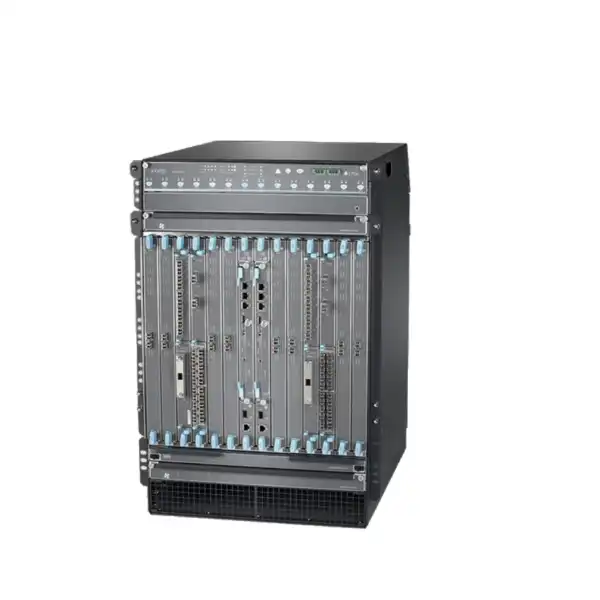
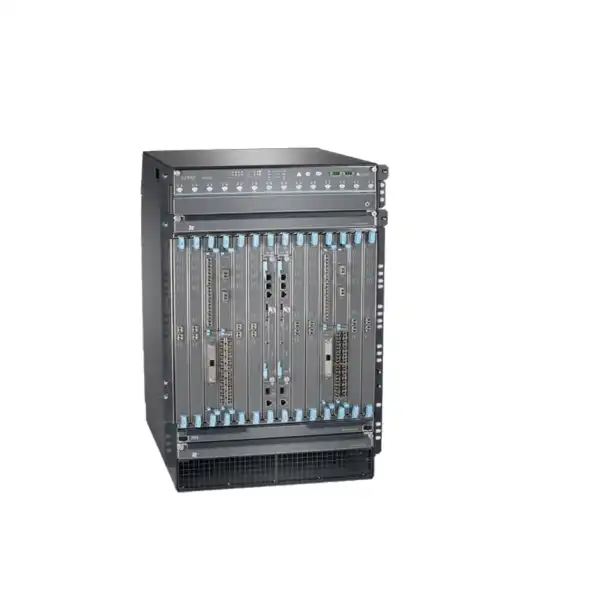
Juniper SRX5800 Firewall Dubai
The Juniper SRX5800 is a modular, carrier-class firewall platform built for exceptionally large security domains, high-volume data-center traffic, service-provider infrastructure and complex network segmentation. It combines the Junos OS operating model with scalable services processing and interchangeable interface hardware, but it is now a lifecycle-sensitive procurement. For UAE buyers, the first question is not simply how fast the chassis is; it is whether the exact configuration, support horizon, software release, security subscriptions, interface cards and spare strategy fit the intended production life.
Direct answer: what is the Juniper SRX5800 and who should consider it?
The Juniper SRX5800 is a modular SRX Series security gateway intended for large enterprise, hosted, colocated, cloud-provider, service-provider core and other environments where a smaller fixed appliance would not provide enough forwarding capacity, security-service scale, interface flexibility or session headroom. Juniper describes the platform as a high-performance, highly scalable, carrier-class device. Its architecture separates services processing from interface capacity, allowing a chassis to be built around the throughput and port mix required by a particular network rather than around a single fixed port arrangement.
Its main use is high-scale stateful firewalling and network security at major data-center boundaries, inter-zone enforcement points, high-capacity aggregation layers and service-provider security domains. Depending on the installed hardware and licensed feature set, an SRX5800 deployment can combine firewall policy, NAT, routing, IPsec VPN, intrusion prevention, application control, security intelligence and other Junos-supported security capabilities. The exact feature result is not determined by the chassis name alone; services cards, interface cards, Junos OS release, subscriptions and topology all matter.
Organizations should consider an SRX5800 primarily when they already operate the platform, require compatibility with an existing SRX5000-series estate, maintain spares for a supported installation, or have a carefully validated project in which this chassis is specifically required. For a new greenfield security design in 2026, the product lifecycle must be examined before any commercial recommendation is made. Juniper’s current lifecycle listing shows SRX5800 chassis-related SKUs with an end-of-life announcement dated October 6, 2021, a last-order date of August 30, 2022 and an end-of-support milestone of September 15, 2027 for the listed chassis family. That makes remaining production life, support entitlement and migration planning central to the decision.
The most important factor to confirm is therefore the exact bill of materials and intended service period, not a headline throughput number. FourTeck can help a Dubai or UAE buyer identify installed or required chassis components, determine the interface and processing profile, review licensing and support dependencies, assess whether the requested unit belongs in an existing platform strategy, and compare a migration path when the expected deployment life extends beyond the published support horizon.
SRX5800 lifecycle status changes the procurement conversation
A request for a Juniper SRX5800 in Dubai needs different treatment from a request for a current mainstream firewall. The model remains documented by Juniper, and its technical capability is still substantial, but lifecycle status creates additional commercial and operational questions. A buyer may be replacing failed hardware in an installed base, expanding a lab, maintaining a like-for-like configuration for a migration window, fulfilling a compatibility requirement, or seeking a complete chassis for a temporary project. Each of those situations can be valid, yet each has a different risk profile from a new long-term deployment intended to run for many years.
Juniper’s published SRX hardware lifecycle table lists the SRX5800 chassis and a group of related SRX5K components as end-of-life, with last order in 2022 and end of support in September 2027 for the cited group. Certain other related SKUs have their own dates, so buyers must not assume that every card, software entitlement, service or accessory shares the same milestone. In practice, an SRX5800 quote should identify every material component rather than describing the order only as “one SRX5800.” The chassis, Routing Engines, Switch Control Boards, Services Processing Cards, MPCs or IOCs, power supplies, optics, cables and software subscriptions can have different availability or support implications.
Existing installed base
If the organization already runs SRX5800, maintaining architectural consistency may reduce immediate change. The decision still needs support validation, spare strategy, Junos compatibility and a defined exit plan. A replacement card that solves today’s outage can be valuable even when the long-term platform is scheduled for migration.
New deployment
For a new data-center build, the remaining support window must be compared with the organization’s desired asset life. If the project expects several years of operation beyond September 2027, evaluating a current-generation Juniper security platform is normally more prudent than designing around an end-of-life chassis.
Spares or migration bridge
A lifecycle-sensitive platform can still make sense as a spare, short-duration bridge or controlled replacement during a larger migration. In that case, availability, serial status, hardware revision, entitlement transferability, tested software release and return policy become as important as raw specification.
A responsible proposal should state whether the requested equipment is new, refurbished, spare, replacement or supplied through another approved channel, and it should distinguish manufacturer support from reseller warranty or third-party support. These are not interchangeable. The correct commercial route depends on the buyer’s operational policy and the support level required for the site.
Modular architecture: why the chassis alone does not define the system
The SRX5800 is a 16U modular chassis rather than a fixed-port firewall. Juniper’s hardware documentation describes a multiprocessor platform in which Services Processing Cards provide capacity for firewall, IPsec and intrusion-detection or prevention services, while MPCs, IOCs and Flex IOCs provide network interfaces. Switch Control Boards and Routing Engines perform critical control and fabric functions. This modular design is one reason the SRX5800 can reach extremely high aggregate scale, but it also means that two devices labeled “SRX5800” may have very different practical capabilities.
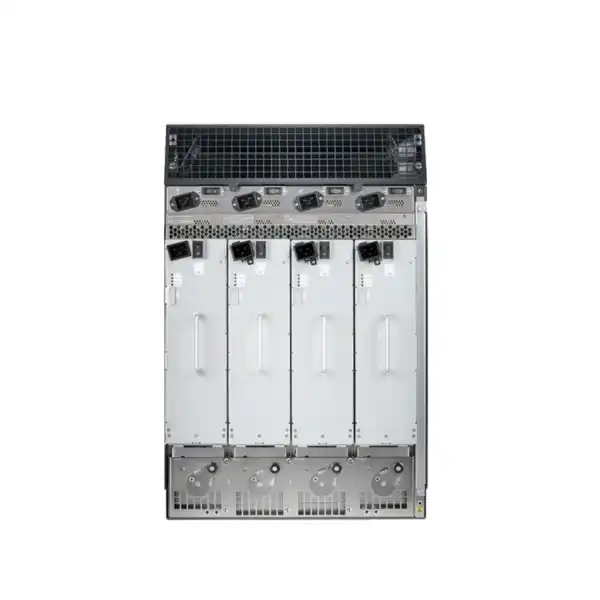
The physical chassis is substantial. Juniper’s Hardware Compatibility Tool identifies the AC and DC variants as modular 16U systems, approximately 70.5 cm high, 44.1 cm wide and 58.4 cm deep at the chassis level, with additional depth possible for cable management and some power configurations. The documented maximum configured weight can reach roughly 182 kg. A procurement team therefore needs to coordinate rack space, floor loading, lifting and installation procedure, rear clearance, airflow, cable management, power feeds and service access before the unit arrives at a Dubai data center.
Juniper lists 11 IOC slots on the product specification page, while detailed platform documentation describes the broader slot architecture in terms of control boards and line/service cards. The safest configuration practice is to use the current Juniper hardware compatibility information for the exact chassis revision and required cards rather than assuming every physical slot can accept every function. Fabric generation, Routing Engine, SCB, SPC and interface-card combinations are subject to compatibility rules. A used chassis populated with older components may not provide the same scale or software support as a later supported configuration.
This is especially relevant for quotation comparison. One supplier may quote a bare chassis, another a base configuration, and another a working system with processing cards and interfaces. Those prices are not comparable unless the bill of materials is normalized. For an accurate SRX5800 request, provide the existing chassis inventory if available, including part numbers from the installed cards. If the project is new to the platform, provide interface speeds, quantity, media type, required firewall and security-service throughput, redundancy model and software objectives so the correct card population can be evaluated.
Published SRX5800 performance and what the numbers mean
Juniper publishes very high performance figures for the SRX5800, but the figures describe different workloads and should not be treated as interchangeable. The current platform datasheet lists 3.36 Tbps firewall performance using IMIX traffic, 504 Gbps next-generation data-center firewall performance, 277 Gbps secure web access firewall performance, 699 Gbps IPsec VPN performance using AES-256-GCM with IMIX, 638 Gbps maximum IPS performance and about 11 microseconds stateful firewall latency under the documented test conditions. Maximum concurrent sessions are listed at 338 million. Juniper also states that performance, capacity and features are measured under ideal lab conditions and can vary by Junos release and deployment.
| Published metric | SRX5800 figure | Buyer interpretation |
|---|---|---|
| Firewall performance, IMIX | 3.36 Tbps | Useful as a high-level stateful firewall scale indicator, not a prediction of all-services production throughput. |
| Next-generation data-center firewall | 504 Gbps | More relevant when advanced inspection and next-generation security features are part of the workload. |
| Secure web access firewall | 277 Gbps | Highlights the cost of richer security inspection compared with base firewall forwarding. |
| Maximum IPS | 638 Gbps | IPS capacity depends on enabled services, traffic pattern, software and processing configuration. |
| IPsec VPN, AES-256-GCM IMIX | 699 Gbps | Relevant for encrypted inter-site traffic, but actual tunnel throughput varies with tunnel count, packet size and feature mix. |
| Concurrent sessions | 338 million | Important for highly multiplexed data-center, carrier or large internet-edge environments. |
| Stateful firewall latency | Approximately 11 µs | A laboratory platform figure; application experience also depends on inspection, network path and upstream systems. |
Sizing should start with the traffic that will actually be inspected. If a network has 400 Gbps of peak routed traffic but only a smaller portion crosses security zones with application identification, IPS or other services enabled, the design question differs from a case in which nearly all traffic requires deep inspection. Conversely, a large headline firewall number can be misleading if the design also needs high rates of new connections, many IPsec tunnels, heavy threat inspection or a specific number of high-speed interfaces. The limiting resource can shift between processing, sessions, card bandwidth, port density, fabric capacity and licensed security functions.
For a serious capacity exercise, collect average and peak throughput, packet-size profile if known, concurrent sessions, new connections per second, encrypted traffic proportion, VPN requirements, security services enabled, expected growth and failover behavior. A high-availability pair should also be sized so one chassis can carry the required load during maintenance or failure. The appropriate safety margin depends on the organization, but designing only to today’s average utilization is rarely sufficient for a platform intended to protect major data-center traffic.
Interface choices: 1GbE, 10GbE, 40GbE and 100GbE depend on the installed cards
One of the SRX5800’s core strengths is interface modularity. Juniper’s current platform datasheet lists IOC4 options capable of 40 × 1GbE SFP plus 40 × 10GbE SFP+ interfaces or 12 × QSFP+/QSFP28 multirate ports, depending on the selected IOC4. It also lists IOC3 choices including an option with 2 × 100GbE CFP2 plus 4 × 10GbE SFP+, and another with 6 × 40GbE QSFP+ plus 24 × 10GbE SFP+. These are card-level options, not ports that appear automatically on every SRX5800 chassis.
That distinction matters when replacing or expanding an existing system. The physical connector type, transceiver standard, fiber type, breakout requirement, remote-end optic, link distance and Junos support all need to line up. A buyer asking for “100G SRX5800” should specify how many 100GbE links are required, whether they are routed or part of another topology, what optics are present at the peer, and whether the existing chassis already contains compatible MPC or IOC hardware. The same principle applies to 40GbE and 10GbE links.
Optics should be treated as explicit line items. The firewall chassis and interface card do not, by themselves, guarantee the required transceivers are included. Juniper’s Hardware Compatibility Tool is the appropriate reference for supported transceivers and card combinations. For a data-center deployment, also confirm patching format, fiber polarity, rack-to-rack distance, patch-panel loss budget, connector cleanliness and spare optics. Many commissioning problems that appear to be firewall faults are actually physical-layer mismatches or unsupported combinations.
Port planning should include redundancy and future growth. A pair of SRX5800 firewalls may require links for production zones, external transit, internal routing, management, synchronization or control functions, depending on the architecture. Reserving enough compatible interface capacity for failover, maintenance and incremental services avoids an expensive late-stage card change. When moving from an older interface generation to newer cards, validate fabric and chassis compatibility rather than assuming that a connector match is sufficient.
Security capabilities: the platform can do more than packet filtering, but services must be designed deliberately
At its foundation, SRX uses stateful security policies to control traffic between security zones. Junos Base functionality for the SRX family includes core routing, firewall, switching, NAT, VPN and MPLS capabilities according to Juniper’s licensing documentation. On top of that baseline, advanced security subscriptions can add functions such as intrusion detection and prevention signatures, application identification and control, security intelligence, web filtering, antivirus services and ATP Cloud capabilities, depending on the selected bundle and software support for the platform.
Stateful firewall and segmentation
Use security zones and policies to enforce boundaries between internet, data-center, application, management, partner or other logical domains. Good design keeps policy intent understandable and avoids turning a high-scale appliance into an unmanageable rule repository.
IPS and application security
Advanced inspection can improve control over malicious patterns and application behavior, but it changes throughput assumptions. Size for the intended inspection profile and confirm the subscription tier that enables the required capabilities.
Security intelligence and cloud services
Security intelligence and ATP-related services can add reputation, threat-information and cloud-assisted protections. They introduce licensing, connectivity and operational dependencies that should be documented before activation.
IPsec VPN
The SRX5800 supports large-scale encrypted connectivity and Juniper publishes 699 Gbps IPsec VPN performance in its stated test profile. Tunnel design still needs peer compatibility, cryptographic policy, routing, failover and operational monitoring.
The security policy model should be aligned to business intent before migration. On a large chassis, raw capacity can encourage organizations to consolidate many enforcement points, but consolidation increases the operational importance of rule governance. Policy naming, object ownership, logging levels, change approval, exception handling and cleanup of obsolete rules have a direct effect on maintainability. A firewall with enormous session capacity can still become operationally fragile if its rules are poorly structured.
Inspection also has architectural implications. Some traffic may be encrypted end to end, some may be latency-sensitive, and some may be better inspected by another control point. The security design should therefore identify which flows need which services rather than enabling every feature universally. This produces a more realistic performance model and helps licensing costs correspond to genuine requirements.
Licensing and subscriptions: specify the security outcome, not just “full license”
Juniper’s SRX licensing documentation supports Standard, Advanced and Premium security bundles for the SRX5400, SRX5600 and SRX5800 family, with tier variations such as A1, A2, A3, P1, P2 and P3 in the legacy Flex structure. The exact bundle determines which advanced security functions are licensed. For example, Juniper’s published tables associate IDP signatures and application identification with multiple Advanced and Premium tiers, while higher tiers add functions such as enhanced web filtering, antivirus choices, antispam and ATP Cloud in different combinations.
A buyer should therefore avoid ambiguous requests such as “include all security” or “UTM license.” The better approach is to list the outcomes required: intrusion prevention, application visibility and control, URL filtering, antivirus, security intelligence, cloud-based threat analysis, centralized management and the desired subscription term. That allows the quote to map requirements to supported SKUs and avoids paying for a bundle that omits one critical service or includes capabilities the organization does not plan to use.
Licensing is also affected by lifecycle. A chassis may be available in the secondary market while a desired subscription or support contract has different eligibility rules. A license tied to one device should not be assumed transferable to another serial number. Existing customers should provide current entitlement information where possible. New purchasers should request written clarification of subscription availability, term, activation mechanism and support implications for the exact hardware being offered.
Junos OS version is another dependency. Juniper notes that platform feature support can depend on the installed release. For a production change, the target software version should be selected using the organization’s support policy, hardware compatibility, security advisories and release notes. An older installation may be running a release chosen for stability or compatibility with particular cards. Jumping directly to a later release can require intermediate upgrades, configuration changes or hardware validation.
When requesting an SRX5800 license quotation in Dubai, include the device serial number when permitted, current Junos version, existing license state, required security functions, desired term and whether the request is for renewal, expansion or a new entitlement. FourTeck can use that information to separate hardware availability from software entitlement, which is especially important on a platform approaching its published end-of-support milestone.
How to size an SRX5800 configuration for a real network
Sizing a chassis-class firewall starts with workload decomposition. Total internet or data-center bandwidth is only one input. The security gateway processes sessions, creates new connections, applies policies, may perform NAT, may encrypt or decrypt traffic, may inspect payloads and may route between many internal domains. Different traffic profiles stress different resources. A network with long-lived high-throughput flows can behave differently from a platform receiving millions of short web, API or mobile sessions.
| Sizing input | Why it matters |
|---|---|
| Peak inspected throughput | Use the traffic that will actually cross policy and inspection points, not only raw link capacity. Separate base firewalling from advanced inspection requirements. |
| Concurrent sessions | Large public services, carrier environments and east-west consolidation can sustain enormous state tables even when bandwidth is moderate. |
| New sessions per second | Bursty application architectures, load-balanced services and user-facing platforms may be connection-rate limited before they reach raw throughput capacity. |
| IPsec volume and tunnel count | Encryption consumes security processing and can interact with failover, routing and MTU behavior. |
| Security services | IPS, application identification, antivirus, web filtering and related services change the practical performance envelope and subscription needs. |
| Port and media mix | Interface-card selection must provide the correct number of 1G, 10G, 40G or 100G connections and the right optics for each peer. |
| Failure-state load | In a redundant design, the surviving unit may need to carry the full production workload while retaining enough headroom for traffic growth and transient spikes. |
Start with measured data where possible. Interface counters, flow telemetry, session statistics, firewall logs, VPN monitoring and existing device utilization can reveal the real pattern. If the migration is from another firewall platform, convert vendor-specific metrics carefully; vendors test under different conditions, and two quoted throughput values may represent different packet sizes or security-service combinations. The correct comparison is a workload model, not a marketing number.
Growth assumptions should be explicit. If a data center expects new tenants, additional internet transit, consolidation of several firewalls, higher east-west inspection or migration from 10G to 100G links, include those changes in the design horizon. However, because the SRX5800 itself is lifecycle-sensitive, long-term growth should also trigger a platform-strategy discussion. It may be more rational to preserve an SRX5800 for a defined transition period while directing net-new capacity toward a current architecture.
Finally, size the operational environment, not just packets. How many security zones are needed? How many virtual systems or administrative boundaries are required? What routing protocols and route scale are expected? Juniper’s Hardware Compatibility Tool publishes very high platform limits, including up to 2,000 security zones and 500 virtual firewalls with data-plane and administrative separation for the listed configurations, but whether those figures are appropriate for a particular design depends on software, hardware and operational manageability. A practical architecture usually uses far fewer logical objects than the technical maximum unless there is a specific multi-tenant requirement.
High availability, redundancy and failure-domain planning
An SRX5800 protects traffic that can be business-critical at enormous scale, so availability architecture deserves as much attention as throughput. A redundant deployment should be designed around the failures the organization needs to survive: a power-feed loss, component failure, interface failure, software maintenance event, chassis outage, rack event or site-level problem. The answer may involve redundant components within a chassis, a pair of firewalls, diverse upstream devices, separate power feeds and, for critical services, a second site or data-center zone.
Juniper hardware documentation describes redundancy for major SRX5800 components, but the exact usable redundancy depends on how the chassis is populated. A bill of materials should therefore identify redundant Routing Engines, control boards, power supplies and processing resources where required. Buying a chassis because it is “modular” does not guarantee that every redundancy objective is met. The installed component count and supported combination must be checked against the intended operating model.
Cluster or failover planning also changes capacity assumptions. The surviving node should be able to carry required traffic after a failure without immediately reaching an unsafe utilization level. Stateful synchronization, routing convergence, link aggregation, upstream ECMP, IPsec behavior and application timeout characteristics can all influence the user experience during failover. Testing should include not only a clean administrative switchover but also plausible fault scenarios.
For an existing SRX5800 pair, lifecycle planning adds another failure domain: spare availability. Organizations should inventory components whose failure would cause unacceptable restoration delay and compare that inventory with the remaining support strategy. A controlled spare program can reduce risk during a migration window, but it should be aligned with the planned retirement date so capital is not tied up in excess legacy stock.
Data-center installation requirements in Dubai and the UAE
The SRX5800 is physically much larger than a typical enterprise firewall. Its 16U form factor and potentially heavy fully configured chassis require data-center coordination before installation. Rack availability should be confirmed not only by counting free rack units but by checking usable depth, front and rear service access, rail or mounting requirements, neighboring cable density and the ability to safely move and lift the equipment. Juniper’s hardware guide publishes detailed mechanical and site requirements that should be used by the implementation team.
Environmental control is important in Gulf-region deployments. Juniper documents normal operation from 0°C to 40°C and 5% to 90% relative humidity, noncondensing, for the SRX5800, with specified altitude limits. A professionally operated UAE data center should keep the device comfortably inside those limits, but local ambient temperature outside the white space is not the relevant metric. What matters is the inlet environment, airflow path, rack arrangement, containment design and cooling behavior during partial HVAC or fan failures.
Power planning must use the exact AC or DC chassis and power-supply configuration. Do not estimate circuit sizing from a generic “SRX5800” label. The number and type of power supplies, redundancy mode, feed arrangement, plug and power-cord type, PDU capacity and upstream UPS or generator design should all be documented. If the equipment is moved from another country or data center, verify power cords and PDU connectors rather than assuming the existing accessories match the Dubai facility.
Airflow and maintenance clearance can affect rack location. Juniper’s current site guide calls for approximately 30 inches / 76.2 cm of maintenance clearance and recommends a clean environment. Cable management should preserve fan access and card removal paths. High-density fiber bundles require careful labeling and bend-radius control, especially on a chassis that can host large numbers of interfaces.
The physical implementation plan should therefore include rack elevation, chassis weight review, power-feed map, management connectivity, console access, cable schedule, optic inventory, grounding where applicable, staging procedure, software baseline and rollback plan. These items often determine whether a planned maintenance window is predictable or chaotic.
Operations, Junos OS and management considerations
The SRX5800 runs Junos OS, giving network teams a familiar operational model if they already manage Juniper routing, switching or security platforms. That consistency can be valuable in large environments: routing policy, interface configuration, security zones, operational commands and automation practices can be aligned with broader Junos expertise. It also means that a team considering SRX5800 should plan for Junos-specific skills rather than assuming configuration processes will translate directly from another firewall vendor.
Configuration governance matters at this scale. Use standardized naming for zones, address books, applications and policies. Separate human-readable intent from temporary exceptions. Review logging volume before enabling verbose logs on high-rate traffic because logging architecture can become its own capacity challenge. Central log collection, retention, indexing and incident-response workflows should be sized according to the volume of security events the policy is expected to generate.
Centralized management can simplify policy lifecycle across multiple SRX devices, but the management product and licensing must be validated for the intended deployment. Juniper’s licensing documentation distinguishes on-premises and cloud-based Security Director subscription structures, and feature availability can vary by hardware and software combination. For an SRX5800 estate, confirm exactly which management path is supported for the installed Junos release and existing licenses rather than assuming that every current cloud feature applies to this older chassis.
Software maintenance should be treated as a controlled engineering activity. Before a Junos upgrade, review release notes, hardware compatibility, security advisories, known issues, required intermediate releases and feature behavior. Validate the configuration in a lab or staged environment where possible. For a clustered production firewall, define failover sequence, maintenance steps and rollback conditions. Backup configuration and operational-state information before changes.
Automation can reduce operational error, but it should be introduced with guardrails. Template generation, configuration validation, API-driven changes and compliance checks are useful when they preserve device-specific context. The largest risk is not a lack of automation; it is uncontrolled automation that pushes a syntactically valid but operationally wrong policy to a chassis carrying critical traffic.
Migration planning: moving to or away from the SRX5800
Because the SRX5800 is near its published end-of-support milestone, migration should be part of the conversation even when the immediate request is for replacement hardware. A migration does not necessarily mean removing the platform tomorrow. It means establishing a controlled path so support expiry does not become an emergency procurement event.
Start by inventorying the current state: chassis serial numbers, installed cards, Junos versions, licenses, support contracts, routing instances, security zones, policies, NAT rules, VPNs, dynamic routing, high-availability behavior, external dependencies, management integrations and logging destinations. Identify which features are actually in use. Mature firewalls often contain years of objects and rules that are no longer required; carrying every legacy element into the replacement system increases complexity and migration risk.
Next, characterize traffic. Determine which paths traverse the SRX5800, the critical applications on those paths, peak sessions and throughput, routing adjacencies, encryption requirements and outage tolerance. If the replacement platform has a different interface architecture or higher port speed, design cabling and upstream changes in parallel. A firewall migration can fail even when the security configuration is correct if routing, optics, VLANs or LAG behavior were not coordinated.
Policy conversion requires semantic review. Object names, application identification, NAT processing order and default behaviors differ across platforms and even across software generations. Automated conversion can accelerate the first draft, but security owners should validate business intent. This is also the opportunity to remove unused rules, tighten broad source and destination objects, standardize naming and confirm logging requirements.
For a phased migration, the SRX5800 may operate beside the new platform while selected zones or services move. That approach reduces blast radius but introduces temporary routing complexity. The cutover plan should identify traffic ownership at every phase, avoid asymmetric paths that break stateful inspection, and include measurable acceptance tests. A rollback path should specify what must happen to routes, interfaces and policy state if the new environment fails validation.
If the immediate requirement is simply to keep an existing SRX5800 estate operational, migration work can still begin with documentation and capacity modeling. That costs little compared with an urgent redesign after support ends. FourTeck can help structure the bill of materials for near-term continuity while separately defining the inputs required to compare current replacement options.
When the SRX5800 fits — and when another platform should be evaluated
SRX5800 can still be a rational fit
- The organization already runs SRX5800 and needs an exact compatible spare or replacement.
- A migration program is underway and the platform needs to remain operational through a defined transition window.
- A validated lab, test, interoperability or temporary environment specifically requires this chassis family.
- The buyer has confirmed support, entitlement, hardware revision and software compatibility for the intended service period.
- The commercial offer is clearly described, including whether hardware is new, refurbished or otherwise sourced.
Evaluate a current alternative when
- The project is a new long-lived production deployment extending well beyond September 2027.
- The organization requires a fresh manufacturer lifecycle with multi-year support and subscription certainty.
- Newer interface density, software capabilities, energy efficiency or management integration are strategic priorities.
- The existing SRX5800 requires enough replacement investment that migration economics become more attractive.
- The desired feature set is easier to obtain or support on a current-generation platform.
Within the legacy SRX5000 family, SRX5400 and SRX5600 historically addressed lower chassis scale than SRX5800, but they share similar lifecycle considerations and therefore should not be treated automatically as long-term successors. A replacement shortlist should instead begin with the required workload and Juniper’s currently supported security portfolio. The correct answer may be one larger chassis, multiple smaller firewalls, a different security architecture or a phased redesign. Product selection follows from the architecture rather than the other way around.
Practical use cases for an SRX5800 estate
Large data-center perimeter
A high-capacity edge may need to handle substantial north-south traffic, large session counts, dynamic routing and advanced inspection. The SRX5800 was designed for this class of scale, but interface and services-card population determine the usable result.
Service-provider security boundary
Carrier environments can value high session scale, routing integration and modular interfaces. Operational design must account for tenant separation, route scale, failure domains and strict change control.
High-capacity IPsec aggregation
The platform’s published IPsec scale can support demanding encrypted connectivity designs. Real deployments must still validate tunnel count, encryption profile, routing behavior, peer interoperability and failover requirements.
Internal segmentation
A large enterprise may use the chassis between major network zones or business domains. Policy governance and logging architecture become central because the enforcement point can affect many applications at once.
Existing-platform continuity
For organizations already standardized on SRX5800, replacement cards or a spare chassis can preserve service while a migration proceeds. This use case is increasingly relevant because of the platform’s lifecycle stage.
Lab and interoperability testing
A test environment may need identical hardware or software behavior to reproduce production issues, validate migrations or test configurations. Lifecycle limitations are less problematic when the unit is not the long-term production security boundary.
Procurement checklist for Juniper SRX5800 buyers in Dubai
The fastest way to receive an accurate quotation is to make the request configuration-specific. An SRX5800 chassis description without cards, licenses or support requirements leaves too much ambiguity. For an installed base, an inventory export or photographs of part-number labels can help identify what must match. For a planned build, a topology and interface schedule are more useful than a request for “maximum configuration.”
Also state delivery location within the UAE, installation scope, after-hours cutover requirements and whether configuration or migration services are needed. If the request is for a replacement part after a failure, include the exact failed SKU and current chassis hardware generation so compatibility can be checked before dispatch.
Common purchasing mistakes and how to avoid them
Comparing chassis-only prices. An apparently inexpensive SRX5800 may not include the processing cards, control components, interface cards, power hardware or licenses required to operate in the intended role. Ask for a complete component list and condition description.
Using headline throughput as the only sizing metric. Base firewall throughput, next-generation firewall throughput, secure web access performance, IPS performance and IPsec throughput represent different workloads. Match the metric to the services that will actually be enabled.
Ignoring lifecycle dates. The current published support milestone should be included in the business case. A low acquisition price can become expensive if the platform must be replaced again earlier than expected or if required support is unavailable.
Assuming all cards are interchangeable. SRX5000-series components have compatibility dependencies involving hardware generation, fabric, Routing Engines and Junos software. Confirm exact supported combinations before buying spare or expansion cards.
Leaving optics until installation day. High-speed interface cards need the correct transceivers, fiber and remote-end compatibility. Include optics in the design and quotation rather than treating them as incidental accessories.
Requesting an undefined “full security license.” State the actual features required and desired subscription period. This makes it easier to map the need to a valid licensing tier and reduces ambiguity around renewals.
Planning capacity without failure-state headroom. In a redundant architecture, size for the traffic one surviving device must carry. If a single failure pushes the remaining firewall to the edge of capacity, the design is not truly resilient.
Buyer questions about the Juniper SRX5800
Is the SRX5800 still a powerful firewall?
Yes. Juniper publishes up to 3.36 Tbps IMIX firewall performance, 638 Gbps maximum IPS performance, 699 Gbps IPsec VPN performance and 338 million concurrent sessions. Those are substantial figures. Performance capability, however, does not override lifecycle reality; the chassis family is end-of-life and its published end-of-support milestone must be considered.
Can I buy one SRX5800 chassis and add any cards later?
Do not assume so. The SRX5800 is modular, but supported card combinations depend on the chassis hardware generation, switch-control fabric, Routing Engine, Junos release and the specific MPC, IOC or SPC. Use Juniper’s Hardware Compatibility Tool and current documentation for the exact configuration.
Does the SRX5800 include 100GbE ports?
The chassis does not have one fixed universal port set. Juniper documents interface-card options that can provide 100GbE, 40GbE, 10GbE and 1GbE connectivity. A quote must specify the required card and optics rather than assuming 100GbE ports are included with the chassis.
What is the most important question for a 2026 purchase?
Ask how the hardware will be supported through the intended service period. Juniper’s lifecycle table shows September 15, 2027 as the end-of-support milestone for the listed SRX5800 chassis group. A production design extending beyond that date should include a migration strategy or use a current platform.
What licenses are relevant?
Junos Base provides core functions such as routing, firewall, NAT and VPN, while Advanced and Premium tiers add different combinations of IDP, application security, filtering, antivirus, security intelligence and ATP Cloud capabilities. The exact requirement should be translated into a supported SKU and term for the specific device.
Can the SRX5800 be used for IPsec VPN?
Yes. IPsec is a core SRX capability and Juniper publishes 699 Gbps IPsec VPN performance for the SRX5800 under the stated AES-256-GCM IMIX test profile. Real throughput depends on packet size, tunnel count, feature mix, hardware population and software version.
Is it suitable for a greenfield Dubai data center?
Technically it can provide data-center-class scale, but the lifecycle position makes it difficult to justify as the default choice for a new long-lived installation. A greenfield project should compare current-generation Juniper options and only use SRX5800 when a specific compatibility or transition requirement outweighs the lifecycle constraint.
What should I provide for an accurate quote?
Provide chassis type, existing part numbers if replacing equipment, interface speeds and quantities, throughput and session requirements, security services, licensing term, optics, redundancy, power type, support expectation, delivery site and migration or installation scope. The more complete the inputs, the less likely the quotation is to omit a critical module.
Can FourTeck help with an existing SRX5800 rather than a new purchase?
Yes. The useful starting point can be an installed-base assessment: identify chassis and card SKUs, review the current software and license state, document capacity, determine spares needs and define the timeline for a replacement architecture. That can support a continuity purchase without losing sight of the migration deadline.
Should a used or refurbished SRX5800 be treated like new?
No. Condition, hardware revision, serial history, entitlement status, installed components, return terms and warranty source need to be explicit. A working secondary-market chassis may solve a spare or transitional requirement, but its commercial protections are not automatically equivalent to manufacturer-backed new equipment.
Decision recap for UAE buyers
What FourTeck needs from you for an accurate SRX5800 quotation
A concise technical brief is enough to begin. If some values are unknown, send what you have and identify whether the request is a new build, failed-part replacement, spare, capacity expansion or migration bridge. The following information gives the quotation process the best chance of producing a usable bill of materials on the first pass.
Build the right SRX5800 continuity or migration plan for Dubai
The SRX5800 still offers remarkable scale, but its lifecycle means every purchase should solve a defined business problem. Whether you need a compatible replacement component, a spare to protect an installed base, help validating licenses and cards, or a roadmap to a current security platform, start with the exact environment and desired operating period. FourTeck can review the requirement, structure the bill of materials and separate short-term continuity from long-term platform strategy.

Reviews
There are no reviews yet.