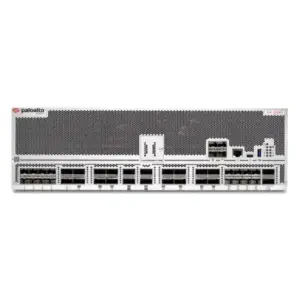
Protective DNS and policy-based web access control
DNS Protection Software Dubai in Dubai, UAE
DNS protection software gives organisations an early control point for internet access. It evaluates domain requests before users or devices connect to websites and online services, helping security teams apply acceptable-use rules, reduce exposure to known malicious destinations, and improve visibility across offices, branches, roaming laptops, and selected cloud environments.
Cloud, hybrid, or appliance-assisted
User, site, device, or service tier dependent
Domain-category and threat-based policies
Coverage, visibility, integrations, and support
Direct answer for business buyers
DNS protection software is a security and access-control service that evaluates domain-name requests and applies policies before a device reaches an internet destination. It is mainly used to block known malicious domains, restrict unsuitable categories, support safer browsing, and create useful DNS activity logs. Organisations with office users, remote staff, branch sites, guest networks, or managed devices should consider it when they need a lightweight security layer that can be centrally administered. Before proceeding, buyers should confirm the number and type of protected users, required deployment methods, roaming coverage, identity integration, policy categories, log retention, reporting, regional service availability, subscription term, support expectations, and whether the requirement includes secure web gateway, firewall, CASB, DLP, or endpoint functions beyond protective DNS.
What it does
The Domain Name System translates readable domain names into network addresses. Protective DNS inserts a security decision into that process. When a user, device, or application requests a domain, the platform can allow the request, block it, redirect it to a warning page, or apply another policy action. Decisions may use threat intelligence, domain reputation, category databases, customer-defined allow and block lists, user identity, device posture, location, schedule, or subscription features.
This control happens early in the connection sequence. It does not replace every other security layer, but it can stop many unwanted connections before a browser or application establishes a session with the destination.
Who it may suit
The category is relevant to small and medium businesses, large enterprises, schools, clinics, professional services firms, retail groups, hospitality operations, construction companies, logistics providers, government-related environments, and managed service providers. It is particularly useful where internet access must be controlled consistently across multiple locations or where laptops continue to require protection when employees work away from the office.
Suitability depends on the required depth of inspection. A DNS-only platform may be enough for domain-level control, while organisations needing file scanning, full URL inspection, cloud-app controls, data loss prevention, browser isolation, or advanced proxy functions may need a broader secure web gateway or security service edge platform.
Business challenges DNS protection can help address
Malicious domain access
Users may follow phishing links, open compromised websites, or connect to command-and-control infrastructure. Reputation and threat feeds can help block domains already identified as unsafe.
Inconsistent branch policies
Separate offices often use different local controls. A centrally managed service can provide a common policy framework while still allowing location-specific exceptions.
Roaming user exposure
Laptops outside the corporate network may bypass office firewalls. Supported roaming agents or secure tunnels can extend policy enforcement to remote users.
Limited internet visibility
DNS logs can show requested domains, blocked categories, policy actions, and trends. Reporting depth and retention vary by platform and licence.
Core capabilities buyers should compare
Threat-domain blocking
Blocks or warns on domains associated with malware, phishing, botnets, newly observed threats, and other risk categories. Coverage depends on the vendor's intelligence sources and policy engine.
Content-category control
Allows administrators to apply acceptable-use policies by category. Category databases, exception handling, and granularity should be tested against business requirements.
Roaming and branch enforcement
May protect office egress points, branch networks, remote devices, or selected cloud workloads through agents, tunnels, DNS forwarding, virtual appliances, or network settings.
Identity-aware policies
Some platforms connect policy events with users, groups, devices, or directories. Integration and licence requirements must be confirmed.
Logging and reporting
Dashboards may provide request history, blocked events, top domains, categories, locations, and users. Retention length, export methods, and API access vary.
Policy administration
Central consoles can simplify changes across multiple locations. Buyers should review role-based access, audit trails, delegated administration, and change-control options.
DNS protection fit matrix
| Business situation | Relevant assistance | Scope dependency |
|---|---|---|
| Single office needs malicious-domain blocking | DNS forwarding, baseline policies, reporting setup | User count, gateway design, policy categories |
| Multiple UAE branches need common controls | Site onboarding, policy hierarchy, exception planning | Branch connectivity and public IP design |
| Remote laptops require off-network protection | Roaming-client evaluation and managed deployment | Operating systems, MDM tools, device ownership |
| School or guest network needs category filtering | Category design, schedule rules, reporting | Policy expectations and network separation |
| Enterprise requires full web and cloud-app controls | Assessment for SWG, SSE, CASB, DLP, or browser isolation | Traffic steering, identity, licence tier, data handling |
Buyer information table
| Topic | DNS Protection Software Dubai |
|---|---|
| Page type | Cybersecurity software category and solution guidance |
| Main purpose | Apply domain-level security and acceptable-use policies before connections are established |
| Suitable for | Businesses, education, healthcare, retail, hospitality, professional services, branch networks, and managed environments |
| Typical deployment types | Cloud-managed recursive DNS, network forwarding, roaming client, virtual connector, tunnel, or integrated security platform |
| Licence guidance | Vendor, user, device, site, feature tier, data retention, and subscription term dependent |
| Integration support | Directory, identity, firewall, endpoint, SIEM, MDM, and API compatibility should be confirmed |
| Configuration support | May include policy planning, site onboarding, roaming deployment, testing, logging, and handover when quoted |
| Availability guidance | Contact FourTeck for current UAE options, vendor lead time, subscription availability, and regional terms |
| Important note | DNS filtering is one security layer and should be evaluated alongside endpoint, email, firewall, identity, backup, and incident-response controls. |
Dependencies that affect the final design
Features described on this page are not automatically included in every DNS security subscription. Threat categories, content filtering, roaming agents, identity integration, log retention, API access, SIEM export, delegated administration, secure web gateway inspection, CASB, DLP, browser isolation, firewall-as-a-service, and support levels may require specific plans or additional subscriptions. Region, data-processing location, operating-system support, and vendor policy can also influence suitability.
Encrypted DNS requires attention during design. Browsers and applications may use DNS over HTTPS or DNS over TLS, potentially bypassing a traditional network resolver if policies are not coordinated. Guest networks, BYOD devices, mobile users, VPN clients, split-tunnel designs, cloud applications, and internal private domains can each require a different approach. FourTeck can help identify these dependencies during requirement review, but the final configuration should be based on the selected platform and an agreed scope.
A practical purchase and deployment journey
Define the protected population
Document users, devices, branches, guest networks, servers, cloud workloads, and remote endpoints. Separate managed and unmanaged equipment.
Map policy and compliance needs
Identify threat categories, acceptable-use rules, exceptions, reporting audiences, retention needs, privacy considerations, and administrative roles.
Evaluate platform depth
Decide whether DNS-only control is sufficient or whether full URL inspection, proxying, malware scanning, CASB, DLP, or remote access is required.
Confirm integration and licensing
Validate directories, SSO, endpoint systems, firewalls, MDM, SIEM, APIs, licence metrics, subscription term, and support entitlement.
Pilot and test
Use a controlled group to test policy accuracy, false positives, roaming behaviour, internal domains, bypass handling, reporting, and user communication.
Roll out and review
Deploy in phases, monitor exceptions, assign ownership, document changes, review reports, and align renewal planning with the subscription date.
Threat prevention at the DNS layer
A domain request often appears before a user reaches a website, downloads a file, or connects to an application service. This makes DNS a useful early enforcement point. A protective resolver can compare the requested domain against security intelligence and customer policy, then return a safe response, block page, sinkhole address, or non-existent-domain result according to the platform design. The operational value is speed and broad coverage: many devices already rely on DNS, and a network can often direct requests to a protected resolver without inserting a full proxy into every connection.
The limitation is equally important. DNS sees the requested domain but may not see the complete URL path, page content, file content, user action, or encrypted application payload. A legitimate cloud platform can host both acceptable and malicious content under the same domain. In that case, domain-level blocking may be too broad or too limited. Buyers should therefore assess whether threat-domain blocking meets the risk requirement or whether deeper web inspection and endpoint controls are necessary.
The quality of protection also depends on threat intelligence, update frequency, domain classification, newly registered-domain handling, algorithmic detections, customer-defined policies, and response to false positives. No platform can guarantee that every dangerous domain is blocked or that every safe domain is classified correctly. A sensible deployment includes monitored pilot groups, exception workflows, reporting review, incident escalation, and complementary security layers.
Consistent policy for offices, branches, and remote users
A central challenge for distributed organisations is policy consistency. A head office may have a next-generation firewall, while small branches rely on broadband routers, and remote users connect from home, hotels, mobile hotspots, or customer sites. DNS protection platforms can offer several enforcement methods to address this variation. Network locations may be identified by public IP address. Branches may use local DNS forwarders, virtual appliances, connectors, or tunnels. Roaming laptops may use an endpoint client. Cloud-hosted workloads may use dedicated resolvers or virtual network integrations.
Each method introduces design choices. Public-IP identification is simple but may not show individual users. Roaming clients provide off-network protection but require operating-system compatibility and managed deployment. Virtual connectors can improve identity or internal-domain handling but add infrastructure. Tunnels may enable broader inspection but depend on bandwidth, routing, resilience, and platform capacity. The best approach may combine methods rather than force every location into one design.
Policy structure also matters. Global rules can establish a baseline, while groups, locations, departments, or device types receive more specific controls. Exceptions should be documented, approved, time-bound where practical, and reviewed regularly. Organisations should avoid creating so many policy layers that administrators cannot predict which rule applies. FourTeck can assist with requirement mapping, but the selected vendor's policy model must be understood during implementation.
Visibility, reporting, and operational control
DNS activity can provide useful evidence about internet behaviour and security events. Reports may identify frequently requested domains, blocked categories, locations generating suspicious requests, devices attempting repeated contact with a malicious destination, and changes in activity over time. Security teams can use this information during incident investigation, while IT managers may use category trends to improve policy design and user awareness.
Reporting must be evaluated carefully. Some subscriptions provide only summary dashboards, while others include detailed event logs, longer retention, scheduled reports, API access, syslog export, or SIEM integrations. Identity mapping can improve usefulness but introduces directory, privacy, and data-handling considerations. Buyers should confirm who can access logs, where information is processed, how long it is retained, how it can be exported, and what happens when the subscription ends.
Operational control includes more than visibility. Administrative role separation, multi-factor authentication, audit logs, change history, alerting, delegated management, and service health information can reduce day-to-day risk. Managed service providers may need multi-tenant administration, while regulated organisations may need stricter separation of duties. These capabilities are vendor and plan dependent and should be included in the evaluation checklist rather than assumed.
Ideal business environments and use cases
Multi-branch organisations
Central DNS policies can give branches a common baseline while allowing controlled local exceptions. The design should account for internet breakout, WAN routing, dynamic public IP addresses, resilience, and branch support responsibilities.
Remote and hybrid workforces
Roaming-device protection can extend policy outside the office. Buyers should confirm endpoint support, interaction with VPN clients, split tunnelling, local administrator rights, MDM deployment, and user privacy notices.
Education and training
Category filtering and schedule-based policies may support safer internet use. Requirements should distinguish staff, students, guests, labs, managed devices, BYOD, and examination or research exceptions.
Healthcare and professional services
Protective DNS can add an early block against phishing and malware destinations. Logging, privacy, retention, identity integration, and access to legitimate specialist services require careful review.
Retail and hospitality networks
Corporate, operational, and guest networks may need separate policies. Network segmentation, payment environments, guest terms, branch connectivity, and local support processes should be included in planning.
Managed IT environments
Service providers may use DNS security as part of a broader managed offering. Multi-tenancy, delegated administration, reporting ownership, alert response, licence management, and customer separation are key evaluation points.
Integration and operational considerations
DNS protection should fit the existing network rather than create hidden routing or name-resolution problems. Internal applications may rely on private domain zones that must resolve through corporate DNS servers. Active Directory and other directory services may require internal records. Branches might use local hostnames, split-horizon DNS, or conditional forwarding. These dependencies should be documented before resolvers are changed.
Endpoint and browser behaviour also needs review. Modern browsers, operating systems, security agents, and applications may use encrypted DNS. An organisation can choose to allow approved encrypted resolvers, redirect requests, enforce enterprise browser policies, or use an endpoint client that maintains control. The appropriate method depends on technical capability, policy, privacy, and the selected platform.
Integration with firewalls can improve traffic steering and event context. Directory or identity integration can map requests to users and groups. SIEM integration can support correlation with endpoint, email, authentication, and network events. MDM can simplify roaming-agent deployment. Ticketing integration may support incident workflows. These integrations should be confirmed against exact software versions, APIs, licensing, and support status.
Resilience is another design factor. Organisations should understand what devices do if the protective service, tunnel, connector, or local forwarder becomes unavailable. Fail-open behaviour may preserve internet access but reduce security. Fail-closed behaviour may protect policy at the cost of availability. Secondary resolvers, connector redundancy, monitoring, and documented rollback procedures should be considered during implementation.
Questions to resolve before requesting a quotation
Procurement checklist
☐ Number of users, devices, and locations
☐ Managed, unmanaged, and roaming endpoints
☐ Required security and content categories
☐ DNS-only or wider SWG/SSE requirement
☐ Directory and identity integration
☐ Firewall, endpoint, MDM, and SIEM compatibility
☐ Log retention and reporting needs
☐ Subscription tier and preferred term
☐ Regional usage and data-handling requirements
☐ High-availability and failure behaviour
☐ Pilot, rollout, and user communication plan
☐ Installation and configuration scope
☐ Administrator training and documentation
☐ Support, escalation, and renewal expectations
How FourTeck can assist
FourTeck can help turn a broad request for DNS security into a clearer bill of requirements. The process can begin with the user population, branch design, remote-work pattern, existing firewalls, endpoint management, identity systems, reporting needs, and preferred operational model. From this information, suitable platform categories and licence approaches can be discussed without assuming that one vendor or plan fits every environment.
Assistance may include requirement clarification, platform comparison, licence-term review, compatibility questions, quotation coordination, rollout planning, configuration scope, pilot planning, administrator handover, and renewal guidance. The exact activities included in a commercial proposal depend on the agreed scope. Customers should state whether they need licence supply only, remote configuration, onsite coordination, migration from an existing DNS service, managed monitoring, or broader cybersecurity consultation.
For complementary planning, buyers can review FourTeck's technology and cybersecurity services, browse the business security product portfolio, learn more about FourTeck, or submit project information through the Dubai contact page.
UAE availability and support guidance
Contact FourTeck to confirm current UAE availability for the required DNS protection platform, licence tier, subscription term, and service scope. Availability may depend on vendor policy, region, user quantity, minimum order requirements, subscription start date, data-processing options, and lead time. A quotation should identify the chosen licence metric, included features, renewal date, support entitlement, implementation services, and any third-party requirements.
Delivery and project coordination can be discussed after the exact requirement is confirmed. Installation and configuration scope should be included in the quotation when required. Businesses operating across Dubai, Abu Dhabi, Sharjah, and Ajman can provide their branch list, public IP design, roaming-user count, preferred deployment sequence, and support expectations so that a coordinated approach can be considered. No assumption should be made that every licence, service visit, or platform option is immediately available in every location.
GCC Availability
FourTeck can assist organisations planning DNS protection across GCC operations by reviewing the requirement, identifying suitable licence structures, coordinating quotations, and discussing deployment and support scope. Regional projects may cover the United Arab Emirates, Saudi Arabia, Kuwait, Qatar, Bahrain, or Oman, but the correct approach depends on the destination, number of users and branches, preferred vendor, subscription tier, identity design, reporting requirements, and local implementation arrangements. Product availability, licensing, delivery schedules, service visits, project scope, and vendor lead times can vary by country, model, quantity, and requirement. Buyers should share the destination country, required platform or service, protected user and device count, licence term, deployment locations, integration needs, and expected timeline. FourTeck can then help clarify the quotation basis and regional coordination needs. For Kuwait-related enquiries, businesses may also review FourTeck Kuwait technology support information. Local stock, customs outcomes, fixed delivery dates, or country-specific certification should not be assumed without written confirmation.
Africa Availability
Organisations with African branches, remote teams, schools, clinics, retail sites, or managed customer networks can contact FourTeck for DNS security requirement review and regional procurement planning. Assistance can cover platform type, licence quantity, subscriptions, roaming-device coverage, branch onboarding, integration, configuration scope, support needs, and renewal planning. Availability and fulfilment may depend on the destination, selected vendor, licence region, user count, local internet design, power or regulatory considerations, shipping arrangements for any related hardware, vendor lead time, installation scope, and local project conditions. Buyers should provide the destination country, exact requirement, quantity, preferred deployment schedule, and support expectations. FourTeck's regional resources include Africa technology solutions, along with information for Kenya projects and Uganda requirements. Local inventory, immediate shipment, customs clearance, guaranteed onsite coverage, and fixed deployment dates should not be assumed unless confirmed for the specific project.
Related products, services, and suitable alternatives
Secure web gateway
Consider when the requirement includes full URL inspection, file controls, web proxy functions, or more detailed user activity policies than DNS alone can provide.
Security service edge
Relevant for organisations combining secure web access, zero-trust network access, CASB, DLP, and firewall services in a cloud-delivered architecture.
Next-generation firewall
Provides network segmentation and traffic inspection at sites or data centres. DNS security can complement rather than automatically replace firewall controls.
Endpoint security
Protects devices against malware, exploitation, and suspicious behaviour. It remains important because not every threat is visible or controllable through DNS.
Security assessment
Useful when the organisation needs help mapping users, locations, existing controls, risks, integrations, and operational responsibilities before selection.
Implementation and policy configuration
May cover onboarding, policy design, pilot testing, roaming deployment, reporting, documentation, and handover when included in the quotation.
Why businesses contact FourTeck
Buyers often need more than a software name. They need clarity about licence metrics, user and site counts, feature tiers, compatibility, implementation effort, support responsibilities, and renewal timing. FourTeck can help structure those questions so quotations are based on a defined requirement rather than an incomplete estimate.
Practical assistance may include clarifying whether DNS-only protection is suitable, comparing cloud-managed and integrated security approaches, identifying required connectors or agents, reviewing directory and SIEM dependencies, defining pilot groups, planning branch rollout, and separating licence supply from configuration or managed support. FourTeck does not treat every capability as standard; optional features, subscriptions, regional terms, and project services should be confirmed in writing.
Frequently asked questions
What is DNS protection software?
It is a security service that evaluates domain-name requests and applies policies before a user or device connects to the requested destination. It can block known malicious domains, enforce category rules, and generate DNS activity logs.
Does DNS protection replace a firewall or endpoint security?
No. It adds an early domain-level control but does not inspect every file, process, email, network session, or application action. Most organisations should use it as part of layered security.
Can it protect employees outside the office?
Many platforms support roaming clients, tunnels, or endpoint integrations. Coverage depends on the selected vendor, licence, operating system, device management method, and interaction with VPN or encrypted DNS settings.
How is DNS protection software licensed?
Licensing may be based on named users, devices, sites, queries, feature tiers, or subscription bundles. Minimum quantities and support levels can apply. The exact metric should be confirmed before quotation.
Can policies be different for departments or branches?
Many platforms allow policies by location, group, user, device, schedule, or network. The available granularity and identity mapping depend on the product and licence tier.
What integrations should be checked?
Common checks include Active Directory or other directories, SSO, firewalls, endpoint agents, MDM, SIEM, syslog, APIs, VPN clients, browsers, and internal DNS zones.
Is a pilot recommended before full deployment?
Yes. A pilot can reveal false positives, internal-domain issues, roaming behaviour, user impact, encrypted-DNS bypasses, reporting quality, and integration dependencies before wider rollout.
Can FourTeck provide configuration assistance?
Configuration, policy planning, onboarding, testing, documentation, and handover can be discussed and included when required. The exact service scope should be stated in the quotation.
How can I confirm UAE availability and price?
Share the protected user and device count, locations, required features, licence term, integrations, implementation needs, and preferred timeline. FourTeck can then coordinate current UAE availability and quotation guidance.
What should be confirmed for renewal?
Review current licence usage, changes in user count, added branches, required feature upgrades, support entitlement, renewal date, data retention, and any migration or consolidation plans before the subscription expires.
Plan DNS protection around your real environment
Share your user count, branch locations, roaming-device needs, policy goals, integrations, licence term, and service expectations. FourTeck can help shape a suitable requirement and coordinate a current quotation.