
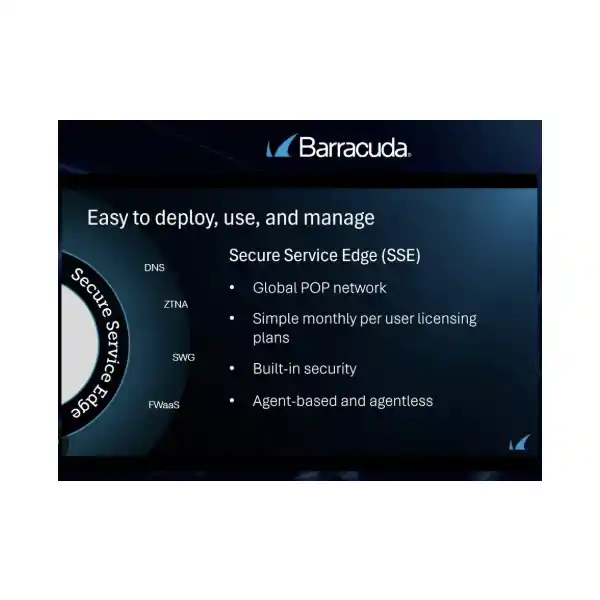
Barracuda SecureEdge Private Edge
A privately hosted SecureEdge enforcement point for organizations that want cloud-managed simplicity while retaining direct control over where critical traffic is inspected, routed, segmented, and protected.
For enterprises in Dubai and across the UAE, Barracuda SecureEdge Private Edge provides a practical path to converge next-generation firewall controls, SD-WAN, Zero Trust application access, secure web access, and branch connectivity around an on-premises or privately hosted edge. The architecture is especially relevant when data-plane locality, deterministic traffic paths, private application access, migration from conventional WAN designs, or internal governance requirements make an exclusively public-cloud enforcement model unsuitable.
What is Barracuda SecureEdge Private Edge?
Barracuda SecureEdge Private Edge is the enterprise-hosted Edge Service option within the Barracuda SecureEdge architecture. In SecureEdge terminology, an Edge Service acts as a hub for connected sites, devices, access agents, and application resources. A Private Edge moves that hub function into infrastructure controlled by the customer rather than relying only on a Barracuda-hosted cloud Edge Service. This allows an organization to keep key security and networking processing within its own data center, campus, colocation facility, or supported private deployment while continuing to use centralized SecureEdge management.
The design is not simply a traditional firewall positioned at the internet boundary. A Private Edge participates in the broader SecureEdge operating model, where security policy, connectivity, access control, application reachability, and SD-WAN behavior can be managed consistently. Barracuda documents the Private Edge Service as an option for hybrid deployments and highlights use cases where organizations need to satisfy geopolitical requirements or retain full control of the data plane. It can be created as a new private Edge Service or implemented by promoting a supported existing SecureEdge Site device to the Edge Service role.
In practical UAE deployments, this means a company can place a Private Edge near its most important applications or network aggregation point, connect branches and remote resources to it, and use SecureEdge policy to control how traffic reaches private applications, internet destinations, SaaS platforms, cloud networks, and other sites. The management experience remains centralized, while forwarding and inspection for selected traffic paths can stay within infrastructure under the organization’s operational control.
Direct answer: when should a UAE enterprise choose Private Edge?
Data-plane control
Choose Private Edge when security inspection and routing for critical traffic should take place in infrastructure operated by the organization, a trusted colocation provider, or a controlled private environment rather than exclusively in a public SASE point of presence.
Hybrid application estates
It fits organizations that still run substantial ERP, database, OT, VDI, file, voice, or line-of-business workloads in UAE data centers while also using Microsoft 365, Azure, AWS, SaaS applications, and remote work patterns.
WAN consolidation
Private Edge is useful when the project objective is to modernize MPLS or appliance-heavy branch networks by combining application-aware SD-WAN, security enforcement, and centralized lifecycle management.
Resilient local enforcement
A high-availability Private Edge design can provide a local or regional security hub for branches whose business processes require predictable paths to applications hosted inside the UAE or private cloud environments.
SecureEdge architecture: hub, spokes, policies, and enforcement
SecureEdge uses a hub-and-spoke architecture. The Edge Service is the hub, while connected SecureEdge Sites, IoT deployments, Connectors, and remote-access components operate as spokes or service consumers. The platform can use Barracuda-hosted Edge Services, Azure-connected Edge Services, or the enterprise-hosted Private Edge Service. Multiple virtual WANs and multiple Edge Services can be used when an organization needs separate production, development, regional, or business-unit connectivity domains.
A well-designed Private Edge therefore sits at the intersection of routing and security architecture. Branch traffic can be steered according to application and transport conditions; private application flows can be authorized according to user, device, and policy context; and internet-bound sessions can be inspected according to the enabled SecureEdge services. Administrators manage infrastructure, policies, devices, visibility, and related configuration through SecureEdge Manager instead of maintaining independent rule sets on every location.
This architecture is significant for UAE organizations with a mixture of headquarters, warehouses, showrooms, clinics, schools, hospitality properties, construction sites, logistics facilities, and remote workers. Instead of treating each site as an isolated firewall project, the network can be designed as a common security fabric. The Private Edge provides a controlled aggregation and enforcement point while branch devices remain purpose-built for local connectivity and policy execution.
Core security capabilities around a Private Edge deployment
Stateful firewall and policy enforcement
SecureEdge supports stateful inspection, forwarding controls, site- and service-specific access rules, user-aware policy decisions, ingress NAT, segmentation constructs, routing, VLAN support, and application-aware controls. This provides the policy foundation for consolidating edge firewall and WAN functions.
IPS and advanced threat protection
Intrusion prevention, application control, encrypted traffic inspection, and Barracuda Advanced Threat Protection capabilities can be incorporated according to the subscribed feature set. Inspection policy should be sized around real TLS traffic and application behavior rather than raw interface speed.
Secure web access
SecureEdge web security includes URL and content filtering, custom categories, safe-search controls, application controls, and policy exceptions based on users, groups, networks, or sites. Proxy and inline approaches can be relevant depending on topology and endpoint strategy.
Zero Trust Network Access
ZTNA policies can limit users to explicitly authorized applications and resources instead of granting broad network reachability. Device-health requirements, user/group identity, platform type, application definition, and service location can be used to shape least-privilege access.
Application-aware SD-WAN
SecureEdge can use application-aware transport selection, dynamic bandwidth detection, uplink health checks, adaptive session balancing, provider selection, and multi-uplink designs. Supported site designs may combine business broadband, leased lines, LTE, or other available transports according to local requirements.
Central visibility
SecureEdge Manager provides centralized operational views covering services, appliances, SD-WAN state, tunnels, security incidents, application risk, connections, devices, and ZTNA activity. Central visibility reduces dependence on per-branch troubleshooting workflows.
Private Edge versus a public SecureEdge service
Both approaches belong to the SecureEdge platform, but they solve different architectural priorities. A Barracuda-hosted Edge Service reduces the infrastructure that the customer must host and can be attractive for globally distributed users that need cloud-delivered enforcement. A Private Edge, by contrast, places the Edge Service role inside infrastructure chosen by the enterprise. The difference is therefore not simply one of features; it is fundamentally about where the data plane resides, how traffic is attracted to the enforcement point, what failure domains are acceptable, and how application locality influences performance.
An organization in Dubai with a major application estate in a local data center may prefer a Private Edge so traffic between UAE branches and those applications can remain on deliberate regional paths. A multinational organization may combine that Private Edge with cloud Edge Services for roaming users or overseas branches. This hybrid model allows architects to select the enforcement location that best fits each traffic pattern rather than applying a single model everywhere.
The most important design exercise is to map applications to users and traffic sources before choosing the edge location. Business-critical systems should be classified by hosting location, latency sensitivity, bandwidth profile, regulatory constraints, authentication method, and dependency chain. From that mapping, the project team can decide which flows should traverse the Private Edge, which should use a cloud Edge Service, which can break out locally, and which should reach private resources through SecureEdge ZTNA or Connector-based access.
Data-plane locality and governance for UAE environments
Private Edge is particularly relevant when an organization has a formal requirement to control where inspection and forwarding occur. Data-plane locality is not identical to data residency, and it should not be presented as a substitute for legal analysis. However, choosing the physical or virtual location of an enforcement point gives network and security teams an additional architectural control. They can define the path taken by selected sessions, the networks they cross, the appliances that inspect them, and the private infrastructure involved in the forwarding decision.
For regulated or governance-sensitive businesses, FourTeck recommends translating policy requirements into explicit network controls. That process normally includes an application inventory, data classification, user population mapping, source and destination zones, cryptographic requirements, authentication dependencies, logging requirements, administrative access controls, retention expectations, and disaster-recovery paths. The output should be a traffic matrix rather than a vague statement that all data must remain local. A traffic matrix is measurable, testable, and suitable for firewall and SD-WAN policy design.
Private Edge can then become one of the enforcement points used to implement that matrix. The final compliance outcome still depends on the complete architecture, including endpoints, SaaS services, cloud regions, identity systems, DNS behavior, logging destinations, backup infrastructure, remote administration, and third-party integrations. FourTeck therefore treats Private Edge as a security and connectivity component within a wider control framework rather than as a standalone compliance certification.
Secure SD-WAN design with Private Edge
The SD-WAN component of SecureEdge is important because modern branch connectivity is rarely a single-tunnel problem. A branch may have fiber from one provider, broadband from another, and LTE or 5G as tertiary connectivity. Applications vary widely: voice and video are sensitive to latency and loss; ERP may be transactional; backups consume sustained bandwidth; SaaS platforms may work best with local internet breakout; and private data-center applications may need predictable tunnel paths. Static routing alone cannot optimize all of these conditions.
SecureEdge supports application-aware routing concepts, dynamic bandwidth detection, transport health checks, provider selection, provider pinning, adaptive session balancing, and multiple uplinks per SD-WAN connection. In a Private Edge topology, these capabilities can be used to determine how sites reach the private hub and how traffic exits from that hub. The design can therefore distinguish between critical application flows, best-effort traffic, voice services, guest internet, cloud applications, and management networks.
WAN sizing should use busy-hour traffic rather than contracted ISP speed alone. Engineers should collect at least several weeks of utilization data where possible and examine average, 95th percentile, and peak throughput in both directions. The design should also account for encrypted inspection overhead, tunnel encapsulation, concurrent sessions, application bursts, software distribution, backup windows, and growth. Where two Private Edge appliances are deployed for availability, each node should be capable of carrying the required production load during a failure rather than relying on combined cluster capacity.
The routing plan should explicitly document route ownership, default-route behavior, local breakout rules, private network advertisements, overlapping subnets, NAT requirements, DNS dependencies, and asymmetric routing risks. These details matter more than headline throughput figures because most real-world deployment issues arise from route ambiguity, duplicate addressing, hidden NAT, or traffic returning through a different path than the one that performed stateful inspection.
Zero Trust access to private applications
Barracuda SecureEdge extends beyond site-to-site connectivity by supporting Zero Trust Network Access for private applications. Instead of giving a remote user broad layer-three access to an internal network, ZTNA policies can be designed around authorized applications and services. This reduces exposure because successful authentication does not automatically imply unrestricted reachability to subnets that contain unrelated systems.
SecureEdge Access Agent support spans common endpoint platforms, while identity integration can use supported enterprise identity methods such as SAML-based authentication and widely deployed identity providers. Device posture requirements can be incorporated into access policy. Examples documented for the platform include controls relating to firewall status, antivirus, operating-system updates, agent updates, disk encryption, screen lock, and jailbroken devices. The exact combination should be selected according to endpoint ownership and risk rather than enabling every possible check without operational planning.
Application publishing should begin with a least-privilege catalog. Each application entry should identify protocol, destination, ports, user groups, device requirements, authentication dependencies, and business owner. Administrative protocols such as RDP, SSH, database listeners, and management interfaces deserve especially restrictive policy. Where an application is reachable through a SecureEdge Connector rather than conventional routing, the Connector can provide controlled reachability between the SecureEdge environment and resources that are not otherwise routed to the service.
For UAE organizations replacing remote-access VPN, this model can simplify segmentation. A finance contractor may receive access to one accounting application without visibility into the finance VLAN. An external support engineer may reach a specific management service during an approved window without being placed on an internal network. An employee may access internal web applications after identity and posture checks while internet traffic is protected according to the organization’s SecureEdge access plan.
Secure web gateway and encrypted traffic inspection
Web security is a major part of the modern edge because most business traffic is encrypted and many threats are delivered through ordinary web protocols. SecureEdge supports URL filtering, custom category controls, application policies, safe-search enforcement, content controls, and SSL/TLS inspection capabilities. When properly licensed and configured, advanced threat protection can add analysis for malware, ransomware, zero-hour threats, and other suspicious content.
TLS inspection must be designed carefully. The relevant performance metric is inspected throughput under the expected cipher mix and policy set, not simply the maximum firewall forwarding rate. Certificate distribution, certificate pinning, privacy-sensitive applications, financial services, healthcare applications, operating-system update services, and applications that perform mutual TLS may require bypass or exception policies. A production design should include an explicit TLS inspection matrix rather than a blanket decrypt-all rule.
The endpoint certificate lifecycle is equally important. Managed Windows, macOS, and mobile devices should receive the required trust chain through centralized endpoint management where possible. BYOD and unmanaged devices require a separate policy decision because installing an enterprise inspection certificate may not be appropriate. The architecture should define which traffic classes require inspection, which can be filtered through DNS or metadata controls, and which destinations are exempt for legal, privacy, or technical reasons.
Barracuda also documents proxy-oriented deployment functions for SecureEdge Site devices and Private Edge scenarios. This can matter when an organization is replacing a legacy secure web gateway that used explicit proxy settings. A migration should inventory PAC files, browser policies, authenticated proxy behavior, server-side proxy dependencies, and applications hard-coded to proxy addresses before cutover.
Identity, authentication, and policy design
A SASE design becomes substantially more useful when policy can be expressed in terms of people and applications rather than only IP addresses. SecureEdge supports integration with common enterprise identity services, including SAML-oriented approaches and platforms such as Microsoft Entra ID, Okta, and Google Workspace, alongside directory methods used in traditional enterprise environments. The exact identity integration should match the customer’s source of truth, MFA strategy, device-management model, and joiner-mover-leaver process.
FourTeck recommends designing groups for access outcomes rather than mirroring the entire organizational chart. For example, groups such as Finance-ERP-Users, ERP-Admins, Warehouse-WMS, Contractors-CCTV-Support, and IT-Privileged-Remote produce clearer security policies than broad departments with mixed requirements. Group ownership should be assigned to a business or application owner, and temporary access should have an expiry process.
Identity-aware access does not eliminate network segmentation. Private Edge deployments should continue to separate user, server, management, voice, guest, IoT, OT, backup, and infrastructure networks as appropriate. Identity then adds another decision dimension. An authenticated user in the wrong segment or on a noncompliant device should not automatically receive the same access as a managed corporate endpoint.
Emergency access also requires planning. Organizations should define how administrators can regain access when the primary identity provider, WAN, or cloud management path is unavailable. Break-glass accounts, console access, out-of-band management, configuration backups, and documented escalation procedures should be part of the operating model. These controls are especially important when firewall, SD-WAN, and access policy converge on the same platform.
Hardware and virtual deployment choices
A Private Edge Service requires a supported SecureEdge Site device, which may be a physical appliance or a virtual appliance depending on the selected design. Barracuda provides multiple hardware models for different site sizes and virtual deployment options for customers that prefer to run the function on supported virtualization or cloud infrastructure. The Private Edge role is therefore a logical service role rather than a single fixed appliance model.
This distinction matters during procurement. The product name “Barracuda SecureEdge Private Edge” describes the deployment function, while the actual bill of materials must identify the appropriate underlying Site device or virtual system, subscription term, support entitlement, interfaces, transceivers where applicable, and high-availability quantity. An enterprise data-center Private Edge may require a different hardware class than a branch appliance even when both run the same SecureEdge operating model.
FourTeck therefore does not recommend selecting a model by employee count alone. Sizing should consider aggregate WAN throughput, expected encrypted traffic, security services enabled, concurrent sessions, tunnel count, branch count, routing scale, remote-user behavior, application mix, north-south versus east-west traffic, high-availability design, and growth. Interface requirements are equally important. Projects may need copper Ethernet, higher-speed uplinks, dedicated management, redundant switching paths, and suitable optics or DACs depending on the chosen platform.
Virtual deployment adds another layer of sizing. CPU reservation, memory, virtual NIC design, hypervisor networking, NUMA characteristics, storage, uplink redundancy, and host maintenance policy can all influence performance and resilience. A virtual appliance should not be treated as infinitely scalable simply because the host is large. Resource allocation must align with Barracuda’s supported virtual model and the expected production workload.
High availability: recommended, not optional in critical environments
Barracuda recommends high availability for Private Edge Service deployments. For a production design, the HA decision should be made alongside upstream and downstream redundancy. Two appliances connected to the same single switch, single ISP circuit, and single power feed do not create end-to-end resilience. A complete design should identify every shared failure domain.
At minimum, FourTeck evaluates appliance redundancy, independent power feeds, switch diversity, WAN circuit diversity, routing convergence, addressing, state behavior, management connectivity, DNS, identity dependencies, and downstream application reachability. If internet access depends on the Private Edge, upstream carrier resilience becomes part of the firewall design. If private applications depend on the same service, internal switching and data-center routing must also be redundant.
Capacity planning for HA should assume the surviving node carries the required traffic after a failure. Running both nodes near their maximum under normal conditions leaves inadequate headroom for failover, incident bursts, or software maintenance. The project should define an acceptable steady-state utilization target and verify it during pilot testing.
Operational procedures should cover planned failover, unplanned failure, firmware or platform updates, ISP outage, switch outage, identity service failure, and management-plane disruption. A resilient architecture is only valuable when the operations team knows how it behaves. Acceptance testing should therefore include controlled failure scenarios and confirmation that critical applications continue to function according to the agreed recovery objectives.
Static public IPv4 and WAN prerequisites
Barracuda’s Private Edge setup guidance specifies a static public IPv4 address from the ISP. This requirement should be included in the project plan before installation. In the UAE, organizations frequently have multiple business internet services, managed routers, provider NAT, or separate public address blocks. The implementation team should confirm exactly where the public address terminates and whether the SecureEdge appliance will receive it directly or operate behind an upstream provider device.
Carrier-grade NAT, double NAT, asymmetric provider routing, and undocumented ISP equipment can complicate tunnel establishment and inbound reachability. The project should confirm public addressing, handoff media, VLAN tagging, gateway information, DNS behavior, MTU, and any filtering applied by the provider. Where two ISPs are used, each path should be tested independently before SD-WAN policies are introduced.
MTU and fragmentation deserve particular attention when tunnels are layered over ISP links. Applications can appear healthy for small packets while failing under larger payloads if path MTU discovery is blocked or if encapsulation overhead is not accommodated. Voice quality, IPsec stability, cloud application sessions, and large file transfers should all be tested during acceptance.
A WAN readiness check should also document service demarcation, circuit IDs, provider support contacts, committed bandwidth, SLA terms, public IP ownership, DDoS service boundaries, and escalation procedures. These details are operationally important after go-live and should be captured before the old edge infrastructure is decommissioned.
Routing, segmentation, NAT, and network services
A Private Edge project should start with a clean layer-three design. Network teams should inventory all subnets, VLANs, routing protocols or static routes, NAT rules, DHCP scopes, relay functions, DNS forwarding rules, network bridges, and special-purpose networks. SecureEdge includes capabilities for static and dynamic routing, VLAN support, DHCP services, relay functions, bridging, custom forwarded domains, and related site-security functions, but these features still require deliberate design.
Overlapping address space is a common challenge after acquisitions, mergers, cloud migrations, or third-party connectivity. If two locations use the same RFC1918 ranges, simply connecting them to a common Edge Service does not solve the ambiguity. Renumbering is often the cleanest long-term option; where it is not feasible, the design may require translation, segmentation, or application-specific access patterns that avoid general routing between duplicate networks.
NAT policy should be documented separately for internet access, published services, partner connectivity, and private inter-site traffic. Security teams should understand where source addresses are preserved because identity correlation, server logs, XDR workflows, and application ACLs may depend on seeing the original client address. Unnecessary translation between internal zones can make troubleshooting and forensic analysis more difficult.
DNS architecture is also essential to Zero Trust and application access. Private applications may rely on split-horizon DNS, Active Directory-integrated DNS, private cloud zones, or custom forwarded domains. SecureEdge supports DNS forwarding scenarios, including architectures that traverse IPsec connectivity to third-party firewalls. The design should confirm which resolver answers each domain, how remote users resolve internal names, and how failover behaves if a private DNS service is unavailable.
SecureEdge Connector in a Private Edge design
The SecureEdge Connector is a software component for Windows or Linux servers that establishes secure connectivity between SecureEdge and selected application resources that may not be reachable through normal routing. This is useful when a project team wants to provide application access without extending broad network routes into a server segment or cloud environment.
A Connector can be associated with one or more resources and operates within the SecureEdge policy framework. Barracuda documents inbound and routed variations, with routed communication requiring the relevant license. The software can support application access in public cloud or on-premises environments and can work with Private Edge Service as a connection point. Current Barracuda guidance also recommends limiting resource density per Connector and using multiple Connectors when application or session load warrants it.
For architects, the important point is that Connector deployment changes the trust boundary. The Connector host becomes part of the access path, so it should be treated as infrastructure: hardened, monitored, patched, backed by appropriate OS controls, and placed in a segment with only the required application reachability. It should not be installed casually on a general-purpose server that exposes unrelated services.
Connector-based access is particularly attractive during phased migration. A company can expose selected internal applications through ZTNA while leaving the rest of the network on the existing WAN. As confidence grows, additional applications can move to application-specific access and broader layer-three VPN entitlements can be reduced. This reduces the need for a disruptive all-at-once remote access migration.
Cloud, Azure, and hybrid connectivity
SecureEdge is designed for hybrid networks, and Private Edge can coexist with cloud-centric deployment options. Barracuda documents SecureEdge deployment in Microsoft Azure and integration with Azure Virtual WAN, as well as the ability to use Private Edge alongside other Edge Service types. This enables organizations to create a topology that reflects where applications actually live.
A typical UAE enterprise might host identity, ERP, and file services in a Dubai data center; analytics and development workloads in Azure; Microsoft 365 as SaaS; and small branch offices across the Emirates. The architecture does not need to force all traffic through one location. Private application traffic can be attracted to the appropriate private edge or cloud path, SaaS can use optimized internet routing, and remote users can receive policy-based access through SecureEdge Access.
Cloud routing must be planned with the same discipline as physical networking. Azure route tables, virtual WAN propagation, cloud firewalls, network security groups, VPN gateways, ExpressRoute, private endpoints, and DNS can all affect reachability. The SecureEdge deployment should be represented in the cloud network diagram, not treated as an isolated appliance outside the cloud team’s responsibility.
For organizations that need help integrating network and cloud operations, FourTeck can combine the Private Edge project with broader UAE IT services and infrastructure support. This is especially useful where the rollout includes identity changes, endpoint policies, server migration, or cloud routing in addition to the SecureEdge configuration itself.
Firewall-as-a-Service and local enforcement
SecureEdge combines cloud-managed security policy with flexible enforcement locations. Firewall-as-a-Service terminology can sometimes create confusion because it sounds as though all firewall processing must occur in a vendor cloud. In SecureEdge, Private Edge exists precisely to support cases where organizations want the security and networking scope of an Edge Service at an enterprise-controlled location.
This allows architecture teams to centralize policy without necessarily centralizing all traffic into a distant public point of presence. Branches can connect to the private service, policies can be applied consistently, and the organization can decide which applications or destinations require inspection at the private hub. The result can reduce the operational difference between “WAN policy” and “firewall policy,” because both are managed as parts of the same connectivity system.
Convergence does not mean every site must have identical rules. Site-specific and service-specific policies remain important. A retail outlet, warehouse, guest Wi-Fi environment, head office, and industrial facility may all need different local controls. The advantage of central management is that these differences can be expressed intentionally and audited from a common platform rather than through dozens of unrelated appliance configurations.
Organizations evaluating broader perimeter modernization can also review FourTeck’s Firewall Dubai solutions for adjacent firewall, migration, and security architecture requirements. The Private Edge project can then be positioned within a wider branch, data-center, and remote-access security roadmap.
Logging, reporting, XDR, and operations
Central visibility is one of the strongest operational arguments for converged edge architecture. SecureEdge provides dashboards and connection views that can expose appliance configuration state, Edge Service status, tunnel condition, SD-WAN maps, application risk, IPS events, ZTNA outcomes, traffic destinations, and other operational data. This helps support teams move from per-device investigation toward service-level troubleshooting.
A monitoring design should define what constitutes a service-impacting event. Examples include loss of a Private Edge node, tunnel degradation, packet loss on a primary provider, policy synchronization failure, high resource utilization, repeated IPS detections, denied ZTNA attempts, or unusual application destinations. Not every event should page an engineer. Alerts should be mapped to severity, ownership, response target, and escalation path.
Barracuda supports reporting and integrations such as Barracuda XDR and Azure logging capabilities for relevant SecureEdge components. Customers should determine which logs must be forwarded to a SIEM, how long records must be retained, who can access them, and how time synchronization is maintained. Security investigations depend heavily on timestamp accuracy and consistent identity context across endpoint, firewall, authentication, DNS, and application logs.
Operations should also define routine tasks such as policy review, unused rule cleanup, firmware planning, license renewal, certificate lifecycle, ISP performance review, privileged access review, configuration backup validation, and periodic failover testing. A secure deployment is a maintained service, not a one-time installation.
Licensing and subscription considerations
Barracuda SecureEdge licensing is composed of platform and service elements rather than a single perpetual “Private Edge” license. Current Barracuda documentation states that a SecureEdge Site hardware or virtual appliance requires an active Energize Updates subscription, and a validly licensed Site device can be promoted to provide a Private Edge Service. SecureEdge Access services and specific security capabilities have their own plan and entitlement structure.
This makes accurate scoping essential. A quotation should identify how many Site devices are required, whether each location needs HA, which access or security plan is required, the subscription term, expected remote-user population, connector licensing where routed functionality is needed, and any support or implementation services. The final bill of materials should also include practical infrastructure items such as rack space, power, optics, cables, LTE hardware, or upstream switching when required by the chosen appliance design.
Licensing should be aligned with the intended architecture rather than purchased as an afterthought. For example, a project primarily focused on ZTNA to private applications has different entitlement priorities from a full secure internet access rollout. A branch SD-WAN consolidation project may focus heavily on Site appliances and WAN security, while a mobile workforce project may place more emphasis on Access plans and endpoint deployment.
FourTeck validates the intended feature set against current Barracuda ordering and subscription requirements during quotation because available plans, bundles, appliance models, and commercial terms can change. This avoids relying on an outdated bill of materials copied from a previous project.
Sizing methodology for Barracuda SecureEdge Private Edge
Correct sizing starts with traffic, not model names. The first number is aggregate expected throughput through the Private Edge under normal and failure conditions. That includes branch-to-data-center traffic, internet traffic that will be backhauled through the service, remote-user access, site-to-site flows, and any cloud connectivity terminating at or traversing the Private Edge. Engineers should measure both directions because upstream-heavy workloads such as backup, surveillance, cloud synchronization, and file replication can be significant.
The second dimension is security inspection. Stateful forwarding consumes fewer resources than full SSL/TLS inspection combined with IPS, ATP, application control, and web security. Sizing should therefore describe the enabled security profile for each major traffic class. A design that assumes all traffic is inspected should be tested under realistic encrypted traffic; a design that decrypts only defined categories can use a different performance model.
The third dimension is session behavior. A user browsing websites may create many short-lived encrypted sessions, while a backup application may create a small number of large sustained flows. Call centers, VDI environments, software-development teams, public-facing services, and IoT estates can produce very different connection rates and concurrency even when average Mbps is similar. Session count and new-connection rate should therefore be reviewed alongside throughput.
The fourth dimension is tunnel and site scale. Count the number of branches, remote locations, partner connections, cloud networks, and other VPN relationships that must terminate on or traverse the Private Edge. Include future locations already approved in the business plan. A platform selected exactly for today’s site count may require premature replacement after an acquisition or expansion.
The fifth dimension is interface and physical design. Confirm carrier handoff speeds, LAN uplink speeds, switch capabilities, transceiver types, copper versus fiber requirements, rack depth, power feeds, console access, and out-of-band management. An appliance with sufficient processing capacity can still be the wrong choice if the interface layout does not match the network.
Finally, apply growth and failure headroom. FourTeck typically treats growth, project expansion, software updates, unexpected traffic events, and HA failover as explicit capacity factors. The final recommendation should state the assumptions used so the customer can revisit sizing when those assumptions change.
For data-center refresh projects where the Private Edge will connect to new compute, switching, or virtualization infrastructure, FourTeck’s Server Dubai infrastructure portfolio can support adjacent platform planning while keeping the SecureEdge scope focused on network and security requirements.
Deployment topology 1: Dubai headquarters as the private security hub
In this topology, an organization places a redundant Private Edge pair at its Dubai headquarters or primary data center. Branch Site devices establish SecureEdge connectivity to the hub, and selected traffic is routed through the Private Edge for access to internal applications or security inspection. Internet traffic can be handled according to policy, with some applications using local breakout and others traversing the hub.
This model is effective when the headquarters already hosts major application services and has resilient carrier connectivity. It can simplify migration from an MPLS hub-and-spoke WAN because the organization preserves a familiar central topology while gaining application-aware SD-WAN and centralized security management. The primary risk is over-centralization: if every branch and every internet flow is backhauled to one location without sufficient capacity or redundancy, the hub becomes a performance and availability bottleneck.
The design should therefore use dual WAN paths, redundant switching, properly sized Private Edge nodes, and a tested disaster-recovery strategy. Critical SaaS applications may be better served by direct internet paths with security controls applied closer to the user, while private ERP or voice services may continue to use the headquarters path. The objective is intentional routing, not compulsory backhaul.
Deployment topology 2: colocation Private Edge for regional resilience
A Private Edge can also be placed in a UAE colocation environment that offers carrier diversity, resilient power, and direct connectivity to the organization’s data-center or cloud resources. This separates the security hub from the headquarters building and can improve resilience where the head office has limited carrier options.
The colocation design is attractive for organizations with many UAE branches but no single campus suitable for hosting the network core. Branches can use diverse ISPs to reach the colocation service, private links can connect critical server environments, and the Private Edge can become a stable aggregation point independent of office relocation or building-level outages.
The project must confirm operational ownership. Remote hands, console access, spare hardware, optics, cabling, power cycling, physical access approvals, and escalation processes should be documented. A technically resilient colocation design can still suffer long outages if nobody can access or replace failed equipment quickly.
Deployment topology 3: hybrid Private Edge plus cloud Edge Services
A hybrid design uses Private Edge for traffic that benefits from enterprise-controlled local enforcement while using Barracuda-hosted or cloud-connected Edge Services for other user groups or geographies. This is often the most flexible option for multinational businesses because application hosting and workforce location are rarely uniform.
For example, UAE branch traffic to an on-premises ERP platform can use the Dubai Private Edge, while roaming users in Europe can use an appropriate cloud Edge Service for internet security. Users can still receive application-specific access to private resources according to SecureEdge policy. The architecture can evolve as applications migrate from on-premises environments to SaaS or public cloud.
The challenge is policy clarity. Engineers should avoid creating overlapping paths that produce unpredictable selection or asymmetric routing. Each application class should have a preferred enforcement location, a backup behavior, DNS design, and measurable path. Central management simplifies administration, but good routing architecture remains essential.
Migration from traditional firewalls and MPLS
A migration should be phased because SecureEdge Private Edge may replace or consolidate several existing functions at once. The current estate should be documented before new policy is created. Required inputs include firewall objects and rules, NAT policies, VPN definitions, MPLS routes, WAN circuits, proxy settings, identity integrations, DHCP functions, DNS forwarding, public services, remote-access VPN groups, monitoring, and incident-response workflows.
Do not mechanically copy every legacy firewall rule. Old configurations frequently contain unused objects, shadowed rules, overly broad service groups, obsolete NAT, and temporary exceptions that became permanent. Migration is an opportunity to classify policy into retain, redesign, replace with ZTNA, or remove. Business owners should validate critical application flows before cutover.
For MPLS replacement, branches can be migrated in waves. A pilot site should represent typical complexity without being the most critical location. The pilot validates zero-touch or staged deployment, WAN failover, application routing, DNS, voice quality, internet breakout, access to private resources, logging, and help-desk procedures. Subsequent branches can then use a standardized template with site-specific parameters.
Remote-access VPN migration should also be incremental. Publish a small set of applications through ZTNA, enroll a controlled user group, validate posture and identity policies, and monitor support tickets. Once application-specific access is stable, broad network-level VPN access can be reduced for those users. This lowers risk and provides measurable evidence before expanding the migration.
FourTeck can align the migration with broader UAE infrastructure projects through FourTeck UAE, including switching, wireless, cloud, endpoint, and security requirements that may need coordination during a branch or data-center transformation.
Application discovery before policy migration
Application discovery is one of the most valuable predeployment activities. Firewall configurations show what was allowed, but they do not always show what is still used. Flow logs, server logs, authentication records, DNS queries, and application-owner interviews provide a better picture of actual dependencies.
Each business application should be recorded with source users or systems, destination names and addresses, ports, protocols, DNS dependencies, authentication requirements, latency sensitivity, bandwidth behavior, data sensitivity, business owner, maintenance window, and fallback process. For SaaS applications, document whether traffic should use local internet breakout or centralized inspection. For private applications, decide whether conventional routing or ZTNA-style publication is more appropriate.
Special attention should be given to applications that embed IP addresses, rely on server callbacks, open dynamic ports, use legacy encryption, perform certificate pinning, or require multicast/broadcast behavior. These applications often need dedicated migration testing because they may not behave like standard web services.
The discovery process also creates a defensible cleanup plan. Rules with no observed use can be flagged for review rather than blindly migrated. Broad any-to-any rules can be decomposed into business-relevant access. The resulting policy set is easier to audit, troubleshoot, and maintain after the SecureEdge deployment goes live.
Operational security and administrative control
Central management reduces configuration overhead, but it increases the importance of protecting administrative identities. SecureEdge administrators should use strong authentication, least-privilege roles, named accounts, and documented change processes. Shared administrator credentials should be avoided because they weaken auditability.
Change management should identify what can be performed during business hours and what requires a maintenance window. Low-risk tasks such as adding a new web category exception are different from changing default routes, WAN transport priorities, TLS inspection policy, or HA behavior. High-impact changes should have a rollback plan and validation checklist.
Administrative access to the underlying appliance should be restricted to management networks or approved out-of-band paths. If the appliance is hosted in a shared data center, physical access controls and remote console permissions should also be documented. Backups, recovery credentials, and emergency support contacts should be stored securely and tested periodically.
Operations teams should review alerts and policies for quality, not merely quantity. Hundreds of noisy alerts teach staff to ignore the platform. A smaller set of actionable alerts tied to service impact, security severity, or policy violation is more effective. Dashboards should be tailored to the roles that consume them: network operations, SOC, service desk, security engineering, and management need different views.
Performance testing and acceptance criteria
A successful installation is not defined by a green appliance status alone. Acceptance testing should demonstrate that the architecture meets business outcomes. FourTeck recommends establishing measurable criteria before cutover so success is not debated after the migration.
Tests should cover internet access, private application reachability, DNS, identity authentication, ZTNA authorization, branch tunnels, SD-WAN path selection, link failover, high-availability failover, TLS inspection exceptions, IPS visibility, logging, reporting, and management access. For voice and video, tests should measure packet loss, latency, jitter, and behavior during WAN transition. For ERP or database applications, validate session continuity and transaction completion.
Performance testing should reflect realistic security services. A throughput test with all inspection disabled is useful for isolating transport capacity, but it does not predict production performance. Repeat critical tests with the intended IPS, application control, web security, and TLS inspection settings. Use a representative mix of packet sizes and session counts rather than one synthetic stream.
Failover testing should be controlled but genuine. Disconnect a WAN path, remove power from one HA node where operationally safe, simulate upstream switch failure, and verify the expected route changes. Record convergence time, application impact, alert generation, and recovery behavior. The result becomes part of the operational runbook for future incidents.
UAE procurement and implementation planning
A technically correct architecture still needs a practical procurement plan. Hardware lead time, subscription start date, project scheduling, ISP readiness, rack preparation, power, transceivers, and change windows should be coordinated. Subscription activation should not occur months before circuits or data-center space are ready unless the commercial plan explicitly accounts for that timing.
For physical appliances, the quotation should confirm the exact model, quantity, HA requirement, power specification, interface needs, and support entitlement. For virtual deployment, it should confirm the supported virtual model, licensing, hypervisor or cloud target, allocated resources, and responsibility for the underlying compute platform. In both cases, the statement of work should distinguish supply, configuration, migration, testing, training, and managed support.
UAE projects often involve several stakeholders: network team, security team, application owners, cloud administrators, data-center providers, carriers, and procurement. A single technical design document should identify dependencies across those groups. If a carrier must provide a static public IPv4 address or VLAN change, that task should have an owner and due date before implementation day.
FourTeck uses a solution-led approach so the final Barracuda bill of materials follows the architecture. Customers can begin with a Private Edge consultation, then expand into branch Site devices, remote-user access, cloud integration, or managed operations as requirements become clear.
Typical UAE use cases
Multi-branch enterprise
A Dubai headquarters connects Abu Dhabi, Sharjah, Northern Emirates, and remote offices through SecureEdge Site devices, using Private Edge as a controlled regional hub for internal applications and selected security inspection.
Retail and hospitality
Sites can separate guest, POS, corporate, voice, CCTV, and IoT traffic while application-aware SD-WAN steers business-critical services over preferred transports and maintains a centralized policy framework.
Healthcare and education
Organizations with sensitive internal applications can keep a private enforcement point near data-center workloads while providing users and devices only the access needed for their role and posture.
Logistics and industrial sites
Distributed warehouses and operational sites can use resilient WAN links, segmentation, and centralized monitoring while isolating OT or IoT networks from general user access.
Professional services
Remote employees and contractors can use application-specific ZTNA rather than broad VPN access, while branch offices use SecureEdge for SD-WAN and internet security.
Cloud migration
Private Edge can support the transition from data-center applications to Azure or other cloud platforms by providing a consistent policy layer while routing and application placement change over time.
Design considerations for voice, video, and real-time traffic
Real-time communications deserve a dedicated SD-WAN policy because they are more sensitive to delay variation than ordinary web traffic. Voice and video sessions can be affected by packet loss, jitter, congestion, NAT behavior, or route changes. A branch design should therefore identify communications platforms and test them across each WAN transport.
Where cloud communications platforms are used, direct internet breakout may reduce unnecessary latency. Where an internal call-control system is hosted at headquarters, the path through Private Edge may be appropriate. The correct decision depends on the service architecture. Application-aware routing can then prioritize the preferred path and move traffic when health thresholds are exceeded.
QoS should be coordinated end to end. Marking traffic on the LAN has limited value if the WAN provider ignores those markings or if an oversubscribed internet link causes queueing before policy can help. Engineers should validate bandwidth allocation, shaping, provider behavior, and tunnel overhead. During failover testing, active calls should be observed rather than assuming connectivity equals acceptable voice quality.
For organizations combining network modernization with telephony projects, the SecureEdge WAN design should be coordinated with the voice team so SIP, media, SBC, PBX, and collaboration traffic receive the correct routing and NAT treatment.
Segmentation for IoT and operational technology
Many UAE environments include building-management systems, CCTV, access control, printers, sensors, industrial controllers, and vendor-maintained appliances. These devices often cannot run modern endpoint agents and may have long replacement cycles. Network segmentation therefore remains essential even when user access moves toward Zero Trust.
Each device class should be placed in an appropriate network zone with explicit communication rules. Cameras may need to reach recorders, NTP, DNS, and management servers but should not initiate arbitrary connections to user networks. Building systems may require vendor cloud access but should have no reason to reach finance servers. Printers should not be trusted simply because they reside inside the LAN.
Private Edge can participate in the enforcement model for traffic that crosses site or security boundaries. Local Site devices can enforce branch segmentation while the Private Edge controls regional or hub-level paths. Logging should preserve enough context to identify the originating site and network because an IoT incident can otherwise disappear into aggregated NAT traffic.
Vendor support access should be designed with temporary, application-specific permissions where feasible. Permanent inbound port forwards or broad third-party VPN accounts create unnecessary exposure. ZTNA and Connector-based access can provide a more controlled alternative for supported workflows.
Branch template design and zero-touch operations
SecureEdge supports centralized management and zero-touch deployment concepts for Site devices, which can reduce the effort required to roll out many branches. The best results come from a standardized branch template that separates global policy from site-specific variables.
Global elements may include baseline firewall rules, DNS settings, management access, web filtering, security profiles, identity integration, logging, alerting, and naming standards. Site variables include WAN addressing, VLAN IDs, local subnets, provider characteristics, DHCP scopes, local printers, voice networks, and site-specific application exceptions. Keeping these categories separate reduces configuration drift.
Deployment kits should be prepared for each branch with appliance serial information, labels, cabling diagrams, ISP handoff details, switch-port assignments, power instructions, and a contact path for support. This is particularly useful for remote UAE sites where no network engineer is physically present. A technician can rack and cable the device according to the kit while central engineers complete policy activation.
After rollout, the branch template becomes an operational standard. New locations can be added more quickly, acquisitions can be integrated with consistent security controls, and deviations can be reviewed intentionally instead of accumulating through one-off configurations.
Security policy cleanup and least privilege
Firewall migration is an opportunity to replace historical trust assumptions. A legacy rule such as “branch subnet to data center any service” may have been created years ago because applications were poorly documented. SecureEdge allows the organization to redesign access around current requirements rather than preserving that broad connectivity forever.
Policy cleanup begins with ownership. Every sensitive rule should have a business reason, application owner, source group, destination, service definition, and review date. Temporary exceptions should include an expiry. Rules granting administrative access should be narrower than normal user access and should ideally require stronger identity and device conditions.
The policy set should also distinguish between network security and user-access decisions. An internal server may permit connections only from the SecureEdge enforcement path, while ZTNA determines which users are allowed to reach the published application. Defense in depth is stronger than relying on one control layer.
After go-live, unused or repeatedly denied policies should be reviewed. Denials are not automatically errors; they may indicate that the security control is working. The operations team should differentiate between blocked malicious activity, legitimate application changes, and misconfigured dependencies before widening access.
Integration with existing firewalls
SecureEdge can coexist with existing firewall infrastructure during migration or in permanent hybrid designs. Barracuda documents integration paths for CloudGen Firewall and IPsec connectivity to third-party firewalls. This can be useful when certain data centers, partners, or acquired businesses cannot move immediately to SecureEdge Site devices.
Coexistence should be architected rather than improvised. Decide which platform owns each routing boundary, NAT rule, internet egress, and security policy. Avoid chains where multiple firewalls perform overlapping TLS inspection or application controls without a clear reason. Each additional enforcement layer can add latency and complicate troubleshooting.
Third-party IPsec connectivity also requires careful DNS and route planning. SecureEdge supports scenarios where DNS requests for selected domains are forwarded through an IPsec path to internal resolvers. The configuration should ensure that only required networks are advertised and that return routes exist through the same stateful path.
A coexistence phase should have an exit plan. If the long-term architecture intends SecureEdge to replace a legacy device, document the criteria for decommissioning it. Otherwise temporary dual-firewall complexity can become permanent and increase both cost and operational risk.
Troubleshooting approach for Private Edge
Troubleshooting should follow the packet path. Start with the source device and confirm addressing, default gateway, DNS resolution, authentication, and local firewall behavior. Then verify the Site device, selected SD-WAN transport, tunnel state, Private Edge route, security policy, destination reachability, and return path. This structured approach avoids changing multiple policies at once.
Connection visibility is valuable because it helps determine whether traffic reached the enforcement point and how it was classified. A denied flow can indicate a policy issue; an absent flow may indicate routing, DNS, or endpoint problems before the firewall. IPS or application-control events provide a different signal from route failure.
For intermittent problems, correlate timestamps across WAN monitoring, SecureEdge logs, endpoint logs, identity events, and application logs. If a voice call drops exactly when WAN packet loss rises and the SD-WAN path switches, the root cause is different from an authentication timeout or server reset. Time synchronization across infrastructure is therefore operationally important.
Change history should be reviewed early in every incident. Many network outages are caused by an otherwise valid change with an unexpected dependency. A disciplined change process, centralized configuration, and clear rollback procedures can reduce mean time to recovery.
Lifecycle management and future growth
Private Edge should be planned as a multi-year platform. Initial sizing should include anticipated branch additions, cloud migration, user growth, new security inspection requirements, and changes in WAN speed. Organizations often upgrade ISP links faster than they replace security appliances, so interface and processing headroom are important.
Subscription renewal dates should be tracked centrally. Because active service and update entitlements are important to the SecureEdge operating model, renewal is a security and availability task rather than an administrative detail. Procurement lead times should be included in the renewal calendar, especially for multi-year budgeting.
Software and feature updates should be evaluated against the architecture. New SecureEdge capabilities may reduce the need for external products or allow additional applications to move from broad VPN access to ZTNA. Conversely, introducing a new inspection feature may increase capacity requirements. Architecture reviews should therefore occur periodically rather than only when hardware reaches end of life.
Organizations operating across multiple countries can coordinate UAE deployments with FourTeck’s broader global FourTeck network and security capabilities, while keeping the local Private Edge design aligned with UAE connectivity and data-center requirements.
Why FourTeck for Barracuda SecureEdge Private Edge in Dubai?
Private Edge projects cross several disciplines: firewall policy, SD-WAN, routing, identity, TLS inspection, Zero Trust, cloud connectivity, WAN carrier coordination, and operational support. FourTeck approaches the deployment as an architecture project rather than an appliance installation. The objective is to make the SecureEdge service fit the customer’s traffic patterns, resilience targets, and security model.
Our planning process can include discovery, application mapping, current-state network review, branch segmentation design, routing strategy, WAN readiness, HA design, appliance or virtual sizing, subscription scoping, migration sequencing, pilot implementation, policy cleanup, acceptance testing, documentation, and knowledge transfer. The exact scope can be adjusted depending on whether the customer requires product supply only, project implementation, or ongoing managed assistance.
We also avoid relying on generic user-count sizing. A 300-user software company with heavy encrypted cloud traffic can require more inspection capacity than a 1,000-user environment dominated by light transactional traffic. Similarly, a logistics business with dozens of sites may have modest per-branch bandwidth but large tunnel and operational scale. The design should reflect actual behavior.
The resulting quotation identifies the underlying SecureEdge Site device or virtual deployment, HA quantity where required, relevant subscriptions, implementation scope, and network dependencies. This gives procurement and technical teams a shared basis for approval.
Frequently asked technical questions
Is Private Edge a separate hardware model?
Private Edge is an Edge Service deployment role. Barracuda documentation states that a supported SecureEdge Site hardware or virtual appliance can be used and promoted to provide a Private Edge Service. The exact platform must therefore be selected according to capacity and interface requirements.
Does it require a public IP?
Barracuda’s current setup guidance specifies an ISP connection with a static public IPv4 address for Private Edge. The exact WAN topology should be validated where carrier routers, upstream NAT, or multiple providers are involved.
Is high availability supported?
Yes. Barracuda recommends high availability for Private Edge Service deployments. FourTeck also recommends designing switch, power, ISP, and routing redundancy so the appliance pair is not protected by a single upstream failure point.
Can it provide SD-WAN?
Yes. SecureEdge includes comprehensive SD-WAN functionality, including application-aware path decisions and uplink optimization capabilities. Exact behavior depends on the Site and Edge Service topology and configured policies.
Can remote users access private apps?
SecureEdge supports ZTNA and application-specific access for users and devices. Private applications may be reached through routed paths, Site devices, CloudGen Firewall integration, or SecureEdge Connectors depending on architecture.
Can it coexist with other firewalls?
Yes. Barracuda documents integration with CloudGen Firewall and IPsec connectivity to third-party firewalls. Coexistence is useful for phased migration, but routing and policy ownership should be documented to avoid asymmetric paths and overlapping inspection.
Does Private Edge replace MPLS?
It can be part of an MPLS replacement strategy by using SecureEdge SD-WAN over alternative transports, but the project must validate application SLA, carrier diversity, addressing, routing, and failover before retiring private WAN circuits.
Can we inspect TLS traffic?
SecureEdge includes SSL/TLS inspection capabilities. Deployment requires certificate planning, bypass policy for incompatible or sensitive applications, and sizing for the performance impact of encrypted inspection.
Implementation workstream: discovery to go-live
Discovery and inventory: collect current network diagrams, ISP details, routing tables, firewall policies, remote-access groups, application lists, IP addressing, VLANs, DNS design, identity providers, logging requirements, and growth plans. Validate which systems are business-critical and identify maintenance windows.
Architecture: define Private Edge location, HA design, upstream and downstream switching, WAN circuits, branch connection model, cloud paths, local internet breakout, ZTNA application model, Connector placement, TLS inspection strategy, and management access. Document failure domains and recovery behavior.
Sizing and bill of materials: select the supported Site hardware or virtual model based on inspected throughput, session behavior, site and tunnel scale, interface requirements, HA capacity, and future growth. Confirm Energize Updates and required SecureEdge Access or other feature subscriptions.
Build: prepare tenant and workspace structure, register appliances, configure infrastructure, set base policies, establish identity integration, create routes and SD-WAN policy, configure security services, and prepare logging. Build the HA pair before moving production traffic where possible.
Pilot: select a representative site and user group. Test branch connectivity, internet access, private applications, DNS, remote access, SD-WAN path behavior, inspection, alerting, and help-desk procedures. Record deviations and update the design template.
Migration: move sites and user groups in controlled waves. Keep rollback paths available until each wave passes acceptance. Monitor policy denies and application performance closely during the early period.
Handover: deliver final diagrams, addressing, policy summaries, HA procedure, ISP escalation details, administrative access process, subscription information, backup procedure, and troubleshooting workflow. Review the system with network and security operations teams.
SecureEdge Private Edge for branch modernization
Many branch networks were built by stacking separate functions: router, WAN optimizer, firewall, web gateway, VPN concentrator, remote-access client, and management platform. This design can work, but it creates overlapping configuration and troubleshooting domains. SecureEdge seeks to converge several of these functions into a common platform while allowing enforcement to run in cloud, branch, endpoint, or private-edge locations.
For branch modernization, the value is operational consistency. Engineers can define security and SD-WAN policies from a central service rather than logging into every edge device independently. New branches can follow a standard design. Remote users can be brought under the same application-access framework. Private applications can be published without extending broad VPN reachability.
The business case should account for more than hardware replacement. Reduced carrier costs, lower configuration effort, fewer point products, faster branch deployment, improved security visibility, reduced VPN exposure, and simplified troubleshooting may all contribute. These benefits should be measured against subscription costs, migration effort, training, and any new infrastructure required for the Private Edge.
A phased rollout makes the economics easier to validate. Begin with a regional hub and a small set of branches or users, measure operational outcomes, then expand based on evidence. This avoids committing the entire estate before the organization understands how the platform behaves in its own traffic environment.
Important specification note
Barracuda SecureEdge Private Edge is not a single fixed-capacity appliance. It is a deployment role delivered using supported SecureEdge Site hardware or virtual appliances. Interface counts, throughput, session limits, rack format, power, and exact performance therefore depend on the selected underlying model and software release. Feature availability also depends on active subscriptions and the intended SecureEdge Access plan.
For that reason, FourTeck prepares the exact model recommendation only after validating the customer’s WAN bandwidth, inspected traffic, branch count, HA requirement, interface layout, remote-user needs, and security services. This avoids publishing a generic specification table that could incorrectly imply one hardware profile applies to every Private Edge deployment.
Planning secure internet access with Private Edge
Internet access design determines user experience for most modern applications. Microsoft 365, Teams, cloud ERP, CRM, collaboration tools, software updates, developer repositories, and SaaS security platforms all rely on direct internet connectivity. Backhauling every session through a distant data center can increase latency and consume WAN capacity without improving security if the same inspection can be applied closer to the user.
A Private Edge gives the organization a regional enforcement option but does not require every user and site to use it for every destination. Application-aware routing and SecureEdge policy can differentiate traffic. Business teams should identify applications that are sensitive to source IP, geolocation, latency, or authentication behavior because those factors may influence egress selection.
Web filtering policy should also be segmented. Corporate users, guest networks, student devices, kiosks, servers, and IoT systems have different internet requirements. A restrictive server policy may allow only update repositories and required APIs, while user networks need broader category-based access. Guest networks should remain isolated from private resources even if they share the same physical site.
Internet egress addresses may need to be registered with SaaS providers, partner portals, payment services, or banking platforms. During migration, public source IP changes should be communicated to application owners so allowlists can be updated before traffic moves to the Private Edge.
Security design for remote and hybrid workers
Remote access should be divided into private application access and internet security. Some users need to reach internal applications; others primarily need protection while browsing SaaS and internet resources. SecureEdge Access plans address different levels of service, and the final design should match the required capability rather than treating every user identically.
For private application access, least privilege is the default objective. Define the exact resources a user group needs and use identity plus device conditions where appropriate. This reduces lateral movement compared with a network-level VPN that places the endpoint on an internal subnet. For high-risk administrative access, add stronger controls and separate privileged groups.
For internet access, policy can apply DNS filtering, secure web controls, and other SecureEdge capabilities depending on the licensed plan. Endpoint rollout should be coordinated with MDM or software distribution where possible. Self-enrollment can be useful, but enterprise-managed devices generally benefit from automated deployment and consistent configuration.
Remote user experience should be tested from common locations and ISP types. Home broadband, mobile hotspots, hotel Wi-Fi, and international travel can behave differently. Test captive portals, split DNS, SaaS authentication, large downloads, conferencing, and transition between networks so the service desk is prepared for real-world conditions.
Change control, documentation, and audit readiness
Converged platforms make disciplined change control more important because one policy update can influence security and connectivity at many sites. Every production change should include a reason, affected services, implementation steps, validation steps, rollback method, owner, and approval where required. Emergency changes should be reviewed after the incident.
Documentation should remain practical. A diagram that shows only appliance icons is not enough. It should identify WAN circuits, public addresses, internal interfaces, VLANs, routing relationships, Private Edge placement, Site devices, cloud connections, identity services, DNS, logging destinations, and HA dependencies. Separate logical and physical diagrams are often useful.
Policy documentation should summarize security intent instead of duplicating every rule line. For example, “Warehouse scanners can reach WMS application servers on required ports but cannot reach user VLANs” is easier for auditors and application owners to understand than a list of IP objects without context.
Audit readiness also depends on account governance, subscription records, firmware status, log retention, and evidence of periodic review. The Private Edge itself can contribute to centralized visibility, but governance processes must determine who reviews that information and what happens when exceptions are found.
What FourTeck needs to produce an accurate quotation
A useful quotation is driven by architecture inputs. The customer does not need to know the Barracuda model number in advance. FourTeck can translate requirements into the appropriate supported Site appliance or virtual platform and subscription set.
The key inputs are the number of locations, current and expected WAN bandwidth per site, required Private Edge aggregate throughput, number of users, number of remote users, HA requirement, internet circuits, public IPv4 availability, branch VLAN count, private application locations, cloud environments, TLS inspection expectations, security services, existing firewall platform, VPN population, identity provider, logging or SIEM destination, and target migration schedule.
For data-center placement, also provide switch interface speeds, copper or fiber requirements, available rack space, power feeds, virtualization platform if a virtual appliance is preferred, and any colocation restrictions. For cloud integration, provide the relevant Azure or cloud network topology and identify who controls routing and DNS.
These inputs allow the proposal to specify an appropriate capacity tier, HA design, subscriptions, implementation scope, and dependencies without guessing from employee count or copying an unrelated reference architecture.
Private Edge decision framework
Choose Private Edge when the organization values an enterprise-controlled enforcement location and has sufficient infrastructure to host and operate it. This is often the case when private applications remain important, regional traffic locality matters, or the security team wants to converge branch SD-WAN and firewall services around a private hub.
Choose a Barracuda-hosted Edge Service when the primary objective is to minimize privately hosted infrastructure and deliver cloud-based enforcement broadly. Choose a hybrid model when user and application locations vary significantly. None of these choices is universally superior; the correct design follows traffic and risk.
The decision should also account for operational maturity. A Private Edge gives the enterprise more control over the data plane, but that control comes with responsibilities for physical or virtual infrastructure, WAN availability, upstream network design, and local disaster recovery. Organizations that prefer not to own those responsibilities may use more cloud-delivered enforcement.
FourTeck can workshop these tradeoffs using the customer’s actual topology. The outcome is a documented recommendation that explains why traffic is processed in each location and what happens when a component fails.
Technical design checklist before order placement
Traffic and capacity
Confirm busy-hour aggregate Mbps, encrypted traffic percentage, expected security inspection, session profile, growth, and failover capacity. Validate that one HA node can carry the critical production load.
WAN and addressing
Confirm static public IPv4, ISP handoff, VLAN tagging, gateways, backup circuit, MTU, routing, public source IP requirements, NAT boundaries, and provider escalation information.
Private applications
List destination networks, ports, protocols, DNS dependencies, application owners, latency sensitivity, user groups, and whether each resource will use routed access or a SecureEdge Connector.
Identity and endpoints
Identify the identity provider, MFA policy, user/group structure, managed versus unmanaged devices, MDM platform, required posture checks, and privileged-access workflow.
Security services
Define IPS, application control, ATP, TLS inspection, web filtering, DNS security, reporting, SIEM integration, and exceptions. Size the platform using the intended production profile.
Resilience and operations
Document HA, power, switch redundancy, ISP diversity, out-of-band access, monitoring, backups, maintenance windows, change control, escalation, and disaster-recovery behavior.
Technical benefits for a well-designed deployment
The first benefit is policy consistency. Branch security, application access, web controls, and WAN behavior can be managed through a common SecureEdge framework. This reduces the number of independent configuration systems engineers must maintain and makes it easier to apply standardized controls to new locations.
The second benefit is enforcement flexibility. Security does not have to exist only in a public cloud or only on a branch appliance. Private Edge allows an enterprise-controlled Edge Service to participate in the same architecture, while other Edge Service types can be used where they make sense. This is valuable for hybrid application estates.
The third benefit is better alignment between routing and security. SD-WAN path decisions and security enforcement can be designed together. Applications can be sent over the most appropriate healthy transport while maintaining policy controls. Troubleshooting benefits because connectivity and security visibility are available within the same operational context.
The fourth benefit is a practical Zero Trust migration path. Organizations can begin publishing selected private applications to approved users without immediately redesigning every internal network. Over time, broad remote-access VPN entitlements can be reduced as application-specific access expands.
The fifth benefit is architectural choice. A Private Edge can support organizations that need more direct control over the data plane, while central management preserves the operational advantages of a cloud-managed platform. The value comes from combining these properties deliberately rather than treating Private Edge as a conventional firewall replacement.
Decision recap for Dubai and UAE organizations
Best fit
Enterprises with hybrid applications, multiple sites, a need for SD-WAN and SASE convergence, or a requirement for greater control over the enforcement data plane.
Key prerequisite
A supported SecureEdge Site hardware or virtual appliance, active required subscription, suitable hosting environment, and a static public IPv4 ISP connection for the Private Edge setup.
Design priority
Size for inspected production traffic and failure conditions, not only nominal WAN speed. Treat routing, identity, DNS, TLS inspection, HA, and branch migration as one coordinated architecture.
Procurement priority
Confirm exact appliance or virtual model, HA quantity, access/security plans, subscription term, interface requirements, optics, implementation services, and infrastructure dependencies before order.
Barracuda SecureEdge Private Edge is most valuable when it is used to simplify a real hybrid network rather than added as another isolated security appliance. The strongest deployments begin with application and traffic mapping, establish clear enforcement locations, use least-privilege access, test failure scenarios, and document the resulting operating model.
Quotation input checklist
Plan your Barracuda SecureEdge Private Edge deployment with FourTeck
FourTeck can help you determine whether Private Edge is the correct SecureEdge enforcement model for your UAE network, select the appropriate hardware or virtual Site platform, design high availability, validate static public IPv4 and WAN readiness, map branch and application traffic, define SD-WAN policy, plan ZTNA access, and build a staged migration path.
Before quotation, share your branch count, WAN speeds, approximate aggregate throughput, current firewall platform, remote-user count, cloud environments, HA requirement, and main private applications. We can use those inputs to produce a technically grounded bill of materials and implementation scope rather than a generic appliance recommendation.

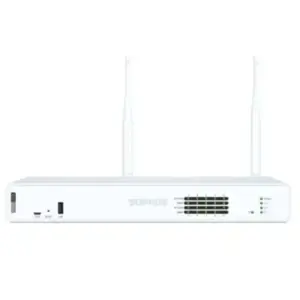
Reviews
There are no reviews yet.