
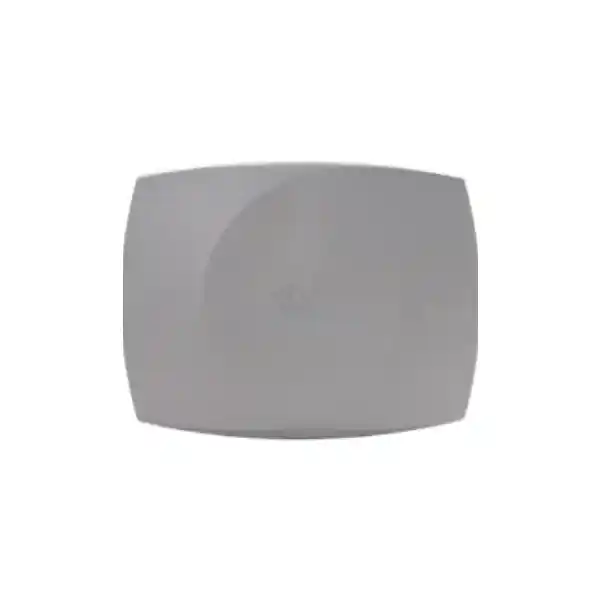
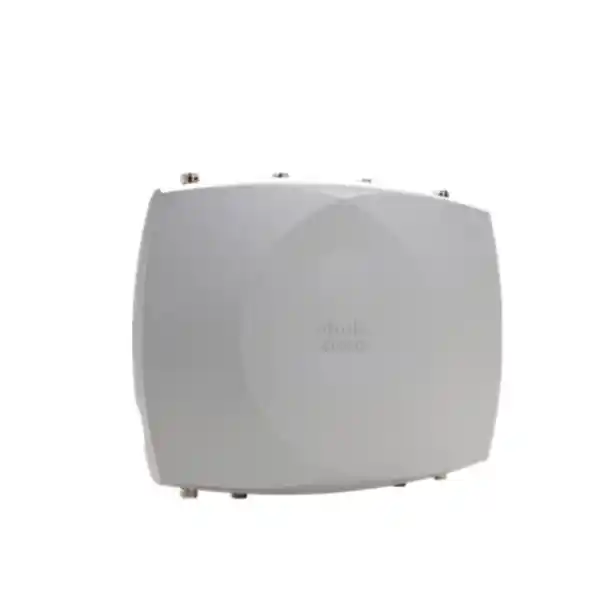
Cisco Wireless CW9177D Wi-Fi 7 Access Point UAE
The Cisco Wireless CW9177D is a purpose-built, high-density outdoor Wi-Fi 7 access point with integrated directional antennas. It is designed for enterprise networks that need to project controlled RF energy toward a defined service area rather than radiating equally in every direction. That makes the CW9177D particularly relevant for stadium seating, outdoor concourses, ports, loading yards, logistics facilities, transport terminals, campus walkways, perimeter zones, industrial sites, smart-city projects and other UAE deployments where capacity, coverage control, ruggedization and operational consistency matter more than simple best-effort wireless reach.
With tri-radio Wi-Fi 7 operation, 4×4 uplink/downlink MU-MIMO on each client-serving radio, up to 12 spatial streams, 320 MHz channel support in 6 GHz where permitted, Multi-Link Operation, preamble puncturing, OFDMA, 4096-QAM, dedicated scanning, integrated BLE/IoT, GNSS/GPS and high-speed wired uplinks, the CW9177D gives network architects a modern outdoor platform for both Cisco Catalyst controller and Cisco Meraki cloud-managed designs. FourTeck supports solution design, quotation, supply, switching and PoE validation, cabling, mounting strategy, migration planning and deployment services across the UAE.
Direct answer: what is the Cisco CW9177D?
The CW9177D is the integrated-directional model in Cisco’s Wireless 9177 outdoor Wi-Fi 7 family. Cisco positions it for targeted or high-density coverage and equips it with an approximately 70° x 70° directional beam pattern. The integrated client-serving antenna system is documented at peak gains of approximately 8 dBi on 2.4 GHz, 6 dBi on 5 GHz and 8 dBi on 6 GHz, with the precise regulatory transmit behavior controlled by country rules and software. The access point can operate with a 2.4 GHz, 5 GHz and 6 GHz tri-band architecture, or in supported regulatory conditions with dual 5 GHz operation. Each client-serving radio can provide 4×4 operation when supplied with the required power budget.
The hardware provides one multigigabit RJ-45 interface supporting 100 Mbps, 1 Gbps, 2.5 Gbps, 5 Gbps and 10 Gbps speeds, plus a dual-rate 1/10 Gbps SFP/SFP+ interface and a management console port. Full feature operation is designed around IEEE 802.3bt Class 6 / Cisco UPOE+ / PoE++ power, with Cisco documenting a maximum PoE consumption of 45.1 W in the full 4×4 operating profile. Lower power can be used, but the radio and uplink capabilities are reduced. This power behavior is important in real projects because a Wi-Fi 7 access point should be treated as part of a complete wired access design, not as an isolated device.
For UAE buyers, the key value is not merely that the CW9177D carries a Wi-Fi 7 label. Its real advantage is the combination of directional RF control, high spatial-stream density, hardened outdoor mechanics, 10G-class uplink choices, unified management options and modern spectrum intelligence. The result is an access point that can be engineered into repeatable outdoor cells, sectorized high-density designs and industrial coverage zones while preserving the management and security practices expected in a Cisco enterprise network.
Cisco CW9177D technical highlights
Wi-Fi 7 radio architecture
Tri-radio architecture supporting 2.4 GHz, 5 GHz and 6 GHz operation, or supported dual-5-GHz modes, with 4×4 uplink/downlink MU-MIMO and up to 12 aggregate spatial streams at full power.
Directional integrated antennas
Approximately 70° x 70° beamwidth for focused outdoor service. Peak integrated client antenna gain is documented at 8 dBi on 2.4 GHz, 6 dBi on 5 GHz and 8 dBi on 6 GHz.
High-speed wired uplinks
One 100M/1G/2.5G/5G/10G multigigabit RJ-45 port plus one dual-rate 1/10G SFP/SFP+ interface supports copper or fiber-oriented outdoor network designs.
Rugged outdoor platform
IP66/IP67 ingress protection, wide environmental limits, corrosion and solar-radiation testing, and documented resistance to sustained and gust wind conditions support demanding installations.
Dedicated RF intelligence
A dedicated scanning radio with Cisco CleanAir Pro can monitor the RF environment independently of the primary client traffic, improving interference visibility and operational troubleshooting.
Unified operational choices
The same hardware platform is designed for on-premises Cisco Catalyst Wireless management or Cisco Meraki cloud management, supported through Cisco’s current networking subscription approach.
Why directional Wi-Fi matters outdoors
Outdoor wireless design is often misunderstood as a simple exercise in increasing transmit power. In enterprise environments, uncontrolled RF propagation can create as many problems as insufficient coverage. A high-gain omnidirectional cell may carry energy into unwanted zones, increase co-channel contention, create sticky-client behavior, complicate roaming boundaries and make capacity planning difficult. The CW9177D addresses a different design objective: project useful energy into a selected area and reduce radiation behind or to the sides of the intended service sector.
The approximately 70° by 70° integrated beam makes the CW9177D suitable when an engineer knows where users and devices are expected to be. Examples include a block of stadium seats, one face of a logistics yard, a pedestrian corridor, a section of a marina, a loading apron, a vehicle holding area, an outdoor hospitality terrace, a campus courtyard or an industrial zone between buildings. Directionality can improve the usable signal-to-noise ratio in the target area while helping limit unnecessary overlap outside it. It also allows multiple access points to be deployed as planned sectors rather than as large overlapping bubbles.
Directional design does not remove the need for an RF survey. Mounting height, azimuth, downtilt, wall reflections, metal structures, glass façades, containers, vehicles, trees, temporary event infrastructure and human density can all alter the real propagation pattern. In UAE projects, high outdoor temperatures, reflective construction materials and wide open hardscape can create conditions that differ considerably from an office-floor predictive model. A competent design therefore starts with the service requirement, identifies client types and traffic profiles, chooses target minimum RSSI and SNR values, models the planned sectors and then validates the result after installation.
The built-in accelerometer adds practical value in this context because installation orientation can be checked after deployment. A directional access point that is mounted at the wrong angle may still appear online and healthy from a management perspective while delivering a poor RF result. Physical verification, controller telemetry, spectrum analysis and post-install survey data should therefore be treated as parts of the same acceptance process.
Wi-Fi 7 capabilities: what they mean in an enterprise outdoor network
Wi-Fi 7 is based on IEEE 802.11be and introduces a collection of mechanisms designed to increase throughput, spectrum efficiency and responsiveness. The CW9177D supports 4096-QAM, Multi-Link Operation, preamble puncturing, uplink and downlink OFDMA, Target Wake Time, BSS coloring and wide channel options including 320 MHz in 6 GHz where regulatory conditions and software support allow. These capabilities are meaningful, but they should be interpreted as design tools rather than as a guarantee that every outdoor client will operate at the maximum advertised physical-layer rate.
4×4 MU-MIMO and spatial streams: at full power the CW9177D can run 4×4 on each of its three client-serving radios, giving up to 12 spatial streams across the platform. Spatial streams increase the radio’s ability to serve capable clients and improve aggregate capacity. Most mobile clients do not have four spatial streams, so the value is primarily aggregate scheduling flexibility rather than a single handset consuming all four streams. In dense outdoor deployments, the design goal is to keep many concurrent users productive, not to optimize a single speed-test result.
4096-QAM: higher-order modulation can increase the number of bits encoded per symbol when the RF conditions are excellent. That means clients need strong signal quality and low interference. In a directional cell with well-planned geometry, there may be more opportunity to achieve high modulation rates than in a noisy, uncontrolled cell, but performance drops naturally as distance, obstruction and interference increase.
Multi-Link Operation: MLO is one of Wi-Fi 7’s most important architectural enhancements. Compatible clients can use more than one link in coordinated ways, potentially improving throughput, latency or resilience. The value depends on client implementation, software release and network policy. Enterprises should therefore evaluate MLO in the context of their actual device fleet rather than assuming immediate universal benefit.
Preamble puncturing: wide channels are not always clean across their full width. Preamble puncturing can allow a transmission to continue using available portions of a channel when a subchannel is affected by interference. This can improve spectrum utilization in environments where broad channels would otherwise be constrained by localized interference. It is especially useful as channel widths grow and the probability of encountering an impaired subchannel increases.
OFDMA: rather than treating each transmission opportunity as an all-or-nothing allocation to one client, OFDMA can divide channel resources into smaller units. This helps networks serve many clients with varied packet sizes and traffic patterns more efficiently. IoT telemetry, voice, collaboration applications and interactive traffic can benefit from more granular scheduling compared with legacy contention behavior.
Channel width strategy: Cisco documents 20 MHz channels on 2.4 GHz, up to 160 MHz on 5 GHz and up to 320 MHz on 6 GHz for 802.11be. The widest possible channel is not automatically the best choice. Outdoor networks that prioritize high client density and predictable reuse may use narrower channels to create more independent cells. Wide 160 MHz or 320 MHz channels can be attractive where spectrum availability, client support and interference conditions justify them. FourTeck recommends selecting channel width only after the capacity model and regulatory operating mode are understood.
Radio, antenna and performance reference
| Design item | CW9177D capability | Engineering implication |
|---|---|---|
| 2.4 GHz | 4×4 at full power; integrated directional antenna; peak gain about 8 dBi | Useful for legacy, IoT and longer-range clients, but channel reuse must be tightly managed because only limited non-overlapping spectrum is available. |
| 5 GHz | 4×4 at full power; up to 160 MHz channels; peak antenna gain about 6 dBi | Usually the primary capacity layer for a mixed enterprise client population, with channel width chosen to balance aggregate throughput and cell reuse. |
| 6 GHz | 4×4 at full power; up to 320 MHz channel support; peak antenna gain about 8 dBi | Offers large clean-spectrum potential for compatible clients where the specific country, outdoor mode, software release and regulatory authorization permit operation. |
| Beam pattern | Approximately 70° x 70° | Supports sectorized designs and targeted coverage; accurate mounting direction and tilt are central to the RF outcome. |
| Maximum aggregate PHY | Cisco documents up to 18 Gbps in tri-radio Wi-Fi 7 mode under the specified 4×4/channel-width conditions | This is an aggregate PHY figure, not application throughput. Real performance depends on channel plan, client radios, protocol overhead, contention, backhaul and RF quality. |
| Dual 5 GHz option | Supported where regulatory rules allow the required outdoor UNII usage | Can be valuable when the client fleet is 5-GHz-heavy or when local 6-GHz outdoor operation is not applicable, but country compliance must be confirmed. |
10G Ethernet, SFP+ and the wired access design behind Wi-Fi 7
A Wi-Fi 7 access point can generate enough aggregate wireless traffic that the wired edge becomes a meaningful design constraint. Cisco therefore gives the CW9177D two high-speed uplink paths: a multigigabit copper interface that negotiates from 100 Mbps through 10 Gbps and a dual-rate 1/10 Gbps SFP/SFP+ interface. The correct choice depends on the physical topology, distance, environmental exposure, surge protection strategy, switch platform, PoE architecture and whether the access point is being installed close to an IDF or at the far edge of a campus or industrial site.
Copper multigigabit: the RJ-45 interface is attractive when suitable outdoor-rated or protected Category cabling can be run within supported Ethernet distance and a compatible PoE++ multigigabit switch is available. A 10GBASE-T access layer can provide both data and power over one cable, simplifying the field installation. Cable quality, terminations, grounding, pathway temperature, bundle effects and lightning/surge design still require attention in outdoor projects.
Fiber uplink: the 1/10G SFP/SFP+ option is useful where fiber is preferred for distance, isolation or campus architecture. It can also be helpful in electrically noisy industrial settings or across outdoor pathways where copper bonding and surge exposure are concerns. Power remains a separate design requirement when fiber is used, so the project must account for the supported local power method rather than assuming the optical uplink also supplies power.
The switch uplink should not be sized only from a headline PHY number. The architect should consider the expected number of concurrent clients, application mix, airtime efficiency, protocol overhead, actual channel widths, client capabilities, roaming behavior and whether the access point will use all three radios at high utilization. A 2.5 Gbps path may be adequate in many practical cells, while higher-density or wide-channel deployments may justify 5 or 10 Gbps access. The CW9177D gives the designer room to select an uplink that matches the service level instead of forcing a single fixed Ethernet speed.
For end-to-end Cisco campus projects, FourTeck can review switching, optics, PoE budget, uplink oversubscription, VLAN design, controller connectivity, routing and firewall dependencies. Customers needing broader network integration can also review FourTeck IT Services UAE for structured deployment and infrastructure support.
PoE engineering: full capability requires the right power budget
Power is one of the most important CW9177D design variables because Cisco explicitly scales radio and uplink behavior according to the available PoE class. For full 4×4 operation across the client-serving radios and a 10G uplink, Cisco specifies IEEE 802.3bt Class 6 / UPOE+ / PoE++ and lists a maximum PoE power consumption of 45.1 W. This should be treated as a switch-port and switch-chassis budgeting requirement, not merely as a nominal access-point specification.
With 802.3at PoE+, Cisco documents reduced operating modes. In a tri-band PoE+ profile, the 2.4 GHz, 5 GHz and 6 GHz radios can be limited to 2×2 operation and the copper uplink is constrained to 2.5 Gbps, with a 30 W power envelope. Cisco also documents a dual-band PoE+ profile in which 2.4 GHz operates 2×2 and 5 GHz can operate 4×4, while the third client radio is unavailable and the uplink remains at 2.5 Gbps. The exact mode should be validated against the intended controller/software configuration and design objective.
802.3af should not be viewed as a normal production power source for a CW9177D Wi-Fi 7 deployment. Cisco lists it for staging/configuration with severely constrained capabilities. If an existing outdoor network currently feeds legacy access points from older PoE switches, replacing the radio hardware without upgrading the power infrastructure can produce a technically online but materially underpowered network. That is why a migration bill of materials should include switch power-class validation, per-port power capability, total chassis PoE budget, PSU redundancy and uplink-port requirements.
LLDP or Cisco Discovery Protocol should be enabled so that proper power negotiation can take place. On large campuses, the team should model both normal and failure conditions. A switch may have enough total PoE capacity while both power supplies are available but lose headroom after one PSU failure. If the wireless design depends on full 4×4 operation, redundant power calculations should preserve the required Class 6 allocation during expected fault scenarios.
Power planning should also include intermediate devices. Outdoor surge protectors, patch panels, cable glands, injectors, media conversion and local enclosures can affect loss, maintainability and environmental integrity. The final field design should be documented as an end-to-end power and data path from access switch to AP, not simply as a list of access points.
Outdoor environmental engineering for Dubai and the wider UAE
The CW9177D is designed as an outdoor access point rather than an indoor radio placed inside a simple weather cover. Cisco lists IEC 60529 IP66/IP67 protection and documents an operating temperature range down to -40°C and up to 65°C without solar load, with a separate solar-load operating specification extending up to 55°C. For UAE installations, the distinction between ambient air temperature and solar loading is important. A device mounted in direct sun on a dark wall, pole or roof can experience enclosure temperatures well above the reported weather-station ambient value.
Cisco also documents resistance to sustained winds of up to 100 mph (161 km/h) and gusts up to 165 mph (266 km/h), along with corrosion testing, icing protection and solar-radiation testing. Those certifications support demanding environmental use, but mounting hardware and the supporting structure must still be engineered correctly. The access point cannot compensate for a weak pole, unsuitable anchor, incorrectly torqued bracket or poorly routed cable that places mechanical strain on the installation.
In coastal UAE environments, salt exposure and humidity can accelerate corrosion on unprotected infrastructure even when the access point enclosure itself is rated appropriately. The complete installation should consider stainless or suitable corrosion-resistant hardware, drip loops, weatherproof glands, grounding, bonding and enclosure practices. In desert and industrial areas, dust ingress protection is essential, but technicians must also maintain cable-entry sealing and avoid field modifications that compromise the rated enclosure.
Thermal design should influence mounting location. Where practical, avoiding unnecessary direct solar exposure can reduce thermal stress and improve lifecycle conditions. The RF objective, however, remains primary: placing a directional AP under deep shade behind a large metal obstruction may preserve temperature while destroying the intended coverage pattern. A good site design balances RF line-of-sight, physical access, safety, sun exposure, cable routes, serviceability and mounting integrity.
FourTeck can help UAE project teams convert the published environmental specification into a site-specific deployment checklist. That is especially useful for large rollouts where one standard mounting method must be repeated across dozens or hundreds of positions without creating inconsistent orientation, sealing or cable-management quality.
Physical and interface specification
Dimensions and weight
Approximate enclosure size without mounting brackets: 352.2 mm x 270 mm x 76.2 mm. Cisco lists the CW9177D access point weight at approximately 4.11 kg. Brackets, glands, cabling and local mounting hardware add to the installed load.
Copper interface
One RJ-45 multigigabit Ethernet port supporting 100M, 1G, 2.5G, 5G and 10G speeds. Final negotiated speed depends on switch capability, cabling and power mode.
Optical interface
One dual-rate 1/10G SFP/SFP+ Ethernet interface. Cisco offers a dedicated gland kit for the SFP port, allowing the physical installation to preserve outdoor sealing requirements when correctly assembled.
Service access
A management console port and front status LED support staging, troubleshooting and installation verification. Operational monitoring should still be performed through the chosen Catalyst or Meraki management architecture.
Catalyst on-premises or Meraki cloud: one hardware platform, two operational models
Cisco describes the Wireless 9177 family as unified hardware that can participate in on-premises Cisco Catalyst Wireless or Cisco Meraki cloud-managed deployments. This matters operationally because customers can standardize the physical access point portfolio while choosing a management model that fits their architecture, governance and operational team. It also reduces the need to treat cloud-managed and controller-managed outdoor hardware as completely separate procurement families.
Catalyst Wireless: organizations with an established Cisco Catalyst campus can integrate the CW9177D with supported Catalyst 9800 Series Wireless Controllers, including physical or virtual options, subject to the required software release. Cisco also documents support with Catalyst 9000 switches using Embedded Wireless Controller in SDA mode. This model is appropriate when the enterprise wants centralized controller policy, established Catalyst operational workflows and deep integration with the existing campus architecture.
Meraki cloud: organizations that prefer cloud operations can onboard the unified hardware into the supported Meraki management stack. This can reduce the amount of local controller infrastructure and provide a cloud-centric operational experience. The correct choice depends on security policy, IT operating model, existing licensing, change-control processes, WAN dependency, integration requirements and organizational familiarity.
Cisco’s current networking subscription approach is designed around a unified licensing concept rather than requiring completely different hardware and licensing types for each management model. Procurement teams should still validate license term, service level, feature entitlement, support coverage and renewal structure for the specific quote. The AP hardware alone should not be purchased without confirming the software and support components needed for the chosen operating model.
A migration can therefore be planned as an architecture decision rather than only as a hardware swap. FourTeck can map current controllers, cloud organization structure, VLANs, identity services, firewall policies, switch capacity, authentication dependencies and operational workflows before proposing the final BOM. For broader Cisco and enterprise infrastructure sourcing, customers can also visit FourTeck UAE.
Enterprise wireless security capabilities
Outdoor Wi-Fi is often exposed to a broader physical and RF environment than indoor wireless. Security design therefore needs to cover authentication, encryption, management, segmentation, rogue-device visibility, infrastructure protection and the wired network behind the access point. Cisco documents support for WPA2 and WPA3, 802.1X, SHA-256-related authentication capabilities, Enhanced Open/OWE, and modern AES cipher suites including GCMP128, GCMP256 and CCMP256. Supported enterprise EAP methods include options such as EAP-TLS, PEAP, EAP-FAST, TTLS and SIM-oriented authentication modes, depending on the deployed architecture.
For enterprise deployments, EAP-TLS is often attractive because certificate-based authentication can reduce dependence on reusable passwords and integrate well with managed device identity. The access point is only one component in that chain. Certificate authority design, RADIUS/identity policy, supplicant configuration, network segmentation and posture workflows must also be implemented correctly. Outdoor guest, contractor, operational technology and corporate-client SSIDs should not automatically share the same security profile or VLAN simply because they use the same physical AP.
The dedicated scanning capability and CleanAir Pro spectrum intelligence help the operational team maintain visibility into interference and RF conditions. Spectrum intelligence is not a replacement for security controls, but it can help distinguish between Wi-Fi contention and non-Wi-Fi interferers during troubleshooting. In high-availability environments, reducing the time needed to identify RF problems is operationally significant.
Wired security should include appropriate switch-port policy, infrastructure ACLs, management-plane restrictions, secure administrative protocols and segmentation. Cisco documentation for the CW9177D also identifies support associated with technologies such as MACsec on the Ethernet uplink platform. Whether a specific architecture uses MACsec should be decided based on switch support, topology and security policy rather than enabled as a checkbox without an end-to-end design.
For Internet-facing guest services or segmented outdoor operational networks, firewall policy remains a separate control plane. FourTeck can align wireless segmentation with perimeter and internal security architecture; organizations evaluating related network-security projects can review Firewall Dubai solutions as part of a wider secure-access design.
CleanAir Pro, dedicated scanning and interference control
Outdoor RF conditions change continuously. Temporary construction, event equipment, neighboring networks, point-to-point links, cameras, industrial electronics and unlicensed devices can alter the spectrum after the original survey. Cisco CleanAir Pro provides interference detection and classification across the supported bands, using a dedicated scanning architecture so that visibility is not limited to moments when the client-serving radios can stop serving traffic.
This is valuable for operations teams because a wireless complaint can originate at several layers. A user may report a slow application even though the AP is online, authentication is working and the wired uplink is healthy. Spectrum data can reveal whether the problem is persistent interference, excessive channel utilization or another RF phenomenon. The team can then correlate that evidence with client statistics, retries, data rates, roaming events, controller alarms and wired telemetry instead of treating every complaint as a generic coverage issue.
Client steering can help capable devices use 6 GHz where supported, freeing capacity on legacy bands. This should be understood as part of client distribution, not as a substitute for a sound cell plan. A network with poor 5 GHz reuse will not become well designed simply because newer clients can move to 6 GHz. The objective is to build a layered spectrum strategy in which 2.4 GHz serves appropriate legacy and IoT requirements, 5 GHz carries broad mainstream capacity and 6 GHz adds high-performance spectrum for compatible devices wherever the regulatory operating mode allows it.
FourTeck recommends documenting interference baselines during commissioning. Record the expected channel plan, normal utilization, client distribution and known nearby RF systems. This gives the support team a reference point when conditions later change. For critical locations, periodic validation is more effective than waiting for user complaints to accumulate.
BLE, IoT, GNSS/GPS and location-aware infrastructure
The CW9177D is more than a set of Wi-Fi client radios. Cisco integrates a BLE/IoT radio and GNSS/GPS capabilities into the platform. The BLE 6.0 radio supports location-oriented use cases such as asset tracking, wayfinding and analytics. Cisco’s hardware documentation also identifies IoT support spanning Bluetooth/BLE, Thread, Zigbee and Matter-related capabilities through the integrated IoT radio platform. The practical use of each technology depends on software support, management architecture and the surrounding IoT solution.
For logistics, transportation and campus environments, integrated IoT capability can reduce the need to deploy separate overlay gateways for every location use case. A network team should nevertheless treat IoT as its own application architecture. Device onboarding, identity, data collection, application integration, privacy policy, retention and security segmentation all need consideration. The radio can create the transport opportunity; it does not by itself deliver a complete asset-tracking business system.
GNSS/GPS provides location intelligence and supports Cisco’s global-use regulatory approach. Cisco also connects the integrated receiver with Automated Frequency Coordination functionality where AFC is part of the regulatory framework. This is especially important because 6 GHz outdoor operation is not governed identically in every country. Hardware capability should never be interpreted as permission to transmit in a particular band, power class or channel set.
The design benefit is a more context-aware infrastructure platform. An outdoor AP can serve Wi-Fi clients, contribute RF intelligence, participate in IoT/location workflows and use location awareness to support regulatory-domain behavior. This consolidation can simplify field infrastructure, but it increases the importance of selecting the right software, licensing and integration design at the start of the project.
UAE 6 GHz and regulatory planning: verify before enabling
The CW9177D is technically capable of 6 GHz Wi-Fi 7 operation, but a UAE deployment must be designed around current Telecommunications and Digital Government Regulatory Authority requirements and Cisco’s approved country configuration. Cisco explicitly notes that where 6 GHz use is not allowed, or where current software support is not available, the 6 GHz radio is disabled. Cisco also notes that dual 5 GHz operation is subject to national permissions for the relevant outdoor UNII bands.
The UAE has actively evolved its 6 GHz spectrum policy. Earlier class authorization opened 5925–6425 MHz for indoor Wi-Fi use, while later national frequency planning also allocated portions of 6 GHz for IMT development. Because these policy directions can affect the allowable Wi-Fi operating modes, FourTeck does not recommend assuming that a generic international outdoor 6 GHz design can be copied directly into a UAE site without validation.
For procurement, the correct process is to confirm the specific CW9177D hardware is supported for the UAE, validate current Cisco Wireless Compliance information, verify the current software release and country-domain behavior, and ensure the supplied equipment meets applicable TDRA type-approval requirements. Any required permits, class authorizations or restrictions should be reviewed based on the exact deployment type and service model. This is particularly important for outdoor installations, high-power operation and any design that depends on AFC or 6 GHz as a primary capacity layer.
A conservative design can still proceed even when 6 GHz assumptions are uncertain. The CW9177D supports 2.4 GHz and 5 GHz operation and can participate in dual-5-GHz architectures where the relevant national band rules permit. The RF plan can therefore be built around verified spectrum first, with 6 GHz activated only when the regulatory and software requirements are confirmed. This approach protects the customer from designing capacity around a band that cannot legally or technically be used in the intended mode on the installation date.
Deployment scenarios for the Cisco CW9177D in the UAE
Stadiums and outdoor event venues: directional sectors can be aimed at seating blocks, gates, terraces and concourses. High-density designs require more than strong signal. The architect must control cell size, channel reuse, association load and backhaul capacity. The CW9177D’s directional pattern helps divide large open areas into defined sectors, while 4×4 radios and Wi-Fi 7 scheduling features provide a modern capacity platform. Mounting positions should be coordinated with venue sightlines, structural engineering, access for maintenance and crowd-safety requirements.
Ports, logistics yards and free zones: warehouses may have indoor Wi-Fi while vehicle yards, container lanes, loading areas and inspection zones require outdoor coverage. A directional AP can be mounted on building façades or poles and aimed along a defined operational lane. The design must account for moving trucks, containers and cranes that can temporarily block or reflect RF. Fiber uplink may be attractive across large sites, while local power and grounding become critical field considerations.
Industrial campuses: outdoor Wi-Fi may support tablets, maintenance devices, handheld scanners, industrial IoT gateways, voice and operational applications between buildings. Metal infrastructure, electromagnetic noise and safety restrictions can make the RF environment complicated. The dedicated scanning capability is useful for ongoing visibility, but a spectrum survey and industrial site walk remain essential before finalizing locations.
Hospitality resorts and large public spaces: pools, gardens, beachfront areas and event lawns can benefit from targeted coverage that does not unnecessarily spill into adjacent service zones. Directional cells can also reduce the temptation to mount one high-power omnidirectional AP and hope it serves an entire property. Guest experience improves when capacity is designed around user concentrations rather than raw distance.
Universities and education campuses: courtyards, sports areas, outdoor study spaces and walkways can be integrated into the same enterprise WLAN policy as indoor buildings. Roaming behavior should be validated at building exits and along pathways so that clients do not remain attached to an indoor AP when a better outdoor cell is available, or vice versa.
Transportation facilities: bus depots, rail environments and operational yards need reliable coverage for staff devices, maintenance systems and passenger services. Directionality can help serve a platform or apron while controlling overlap with neighboring sectors. Wired and wireless redundancy should be considered separately: a highly available AP still depends on upstream switch, fiber, power and controller/cloud reachability.
Smart-city and municipal infrastructure: public-space Wi-Fi can coexist with IoT, surveillance, signage and operations networks. The CW9177D’s hardened design and integrated IoT/location capabilities make it suitable as a multifunction edge platform, but data governance, device segmentation and municipal cybersecurity policy must be part of the project scope. FourTeck can coordinate wireless design with wider infrastructure requirements through its regional engineering practice and FourTeck global technology portfolio.
Sizing methodology: how many CW9177D access points does a site need?
There is no technically responsible universal answer such as one access point per fixed number of square metres. Outdoor Wi-Fi sizing is a capacity and RF geometry problem. The same CW9177D can serve a very different footprint depending on mounting height, direction, allowed transmit power, band, channel width, client radio capability, target data rate, obstruction and noise. A stadium seating section and an empty logistics yard may occupy similar physical areas while requiring completely different AP density.
Step 1 – define the user and device population. Count peak concurrent clients, not only registered devices. Separate high-throughput laptops, smartphones, handheld scanners, voice devices, cameras, IoT sensors and guest devices because their airtime and roaming needs differ. Identify Wi-Fi 7, Wi-Fi 6E, Wi-Fi 6 and legacy client proportions. A network full of 2×2 clients behaves differently from a laboratory test using a high-end Wi-Fi 7 client.
Step 2 – define application requirements. Estimate throughput per active client and classify latency sensitivity. Voice, interactive control, video collaboration and bulk downloads should not be treated as identical traffic. Determine whether the service target is simple connectivity, business application access, real-time operational traffic or premium high-density user experience.
Step 3 – establish RF acceptance criteria. Select target RSSI, SNR, minimum data rate, roaming overlap and channel utilization thresholds appropriate to the applications. The exact values depend on device requirements and network policy. A voice-oriented design typically needs more conservative cell-edge behavior than a telemetry-only network.
Step 4 – choose the band strategy. Decide what roles 2.4 GHz, 5 GHz and 6 GHz will play. In a modern enterprise, 2.4 GHz is often minimized for high-capacity client service because of its limited spectrum, while 5 GHz carries the majority of mainstream devices. 6 GHz can add substantial capacity for capable clients where allowed. Outdoor UAE operation must be validated against current regulatory conditions before the capacity model assumes 6 GHz availability.
Step 5 – choose channel widths. A wide channel gives a higher peak PHY rate but consumes more spectrum. High-density sectorized networks often benefit from narrower channels because they create more reusable channel opportunities. A low-density premium zone may justify wider channels. The correct width is therefore derived from capacity and reuse, not from the maximum number printed in a Wi-Fi 7 specification.
Step 6 – model directional cells. Place each CW9177D according to realistic mounting points, height, azimuth and tilt. Model building materials, barriers and terrain where possible. Ensure adjacent cells have enough overlap for roaming without creating excessive co-channel contention. Directional patterns make geometry easier to control, but they require more discipline in physical orientation.
Step 7 – validate wired capacity and PoE. Confirm each switch port supports the required data rate and Class 6 power for full operation. Check aggregate switch uplinks, PSU capacity, redundancy and controller/cloud dependencies. A high-capacity RF design can be undermined by a 1G bottleneck or insufficient PoE budget.
Step 8 – survey after installation. A predictive plan is not final proof. Conduct post-install validation with the real APs mounted in the real environment. Test coverage, SNR, throughput, roaming and application behavior. Review orientation and channel utilization. For high-density venues, validate during realistic occupancy where possible because human bodies, temporary structures and operational equipment materially change RF conditions.
Migration from legacy outdoor Cisco access points
Cisco identifies the CW9177 series as a successor platform for outdoor environments previously served by products such as the MR86 and C9124 families. A migration should not be performed as a one-for-one physical replacement without examining the differences in antenna pattern, radio count, power draw, wired uplink, software requirements and management architecture. A location that was acceptable for an older omnidirectional or external-antenna design may not be the correct location for an integrated directional CW9177D.
Start by exporting the existing site inventory: AP model, mount type, height, antenna type, channel plan, transmit power, switchport, cable route, PoE class, VLANs, SSIDs, controller association and client load. Then identify which cells genuinely need directional coverage. Some positions may be better served by the omnidirectional CW9177I, while specialized external-antenna requirements may point to the CW9177E. The CW9177D should be selected because its focused pattern fits the coverage objective, not merely because it is the most directional model.
Switch readiness is often the largest hidden migration dependency. A legacy outdoor AP may have operated successfully on 802.3at or a 1G port. The CW9177D can function with reduced resources on lower power, but full 4×4 Wi-Fi 7 operation is designed around 802.3bt Class 6 and can take advantage of 10G-class uplinks. Upgrading access points while leaving an old PoE access layer unchanged can restrict the new platform before it serves its first client.
Software support must also be included in the change plan. Cisco documents minimum supported IOS XE and Meraki software trains for the CW9177 series, and those versions evolve over time. Before staging, confirm controller or dashboard compatibility, release recommendations, licensing, feature support and any dependencies related to regulatory domain or 6 GHz operation. A controlled pilot location is usually preferable to converting an entire outdoor estate in one change window.
Mounting and installation strategy
Cisco lists several mounting options for the CW9177D, including horizontal, vertical, strand and articulating approaches. The mount should be selected according to both structural and RF requirements. An articulating bracket can be valuable when precise azimuth and tilt are required to serve a defined seating block or yard sector. A simple vertical pole mount may be appropriate when the required beam direction aligns with the installation geometry.
The mounting process should document orientation numerically rather than rely on a technician’s visual estimate. Record pole or wall location, mounting height, azimuth, mechanical downtilt, cable entry direction and photographs. This makes later troubleshooting and repeat deployments more consistent. If an AP is replaced, the service team can reproduce the original intended geometry rather than guessing based on the old bracket position.
Outdoor cable entry is part of the environmental system. Use the correct gland, seal, conduit arrangement and grounding components. Do not leave unused entries open. Maintain bend radius for copper or fiber, create appropriate drip loops and protect cables from sharp metal edges, UV exposure and mechanical movement. Fiber installations should also protect the transceiver and connector environment from contamination during installation.
Working at height, near roads, in industrial zones or on transport infrastructure can require permits, access equipment and site safety coordination. The RF team and installation team should jointly confirm that the proposed AP location is both technically valid and physically serviceable. An access point that can only be reached by an unusual shutdown procedure may create unacceptable maintenance cost over its lifecycle.
FourTeck can structure deployment documentation so that each AP has a repeatable field record: device serial, switchport, cable ID, power class, mounting kit, coordinates, orientation, photo set, controller/dashboard status, firmware version and acceptance-test result. This turns a collection of access points into a maintainable enterprise asset base.
Platform architecture and verified hardware behavior
Technical product pages sometimes overstate hardware by naming internal chipsets, ASICs or acceleration functions that are not actually disclosed in the vendor’s current public data sheet. FourTeck avoids that practice. Cisco’s CW9177 documentation describes the functional architecture in terms of tri-radio 4×4 Wi-Fi 7 capability, dedicated scanning, integrated IoT, GNSS/GPS, high-speed Ethernet interfaces, power modes and supported software platforms. Cisco does not need to expose a specific named forwarding or RF ASIC for a customer to design the access point correctly.
From a network architect’s perspective, the documented behaviors are what matter. The client radios support the 802.11be mechanisms required for Wi-Fi 7 service. The dedicated scan radio separates RF monitoring from primary client service. The IoT radio provides additional protocol capability. The multigigabit and SFP+ ports give the platform wired bandwidth options. PoE class directly controls the available radio chain configuration and uplink ceiling. Catalyst or Meraki software provides the policy, management and operational plane.
This functional decomposition is more useful than an unverified silicon claim because it maps directly to project decisions. If the requirement is twelve spatial streams, the power budget must support full 4×4 operation. If the requirement is 10G fiber, the design needs SFP+ connectivity and a separate power plan. If the requirement is outdoor 6 GHz, country authorization and software support must be validated. If the requirement is cloud management, the licensing and dashboard architecture must be included in the order.
A production design should therefore be based on documented interfaces, supported radio modes and release-specific feature matrices. Any future Cisco software enhancement can then be evaluated against a known hardware baseline rather than against marketing assumptions.
Operations, monitoring and lifecycle management
Outdoor access points are often harder to access physically than indoor devices, so remote observability has greater operational value. The monitoring design should make it possible to identify whether a problem is client-specific, RF-related, switch-related, power-related, controller-related or WAN/cloud-related before dispatching a field technician. Basic availability alone is not enough. The team should monitor client counts, channel utilization, retry rates, RSSI/SNR distribution, data rates, roaming events, radio resets, PoE state, uplink errors and environmental trends available through the management platform.
Change management should control radio-policy changes. Automatic RF management can adapt to changing conditions, but high-density outdoor sectors may also have carefully engineered channel reuse. Teams should understand which parameters are dynamic and which are intentionally constrained. A seemingly harmless change in channel width can alter the entire reuse model, while an increase in transmit power can expand cell boundaries and create more contention.
Firmware and software lifecycle planning is equally important. The CW9177D launched in a modern Cisco software generation and will receive feature and maintenance updates. Enterprises should follow Cisco recommended release guidance, evaluate security advisories, test upgrades on representative sites and coordinate controller or dashboard changes with the production wireless estate. Features such as Wi-Fi 7 enhancements, 6 GHz behavior and client interoperability can evolve with software, so release notes should be part of the operational workflow.
Inventory should include license entitlement and support status alongside hardware serials. An AP can remain physically healthy for years while support contracts, subscription terms or controller compatibility become the limiting lifecycle factor. Renewal dates should therefore be managed with the same discipline as hardware warranties and spare stock.
For critical sites, maintain a spare strategy. Whether a spare must be pre-staged, licensed or pre-associated depends on the management model and business recovery target. The replacement process should include the exact bracket and sealing components needed for rapid field restoration, not only a boxed access point in a warehouse.
Licensing, software and support considerations
Cisco’s current documentation places the CW9177 series within the Cisco Networking Subscription model, intended to provide a unified license approach across on-premises, cloud and hybrid management choices. This simplifies the concept of moving between management models, but buyers should still obtain a quote that clearly identifies the selected subscription term, support level and any required service components.
Software compatibility should be verified at the time of order. Cisco’s current data sheet lists IOS XE 26.2.1 or 26.1.3 or later and Meraki MR32.2.x or later as supported software baselines for the 9177 series, but recommended versions can change. A procurement document should therefore avoid freezing only the first-supported version and instead require compatibility with the customer’s intended controller or dashboard release at deployment time.
Support planning should consider the whole network path. When an outdoor user reports a wireless outage, the fault may sit in an access switch, optical module, fiber route, PoE power supply, controller, authentication service, DHCP service or firewall rather than in the AP. Customers that purchase only device replacement coverage without a support model for the adjacent infrastructure may still face long outages.
FourTeck can quote the CW9177D as part of a complete BOM including licenses, support, compatible switches, optics, mounting kits, glands, cabling accessories and professional services. This is preferable to quoting only the access point when the project requirement is an operational outdoor Wi-Fi service rather than a spare hardware purchase.
Procurement considerations for UAE projects
A complete UAE quotation should identify more than the CW9177D base part number. Confirm the intended management model, license term, support entitlement, mounting method, power source, switch-port capability, copper or fiber uplink, required optics, glands, cable type, grounding components, surge protection approach and installation services. If the AP is being deployed on a remote pole or across a large campus, include the civil and containment work needed to make the network maintainable.
Regulatory status should be confirmed for the exact supplied model and intended operating bands. The UAE TDRA requires applicable telecommunications equipment to be registered and approved before market sale/use according to the current type-approval framework. Procurement teams should ensure the supply path and equipment documentation align with those requirements rather than relying on the fact that the CW9177D is a global-use hardware platform.
Lead time can also depend on mounting kits and optics, not only access-point availability. A project with APs in stock but no correct articulating brackets or weatherproof SFP glands is not deployment-ready. The BOM should therefore be reviewed as a system, with special attention to items that are easy to overlook during initial budgeting.
For phased projects, standardize the field build. Using the same switch family, power class, cable specification, bracket, labeling format and acceptance checklist across sites reduces installation variation and simplifies spares. Where site geometry differs, document approved variants rather than allowing ad-hoc field substitutions.
Organizations with regional operations can coordinate broader sourcing and deployment through FourTeck Global, while UAE-focused engineering and local technology services are available through FourTeck UAE and FourTeck IT Services UAE.
CW9177D compared with CW9177I and CW9177E
| Model | Antenna approach | Best-fit coverage | Typical reason to choose |
|---|---|---|---|
| CW9177I | Integrated omnidirectional | Broad general outdoor area | Users surround or move around the AP and broad coverage is preferred over a focused sector. |
| CW9177D | Integrated directional, approximately 70° x 70° | Targeted or high-density outdoor zone | The engineer wants to project coverage toward a defined area and better control sector overlap. |
| CW9177E | External N-type antenna connectors | Custom antenna geometry or specialized reach | The project requires antenna types, placement or gain patterns that cannot be achieved with the integrated I or D models. |
The three models share the same family architecture, but antenna choice determines whether the network behaves as broad-area coverage, a defined directional sector or a custom external-antenna system. Selecting the correct variation at the design stage is more important than treating the family as interchangeable after installation.
Design example: sectorized outdoor enterprise coverage
Consider a UAE logistics facility with a long outdoor loading apron running along one side of a warehouse. Staff use rugged handheld terminals, supervisors use tablets, vehicles carry telemetry devices and maintenance teams require voice and application access. An omnidirectional AP mounted on the warehouse wall would radiate substantial energy back toward the building and side areas, potentially overlapping with indoor cells. A CW9177D can instead be aimed toward the loading apron, creating a more intentional outdoor sector.
The design would first determine peak concurrent devices and required application throughput. The engineer then models a row of directional cells along the façade, choosing mount height and downtilt so each cell covers a defined apron segment. Channel reuse is selected according to available 5 GHz spectrum and any verified 6 GHz operating mode. 2.4 GHz can remain enabled for devices that require it but with a controlled power strategy to avoid creating a much larger legacy cell than the 5 GHz layer.
Each access point is connected to a Class 6-capable multigigabit switchport so that the full 4×4 radio configuration is available. If the warehouse IDF is within suitable copper distance, 10GBASE-T may provide a simple combined power/data path. If sections extend beyond copper distance, the architecture can use 10G fiber from a nearby protected field cabinet or another supported design while providing local power according to Cisco requirements.
The operational team creates separate policy for corporate tablets, scanners and IoT devices. Authentication and segmentation are mapped to the existing identity and firewall environment. CleanAir Pro telemetry is monitored during commissioning to identify interference from nearby industrial or third-party systems. After installation, technicians verify the physical angle of each directional AP and perform a walking/vehicle survey through the service lane to confirm signal, SNR, roaming and application performance.
This example illustrates why the CW9177D should be sold as an engineered wireless component rather than simply as a high-speed outdoor AP. The final user experience comes from radio geometry, channel planning, client behavior, wired capacity, power, policy and lifecycle monitoring working together.
Frequently asked technical questions
Is the Cisco CW9177D an indoor or outdoor access point?
It is an enterprise outdoor access point designed for harsh environments. Cisco documents IP66/IP67 ingress protection and broad environmental tolerances. Indoor use is technically possible in some contexts, but its form factor, directional antenna and ruggedization are optimized for outdoor and industrial-style deployments.
What is the difference between CW9177D and CW9177I?
The primary difference is antenna pattern. The CW9177D uses integrated directional antennas for focused coverage, while the CW9177I uses integrated omnidirectional antennas for broader surrounding coverage. Both belong to the same outdoor Wi-Fi 7 platform family.
Does CW9177D support Wi-Fi 7 320 MHz channels?
Cisco documents 320 MHz channel support in 6 GHz for 802.11be. Whether that mode is available in a specific deployment depends on national spectrum rules, software support, client capability and the selected radio policy. Wide channels should also be evaluated against density and reuse requirements.
Can it use 10 Gigabit Ethernet?
Yes. The access point includes a multigigabit RJ-45 interface that supports up to 10 Gbps and a 1/10G SFP/SFP+ interface. The actual usable uplink speed depends on power mode, switch capability, cabling or optics and the deployed configuration.
What PoE is recommended?
For full 4×4 radio operation and 10G uplink capability, design for 802.3bt Class 6 / Cisco UPOE+ / PoE++. Cisco lists up to 45.1 W maximum PoE consumption in the full-power profile. Lower PoE classes result in reduced radio or uplink capability.
Can CW9177D be managed by Meraki?
Yes. Cisco positions the 9177 series as unified hardware capable of either Catalyst on-premises management or Meraki cloud management with the supported software and licensing. The management mode should be selected based on the customer’s operating model and existing network architecture.
Does it include Bluetooth and IoT capabilities?
Yes. Cisco documents integrated BLE and IoT capabilities, including location-oriented use cases. The complete business application still depends on software, integration and the IoT solution architecture.
Is outdoor 6 GHz automatically permitted in the UAE?
No assumption should be made. The AP has 6 GHz hardware capability, but Cisco states that country rules and software support govern whether the radio is enabled. UAE projects should validate current TDRA requirements and Cisco compliance information for the exact deployment before relying on outdoor 6 GHz capacity.
Decision recap: when the CW9177D is the right choice
Choose the Cisco CW9177D when the project needs enterprise-class outdoor Wi-Fi 7 and the service area can benefit from a focused integrated antenna pattern. It is particularly strong when the deployment requires directional coverage without the design complexity of selecting and installing separate external antennas. The 70° x 70° pattern, rugged enclosure and flexible mounting options make it suited to repeatable sector-based designs.
Strong fit
Stadium blocks, campus outdoor zones, logistics lanes, loading yards, transport facilities, industrial sectors and hospitality spaces where coverage direction is known.
Infrastructure fit
Networks with 802.3bt Class 6 power, multigigabit switching or fiber access, and a desire to preserve 10G-class uplink options for future capacity.
Operational fit
Organizations standardizing on Cisco Catalyst Wireless or Meraki cloud operations and wanting a unified modern outdoor platform.
Consider alternatives when
Users surround the AP in all directions, the antenna geometry needs specialized external patterns, or the existing power/switch infrastructure cannot support the intended Wi-Fi 7 operating profile.
The CW9177D is not automatically the correct choice for every outdoor location. A CW9177I may be better for broad omnidirectional service, while CW9177E may be better for specialized external-antenna engineering. FourTeck selects the model from the RF requirement rather than forcing one hardware type across every site.
Quotation input checklist for Cisco CW9177D UAE projects
A precise quotation is faster when the engineering team receives enough information to size the wireless, switching, power and licensing components together. Before requesting the final BOM, prepare the following project inputs.
Site and coverage
Site drawings or map, outdoor service zones, approximate dimensions, mounting points, heights, obstructions, photos and areas where signal must be contained or avoided.
Users and applications
Peak concurrent client count, device types, Wi-Fi generations, voice/video requirements, scanners, IoT endpoints, guest usage and required throughput or latency targets.
Existing wireless
Current AP models, controller or Meraki organization, SSIDs, authentication method, VLANs, channel plan, known problem areas and any planned migration constraints.
Switching and power
Switch models, free ports, multigigabit capability, PoE class, available PoE budget, PSU redundancy, uplink capacity and distance from switch to proposed AP positions.
Cabling and optics
Copper or fiber preference, pathway distance, outdoor-rated cabling, existing fiber type, required SFP/SFP+ optics, patching, glands, surge protection and grounding approach.
Mounting and civil work
Wall, pole or strand mounting, required articulating brackets, access equipment, weatherproof enclosures, conduit, permits, working-at-height controls and site access restrictions.
Software and licensing
Catalyst or Meraki management preference, existing licenses, desired subscription term, support level, controller software version and any enterprise support-standard requirements.
Regulatory requirements
Deployment emirate, intended outdoor spectrum use, any special operational permits, customer compliance requirements and confirmation needs for TDRA type approval or 6 GHz behavior.
FourTeck consultation for Cisco CW9177D design, supply and deployment
FourTeck supports Cisco outdoor wireless projects from initial design through procurement and implementation. Our team can review RF objectives, client density, directional sector geometry, switching, PoE Class 6 capacity, fiber or copper uplinks, licensing, controller or Meraki management, regulatory constraints, mounting and post-install validation. The objective is to deliver a complete operational design rather than a hardware-only quote.
For a new project, share the site drawings, desired coverage zones, user density, application requirements and existing network inventory. For an upgrade, include current AP models, switch models, controller/dashboard details and known coverage or capacity issues. FourTeck can then determine whether CW9177D directional sectors are the best fit or whether a mixed design using CW9177I, CW9177D and CW9177E is more appropriate.
Final technical note
Published radio rates, channel widths, antenna gains and power modes describe the capabilities of the Cisco platform under specific conditions. They are not a substitute for an RF survey, capacity model, regulatory review or client compatibility assessment. Real application performance varies with spectrum availability, environmental conditions, client radios, interference, channel plan, wired backhaul and software configuration.
For UAE production networks, FourTeck recommends validating current Cisco software support and TDRA requirements at the time of deployment, especially when 6 GHz outdoor operation is part of the design. This keeps the project aligned with both the technical capability of the CW9177D and the regulatory conditions that govern actual operation.

Reviews
There are no reviews yet.