

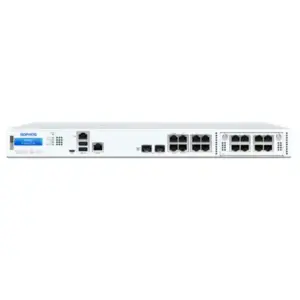
Cisco Meraki Z4 Dubai
A compact Meraki teleworker gateway built to extend enterprise-managed firewall, VPN, wired networking and Wi-Fi 6 services to remote workers, small offices and distributed business locations without turning each site into a separate management project.
Up to 250 Mbps VPN throughput
Dual-band 2×2 Wi-Fi 6
Recommended for up to 15 devices
Direct answer: what is the Cisco Meraki Z4?
The Cisco Meraki Z4 is an enterprise-class teleworker gateway that combines routing, firewalling, VPN, wired Ethernet, Wi-Fi 6 and cloud-based management in a small desktop or wall-mount appliance. Its main purpose is to give a remote worker or very small office an enterprise-managed network edge that can be administered centrally through the Cisco Meraki Dashboard rather than configured as an isolated consumer router.
It is mainly considered for home offices, executive residences, temporary project locations, compact satellite offices and distributed teams where the organisation wants consistent policy, Auto VPN connectivity, remote troubleshooting and common visibility across many small sites. Cisco positions the Z4 for up to 15 devices, so it should be viewed as a focused teleworker or micro-branch platform rather than a general replacement for a larger MX security appliance.
The most important factor to confirm before purchase is not simply whether the Z4 has enough Ethernet ports. The buyer should validate the complete deployment profile: user and device count, expected internet speed, encrypted VPN traffic, required license tier, wireless coverage, PoE requirements, WAN resilience and whether cellular backup is necessary. FourTeck can help translate those inputs into the correct Z4 hardware, license term, accessories and deployment scope for a Dubai or UAE rollout.
Why the Z4 exists in a Meraki network
The value of the Z4 becomes clearer when it is viewed as part of a managed Meraki architecture rather than as a small standalone router. A conventional home router may provide internet access and basic Wi-Fi, but it usually places operational responsibility on the remote user and gives the IT team limited visibility. The Z4 changes that operating model. Policies, firmware, VPN relationships, client visibility and troubleshooting functions can be managed from the Meraki Dashboard, allowing an IT department to support a remote edge in a way that is closer to supporting a small corporate site.
That difference matters for organisations with distributed employees. A remote finance user, design consultant, management executive or project team may need access to internal services while still receiving a predictable security policy. With Meraki Auto VPN, a Z4 can participate in a Meraki VPN topology without requiring the user to understand traditional site-to-site VPN configuration. The appliance also supports L3/L7 stateful firewall capabilities, VLANs, DHCP, static routing, client VPN, IPsec VPN, custom traffic shaping, NetFlow, syslog, remote packet capture and historical client statistics. These capabilities make the Z4 useful when central IT wants both connectivity and operational control.
The Z4 does not remove the need for network design. Internet service quality still depends on the ISP. Wi-Fi performance still depends on placement, interference, building materials and client capability. VPN throughput is finite. The four LAN ports may be sufficient for a home-office desk but not for a growing satellite office with printers, cameras, access points and multiple wired workstations. The Z4 therefore solves a particular problem well: centrally managed enterprise connectivity at a small remote location. It should not be stretched into use cases that need substantially greater scale or interface density simply because its cloud management is attractive.
For Dubai businesses, this makes the Z4 especially relevant to organisations that have permanent work-from-home policies, senior staff operating from residences, small sales offices, remote technical teams or temporary project sites. The decision should be made around the intended managed-edge experience, not around the physical size of the appliance.
Core Z4 hardware and performance profile
| Specification | Cisco Meraki Z4 |
|---|---|
| Product type | Cloud-managed teleworker gateway; enterprise firewall, VPN gateway and router |
| WAN | 1 × dedicated 1 GbE RJ45 WAN interface |
| LAN | 4 × dedicated 1 GbE RJ45 LAN interfaces |
| PoE | 1 × GbE RJ45 LAN port with 802.3at PoE+ capability |
| Wireless | Dual-band 2×2 Wi-Fi 6 / 802.11ax with MU-MIMO and two spatial streams; Cisco lists a maximum radio data rate of 1.5 Gbps, which is a chipset over-the-air figure rather than an internet throughput guarantee |
| Stateful firewall throughput | Up to 500 Mbps in NAT mode |
| VPN throughput | Up to 250 Mbps |
| Recommended use case | Up to 15 devices |
| Mounting | Desktop or wall mount |
| Dimensions | 184.2 × 123 × 28 mm |
| Weight | 0.391 kg |
| Power supply | 50 W DC power supply |
| Power load | 11 W idle / 42 W maximum |
| Operating temperature | 0°C to 45°C |
| Humidity | 5% to 95% |
| Hardware SKU | Z4-HW |
| Warranty | Cisco lists lifetime warranty coverage for the Z4 hardware; accessory warranty terms differ |
Published throughput figures are useful sizing references, not promises that every application will achieve those rates. Real performance is affected by traffic mix, security functions, VPN use, WAN conditions, firmware, topology and client behaviour. For a business purchase, size against the actual workload and expected growth rather than the headline link speed.
Five capabilities that make the Z4 useful for remote work
1. Meraki Dashboard management
Central management is one of the strongest reasons to choose a Z4. IT teams can manage configuration and visibility without relying on the remote user to understand firewall rules, VPN parameters or device firmware. This is particularly valuable when an organisation deploys tens or hundreds of teleworker gateways and wants a consistent operating process.
2. Auto VPN connectivity
Meraki Auto VPN is designed to simplify the creation of secure site-to-site connectivity within a Meraki environment. For remote workers, this can make the Z4 behave more like a small managed branch edge than a personal router, giving corporate traffic a controlled path toward headquarters, data-centre or cloud-connected Meraki networks.
3. Integrated Wi-Fi 6
The built-in dual-band 2×2 Wi-Fi 6 radio means a simple home-office deployment may not require a separate access point. That reduces equipment count, but the integrated radio should still be evaluated like any wireless design: placement, walls, interference, client density and required coverage all matter.
4. PoE+ for a powered endpoint
One LAN port supports 802.3at PoE+, which is useful for a compatible IP phone or another suitable powered device at the remote desk. This can simplify cabling, but the endpoint’s power requirement and compatibility should be checked. A single PoE+ port does not replace a PoE switch where several powered devices are required.
5. Remote visibility and troubleshooting
Historical client usage, syslog integration, NetFlow support and remote packet capture give administrators more diagnostic context than a typical unmanaged remote router. For a help-desk team, that visibility can reduce the number of conversations that begin with no information beyond “the connection is slow.”
Licensing is part of the Z4 purchase, not an afterthought
A Cisco Meraki Z4 should be planned with the appropriate Meraki licensing. Cisco documents two Z4 teleworker license families: Z-Enterprise and Secure Teleworker. Z-Enterprise is intended around essential Auto VPN functionality, centralized management, connectivity and baseline security capabilities. Secure Teleworker adds a broader set of advanced security and analytics functions, including capabilities such as content filtering, geography-based firewall rules, Cisco Advanced Malware Protection, Threat Grid integration and additional analytics features where supported.
This distinction affects both functionality and cost. A buyer who only needs controlled connectivity back to the corporate environment may have a different licensing requirement from a remote worker whose traffic breaks out directly to the internet and therefore needs stronger local security controls. The right question is not “which license is cheaper?” but “which security and traffic model will this remote site actually use?” That answer should be settled before a quotation is finalized.
Cisco identifies Z4 license SKUs in the LIC-Z4-ENT-[X]Y and LIC-Z4-SEC-[X]Y families, where the term is represented by the number of years. Exact available term options, licensing model, organisation compatibility and current commercial packaging should be checked at quotation time. Cisco also notes that the Z4 Enterprise and Secure Teleworker licenses cannot be mixed within the same organisation under the documented co-termination rules, so an existing Meraki organisation can influence the appropriate ordering path.
Licensing also connects to support and software lifecycle. Cisco states that the license includes enterprise support, device RMA coverage and software upgrades for the licensed platform. That makes the license a core operational element of the deployment, not merely a feature unlock code. If a customer already has Meraki, FourTeck should be given the organisation context and existing license model before the final bill of materials is agreed.
Sizing the Z4 correctly for a Dubai remote site
Cisco’s recommendation of up to 15 devices is a useful starting point, but device count alone is not a complete sizing method. Fifteen lightly used endpoints are very different from fifteen devices running continuous video meetings, large cloud synchronization jobs, remote desktop sessions and encrypted data transfers. A teleworker gateway should be sized against traffic behaviour, not just headcount.
The 500 Mbps stateful firewall throughput figure is relevant when evaluating a fast home or small-office broadband service. If the remote site has a 1 Gbps internet circuit, the Z4 should not be assumed to pass a full gigabit of stateful NAT traffic simply because the WAN interface itself is Gigabit Ethernet. Similarly, the 250 Mbps VPN throughput figure is the more relevant ceiling for workloads that are expected to traverse site-to-site VPN. The ratio between local internet breakout and corporate VPN traffic should therefore be understood.
The four LAN interfaces are another practical sizing point. A typical executive home office may connect a workstation, IP phone and printer and still have spare capacity. A small project office may quickly exceed four wired endpoints. Adding an external switch is possible where the design supports it, but that changes the bill of materials, power requirement, cabling and management plan. If the location is becoming a real branch rather than a teleworker site, a larger Meraki architecture may be a cleaner long-term choice.
Wireless coverage needs separate consideration. Wi-Fi 6 improves the platform’s wireless generation, but it does not make a single access point universally suitable for every villa, apartment, warehouse room or office floor. Reinforced concrete, multiple rooms, reflective surfaces, neighbouring wireless networks and the physical location of the ISP handoff can all affect coverage. If the Z4 must be placed in a poor radio position because that is where the WAN service terminates, a wireless survey or a separate access-point design may be more appropriate.
A disciplined Z4 sizing discussion therefore asks five questions: how many devices will use the site, how much internet bandwidth is purchased, how much of that traffic will be encrypted across VPN, how many wired and powered endpoints are required, and whether the integrated wireless radio can cover the intended work area. Those inputs provide a more reliable basis for a Dubai deployment than simply matching the product name to a “small office” label.
Z4 network interfaces: what the port count means in practice
One dedicated GbE WAN port
The Z4 uses one dedicated Gigabit Ethernet RJ45 WAN interface. In a normal Dubai deployment, this connects to the ISP’s modem, ONT or upstream handoff according to the provider design. Because the Z4 itself does not include the integrated LTE modem found on the Z4C, a buyer who considers cellular resilience mandatory should evaluate the correct alternative or supported external architecture rather than assuming cellular is built into the Z4.
Four dedicated GbE LAN ports
Four Gigabit Ethernet RJ45 LAN ports support a compact wired environment. They can serve a workstation, phone, printer or small downstream switch depending on the design. The practical limitation is density: once several fixed devices, cameras or local peripherals are added, an external switch or a more branch-oriented design may be preferable. Port count should be mapped before procurement to avoid an unnecessary second order.
One PoE+ LAN port
One LAN interface supports 802.3at PoE+. A common teleworker use is powering a compatible business IP phone with a single Ethernet cable. This is convenient, but it should not be interpreted as a multi-device PoE budget. If the remote location needs several phones, access points or cameras, a separate PoE switch or another architecture should be considered.
No built-in cellular modem
The plain Z4 and Z4C are easy to confuse because their names and use cases are similar. The Z4C adds a built-in CAT12 LTE modem and external LTE antennas; the Z4 does not. For a remote executive, point-of-sale location or project office where broadband failure must not interrupt connectivity, this distinction can be decisive. Confirm the resilience requirement before selecting between the two models.
Wi-Fi 6 on the Z4: useful, but still subject to radio design
The Z4 includes dual-band 2×2 Wi-Fi 6 with MU-MIMO and two spatial streams. Cisco lists support across 802.11a/b/g/n/ac/ax operation and a maximum data rate of 1.5 Gbps for the radio chipset. That figure should be interpreted correctly. It is not the same as guaranteed application throughput, and it does not mean a wireless user can expect 1.5 Gbps internet performance through a gateway whose stateful firewall throughput is rated at 500 Mbps.
For a normal home-office desk, the integrated wireless capability can be a strong simplification. A corporate laptop, phone and tablet can connect without a separate access point, while the organisation retains Meraki-managed visibility and policy. In a studio apartment or compact office, one well-positioned Z4 may be all the wireless infrastructure required. That keeps the installation simple and reduces the number of powered devices at the desk.
The picture changes in a large villa, a multi-room office or a location where the WAN handoff forces the gateway into a cabinet or remote corner. Wireless signals do not respect floor plans. Concrete walls, metal surfaces, neighbouring networks, distance, client antenna quality and local interference can make a single radio insufficient even when the overall device count is low. A buyer should therefore separate “Z4 supports Wi-Fi 6” from “Z4 alone will cover this property.” The first is a product fact; the second is a site-design question.
Channel planning and client capability also matter. Older devices will not gain full Wi-Fi 6 benefits simply by associating with the Z4. Conversely, modern Wi-Fi 6 clients may still be limited by WAN bandwidth, VPN routing or the physical radio environment. Where wireless performance is business-critical, coverage expectations should be stated in practical terms: which rooms need service, what applications run there, how many simultaneous clients are expected and whether mobility between areas matters.
If those requirements exceed what one integrated radio can deliver, the correct response is not to oversell the Z4’s wireless specification. The design should consider additional Meraki wireless infrastructure or a different placement strategy while retaining the Z4 as the security and VPN edge.
Z4 versus Z4C: the cellular decision
The closest model comparison for many buyers is the Cisco Meraki Z4C. Both are teleworker gateways with Wi-Fi 6, four GbE LAN ports, one PoE+ LAN port, centralized Dashboard management and the same 500 Mbps stateful firewall and 250 Mbps VPN figures in Cisco’s published documentation. The defining Z4C difference is the integrated cellular capability: it adds a CAT12 LTE modem and external LTE antennas.
Choose the comparison based on business continuity, not on the assumption that the higher-feature model is automatically better. If the remote site has reliable fixed broadband and an outage would be inconvenient but tolerable, the Z4 can be the simpler fit. If the location supports an executive who must remain reachable, a temporary project team dependent on cloud applications, or a business process where a fixed-line failure has material cost, the integrated LTE capability of the Z4C may justify the additional design and subscription considerations.
Cellular service itself must also be planned. A cellular modem does not create coverage where the carrier signal is weak, and a backup path requires a suitable mobile service, SIM or subscription arrangement according to the supported design. The location of the appliance and antennas can influence real results. For that reason, “we want backup internet” should lead to a resilience discussion that includes carrier availability, signal quality, failover expectations and the applications that must remain active.
The plain Z4 is therefore not an inferior Z4C; it is a different fit. It is the cleaner choice when single wired WAN connectivity is acceptable and integrated cellular is unnecessary. The Z4C becomes more appropriate when the business requirement explicitly includes built-in LTE backup or connectivity at a location where cellular is part of the intended uplink strategy.
Security and VPN design considerations
The Z4 provides L3/L7 stateful firewall functions, NAT, VLAN support, DHCP, static routing, client VPN and Meraki Auto VPN/IPsec VPN capabilities. These features allow a remote site to be segmented and connected with considerably more policy control than a consumer-grade router. The design opportunity is to decide what traffic should remain local, what traffic should traverse the corporate VPN, and which security controls should apply to each path.
A full-tunnel design can centralize more traffic through the corporate environment, which may simplify policy consistency but increases the amount of traffic crossing VPN. A local-breakout approach can reduce backhaul and improve performance for internet or SaaS services, but it increases the importance of the local security controls available under the selected license. Neither approach is universally correct. Application location, regulatory requirements, cloud adoption, internet quality and central infrastructure all influence the better design.
The 250 Mbps VPN throughput rating should be used when assessing how much encrypted traffic the site can reasonably handle. A user may purchase 500 Mbps or 1 Gbps broadband yet spend most of the workday reaching corporate resources through VPN. In that situation, the VPN figure can become the more meaningful sizing limit. Conversely, an employee whose applications are almost entirely SaaS-based may use local internet breakout for the majority of traffic and place a different load profile on the gateway.
Security policy should also consider personal devices in a home-office environment. A teleworker appliance is often deployed into a location where corporate and household technology coexist. VLANs, SSIDs and group policies can support separation strategies, but the exact configuration should be designed intentionally. The goal is to provide the employee with simple usage while preventing the managed corporate edge from becoming an unmanaged extension of the entire household network.
The Z4’s advantage is that these decisions can be expressed through a centrally managed platform. The technical team should still document the intended topology, segmentation, tunnel behaviour and license-dependent controls before shipment, so the appliance arrives as part of a repeatable architecture rather than as a generic box sent to a remote user.
Zero-touch deployment: what “simple” should mean
One of the strongest operational cases for Meraki teleworker gateways is the ability to prepare the logical configuration centrally and then place the appliance at a remote site with minimal local technical work. Cisco’s installation process uses the Meraki Dashboard and the device’s order number or serial number to claim the hardware into the appropriate network. Once the physical WAN connection is available, the device can retrieve its cloud-managed configuration.
For a distributed rollout, this can change the economics of deployment. Instead of sending a network engineer to every employee residence, an organisation can standardize the kit, predefine templates and provide a controlled set of connection instructions. That is especially valuable when dozens of remote workers need the same logical network policy. The user does not need to understand IPsec parameters, firewall rule syntax or firmware management; the IT team retains those responsibilities centrally.
Zero-touch does not mean zero planning. The remote location still needs a compatible internet handoff, power, suitable cabling and a practical place for the Z4. If the ISP uses a device that must remain in router mode, NAT and addressing behaviour should be understood. If the employee relies on the Z4’s Wi-Fi, the appliance should not be hidden inside a metal cabinet simply because that is the easiest place to connect the WAN cable. If a PoE phone is included, the correct LAN port and endpoint power expectations should be documented.
A good deployment pack normally includes the claimed and licensed device, the correct power accessories, clearly labelled network cables where appropriate, a short user connection guide and a help-desk escalation path. For larger projects, standard templates, naming conventions, inventory records and a return/replacement process are also important. This converts a collection of teleworker appliances into a manageable service.
For UAE organisations with staff spread across Dubai, Abu Dhabi, Sharjah and other locations, the operational objective should be repeatability. The same technical standard should be possible whether the gateway goes to one senior executive or a hundred remote employees. Meraki’s cloud model supports that objective, but the rollout process must be designed around it.
Installation planning for UAE homes and small offices
Physical installation is straightforward in principle because the Z4 is compact and supports desktop or wall mounting. The details still matter. Cisco specifies an operating temperature range of 0°C to 45°C, so the appliance should be kept in an indoor, ventilated area rather than exposed to direct sunlight, outdoor heat or an enclosed space that traps heat. In the UAE, this is particularly relevant for telecom cabinets, service rooms and temporary sites where ambient conditions may be hotter than a normal office.
Power should also be treated as part of the service design. Cisco specifies a 50 W DC power supply, with published load figures of 11 W idle and 42 W maximum. The ordering guide lists region-specific power cords as separate accessory options. For a Dubai deployment, the commercial quotation should confirm the appropriate power cord and any accessory packaging rather than assuming every hardware bundle is identical across sourcing channels.
WAN installation requires an Ethernet handoff from the broadband equipment. In many homes, the ISP’s optical network terminal or router may be installed in a utility area that is poor for Wi-Fi. If the Z4 is expected to provide the primary wireless network, it can be better to extend Ethernet from the ISP handoff to a more central working area. The trade-off is additional cabling, but the result can be far better wireless service than placing the gateway wherever the carrier equipment happens to be mounted.
Wall mounting can keep the gateway organized and reduce desk clutter, but mounting location should preserve ventilation, cable strain relief and access to ports. A small appliance still needs professional cable management if it will support business-critical work. The power adapter should not hang from its cable, and the Ethernet path should not be routed in a way that creates a trip hazard in a home office.
Where the Z4 is part of a formal corporate deployment, installation should conclude with verification of cloud connectivity, policy assignment, VPN establishment, wired and wireless client access, expected DNS behaviour, application reachability and any PoE endpoint. That final validation is more valuable than simply confirming that the status light turns on.
Typical business use cases
Executive home office
A senior employee who regularly accesses sensitive corporate systems may need a managed network edge rather than relying entirely on a personal home router. The Z4 can provide a dedicated corporate SSID or wired connection, secure VPN reachability and central IT visibility while remaining compact enough for a residence.
Small satellite office
A two-to-five person office with modest wired requirements may fit the Z4 well, provided the total device count, firewall throughput, VPN demand and port count remain within the intended scale. It can create a branch-like managed experience without deploying a larger security appliance.
Temporary project location
Project teams that occupy a small site for weeks or months can benefit from a preconfigured gateway that follows corporate policy and is easy to redeploy later. Fixed-line availability and the need for cellular resilience should be considered; where LTE is integral, the Z4C may deserve comparison.
Remote support or service desk
A remote support employee often depends on stable access to ticketing, voice, remote-control and internal systems. The Z4’s PoE+ port can support a compatible IP phone, while traffic shaping and VPN services can help keep business traffic managed. Actual application performance still depends on the internet circuit.
Distributed regulated workforce
Organisations that need tighter control over remote connectivity can use teleworker gateways as part of a broader security architecture. The Z4 does not by itself satisfy a regulation, but centralized policy, segmentation, VPN and logging capabilities can support a more controlled remote-access design.
Meraki-standardized enterprise
The Z4 is particularly compelling when headquarters, branches or cloud connectivity already use Meraki. Dashboard operations, Auto VPN and common management workflows can extend to the teleworker edge. Organisations without an existing Meraki strategy should evaluate the platform and licensing model as part of the purchase decision.
When the Cisco Meraki Z4 may not be the right fit
A balanced procurement decision includes reasons not to buy. The Z4 is designed around teleworkers and very small sites, so a larger office with substantial user growth may exceed its intended scale. If the environment will regularly support far more than Cisco’s recommended 15 devices, or if it needs substantially more LAN ports, the design should move toward a branch platform rather than making the Z4 carry a role it was not selected to perform.
The same applies to throughput. A site that requires sustained firewall performance above 500 Mbps or VPN performance above 250 Mbps should evaluate a higher-capacity appliance. Internet access packages are increasingly fast in Dubai, and a buyer may reasonably want to use more of a 1 Gbps connection. The WAN interface can negotiate at Gigabit Ethernet, but the security processing figures remain the relevant sizing boundaries.
Built-in resilience is another reason to compare alternatives. The Z4 has a single wired WAN uplink and no integrated cellular modem. If the business requirement states that the remote site must survive a fixed-line outage using LTE, the Z4C is the obvious near-family comparison because it adds built-in CAT12 LTE. There may also be broader Meraki architectures using cellular gateways or other appliances, but the correct choice depends on the organisation’s design standards.
Wireless scale can also push the design away from an all-in-one Z4 deployment. One integrated 2×2 Wi-Fi 6 radio may be ideal for a compact work area but is not a substitute for a multi-access-point wireless design in a large space. If roaming, higher client density or broad physical coverage is required, the project should consider dedicated access points.
Finally, organisations that do not want a subscription-managed networking model should understand that Meraki licensing is fundamental to the platform. The Z4’s value comes substantially from its cloud-managed operational model. If the business is unwilling to maintain the appropriate licensing, a different network architecture should be evaluated rather than buying the hardware and expecting it to behave like an unmanaged consumer router indefinitely.
Procurement: what should appear in a complete Z4 quotation?
A useful quotation should separate the physical gateway from the services and licensing required to make the deployment operational. The hardware model is Z4-HW, but the complete bill of materials may also include the chosen license tier and term, power cord, installation services, configuration work, shipment to the remote location, support services and any required downstream switching or cabling. If a compatible PoE phone is part of the solution, that endpoint should be specified separately.
The license term should be explicit. Buyers should know whether the quotation uses Z-Enterprise or Secure Teleworker and for how many years. Where the organisation already has Meraki licensing, the existing organisation model and renewal dates can affect how the new appliance should be added. This is particularly important in environments using co-termination or a standardized enterprise procurement calendar.
Power accessories deserve more attention than they normally receive. Cisco lists multiple region-specific power cords for the Z4 family. A UAE quotation should confirm the correct locally appropriate cord and supply package. The same applies to replacement power adapters if they are needed as spares. Small accessory mismatches are easy to solve later, but they create unnecessary deployment delays when a remote employee expects a ready-to-use kit.
If the site requires a switch, additional access point, UPS or structured cabling, those items should be driven by the site requirement rather than bundled automatically. A two-device home office may not need any of them. A six-person satellite office could. Procurement quality improves when every line item answers a stated requirement.
For broader network planning, buyers can review Firewall Dubai by FourTeck for UAE network-security context and FourTeck IT Services UAE where deployment, support or infrastructure assistance is part of the scope.
Migration from a consumer router or older teleworker gateway
Replacing a consumer router with a Z4 should be treated as a network migration, even if the physical change appears simple. The existing environment may have local static addresses, printer mappings, smart-home devices, personal Wi-Fi credentials and ISP-specific settings. Corporate IT should decide whether the Z4 will replace the household router entirely, sit behind existing broadband equipment, or create a separate corporate network alongside the personal network.
For many home-office deployments, separation is preferable. The goal is to give the employee a controlled corporate path without unexpectedly taking ownership of every personal device in the residence. A dedicated corporate SSID and wired ports can keep work equipment logically distinct. If the Z4 is placed behind another NAT device, the network team should verify that VPN and required services operate correctly through the resulting topology.
Migrating from an older Meraki Z-Series model introduces a different set of considerations. Configuration templates, network settings, license compatibility and physical accessories should be reviewed rather than assumed to transfer unchanged. Cisco specifically notes that the newer Z4/Z4C teleworker license types are not supported by older Z1 and Z3 gateways, so a hardware refresh may also require a licensing transition.
The WAN handoff should be documented before the cutover. If the old router uses PPPoE, static addressing, VLAN tagging or another provider-specific configuration, those requirements need to be known. A migration plan should preserve ISP credentials and provide a rollback route if the new edge cannot establish service immediately. Remote users should not be asked to troubleshoot provider authentication while also learning a new corporate network.
A disciplined migration ends with functional tests: internet access, corporate VPN reachability, DNS resolution, business application access, voice calling if a PoE phone is used, Wi-Fi coverage and Dashboard visibility. The technical objective is not only to replace hardware but to improve manageability without creating new friction for the employee.
Operational management after deployment
The long-term value of the Z4 comes from operations. Meraki Dashboard provides centralized administration, firmware management, client visibility and troubleshooting tools that allow the network team to treat remote gateways as a fleet rather than unrelated household routers. The organisation can use templates and consistent policies so that standard changes are made centrally instead of repeated manually at every location.
Firmware updates are handled through the Meraki platform, reducing the need for the remote employee to perform software maintenance. That improves consistency but also means IT should maintain a sensible update and change-management process. Remote workers may be in the middle of meetings or time-sensitive tasks, so planned changes should consider user impact even when the technical process is cloud-managed.
Client usage history can help answer questions about bandwidth and device behaviour. If a remote user reports poor performance, administrators can investigate whether the issue is broad WAN degradation, a specific client consuming excessive bandwidth, VPN-path conditions or wireless behaviour. Remote packet capture, NetFlow and syslog options can extend that troubleshooting depth where the operations team has the appropriate tools and processes.
Inventory management is equally important. Each Z4 should be associated with a user or site, serial number, license state, shipment record and support contact. In a large teleworker programme, the organisation should also define what happens when an employee leaves, moves residence or reports a hardware failure. A centrally managed appliance is still a physical corporate asset that needs lifecycle control.
This operational discipline is what makes the Z4 more than a convenient router. The hardware is compact, but the management model can scale across a distributed workforce when naming, templates, licensing, logistics and support responsibilities are standardized from the beginning.
Performance expectations: interpreting the numbers correctly
Three published figures are likely to attract the most attention: 500 Mbps stateful firewall throughput, 250 Mbps VPN throughput and 1.5 Gbps maximum wireless radio data rate. They describe different parts of the system and should not be combined into a single expectation. The firewall figure relates to stateful NAT-mode processing, the VPN figure relates to encrypted VPN performance, and the wireless figure is an over-the-air radio chipset data-rate metric.
For a user on a 250 Mbps broadband service, the Z4 may have ample firewall headroom, but application performance can still be limited by ISP congestion or Wi-Fi conditions. For a user on a 1 Gbps broadband service, the 500 Mbps firewall specification becomes more relevant because the gateway is not positioned as a full-gigabit security platform. If the organisation expects most traffic to cross Auto VPN, the 250 Mbps VPN figure deserves even greater attention.
Traffic mix also matters. Voice and video need low latency and stable packet delivery more than they need extreme raw throughput. Large cloud backups may consume bandwidth but tolerate delay. Remote desktop applications can feel poor with modest packet loss even when speed tests look strong. The Z4 includes traffic-shaping capability, allowing the network policy to prioritize certain classes of traffic, but policy cannot compensate for an unreliable ISP or severe wireless interference.
Testing should therefore reflect the user’s work. A deployment acceptance test can include a corporate VPN file transfer, a video call, access to internal applications and a wireless coverage check in the actual work area. A generic internet speed test is useful but incomplete. It tells the team about one path at one moment, not about the whole user experience.
Where requirements are close to the Z4’s published limits, choose additional capacity rather than relying on optimistic assumptions. Network edge devices normally remain in service for years, while internet packages, cloud usage and remote-work application demands tend to increase. Headroom is often cheaper than a premature replacement.
Voice and PoE use at the remote desk
The single 802.3at PoE+ LAN port gives the Z4 an interesting advantage for business telephony. A compatible IP phone can receive both data and power from the gateway, reducing the number of power adapters on the desk. For organisations that still provide a dedicated desk phone to executives, reception staff, service-desk employees or sales teams, this can make the teleworker kit more self-contained.
Compatibility should be confirmed before purchase. PoE+ support describes the power-delivery standard of the port, but the phone or powered endpoint must also be appropriate for that standard and within the available power profile. The voice platform, SIP service, VLAN design, quality-of-service policy and VPN path are separate design questions. Powering a phone successfully does not automatically mean the telephony system is correctly integrated.
Voice traffic is particularly sensitive to latency, jitter and packet loss. The Z4’s traffic-shaping capability can help prioritize business voice, but the end-to-end path includes the broadband service and potentially the corporate VPN. If voice quality is critical, the deployment plan should consider whether calls remain local to a cloud calling service or traverse the enterprise network. That choice can affect both performance and troubleshooting.
If multiple PoE devices are required, the Z4’s single powered LAN port becomes a clear boundary. A remote office with several phones, cameras or an additional wireless access point may need a PoE switch. At that stage, the buyer should examine the total topology and decide whether a teleworker gateway remains the right edge appliance or whether the location has effectively become a small branch.
For customers combining network security with voice infrastructure, FourTeck IP Phones can be used as a related resource when compatible desk-phone requirements are part of the remote-work design.
Dubai and UAE buying considerations
A UAE buyer should request a quotation that identifies the exact Cisco Meraki Z4 hardware, license tier, license duration and required accessories rather than relying on a generic product-name quote. Hardware availability, lead time and commercial pricing can vary, so current stock and delivery should be confirmed at the time of order. The same applies to regional power accessories and any service package.
For multi-site projects, provide the number of gateways and delivery destinations. A rollout of one Z4 to a Dubai office is operationally different from shipping fifty gateways to employees across the Emirates. Larger deployments may benefit from a standardized staging process, device claiming, naming, template assignment, user-specific labelling and centralized shipment tracking.
The customer should also explain whether the Meraki organisation already exists. An existing Dashboard organisation, current MX/Z license model and Auto VPN topology can influence how the new Z4 devices are integrated. A greenfield project may require more design work around organisation creation, hub selection, address planning, security policy and administrator access.
Internet service is normally customer-specific at each remote location. FourTeck can help define the technical handoff needed by the Z4, but the actual ISP package, provider equipment and local account arrangement should be understood. If resilience is required, the project should explicitly state whether that means a second fixed connection, cellular backup, or a different architectural approach.
For broader UAE infrastructure sourcing and consultation, buyers can use FourTeck alongside the UAE and specialist resources already referenced on this page.
Frequently asked buyer questions
Is the Cisco Meraki Z4 a firewall or a router?
It is both, and more. Cisco describes the Z4 as an enterprise-class firewall, VPN gateway and router. It also integrates Wi-Fi 6, wired LAN interfaces, one PoE+ LAN port and cloud-based Meraki Dashboard management.
How many devices is the Z4 intended to support?
Cisco lists the recommended use case as up to 15 devices. That figure should be combined with bandwidth, VPN load, port requirements and wireless coverage when deciding whether the model is appropriately sized.
Does the Z4 support Wi-Fi 6?
Yes. It includes dual-band 2×2 Wi-Fi 6 / 802.11ax wireless with MU-MIMO and two spatial streams. Coverage and real throughput still depend on placement, radio conditions, clients and the rest of the network.
Does the Z4 include LTE or 5G backup?
The standard Z4 does not have the built-in cellular modem of the Z4C. Cisco documents the Z4C with an integrated CAT12 LTE modem. If cellular failover is a requirement, compare the Z4C or another supported resilience design before ordering.
What is the Z4 firewall throughput?
Cisco publishes up to 500 Mbps maximum stateful firewall throughput in NAT mode. This is lower than the 1 GbE physical WAN port speed, so buyers with very fast internet services should size against the firewall figure rather than interface speed alone.
What is the Z4 VPN throughput?
Cisco publishes up to 250 Mbps VPN throughput. For remote users who send most corporate traffic through site-to-site VPN, this figure may be more important than the broadband package’s nominal speed.
Does the Z4 provide PoE?
Yes. One of the four Gigabit Ethernet LAN ports supports 802.3at PoE+. It can be useful for a compatible IP phone or other powered endpoint, but it is not a multi-port PoE switching solution.
Does the Z4 require a Meraki license?
Meraki licensing is fundamental to the platform. Cisco documents Z-Enterprise and Secure Teleworker license options for Z4/Z4C. The correct tier, term and organisation compatibility should be confirmed in the quotation.
Can the Z4 replace a home router?
It can serve as the managed network edge for a home office, but replacement topology should be planned carefully. Many organisations prefer to keep corporate work devices separated from household devices rather than taking over the entire residential network.
Can a Z4 be used in a small branch?
Yes, where the branch remains within the intended teleworker/micro-site scale. If users, wired ports, throughput, resilience or wireless requirements are growing, a larger Meraki security appliance and dedicated switching or wireless design may be more appropriate.
What should I provide for an accurate Dubai quote?
Provide quantity, intended device count per site, internet speed, expected VPN use, required license tier or security features, license term, need for cellular resilience, number of wired and PoE devices, deployment locations and whether configuration or installation is required.
Is the Z4 suitable for a 1 Gbps internet connection?
The WAN interface is Gigabit Ethernet, but Cisco’s published stateful firewall throughput is 500 Mbps and VPN throughput is 250 Mbps. If the business expects to use substantially more than those processed rates, evaluate a higher-capacity platform.
A practical Z4 deployment journey
Support, warranty and lifecycle thinking
Cisco lists lifetime warranty coverage for the Z4 hardware and a shorter one-year warranty category for specified accessories. Warranty should not be confused with the entire operational support model. Meraki licensing includes enterprise support, device RMA and software upgrades according to Cisco’s documented licensing framework, so the organisation should keep licensing current and maintain accurate ownership records.
For remote hardware, replacement logistics are worth planning before a failure happens. If a Z4 supports a critical executive or a revenue-sensitive role, the organisation should decide whether standard RMA timing is acceptable or whether a locally held spare is justified. A spare strategy also needs licensing and configuration procedures so replacement is not delayed by administrative uncertainty.
Lifecycle planning should include firmware policy, security updates, periodic review of device count and bandwidth, and reassessment when the employee or site changes. A home-office setup can grow gradually: an additional phone, printer, camera, second employee or larger broadband package may change whether the Z4 remains the best fit. The gateway should be reviewed as the remote location evolves rather than assumed to be permanently sufficient.
Organisations should also maintain administrator access discipline. Cloud management is powerful because it centralizes control, but that makes Dashboard account security and role assignment important. Administrative access should follow the company’s identity, MFA and least-privilege standards. Device-level convenience should not weaken control of the management plane.
The useful lifecycle question is simple: does the remote site still look like the small, centrally managed environment the Z4 was designed for? If yes, the platform can continue to be an efficient fit. If traffic, users, resilience or physical infrastructure have grown materially, that is the signal to evaluate a larger branch architecture before user experience declines.
Decision recap: is the Z4 a good match?
What FourTeck needs from you for an accurate Z4 quotation
The fastest way to get a useful proposal is to describe the intended deployment rather than sending only the model name. The following inputs allow the hardware, licensing and service scope to be checked together.
Plan the Cisco Meraki Z4 around the remote site, not just the hardware SKU
The Z4 is a strong fit when a Dubai or UAE organisation needs a compact, centrally managed teleworker edge with Wi-Fi 6, Auto VPN, firewalling and one PoE+ endpoint. The final purchase should confirm scale, bandwidth, VPN load, licensing, wireless coverage and resilience so the gateway remains appropriate after deployment rather than merely appearing correct on the purchase order.

Reviews
There are no reviews yet.