

Fortinet FortiADC 220F in Dubai, UAE
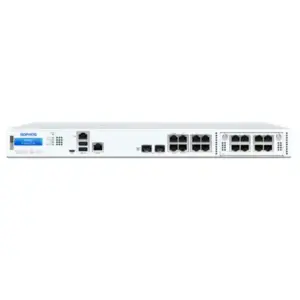
The FortiADC 220F is a 1U hardware application delivery controller for organisations that want dedicated traffic distribution, application availability, TLS handling and application-security capabilities in front of business services. Its suitability depends on actual Layer 4 and Layer 7 traffic, encrypted-session demand, interface design, high-availability requirements and the FortiADC bundle selected for the project.
Before a quotation is prepared
Share the expected application traffic, peak TLS load, server-pool design, required interfaces, subscription term and whether a resilient two-appliance topology is planned.
Current availability, licence choices, delivery timing and service scope should be confirmed for each UAE requirement.
A direct answer for buyers evaluating the 220F
Fortinet FortiADC 220F is a physical application delivery controller used to distribute traffic across application servers, improve service availability, process Layer 4 and Layer 7 traffic and provide additional application-security functions when the appropriate bundle is licensed. It is most relevant to organisations that want an on-premises 1U appliance and whose measured traffic fits within the model’s verified performance envelope. Before proceeding, a buyer should confirm peak L4/L7 throughput, TLS transactions and bulk encryption demand, concurrent connections, copper and fibre interface needs, desired high-availability design, security-service requirements, subscription term and deployment support. These inputs determine whether the 220F is correctly sized or whether a larger FortiADC model should be evaluated.
What the FortiADC 220F does
An application delivery controller sits between users and application servers and makes traffic-management decisions before requests reach the server pool. The 220F can be used for Layer 4 and Layer 7 server load balancing, SSL/TLS offload or handling, application acceleration, global server load balancing and application access functions supported by the FortiADC platform. Fortinet also positions FortiADC as part of its Security Fabric, allowing the ADC role to be considered alongside wider network and application-security architecture.
For a business buyer, the important point is that an ADC is not simply a faster switch. It is selected around application behaviour: how many sessions arrive, whether traffic is encrypted, how requests should be balanced, how server health is checked, whether persistence is required, and what should happen if an application node or site becomes unavailable. That is why sizing should use application metrics rather than only internet-circuit bandwidth.
Who should consider this model
The 220F can be a practical fit for organisations operating business-critical web applications, portals, APIs, internal applications or published services that need dedicated hardware-based traffic management. Typical buyers include IT infrastructure teams, application owners, data-centre operators, managed-service providers and procurement teams replacing an existing ADC or formalising load balancing for the first time.
It should not be selected merely because it is the entry point in a hardware range. A buyer whose application traffic, TLS demand or growth forecast approaches the published limits should compare the next models rather than assume all FortiADC appliances provide the same headroom. Likewise, organisations that require redundant power inside each appliance should review the hardware architecture carefully because the current Fortinet data sheet lists the 220F with a single power supply. Device-level resilience can still be designed with multiple appliances, but that is a separate consideration from power-supply redundancy within one chassis.
Business challenges the 220F can help address
Uneven server utilisation
When application requests reach individual servers without an intelligent distribution layer, some nodes can become overloaded while others remain lightly used. Load-balancing policies can distribute connections according to application and infrastructure requirements, provided the deployment is designed around the actual service.
Service interruption risk
Health checks and failover logic can remove unhealthy application nodes from active service so traffic is directed to available resources. Availability still depends on the complete architecture, including server redundancy, network paths, ADC design and upstream dependencies.
Encrypted traffic overhead
TLS processing can consume resources on application servers and security devices. The 220F provides verified TLS performance figures that should be compared with the organisation’s certificate types, cipher use, transaction profile and expected encrypted traffic rather than treated as a universal value.
Application-layer risk
FortiADC bundles can add security services such as IP reputation, antivirus, intrusion prevention, WAF-related functions, credential-stuffing defence, sandboxing, data-loss prevention and advanced bot protection. Which services are available depends on the chosen bundle and current licence terms.
Verified FortiADC 220F technical information
The following values are based on Fortinet’s current FortiADC data sheet for the exact 220F model. Performance measurements are vendor laboratory results and can vary with network traffic, policies, traffic mix, encryption choices and configuration. They should be treated as sizing inputs, not as guaranteed production outcomes.
| Specification | FortiADC 220F |
|---|---|
| Brand / model | Fortinet FortiADC 220F |
| Vendor SKU | FAD-220F |
| Product type | Hardware application delivery controller |
| L4 / L7 performance | 5 Gbps / 4 Gbps |
| L4 connections per second | 160,000 |
| L4 HTTP requests per second | 500,000 |
| L7 requests per second | 40,000 |
| Maximum L4 concurrent connections | 6 million |
| SSL acceleration technology | Software |
| TLS bulk encryption throughput | 1.2 Gbps |
| TLS TPS, ECDHE-RSA-AES256-GCM-SHA384 | 1,200 |
| TLS TPS, ECDHE-ECDSA-AES256-GCM-SHA384 | 4,000 |
| Compression throughput | 2.5 Gbps |
| Virtual domains | Up to 10 |
| Memory | 8 GB ECC |
| Network interfaces | 4 × GE RJ45 and 4 × GE SFP |
| Storage | 120 GB SSD |
| Management | HTTPS, SSH CLI, direct console DB9 CLI and SNMP |
| Power supply | Single |
| Trusted Platform Module | Yes |
| Form factor | 1U appliance |
| Dimensions | 44 × 438 × 416 mm |
| Weight | 9.07 kg |
| Input voltage | 100–240 V AC, 50–60 Hz |
| Power consumption | 80 W listed by Fortinet for the 220F |
| Operating temperature | 0°C to 40°C |
| Airflow | Front to back |
Product-fit matrix: when the 220F makes sense
| Requirement | Suitable when | Confirm before ordering |
|---|---|---|
| Application throughput | Measured and forecast traffic fits comfortably within the 5 Gbps L4 / 4 Gbps L7 envelope. | Peak traffic, policy complexity, growth margin and application mix. |
| TLS processing | Encrypted traffic and transaction rates align with the published TLS figures. | Cipher suites, certificate type, TPS, bulk throughput and inspection requirements. |
| Interface design | Gigabit copper and SFP connectivity is sufficient for the topology. | Exact transceivers, VLAN design, uplink capacity and switch compatibility. |
| Application security | The required security functions are covered by the selected bundle and operating design. | Network Security, Application Security or AI Security bundle and subscription term. |
| Resilience | A multi-appliance HA design can meet the application’s continuity objectives. | Number of appliances, failover design, switch paths, power feeds and the 220F single-PSU characteristic. |
Licensing and bundle choices need to be part of the design
Fortinet’s current ordering guide shows the FortiADC hardware family with Network Security, Application Security and AI Security bundles. For the 220F, these are represented by hardware bundle families beginning with FAD-220F-BDL-730, FAD-220F-BDL-731 and FAD-220F-BDL-732 respectively, with the final term characters varying according to the subscription duration. This matters because buyers should not assume every advertised FortiADC security function is included with a bare appliance or every bundle.
Network Security bundle
The ordering guide associates this tier with Geo-IP protection and IP reputation, FortiGuard antivirus, intrusion prevention and FortiCare Premium Support. Confirm the current service description and term at quotation time.
Application Security bundle
This tier adds application-focused services shown in the ordering guide, including web security signatures and adaptive learning, credential-stuffing defence, FortiGuard Sandbox Cloud and FortiGuard data-loss prevention, alongside the Network Security services.
AI Security bundle
The AI Security bundle extends the application-security set with Threat Analytics and FortiGuard Advanced Bot Protection according to the current guide. Buyers should validate how these services are licensed, consumed and renewed for the intended deployment.
FourTeck can help map the required security outcome to the correct bundle, subscription term and bill of materials. For a wider view of Fortinet infrastructure options, buyers can also review FourTeck technology products and Fortinet security solutions in Dubai.
A practical purchase and deployment journey
Measure the application
Collect peak and normal traffic, connections per second, concurrent sessions, TLS transaction data, application protocols, backend server count, certificate details and growth expectations.
Validate the topology
Confirm one-arm or routed designs, VLANs, server networks, upstream firewalls, load-balancing method, health checks, persistence, DNS or GSLB requirements and whether two appliances are planned.
Choose the bundle
Match security services to the required policy scope instead of buying a subscription purely by name. Confirm term length, support coverage and renewal expectations in the quotation.
Plan implementation
Agree rack space, power, cabling, transceivers, change window, addressing, certificates, server-team inputs, testing criteria, rollback plan, monitoring and documentation responsibilities.
Compatibility and dependency notice
The FortiADC 220F should be evaluated as part of an application path, not as an isolated appliance. Transceiver support, upstream switching, VLAN design, routing, certificate handling, DNS, backend server behaviour, health-check methods, authentication sources, Fortinet Security Fabric integrations, firmware compatibility and bundle entitlements can all affect the final configuration. If the project includes FortiGate, FortiAnalyzer, FortiSIEM, FortiClient EMS, cloud services or other third-party systems, confirm the supported software versions and integration method for the planned FortiADC release. Features that exist in the FortiADC platform can also be licence, version or topology dependent. A pre-order compatibility review reduces the risk of choosing the right appliance but the wrong surrounding components.
Capability focus: application traffic control without over-sizing the platform
The first reason to consider an ADC is control over how application requests reach backend services. The FortiADC platform supports Layer 4 and Layer 7 load balancing, which lets an architecture make decisions at the transport layer or with greater awareness of application traffic. For the 220F, the current data sheet lists 5 Gbps of Layer 4 performance and 4 Gbps of Layer 7 performance, along with 160,000 Layer 4 connections per second, 500,000 Layer 4 HTTP requests per second, 40,000 Layer 7 requests per second and up to six million concurrent Layer 4 connections.
Those values are useful only when they are compared to the workload the ADC will actually see. A public website with many short-lived requests can stress different resources from a line-of-business portal with long sessions. An API gateway with intensive TLS handshakes is different again. Buyers should therefore avoid sizing solely from average WAN bandwidth. Capture peak request rates, session duration, traffic direction and the proportion of requests that require Layer 7 processing. If the expected load sits close to the published ceiling, leave room for growth, policy changes and software overhead rather than selecting a model with no operational margin.
This model can be attractive where Gigabit interfaces and its published throughput are appropriate, because it provides a dedicated physical ADC footprint without moving to the higher interface and performance classes of larger appliances. The decision is not about choosing the lowest or highest model; it is about choosing a platform that remains comfortable during normal peaks, maintenance events and planned growth.
Capability focus: TLS handling and application security
Modern application traffic is predominantly encrypted, so an ADC sizing exercise must consider TLS performance separately from ordinary throughput. Fortinet lists the 220F with software SSL acceleration, 1.2 Gbps TLS bulk encryption throughput, 1,200 TLS transactions per second using the stated ECDHE-RSA-AES256-GCM-SHA384 test profile and 4,000 transactions per second using the stated ECDHE-ECDSA-AES256-GCM-SHA384 profile. These are laboratory figures under defined conditions, not promises for every certificate and policy combination.
A buyer should identify how many secure sessions are established during peak periods, which cipher suites are mandated, how often sessions are reused, whether client-side and server-side TLS are both required, and whether traffic will be decrypted for additional security processing. The ADC can reduce cryptographic workload on application servers, but the capacity benefit depends on how the service is configured. Certificate lifecycle, private-key handling, compliance controls and change procedures also need to be agreed before production deployment.
Security-service selection is equally important. The FortiADC ordering guide differentiates Network Security, Application Security and AI Security bundles. That distinction prevents a common purchasing error: assuming that because a capability is described at platform level, it is automatically entitled on every appliance. If the project requires WAF signatures, adaptive learning, credential-stuffing defence, sandbox integration, data-loss prevention, threat analytics or advanced bot protection, the selected bundle and term should explicitly match those requirements. FourTeck can include this licence mapping in the quotation review rather than leaving subscription decisions until after the hardware is ordered.
Capability focus: availability, segmentation and operational control
Application availability is a system outcome. The ADC can monitor backend services and direct traffic to healthy resources, but continuity also depends on the number of ADC appliances, upstream and downstream network paths, server redundancy, DNS design, power architecture, storage and external dependencies. FortiADC supports high-availability concepts at platform level, and the current training material covers high availability as an administration topic. For a production deployment, the exact HA mode and network design should be confirmed against the FortiADC software version being installed.
The 220F is a 1U appliance with a single power supply according to the current data sheet. This makes it particularly important to distinguish between device-level HA and component-level redundancy inside one chassis. A pair of ADCs on separate power paths can address different risks from a single appliance with dual power supplies, and the right design depends on business continuity objectives. If a buyer requires redundant power in each individual appliance, compare the hardware options rather than assuming this feature is present on the 220F.
Operationally, Fortinet lists HTTPS, SSH CLI, direct console DB9 CLI and SNMP as management methods for the 220F. The device also supports up to ten virtual domains, which can help separate administrative or service contexts where appropriate. Before using VDOMs as part of a multi-team or multi-service design, confirm the intended segmentation model, administrative ownership and object limits for the software release. Management-network isolation, privileged access, logging, configuration backups, firmware policy and monitoring should be part of the implementation plan from the beginning.
Where the FortiADC 220F may be deployed
Enterprise web applications
For organisations publishing customer portals, ERP front ends, intranet applications or APIs from an on-premises data centre, the 220F can provide a dedicated traffic-management tier when the workload fits its capacity.
Private-cloud application stacks
A physical ADC can sit in front of virtualised server farms where teams want the traffic-management function separated from compute hosts. Network design and east-west traffic patterns should be assessed before choosing placement.
Multiple internal services
Organisations can use ADC policies to consolidate delivery of several applications, subject to throughput, security policy and administrative separation requirements. Up to ten virtual domains are listed for the 220F, which may support segmented administration.
Fortinet-centred environments
Where FortiGate and other Fortinet platforms already form part of the architecture, FortiADC can be evaluated for Security Fabric integration. Version support and the required connector configuration should be confirmed before implementation.
Integration and operational considerations
The most successful ADC projects begin with the application dependency map. Identify the virtual IPs, server pools, service ports, DNS records, certificates, persistence requirements and health-check logic for every application moving behind the appliance. Then map the network path from clients to the ADC and from the ADC to servers. This clarifies where routing changes, firewall policies, NAT, VLAN trunks, static routes or dynamic routing may be needed.
Health checks deserve special attention. A basic TCP port check can report a server as available even when the application itself is returning errors. Where the service supports it, application-aware checks can test a meaningful URL or response so the load balancer has better information. The check must also avoid placing unnecessary load on the backend system. Application owners should define what “healthy” means for each service and agree the interval, timeout and recovery behaviour.
TLS certificates and keys are another operational dependency. Decide who owns certificate issuance, renewal and revocation; whether private keys are generated on or imported to the ADC; and how certificate expiry is monitored. If SSL offload is used, document whether the backend connection is re-encrypted. Security teams may require end-to-end encryption even when the ADC terminates the client-side TLS session.
Finally, plan monitoring and recovery. SNMP, event logging and configuration backups should feed the organisation’s operational processes. Firmware upgrades need a tested procedure, especially in an HA pair. Keep a current configuration baseline and define who can approve changes to virtual servers, pools, certificates and security policies. FourTeck’s technology service options can be discussed when installation, configuration or migration support is required.
Buyer questions to resolve before requesting a quote
How busy is the application at its real peak?
Provide measured throughput, connections per second, request rate, concurrent sessions and seasonal or event-driven spikes. Average utilisation alone is not enough for sizing.
How much TLS work will the ADC perform?
Confirm certificate types, ciphers, handshake rate, bulk encrypted traffic, client-side termination, server-side re-encryption and any inspection or security services applied after decryption.
What failure scenarios must the design survive?
Decide whether the requirement is only server failover or also ADC, switch, link, power-feed and site resilience. This determines whether a second appliance and additional network components are required.
Which security services are actually needed?
List required controls and map them to the current bundle rather than selecting a bundle solely by name. This also improves renewal planning and budget clarity.
Procurement checklist for the FortiADC 220F
How FourTeck can support sizing and quotation preparation
A useful quotation for an ADC project needs more than a model name. FourTeck can review the intended traffic profile, application architecture, physical connectivity, subscription tier, term, resilience objectives and service scope so the bill of materials reflects the project rather than just the chassis. This is particularly helpful when a buyer is comparing the 220F with a larger FortiADC model or deciding whether the application-security requirements justify a different bundle.
For an existing deployment, share the current ADC model, virtual services, server pools, peak statistics, certificates, health checks and any known pain points. For a new application, share expected users, traffic profile, server architecture, application protocols, growth assumptions and security controls. FourTeck can then help identify the questions that need to be resolved before purchase. Installation and configuration can be scoped separately where required, including change planning, base setup, virtual service creation, validation and handover.
Buyers can learn more about FourTeck network and security solutions, review FourTeck company information, or use the FourTeck contact page to submit the project requirement.
UAE availability and project support guidance
Contact FourTeck to confirm current UAE availability for the Fortinet FortiADC 220F. Availability may depend on the exact hardware bundle, subscription term, required quantity, vendor lead time and regional ordering conditions. A quotation should identify whether the requirement is for the FAD-220F base appliance or a bundled hardware-and-service SKU, because the entitlement and commercial structure can differ. Delivery and project coordination can be discussed once the exact bill of materials has been confirmed.
For installation or configuration, provide the target data-centre location, rack and power details, network diagram, VLANs, IP plan, backend server information, application ports, certificates and change-window constraints. FourTeck can then scope whether assistance is required only for supply and licensing or also for configuration, migration, testing and handover. Warranty and support terms should be confirmed in the quotation rather than assumed from generic online listings.
Dubai, Abu Dhabi, Sharjah and Ajman project coordination
For organisations operating across Dubai, Abu Dhabi, Sharjah and Ajman, a FortiADC project may involve central data-centre infrastructure, disaster-recovery locations, branch-connected applications or services shared across multiple business sites. FourTeck can help consolidate the technical requirement into one bill-of-material review, including appliance quantity, licences, transceivers, implementation scope and support expectations. The practical next step is to provide the deployment location or locations, the application topology and the desired schedule. Delivery timing, onsite work and change-window planning depend on the exact requirement and should be confirmed before commitment. Where the ADC forms part of a broader Fortinet environment, the review can also include the surrounding firewall, switching, monitoring and application-security dependencies so that the project is planned as a complete traffic path rather than an isolated appliance purchase.
GCC Availability
FourTeck can assist organisations planning FortiADC projects across the GCC by reviewing the exact application-delivery requirement before quotation. This can include model sizing, licence or bundle selection, subscription duration, interface requirements, transceiver planning, high-availability architecture, configuration scope and renewal considerations. Projects may involve the United Arab Emirates, Saudi Arabia, Kuwait, Qatar, Bahrain or Oman, but product availability and service arrangements can vary by destination. Hardware supply, licence region, delivery schedules, installation visits, vendor lead times and project scope are not identical in every market. For an accurate regional requirement, share the destination country, FortiADC model under consideration, quantity, required bundle and term, deployment location, expected project date and whether installation or configuration assistance is needed. FourTeck can then coordinate the commercial and technical review without assuming local inventory or a fixed delivery commitment. For Kuwait-based enquiries, the FourTeck Kuwait resource can also support regional engagement.
Africa Availability
Organisations planning application-delivery infrastructure in Africa can work with FourTeck to clarify hardware, licensing, accessories, deployment design and support expectations before a FortiADC order is prepared. Requirements can differ significantly between projects in East Africa, West Africa, Southern Africa and Central Africa because the destination, electrical environment, transceiver selection, licence region, shipping arrangements, vendor lead time and local implementation conditions may affect fulfilment. Buyers in markets such as Kenya and Uganda should provide the destination country, exact model or bundle, quantity, preferred subscription term, target deployment schedule, rack and power requirements and any installation or configuration expectations. FourTeck can review these inputs and advise on the next commercial and technical steps. This guidance does not imply local stock, immediate shipment, customs outcomes or guaranteed onsite coverage. Regional buyers can also explore the FourTeck Africa technology resource for wider project coordination.
Related options and services to evaluate
FortiADC 320F
Consider the next hardware tier when traffic, TLS processing or interface requirements exceed the comfortable design range of the 220F. Confirm current model specifications rather than extrapolating from the 220F.
FortiADC 420F
A higher-capacity option with additional interface and hardware characteristics. It is relevant when the application architecture requires more headroom or features not present in the 220F chassis.
FortiADC configuration support
Useful when the customer needs help translating application requirements into virtual servers, pools, health checks, certificates, persistence, policies and operational documentation.
Fortinet firewall integration
Where FortiGate protects the surrounding network, review routing, NAT, policy, SSL inspection and Security Fabric integration so the ADC and firewall responsibilities remain clear.
Why businesses contact FourTeck for FortiADC projects
ADC procurement often crosses several teams: networking owns the traffic path, security owns certificates and controls, application teams own health and persistence behaviour, infrastructure teams own the server pools, and procurement needs a clean bill of materials. FourTeck can help bring those inputs together before the quote is finalised. The aim is practical requirement clarification rather than adding unnecessary products.
Compare measured application demand with the verified performance characteristics of the exact model.
Align required security services with the appropriate FortiADC bundle and term.
Identify transceivers, network dependencies, software versions and surrounding platforms that need confirmation.
Define whether the requirement includes supply only, configuration, migration, validation, documentation or ongoing support coordination.
What buyers commonly need to understand before choosing the FortiADC 220F
People researching the FortiADC 220F usually start with a simple question—“Is this the right Fortinet load balancer for my application?”—but the useful answer requires a few layers of context. The model is a dedicated 1U ADC, not a generic firewall replacement. Its core role is to sit in the application path, distribute traffic to backend servers and apply traffic-management, availability and security functions. That means the application profile matters more than the number of employees in the organisation. Two companies with the same headcount can have completely different ADC requirements if one serves a small internal ERP portal and the other runs a public, encrypted transaction service.
Is 5 Gbps the number I should size on?
Not by itself. Fortinet publishes separate L4 and L7 figures, plus connection, request and TLS metrics. A workload heavy in Layer 7 inspection or TLS handshakes may reach another limit before aggregate throughput becomes the issue. Collect several production statistics and size with headroom instead of selecting from one headline number.
Does the 220F include all FortiADC security features?
The platform supports a broad feature set, but the current ordering guide separates services into Network Security, Application Security and AI Security bundles. A buyer who needs WAF-related services, credential-stuffing defence, sandboxing, DLP, threat analytics or advanced bot protection should confirm the relevant bundle rather than assume every capability is standard.
Another frequent buyer question concerns ports. Fortinet’s current global data sheet lists four GE RJ45 and four GE SFP interfaces for the 220F, and its current global product page also shows four GE and four SFP ports. This is important because older regional pages and third-party listings can contain inconsistent summaries. Procurement teams should use the current model-specific data sheet and ordering guide as the primary reference and validate any required SFP modules separately. The SFP slots tell you the appliance can use fibre or copper transceivers as supported, but they do not tell you which optics are included in a quote.
Buyers also search for the difference between a base FAD-220F and a bundle SKU. The base model identifies the hardware appliance. Bundle part numbers add subscription services and FortiCare for a defined term. The current ordering guide uses FAD-220F-BDL-730 for Network Security, FAD-220F-BDL-731 for Application Security and FAD-220F-BDL-732 for AI Security, with term characters completing the exact SKU. This distinction affects price, entitlement and renewal planning. When requesting a quote, specify both the desired service tier and term instead of asking only for “FortiADC 220F price.”
What about high availability?
FortiADC supports HA designs, but the resilience question should be split into two parts. First, do you want two ADC appliances so one can continue service if the other is unavailable? Second, do you require redundant internal power supplies inside each appliance? The 220F data sheet lists a single power supply. A two-appliance architecture can still provide device-level resilience when correctly designed, but it does not change the power-supply construction of each unit. Buyers with strict power redundancy requirements should include that requirement in model selection rather than treating it as an afterthought.
Pricing searches are another source of confusion. Public listings may show a base appliance, one-year bundle, three-year bundle, five-year bundle, refurbished unit or a reseller list price. These are not directly comparable. A realistic procurement request states the hardware model, bundle, term, quantity, destination, support requirement and any implementation services. FourTeck can prepare a quotation around those inputs and confirm current UAE availability instead of relying on an online number that may represent a different entitlement.
Finally, buyers often ask whether the 220F is suitable for cloud applications. It can participate in hybrid application architectures, but it is a physical appliance designed for deployment in a data-centre environment. FortiADC is also available in virtual and public-cloud forms. If the application lives primarily in AWS, Azure, Google Cloud or Oracle Cloud, compare the operational and licensing implications of keeping a physical ADC on-premises versus deploying FortiADC closer to the cloud workload. The correct answer depends on latency, traffic path, cloud design, ownership model and existing infrastructure—not simply on feature parity.
Questions worth answering before the shortlist becomes a purchase order
Do we need a physical ADC or would a virtual deployment fit better?
Choose the physical 220F when a dedicated on-premises appliance aligns with the network design, performance requirement and operational model. A virtual FortiADC may be more appropriate when application infrastructure is already highly virtualised and teams prefer software-defined capacity. Compare performance, licensing, lifecycle, hypervisor support and failure domains rather than assuming one form factor is automatically better.
How much capacity margin should we keep?
There is no universal percentage. Leave enough headroom for predictable growth, traffic spikes, failover conditions, policy changes and maintenance. If normal peaks already consume a large share of the relevant L7, TLS or connection metric, compare the 320F rather than planning to run the 220F near its published limit.
What data should we provide for accurate sizing?
Useful inputs include peak throughput, HTTP or HTTPS request rates, new connections per second, concurrent sessions, certificate and cipher details, backend server count, required health checks, persistence, application protocols, number of virtual services and growth forecasts. Existing ADC statistics are especially valuable during replacement projects.
Will a bundle change how the appliance is configured?
It can. Security services enabled by the selected bundle introduce additional policies, inspection functions and operational responsibilities. The effect on traffic processing and change management should be considered during design. Confirm entitlements before building a configuration that depends on a service not included in the purchased tier.
What should be tested before production cutover?
Test application reachability, health checks, load distribution, persistence, TLS certificates, server-side connectivity, failure handling, monitoring, logging and the behaviour of security policies. For HA deployments, test appliance failover under an agreed window and verify that surrounding switches and routing behave as expected.
How should we plan renewals?
Record the exact bundle SKU, activation date, subscription term, support level and owner responsible for renewal. Do not treat the ADC as a one-time hardware purchase if the production design relies on subscription-backed security services. FourTeck can include renewal visibility in the commercial review.
FortiADC 220F frequently asked questions
What is the Fortinet FortiADC 220F used for?
It is a hardware application delivery controller used for application traffic distribution, Layer 4 and Layer 7 load balancing, availability functions, TLS handling and additional application-security capabilities when the appropriate services are licensed.
What are the published L4 and L7 performance figures?
Fortinet’s current data sheet lists 5 Gbps Layer 4 performance and 4 Gbps Layer 7 performance for the 220F. Actual results can vary with network traffic, policies and configuration.
How many network interfaces does the 220F have?
The current Fortinet data sheet lists four GE RJ45 interfaces and four GE SFP interfaces. Required transceivers and their compatibility should be confirmed separately.
Does the FortiADC 220F have redundant power supplies?
The current data sheet lists the 220F with a single power supply. If redundant power inside each appliance is mandatory, include that requirement in model comparison. Device-level HA can be designed with multiple appliances.
Which FortiADC security bundle should I choose?
It depends on the required controls. Fortinet currently distinguishes Network Security, Application Security and AI Security bundles. List the specific services you need and match them to the current ordering guide before purchase.
Can the FortiADC 220F be deployed in high availability?
FortiADC supports high-availability designs. The exact HA mode, network topology and software version should be confirmed for the deployment, and a second appliance should be included where the continuity design requires device redundancy.
What information is needed for a FortiADC 220F quote?
Provide quantity, required bundle and term, application traffic metrics, TLS workload, interface requirements, HA preference, destination, support expectations and whether installation or configuration services are required.
Is the 220F suitable for every application under 5 Gbps?
No. Throughput is only one sizing metric. Layer 7 request rate, TLS transactions, concurrent connections, traffic pattern, security policies and growth can determine suitability before raw throughput does.
How can I check current Dubai or UAE availability?
Contact FourTeck with the exact model or bundle SKU, quantity and desired subscription term. Availability and delivery timing can vary with the configuration, region and vendor lead time.
Prepare the FortiADC 220F requirement before you order
Share your application traffic, TLS demand, server topology, required security bundle, subscription term, interface design and resilience objectives. FourTeck can help confirm whether the FortiADC 220F fits the workload, identify the bill of materials and prepare a current UAE quotation with any required configuration or deployment scope.

Reviews
There are no reviews yet.