

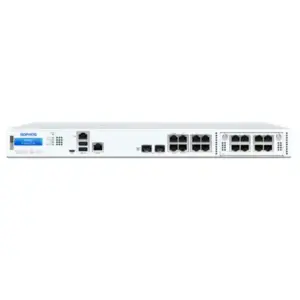
Fortinet FortiAnalyzer 3700G in Dubai, UAE
The FAZ-3700G is designed for organisations that need to centralise, analyse and retain very large security-log volumes without turning their SOC into a collection of disconnected consoles. It is a 4 RU FortiAnalyzer platform in the 8.3 TB-per-day ingestion class, aimed at high-scale security operations, telecommunications, large enterprises and environments that require extensive telemetry analysis, reporting and automation.
Before you request a quotation
Confirm expected GB/day, retention needs, number of managed domains and devices, interface requirements, support term, optional security services and whether the project should remain on FAZ-3700G or move to a newer FortiAnalyzer platform.
Direct answer for buyers
Fortinet FortiAnalyzer 3700G is a high-capacity physical appliance for centralised log ingestion, security analytics, reporting and security-operations workflows. Fortinet identifies the model as FAZ-3700G and documents up to 8,300 GB of logs per day, 100,000 analytic logs per second and a 4 RU rackmount format. It is most relevant to large enterprises, service providers, telecom operators and SOC teams with substantial Fortinet Security Fabric telemetry. Before proceeding, confirm the current orderable model, exact support and subscription bundle, expected log volume, retention period, rack and power requirements, connectivity, high-availability design and whether a newer FortiAnalyzer model is preferred for a new deployment.
What the FortiAnalyzer 3700G does
The appliance acts as a central destination for security and network telemetry. FortiAnalyzer is designed to ingest, normalise and enrich data so security teams can investigate events, build reports, correlate activity and coordinate response workflows from a common platform. In large environments this centralisation matters because the value is not simply storing logs; it is keeping enough context to turn raw events into investigations, operational trends and audit evidence.
Fortinet positions FortiAnalyzer as a unified security-operations platform with data-lake, SIEM, SOAR and XDR-related capabilities. The exact features available to a customer can depend on software version, subscription and connected products, so the quotation should distinguish base hardware from FortiCare, Enterprise Protection, IOC and Outbreak services, Security Automation, OT services, FortiAI-related licensing and other add-ons.
Who should consider this model
FAZ-3700G is not a small-office logging appliance. Its 8.3 TB/day class places it in a high-scale deployment segment where security teams are managing very large event volumes, many domains, multiple sites or broad service-provider infrastructure. It can be relevant where logging growth has outpaced smaller appliances, where retention requirements are significant, or where central analytics must support a mature SOC.
Buyers with materially lower ingest needs should compare smaller FortiAnalyzer appliances or virtual/cloud approaches. Buyers planning a fresh high-end deployment should also compare the current Fortinet portfolio because recent product material lists FAZ-3750G in the same 8,300 GB/day performance class. FourTeck can help determine whether a 3700G requirement is tied to an existing standard, replacement, spare, expansion or migration project.
Business problems this platform can help address
Security data scattered across tools
A central FortiAnalyzer deployment can reduce the need for analysts to jump between individual devices when investigating incidents. Consolidated telemetry provides a broader operational view, although connected-source support and licensing should be confirmed for the intended environment.
Log growth exceeding smaller platforms
High-volume firewalls, distributed branches, data-centre services and telecom networks can create sustained log growth. The 3700G is designed for a much larger ingestion class than entry and midrange appliances, but sizing should use measured daily averages and peak conditions rather than device count alone.
Long investigations with limited context
Security analytics becomes more useful when analysts can correlate events across network, endpoint, cloud and identity sources. FortiAnalyzer provides correlation, enrichment and investigation workflows, with advanced services and automation depending on the selected bundle and release.
Operational and audit reporting pressure
Centralised retention and reporting can support internal governance and audit preparation. Buyers should map retention policy, reporting frequency, storage allocation and regulatory requirements before ordering rather than assuming that raw installed capacity equals usable analytical retention.
Product-fit decision matrix
| Requirement | Suitable when | Confirm before ordering |
|---|---|---|
| Very high log ingest | Measured security telemetry approaches the high-end appliance class and central analytics is required. | Average and peak GB/day, event rate, growth forecast and logging-source mix. |
| Large SOC deployment | Multiple teams require consolidated investigations, reporting, automation and domain separation. | ADOM design, administrator roles, workflows, retention and required services. |
| Telecom or service-provider environment | Central analysis must support high-volume infrastructure and potentially multiple operational domains. | Architecture, tenancy model, collector placement, interface capacity and redundancy. |
| New greenfield purchase | Only after current Fortinet portfolio and lifecycle position are reviewed. | Whether FAZ-3750G or another current model is the preferred new-project option. |
| Existing 3700G standardisation | The project is a replacement, spare, expansion or controlled compatibility requirement. | Current orderability, support entitlement, software compatibility and exact SKU. |
Verified technical and ordering information
Important model-status and licensing notice
A buyer should not treat FAZ-3700G hardware, FortiCare and advanced FortiAnalyzer services as one automatically included package. Fortinet ordering material separates base products, hardware bundles, support and subscriptions. Depending on the required capability, the project may involve FortiCare Premium or Elite, Enterprise Protection, IOC and Outbreak Detection, Security Automation, OT-related analytics, FortiAI-related services or other entitlements. The exact commercial bundle must be matched to the project rather than inferred from a feature list.
There is also a lifecycle consideration. Fortinet material published in 2026 still references FAZ-3700G in vertical ordering guidance, while a newer Fortinet product matrix lists FAZ-3750G in the 8,300 GB/day class and does not list 3700G. This makes current orderability a confirmation item for any new purchase. FourTeck can help validate whether the requirement should stay with FAZ-3700G for compatibility or installed-base reasons, or move to a current successor for a new deployment.
A practical deployment and purchase journey
Measure the telemetry
Collect realistic GB/day and logs-per-second data from current firewalls, endpoints, cloud services and other intended sources. Include projected growth and peak periods.
Define retention and analytics
Determine how much data needs to remain searchable, how long archived data must be retained, which reports are required and what investigation workflows the SOC expects.
Confirm model and lifecycle
Validate FAZ-3700G orderability and compare successor models. Existing-standard projects and greenfield projects may reach different conclusions.
Build the commercial BOM
Select hardware, FortiCare term, security services, optics or cabling, rack requirements, installation scope and any migration assistance.
Plan implementation
Prepare addressing, DNS/NTP, administrative domains, device registration, storage allocation, collectors, HA architecture, backups, integrations and acceptance testing.
Capability focus: high-volume ingestion with useful context
The value of an 8.3 TB/day class appliance is not simply the headline capacity. The real design question is whether the platform can accept the organisation’s sustained telemetry while preserving the analytical data needed for investigations. A well-sized deployment considers normal daily volume, peak event bursts, database insertion, storage allocation, archival strategy and growth. Fortinet also reserves part of FortiAnalyzer disk space for system operation, so buyers should not assume that raw installed storage is fully assignable to customer log quotas.
A mature sizing exercise therefore works backwards from operational needs. Determine which logs require analytics, which can be archived, how long the SOC needs fast search, and which sources generate disproportionate volume. FourTeck can use this information to help prepare a more accurate model and license discussion rather than choosing hardware solely on device count.
Capability focus: SOC investigation and automation
FortiAnalyzer is positioned as more than a passive log store. Current Fortinet material describes unified data-lake functions, security correlation, incident investigation, playbooks, automation, third-party ingestion and native integration with Security Fabric products. These capabilities can reduce the time analysts spend manually joining evidence from separate systems, but they should be evaluated against the organisation’s actual workflow and subscription plan.
For procurement teams, the important distinction is between platform capability and licensed entitlement. Some services are sold separately or in bundles, and software versions can alter feature availability. During quotation, specify whether the business needs basic central logging and reporting, advanced security analytics, IOC/outbreak functions, premium automation content, OT analytics, AI-assisted operations or SOC-related services. This prevents a hardware-only purchase from being mistaken for a complete SOC package.
Capability focus: resilience and operational continuity
For a central logging platform, availability has a direct operational impact. If the analytics layer is unavailable, security events may continue elsewhere but analysts can lose central visibility and workflows can be disrupted. FortiAnalyzer supports high-availability designs, and large environments should decide whether clustering, geographically separated nodes, collectors or backup strategies are required.
Resilience planning also includes rack space, redundant power, data-centre cooling, network paths, backup and restore procedures, firmware maintenance windows and sufficient administrative separation. The right design is configuration dependent. A single large appliance may satisfy capacity but not the organisation’s recovery objectives. FourTeck can help capture these requirements in the bill of materials and implementation scope so that resilience is treated as an architecture decision rather than an afterthought.
Ideal business environments and use cases
The 3700G class makes the most sense where security telemetry is both large and operationally valuable. A very large enterprise may use it to aggregate logs from data centres, campuses, branches and security platforms into a central SOC. Telecommunications providers can use FortiAnalyzer in network and security operations contexts where event volume is substantial and multiple domains must be monitored. Managed-service and multi-tenant environments may value administrative-domain separation, although the precise tenancy architecture and licensing should be reviewed before purchase.
Large enterprise SOC
Centralises telemetry from many sites and teams so analysts can investigate events with broader context and standardised reporting.
Telecommunications
Fortinet includes FAZ-3700G in recent telco ordering material for NOC/SOC and high-scale operational environments.
Distributed infrastructure
Useful where many Fortinet devices or domains generate logs that must be centrally analysed, retained and reported.
Data-sovereignty projects
Fortinet references FortiAnalyzer appliances in sovereign architectures for regional log storage and reporting. The full solution requires its own architecture and entitlements.
Integration and operational considerations
FortiAnalyzer integrates naturally with the Fortinet Security Fabric, but integration planning should be specific. Identify every log source that must be onboarded, the transport method, expected event volume, time synchronisation, naming conventions and whether each source requires parsing, custom fields or separate administrative domains. If third-party log sources are part of the project, validate supported connectors and any related entitlement rather than assuming identical behaviour to Fortinet-native sources.
Network design also matters. The 3700G is associated with high-speed 10GE and 25GE interfaces, but interface speed alone does not guarantee an efficient architecture. Determine whether collectors are required at remote sites, whether logs traverse WAN links, how routing and firewall policies will be handled, and whether dedicated management or logging networks are preferred. In HA designs, account for inter-node connectivity and replication traffic.
Operationally, define who owns platform administration, who manages retention quotas, how firmware changes are tested, how backups are performed, and how incident and reporting workflows are handed to the SOC. These governance questions have a larger effect on day-to-day value than simply installing a powerful appliance.
Buyer questions to resolve before ordering
Procurement and evaluation checklist
How FourTeck can assist
FourTeck can help convert a broad requirement such as “we need a high-capacity FortiAnalyzer” into a quotation-ready scope. That normally means reviewing log volume, retention, connected products, deployment architecture, support expectations and the intended use of analytics and automation. For an installed-base project, FourTeck can also help clarify whether an exact FAZ-3700G requirement is driven by compatibility, spare strategy or an existing standard.
For new projects, FourTeck can include a current-model check so procurement does not unknowingly order around an older architecture. Assistance can also cover bill-of-material review, licensing guidance, delivery coordination and discussion of installation or configuration services where required. Visit the FourTeck technology services page or contact FourTeck with your expected GB/day and retention objectives.
UAE availability and support guidance
Contact FourTeck to confirm current UAE availability for the FortiAnalyzer 3700G. Availability can depend on model lifecycle, quantity, support term, service bundle and vendor lead time. Because recent Fortinet portfolio references show a transition at the high end of the FortiAnalyzer range, current orderability should be verified before a purchase order is issued.
Delivery and project coordination can be discussed after the exact requirement is confirmed. If installation, configuration, migration, HA setup, device onboarding or knowledge transfer is needed, include those items in the quotation request so the scope is clear. FourTeck does not assume that hardware availability automatically includes the required software entitlement, support term or professional services.
Dubai, Abu Dhabi, Sharjah and Ajman project coverage
Businesses across Dubai, Abu Dhabi, Sharjah and Ajman can discuss FortiAnalyzer requirements with FourTeck as part of a UAE technology procurement or deployment project. The useful starting point is not the city name but the technical scope: exact appliance or replacement model, number of units, expected log volume, retention, support term, required subscriptions, destination data centre and implementation expectations. FourTeck can coordinate quotation and project planning once these details are available. For broader Fortinet security requirements, buyers can also review Fortinet solutions from FourTeck and the FourTeck product catalogue.
GCC Availability
For GCC projects, FourTeck can help organisations review the requirement before a FortiAnalyzer quotation is prepared. This is particularly useful for a high-capacity platform such as FAZ-3700G, where the right choice depends on measured log volume, retention policy, support term, connected Fortinet products, optional security services and the current orderable portfolio. Projects in the United Arab Emirates, Saudi Arabia, Kuwait, Qatar, Bahrain or Oman may have different delivery, licensing and project-coordination conditions, so a single regional assumption should not be used for every order.
Availability, subscription structures, delivery schedules, service visits and vendor lead times can vary by country, quantity and model lifecycle. Buyers should provide the destination country, required appliance or approved successor, quantity, preferred contract term, deployment location and target project window. FourTeck can then assist with requirement review, quotation coordination, configuration scope and installation planning where appropriate. For Kuwait requirements, organisations may also review FourTeck Kuwait technology support. No stock position, customs outcome or fixed delivery date should be assumed until the specific project is checked.
Africa Availability
FourTeck can also assist organisations planning FortiAnalyzer deployments in African markets, including projects in East Africa and other regions where central log analytics is part of a wider cybersecurity architecture. For a model such as the 3700G, the procurement discussion should include whether the exact appliance is still the preferred orderable platform, what quantity is required, what FortiCare and optional services are needed, and how the hardware will fit into the destination data centre. Power, rack, network-interface and shipping considerations should be included early rather than after the bill of materials is issued.
Fulfilment can depend on destination, product lifecycle, quantity, license region, shipping arrangements, vendor lead time and local project conditions. Buyers should share the destination country, expected GB/day, retention requirement, preferred deployment schedule and any installation or support expectations. FourTeck can then provide appropriate guidance instead of making generic stock or delivery promises. Organisations can review FourTeck Africa, FourTeck Kenya or FourTeck Uganda for regional contact paths.
Related options and complementary services
FortiAnalyzer 3750G
A newer high-end FortiAnalyzer model listed in the current Fortinet product matrix at the same 8,300 GB/day class. It should be evaluated for greenfield projects where 3700G is not mandatory.
FortiAnalyzer 3510G
A lower-capacity hardware option for organisations whose measured ingest and retention requirements do not justify the 8.3 TB/day class.
FortiAnalyzer VM
A virtual deployment route where the organisation prefers software-defined capacity and can provide suitable compute, storage and IOPS. VM sizing remains infrastructure dependent.
FortiManager
Complements FortiAnalyzer by focusing on centralised policy and configuration management. The two platforms solve different operational problems and are often reviewed together in large Fortinet environments.
Implementation assistance
FourTeck can discuss installation, configuration, migration, device onboarding and HA planning as separate scope items where the customer requires more than product supply.
What buyers are trying to clarify before choosing this class of FortiAnalyzer
A common first question is whether 8,300 GB/day is the same thing as usable retention capacity. It is not. Daily ingest is a rate, while retention is an outcome of data volume, storage allocation, analytics settings and archive policy. A buyer can have a platform capable of receiving a very large daily volume but still need to make deliberate choices about how many days remain in fast analytical storage. FortiAnalyzer also reserves part of disk space for system use, which is another reason to avoid simple raw-capacity arithmetic.
Another frequent decision point is “3700G or 3750G?” The answer depends on why 3700G appears in the requirement. If a customer has an installed standard, a compatibility-controlled environment, a spare strategy or an approved design based on FAZ-3700G, the exact model may still matter. For a new project, however, current portfolio status should be checked because Fortinet’s latest product matrix shows FAZ-3750G in the 8,300 GB/day class. That does not make every 3700G project wrong; it means lifecycle and orderability should be part of the purchasing conversation.
Buyers also ask whether the appliance alone delivers every SOC function shown on FortiAnalyzer marketing pages. The safer assumption is no. Fortinet provides a broad platform with data-lake, analytics, SIEM, SOAR, XDR-related workflows, threat-intelligence services and AI assistance, but commercial access can vary by release, support level and subscription. A quotation should therefore list what is included in the base hardware, what comes with the chosen FortiCare or bundle, and what requires a separate service. This avoids comparing a hardware-only price with a competitor’s bundled security-operations subscription.
A fourth issue is whether device count is enough for sizing. It is not. Two environments with the same number of FortiGate devices can generate very different telemetry depending on traffic volume, enabled logging, security profiles, event types and retention. Measured GB/day and sustained/peak event rates are better starting points. For environments without reliable historical measurements, a discovery exercise should estimate each source, apply growth assumptions and identify which logs need full analytics versus archive-only handling.
Security logging tends to grow as more inspection, cloud services, endpoints and compliance requirements are added. Include a realistic growth horizon and peak-event behaviour.
Keeping every event in high-performance analytical storage may not be necessary. Define what analysts need fast versus what can be retained for historical or audit purposes.
Hardware, FortiCare, analytics services, optics, implementation, migration and HA components should appear as separate, understandable line items.
Connectivity is another practical topic. Search results for the 3700G commonly surface its 10GE RJ-45 and 25GE SFP28 interfaces, which is useful, but procurement should go one step further. Confirm which ports will carry management, logging, HA or backup traffic; whether the destination switches support the required optics; and whether the customer expects transceivers or direct-attach cables in the same order. A project can be delayed by a missing optical module just as easily as by a missing license.
Organisations also compare appliance, virtual and cloud FortiAnalyzer approaches. Physical hardware can provide predictable on-premises capacity and may align well with data-centre or sovereignty requirements. Virtual FortiAnalyzer offers deployment flexibility but depends on the allocated CPU, memory, storage and IOPS. Cloud options shift more infrastructure responsibility away from the customer but introduce their own licensing, connectivity and data-location questions. The right route depends on security architecture, data policy, operational ownership and commercial model.
Finally, buyers want to know what information produces an accurate quotation. The strongest request includes the exact desired model or permission to recommend a successor, quantity, destination, current and projected GB/day, required retention, device and domain counts, FortiCare preference, optional FortiAnalyzer services, HA requirement, interface/optic needs and any installation or migration scope. With those details, FourTeck can prepare a more useful commercial discussion than a simple request for “FortiAnalyzer 3700G price.”
Questions buyers should answer during evaluation
How do we know whether the 3700G is oversized?
Compare measured GB/day, peak logs per second, retention and growth against the appliance class. If current telemetry is far below the high-end range and long-term growth does not justify it, a smaller FortiAnalyzer may reduce infrastructure and support cost. Do not select the largest model merely to create “headroom” without quantifying what that headroom is for.
What if our requirement document specifically names FAZ-3700G?
Keep the named model in the comparison, but ask whether substitutions are allowed. If the requirement is for an existing environment, exact-model continuity may be important. If it is a new procurement, confirming the newer portfolio option can prevent a lifecycle issue. FourTeck can quote or recommend only after the procurement rules are clear.
Do we need FortiManager as well?
FortiManager and FortiAnalyzer serve different primary roles. FortiManager focuses on centralised configuration and policy management, while FortiAnalyzer focuses on logs, analytics and security operations. Large Fortinet estates often use both, but one is not automatically required simply because the other is deployed. Map the operational requirements first.
Can we plan retention from the 240 TB HDD number?
Use it only as an input, not the final answer. Raw installed capacity, RAID, system-reserved space, analytics allocation, compression, daily ingest and archive settings all influence usable retention. Build the retention plan around measured data and the required analytical window, then validate it against Fortinet sizing guidance.
Should advanced threat services be included from day one?
Include them when the SOC use case requires them and the team is prepared to operate the workflows. If the initial goal is central logging and reporting, adding every optional service can complicate the project. If automated detection, IOC enrichment, OT analytics or advanced playbooks are core requirements, they should be scoped and licensed deliberately.
What does FourTeck need for a migration quotation?
Provide the source FortiAnalyzer model and version, device count, ADOM structure, analytical data size, retention requirements, target architecture, maintenance window and any HA configuration. Migration scope can vary considerably, so it should not be assumed as part of the hardware price.
Why businesses contact FourTeck for FortiAnalyzer projects
High-capacity security analytics projects involve more than finding a part number. Buyers often need help translating operational requirements into a model, license term and implementation scope that procurement can compare. FourTeck can assist with requirement clarification, model selection, bill-of-material review, compatibility questions, quotation coordination and planning for installation or migration. The goal is to reduce ambiguity before the purchase order rather than relying on assumptions after delivery.
For a specific FAZ-3700G request, a useful discussion includes whether the exact model is mandatory, whether a newer replacement can be accepted, and which FortiAnalyzer services are required. FourTeck can also help organise the requirement around deployment location, quantity, support term, optics, HA and delivery coordination. Learn more about FourTeck or use the FourTeck contact page for broader technology projects.
Frequently asked questions
What is the Fortinet FortiAnalyzer 3700G mainly used for?
It is used for high-volume centralised log collection, security analytics, reporting and security-operations workflows. Fortinet documents the model in an 8,300 GB/day class with a 100,000 logs/second analytic sustained rate.
What is the base Fortinet SKU for this appliance?
The base product identifier is FAZ-3700G. Support bundles and optional security services use different Fortinet SKUs and should be listed separately in a quotation.
How much log volume can FAZ-3700G handle?
Fortinet references up to 8,300 GB of logs per day and an analytic sustained rate of 100,000 logs per second. Real deployments should still be sized around measured average and peak conditions.
Does FortiAnalyzer 3700G include every analytics and automation service?
No assumption should be made that every service is included. FortiCare, Enterprise Protection, IOC and Outbreak Detection, Security Automation, OT services and AI-related functions can be bundle or subscription dependent.
Is the 3700G the current high-end FortiAnalyzer model?
Current Fortinet product material should be checked before ordering. Recent vertical guides still reference FAZ-3700G, while the newer product matrix lists FAZ-3750G in the same 8,300 GB/day class. FourTeck can help confirm the appropriate orderable model.
Can FortiAnalyzer 3700G be deployed in high availability?
FortiAnalyzer supports high-availability architecture. The exact node design, licensing, replication and recovery objectives should be validated for the intended software release and deployment topology.
What should we provide for an accurate UAE quote?
Provide quantity, exact model or permission to recommend a successor, expected GB/day, retention, device and domain counts, support term, required services, interface/optic requirements, HA needs and installation or migration scope.
Is the 240 TB storage figure the same as usable analytical retention?
No. Raw storage, RAID, system-reserved space, quota allocation, daily ingest and archival choices affect the usable retention window. Retention should be calculated from the actual logging profile.
Can FourTeck assist with installation and migration?
FourTeck can discuss installation, configuration, migration, HA planning and onboarding as project scope items. Requirements should be defined in the quotation because service effort depends on the source environment and target design.
Confirm the right FortiAnalyzer model before the purchase order
Send FourTeck your expected log volume, retention requirement, quantity, location, preferred support term and whether FAZ-3700G is mandatory. We can help review the current model position, licensing and deployment scope before quotation.

Reviews
There are no reviews yet.