

Centralized logging • analytics • operational visibility
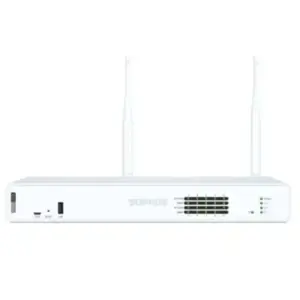
Fortinet FortiAnalyzer 810G in Dubai, UAE
FortiAnalyzer 810G, model FAZ-810G, is a dedicated 1U appliance for organisations that want to centralize security logs, retain evidence, analyse events and build repeatable reporting around Fortinet-connected environments. Its role is not to replace the firewall or endpoint controls that generate telemetry; it gives security and operations teams a structured place to collect, investigate and report on the data those systems produce. For a buyer, the important decision is whether the appliance’s verified 200 GB/day logging capacity, device scale, storage design and available service subscriptions align with the real environment rather than simply selecting it by model size.
Before a quotation is prepared
Share the expected log volume, number of Fortinet devices or VDOMs, retention objective, preferred RAID approach, site power and rack details, and whether subscriptions such as IOC and Outbreak Detection, Security Automation, OT Security, FortiAI or other FortiAnalyzer services are part of the requirement.
Availability, subscriptions, support terms and delivery schedules should be confirmed for the exact UAE requirement.
Direct answer for buyers evaluating the FAZ-810G
The Fortinet FortiAnalyzer 810G is a hardware appliance for centralized log collection, security analytics, reporting and investigation across supported Fortinet and, depending on architecture and software capability, selected third-party logging sources. It should be considered by organisations whose logging volume, retention plans and operational model justify a dedicated appliance rather than a smaller model, virtual deployment or cloud service. The most important checks are daily log ingestion, the number of managed devices or VDOMs, required retention period, storage and RAID expectations, connectivity, support coverage and any optional FortiAnalyzer subscriptions. A buyer should also confirm the software version planned for deployment and the feature entitlements required before finalizing the bill of materials.
What the FortiAnalyzer 810G does
The appliance provides a central destination for security and network logs so teams can work with consolidated data instead of examining each FortiGate or other integrated source separately. This matters when an incident spans multiple sites, when a security team needs historical evidence, or when operations staff need recurring reports rather than ad-hoc device-by-device troubleshooting.
FortiAnalyzer software adds investigation, analytics, event handling, reporting and automation capabilities around the collected data. Some advanced services are subscription dependent, so the hardware SKU should be treated as the foundation of a wider logging and SecOps design rather than an assumption that every FortiAnalyzer service is automatically included.
Who should shortlist it
The FAZ-810G is relevant to medium-to-large businesses, multi-site organisations, managed environments and security teams that expect substantial daily log volumes but do not need the capacity of Fortinet’s larger appliances. It can also suit buyers who prefer an on-premises appliance for operational, data-location or architecture reasons.
It may be unnecessary for a small environment with modest log generation, very limited retention requirements or a strong preference for virtual or cloud delivery. Conversely, a fast-growing environment approaching the model’s verified capacity may justify evaluating a larger FortiAnalyzer before procurement. FourTeck can help map the actual numbers to the appropriate option.
Business challenges the appliance is intended to address
Logs spread across many devices
Distributed FortiGate estates can generate large volumes of data at different branches and network boundaries. A centralized analyser gives teams one place to retain and search that data, subject to configured ADOMs, policies and storage.
Slow cross-site investigation
When an incident crosses several devices, reviewing local logs separately adds friction. Centralized analytics makes it easier to correlate events and examine historical activity from a unified operational context.
Reporting consistency
Security and IT teams often need repeatable reports for management, operations and governance. FortiAnalyzer can provide scheduled and structured reporting, with available templates and service-dependent features varying by software and entitlement.
Retention planning
Keeping useful history requires more than raw disk capacity. Daily volume, analytics retention, archive policy, RAID overhead and growth all affect how long data can be retained and how the appliance should be configured.
Core capabilities that matter in a real deployment
Central log ingestion
The FAZ-810G is rated for up to 200 GB of logs per day. Fortinet lists a 4,000 logs/sec sustained analytics rate and 6,000 logs/sec sustained collector rate. These figures should be compared with measured or estimated production traffic rather than treated as a generic user-count metric.
Analytics and investigation
FortiAnalyzer provides a platform for searching, analysing and correlating collected telemetry. The operational value is strongest when log sources, time settings, ADOM structure and analyst workflows are planned before go-live.
Reporting and governance
Central reporting can help teams turn raw logs into recurring operational views. The exact report set, compliance content and advanced analytics available may depend on FortiAnalyzer version and optional services, so the required output should be listed during solution design.
Automation options
Fortinet offers Security Automation and related services for FortiAnalyzer. These are not assumptions about the base hardware purchase: the relevant subscription, bundle and support SKU must be confirmed if automated workflows or advanced service features are required.
FortiAnalyzer 810G fit matrix
| Requirement | Suitable when | Confirm before ordering |
|---|---|---|
| Daily log volume | The expected sustained daily volume fits comfortably within the model’s 200 GB/day rating. | Measure normal days, peaks, growth and any new sources planned over the appliance lifecycle. |
| Device scale | The design remains within the published maximum of 800 devices/VDOMs. | Count VDOMs separately where relevant and leave headroom for expansion. |
| On-premises preference | A dedicated 1U appliance aligns with the organisation’s data and operational architecture. | Rack space, power, cooling, cabling, lifecycle and support process. |
| Retention | The usable storage and configured retention plan meet investigation and reporting needs. | Analytics versus archive retention, RAID overhead, actual daily volume and backup strategy. |
| Advanced SecOps services | FortiAnalyzer’s optional subscriptions match the team’s required workflow. | Exact bundle, term and entitlement for IOC, automation, OT, FortiAI, TIP or other services. |
Verified FAZ-810G hardware and capacity information
The values below are based on the current Fortinet FortiAnalyzer data sheet for the exact FAZ-810G. Performance values are vendor laboratory metrics and should be treated as sizing references, not a guarantee of identical results in every network.
| Brand | Fortinet |
| Product | FortiAnalyzer 810G |
| Model / SKU | FAZ-810G |
| Product type | Centralized log and analysis appliance |
| Logs per day | Up to 200 GB/day |
| Analytic sustained rate | 4,000 logs/second |
| Collector sustained rate | 6,000 logs/second |
| Devices / VDOMs maximum | 800 |
| Maximum analytics days at sustained rate | 50 days; the actual number can increase when average log rate is lower |
| Form factor | 1 RU rackmount |
| Interfaces | 4 x GE RJ-45 and 2 x GE SFP |
| Raw storage | 16 TB using 4 x 4 TB 3.5-inch SAS HDDs; Fortinet ordering information describes the storage as self-encrypting |
| Usable storage after RAID | 8 TB |
| RAID levels supported | RAID 0/1, 1s/5, 5s/10 |
| RAID type / default | Hardware, hot swappable / default RAID 10 |
| Removable drives | Supported |
| Redundant hot-swap power supplies | Optional |
| TPM | Supported on the referenced hardware generation |
| Dimensions | 1.73 x 17.32 x 21.65 in / 4.4 x 44.0 x 55.0 cm |
| Weight | 25.75 lb / 11.68 kg |
| AC input | 100–240 VAC, 50–60 Hz, 4 A maximum |
| Power consumption | 115 W average / 150 W maximum |
| Operating temperature | 0°C to 40°C |
| Humidity | 5% to 95% non-condensing |
| Airflow | Front to back |
Licensing, services and configuration dependencies
The base appliance should not be assumed to include every advanced FortiAnalyzer service. Fortinet’s current portfolio lists optional services that can include IOC and Outbreak Detection, Security Automation, OT Security, Security Rating and Compliance, FortiGuard Threat Intelligence Platform integration, FortiAI and SOCaaS-related options. Hardware bundles can combine the appliance with selected FortiCare and service entitlements, while standalone service SKUs may also be available. Exact commercial packaging changes over time, so the required term and bill of materials should be validated for the quotation date.
Compatibility also depends on the FortiAnalyzer software release, the Fortinet products sending logs, the deployment architecture, ADOM design, third-party log requirements and any high-availability design. Before purchase, confirm the target release and current support matrix rather than relying on a historical configuration from another project.
A practical purchase and deployment journey
Measure the environment
Record current daily log volume, peak rates, device and VDOM counts, site growth, retention expectations and reporting needs. Actual log volume is more useful than a rough user-count estimate.
Define the service scope
Identify which FortiAnalyzer services, automation functions, support tier and reporting requirements are essential. This prevents a hardware-only quotation when the intended workflow depends on subscriptions.
Review architecture
Confirm rack, power, network interfaces, IP addressing, DNS/NTP, ADOM structure, administrative access, backup, high availability and integration prerequisites before the appliance is installed.
Build the bill of materials
Match the FAZ-810G hardware with the chosen support term, subscriptions, optics or accessories, installation activities and any migration effort. Confirm regional SKU details where applicable.
Deploy and validate
After installation, onboard log sources in a controlled sequence, verify time synchronization, confirm expected ingestion, test search and reporting, then validate retention and alerting behaviour against the original design.
Capacity planning: size around logs, not assumptions
The 200 GB/day figure is the most visible sizing number for the FAZ-810G, but it should not be used in isolation. Daily log generation can change substantially when firewall policies, application control, web filtering, VPN usage, endpoint telemetry, branch growth and additional devices are introduced. A business that averages 120 GB/day today may still need to model peak periods and future projects before choosing the appliance. Equally, a business with a modest average might generate bursts that influence collection and analysis behaviour even when the daily total remains below the headline capacity.
Retention is another variable. Fortinet lists 50 maximum analytics days when logs arrive continuously at the sustained analytics rate, and notes that the number can increase when the average log rate is lower. This means buyers should separate the question “How much disk is installed?” from “How long will my useful data remain available for analytics?” Storage overhead, RAID configuration, archiving policy and data mix all influence the answer.
FourTeck can help convert measured log data into a practical sizing worksheet. For organisations already using FortiGate, exporting recent log statistics and identifying planned new sites is a useful starting point. If the projected figures sit too close to the model boundary, compare the FAZ-810G with a larger FortiAnalyzer or an alternative deployment model rather than building a design with minimal headroom.
Operational visibility: make central logging useful to the SOC and NOC
Central collection has value only when the data can be interpreted quickly. A well-planned FortiAnalyzer deployment should define who is expected to use the platform and what each team needs from it. A security analyst may want incident timelines, IOC context and correlation, while a network engineer may be investigating VPN behaviour, routing changes or application traffic. Management may need recurring summaries instead of raw event lists. These are different requirements and should be reflected in dashboards, report schedules, permissions and ADOM design.
Role-based operational planning also affects retention. Some logs are valuable for short-term troubleshooting; others may be needed longer for investigation or governance. Rather than keeping everything in the same way indefinitely, define what must remain in analytics storage, what can be archived and how any backup or external retention process will be handled.
The FAZ-810G provides the appliance resources, but the quality of the operational outcome depends on configuration discipline. Time synchronization, device naming, administrative ownership, alert routing, report recipients and change control all influence whether the platform becomes a dependable daily tool or simply a large log repository.
Resilience, storage and maintenance planning
Fortinet specifies hardware RAID with hot-swappable drives for the FAZ-810G and lists RAID 10 as the default level. These details are important because security logs are often most valuable when another system has failed or an incident is already underway. Storage design should therefore consider fault tolerance and serviceability, not only total capacity. The appliance also supports optional redundant hot-swap power supplies, which may be relevant for data-centre deployments that require power-path redundancy.
High availability for FortiAnalyzer is a wider architectural decision than installing a second power supply. If an organisation needs platform-level resilience, confirm current FortiAnalyzer HA capabilities, software requirements, licensing and operational design. The ordering guide identifies high availability as available for on-premises FortiAnalyzer, but the exact topology and behaviour should be designed around the required recovery objective.
Maintenance planning should also cover firmware and FortiAnalyzer version updates, configuration backups, support entitlement, hardware replacement process, monitoring of disk health and capacity trends, and periodic review of which devices are sending logs. Treating these tasks as part of the initial project makes the platform easier to sustain after handover.
Where the FAZ-810G can fit well
Multi-branch enterprises
Businesses with FortiGate appliances across head office, branches, warehouses or remote sites can centralize logs for investigation and reporting. Suitability depends on aggregate volume and device/VDOM count, not simply the number of physical sites.
Security operations teams
SOC teams that need consolidated security telemetry, searchable history and repeatable reporting can use FortiAnalyzer as part of a broader incident detection and response workflow. Optional services should be selected around actual use cases.
Regulated or evidence-sensitive environments
Organisations with internal governance or investigation requirements may prefer centralized on-premises retention. The exact retention duration and controls should be mapped to the organisation’s own policy and regulatory advice rather than assumed from hardware capacity.
Managed multi-tenant designs
FortiAnalyzer supports ADOM-based segmentation and multi-tenancy capabilities. Service providers and large internal IT teams should confirm the intended administrative model, ADOM scale and license implications before adopting a shared design.
Integration and operational considerations
A FortiAnalyzer purchase normally touches more than one system. FortiGate devices must be configured to send logs, network paths and firewall policies must permit the required communication, DNS and NTP should be reliable, and administrative access needs to align with the organisation’s identity and privilege model. Where FortiManager, FortiSOAR, FortiSIEM or other security platforms are present, clarify which system owns each workflow so duplicate alerts or overlapping reports do not create unnecessary complexity.
Third-party log ingestion is another area to validate carefully. Fortinet’s current ordering information indicates support for third-party sources in the on-premises appliance context, but source compatibility, parsing, connector requirements and the effect on ingestion volume should be checked for the exact device or application. Do not assume that any syslog-capable product will automatically provide the same analytics depth as a native Fortinet source.
If the organisation is replacing an older FortiAnalyzer, include migration planning in the scope. Decide whether historical logs must move, how configuration will be transferred, whether device registration changes are required, and how downtime or parallel operation will be handled. A migration should be tested as an operational change, not treated as a simple rack-and-cable activity.
Buyer questions to resolve before the purchase order
Use recent data where possible, then add expected growth from new sites, policies and products. This is the most direct way to test fit against the 200 GB/day rating.
The published maximum is 800 devices/VDOMs, so count the planned logical estate as well as physical devices.
Retention depends on actual ingestion and storage policy. Separate analytics retention from archive or external backup requirements.
List IOC, automation, OT, FortiAI, TIP, compliance or SOC-related requirements explicitly so the quote contains the intended entitlements.
If the logging platform must survive appliance failure, review current HA design and licensing rather than relying only on RAID or optional redundant power.
Clarify whether the project needs rack installation, base configuration, source onboarding, report setup, migration, testing, documentation or knowledge transfer.
Procurement checklist for FortiAnalyzer 810G
How FourTeck can assist with the FAZ-810G requirement
FourTeck can help turn a model request into a complete procurement specification. That can include confirming whether the FAZ-810G is appropriately sized, reviewing the required FortiCare and FortiAnalyzer service terms, checking whether optics or infrastructure accessories are needed, and aligning the quotation with installation or configuration work. This is especially useful when a buyer has been given only a hardware model but the intended outcome depends on subscriptions and implementation tasks.
For an existing Fortinet estate, the sizing discussion can include current FortiGate count, VDOM structure, measured logging rates, expected growth and retention. For a replacement project, the discussion can include migration of configuration, log source cutover, change windows and acceptance testing. For a new deployment, FourTeck can help define the initial onboarding sequence and practical handover scope.
You can also review related FourTeck security products, explore installation and configuration services, or discuss the wider Fortinet architecture through the Fortinet solutions page.
UAE availability and project coordination
Contact FourTeck to confirm current UAE availability for the FortiAnalyzer 810G. Availability can vary with quantity, support bundle, subscription term, regional SKU, vendor lead time and the date of the request. A quotation should therefore identify the exact hardware and any related services rather than relying on a general product-page indication. Delivery and project coordination can be discussed after the requirement is confirmed.
If installation or configuration is required, include it in the quotation scope. Typical planning inputs include site access, rack position, power, network addressing, management access, log-source list, maintenance window and acceptance criteria. Businesses can use the FourTeck contact page to request current commercial guidance.
Dubai, Abu Dhabi, Sharjah and Ajman coverage
FourTeck can coordinate FortiAnalyzer enquiries for organisations operating in Dubai, Abu Dhabi, Sharjah and Ajman through one UAE requirement review. For multi-site projects, it is useful to identify where the FAZ-810G will physically reside, which sites will send logs, whether inter-site bandwidth or firewall changes are required, and who will manage the appliance after handover. Delivery, installation, configuration and support scope should be confirmed against the actual location and project requirements. Where a customer has several branches, the quotation can distinguish the central appliance from any branch-side changes needed to enable reliable logging and secure administrative access.
GCC Availability
For GCC projects, FourTeck can assist with requirement review, FortiAnalyzer model selection, support and subscription planning, quotation coordination and deployment-scope discussion for businesses operating across the United Arab Emirates, Saudi Arabia, Kuwait, Qatar, Bahrain and Oman. A regional requirement should specify the destination country, FAZ-810G quantity, expected log volume, device and VDOM count, required subscription term, planned deployment site and desired project timeline. Product availability, license packaging, delivery schedules, service visits and vendor lead times can vary by country and by the exact bill of materials. Where a multi-country organisation plans centralized logging, network connectivity, data-location policy, administrative ownership and cross-border operational requirements should also be reviewed. FourTeck can help structure the commercial and technical questions before a purchase order is raised, but local stock, customs outcomes, fixed delivery dates and country-specific certification should be confirmed separately for the destination and should not be assumed from a UAE product page. For regional enquiries, the FourTeck Kuwait resource may also be relevant.
Africa Availability
FourTeck can support organisations planning FortiAnalyzer procurement for selected African markets by helping clarify the exact appliance, support term, subscriptions, accessories, deployment requirements and configuration scope before commercial coordination begins. For an FAZ-810G request, share the destination country, quantity, expected log volume, preferred deployment schedule and whether the project also needs installation, migration, configuration or remote assistance. Availability and fulfilment can depend on destination, product quantity, regional licensing, power and rack requirements, shipping arrangements, vendor lead time and local project conditions. Businesses with operations in East Africa, including Kenya and Uganda, can also consider how connectivity to remote FortiGate sites will affect centralized logging. FourTeck does not assume local inventory or guaranteed shipment dates from a web listing; those details should be checked for the exact project. Additional regional information is available through the FourTeck Africa technology portal.
Related options and services to consider
Larger FortiAnalyzer appliances
If projected log volume or device scale leaves little headroom on the FAZ-810G, compare a larger current FortiAnalyzer appliance. Model selection should use current vendor specifications rather than assuming a linear performance step.
FortiAnalyzer virtual appliance
A VM deployment can suit organisations that prefer virtual infrastructure and flexible licensed capacity. Hypervisor compatibility, resources, storage design and license model must be reviewed for the target platform.
FortiAnalyzer Cloud
Cloud delivery can be relevant where the organisation prefers a hosted analytics service. Feature, licensing, data-location and integration differences should be compared with the on-premises appliance before choosing.
FortiGate and Security Fabric planning
FortiAnalyzer is most useful when log-generating security controls are configured consistently. Review FortiGate logging, naming, time synchronization and policy design as part of the analytics project.
Installation and migration service
A scoped service can cover rack installation, initial configuration, source onboarding, migration from an older FortiAnalyzer, testing and documentation. The exact activities should be listed in the quote.
Why businesses contact FourTeck for FortiAnalyzer planning
A FortiAnalyzer requirement often begins with a model number but quickly becomes a sizing, licensing and implementation discussion. FourTeck can help clarify those layers before procurement: whether FAZ-810G capacity is appropriate, which service entitlements are required, whether the rack and network design are ready, how the existing Fortinet estate will connect, and whether configuration or migration should be part of the project.
This approach is intended to reduce avoidable purchasing gaps, such as ordering hardware without the required support term, overlooking optional power redundancy, underestimating log growth or discovering after delivery that migration tasks were not included. The objective is a clear bill of materials and a defined scope rather than unsupported claims about stock or universal compatibility.
Learn more about FourTeck or send the exact requirement through the contact channel for a project-specific quotation.
How buyers are comparing the FAZ-810G in real projects
Most practical evaluation questions are not about whether FortiAnalyzer can collect logs; buyers want to know how this particular appliance fits into an operating model, how much headroom to leave, what is included in the hardware purchase, and whether an appliance is preferable to virtual or cloud delivery. The following guidance focuses on those decisions.
How much headroom should be left below 200 GB/day?
There is no single percentage that fits every environment. A stable estate with predictable traffic can be modelled differently from a rapidly expanding branch network. Start with measured average and peak log volume, then account for new firewalls, increased security logging, additional telemetry sources and seasonal peaks. If the business case depends on running close to the published limit for most of the appliance lifecycle, a larger platform may provide a more comfortable operational margin. Buyers should also remember that log rates and GB/day describe different aspects of load; both sustained event rate and total volume matter.
Is 16 TB the amount available for analytics?
No. Fortinet lists 16 TB raw storage based on four 4 TB SAS drives and 8 TB usable after RAID for the FAZ-810G. That distinction matters when estimating retention. The data sheet also lists 50 maximum analytics days at the sustained analytics rate, with the possibility of longer retention when average log rates are lower. A retention design should therefore combine actual ingestion, the configured RAID level, analytics policy, archive requirements and growth instead of dividing raw disk capacity by a simple daily number.
What is included with the appliance and what is optional?
The FAZ-810G is the hardware appliance. Fortinet publishes a range of add-on services and bundles, including FortiCare support choices and service options for IOC and Outbreak Detection, Security Automation, OT Security, FortiAI, security rating and compliance, threat-intelligence integration and other SecOps capabilities. The exact combination offered in a quotation depends on the selected SKU and term. Buyers should specify the capabilities they actually need and ask for the corresponding bill of materials rather than assuming a feature shown on a FortiAnalyzer product overview is included with base hardware.
Hardware appliance, VM or cloud: which route is more appropriate?
The appliance is attractive when a business wants dedicated on-premises resources and a defined hardware platform. VM can be attractive when the organisation already operates resilient virtualization infrastructure and prefers software-defined capacity. FortiAnalyzer Cloud can reduce the need to host the analytics platform locally. The correct choice depends on data-location policy, operational ownership, virtualization standards, desired scale, feature requirements, subscription preference and connectivity. A price-only comparison misses those architectural differences.
Can the FAZ-810G handle third-party logs?
Fortinet’s current ordering information indicates support for third-party logging sources on on-premises FortiAnalyzer. However, that statement should not be interpreted as identical native visibility for every source. Verify the specific device or application, supported parser or connector, log format, expected volume and desired analytics before making third-party ingestion a design assumption. Third-party data also consumes capacity, so it should be included in the 200 GB/day sizing calculation rather than treated as free overhead.
What should be included in a quote request?
A useful request states the FAZ-810G model, quantity, destination, current and projected daily log volume, number of devices and VDOMs, retention goal, support term, desired FortiAnalyzer services, installation requirement and expected project window. If the project replaces an existing FortiAnalyzer, include the old model and software version plus any need to retain historical logs. If the project is new, list the Fortinet products that will send logs. These details allow the commercial quotation to be tied to the technical requirement instead of becoming a hardware-only price request.
The most reliable way to choose the FortiAnalyzer 810G is to start with telemetry and workflow requirements, then confirm that the hardware, storage, software release and subscriptions support those requirements with reasonable growth margin. Model numbers are useful shorthand, but the operational design determines whether the purchase will remain appropriate after the first year.
Questions procurement and IT teams should answer together
Will the appliance still fit after the next network expansion?
Do not size only for today’s log volume. Planned branches, firewall upgrades, additional VDOMs, more detailed logging and new security products can all change ingestion. Build a projection for the expected lifecycle and compare it with the 200 GB/day capacity and 800 device/VDOM maximum. If growth is uncertain, define a trigger point for when a larger model or alternative architecture would be required.
Which logs actually need long-term retention?
Security teams may want detailed traffic and event data, while governance teams may have separate retention obligations. Establish which data must remain searchable in analytics storage, which can be archived and how retrieval will work. This prevents the organisation from buying capacity around an undefined “keep everything” requirement and helps make retention measurable during acceptance testing.
Does the project need only logging, or also automated response?
If the intended outcome includes advanced event handling, playbooks, IOC services, FortiAI assistance or other premium capabilities, identify those requirements before the purchase order. Hardware can be correctly sized yet commercially incomplete if the necessary service entitlement was not included. Ask for each required capability to be mapped to a current Fortinet subscription or bundle.
How will administrators access and maintain the platform?
Define management networks, authentication, privilege levels, backups, software maintenance responsibilities and escalation paths. This should be decided before go-live so the appliance does not become dependent on one administrator or an undocumented local account. If corporate identity integration is required, confirm support for the target authentication architecture in the planned FortiAnalyzer release.
What does successful handover look like?
Agree acceptance points such as device onboarding, expected log ingestion, searchable history, scheduled reports, alert delivery, administrator access and backup configuration. For migration projects, include successful cutover from the old platform. A defined handover makes it easier for procurement, IT and the implementation team to agree when the scoped work is complete.
What information will FourTeck need for a useful quotation?
Provide the exact FAZ-810G requirement, quantity, destination, support term, subscription needs, current log volume, expected growth, device/VDOM count and any installation or migration scope. If some numbers are unknown, FourTeck can help identify what should be measured before final sizing. The goal is to avoid converting an incomplete model request into an incomplete order.
Frequently asked questions
What is the Fortinet FortiAnalyzer 810G used for?
It is a centralized log collection and analysis appliance used to consolidate security telemetry, support investigation, reporting and operational visibility across supported Fortinet and selected integrated sources.
How much logging capacity does the FAZ-810G support?
Fortinet rates the model for up to 200 GB of logs per day, with 4,000 logs/sec sustained analytics rate and 6,000 logs/sec sustained collector rate. Actual deployment sizing should include peaks and growth.
What storage is available?
The appliance has 16 TB raw storage using four 4 TB SAS drives and 8 TB usable after RAID according to the current Fortinet data sheet. Retention depends on actual log volume and configuration.
Are FortiAnalyzer security services included with the base hardware?
Do not assume that every service is included. Fortinet offers hardware bundles and separate subscriptions for support and advanced services. The exact entitlements and term should be confirmed on the quotation.
Does the FAZ-810G support high availability?
Fortinet’s current on-premises FortiAnalyzer portfolio supports high availability, but the exact design, software requirements and licensing should be validated for the planned release. Optional redundant hot-swap power is a separate hardware consideration.
Can FourTeck help migrate from an older FortiAnalyzer?
Migration assistance can be discussed as a scoped service. The old model, current software version, configuration, historical log requirements, device cutover plan and maintenance window should be reviewed before the effort is quoted.
Is the FortiAnalyzer 810G currently available in Dubai?
Contact FourTeck to confirm current UAE availability. Lead time can depend on quantity, bundle, regional SKU, subscriptions and vendor supply at the time of request.
What information is needed for a quote?
Provide quantity, destination, daily log volume, device/VDOM count, retention goal, support term, subscription requirements and any installation, configuration or migration scope.
Should I choose FAZ-810G, FortiAnalyzer VM or FortiAnalyzer Cloud?
Choose based on capacity, infrastructure model, data-location requirements, operational preference, licensing and required features. FourTeck can help compare these routes against the real environment.
Confirm the FAZ-810G configuration before ordering
Send FourTeck your expected log volume, device count, retention target, support term and required FortiAnalyzer services. We can help check the model fit, prepare a clearer bill of materials and confirm current Dubai/UAE quotation and availability guidance.

Reviews
There are no reviews yet.