

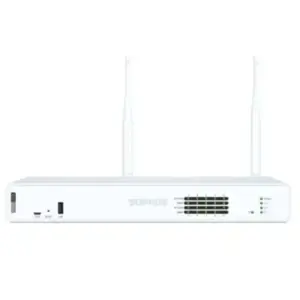
Fortinet FortiAP FAP-231K Wireless Access Point in Dubai, UAE
The FortiAP FAP-231K is aimed at businesses planning a current-generation indoor wireless network with Wi-Fi 7 on 2.4 GHz, 5 GHz, and 6 GHz. Its role is not simply to increase headline wireless speed; it gives network teams a compact 2×2 access point that can fit into a Fortinet-managed LAN design, use a multi-gigabit wired uplink, and support modern client density while keeping policy and wireless operations aligned with the wider network architecture.
What to confirm first
For an accurate quotation, share the required quantity, floor plans or coverage areas, expected client count, current switching platform, available PoE budget, management preference, and whether 6 GHz operation is required.
Regional part number, licensing, support term, power accessories, and delivery timing should be confirmed before purchase.
Direct answer for buyers
The Fortinet FortiAP FAP-231K is a tri-band indoor Wi-Fi 7 access point for organisations that want 2.4 GHz, 5 GHz, and 6 GHz wireless service in a Fortinet-managed network. It is most relevant to offices, branches, education sites, hospitality venues, retail environments, and other indoor locations where newer Wi-Fi clients and multi-gigabit switching are being introduced. Buyers should not choose it from wireless generation alone. Confirm radio coverage, client mix, 6 GHz regulatory use, wired uplink capacity, PoE availability, management platform, support subscription, mounting needs, and the exact regional SKU before ordering.
What the FAP-231K does
The access point provides enterprise WLAN service across three frequency bands. The 2.4 GHz radio supports 2×2 operation with 20/40 MHz channels, the 5 GHz radio supports 2×2 operation up to 160 MHz, and the 6 GHz radio supports 2×2 operation up to 320 MHz where local regulation and client support permit. Fortinet publishes maximum radio data rates of up to 688 Mbps on 2.4 GHz, 2.882 Gbps on 5 GHz, and 5.765 Gbps on 6 GHz. These values are physical-layer maxima, not a promise of application throughput at every client.
It also provides a multi-gigabit 5/2.5/1 GbE RJ45 interface for the wired uplink and a serial management port. BLE and ZigBee capability can support relevant location, beacon, or IoT-oriented use cases when the surrounding application design calls for them.
Who should consider it
The FAP-231K makes sense when a business needs an indoor 2×2 Wi-Fi 7 AP and wants the wireless layer to sit within a Fortinet networking and security design. It can be a practical fit for new offices, branch refreshes, meeting-heavy workplaces, classrooms, guest Wi-Fi areas, professional services firms, clinics, hospitality areas, retail spaces, and distributed sites that are moving to newer client hardware.
It may not be the right choice for every high-density or outdoor requirement. Projects demanding 4×4 radio architecture, external antennas, outdoor environmental protection, or a different physical form factor should compare other FortiAP models. Likewise, a site with only 1 GbE switching and no plan to use 6 GHz may need to examine whether the additional capability is useful enough to justify the design change.
Business challenges the FAP-231K can help address
Crowded legacy spectrum
A tri-band design can give compatible devices access to 6 GHz in addition to the established 2.4 and 5 GHz bands. This can help a wireless design distribute capable clients across more spectrum, subject to regulatory and device support.
Wireless and security silos
FortiAPs can be managed within Fortinet architecture options rather than as an isolated WLAN platform. This may simplify operational visibility where Fortinet is already part of the LAN or security estate, while the exact management path should be selected during design.
Wired bottlenecks after a WLAN refresh
The 5/2.5/1 GbE uplink supports a multi-gigabit wired connection. Buyers still need to check switch port speed, cabling, PoE budget, upstream capacity, and the traffic profile so the WLAN upgrade is not constrained elsewhere.
Growth in connected devices
Fortinet specifies up to 256 clients per serving radio as a platform capacity figure. Real deployment density should be engineered far below simplistic maximum-client math and should consider airtime, application mix, roaming, signal quality, and user experience targets.
Core capabilities buyers should understand
2.4, 5 and 6 GHz serving radios with 2×2 operation on each band.
Wide-channel capability is available where client support, spectrum plan and regulation permit.
One 5/2.5/1 GbE RJ45 interface helps align the AP with modern access switching.
Power design should be checked against switch budget and cable path before installation.
SSID forwarding modes support different network designs; the selected mode should match the controller and security architecture.
Integrated low-power wireless capability can support relevant beacon, location or IoT scenarios when configured as part of a compatible solution.
Is the FAP-231K the right fit?
| Requirement | Suitable when | Confirm before ordering |
|---|---|---|
| Indoor Wi-Fi 7 refresh | The site needs a current 2×2 tri-band AP and compatible clients are being introduced. | Coverage design, client mix, 6 GHz availability and channel plan. |
| Fortinet-based LAN | Central wireless management within the Fortinet architecture is preferred. | FortiGate or cloud/SASE management mode, software compatibility and licenses. |
| Multi-gig access switching | The wired edge can provide greater than 1 GbE where required. | Switch port speed, cabling category, PoE budget and upstream bandwidth. |
| High device counts | The RF design distributes users across enough APs and bands. | Airtime demand, application types, roaming and per-zone density. |
| Outdoor or exposed area | Not the intended use case. | Select an outdoor-rated FortiAP after environmental review. |
| 4×4 radio requirement | The project does not specifically require 4×4 radios. | Compare higher-radio FortiAP options such as the FAP-441K family position where appropriate. |
Verified FAP-231K technical information
The values below are limited to model-specific information published for the FAP-231K. Wireless data-rate figures are maximum radio rates and should not be interpreted as guaranteed user throughput. Regulatory capabilities, especially 6 GHz operation, can vary by country and regional part number.
| Brand | Fortinet |
|---|---|
| Product | FortiAP FAP-231K |
| Product type | Indoor wireless access point |
| Wireless technology | Wi-Fi 7 / IEEE 802.11be |
| Radios | 3 Wi-Fi radios plus BLE |
| 2.4 GHz radio | 2×2, 20/40 MHz; up to 688 Mbps |
| 5 GHz radio | 2×2, 20/40/80/160 MHz; up to 2.882 Gbps |
| 6 GHz radio | 2×2, 20/40/80/160/320 MHz; up to 5.765 Gbps, region dependent |
| Antennas | Internal antennas; Fortinet product matrix lists four internal Wi-Fi antennas plus one internal BLE antenna |
| BLE / ZigBee | Supported |
| Ethernet interface | 1 x 5/2.5/1 GbE RJ45 |
| Serial interface | 1 x RS-232 RJ45 serial port |
| Power over Ethernet | 802.3at PoE default |
| Maximum power consumption | 15.2 W |
| SSID capacity | Up to 8 per client-serving radio; 7 if background scanning is enabled |
| SSID types | Local bridge, tunnel and mesh |
| Published client capacity | Up to 256 clients per serving radio; practical design should use RF and application requirements rather than maximum-count sizing |
| SASE support | Listed by Fortinet for this model; subscription and architecture dependent |
| Management | Fortinet-managed options including FortiGate and cloud/SASE paths; exact software and licensing compatibility should be confirmed |
| Availability | Contact FourTeck for current UAE model, region code, quantity and lead-time confirmation |
| Warranty guidance | Confirm the applicable Fortinet support and warranty terms for the quoted regional SKU and support package |
Configuration, licensing and regional dependencies
The FAP-231K hardware should be treated as one part of a complete WLAN design. The preferred management route, firmware compatibility, cloud or SASE subscription, FortiCare support level, switch configuration, VLAN design, authentication method, SSID structure and security policy all influence the final bill of materials and deployment plan. A buyer should not assume that every management or security service is included with the base access point.
The 6 GHz band is also subject to local regulatory rules and the capabilities of client devices. Regional suffixes can differ, so the exact part number should be confirmed for the destination country. FourTeck can help align the hardware, support term and management approach before the order is finalised.
A practical purchase and deployment journey
Define the user experience
List the applications, device types, roaming expectations, guest access needs and high-traffic spaces. Wi-Fi sizing begins with workload and experience targets, not a simple square-metre estimate.
Review the RF environment
Use floor plans and, where appropriate, a survey to identify walls, interference, ceiling height, client density and mounting constraints. Decide how 2.4, 5 and 6 GHz will be used in the channel plan.
Validate switching and power
Confirm multi-gig port availability, cable quality, PoE capacity per port and overall switch budget. Also consider switch uplinks and the upstream internet or WAN path.
Choose management and support
Confirm whether the APs will be controlled through FortiGate or another supported Fortinet management path. Check required subscriptions, support term and software compatibility.
Deploy and validate
After installation, test coverage, roaming, authentication, VLAN placement, application behaviour and failure scenarios. Optimise RF settings based on actual usage rather than assuming default settings will fit every site.
Wi-Fi 7 capability without treating headline speed as the design goal
The FAP-231K brings Wi-Fi 7 radio technology into a compact indoor 2×2 platform. For buyers, the important question is how the radio design changes day-to-day WLAN planning. A 6 GHz radio can create more room for compatible devices, and the 320 MHz channel capability on that band can support very high physical-layer rates in suitable environments. However, wider channels consume more spectrum and may not be appropriate in every multi-AP design. In dense offices, schools, hospitality properties or multi-floor buildings, channel reuse and interference management can matter more than maximising channel width on every access point.
Client capability is equally important. Older devices will continue to use the bands and standards they support, so an upgrade to the access point does not instantly turn every endpoint into a Wi-Fi 7 client. A mixed estate may include scanners, phones, laptops, IoT devices, printers and guest equipment spanning several Wi-Fi generations. The RF design should therefore balance backward compatibility with the opportunity to move newer clients into 6 GHz.
For procurement teams, this means the FAP-231K should be evaluated alongside the expected device refresh cycle. A business replacing laptops during the next two or three years may value Wi-Fi 7 readiness differently from a site dominated by fixed legacy terminals. FourTeck can help convert the client inventory, floor plan and business applications into an AP quantity and placement discussion rather than basing the quotation only on the product generation.
Multi-gigabit uplink and PoE: the wired edge still matters
A Wi-Fi 7 upgrade can expose limits in the existing access layer. The FAP-231K uses a 5/2.5/1 GbE RJ45 interface, so it can connect above 1 GbE when the switch and cabling support the required link rate. That does not mean every site must operate the AP at 5 GbE, but it does give network designers a way to avoid automatically constraining a modern access point to a traditional 1 GbE edge. The right speed depends on traffic patterns, number of active clients, local switching, internet capacity and application behaviour.
Power should be considered at the same time. Fortinet lists 802.3at as the default PoE method for the FAP-231K and publishes a maximum consumption of 15.2 W. A single AP may appear modest, but a project with many units can create a material switch power-budget requirement. Designers should verify both per-port capability and the total PoE available from each switch, including any redundancy plan.
Cabling condition can also determine whether the desired multi-gig link is stable across existing runs. A pre-deployment review should identify cable category, distance, patching, switch model and uplink utilisation. This is especially useful in older offices where replacing an AP is easy but opening ceilings to remediate cabling is disruptive. FourTeck can include switching, PoE and installation review in the quotation discussion when the wireless refresh is part of a broader LAN upgrade.
Centralised operations and policy alignment
Fortinet positions FortiAP as part of a converged networking and security architecture. For an organisation already operating FortiGate or other Fortinet network services, that can be a reason to consider the FAP-231K beyond its radio specifications. Centralised visibility can reduce the operational gap between the wireless edge, wired network and security policy, particularly when the design uses common identity, segmentation and monitoring processes.
The management path still needs a deliberate choice. Fortinet supports different FortiAP control approaches across FortiGate, cloud-managed and SASE-oriented architectures. The exact features, subscription requirements and software compatibility can differ, so the design team should confirm the intended controller or cloud platform before purchase. It is better to make that decision at the bill-of-material stage than discover after delivery that the chosen operational model requires a different license or software release.
Operational planning should include administrator roles, configuration backup, change control, firmware lifecycle, alerting, guest access, authentication integration and troubleshooting workflow. These details determine whether central management actually reduces effort. FourTeck can help buyers define what should be supplied as hardware, what should be configured, what remains the customer’s responsibility, and what ongoing support expectations should be documented in the quotation.
Where the FAP-231K can fit well
Modern offices
Suitable for office refreshes where laptop and phone fleets are moving toward Wi-Fi 6E and Wi-Fi 7, meeting rooms create bursts of traffic, and IT wants centrally managed employee and guest WLANs.
Branches and distributed sites
Useful where a standard indoor AP platform is needed across multiple locations and a Fortinet management architecture is already part of the branch network design.
Education spaces
Can support classrooms, staff areas and shared learning spaces when AP placement, client density, roaming and content-access policies are properly engineered.
Hospitality and guest networks
Relevant to indoor guest areas, meeting facilities and staff zones, provided the design accounts for room construction, client diversity, authentication flow and the required guest network isolation.
Retail and customer areas
Can serve employee devices, customer Wi-Fi and selected digital applications where coverage, segmentation and wired backhaul are part of the store technology plan.
Professional and regulated environments
May suit clinics, finance offices and professional services locations where IT wants managed wireless access, but security policy, authentication and compliance requirements must still be designed for the organisation.
Integration and operational considerations
Wireless access points interact with almost every layer of the local network. For the FAP-231K, the switch must provide the correct VLAN trunks or access configuration, adequate PoE, and the desired Ethernet speed. DHCP, DNS, authentication services, firewall policy and internet access must support the SSID design. If guest traffic is separated from corporate access, the forwarding method and security path need to be agreed before configuration begins.
Roaming is another system-level consideration. A single AP can provide wireless service to a small area, but multi-AP networks require consistent RF planning, naming, authentication and channel behaviour. Users moving between rooms should not be used as the first test of whether the design is correct. A validation plan should measure signal levels, retransmissions, roaming events and application continuity across representative device types.
6 GHz introduces additional planning questions because only compatible devices can use it and local rules determine the permitted operation. The project team should identify which endpoints can benefit from 6 GHz, whether any applications require the additional spectrum, and whether the desired channel widths fit the deployment density. It is also wise to confirm current operating-system support and client driver maturity for the organisation’s device fleet.
Where Fortinet security and management services are involved, confirm version compatibility and subscription requirements before purchase. FourTeck can help assemble the relevant AP, support, management, switching and installation components into a reviewed bill of materials rather than treating the access point as a stand-alone item.
Questions to resolve before requesting a quotation
Include employee devices, guest equipment, IoT endpoints, scanners, voice devices and any bursty meeting-room demand.
A client inventory helps determine how much immediate value the 6 GHz radio will provide and how the network should be staged.
Confirm port speed, cabling and the total PoE budget across all planned APs, not only a single port.
Clarify controller or cloud/SASE management, required subscriptions, current firmware and who will operate the WLAN.
Floor plans, ceiling type, mounting height and access restrictions influence effort, AP count and accessories.
Align FortiCare and any management subscription with procurement policy, operating model and renewal planning.
Procurement checklist for the FAP-231K
✓ Confirm the exact FAP-231K regional SKU and suffix.
✓ State the required quantity and whether spares are needed.
✓ Provide floor plans, ceiling height and proposed mounting locations.
✓ Record expected concurrent users and major application types.
✓ Identify current and planned Wi-Fi 7 / 6 GHz client devices.
✓ Verify 5/2.5/1 GbE switch-port capability and cabling.
✓ Check 802.3at availability and aggregate PoE budget.
✓ Confirm management platform and software compatibility.
✓ Define required FortiCare, cloud or SASE subscription terms.
✓ Confirm SSID, VLAN, authentication and guest-access requirements.
✓ List mounting, power or installation accessories required.
✓ Include installation, configuration, testing or handover scope in the quotation where needed.
How FourTeck can assist with sizing and quotation
FourTeck can help turn an AP request into a complete purchasing requirement. That can include checking whether the FAP-231K is appropriate for the intended environment, reviewing likely AP quantities, identifying switching and PoE dependencies, clarifying the management method, mapping support or subscription requirements, and discussing whether installation or configuration services should be included.
For a straightforward replacement, the main task may be confirming the exact regional SKU and support term. For a new site or larger refresh, it is useful to share floor plans, device estimates, existing switch models, controller or FortiGate information, required SSIDs, authentication method and rollout schedule. FourTeck can then coordinate a more useful bill-of-material discussion and identify items that still require confirmation.
You can review other business networking and security products, explore FourTeck technical services, or contact the FourTeck team with the project details.
UAE availability and support guidance
Contact FourTeck to confirm current UAE availability for the Fortinet FortiAP FAP-231K. Availability can depend on the required regional suffix, quantity, support term, vendor lead time and project schedule. A quotation should also identify whether the requirement includes only the access point hardware or also FortiCare, cloud or SASE licensing, switching, PoE accessories, installation, configuration and validation services.
For UAE projects, FourTeck can coordinate requirement review and quotation planning after the deployment details are supplied. Delivery and project scheduling should be agreed only after the exact model, quantity, destination and scope have been confirmed. Buyers who are standardising multiple sites should also state whether they need consistent management, configuration templates, spare-unit planning or phased deployment assistance.
Dubai, Abu Dhabi, Sharjah and Ajman coverage
FourTeck can discuss FAP-231K requirements for organisations operating in Dubai, Abu Dhabi, Sharjah and Ajman as part of one UAE coverage conversation. Share the site count, quantity per location, expected users, switching environment, preferred management platform and whether installation or configuration support is required. For multi-location projects, it is useful to standardise the bill of materials, support term and configuration approach while allowing each site’s RF plan and installation constraints to be reviewed separately.
Planning a UAE wireless refresh
A refresh is usually easier to price accurately when buyers provide more than an access-point count. Existing switch models, ceiling plans, user density, guest access, authentication, cabling condition and the expected Wi-Fi client roadmap all affect the final recommendation. FourTeck can help structure these details before the quotation so the hardware order is aligned with the deployment rather than treated as a stand-alone purchase.
GCC Availability
FourTeck can assist organisations considering the FAP-231K for projects across the Gulf region, including requirements connected with the United Arab Emirates, Saudi Arabia, Kuwait, Qatar, Bahrain and Oman. Regional procurement should begin by confirming the destination country because product suffixes, 6 GHz rules, licensing, delivery planning and support arrangements can vary. For a useful quotation, provide the exact access-point model, expected quantity, intended management architecture, support or subscription term, deployment location and target project schedule. FourTeck can help review whether switching, PoE, mounting, configuration or installation work should be included in the scope. Product availability, vendor lead time, service visits and final delivery timing remain dependent on country, quantity and project requirements. For Kuwait-related planning, buyers may also review FourTeck Kuwait resources and then confirm the final bill of materials with the sales team.
Africa Availability
For African projects, FourTeck can help buyers evaluate the FAP-231K alongside the wider wireless requirement rather than treating shipping as the only procurement question. Destination country, regional model suffix, quantity, local 6 GHz regulation, power design, support term, management platform, shipping arrangements and installation expectations can all affect the final plan. Organisations in East Africa and other regions should share the intended deployment sites, client numbers, floor plans where available, target schedule and any configuration or support requirements. FourTeck can then discuss suitable procurement and project coordination options without assuming local inventory or fixed delivery dates. Buyers working in Kenya or Uganda can use FourTeck Kenya or FourTeck Uganda resources as regional starting points, while broader requirements can be explored through FourTeck Africa.
Related options to discuss before finalising the order
FortiAP FAP-221K
A Wi-Fi 7 indoor 2×2 option with two serving bands in Fortinet’s portfolio. It may be worth comparing where 6 GHz is not part of the requirement. Confirm exact features and management fit.
FortiAP FAP-241K
Another indoor Wi-Fi 7 2×2 model with a different radio design. Compare it when the project needs dedicated scanning or a different operational profile.
FortiAP FAP-441K
A 4×4 indoor Wi-Fi 7 model positioned for environments that need greater radio capacity. It should be evaluated when 2×2 architecture does not match density or performance goals.
FortiSwitch with suitable PoE
A wireless refresh may require multi-gig access ports and an adequate PoE budget. The switch model should be sized for the AP count, uplinks and other powered devices.
FortiGate-managed wireless
Organisations already using FortiGate can assess whether integrated WLAN control fits the design. Confirm software compatibility, scale and the required configuration before ordering.
Wireless survey and deployment support
For new sites or difficult RF environments, planning, installation and validation services can reduce guesswork around AP quantity, placement and post-deployment tuning.
Why businesses contact FourTeck for FortiAP projects
The practical value is in requirement clarification. A buyer may know the preferred access-point model but still need to confirm quantity, region code, support, switching, power, cloud management, installation or the correct order combination. FourTeck can help organise those decisions before the purchase order is raised.
For larger deployments, the discussion can expand to site standards, bill-of-material consistency, staged rollout, configuration scope and support renewal planning. For smaller deployments, it may simply involve checking that the AP, management method and PoE environment match. In both cases, the aim is to reduce avoidable mismatches rather than add unnecessary products.
Buyers can learn more about FourTeck or send project information through the FourTeck contact team.
What buyers usually need to know before moving to the FAP-231K
A recurring question in a Wi-Fi 7 purchase is whether the access point will make an existing network faster immediately. The answer depends on the client estate and the wired network. The FAP-231K can serve older compatible Wi-Fi devices as well as newer clients, but only devices with the relevant capabilities can use Wi-Fi 7 features or 6 GHz. A business with mostly older laptops may see more value from improved design, AP placement and capacity planning than from the newest radio features on day one. By contrast, an organisation buying a new fleet of Wi-Fi 7 laptops can make 6 GHz part of the network strategy much earlier.
Do you need 6 GHz to justify this model?
Not necessarily, but 6 GHz is one of the defining reasons to consider the FAP-231K. If the client roadmap does not include 6 GHz-capable devices, compare the cost and operational benefit with other FortiAP models. If newer clients are already present, 6 GHz can provide additional spectrum that may be valuable in busy indoor environments.
Will a 5 GbE port improve every deployment?
The multi-gig uplink gives the design headroom, but application throughput depends on more than the port. Client capability, airtime, channel use, WAN speed, switch uplinks and server paths may all constrain traffic. The correct approach is to remove avoidable bottlenecks rather than assume one port speed defines the user experience.
Another common concern is how many users one AP can handle. Fortinet publishes a platform figure of up to 256 clients per serving radio, but this is not a recommended design target for a busy office. Wireless networks are airtime systems. Fifty users in a training room doing video calls can create a very different load from fifty low-traffic sensors. Voice, video, file transfers, guest traffic and real-time collaboration should be considered separately. A sensible AP count therefore comes from expected concurrent demand and RF conditions rather than dividing a user total by the maximum client figure.
Buyers also ask whether they can replace an older FortiAP one-for-one. Sometimes the physical positions can be reused, but a direct count-for-count replacement should not be assumed. Wi-Fi 7 introduces new spectrum opportunities, client behaviour changes over time, and office layouts may have changed since the original WLAN was designed. A new survey or at least a review of floor plans and existing performance data can reveal whether AP placement should change. Ceiling type, wall construction, glass, metal shelving and high-density rooms can make a large difference.
The management question is equally important. FortiAP can sit within a Fortinet-controlled wireless architecture, but buyers need to choose the operational model intentionally. If FortiGate is already the network security platform, integrated control may be attractive. If cloud management or a SASE-oriented model is preferred, subscriptions and compatibility need to be checked. Do not assume a cloud service is automatically included with the hardware. The quotation should state the hardware SKU, support term, management subscription where required, and any professional services.
Power and switching often appear late in a wireless project even though they can determine whether the deployment works. The FAP-231K’s published maximum power consumption is 15.2 W with 802.3at PoE as the default power method. For a 30-AP project, the switch design must account for all APs and other powered devices, plus the switch’s own power-budget rules. Multi-gig port requirements should also be checked. If existing switches are limited to 1 GbE or do not support the required PoE standard, the wireless bill of materials may need to include switching changes.
Businesses comparing Wi-Fi 6, Wi-Fi 6E and Wi-Fi 7 usually want to know whether they should wait. There is no universal timing answer. If the current WLAN is meeting coverage, capacity and security requirements, a planned refresh can be tied to the device lifecycle. If the network is congested, the organisation is adopting 6 GHz-capable clients, or the site is being rebuilt, moving directly to Wi-Fi 7 may avoid another near-term replacement. The decision should be tied to the expected life of the access layer rather than only to the age of the standard.
For quotation planning, send FourTeck enough information to separate hardware requirements from deployment assumptions: quantity, location, floor plan, user count, device mix, current switch models, preferred management path, support term, installation needs and desired timing. That gives the sales and technical teams a basis to confirm the regional SKU and identify any missing dependencies before the order is placed.
Decision questions that can prevent the wrong wireless purchase
Should we choose the FAP-231K simply because it is Wi-Fi 7?
No. Wi-Fi generation is only one selection factor. Choose the model when its 2×2 tri-band design, indoor form factor, management approach and wired requirements fit the project. A site needing 4×4 radios, outdoor protection or external antennas should compare another FortiAP model. A small site with few modern clients may also have different priorities.
What information is most useful for AP sizing?
Floor plans, wall materials, ceiling height, expected concurrent clients, major applications, device types and known problem areas are more useful than a single square-metre figure. Where the environment is complex or user density is high, an RF survey or predictive design should be considered before fixing the AP count.
Do we need to replace our switches at the same time?
Not automatically. First check whether existing switches can provide the required PoE, desired link speed and enough aggregate capacity. If they cannot, a switch upgrade may be part of the wireless refresh. Even where 1 GbE can operate, the organisation may decide that multi-gig switching is worthwhile for the expected lifecycle.
How should we plan 6 GHz?
Start by verifying local regulation and the number of client devices that support the band. Then decide which SSIDs and user groups benefit from it. Wide channels can deliver high link rates, but dense multi-AP designs may prefer narrower channel plans to improve reuse. The best answer depends on site size and client demand.
What should be included beyond hardware?
Consider FortiCare, any required cloud or SASE subscription, switch or PoE upgrades, mounting needs, installation, configuration, survey work, testing and handover. The exact combination varies by project. Ask for these items to be separated in the quotation so procurement can see the hardware and service components clearly.
Can a phased rollout reduce project risk?
For larger estates, a pilot area can help validate client behaviour, switch compatibility, 6 GHz policy, configuration templates and roaming before wider deployment. The pilot should be representative of the real environment rather than the easiest location. Lessons can then be applied to the remaining sites.
These questions are particularly useful when the buying team includes procurement, IT operations and security stakeholders with different priorities. FourTeck can use the answers to clarify whether the FAP-231K is the right model, which dependencies belong in the bill of materials, and which parts of the deployment remain subject to design confirmation.
Frequently asked questions
Is the FortiAP FAP-231K a Wi-Fi 7 access point?
Yes. Fortinet lists the FAP-231K as an indoor Wi-Fi 7 access point using 2.4 GHz, 5 GHz and 6 GHz radios with 2×2 operation on each serving band.
Does the FAP-231K support 6 GHz?
Yes, the hardware includes a 6 GHz 2×2 radio with channel widths up to 320 MHz. Actual 6 GHz use is subject to regional regulation and client-device support, so the destination country and planned client estate should be checked.
What wired interface does the FAP-231K use?
Fortinet specifies one 5/2.5/1 GbE RJ45 interface plus an RS-232 RJ45 serial port. The deployment switch and cabling should be reviewed if multi-gig operation is required.
What PoE standard is required?
Fortinet lists 802.3at as the default PoE method and a maximum power consumption of 15.2 W. Confirm the switch’s per-port capability and total PoE budget for the planned AP quantity.
How is the FAP-231K managed?
FortiAP supports Fortinet management architectures including FortiGate and cloud/SASE paths. The exact management platform, software compatibility, subscription and scale should be confirmed for the project before ordering.
Can the FAP-231K be used outdoors?
No. Fortinet positions the FAP-231K as an indoor access point. Outdoor or exposed deployments should use an appropriate outdoor-rated model after environmental and coverage requirements are reviewed.
How many clients can it support?
Fortinet publishes up to 256 clients per serving radio as a platform capacity. Practical WLAN sizing should be based on airtime, applications, signal quality and concurrent usage rather than using the maximum client figure as a target.
Are licenses or subscriptions included with the AP?
Do not assume every management, cloud, SASE or support service is included with the base hardware. The quotation should state the FortiCare term and any required management subscription separately.
How do I request a Dubai or UAE quotation?
Send FourTeck the required quantity, deployment location, floor plan or coverage details, expected users, switch environment, management preference, support term and installation needs. FourTeck can then confirm the regional SKU, current availability and quotation scope.
Plan the FAP-231K purchase around your real WLAN requirements
Share the site details, quantity, user density, switch models, management preference and required support term. FourTeck can help confirm whether the FAP-231K is the right fit, identify any missing switching or licensing dependencies, and prepare a quotation based on the actual deployment scope.

Reviews
There are no reviews yet.