

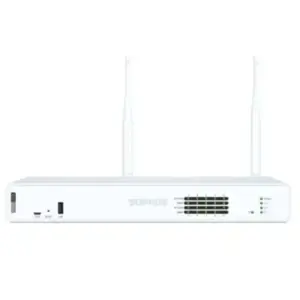
Fortinet FortiExtender Vehicle 212F in Dubai, UAE
The Fortinet FortiExtender Vehicle 212F, model FEV-212F, is built for organisations that need LTE connectivity to travel with the operation rather than remain tied to a fixed office. Its dual CAT-12 modem design, four SIM positions, built-in Wi-Fi and vehicle-focused hardware make it a practical choice for mobile fleets, field systems and operational technology deployments where carrier diversity, network continuity and central management matter. FourTeck helps UAE buyers translate those capabilities into a correct bill of materials by checking the regional model, antenna plan, SIM approach, mounting, power, management method and support requirement before quotation.
Share the fleet size, deployment country, preferred mobile carriers, antenna requirement and management environment. FourTeck can help validate the exact configuration before you order.
A direct answer for buyers
FortiExtender Vehicle 212F is a Fortinet wireless WAN gateway for vehicle and operational technology deployments that need 3G/4G LTE connectivity, wired Ethernet and local Wi-Fi in one managed platform. It should be considered by fleet operators, transport organisations, utilities, field-service teams, mobile response units and remote-site owners that value dual cellular modems and carrier diversity. The most important checks before purchase are the correct FEV-212F regional code, local carrier compatibility, SIM arrangement, external LTE/GNSS antenna choice, power source, mounting position, software compatibility and whether management will be through FortiGate, FortiEdge Cloud or a standalone design. Availability, support terms and deployment services should also be confirmed for the destination before ordering.
What the FEV-212F does
A vehicle network often has to operate beyond the reach of a fixed Ethernet circuit. The FEV-212F provides a cellular WAN edge that can connect over LTE while also offering a dedicated Gigabit WAN interface, four Gigabit LAN ports and built-in Wi-Fi. The dual-modem architecture lets network teams design for more than one cellular path, which can be useful when a fleet crosses areas where carrier coverage differs or when the operation cannot depend on a single mobile network.
The product also fits Fortinet-managed architectures. Fortinet documents FortiGate LAN Extension and WAN Extension support for the Vehicle 212F, while current platform documentation lists the model in the FortiExtender operating-system compatibility matrix. Buyers should still confirm the intended FortiOS and FortiExtender OS versions for the final deployment rather than assuming every software combination is equivalent.
Who should shortlist it
The strongest fit is a business that needs a network edge inside a vehicle or a similarly mobile operational environment. Examples include service fleets carrying connected equipment, transport and logistics vehicles, mobile command or field coordination units, remote inspection teams, utility vehicles, temporary operations and specialist industrial assets. It can also be relevant to fixed OT locations when the vehicle-oriented form factor and cellular capabilities suit the installation.
It is not automatically the right answer for every wireless WAN requirement. A buyer seeking 5G rather than LTE should compare a current 5G FortiExtender option. A climate-controlled branch that only needs one modem may be better served by a simpler indoor model. Selection should be driven by modem count, mobile carrier strategy, Wi-Fi need, environmental conditions, mounting, power, regional radio support and how the device will be managed.
Operational problems this model can help address
Single-carrier dependency
Two internal LTE modems and two dual-SIM groups give designers more options for carrier diversity. The actual failover or active-link behaviour depends on configuration, mobile contracts and network conditions, so the SIM strategy should be designed rather than treated as an automatic guarantee of uptime.
Connectivity while moving
A vehicle-mounted gateway allows cameras, laptops, telemetry devices, handheld systems or other approved onboard equipment to reach business resources through a centrally planned WAN rather than relying on ad-hoc phone hotspots. The final network design should account for bandwidth, antenna placement and application priority.
Remote operations management
FortiExtender can participate in Fortinet-managed environments, helping administrators use a consistent approach across distributed assets. Management architecture, licenses, software versions and integration with the existing FortiGate estate should be reviewed before rollout.
Mixed wired and wireless devices
Four Gigabit LAN ports and integrated dual-band Wi-Fi support a compact onboard LAN. The number and type of connected endpoints, VLAN design, authentication method and security controls still need to be planned to match the vehicle use case.
Core capabilities in business terms
Dual CAT-12 LTE
The EMEA/APAC/LATAM FEV-212F uses two CAT-12 LTE modem modules. Fortinet identifies the model as a dual-modem vehicle gateway, making dual cellular paths the central reason to choose it over a single-modem alternative.
Dual-band Wi-Fi
The product provides 2×2 2.4/5 GHz 802.11 a/b/g/n/ac Wave 2 Wi-Fi. This can create local wireless access inside or around the vehicle, subject to configuration, radio conditions and the security policy selected by the operator.
GPS/GNSS support
The platform provides GPS/GNSS capability and a dedicated antenna connection. Positioning use depends on the antenna design and software/application requirements, so buyers should confirm how location data is intended to be consumed.
Fortinet integration
Fortinet positions FortiExtender as part of its secure networking portfolio and documents FortiGate extension functions. This can reduce operational fragmentation where a business already uses Fortinet, provided the software and management design are compatible.
Product-fit matrix
| Requirement | Suitable when | Confirm before ordering |
|---|---|---|
| Cellular resilience | Two LTE modems and multiple SIMs are useful for the WAN design. | Carrier bands, SIM policies, data plans and failover rules. |
| Vehicle networking | The gateway will be installed in a vehicle, mobile asset or comparable OT setting. | Mounting position, power source, heat, cable routing and antenna placement. |
| Local wired devices | Up to four onboard LAN connections meet the physical port plan. | VLANs, endpoint count, switch expansion and security segmentation. |
| Wi-Fi access | Wi-Fi 5 is sufficient for client connectivity or the selected wireless role. | Coverage, user count, RF environment and authentication design. |
| Fortinet-managed edge | The organisation wants FortiGate/Fortinet management alignment. | FortiOS/FortiExtender OS compatibility and the required management service. |
| 5G requirement | Not the preferred fit when 5G radio access is mandatory. | Compare a 5G FortiExtender vehicle option such as the relevant 511G variant. |
Verified technical information for FortiExtender Vehicle 212F
| Brand | Fortinet |
|---|---|
| Product name | FortiExtender Vehicle 212F |
| Model | FEV-212F; regional code suffix must be confirmed for the destination. |
| Product type | Vehicle / OT broadband wireless WAN gateway |
| Cellular architecture | Two internal CAT-12 LTE modems |
| SIM arrangement | Two dual-SIM groups, four SIM positions in total |
| Regional positioning | FEV-212F is listed for EMEA/APAC/LATAM; FEV-212F-AM is the North America variant. |
| Cellular module family | Sierra Wireless EM7565 for the FEV-212F regional model family; modem firmware and carrier support should be confirmed. |
| Advertised modem category rate | CAT-12 class, up to 600 Mbps downlink / 150 Mbps uplink per modem under supported conditions; real performance depends on carrier, radio environment and network loading. |
| Ethernet | 1 x Gigabit Ethernet WAN and 4 x Gigabit Ethernet LAN RJ45 ports |
| Wi-Fi | 2×2 2.4/5 GHz 802.11 a/b/g/n/ac Wave 2 |
| Bluetooth | Integrated Bluetooth; configuration and use are application dependent. |
| GPS/GNSS | Supported with dedicated antenna connection |
| USB | 1 x USB 2.0 Type-A |
| Mounting | Vehicle / wall-oriented mounting; installation method should be confirmed for the actual asset. |
| Approximate chassis size | 45 x 130 x 182 mm, excluding antennas |
| Approximate weight | 0.97 kg |
| Vehicle antenna | External LTE/GNSS vehicle antenna is a separate requirement; compatible Fortinet options include FANT-5IN1-TG-5M-FEV and FANT-7IN1-TG-5M-FEV for FEV-212F/-AM. |
| Management | FortiGate-managed and FortiEdge Cloud-managed options are documented; exact support/subscription requirement is configuration dependent. |
| Support | FortiCare support options are available for the model family. Term and service level should be quoted separately. |
| UAE availability | Contact FourTeck for current model, regional code, quantity and vendor lead-time confirmation. |
The figures above identify the model and planning parameters rather than guaranteeing field throughput. Mobile network performance can change with LTE band, carrier aggregation, signal quality, antenna installation, congestion, mobility, data-plan policy and software configuration. FourTeck can help match these variables to the intended deployment before a purchase decision is made.
Compatibility and dependency notice
The FEV-212F is not a universal radio device that can be assumed to work identically with every SIM in every country. Cellular bands, modem firmware, carrier certification rules and operator provisioning can affect service. Fortinet identifies the FEV-212F as the EMEA/APAC/LATAM hardware family and separates it from the FEV-212F-AM North American variant. UAE projects should therefore confirm the exact country code, operator requirements and supported LTE bands before the purchase order is finalised.
The external LTE/GNSS antenna is another important dependency. Fortinet lists dedicated vehicle antenna accessories for the FEV-212F family, including five-in-one and seven-in-one roof-mount options. The correct choice depends on whether the design needs cellular and GNSS only or also wants external Wi-Fi elements. Cable routing, roof material, antenna separation, drilling permissions and vehicle warranty considerations should all be reviewed during installation planning.
Management also has dependencies. A FortiGate-managed architecture, a FortiEdge Cloud-managed deployment and a standalone installation have different operational models. Confirm the required FortiExtender OS, FortiOS compatibility, subscriptions, support term and administrative responsibility before rollout.
A practical purchase and deployment journey
Define the mobile use case
Document what must stay connected: telematics, laptops, cameras, controllers, payment systems, field applications or remote-management traffic. Note typical data use and how critical the connection is.
Choose the carrier strategy
Decide whether the two modems will use different operators, multiple SIMs from the same operator, or another arrangement. Confirm data plans, APNs, private SIM requirements and roaming limitations.
Build the physical bill of materials
Include the exact FEV-212F regional code, external vehicle antenna, mounting items, power accessories, Ethernet cabling and any supporting switch or security equipment required in the vehicle.
Select management and support
Confirm whether the units will be managed through FortiGate, FortiEdge Cloud or another approved method, and select the relevant FortiCare/support term for the operational lifecycle.
Pilot before fleet scale
A small controlled deployment can validate carrier behaviour, antenna placement, power stability, Wi-Fi coverage, policy, remote management and failover behaviour before a larger vehicle rollout.
Capability focus: dual-modem resilience without assuming perfect coverage
The defining capability of the Vehicle 212F is the presence of two CAT-12 LTE modems rather than a single radio path. In practice, this matters because vehicle connectivity is exposed to changing signal conditions. A delivery truck can move from a strong urban cell into a warehouse yard with reflection and obstruction. A utility vehicle may travel between operators’ stronger coverage areas. A temporary field unit may remain parked for hours in a location where one carrier performs better than another. With two modem paths, the network designer has more choices for avoiding a single dependency.
That architecture should be treated as an engineering tool, not a promise that connectivity will never drop. Carrier diversity works best when the SIMs, antennas, routing policy and application priorities have been planned together. Two SIMs from carriers that share the same underlying coverage constraints may not deliver the desired independence. Likewise, poor antenna placement can reduce the practical value of a sophisticated modem arrangement. The strongest deployment begins with coverage knowledge, then uses the FortiExtender configuration to support the intended behaviour.
For organisations already using FortiGate secure networking, the 212F can also be considered as part of a wider WAN policy rather than an isolated modem. This can help operations teams standardise how remote links are monitored and how traffic reaches central resources. FourTeck can help identify which parts of the resilience design belong in the gateway, which belong in FortiGate or SD-WAN policy, and which depend on the mobile operators themselves.
Capability focus: an onboard network for wired and wireless devices
A mobile WAN gateway is most useful when it can connect the equipment that actually travels with the vehicle. The FEV-212F provides four Gigabit Ethernet LAN interfaces and dual-band Wi-Fi 5, giving designers a compact combination of wired and wireless access. That can suit a vehicle containing a rugged laptop, camera system, telematics controller, service terminal, diagnostic tool or other networked equipment. The dedicated Gigabit WAN port also gives the design an additional path when a wired uplink is available at a depot or temporary location.
The presence of ports does not remove the need for segmentation. A vehicle with operational equipment and staff devices may need separate VLANs or security policies. A camera stream can create very different bandwidth demand from telemetry. An engineer’s laptop may require corporate authentication while a machine interface may use a fixed address. Buyers should therefore map the connected devices, traffic direction, addressing, authentication, logging and remote-access requirements before deciding whether the onboard interfaces are sufficient by themselves or should feed another switch or security device.
Wi-Fi should also be planned as radio infrastructure rather than a checkbox. The vehicle body, nearby equipment, passenger area, parked location and external antenna design can affect coverage. If the use case depends heavily on client Wi-Fi, test the required zones during a pilot. Where newer Wi-Fi generations, more client capacity or advanced WLAN features are mandatory, compare the FEV-212F with other products in the wider Fortinet portfolio rather than selecting solely because Wi-Fi is present.
Capability focus: management consistency across distributed assets
Fleet networking becomes difficult when every vehicle behaves like a separate consumer router. Credentials drift, configurations become inconsistent, cellular faults are hard to diagnose and operational teams spend time asking drivers or field staff to reboot equipment. Fortinet positions FortiExtender as a managed wireless WAN platform, and the Vehicle 212F supports architectures in which FortiGate or FortiEdge Cloud provides central operational control. The value is less about a single dashboard feature and more about making mobile connectivity part of the same network-management discipline used elsewhere.
The management choice should reflect who owns the service. An organisation with a FortiGate estate may want the extender aligned with firewall and WAN policies. A distributed fleet may place a higher priority on cloud-based visibility. A specialist standalone deployment may have another reason to separate the gateway. Each option has implications for software compatibility, subscriptions, administrator access, change control, monitoring and support responsibilities. These items should be documented before devices are dispatched into vehicles.
This is also where support planning becomes practical. A remote unit may be hours away from the IT team, so the ability to collect diagnostics and manage settings remotely can reduce unnecessary site visits. That benefit depends on correct onboarding, reachability and access control. FourTeck can assist with a deployment standard covering naming, SIM records, configuration templates, upgrade planning, backup expectations and escalation procedures so a fleet of FEV-212F units can be operated as a managed service rather than a collection of unrelated boxes.
Ideal business environments and use cases
Transport and logistics fleets
Fleet vehicles can use the gateway as a managed connectivity point for driver systems, telemetry, onboard devices and approved business applications. The dual-modem design is attractive when routes cross areas with uneven mobile coverage. The organisation should confirm data plans and roaming behaviour for the intended routes.
Utilities and field service
Engineering and maintenance vehicles often need secure access to work orders, remote systems, diagnostic tools and operational data. The FEV-212F can provide the WAN and local network foundation, while the security architecture determines which resources can be reached.
Mobile response units
Temporary command or response vehicles may need connectivity for collaboration, mapping, cameras, data exchange and central coordination. Antenna position, power stability, application priority and carrier choice become especially important when the vehicle must work in unfamiliar locations.
Remote OT and temporary sites
The vehicle form factor can also be considered for certain fixed operational locations, temporary installations or movable industrial assets where LTE, Ethernet and Wi-Fi are needed together. Environmental suitability and mounting should be checked against the actual site conditions.
Integration and operational considerations
The gateway should be planned as one component of the business network. Start with addressing and segmentation. Decide whether vehicle devices receive addresses from the FortiExtender or from another network function, whether different endpoint groups need separate VLANs, and which traffic is allowed to traverse the cellular WAN. If the unit is integrated with FortiGate, define where policy enforcement, VPN termination and SD-WAN path selection will occur. This prevents duplicated configuration and makes troubleshooting easier.
Next consider application behaviour over mobile links. Video upload, cloud backup and software updates can consume large amounts of cellular data. Real-time operational traffic may be more sensitive to latency than ordinary web access. Some applications maintain sessions poorly when the public IP address changes. Private APNs, static addressing, inbound connectivity or carrier-grade NAT may affect the solution. These are not FortiExtender-only questions; they involve the mobile operator and the application design. Capture them during procurement so the final network behaves as expected.
Finally, build an operations process. Record the device serial number, modem identifiers, SIM numbers, carrier account, vehicle asset ID, antenna type and support contract. Establish a firmware and configuration-change process. Decide who can replace a SIM, who can factory-reset a device and how a lost or decommissioned vehicle is handled. Mobile networking becomes more manageable when inventory, configuration and field procedures are documented from the beginning.
Buyer questions to resolve before ordering
Which mobile carriers will be used?
The answer influences regional model selection, SIM provisioning, APNs, coverage testing and the value of using two modem paths.
Will both modems be active operationally?
Clarify whether the design uses carrier failover, load distribution or another policy so the SIM and data-plan structure can be quoted correctly.
Which external antenna is required?
The vehicle LTE/GNSS antenna is a separate item. Decide whether Wi-Fi also needs external roof elements and how cables can be routed safely.
How will the unit be powered?
Review the vehicle electrical system, ignition behaviour, fuse strategy, permitted installation method and power accessory requirements.
What will connect locally?
List wired and wireless endpoints, security zones, bandwidth expectations and whether the four LAN ports meet the physical requirement.
Who will manage the fleet?
Choose FortiGate, FortiEdge Cloud or the required supported operating model, then include compatible software and support in the rollout plan.
Procurement checklist for FEV-212F projects
✓ Exact FEV-212F regional part code for the deployment country
✓ Required quantity and planned number of vehicles or sites
✓ Primary and secondary mobile operators and SIM ownership
✓ APN, private SIM, roaming or static-IP requirements
✓ Vehicle LTE/GNSS antenna model and cable-routing plan
✓ Wi-Fi coverage and client requirements
✓ Number of wired LAN devices and VLAN design
✓ Mounting location, enclosure constraints and access for maintenance
✓ Vehicle power source, protection and installation responsibility
✓ FortiGate, FortiEdge Cloud or standalone management approach
✓ FortiOS and FortiExtender OS compatibility check
✓ FortiCare/support service and desired term
✓ Pilot testing, configuration template and acceptance criteria
✓ Delivery destination and project timeline for lead-time planning
FourTeck consultation, sizing and configuration support
FourTeck can help turn a product request into a deployable configuration. For FEV-212F enquiries, that normally starts with the intended vehicle or site type, number of units, destination, mobile operators, local devices and central network architecture. From there, the discussion can cover the exact regional SKU, required antenna, management path, support term and optional deployment services. This is particularly useful when procurement teams have a model name but the engineering team still needs to confirm how it will fit into the wider WAN.
If the organisation already operates Fortinet, FourTeck can also review how the extender relates to the existing FortiGate environment and whether configuration, rollout templates or integration work should be included in the quotation. Businesses planning a broader secure-network project can review FourTeck network and security products or discuss deployment assistance through the technology services team.
A useful quotation request includes quantity, destination, target deployment date, required support term, proposed SIM carriers, antenna preference and whether installation or configuration is needed. This helps avoid an incomplete bill of materials and gives both procurement and IT a clearer basis for approval.
UAE availability and support guidance
Contact FourTeck to confirm current UAE availability for the Fortinet FortiExtender Vehicle 212F. Availability can depend on the exact regional part code, quantity, Fortinet channel lead time, support selection and accessory requirements. A quotation should distinguish the gateway from optional or separately ordered items such as the vehicle LTE/GNSS antenna, support services and any installation or configuration work. Do not assume an antenna or subscription is bundled unless the quotation states it.
For UAE deployments, it is also sensible to validate local carrier compatibility and the intended SIM plan before equipment is installed across an entire fleet. A pilot vehicle can confirm the performance of the selected carriers and antenna placement in the actual operating area. Delivery and project coordination can then be discussed once the model, quantity and deployment scope are clear.
For current product enquiries, use the FourTeck UAE contact page. Buyers evaluating a broader Fortinet environment can also review Fortinet solutions for UAE networks when the mobile WAN gateway will connect into an existing secure edge.
Dubai, Abu Dhabi, Sharjah and Ajman coverage
FourTeck can coordinate product consultation, quotation planning and agreed deployment services for organisations operating across Dubai, Abu Dhabi, Sharjah and Ajman. A fleet project may involve vehicles registered in one emirate but operating across several, so the better planning method is to treat the deployment as one managed technical standard: the same hardware variant where appropriate, documented SIM policies, consistent antenna installation, common configuration templates and a shared support process. Local scheduling, site access, vehicle availability and installation scope can differ between locations, so these should be confirmed during project planning. FourTeck can help consolidate the requirement into a single bill of materials and rollout discussion rather than creating separate technical designs for each city unless the operating conditions genuinely require it.
GCC Availability
Organisations running fleets or operational technology across the Gulf often need the same mobile-network design to be reviewed across more than one country. FourTeck can assist with requirement review, model and accessory selection, quotation coordination, configuration scope, installation planning and regional project discussions for GCC requirements. The FEV-212F family is region-sensitive, so the destination market, carrier environment and exact Fortinet part code should be checked rather than assuming one unit can be moved between all markets without additional validation.
Projects may involve the United Arab Emirates, Saudi Arabia, Kuwait, Qatar, Bahrain or Oman, but product availability, licensing, mobile carrier support, delivery schedule, service visits and vendor lead time can vary by country, model and quantity. Buyers should provide the destination country, number of units, proposed mobile operators, preferred support term, antenna requirement, vehicle type and expected rollout date. FourTeck can then help identify the procurement questions that need to be resolved before a regional standard is approved. Kuwait-focused organisations can also use the FourTeck Kuwait resource when planning country-specific coordination.
Africa Availability
Vehicle and remote-site connectivity projects in Africa can vary widely because operating areas, mobile networks, road conditions, installation resources and procurement routes differ from one market to another. FourTeck can help organisations evaluate the FortiExtender Vehicle 212F, the required regional hardware code, SIM strategy, external antenna, management approach, support needs and rollout scope before an order is placed. The dual-modem architecture may be attractive for fleets travelling across areas with uneven coverage, but the real benefit depends on choosing suitable carriers and validating how their networks perform on the intended routes.
Availability and fulfilment can depend on destination, quantity, vendor lead time, power and radio requirements, shipping arrangements, local installation conditions and the selected support model. Buyers should share the destination country, exact quantity, expected deployment schedule, proposed mobile operators and whether FourTeck assistance is required for configuration or installation planning. For East African projects, the FourTeck Kenya resource can support Kenya-focused coordination, while FourTeck Africa provides a broader regional contact path. No local inventory, customs outcome or delivery date should be assumed until the specific requirement is confirmed.
Related products, accessories and services to consider
FANT-5IN1-TG-5M-FEV antenna
Fortinet lists this five-in-one vehicle roof antenna for FEV-212F/-AM. It combines four cellular antenna elements and one active GNSS element with a five-metre cable. Confirm installation method and cable routing.
FANT-7IN1-TG-5M-FEV antenna
This seven-in-one roof antenna adds two Wi-Fi elements to the cellular and GNSS arrangement. It can be relevant when the deployment needs external Wi-Fi antennas in addition to the mobile WAN radio system.
FortiExtender Vehicle 511G
Buyers that require a 5G vehicle gateway should compare the current 511G vehicle family. It is a different platform and should be evaluated on its own modem, SIM, Wi-Fi, power and accessory requirements.
FortiGate integration services
Where FEV-212F units are part of a wider Fortinet WAN, configuration work can include connectivity design, extension setup, VLAN policy, SD-WAN logic, monitoring and remote-management planning.
Why businesses contact FourTeck for this type of project
A vehicle gateway purchase often contains more variables than the product name suggests. The modem must match the region, the SIM plan must match the intended carriers, the external antenna must fit the installation, the power method must suit the vehicle, and the management model must align with the customer’s network. FourTeck can help organise those variables into a practical procurement discussion. This reduces the risk of receiving the gateway while still missing a critical antenna, support service or installation decision.
FourTeck can also help procurement and technical teams use the same specification. The engineering team can define the deployment and acceptance criteria while purchasing receives the exact part codes, quantities and service lines required for a quotation. Where the project includes FortiGate, switching, wireless, structured cabling or related infrastructure, those dependencies can be discussed together rather than treated as unrelated purchases.
For background on FourTeck’s technology approach, buyers can review the FourTeck company information and then use the contact page to share the project scope. The objective is to arrive at a correct, supportable configuration for the intended environment, with uncertain items clearly identified before the order is placed.
Planning a FortiExtender Vehicle 212F purchase: what buyers are really trying to solve
Most buyers researching the FEV-212F are not simply looking for another router. They are trying to solve one of several operational questions: how to keep a vehicle connected when fixed broadband is impossible, how to reduce dependence on one mobile operator, how to give onboard equipment a managed LAN, or how to integrate mobile assets with an existing Fortinet network. That distinction matters because it changes what should appear in the quotation. A product-only order may not address the antenna, SIM, carrier, power, support and management decisions that determine whether the deployment works well in practice.
Is the 212F a 5G router?
No. The Vehicle 212F is a dual CAT-12 LTE platform. This is an important purchasing distinction because buyers sometimes see the wider FortiExtender family described as 5G/LTE and assume every model contains a 5G modem. If 5G radio access is mandatory for the fleet, shortlist a current 5G vehicle model instead of treating the 212F as equivalent.
Why do four SIM positions matter?
The four positions are organised as two dual-SIM modem groups. This gives a network team flexibility when assigning operators and backup SIMs. It does not mean four simultaneous cellular links are automatically active. The way the modems and SIMs are used depends on the selected configuration and operating policy.
Another common question is whether the product includes everything needed for a vehicle installation. The gateway includes its onboard Wi-Fi capability, but Fortinet documents the external vehicle LTE/GNSS antenna as a separate requirement for the FEV-212F family. That should prompt an installation discussion before the order is approved. A roof antenna can require drilling, weather sealing, cable routing and a clear path away from noisy electronics. Some fleets have strict modification policies or leased vehicles where permanent roof work needs permission. These physical details are just as important as modem specifications.
Buyers also search for the difference between FEV-212F and FEV-212F-AM. The difference is regional rather than simply cosmetic. Fortinet separates the standard FEV-212F family for EMEA/APAC/LATAM from the North American AM variant, and the internal modem implementation supports different radio-band requirements. A UAE project should therefore be quoted against the correct EMEA/APAC regional part code. If the same fleet will later be deployed in another country, validate the target carrier environment before assuming the original hardware is suitable there.
A high-spec cellular gateway cannot compensate for the wrong SIM plan, weak local coverage or an APN that does not support the required application. Ask whether the business needs public internet, a private APN, fixed addressing, inbound access, VPN connectivity, roaming or specific data-volume commitments. Those answers can change both network design and operating cost.
For fleets that already use FortiGate, a major attraction is the possibility of managing the wireless WAN in the context of the wider Fortinet environment. The correct design depends on FortiOS and FortiExtender OS compatibility, the management method and where routing or security policy will be enforced. An IT team should decide whether the vehicle is simply extending a WAN path, hosting a local routed network, connecting through encrypted overlays, or participating in a broader SD-WAN architecture. Naming this role clearly prevents over-complicated configurations.
Pricing questions are also common, but a useful commercial comparison needs more than the gateway price. A complete project cost can include the external antenna, support, installation labour, vehicle access, mobile data plans, optional cloud management and configuration services. Multi-vehicle deployments may also need a pilot, documentation, asset labels and repeatable commissioning. For that reason, FourTeck recommends asking for a bill-of-material quotation rather than comparing a single hardware price in isolation.
Finally, think about lifecycle. Vehicles may remain in service for years and can be sold, reassigned or moved between regions. Maintain an inventory that links each FortiExtender serial number to the vehicle, SIM cards, carrier contracts, antenna and support term. This makes troubleshooting, SIM replacement, contract renewal and decommissioning easier. It also gives the network team a reliable record when a vehicle is transferred or a cellular operator changes. Good lifecycle discipline is often what separates a manageable fleet network from a growing collection of undocumented remote devices.
Questions worth answering before the vehicle reaches the installer
Will the gateway use two different mobile operators?
It can be planned that way, and this is one of the reasons to consider a dual-modem platform. The better choice depends on coverage maps, actual route testing, contract terms and whether the operators provide sufficiently independent service in the areas that matter. Record which SIM belongs to which modem and how failover or link selection will be tested.
Can the 212F replace a FortiGate firewall?
Do not assume that. FortiExtender is primarily a wireless WAN and connectivity platform. In many Fortinet designs it works with FortiGate rather than replacing the full security role of a next-generation firewall. Decide where firewall policy, VPN, inspection and segmentation are required, then choose the architecture accordingly.
What happens when the vehicle is parked at a depot?
The dedicated Ethernet WAN interface gives designers another connectivity option where a wired service is available, while Wi-Fi roles may also be relevant depending on configuration. Decide whether depot connectivity should take priority over cellular, how sessions are handled during path changes and whether large software updates should be scheduled when lower-cost connectivity is available.
Does every vehicle need the same antenna?
Not necessarily. The same FEV-212F gateway can be used across a standardised fleet, but antenna selection and mounting can vary with vehicle roof material, available space, Wi-Fi requirements and installation policy. Fortinet lists both five-in-one and seven-in-one vehicle antenna options for this model family. Confirm the RF and physical requirements before standardising.
How should a quotation be prepared for twenty or more vehicles?
Provide the total device count, desired spare quantity, regional part code, antenna type, support term, installation responsibility and management method. Add the planned carriers and any configuration template or staging requirement. This gives the supplier enough information to distinguish hardware cost from recurring services and project work.
When is a pilot especially important?
Run a pilot when route coverage is uncertain, the vehicle contains RF-sensitive equipment, the application depends on stable sessions, roof modifications are difficult, or the fleet will be deployed at scale. A pilot can validate carrier behaviour, antenna placement, power, heat, Wi-Fi coverage, remote management and failover before installation procedures are locked down.
These questions are not intended to make the project complicated. They help expose the decisions that already exist. FourTeck can use the answers to produce a clearer quotation and identify which assumptions need technical validation. For large fleets, the outcome should be a repeatable standard containing the approved model, antenna, SIM arrangement, configuration, labels, support path and installation instructions so each vehicle is commissioned consistently.
Support pathway after purchase
Confirm firmware, modem status, SIM registration, antenna connectivity, Ethernet and Wi-Fi operation, and the intended management platform.
Test the agreed mobile operators, failover behaviour, application access, remote visibility and vehicle power behaviour under expected operating conditions.
Maintain an asset record, software-change process, SIM inventory, support contacts and troubleshooting procedure for drivers and technical staff.
Review FortiCare or management renewals, carrier contracts, firmware compatibility and replacement strategy before support terms expire.
Frequently asked questions
Is FortiExtender Vehicle 212F a dual-modem device?
Yes. Fortinet identifies the FEV-212F as a dual-modem Vehicle FortiExtender with CAT-12 LTE modules. It also provides two dual-SIM groups. The way those modems and SIMs are used depends on the network configuration and carrier plan.
Does the FEV-212F support 5G?
No. The FEV-212F is a 3G/4G LTE CAT-12 platform. If the project specifically requires 5G, compare a current 5G FortiExtender vehicle model and confirm the required bands and carrier compatibility.
What is the difference between FEV-212F and FEV-212F-AM?
They are regional variants. Fortinet lists the FEV-212F family for EMEA/APAC/LATAM and the FEV-212F-AM family for North America. The modem implementation and supported radio bands differ, so the destination market must be confirmed before ordering.
Is the vehicle LTE antenna included?
The external vehicle LTE/GNSS antenna should be treated as a separate bill-of-material item. Fortinet lists compatible FANT-5IN1-TG-5M-FEV and FANT-7IN1-TG-5M-FEV options for the FEV-212F/-AM family. Confirm the required antenna in the quotation.
How many Ethernet ports are available?
The Vehicle 212F provides one Gigabit Ethernet WAN port and four Gigabit Ethernet LAN ports. Check whether the connected devices need additional switching, VLAN segmentation or power delivery from another device.
Can it provide Wi-Fi inside a vehicle?
Yes. The model includes 2×2 dual-band 2.4/5 GHz 802.11 a/b/g/n/ac Wave 2 Wi-Fi. Actual coverage depends on the vehicle body, antenna arrangement, interference, client type and radio configuration.
Can FortiGate manage the FEV-212F?
Fortinet documents FortiGate-managed support and extension functions for the Vehicle 212F. Confirm the intended FortiOS and FortiExtender OS combination, architecture and support requirements for the deployment.
What information should I send for a Dubai quotation?
Send the required quantity, vehicle type, preferred mobile carriers, deployment locations, antenna requirement, management method, support term, installation scope and target schedule. FourTeck can then confirm the regional SKU and current UAE availability.
Should we test one unit before a fleet rollout?
A pilot is strongly worth considering for larger or operationally important fleets. It can validate carrier coverage, antenna placement, power behaviour, Wi-Fi reach, remote management and application performance before the installation is repeated across many vehicles.
Confirm the FEV-212F configuration before you order
Send FourTeck your quantity, UAE deployment area, vehicle type, mobile carriers, external antenna requirement, management platform and support term. We can help you confirm the correct regional hardware, accessory list and quotation scope without assuming stock, delivery or compatibility.

Reviews
There are no reviews yet.