

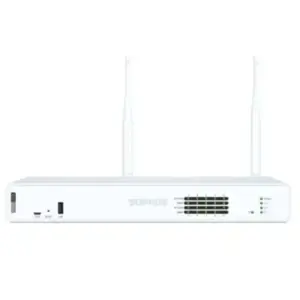
Fortinet FortiGate 900G Firewall in Dubai, UAE
The FortiGate 900G is built for organisations that need substantial firewall and security-inspection capacity without moving to a larger chassis platform. Its combination of high session scale, 25GE and 10GE connectivity, FortiOS secure networking, and FortiGuard service options makes it relevant to enterprise internet edges, campus cores, data-centre boundaries and high-traffic WAN aggregation designs.
A better quote starts with the traffic profile
A model number alone does not define the right firewall design. Inspection features, encrypted traffic, session growth, WAN topology, interface type, high availability, logging strategy and subscriptions all influence the final bill of materials.
Direct answer: what is the FortiGate 900G?
The Fortinet FortiGate 900G is a high-capacity physical next-generation firewall in Fortinet’s G-series portfolio. It is mainly used to secure enterprise internet access, inter-site WAN traffic, data-centre or campus boundaries, segmented internal networks and other environments where security inspection must keep pace with multi-gigabit traffic. Buyers considering it should confirm not only headline throughput but also the expected mix of firewalling, IPS, malware protection, application control, SSL inspection, IPsec VPN and logging. They should also confirm port requirements, optics, FortiGuard and FortiCare terms, high-availability design and whether local storage is needed, because the storage-equipped FortiGate 901G is a separate model.
What it does
The 900G combines firewall policy enforcement with functions such as IPS, application control, encrypted-traffic inspection, IPsec VPN, secure SD-WAN, segmentation and zero-trust network access capabilities within FortiOS. The exact protection services available in production depend on the selected FortiGuard subscription and configuration. This matters during procurement because a hardware-only appliance and a fully subscribed security deployment are materially different purchases.
Who it suits
It is most relevant where an organisation has high aggregate traffic, many simultaneous sessions, multiple high-speed uplinks, demanding encrypted inspection, a large branch estate, significant east-west segmentation, or a need to consolidate secure networking functions. Smaller sites with modest broadband speeds may find the platform oversized, while very large data-centre or hyperscale designs may need a higher FortiGate class. Sizing should be based on measured traffic and security policy rather than company headcount alone.
Business challenges the 900G can help address
Security inspection becoming the bottleneck
When an older firewall can route traffic quickly but slows under IPS, malware scanning, application control or TLS inspection, the network may need a platform sized around inspected throughput rather than raw firewall numbers.
Uplinks moving beyond 1GE
The 900G offers a mix of 25GE SFP28, 10GE SFP+, GE SFP, GE RJ45 and a 2.5GE HA interface, giving designers options for fibre and copper connections without relying on a single interface speed.
Growing session and connection rates
Large user populations, SaaS-heavy traffic, public services, NAT, VPNs and modern applications can create very high session counts. Session capacity and new-session rate should therefore be checked alongside throughput.
Too many separate network functions
FortiOS can combine routing, secure SD-WAN, firewalling and security controls in one appliance. Whether consolidation is appropriate depends on resilience, change-control boundaries and the organisation’s operational model.
Core capability band
Up to 164/163/153 Gbps firewall throughput depending on packet size in Fortinet’s current matrix.
Up to 42 Gbps IPS, 31 Gbps NGFW and 30 Gbps threat protection under Fortinet’s published test profiles.
Up to 16.7 Gbps SSL inspection throughput, which is a critical sizing figure for TLS-heavy environments.
Up to 28 million concurrent sessions and 720,000 new sessions per second in the current product matrix.
All published performance figures are maximum or “up to” values measured under defined test conditions. Real results depend on traffic mix, FortiOS version, enabled security services, policy design, logging, encryption, packet size and other configuration factors.
Product-fit matrix: is the 900G the right class?
| Requirement | Suitable when | Confirm before ordering |
|---|---|---|
| Multi-gigabit internet edge | Security inspection must remain comfortable above ordinary branch-firewall levels. | Actual inspected throughput, TLS ratio, growth target and redundancy. |
| 25GE / 10GE aggregation | The design needs high-speed fibre uplinks and multiple interface choices. | Optics, fibre type, port mapping and supported transceivers. |
| Large session volume | Applications create many simultaneous connections or rapid connection churn. | Observed peak sessions, new-session rate and NAT behaviour. |
| High availability | The business requires firewall redundancy and controlled maintenance windows. | Two-unit design, licensing parity, HA interfaces, switching dependencies and failover testing. |
| Local on-box storage | Local storage is explicitly required for the chosen logging or feature design. | The base 900G should not be assumed to include the 901G’s 960 GB local storage. |
FortiGate 900G verified technical information
The figures below reflect Fortinet’s current July 2026 product matrix for the FG-900G. They are useful for initial comparison, but project sizing should account for the features and traffic that will actually be enabled.
| Brand | Fortinet |
|---|---|
| Product / model | FortiGate 900G / FG-900G |
| Product type | Physical next-generation firewall appliance |
| Form factor | 1RU rack-mount appliance |
| Firewall throughput | Up to 164 / 163 / 153 Gbps for 1518 / 512 / 64 byte UDP traffic |
| IPsec VPN throughput | Up to 55 Gbps using Fortinet’s stated test profile |
| IPS throughput | Up to 42 Gbps, Enterprise Mix |
| NGFW throughput | Up to 31 Gbps, Enterprise Mix |
| Threat protection throughput | Up to 30 Gbps, Enterprise Mix |
| SSL inspection throughput | Up to 16.7 Gbps using Fortinet’s average HTTPS test profile |
| Application control throughput | Up to 74.8 Gbps, HTTP 64K test profile |
| Concurrent sessions | Up to 28 million |
| New sessions per second | Up to 720,000 |
| Firewall policies | Up to 50,000 |
| Gateway-to-gateway IPsec tunnels | Up to 2,000 |
| Client-to-gateway IPsec tunnels | Up to 50,000 |
| SSL VPN throughput | Up to 10 Gbps |
| Recommended maximum concurrent SSL VPN users | 10,000 in the product matrix test / guidance context |
| Interfaces | 4 × 25GE SFP28, 4 × 10GE SFP+, 1 × 2.5GE RJ45, 8 × GE SFP, 17 × GE RJ45 |
| Local storage | Base FG-900G: no 960 GB storage listed; FG-901G is the 960 GB storage variant |
| Power supplies | Dual power supplies; confirm AC/DC ordering variant and regional power-cord requirement |
| Virtual domains | 10 default / up to 50 maximum in the published matrix |
| FortiAP capacity | Up to 2,048 total / 1,024 tunnel |
| FortiSwitch capacity | Up to 196 |
| Security subscriptions | License and subscription dependent; select FortiGuard / FortiCare services according to required protection and support |
| Availability | Contact FourTeck for current UAE model, quantity, license and lead-time confirmation |
Configuration, licensing and compatibility dependencies
The appliance should be purchased as part of a defined security design, not as an isolated box. FortiGuard security services, FortiCare support, cloud management, centralized logging, advanced malware protection, URL filtering, DNS filtering, OT security and other capabilities can be subscription dependent. A hardware-only SKU does not automatically include every service associated with the FortiGate platform.
For a high-availability pair, align the units, FortiOS compatibility, interface design and security subscriptions. Fortinet’s ordering guidance states that all units in a FortiGate cluster must be registered and licensed for the required FortiGuard services because any cluster member may become primary. Optics and transceivers also require careful confirmation against the exact interface and supported accessory list.
If migration from an older FortiGate or another vendor is planned, gather the current policy set, routing design, VPNs, address objects, authentication dependencies, NAT rules, logging destinations and change window. Conversion tools can assist in some cases, but migration quality still depends on validation, cleanup and testing.
A practical purchase and deployment journey
Measure the current network
Capture peak WAN traffic, encrypted traffic ratio, concurrent sessions, VPN usage, routing scale and security features already enabled.
Define the target architecture
Decide where the 900G sits, which zones it separates, whether HA is required, how internet and WAN links connect, and where logs are retained.
Build the bill of materials
Confirm FG-900G versus FG-901G, AC/DC requirements, transceivers, rack and cabling needs, subscriptions, support term and management platforms.
Plan configuration and migration
Document policies, routes, VPNs, authentication, objects, certificates, HA behaviour, rollback steps and an agreed test plan.
Validate after cutover
Check business applications, VPNs, security events, routing convergence, performance, logging, monitoring and documented recovery procedures.
Throughput that should be read in context
Firewall sizing is often distorted by a single headline number. The 900G’s raw firewall throughput is substantially higher than its inspected security throughput because each security service adds work. A buyer planning a 20 Gbps internet circuit should therefore not assume that a firewall rated far above 20 Gbps in basic firewall testing will automatically deliver the same margin when SSL inspection, IPS, malware protection, application control and detailed logging are enabled at the same time.
The more useful approach is to map the expected traffic to the Fortinet metric that resembles the intended policy. For a heavily protected enterprise edge, threat protection or NGFW throughput can be more relevant than basic firewall forwarding. For environments where most web traffic is encrypted, SSL inspection capacity becomes a separate sizing dimension. For public-facing services, session rate and concurrent sessions may matter as much as Gbps.
Allow design headroom for growth, bursts, future security features and failover conditions. In an HA design, consider whether one remaining unit must carry the full workload during maintenance or an outage. FourTeck can help translate monitoring data into a sizing conversation rather than relying on a single specification line.
Interface density for mixed enterprise networks
The 900G’s interface mix is useful where the firewall must connect to different generations of infrastructure. Four 25GE SFP28 ports can serve high-speed uplinks or aggregation roles, four 10GE SFP+ ports support common data-centre and campus connections, eight GE SFP ports can accommodate fibre-based 1GE links, and seventeen GE RJ45 ports cover copper connectivity. A dedicated 2.5GE RJ45 interface is listed for HA.
Physical port count alone is not a deployment plan. Confirm which interfaces participate in hardware acceleration, which transceiver types are supported, how link aggregation is designed, whether redundant switches are used, and how HA heartbeat traffic is separated. Optics, DACs, fibre type and patching should be specified in the bill of materials rather than assumed.
Secure SD-WAN and segmentation as operational tools
FortiOS combines routing and security functions, allowing the appliance to participate in secure SD-WAN designs and segmented network architectures. This can reduce the number of separate platforms a team must operate, but the value depends on how clearly policies, routing ownership and operational responsibilities are defined.
For SD-WAN, buyers should identify underlay circuits, application priorities, performance-SLA thresholds, hub-and-spoke or mesh requirements and cloud connectivity. For segmentation, document trust zones, user and device groups, server tiers, guest networks, management networks and any OT or regulated environments. The firewall should enforce a design that already has clear security boundaries rather than becoming the place where an undefined network is improvised.
Visibility, management and security operations
The 900G operates as part of the wider Fortinet Security Fabric. FortiOS provides the local firewall operating environment, while centralised management, analytics, cloud services and security subscriptions can be added according to the design. This is especially relevant for organisations that need standardised policy across many FortiGate devices, consolidated logging or shared operations across branch, campus and data-centre environments.
Logging strategy should be planned before deployment. The base FG-900G should not be purchased on the assumption that it contains the 901G’s 960 GB local storage. If local storage is needed for a particular function, clarify whether the 901G is more appropriate or whether logs should be sent to FortiAnalyzer, FortiAnalyzer Cloud, a SIEM or another approved destination. Retention requirements, event volume and compliance obligations can materially affect the architecture.
Operational teams should also decide who administers network policy, who handles security events, how configuration changes are approved, and whether administrators require role-based separation. Hardware capability is only one component of a maintainable firewall service.
Ideal business environments and use cases
Enterprise internet edge
Suitable where internet bandwidth and security inspection requirements exceed typical branch-firewall levels and where redundancy, multiple uplinks or high session counts are important.
Campus segmentation
Can enforce security boundaries between users, servers, guest access, administration, research, operational networks or other zones when the policy scale and traffic justify this appliance class.
Data-centre boundary
The 25GE and 10GE connectivity can suit selected data-centre edge roles where throughput, encrypted inspection and large session volumes are required without moving to a multi-RU chassis platform.
Large SD-WAN hub
May be considered for aggregation or hub roles where many sites, IPsec tunnels and application-aware WAN policies must be handled centrally. Tunnel scale and traffic concentration still need to be calculated.
High-traffic services
Session capacity and new-session rate can make the platform relevant to environments that experience high connection churn, provided the security policy and application architecture are also understood.
Firewall refresh projects
Organisations replacing older mid-range or enterprise FortiGate models may shortlist the 900G, but migration should be based on measured load, feature usage and future headroom instead of assuming a like-for-like model number.
Integration and operational considerations
A firewall at this scale usually touches several infrastructure domains. Network teams need routing and VLAN information; security teams need policy and inspection requirements; identity teams may provide directory or authentication integrations; application owners must validate business services; and operations teams need monitoring, backups and change procedures. Treating the deployment as a joint design exercise reduces the risk of discovering dependencies during the cutover window.
If the 900G will connect to FortiSwitch or FortiAP environments, confirm the intended management topology and platform limits against the actual FortiOS release. If it will integrate with FortiManager, FortiAnalyzer, SIEM tooling or automation workflows, confirm version compatibility and data-flow requirements. For VPN use, collect peer types, encryption settings, routing behaviour, certificate requirements and remote-access expectations.
High availability deserves special attention. Redundancy is not complete merely because two appliances are present. The design should consider redundant upstream and downstream switching, independent power, HA heartbeat interfaces, state synchronization, failure detection, session behaviour, management access and test procedures. The subscription and support bill of materials must also match the cluster design.
Buyer questions to resolve before ordering
Use real peak traffic plus growth and failover headroom, then map the design to NGFW, threat-protection and SSL-inspection figures instead of raw firewall throughput alone.
If local storage is required, confirm the 901G. Do not assume the base 900G includes the 960 GB storage shown for the 901G variant.
List the services the organisation actually needs and the preferred FortiCare level and term. A hardware-only appliance is not equivalent to a subscribed security bundle.
Identify every 25GE, 10GE, GE fibre and copper connection, transceiver, DAC and fibre type, then confirm supported accessories before purchase.
If yes, plan two matching appliances, subscriptions for the cluster, redundant switching and power, failover behaviour and a tested maintenance process.
Clarify whether the quote covers configuration review, policy migration, VPN migration, routing, testing, cutover support, documentation and post-change verification.
Procurement checklist for a cleaner 900G quotation
✓ Exact model: FG-900G or FG-901G
✓ Required quantity and HA pairing
✓ Peak internet and WAN throughput
✓ SSL inspection requirement
✓ Current and projected session count
✓ 25GE / 10GE / GE port mapping
✓ Optics, DACs and fibre type
✓ FortiGuard security package
✓ FortiCare support level and term
✓ AC or DC power requirement
✓ Logging and retention destination
✓ Migration and configuration scope
✓ Target FortiOS / management platform
✓ Delivery location and required timeline
How FourTeck can assist
FourTeck can help turn a product shortlist into a defined purchase requirement. That may include reviewing traffic and session information, clarifying whether the 900G is appropriately sized, identifying the required subscription term, checking whether local storage is needed, mapping interface requirements and building a bill-of-material discussion around optics, support and services.
For project work, the scope can also consider installation planning, baseline configuration, migration, HA setup, routing, VPNs, security policies, logging and validation. These activities should be stated in the quotation rather than assumed to be included with the hardware.
Explore FourTeck firewall services or review the broader firewall product range.
UAE availability and support guidance
Contact FourTeck to confirm current UAE availability for the exact FG-900G hardware, license term, support level and quantity. Availability can vary with model, regional SKU, quantity, vendor lead time and the selected subscription bundle. Delivery coordination should be discussed after the requirement is confirmed.
If installation or configuration assistance is needed, include that requirement in the quotation request so the technical scope can be reviewed alongside the hardware. This is especially important for HA, migration, complex routing, SD-WAN, VPN or logging projects where preparation affects the implementation plan.
Dubai, Abu Dhabi, Sharjah and Ajman project coverage
Businesses planning FortiGate 900G deployments in Dubai, Abu Dhabi, Sharjah and Ajman can discuss requirements with FourTeck as one UAE project scope rather than treating each location as a separate product decision. Multi-site projects should identify the role of the 900G at each site, WAN topology, central-management needs, failover expectations, installation windows and whether remote or on-site coordination is required. The same model may not be suitable for every location, so branch appliances, core firewalls and management components should be sized according to each site’s traffic and operational role. For a current UAE quotation, use the FourTeck contact page with the model, quantity, license term and deployment summary.
GCC Availability
For FortiGate 900G requirements across the GCC, FourTeck can assist with requirement review, model selection, licensing discussions, quotation coordination and deployment planning. Projects in the United Arab Emirates, Saudi Arabia, Kuwait, Qatar, Bahrain or Oman may have different procurement routes, license-region considerations, power requirements, delivery schedules and service arrangements. Buyers should provide the destination country, exact FG-900G or FG-901G requirement, quantity, preferred FortiGuard and FortiCare term, optics requirements, deployment location and target project timeline. Product availability, subscription options, service visits and vendor lead times can vary by country and quantity, so these should be confirmed before issuing a purchase order. Regional teams can also discuss whether configuration, migration or renewal assistance is required. For projects that include Kuwait, the FourTeck Kuwait resource can support regional coordination conversations.
Africa Availability
Organisations planning Fortinet firewall projects in Africa can engage FourTeck for product evaluation, license and subscription planning, accessory review, configuration scope and procurement coordination. The appropriate fulfilment approach may vary across East Africa, West Africa, Southern Africa and other markets because destination, quantity, license region, power standards, shipping arrangements, vendor lead time and local project conditions can affect the final plan. Buyers should share the destination country, exact model, required quantity, security subscription term, expected deployment date, interface needs and any installation or support expectations. For distributed regional networks, it is also useful to identify which sites need a high-capacity 900G and which sites require smaller branch models so the architecture remains proportionate. FourTeck’s Africa technology resource can be used to start the regional requirement discussion without assuming local inventory or a fixed delivery date.
Related options and surrounding services
FortiGate 901G
Consider when the 900G class is appropriate but the deployment specifically requires the 901G’s listed 960 GB local storage. Confirm the exact use case and logging design.
FortiGuard security services
Select the protection package according to IPS, malware, web, DNS, application, OT or other security requirements. Service availability and bundling are subscription dependent.
FortiCare support
Confirm the desired support level and term for every production appliance, including HA cluster members, before finalising the purchase.
FortiManager and FortiAnalyzer
Central management and analytics may be relevant for multi-site policy control, logging and operations. Scope them separately according to architecture and retention needs.
Migration and configuration
A hardware refresh may also require policy cleanup, VPN migration, routing validation, HA setup, testing and documentation. Define these activities in the service scope.
Fortinet UAE planning
For broader Fortinet requirements beyond one appliance, review Fortinet solutions in the UAE and discuss how the firewall fits the wider network.
Answers buyers usually need before shortlisting the 900G
Buyers researching this model tend to move quickly from “what is the FortiGate 900G?” to more practical questions: whether it can carry a particular internet speed with security enabled, whether the 900G and 901G are functionally different, what licenses are needed, whether 25GE ports can fit an existing core, how much headroom is sensible, and what should be included in a quote. Those are better questions than simply comparing raw firewall throughput because they expose the dependencies that determine whether the appliance will work well in a real network.
For a 10 Gbps or multi-10-gigabit perimeter, the first decision is not whether 164 Gbps of firewall throughput looks large enough. The relevant check is what proportion of traffic will be inspected with IPS, application control, malware protection and TLS decryption. Fortinet’s current matrix gives separate figures for these workloads: 42 Gbps IPS, 31 Gbps NGFW, 30 Gbps threat protection and 16.7 Gbps SSL inspection. These numbers show why configuration context matters. A network carrying a high proportion of encrypted SaaS traffic can place different demands on the firewall from a network carrying large trusted data transfers with little inspection.
Another common point of confusion is the 900G versus 901G distinction. The current Fortinet matrix lists 960 GB of local storage for the 901G, not for the base 900G. This is important if the design expects local logging or other storage-dependent functions. It does not mean every deployment requires a 901G. Many enterprise designs send logs to FortiAnalyzer, a cloud service or a SIEM, but the destination and retention policy should be decided intentionally. If local storage is a requirement, put it in the bill of materials instead of assuming it comes with every 900G-series unit.
The 900G includes four 25GE SFP28 and four 10GE SFP+ ports in addition to 1GE fibre and copper connectivity. That can make it attractive for enterprises moving away from 1GE uplinks. But a quote should specify optics, DACs, fibre type and the physical path to upstream and downstream switches. The presence of a port does not guarantee the required transceiver is included or that an existing optic is supported.
Licensing is another area where buying only by hardware price can create a poor comparison. The FG-900G can be sold as hardware and can also be bundled with FortiCare and FortiGuard services. The right package depends on the security controls the organisation intends to use and the support term required by its operations policy. If the project is an HA pair, both appliances should be considered together for registration and service licensing. A low initial hardware number is not an accurate project cost if the production design requires security subscriptions, optics, central management, implementation and support.
For replacement projects, buyers often ask whether a 900G is a suitable successor to an older enterprise FortiGate. The safest answer is to compare actual utilisation rather than model generations. Export traffic graphs, peak sessions, new-session rates, CPU and memory trends, VPN load, policy count and enabled inspection features from the existing firewall. Then add expected growth and a failover margin. This approach can show that a 900G is appropriate, oversized or insufficient without relying on a model-name shortcut.
Buyers also ask about “price in Dubai” or “FortiGate 900G price in UAE.” A useful quotation should be tied to an exact SKU and service scope. Hardware-only pricing cannot be compared directly with a one-, three- or five-year security bundle, and an HA project doubles key hardware requirements while also affecting subscriptions, optics and implementation. Currency, vendor pricing, regional lead time and bundle structure can change, so FourTeck should confirm the current commercial offer at the time of purchase.
The final shortlist should therefore answer a simple operational question: can this exact configuration carry the organisation’s expected workload during normal operation and during failover, with the required security services enabled, using interfaces that match the surrounding network, under a support model the IT team can operate? If those points are documented, the 900G becomes much easier to compare with nearby FortiGate models or alternative architectures. For a broader firewall planning discussion, visit Firewall Dubai by FourTeck.
Practical decisions that shape the right 900G quote
How much spare capacity should we plan?
Enough to absorb realistic growth, bursts and a failed-peer condition if the firewall runs as an HA pair. The percentage cannot be chosen from a universal rule because businesses have different growth patterns and traffic peaks. Start with measured utilisation, add known projects such as new internet circuits or cloud migration, then verify that the inspected workload remains inside the chosen operating margin.
When should we choose the 901G instead?
Choose it when local storage is an explicit part of the design and the 901G’s 960 GB storage meets that requirement. If logs will be centralised elsewhere, local storage may not drive the decision. Confirm the operational reason for storage, retention expectations and any feature dependency before changing the SKU.
Do we need to buy transceivers separately?
Treat optics and DACs as separate bill-of-material items unless the exact package explicitly includes them. Record required speed, media, distance and connector type for each link, then match that requirement to Fortinet-supported transceivers for the 900G interfaces. This avoids discovering during installation that a core-switch optic or fibre path does not match the firewall design.
Should every cluster member carry the same security services?
For required FortiGuard services, Fortinet’s ordering guidance states that all units in the cluster must be registered and licensed because any member can become primary. Build licensing around the HA architecture rather than licensing only the unit expected to be active most of the time.
Can we migrate an old configuration unchanged?
A direct translation may be possible for many objects and policies, but a refresh is also an opportunity to remove obsolete rules, validate routes, modernise VPN settings and confirm identity or certificate dependencies. A conversion tool should not replace technical review, testing and rollback planning.
What should be included when asking FourTeck for a quote?
Provide the exact model, quantity, HA requirement, subscription package and term, FortiCare level, optics, power variant, destination, required timeline and whether configuration or migration assistance is needed. Include traffic data where possible. That lets the quotation reflect a usable deployment rather than a bare appliance with missing dependencies.
Why businesses contact FourTeck for FortiGate 900G projects
The practical value of a supplier conversation is not simply confirming that a model exists. Buyers often need help deciding whether the selected firewall class is proportionate, whether the quote contains the right subscription, whether optics have been overlooked, whether HA has been costed correctly, and how migration or configuration services should be scoped. FourTeck can assist with requirement clarification, model and license selection, bill-of-material review, compatibility questions, quotation coordination and implementation planning.
For existing Fortinet estates, the discussion can include central management, logging, policy consistency and renewal alignment. For replacement projects, it can include data gathering from the current platform and a review of VPNs, routing, policies and change dependencies. For new deployments, it can include rack placement, cabling, interfaces, high availability, security zones, internet/WAN design and post-deployment validation criteria.
These activities are scope dependent. They should be documented in the quotation and project plan rather than assumed to accompany the appliance automatically. If you are comparing Fortinet with other firewall options, FourTeck can also help frame the comparison around workload, operational model and lifecycle requirements instead of feature lists alone.
Frequently asked questions
What type of firewall is the FortiGate 900G?
It is a 1RU physical Fortinet next-generation firewall designed for high-capacity enterprise secure networking. It combines FortiOS networking and security functions and can use FortiGuard services according to the selected license or subscription.
What is the difference between the FortiGate 900G and 901G?
The current Fortinet product matrix lists 960 GB of local storage for the 901G. The base 900G should not be assumed to include that storage. Confirm the exact SKU if local logging or another storage-dependent requirement is part of the design.
How much threat-protection throughput does the 900G provide?
Fortinet’s July 2026 product matrix lists up to 30 Gbps threat protection for the FG-900G under its Enterprise Mix test conditions. Actual performance varies with traffic, security features, logging, encryption and configuration.
Does the FortiGate 900G support 25GE interfaces?
Yes. The current product matrix lists four 25GE SFP28 ports, along with four 10GE SFP+ ports, eight GE SFP ports, seventeen GE RJ45 ports and one 2.5GE RJ45 interface. Confirm transceivers and port mapping for the intended design.
Are FortiGuard security services included with every 900G?
No. FortiGuard services and FortiCare support depend on the purchased SKU, bundle and subscription term. Ask for the exact service package required by the organisation rather than assuming all protection features are bundled with hardware-only pricing.
Can the FortiGate 900G be deployed as an HA pair?
FortiGate supports high-availability designs, but the project should include matching appliances, appropriate subscriptions, HA interfaces, redundant network paths and a tested failover plan. Fortinet requires cluster units to be registered and licensed for the required FortiGuard services.
Is the 900G appropriate for a 10 Gbps internet connection?
It may be, but sizing should use the intended inspection workload and not just internet circuit speed. Review threat protection, NGFW, SSL inspection, session rate, VPN load and failover headroom before deciding.
What information is needed for a FortiGate 900G quotation?
Provide model, quantity, HA requirement, license package and term, FortiCare level, optics, power variant, destination, target deployment date and any installation, configuration or migration services required.
Is the FortiGate 900G currently available in Dubai?
Availability should be confirmed for the exact SKU, quantity and subscription bundle at the time of purchase. Contact FourTeck for current UAE availability and vendor lead-time guidance rather than assuming stock or a fixed delivery date.
Can FourTeck assist with configuration or migration?
FourTeck can discuss configuration, migration, HA, routing, VPN, policy and deployment requirements as part of a defined service scope. The exact activities, customer inputs and deliverables should be agreed in the quotation.
Build the 900G requirement before you buy
Send FourTeck your expected traffic, required security services, HA plan, interface needs, license term, destination and implementation scope. The team can help turn those details into a product and service quotation that is easier to approve and deploy.
Specifications and service structures can change by FortiOS release, license, configuration, region and vendor policy. Confirm the exact SKU and current commercial terms before ordering.

Reviews
There are no reviews yet.