

Centralized Fortinet administration for structured operations
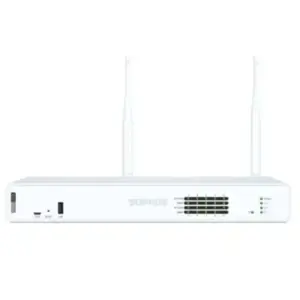
Fortinet FortiManager 200G in Dubai, UAE
FortiManager 200G, model FMG-200G, gives IT and security teams a dedicated hardware platform for central policy control, device onboarding, configuration governance, firmware coordination, monitoring and automation across a Fortinet environment. It is intended for organisations that have moved beyond comfortable device-by-device administration and need a repeatable operating model.
Support, FortiAI services, project scope and availability should be confirmed in the quotation.
FortiManager FMG-200G
30 devices/VDOMs default
2 x 4 TB, RAID 1 default
Confirm support and deployment scope
Direct answer for buyers evaluating FortiManager 200G
Fortinet FortiManager 200G is a dedicated centralized management appliance for organisations operating multiple Fortinet network and security devices. Its main role is to bring policy administration, device configuration, onboarding, revision history, firmware workflows, automation and operational visibility into one controlled management system. It is most relevant when a business has enough FortiGate, FortiSwitch, FortiAP, FortiExtender or related managed infrastructure that independent administration creates inconsistency or unnecessary effort. Before proceeding, confirm the actual device and VDOM count, software release compatibility, support subscription, rack and power planning, high-availability requirements, integration expectations and whether optional FortiAI capabilities are part of the intended operating model.
What the FortiManager 200G does
The FMG-200G creates a central administrative layer above supported Fortinet devices. Rather than treating each firewall, branch or edge component as an isolated management task, administrators can use FortiManager workflows to maintain shared objects, policy packages, templates and controlled configuration changes. This is especially useful where the same operational standard must be maintained across several sites.
FortiManager also supports device onboarding, firmware scheduling, configuration backups, revision history, role-based administration, SD-WAN workflows, monitoring and automation capabilities. The practical value is not simply having another console; it is having a governance point where network changes can be planned, reviewed, deployed and traced in a more consistent way.
Who should consider this appliance
FortiManager 200G is positioned for smaller central-management estates within the FortiManager hardware family. It is a sensible candidate for businesses managing up to 30 devices or VDOMs by default, provided that this capacity matches the real design. Multi-site companies, retail groups, education networks, healthcare organisations, hospitality operators, industrial environments, financial services teams and managed IT functions may benefit when configuration consistency matters across dispersed locations.
It may be unnecessary for a single uncomplicated FortiGate deployment with very limited change requirements. It may also be undersized if the organisation expects to exceed the supported managed-device or VDOM capacity. Capacity planning should therefore happen before the purchase, not after central management has already been designed around the appliance.
Business problems the FMG-200G helps address
Policy drift between sites
When branches are managed individually, common objects and security rules can diverge over time. FortiManager policy packages and central objects provide a structured way to maintain shared standards while allowing controlled local differences where the design requires them.
Repetitive deployment work
Templates, device blueprints and zero-touch provisioning workflows can reduce repeated manual configuration for new locations. The exact onboarding method depends on device support, network readiness and the FortiManager release used.
Change accountability
Revision history, event logging, workspace controls and approval-oriented workflows help teams track who changed what and why. This can support internal operational discipline and audit preparation without replacing the organisation’s wider governance process.
Fragmented visibility
A central view can make it easier to understand device state, policy status, topology and operational conditions across the managed estate. Advanced analytics and reporting requirements may also involve FortiAnalyzer or other Fortinet components.
Core management capabilities buyers should understand
Device Manager
Provides a centralized place for supported device inventory, configuration access, templates, interfaces, scripts and management status.
Policy and Objects
Allows common policies, security profiles and objects to be managed centrally and deployed through controlled policy packages.
Firmware Manager
Supports planned firmware upgrade workflows and reporting, helping administrators coordinate maintenance across multiple managed devices.
Automation interfaces
REST APIs, scripts, connectors and automation integrations can support repeatable workflows where the organisation has appropriate design and operational controls.
SD-WAN operations
Central templates, orchestration and monitoring can help standardize distributed SD-WAN deployments, subject to the capabilities and versions of the managed devices.
Administrative domains
ADOMs help separate independent administrative environments, policies and databases. The FMG-200G is listed with 30 default ADOMs in current Fortinet product information.
FortiManager 200G suitability matrix
| Requirement | Suitable when | Confirm before ordering |
|---|---|---|
| Central administration | Multiple supported Fortinet devices need shared policy and configuration governance. | Exact managed product types and software releases. |
| Management scale | The estate fits within the 30 default device/VDOM capacity. | Current count, VDOM consumption and expected growth. |
| On-premises appliance | The organisation prefers dedicated rack hardware under its own infrastructure control. | Rack space, power, cooling and data-centre standards. |
| Resilience | Central management is important enough to justify HA planning. | Second unit, topology, licensing, optional power redundancy and operational runbook. |
| Automation | Teams plan to use templates, scripts, APIs or integrations to reduce repetitive administration. | Change controls, API integration design and staff capability. |
Configuration, support and compatibility dependencies
A FortiManager appliance should be purchased as part of an operating design, not as an isolated box. The managed Fortinet products and their software releases must be compatible with the FortiManager version chosen for deployment. Fortinet publishes release-specific supported-model information, so an organisation upgrading an existing estate should map its current FortiOS and related platform versions before deciding the FortiManager upgrade path. A mixed estate can require staged upgrades rather than one immediate change.
FortiCare support is subscription dependent. Fortinet also offers FortiAI Assistant as an additional service for FortiManager; current ordering information identifies it separately and notes software-version requirements. Buyers should not assume that every AI-assisted feature, support tier, best-practice service or professional service is automatically included with the base appliance. Similarly, high availability requires a design that accounts for another FortiManager unit, synchronization, addressing and operational procedures. The FMG-200G supports an optional redundant AC power supply, but the current data sheet states that this additional power supply is not included by default.
If the appliance will be integrated with FortiAnalyzer, ITSM systems, third-party automation platforms, APIs or a wider Security Fabric architecture, confirm both technical support and implementation responsibility. FourTeck can help turn these dependencies into a practical bill of materials and quotation scope.
A practical purchase and deployment journey
Inventory the estate
Count managed devices and VDOMs, record models and software versions, and identify branches or administrative zones that need central control.
Define the operating model
Decide which objects, policies, templates, approvals and firmware tasks will be centralized and which local exceptions remain necessary.
Confirm licensing and support
Choose the relevant FortiCare term and any optional FortiAI or service elements. Do not assume these are part of the hardware-only SKU.
Plan rack and resilience
Confirm 1RU rack space, power feeds, cooling, addressing, management network access and any HA requirement.
Stage onboarding
Add representative devices first, validate policy packages and administrative workflows, then expand to the wider estate through a controlled change plan.
Central policy control without losing operational context
One of the strongest reasons to deploy FortiManager is the need to make changes consistently across a distributed environment. Central policy and object management lets administrators maintain common address objects, services, security profiles and policy packages instead of repeatedly creating them on separate devices. For a buyer, the important question is not whether central management can push rules; it is whether the organisation is ready to define which controls are global, which are site-specific and which require an approval path.
FortiManager includes revision history and change information that can improve traceability. Workspace and policy-locking features can help prevent overlapping administrative work. These capabilities become more valuable when multiple engineers, service providers or regional teams share responsibility for the estate. The operational benefit comes from combining the technology with role definitions, documented change windows and rollback planning.
A central platform can also expose poor standards if the underlying policy model has not been cleaned up. Before migration, review duplicate objects, naming conventions, inherited rules, unused policies and local exceptions. FourTeck can assist with planning the migration sequence and identifying the information required for a cleaner central management design.
Buyer decision note
Choose the FMG-200G when its capacity is comfortably aligned with the real estate and when a physical on-premises management appliance is operationally preferable. If growth will move beyond the model’s default scale, compare higher FortiManager appliances or virtual/cloud approaches before procurement.
Automation and provisioning for repeatable network changes
FortiManager supports device blueprints, provisioning templates, scripting, APIs and zero-touch provisioning workflows. In a distributed network, these tools can reduce the number of repetitive tasks required to bring new branches or replacement devices into a consistent state. The value is particularly clear when many sites follow a shared design for interfaces, routing, security policy, SD-WAN, LAN edge or operational settings.
Automation should not be interpreted as permission to make uncontrolled mass changes. Templates need variables, validation and version control. Scripts should be reviewed against the device models and software releases they target. API integrations should use appropriate authentication and permissions. A staged approach is usually safer: prove the workflow on a representative location, verify the result, then expand the change to additional devices in manageable groups.
For organisations adopting SD-WAN, FortiManager can centralize provisioning and monitoring workflows. Fortinet documents support for application-centric SD-WAN policies, overlay provisioning, templates and monitoring of performance indicators such as bandwidth, latency, jitter and packet loss. The underlying WAN design, FortiGate capabilities and carrier performance remain separate dependencies. FourTeck can help define which parts of the deployment should be standardized in FortiManager and which require site-specific engineering.
Availability is not the same as resilience
The management appliance can be critical to operations, but managed FortiGate devices continue enforcing their local configuration if the manager becomes unavailable. The business impact therefore depends on how quickly administrators need to make changes, deploy policies, investigate state or coordinate firmware and automation. Define that operational requirement before deciding whether an HA design is justified.
Resilience, local hardware control and day-two operations
FortiManager supports high-availability deployment with a primary and secondary design. Fortinet documentation describes a cluster model with one primary and up to four secondary units, subject to supported design and software behavior. For the FMG-200G, the hardware also supports an optional redundant AC power supply. These are separate layers of resilience: an additional power supply helps address a power-component or feed concern, while a second FortiManager appliance addresses management-platform availability more broadly.
Day-two operations also depend on backup, monitoring and maintenance discipline. FortiManager can keep configuration revisions and automate device configuration backups, but the organisation should still define backup retention, administrator access, certificate management, monitoring alerts, software maintenance windows and recovery procedures. Physical installation should account for front-to-back airflow, rack depth, power input and the published 0°C to 40°C operating range.
For buyers in Dubai and the UAE, the infrastructure environment may also involve data-centre standards, branch cabinets and temperature control considerations. Confirm the exact deployment location before ordering accessories or planning installation.
Ideal business environments and practical use cases
Multi-branch businesses
Retail, hospitality, logistics and service organisations can centralize branch policy, templates and firmware processes when each location follows a repeatable network design.
Education and healthcare
Campuses, clinics or distributed facilities may use centralized administration to keep network controls more consistent while separating administrative domains or local responsibilities where needed.
Managed IT operations
Internal shared-service teams or service providers can use ADOMs, role-based access and policy workflows to organize multiple environments. The capacity of the FMG-200G must match the actual device and VDOM design.
Secure SD-WAN estates
Distributed WAN environments can benefit from centralized templates, overlay orchestration and monitoring when FortiGate devices and software releases support the planned workflow.
Change-controlled enterprises
Teams with formal change management can use revision history, workspace controls and approval practices to make network-policy administration more accountable.
Growing Fortinet environments
A business approaching the point where local device administration becomes difficult can introduce FortiManager before inconsistent practices become embedded across a larger estate.
Integration and operational considerations
FortiManager sits within a broader Fortinet management and security ecosystem, so integration planning should reflect the organisation’s actual architecture. FortiAnalyzer can add deeper analytics, reporting and event analysis. FortiManager also provides APIs and Fabric Connectors that can support interaction with external systems, while ITSM integration can be used in workflows where change or incident processes span several platforms. These capabilities are valuable when properly designed, but they are not substitutes for an integration specification.
Administrative access deserves particular attention. Define roles for policy administration, device configuration, audit review and platform administration. Decide whether ADOM separation is required, how administrator authentication will be handled, and what approvals are needed before policy installation. If a third party manages the system, document boundaries clearly: who owns the FortiManager configuration, who can modify managed devices directly, who schedules firmware, who maintains backups and who responds to failed installation tasks.
Network connectivity to managed devices must be reliable and appropriately secured. DNS, NTP, certificate handling, routing and management-plane firewall rules should be considered during design. Where FortiManager distributes FortiGuard content or is used in restricted networks, confirm the relevant topology and update method. For larger projects, a pilot group provides a useful opportunity to validate communication, templates, policy installation and rollback behavior before migrating the remaining estate.
FourTeck can include integration and configuration assistance in the project discussion. See FourTeck technology services when installation, configuration or migration support is required.
Buyer questions to resolve before requesting a quotation
How many managed objects count toward capacity?
Each VDOM can count as a licensed network device, so a physical-device count alone may understate the management requirement. Build the sizing table from devices and VDOMs together.
Which FortiManager release will be used?
Compatibility is release specific. Record the managed devices and current software versions, then map them against the target FortiManager release before planning migration.
What support level is required?
FortiCare support is subscription dependent. Confirm term, support tier and any best-practice or professional-service requirement rather than assuming the appliance-only SKU includes them.
Is high availability necessary?
Decide how long central management can be unavailable during maintenance or failure, then determine whether a second appliance and additional power redundancy are justified.
What must be migrated?
List existing policies, objects, templates, local exceptions, administrator roles, scripts and firmware practices. Migration effort depends on the condition and consistency of the current estate.
Which optional capabilities matter?
FortiAI Assistant and certain services are optional or subscription dependent. Decide whether they are a requirement now, a future option or outside the project scope.
Procurement checklist for the FMG-200G
How FourTeck can assist with sizing and configuration
FourTeck can help convert a product request into a complete management requirement. That starts with the number and type of Fortinet devices, VDOM count, current firmware releases, desired FortiManager version and expected growth. From there, the discussion can cover support subscriptions, FortiAI options, high availability, rack planning and whether implementation assistance should be part of the quotation.
For an existing Fortinet estate, migration planning may include discovering current policies and objects, deciding how to group devices, defining ADOMs, building policy packages, documenting naming standards and validating firmware compatibility. For a new deployment, FourTeck can coordinate the management appliance requirement with the wider Fortinet bill of materials.
Use the FourTeck contact page to share the device list, required quantity, target location and expected deployment schedule.
When the FMG-200G may not be the right fit
A buyer should avoid choosing the 200G simply because it is the entry point in the current hardware range. If the device and VDOM count is already close to 30, or if significant growth is planned, a higher-capacity FortiManager model can provide more headroom. If the organisation prefers infrastructure elasticity and does not want dedicated hardware, FortiManager VM or FortiManager Cloud may deserve evaluation.
The appliance can also be excessive for a very small environment where local FortiGate administration remains simple and change frequency is low. Conversely, a managed service provider or large enterprise with many administrative domains may require a substantially larger platform.
The purchase decision should be based on management scale, operational workflow, resilience and lifecycle plans rather than appliance price alone.
UAE availability and support guidance
Contact FourTeck to confirm current UAE availability for Fortinet FortiManager 200G. Availability can depend on the exact hardware SKU, required quantity, support bundle, subscription term, regional ordering rules and vendor lead time. A quotation should identify whether the request is for the FMG-200G appliance only or for a bundle that includes FortiCare and other services. Installation and configuration scope should be listed separately when required so that the hardware purchase and project responsibilities are clear.
For projects in Dubai, share the deployment location, rack environment, power arrangement and preferred project window. If the appliance is replacing an existing FortiManager or centralizing devices that are currently managed locally, include migration information in the request. FourTeck can coordinate quotation and project planning after the exact technical requirement is confirmed.
Dubai, Abu Dhabi, Sharjah and Ajman coverage
Businesses across Dubai, Abu Dhabi, Sharjah and Ajman can contact FourTeck for FortiManager requirement review, product quotation, configuration planning and project coordination. The exact service arrangement can vary according to the deployment location, number of sites, access requirements and whether the work is remote, onsite or part of a wider Fortinet rollout. For multi-emirate networks, provide a branch inventory and indicate whether all locations will be brought under FortiManager at the same time or in phases. This helps define device grouping, change windows, travel requirements, staging work and any dependencies on existing firewalls, switches, access points or WAN services.
GCC Availability
FourTeck can assist organisations planning FortiManager deployments across GCC markets by reviewing the management requirement before quotation. For a FortiManager 200G request, buyers should provide the destination country, required quantity, Fortinet device and VDOM count, desired support term, target software release and any installation or migration scope. This is particularly important when one central management design will cover sites in the United Arab Emirates, Saudi Arabia, Kuwait, Qatar, Bahrain or Oman, because network ownership, deployment schedules and local operational responsibilities can differ between locations.
Product availability, licensing, delivery schedules, service visits, project scope and vendor lead times can vary by country, model, quantity and requirement. FourTeck can coordinate requirement clarification, quotation planning, configuration scope and renewal guidance once the bill of materials is defined. Buyers should not assume the same ordering path or timeline applies to every GCC destination. For Kuwait-related planning, the FourTeck Kuwait resource can also provide regional contact context.
Africa Availability
FourTeck can support organisations evaluating FortiManager 200G for African operations, including projects where a central IT team is standardizing Fortinet management across multiple offices or branches. Before requesting a regional quotation, share the destination country, exact appliance requirement, quantity, intended support term, deployment schedule and the Fortinet devices that will be placed under management. Power standards, rack conditions, licensing region, shipping arrangements, vendor lead time and local installation requirements can all affect the final project plan.
Availability and fulfilment should therefore be confirmed for the specific destination rather than assumed from another market. FourTeck can help review the product, accessories, subscriptions, configuration scope and support expectations for projects in East Africa or other regions. Organisations in Kenya and Uganda can also review FourTeck Africa technology guidance when coordinating wider regional requirements. Local inventory, customs outcomes and onsite coverage are not implied and should be confirmed during quotation.
Related options and services to evaluate
Higher-capacity FortiManager hardware
If the estate exceeds the FMG-200G capacity or needs more growth headroom, compare larger FortiManager appliances using the current model matrix.
FortiManager VM
A virtual appliance can suit organisations that prefer software deployment and scalable licensing rather than dedicated physical management hardware.
FortiManager Cloud
Cloud-based management may suit teams that want a Fortinet-hosted approach. Subscription structure, features and regional service availability should be confirmed.
FortiAnalyzer
For deeper analytics, event analysis and reporting, FortiAnalyzer can complement FortiManager in a broader Fabric Management Center design.
FortiGate infrastructure
FortiManager is commonly deployed to administer FortiGate estates and related Fortinet networking components.
Migration and configuration services
Existing estates may need policy cleanup, ADOM planning, template creation, device onboarding, firmware coordination and handover documentation.
Why businesses contact FourTeck for FortiManager projects
A FortiManager purchase involves more than matching a model number to a price list. The device count, VDOM structure, FortiOS versions, future growth, support term and intended operating model all affect whether the FMG-200G is appropriate. FourTeck can help clarify these details before the quotation is finalized, reducing the chance that the organisation orders hardware without the supporting subscriptions, accessories or implementation scope it expected.
For migration projects, the discussion can include current device administration, policy and object structure, ADOM design, change control, firmware planning, high availability and the sequence for onboarding production devices. For new environments, FourTeck can coordinate FortiManager with the wider Fortinet bill of materials and installation plan. The goal is to produce a clear scope: exact product, quantity, support, optional services, configuration responsibilities and delivery coordination.
Learn more about FourTeck or discuss the project through the contact team.
What buyers commonly need to know before choosing FortiManager 200G
Central management is about governance, not only convenience
Businesses often start comparing FortiManager after the number of FortiGate firewalls or branch devices grows beyond what a small team can comfortably manage one at a time. The immediate attraction is a single console, but the stronger long-term reason is governance. FortiManager allows the organisation to define common policy packages, objects, templates, revision history and firmware workflows. That makes it easier to build a repeatable way of working. Buyers should therefore evaluate who will administer the platform, how changes will be approved and how site exceptions will be documented. A central tool delivers the most value when the operating process is designed along with it.
Thirty devices does not always mean thirty physical appliances
The current FortiManager 200G specification lists 30 devices/VDOMs by default. That wording matters because each VDOM operating on a managed physical or virtual device can count as a licensed network device. A company with fewer than thirty FortiGate appliances can therefore still approach the limit if several VDOMs are used. Prepare a simple inventory with physical model, serial number, VDOM count, software release and site. That inventory becomes the basis for capacity planning, migration sequencing and quotation. It also reveals whether the FMG-200G provides sensible headroom or whether a larger platform should be considered.
How should an organisation compare FMG-200G with virtual or cloud management?
The FMG-200G gives the organisation a dedicated 1RU hardware appliance with local storage and fixed physical interfaces. This can be attractive when the management platform must live inside an on-premises data centre, when infrastructure teams prefer hardware ownership, or when existing operational procedures are built around appliances. FortiManager VM offers a software-deployed alternative that can fit virtualized infrastructure and uses a different licensing approach. FortiManager Cloud shifts the management platform to a cloud-delivered model. The choice should consider control, capacity, infrastructure responsibility, lifecycle operations, procurement preferences and regional service requirements rather than assuming one deployment type is universally better.
What does the 8 TB storage figure mean in practice?
The appliance has 8 TB of raw storage using two 4 TB drives, with RAID 1 as the default and 4 TB listed as usable storage after RAID. RAID 1 mirrors data across the two drives, prioritizing redundancy over raw capacity. Buyers should not interpret the full 8 TB as usable application storage. The platform is also specified for 2 GB/day of logs. If the organisation expects deep, long-term log analytics or extensive reporting, FortiAnalyzer may be a more appropriate companion platform. The management and analytics roles should be designed deliberately instead of using raw disk size as the only sizing input.
Do support and advanced assistance come with the hardware?
Support is subscription dependent. Fortinet lists FortiCare options separately and also offers FortiAI Assistant subscriptions for FortiManager. Hardware bundles can include services that are not part of an appliance-only purchase, so the quote must show the exact bundle or separate SKUs. This is particularly important for procurement teams comparing different reseller quotations because two offers that both mention “FortiManager 200G” may contain different support terms. Compare manufacturer SKU, support level, duration, optional services and implementation scope line by line rather than comparing only the headline price.
The most useful quotation request includes the network inventory
A clear request should state that the required platform is FortiManager 200G FMG-200G, the quantity, destination, number of devices and VDOMs, current FortiOS versions, desired support term, HA requirement, FortiAnalyzer integration, FortiAI requirement and whether installation or migration is needed. If the buyer is replacing an older FortiManager, include the existing model and software release. If the environment is new, include the FortiGate models that will be managed. This information gives the supplier enough context to identify obvious compatibility or sizing questions before the bill of materials is finalized.
Pricing visible online can vary significantly depending on whether a listing is hardware-only, a support bundle, an older offer or a regional configuration. For UAE procurement, request a current quotation rather than treating a public web price as the final delivered cost. Currency, support term, tax treatment, shipping, project services and vendor lead time can all change the commercial result.
What should happen before production devices are onboarded?
Build the FortiManager administration model first. Configure trusted administrator access, time synchronization, management addressing, certificates where required and backup procedures. Define ADOMs, policy packages, naming conventions and change controls. Add a small representative group of devices, validate retrieval and installation behavior, confirm that local exceptions are handled correctly, and test rollback procedures. Only after the pilot behaves as expected should the team expand onboarding. This approach reduces the risk of discovering policy-model problems during a large production migration.
Where does AI-assisted operation fit?
Current FortiManager releases can use FortiAI-assisted capabilities for scripting, configuration help, troubleshooting and IoT vulnerability analysis. These functions should be treated as optional operational tools rather than assumed base entitlements. Fortinet’s ordering information identifies FortiAI Assistant as a separate subscription and notes version requirements. Buyers interested in this capability should confirm software compatibility, subscription term, data-handling expectations and the tasks administrators expect it to support. The core case for FortiManager remains centralized management and automation even when the optional AI service is not selected.
Decision questions that help avoid the wrong FortiManager purchase
Will the platform still fit after the next network expansion?
Direct answer: calculate near-term growth before choosing the 200G. The default capacity is 30 devices/VDOMs, so a design already close to that number has limited room. Include planned branches, new firewalls and VDOM growth. If the forecast is uncertain, compare a larger FortiManager appliance or a virtual option before committing to the operating model.
Can all current FortiGate devices be managed by the same FortiManager release?
Direct answer: only after release compatibility is checked. FortiManager support is version specific, and mixed FortiGate firmware can complicate migrations. Build a model-and-version inventory, choose the target FortiManager release, and identify devices that need firmware changes before central onboarding. This avoids using production migration as the compatibility test.
Is a second FMG-200G required?
Direct answer: it depends on the business tolerance for management-platform downtime. Managed firewalls keep enforcing local configuration, but central policy changes, coordinated workflows and administration can be affected if FortiManager is unavailable. Organisations with strict operational continuity may design HA with another appliance. Others may accept maintenance windows and rely on recovery procedures.
Should FortiAnalyzer be included in the same project?
Direct answer: include it when analytics, event investigation, extended reporting or centralized log-management requirements go beyond the FortiManager role. FortiManager provides management visibility and some logging capacity, but FortiAnalyzer is the dedicated analytics platform. Clarify retention, reporting and security-operations needs before deciding the complete architecture.
What information lets FourTeck produce a more accurate quote?
Direct answer: send the exact FMG-200G requirement, quantity, destination, device/VDOM inventory, required support term, target software release, HA requirement and services scope. If migration is involved, add the existing FortiManager model or describe how devices are currently managed. This helps distinguish hardware-only, support bundle and implementation requirements.
Can configuration be standardized without forcing every site to be identical?
Direct answer: yes, when the policy and template model is designed correctly. Common objects and baseline policies can be centralized while site-specific values are handled through separate packages, variables or controlled exceptions. The planning task is to decide what should be common and what must remain local before large-scale deployment begins.
Frequently asked questions
What is the Fortinet FortiManager 200G used for?
It is a centralized management appliance for supported Fortinet devices. It helps administrators manage policies, configurations, templates, firmware workflows, device onboarding, revision history, monitoring and automation from a central platform.
How many devices can the FMG-200G manage?
Current Fortinet information lists 30 devices/VDOMs by default. Each VDOM can count as a licensed network device, so sizing should include both physical devices and VDOM usage.
Does the appliance include FortiCare support?
Support depends on the SKU or bundle purchased. Fortinet lists FortiCare support as subscription based for the 200G, while hardware bundles can include specific service combinations. Confirm the exact support term in the quotation.
Is FortiAI Assistant included with FortiManager 200G?
FortiAI Assistant is an additional subscription in current Fortinet ordering information. It also has software-version requirements. Confirm entitlement, term and FortiManager release before including AI-assisted functions in the design.
What storage does the FMG-200G provide?
The appliance has 8 TB raw storage using two 4 TB drives. The current data sheet lists RAID 1 as default and 4 TB usable storage after RAID.
Can FortiManager 200G be deployed in high availability?
FortiManager supports HA. A resilient design requires another FortiManager appliance and appropriate configuration, networking and operational planning. The exact topology should be confirmed during design.
Does the FMG-200G have redundant power supplies?
The current Fortinet data sheet indicates support for an optional redundant AC power supply and states that it is not included by default. Confirm whether the project requires the additional PSU.
Is FortiManager 200G suitable for SD-WAN management?
FortiManager includes SD-WAN provisioning, orchestration and monitoring capabilities. Suitability depends on the managed FortiGate models, software versions and the organisation’s SD-WAN design.
How can I request a FortiManager 200G quotation in Dubai?
Contact FourTeck with the FMG-200G model, quantity, device/VDOM count, support term, destination, HA requirement and any installation or migration scope. FourTeck can then confirm current UAE availability and quotation details.
Plan the FortiManager 200G requirement before ordering
Share your Fortinet device inventory, VDOM count, target management release, support term and deployment location. FourTeck can help confirm whether the FMG-200G fits the environment and prepare the quotation around the actual requirement.

Reviews
There are no reviews yet.