

High-density wired access for business networks
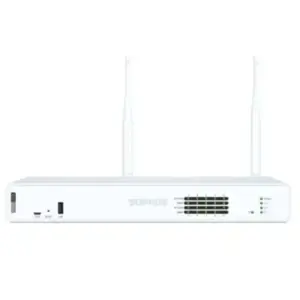
Fortinet FortiSwitch FS-148F Network Switch in Dubai, UAE
The FS-148F is a 48-port Gigabit Ethernet managed access switch with four 10 Gigabit SFP+ uplinks. Its role is straightforward: give a business a dense wired access layer while retaining faster uplink capacity for connections toward aggregation switches, FortiGate infrastructure or other compatible network equipment. The base FS-148F does not provide PoE on its 48 copper access ports, so it is particularly relevant where endpoint power is handled separately or where most connected devices are PCs, printers, servers, building systems and other non-PoE equipment.
Before you request a quote
Confirm whether your edge devices need PoE. The FS-148F itself is the non-PoE model; PoE requirements point to a different 148F variant.
Define the uplink media and distance so the correct SFP or SFP+ transceivers, fiber patching or direct-attach cabling can be considered.
Share the FortiGate model, management approach, VLAN plan and quantity if the switch is part of a larger Fortinet deployment.
Direct answer: what is the FS-148F?
The Fortinet FortiSwitch FS-148F is a managed 1U Ethernet access switch in Fortinet’s 100 Series. It provides 48 Gigabit RJ45 access ports and four 10 Gigabit SFP+ ports for uplinks, with a published switching capacity of 176 Gbps and packet-processing rate of 260 Mpps. It is mainly used to connect a large number of wired endpoints at branch, office or similar access-layer locations. Buyers should confirm that a non-PoE model matches the endpoint mix, identify the required uplink optics or cabling, decide how the switch will be managed, and check software, support and topology requirements before ordering. FourTeck can help convert those details into a clear bill of materials and quotation.
What the switch does in a business network
An access switch sits close to users and devices. Its job is to provide Ethernet connectivity to workstations, printers, desktop phones with independent power, surveillance equipment with separate power, access-control systems, servers, appliances and other wired endpoints. With 48 copper ports, the FS-148F can consolidate a substantial number of connections into a single rack unit, which can simplify cabinet planning compared with deploying several smaller switches.
The four SFP+ uplinks are important because a 48-port access layer can generate more traffic than a single 1 Gigabit uplink should be expected to carry comfortably in every environment. A buyer can therefore design faster links toward an upstream switch, firewall or other network layer, subject to topology, transceiver and platform compatibility. The exact number of active uplinks, whether they are aggregated, and how redundancy is implemented should be based on the intended network design rather than assumed from the port count alone.
In a Fortinet environment, FortiSwitch can also be incorporated into a wider management architecture. Fortinet documents options including standalone operation and supported centralized management approaches. The best choice depends on the FortiGate model, software versions, management preferences and operational responsibilities.
Who should consider the FS-148F?
The FS-148F fits organisations that need many conventional Gigabit Ethernet access connections in a wiring cabinet and already have a plan for power at the endpoints. Typical buyers include IT teams supporting medium-sized offices, multi-floor workplaces, education facilities, distributed retail operations, professional services firms and branch-heavy organisations standardising on a Fortinet-oriented network architecture.
It is especially sensible when 48 copper ports are useful, 10 Gigabit uplinks are desirable, and PoE is not a requirement for most of the connected estate. If the same cable must power phones, wireless access points, cameras or other powered devices, the base FS-148F may be the wrong variant. Buyers should instead compare the FS-148F-POE and FS-148F-FPOE variants, while checking their power budgets and exact project requirements.
The model is less attractive when the business needs multigigabit copper access, higher-speed campus aggregation, advanced redundancy features outside the capabilities of the 100 Series, or a large PoE budget. Those requirements should trigger a broader product-family comparison before a purchase decision is made.
Business problems the FS-148F can help address
Port density in a crowded rack
A single 1U unit offers 48 Gigabit copper ports. For a site with many wired desks or fixed devices, that density can reduce the number of access switches needed and make patch-panel-to-switch planning more orderly. Port count should still include spare capacity for growth and maintenance.
Access-to-core bandwidth mismatch
Four 10GE SFP+ interfaces give network designers options for higher-speed uplinks instead of relying only on Gigabit Ethernet. Actual uplink design depends on oversubscription targets, traffic patterns, supported aggregation methods and the capabilities of the upstream platform.
Fragmented network administration
Where FortiGate and FortiSwitch are used together, supported FortiLink management can provide a more integrated operational model. This can be useful for teams that want switching decisions to align with a broader Fortinet network design, but compatibility and software planning must be checked.
Mixed old and new cabling
The 48 copper ports fit standard Gigabit Ethernet access while the SFP+ slots provide fiber or other supported transceiver-based uplink choices. This can help modernise the backbone without requiring every endpoint connection to change at the same time.
Core capabilities that matter to buyers
FS-148F suitability matrix
| Requirement | Suitable when | Confirm before ordering |
|---|---|---|
| 48-port wired access | The site has many Gigabit Ethernet endpoints and benefits from 1U density. | Current port count, spare-port target and patching plan. |
| No PoE requirement | Connected devices have independent power or do not need power over Ethernet. | Whether phones, APs, cameras or access-control devices need PoE. |
| Faster uplinks | The design calls for 10GE SFP+ connectivity toward the upstream layer. | Fiber type, distance, optic compatibility and upstream port type. |
| Fortinet-managed LAN | FortiGate/FortiSwitch integration is part of the intended architecture. | FortiGate model, supported software release, topology and management mode. |
| Redundant switching design | The topology is built around features actually supported by the 100 Series. | High-availability requirements, LAG/STP design and whether a higher series is more suitable. |
Dependencies that can change the right bill of materials
The model number alone is not enough to finalise a switching purchase. The most important dependency is PoE. FS-148F is the non-PoE unit, while other 148F variants add different PoE coverage and power budgets. A site may appear to need only standard data switching until the device inventory is reviewed and wireless access points, IP cameras, desk phones or door controllers are found. If those devices must receive power from the switch, the base model should not be specified for those ports.
Uplink hardware is another dependency. The SFP+ slots are interfaces, not an automatic promise that every optic, fiber type, direct-attach cable or upstream switch combination will work. Distance, multimode versus single-mode fiber, connector type, 1GE versus 10GE operation and supported transceiver choices should be checked as part of the design. For long links between floors or buildings, the cabling plant can be as important as the switch itself.
Management and licensing should also be defined. Fortinet supports multiple management approaches across the FortiSwitch portfolio, and support or cloud-management services can have their own commercial terms. The intended FortiSwitchOS release, FortiGate platform, FortiLink design and operational support model should therefore be documented before purchase. FourTeck can help separate hardware, optional services, transceivers and implementation scope so the quote is easier to evaluate.
Important: do not assume that accessories, subscriptions or support contracts are included simply because they are relevant to the deployment. Ask for each required component to be shown explicitly in the quotation.
A practical purchase and deployment journey
Count real endpoints
List devices that need switch ports today, then add sensible room for moves, temporary connections and growth. Separate devices that need PoE from those that do not.
Map uplinks
Document the upstream switch or firewall, target link speed, fiber or copper path, distance and redundancy expectations. This determines whether transceivers or DAC/AOC cabling are needed.
Choose management
Decide whether the switch will be standalone or integrated into a supported Fortinet management architecture. Include software and topology compatibility in this step.
Build the quotation
Ask for the exact FS-148F quantity, optics, support options, rack accessories if required, installation scope and configuration scope to be shown separately.
After procurement, implementation normally includes rack placement, power and patching checks, management access, firmware review, VLAN and trunk configuration, uplink validation, spanning-tree or aggregation settings where required, endpoint testing and documentation. The exact sequence depends on whether the switch is being added to an existing network, replacing an older access switch, or deployed as part of a new site. For production networks, plan a change window and rollback method rather than treating the installation as a simple hardware swap.
Capability focus: high-density access without unnecessary PoE cost
PoE is valuable when a switch must power edge equipment, but not every cabinet needs it. Desktops, printers, servers, certain industrial devices and many fixed appliances already have local power. In such an environment, selecting a non-PoE switch can keep the bill of materials aligned with the actual requirement rather than paying for a large PoE budget that will remain unused. The FS-148F gives the buyer 48 Gigabit access ports specifically in that non-PoE profile.
That does not mean the switch should be selected by port count alone. A 48-port unit is most useful when the site can realistically consume a large portion of those ports during its lifecycle. If the cabinet currently needs only 14 connections and is unlikely to grow, a 24-port model may be easier to justify. Conversely, if the count is already close to 48, a buyer should consider whether one unit leaves enough spare capacity or whether two switches, a different model, or an alternative access-layer design is more appropriate.
The practical decision is therefore about density and endpoint type together. FourTeck can review the device schedule and help identify whether the base FS-148F, a PoE variant or another FortiSwitch model is the better fit.
Capability focus: four 10GE SFP+ uplinks for design flexibility
A dense access switch can become constrained if every endpoint ultimately shares a single low-speed upstream link. The FS-148F includes four SFP+ interfaces capable of 10 Gigabit Ethernet, giving the network architect room to design higher-bandwidth paths from the access layer. That can be useful for a busy office floor, a branch with local servers, a classroom block with many active wired clients, or a site that backhauls multiple VLANs through an upstream security platform.
However, four uplink ports should not be read as four times the usable bandwidth in every topology. Whether links can be combined, how redundancy works, and which uplinks should be active depends on the upstream equipment, FortiLink or standalone topology, supported link aggregation methods and spanning-tree design. A network built for resilience may use interfaces differently from one optimised for throughput. Buyers should therefore describe the intended physical and logical topology when requesting advice.
Transceiver selection is equally important. SFP+ is a form-factor interface; the actual optical or cable specification must match distance, fiber type and the device at the other end. Confirming this in the bill of materials prevents a common procurement problem where the switches arrive but the correct interconnect components do not.
Capability focus: management choices for Fortinet-oriented networks
A managed switch creates operational value when its configuration, monitoring and policy model fit the way the IT team works. Fortinet’s current documentation describes FortiSwitch operation in standalone mode as well as supported management by FortiGate and other Fortinet management options. For organisations already using FortiGate, FortiLink can be particularly relevant because it allows the switching layer to participate in a more integrated Fortinet network design.
The management choice affects implementation planning. A standalone deployment needs its own management addressing, administrative access, configuration standards, monitoring and backup process. A FortiGate-managed deployment requires compatible FortiGate capability, FortiLink design and suitable software versions. Cloud or manager-based operation introduces its own account, subscription and operational considerations. None of these approaches should be selected merely because they exist; the right one is the one that fits the organisation’s support model and architecture.
Before ordering, document who will own switch configuration, where logs and alerts should be monitored, how firmware updates will be handled, and whether the network already has a standard FortiSwitch management method. FourTeck can incorporate those answers into sizing and implementation discussions.
Business environments where the FS-148F can make sense
Office floors
An office with dozens of wired desks, printers and meeting-room endpoints can use the 48-port density efficiently, particularly where phones and access points are powered elsewhere or connected through separate PoE switching.
Education and training sites
Computer labs and teaching environments often require many fixed Gigabit Ethernet ports. The correct choice still depends on whether wireless APs, cameras or phones also need PoE from the same cabinet.
Retail or branch networks
Larger branches may have POS devices, back-office systems, printers, controllers and local servers. A Fortinet-oriented branch design can also make FortiLink management relevant when supported by the chosen FortiGate.
Shared services and operations rooms
Teams with many wired appliances or management interfaces can benefit from a dense access layer, provided that the switching feature set, redundancy requirements and uplink design are suitable for the operational role.
Network refresh projects
The model can be considered when replacing older 48-port Gigabit switches and adding 10GE uplink capability. Migration planning should preserve VLANs, trunks, management access and any required security controls.
Mixed Fortinet estates
Businesses already operating FortiGate, FortiAP or other Fortinet network components may value architectural consistency. Compatibility should still be checked against the exact platforms and software releases in use.
Integration and operational considerations
Start with the upstream design. If the FS-148F connects to an existing core or distribution switch, identify the available SFP/SFP+ interfaces, supported transceivers, VLAN trunking method and link aggregation options on both ends. If it connects directly into a FortiGate-managed architecture, review the FortiGate model, FortiLink capabilities, software version and intended topology. A technically valid switch can still be a poor purchase if the surrounding design cannot use the desired uplink or management method.
Next, treat VLAN migration as a controlled task. Existing switches may contain access VLANs, voice VLANs, management VLANs, trunks, DHCP-snooping settings, spanning-tree priorities, port security and monitoring features. Replacing the hardware without documenting those settings can cause outages that have nothing to do with the new switch. Before the change, export or record the old configuration and create a port-by-port mapping to the new unit.
Physical installation also deserves attention. Confirm rack depth, available 1U space, airflow, power outlets, patch-cord lengths and cable management. A 48-port switch can create significant front-of-rack cabling density, so patching should be planned rather than improvised. Label both switch ports and patch-panel ports, and reserve uplink positions consistently if several closets use the same design.
Finally, decide how configuration backups, firmware maintenance and administrative access will be handled after go-live. The network is easier to support when those operational responsibilities are defined during procurement, not after the equipment has already been installed.
Buyer questions to resolve before ordering
How many ports will be occupied on day one?
Include current endpoints, growth and spare capacity. If the requirement is far below 48 ports, compare whether a smaller model is more efficient.
Which devices need power from the switch?
The base FS-148F has no PoE. If APs, phones or cameras need switch-delivered power, use a PoE-capable design.
What is the uplink speed and medium?
Specify 1GE or 10GE, fiber or direct-attach cabling, link distance and the upstream port type so the correct transceiver is selected.
Will FortiGate manage the switch?
If yes, provide the FortiGate model and software release and describe the planned FortiLink topology so compatibility can be checked.
What redundancy is required?
Define whether the goal is redundant uplinks, dual upstream devices, switch redundancy or simply link aggregation. These are different design problems.
What services should be included?
Installation, configuration, migration, testing, documentation and support should be stated explicitly if they are part of the project.
Procurement checklist for the FS-148F
✓ Confirm exact model: FS-148F
✓ Required switch quantity
✓ Access-port count and growth allowance
✓ Non-PoE suitability confirmed
✓ Uplink speed and port usage
✓ SFP/SFP+ optic or cable type
✓ Fiber type, connector and distance
✓ FortiGate model if FortiLink is planned
✓ Firmware / software compatibility review
✓ Rack, power and patching requirements
✓ Support or subscription requirement
✓ Installation and configuration scope
✓ Migration and change-window requirements
✓ UAE destination and requested timeline
How FourTeck can assist with sizing and quotation
FourTeck can help translate a broad request such as “we need a 48-port Fortinet switch” into a procurement-ready requirement. That usually means checking whether the base FS-148F is appropriate, identifying PoE demand, reviewing the uplink path, confirming the planned management method and listing accessories or support items separately. This approach is useful because model-family names can look similar while the practical differences—especially PoE budget and management design—matter significantly in deployment.
If the switch is part of a wider security and networking refresh, FourTeck can also discuss FortiGate integration, switch staging, VLAN migration, installation and configuration scope. Browse related FourTeck technology products or review available network and security services for broader project planning.
For an accurate quotation, send the switch quantity, site location, current firewall or upstream switch model, expected port use, PoE requirement, uplink media, preferred management method and any installation expectations. That information reduces unnecessary revisions to the bill of materials.
Useful FourTeck resources
For Fortinet-focused infrastructure discussions, visit the FourTeck Fortinet UAE resource.
For firewall and secure-network integration projects, review Fortinet firewall solutions in Dubai.
To discuss the switch, accessories or project scope directly, use the FourTeck contact page.
UAE availability and support guidance
Contact FourTeck to confirm current UAE availability for the Fortinet FortiSwitch FS-148F. Availability may depend on the exact model, quantity, vendor lead time, support requirement and project schedule. A quotation should therefore distinguish the FS-148F base switch from any PoE variant and clearly identify transceivers, licenses, support contracts or services that are required for the deployment. Delivery and project coordination can be discussed after the exact requirement is confirmed.
For projects spanning Dubai, Abu Dhabi, Sharjah and Ajman, FourTeck can coordinate requirement review and quotation preparation around a consistent bill of materials. Businesses with several branches should provide the quantity per site, existing FortiGate or switching platform, uplink distances and any local installation constraints. Installation and configuration scope should be included in the quotation when required rather than assumed to be part of hardware supply.
GCC Availability
FourTeck can assist businesses planning FortiSwitch deployments across GCC markets with requirement review, model selection, quotation coordination, configuration scope and regional project planning. For an FS-148F request, buyers should state the destination country, switch quantity, whether the project is new or an expansion, the required uplink media, and whether FortiGate management is intended. Requirements in the United Arab Emirates, Saudi Arabia, Kuwait, Qatar, Bahrain and Oman can differ in logistics, project timing and commercial conditions, so availability should be confirmed for the actual destination rather than inferred from another market. Product supply, licensing, support options, delivery schedules, service visits and vendor lead times can vary by country, quantity and project scope. For Kuwait-related coordination, buyers can also review FourTeck Kuwait resources. Share the required timeline and installation expectations so the quotation can reflect the practical deployment requirement.
Africa Availability
Organisations planning an FS-148F deployment in Africa can ask FourTeck for help evaluating the hardware, uplink components, management approach, support needs and regional procurement plan. Availability and fulfilment may depend on the destination, model, quantity, power and rack requirements, shipping arrangements, vendor lead time and local project conditions. Buyers in East Africa and other regions should send the exact destination country, required quantity, preferred deployment schedule and any installation or remote-support expectations. This is particularly important when the switch will be integrated with existing FortiGate infrastructure or when optics must match an installed fiber plant. FourTeck’s Africa technology resource can support broader regional discussions. Local inventory, customs outcomes, onsite coverage and fixed delivery dates should be confirmed for each project rather than assumed from a general product listing.
Related options to compare before final selection
FS-148F-POE
Consider when only part of the 48-port access layer needs PoE. Confirm the supported PoE port count and budget for the exact variant before ordering.
FS-148F-FPOE
Consider when PoE is required across more access ports. It is a different model with a larger PoE budget and should not be confused with the base FS-148F.
FS-124F family
A 24-port option can make more sense for smaller closets. Compare port growth, uplink needs and PoE variants rather than buying 48 ports purely for consistency.
Higher FortiSwitch series
If the project needs multigigabit access, more advanced campus features or different redundancy capabilities, compare current higher-series FortiSwitch models instead of forcing the 100 Series into the design.
What buyers are usually trying to work out before choosing a 48-port FortiSwitch
A buyer researching the FS-148F is often not simply comparing one switch against another. The real question is whether this exact model fits the access layer that already exists. That means beginning with the endpoint inventory. If a business has around 30 to 40 wired devices in one cabinet and expects growth, a 48-port switch may offer a practical balance between current use and spare capacity. If there are only 10 to 15 endpoints, the extra density may be unnecessary. If there are already more than 45 live ports, one 48-port unit may leave too little operational headroom, so the design should consider a second switch or a different approach.
The non-PoE question comes first
The base FS-148F does not power connected devices. This is a decisive distinction, not a minor specification. Many office networks mix PCs and printers with PoE phones, cameras and wireless access points. If those powered devices share the same cabinet, the buyer must decide whether to use a PoE-capable 148F variant, keep a separate PoE switch, or use another power strategy. The right answer depends on device count, power budget, resiliency and cabling plans.
Uplink planning is about more than “10G”
The switch has four 10GE SFP+ interfaces, but a complete uplink design must state what the other end is, what media runs between them and what distance the link must cover. A short in-rack connection may use a different approach from a fiber link between floors. The existing fiber plant may be multimode or single mode, and the upstream device may have its own transceiver requirements. Procurement should therefore include the interconnect components, not only the switch.
Another common research question is whether the FS-148F can be managed through a FortiGate. Fortinet supports FortiLink-based management for FortiSwitch in suitable deployments, but the practical answer depends on the FortiGate model, software versions and topology. A buyer replacing switches in an existing Fortinet network should not assume that every old design can be reproduced unchanged. The current architecture should be reviewed, especially if the project involves redundant FortiGates, multiple access switches or a mixture of FortiSwitch series.
Buyers also compare switching capacity and packet rate because these numbers indicate the forwarding capability of the hardware, but they do not by themselves predict application performance. The FS-148F is published with 176 Gbps switching capacity and 260 Mpps packet rate. Whether users experience congestion depends on endpoint traffic, uplink design, oversubscription, server locations, security inspection points and the wider network. A 10GE uplink can improve access-to-upstream bandwidth, yet a slow WAN link or overloaded firewall can still become the limiting factor.
For a quotation, the most useful information is operational rather than marketing-oriented. State the number of switches, site location, number of active ports, number of PoE devices, expected VLANs, uplink destinations, required link speeds, fiber type and distance, current FortiGate model, preferred management method and whether installation or migration is needed. If the switch is replacing an existing model, include that model and explain any problems the upgrade is meant to solve. This makes it easier to determine whether the FS-148F is genuinely suitable or whether another FortiSwitch should be considered.
Price comparisons should also be treated carefully. Online listings may show different regions, tax treatment, support coverage, hardware condition and delivery assumptions. A lower hardware-only figure does not necessarily represent a lower deployed cost if the project also needs optics, subscriptions, support or professional services. For UAE business procurement, ask for a current quotation tied to the required quantity and bill of materials rather than using an unrelated overseas listing as a purchasing commitment.
Decision questions that reveal whether this model is the right fit
“Can I use FS-148F for phones and access points?”
For data connectivity, potentially yes; for powering them, no. The base FS-148F has no PoE on its copper access ports. If phones or access points rely on PoE, choose a suitable PoE-capable switch design or provide another approved power method. Count both the number of powered devices and their power requirements before selecting the variant.
“Do I need all four SFP+ ports?”
Not necessarily. The four uplink interfaces give flexibility, but the correct design may use one, two or more depending on bandwidth, redundancy and topology. The quantity of installed optics should follow the design. Buying four transceivers automatically can add cost without adding value if only one or two links are required.
“Will it work with my existing FortiGate?”
Compatibility should be verified against the exact FortiGate and software release. FortiLink is a supported Fortinet management approach, but platform support, topology and firmware combinations matter. Provide the FortiGate model and current software version when asking FourTeck to review the design.
“Should I buy a 48-port model if only 24 ports are used?”
Only when the spare capacity has a clear purpose. Growth, temporary connections and standardisation can justify extra ports, but a 24-port model may be more appropriate for a stable small site. Compare the expected three-to-five-year endpoint count and cabinet design rather than purchasing unused density by default.
“What should I send for an accurate quote?”
Send the exact model, quantity and deployment context. Include PoE requirements, uplink speed, fiber or cable distance, upstream device, management method, site location and service scope. If support or cloud management is required, specify the preferred term where known so those items can be shown separately.
“Is a 10GE uplink automatically faster for users?”
It can remove an access-layer bottleneck, but only within the limits of the whole path. Application servers, firewalls, WAN circuits and endpoint capabilities still affect end-to-end performance. Uplink sizing should be based on traffic patterns and the wider architecture, not only the switch’s maximum port speed.
Why businesses contact FourTeck for FortiSwitch projects
The useful part of a switch quotation is not simply confirming that a model number exists. Businesses often need help deciding whether they selected the correct variant, whether the proposed uplinks match the installed cabling, whether FortiGate management is appropriate, and which accessories or support items should appear in the bill of materials. FourTeck can assist with these clarification steps before the order is placed.
For larger projects, FourTeck can also discuss network refresh planning, VLAN migration, configuration scope, installation coordination and integration with the surrounding security architecture. This is particularly relevant when several sites are being standardised or when an existing third-party switching estate is being moved to FortiSwitch.
The objective is to make the purchase requirement precise enough that procurement, IT operations and implementation teams are all working from the same assumptions. For company background, visit about FourTeck.
Frequently asked questions about Fortinet FortiSwitch FS-148F
1. How many network ports does the FS-148F provide?
The FS-148F provides 48 Gigabit Ethernet RJ45 access ports plus four 10GE SFP+ interfaces. Buyers should distinguish access ports from uplink interfaces when counting endpoint capacity.
2. Does the base FS-148F support PoE?
No. The base FS-148F is the non-PoE model. Fortinet also lists FS-148F-POE and FS-148F-FPOE variants with different PoE capabilities. Confirm the exact variant required before ordering.
3. What is the switching capacity of the FS-148F?
Fortinet publishes a switching capacity of 176 Gbps and a packet-processing rate of 260 Mpps for the FS-148F. Real application performance still depends on the complete network path and configuration.
4. Can the FS-148F be managed by a FortiGate?
FortiSwitch supports FortiLink-based FortiGate management in compatible deployments. The FortiGate model, FortiSwitchOS/FortiOS versions and topology should be checked before implementation.
5. Are SFP+ transceivers included with the switch?
Do not assume transceivers are included. The required optic or cable depends on link speed, distance, fiber type and the upstream equipment. Ask for these components to be listed explicitly in the quotation.
6. Is the FS-148F suitable for a new office network?
It can be suitable where the office needs many Gigabit wired ports, 10GE uplink options and no PoE on the base access switch. A final decision should consider endpoint count, PoE demand, uplinks, management and redundancy requirements.
7. What should be checked when replacing an older 48-port switch?
Document VLANs, trunks, uplinks, spanning-tree settings, link aggregation, management addressing, security controls and port mapping. Confirm that the new switch and upstream devices support the planned design before the cutover.
8. How can I confirm FS-148F availability in Dubai or the UAE?
Contact FourTeck with the exact model and quantity. Current UAE availability can depend on quantity, vendor lead time, support options and project schedule, so it should be confirmed for the specific requirement.
9. What information does FourTeck need for an FS-148F quotation?
Provide quantity, site location, port count, PoE requirement, uplink speed and medium, fiber distance, upstream switch or FortiGate model, management preference, support expectations and any installation or configuration scope.
Confirm the FS-148F design before you place the order
Share your switch quantity, endpoint count, PoE needs, uplink design and FortiGate details with FourTeck. We can help review the model choice, build the required accessory list, discuss configuration or migration scope and prepare a current UAE quotation.

Reviews
There are no reviews yet.