

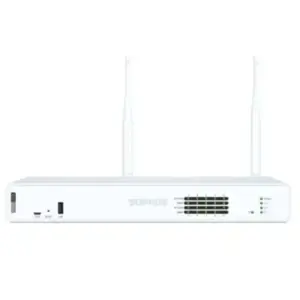
Fortinet FortiSwitch FS-2048F Data Center Switch in Dubai, UAE
The FS-2048F is built for buyers who are moving beyond conventional 1GE and 10GE switching and need a compact platform for high-density server, storage, aggregation or campus-core connectivity. It provides a practical path to 25GE downlinks and 100GE uplinks while remaining compatible with FortiGate switch-controller operation through FortiLink. The important buying question is not simply whether the chassis has enough ports; it is whether the selected optics, port modes, airflow, support coverage and network design match the intended rack and traffic pattern.
Before requesting a quotation
Share the intended role of the switch, port-speed mix, optics type, uplink design, quantity, rack airflow requirement and management method.
FourTeck can then help align the FS-2048F hardware, transceivers, support and deployment scope with the project rather than quoting an incomplete chassis-only requirement.
48 × 25GE SFP28 positions
8 × 100GE QSFP28 positions
Layer 2/3, campus core and data center
FortiGate switch-controller compatible
Direct answer: what is the FS-2048F?
The Fortinet FortiSwitch FS-2048F is a high-density 1RU Layer 2/3 switch intended for data-center and campus-core networking where 25GE server or aggregation links need to feed into 100GE uplinks. Organisations should consider it when they have a clear need for fibre-based high-speed switching, FortiGate-integrated management, or a leaf/aggregation design that fits its port layout. Before proceeding, confirm the speed plan for the SFP28 ports, compatible transceivers or cables, the number and type of 100GE uplinks, airflow direction, power arrangements, software or feature licensing, support term and the exact FortiGate/FortiLink architecture if central switch control will be used.
What the switch is designed to do
The FS-2048F concentrates high-speed fibre links in a compact rack space. Its 25GE-oriented SFP28 port bank is relevant to modern servers, storage systems, hyperconverged platforms and aggregation links that would otherwise consume many 10GE interfaces. Eight 100GE QSFP28 positions provide room for higher-capacity upstream connections, leaf-to-spine links or core aggregation depending on the architecture. The switch is therefore better understood as an infrastructure building block than as a general office access switch.
It also fits Fortinet-centric operational models because Fortinet identifies the model as compatible with FortiGate switch-controller management. That can be useful when the organisation wants network segmentation, switch management and security policy workflows to sit closer to the Fortinet Security Fabric. The exact operating model still needs design work: stand-alone FortiSwitchOS operation and FortiGate-managed operation have different planning, version and topology considerations.
Who should shortlist it
The strongest candidates are organisations refreshing a server room or data center toward 25GE, building a leaf-spine fabric, consolidating multiple high-bandwidth workloads, or designing a campus-core layer that needs dense fibre and 100GE uplinks. It can also suit businesses already standardising on FortiGate and FortiSwitch technologies when the chosen FortiGate platform, FortiOS release and topology support the required controller scale.
It is less suitable when the requirement is primarily copper endpoint access, Wi-Fi access-point powering, IP telephony PoE, low-port-count branch switching or simple 1GE desktop connectivity. Those requirements normally point to an access-layer FortiSwitch model rather than the FS-2048F. FourTeck can help compare the intended workload against the broader FourTeck product portfolio before the final bill of materials is prepared.
Business challenges the FS-2048F can address
Dense server connectivity
A rack with many 10GE or 25GE-capable hosts can quickly outgrow traditional aggregation switches. The FS-2048F provides a concentrated SFP28 interface footprint so more high-bandwidth devices can be connected within a single rack unit. The actual port-speed pattern and optics must still be engineered around the installed NICs and cabling.
100GE uplink pressure
As east-west traffic grows, multiple 25GE server-facing links can create a bottleneck at the aggregation layer. The eight QSFP28 positions give designers a way to build higher-capacity upstream paths. Oversubscription ratios, link aggregation and redundancy should be calculated from real workloads rather than assuming every port will run at line rate at the same time.
Operational fragmentation
In Fortinet environments, separate switching and security administration can add operational overhead. FortiGate switch-controller compatibility provides an integrated management option. That does not remove the need for design discipline: FortiLink topology, controller capacity, software compatibility and change-control procedures should be agreed before migration.
Rack-space efficiency
When data-center rack units are constrained, combining many high-speed ports into 1RU can simplify physical planning. Power, heat, airflow and cable-management impact must still be considered; port density alone is not a reason to select a switch unless the rack can support the complete operating requirement.
Core capability band
The 48 SFP28 positions are the main reason to select this model. They support a high-density design for modern server, storage and aggregation links where a 25GE target makes technical and commercial sense.
Eight QSFP28 positions provide high-capacity connectivity toward a spine, core or another aggregation layer. Breakout, optics and cable choices should be confirmed against the supported interface configuration.
Fortinet lists the FS-2048F as FortiGate switch-controller compatible. This is relevant to organisations using FortiLink, but controller sizing and FortiOS/FortiSwitchOS compatibility remain design dependencies.
Fortinet architecture guidance identifies a 4,000 Gbps switching capacity for the FS-2048F. Actual application performance depends on traffic characteristics, topology, configuration and connected systems.
Product-fit decision matrix
| Requirement | Suitable when | Confirm before ordering |
|---|---|---|
| 25GE server or storage connectivity | A meaningful number of devices can use SFP28-based 25GE links. | NIC speed, optic/DAC compatibility, fibre type and grouped PHY-mode plan. |
| 100GE upstream bandwidth | The design needs several high-capacity links toward spine or core infrastructure. | QSFP28 optics, breakout requirements, redundancy and oversubscription ratio. |
| Fortinet-managed switching | FortiGate switch-controller operation is part of the target architecture. | FortiGate model, supported switch scale, FortiOS release and FortiLink topology. |
| Compact data-center footprint | High interface density is needed within a 1RU chassis. | Rack depth, rail/mounting plan, airflow, power feeds and cable-management space. |
| Office edge or PoE access | Generally not the target use case. | Consider an access-layer FortiSwitch family if copper ports or PoE are required. |
Verified product information
The table below keeps confirmed model facts separate from items that should be checked in the final quotation. Where a deployment characteristic can change with software, licensing, optics or regional supply, it is deliberately not presented as a fixed entitlement.
| Brand | Fortinet |
| Product | FortiSwitch 2048F |
| Manufacturer model / part number | FS-2048F |
| Product type | Layer 2/3 data-center and campus-core Ethernet switch |
| Main port bank | 48 × 25GE SFP28 slots; Fortinet documentation also provides FS-2048F PHY-mode controls for lower-speed operation on grouped ports. |
| High-speed uplinks | 8 × 100GE QSFP28 slots |
| Additional interfaces | 2 × 10GE SFP+ |
| Switching capacity | 4,000 Gbps as identified in Fortinet switching architecture guidance |
| Form factor | 1RU rack-mountable |
| FortiGate switch-controller compatibility | Yes; architecture and software compatibility should be validated for the intended FortiLink deployment |
| Power supplies | Dual AC power supplies |
| Airflow | FS-2048F is the standard airflow model; a distinct FS-2048F-B2F variant exists for back-to-front airflow. Confirm the exact airflow requirement in the BOM. |
| Advanced feature licensing | Feature dependent. An FS-2000 Series Advanced Features software license is available; confirm whether the required functions need it. |
| Optics / DAC / AOC | Not assumed included. Exact transceiver and cable selection must be confirmed. |
| FortiCare | Support term and service level are quotation dependent. |
| UAE availability | Contact FourTeck for current options; quantity and vendor lead time may affect supply. |
Configuration, licensing and compatibility dependencies
High-speed switching projects often fail at the edges of the bill of materials rather than at the chassis itself. The FS-2048F should therefore be evaluated as a combination of switch hardware, supported optics or cables, connected NICs, port-mode configuration, upstream design, software versions, management architecture and support coverage. A quotation that only lists the base switch can be incomplete for a production deployment.
Fortinet documentation for the FS-2048F exposes PHY-mode settings in groups of twelve SFP28 ports. That matters when a rack needs a mixed 1G/10G/25G design. Buyers should not assume that every individual SFP28 position can be set independently to any speed without considering the group configuration. The correct port plan should be documented before installation, particularly when the switch connects to existing FortiGate interfaces, older 10GE devices or another FortiSwitch platform.
Forward-error-correction settings can also matter on high-speed links. Fortinet has published troubleshooting guidance showing that link establishment between the FS-2048F and specific FortiGate or FortiSwitch interfaces may require matching PHY-mode, interface speed and FEC settings. This does not mean the product is incompatible with those devices; it means high-speed physical links need configuration alignment. During migration, record the optic type, lane speed and FEC setting on both ends of every 25GE or 100GE connection.
Licensing should be treated with the same care. Basic switching operation and advanced features should not be blended together in the commercial description. Fortinet offers an Advanced Features software license for the FS-2000 Series, while FortiCare is a separate support consideration. FourTeck can help map the requested feature set and support expectation to the quote so optional items are identified before procurement approval.
A practical purchase and deployment journey
Define the traffic role
Decide whether the switch will be top-of-rack, leaf, aggregation or campus core, and identify the devices that will connect directly to it.
Build the port map
List each required 10GE, 25GE and 100GE link, allowing for redundancy, growth and the FS-2048F grouped PHY-mode behaviour.
Validate the physical layer
Choose supported SFP28/QSFP28 optics, DACs or AOCs and verify fibre type, reach, FEC and connector standards at both link ends.
Confirm management
Select stand-alone or FortiGate-managed operation and check the relevant firmware versions, FortiLink design and controller scale.
Quote complete scope
Include hardware, optics, support, licenses, rack accessories and any configuration, migration or installation services needed.
25GE density without losing sight of oversubscription
The headline value of the FS-2048F is its concentration of 25GE-capable server-facing connectivity. A 25GE link is attractive because it increases per-server bandwidth significantly without immediately forcing every downstream device into 100GE. This can be useful in virtualisation clusters, private cloud platforms, storage-intensive environments, backup infrastructure and analytics systems where multiple high-bandwidth hosts sit in the same rack or pod.
Port count alone, however, does not determine whether the switch is correctly sized. A design with forty-eight active 25GE links may have very different traffic characteristics from a design with twenty-four active links and bursty workloads. The eight 100GE uplink positions provide substantial fabric bandwidth, but the upstream topology still needs an oversubscription calculation. Buyers should document normal and peak east-west traffic, replication or backup windows, storage behaviour and failover expectations. That information tells the architect how many 100GE links should be active, how they should be distributed and whether link aggregation or equal-cost routing is appropriate.
The commercial benefit of doing this work early is significant: it prevents overbuying optics and uplinks that are not needed, while also avoiding a deployment that becomes constrained shortly after go-live. FourTeck can review the port map and growth assumptions as part of a product-sizing discussion.
FortiLink and operational integration
FortiGate switch-controller compatibility is an important reason a Fortinet customer may choose the FS-2048F over an unrelated data-center switch. In a FortiLink design, the switching infrastructure can be brought into a FortiGate-centred operational model, giving network teams a more unified place to manage segmentation and switch policy. For organisations already using FortiGate at the data-center edge or campus core, this can reduce the number of separate management workflows they maintain.
The integration should still be planned rather than assumed. The FortiGate model must have enough switch-controller capacity for the intended number of managed switches and endpoints. FortiOS and FortiSwitchOS versions must be compatible, and the physical FortiLink topology has to support the required resilience. Management traffic, VLAN design, routing boundaries and administrative ownership should be decided before migrating production links.
Some environments will prefer stand-alone FortiSwitchOS management because the data-center switching team is operationally separate from firewall administration. Others will prefer FortiGate control for policy coordination. The correct choice depends on the organisation’s network operating model, not simply on feature availability. For broader deployment help, FourTeck can scope network configuration and implementation services alongside the hardware quotation.
Resilience starts with the complete design
The FS-2048F includes dual AC power supplies, which supports redundant power design at the chassis level. That is useful, but it is only one element of availability planning. A resilient data-center switch deployment normally considers separate power feeds, independent uplinks, link aggregation or routed paths, redundant upstream devices, spare optics, configuration backup, monitoring and an appropriate vendor support level.
Airflow is another operational detail that can be overlooked. The standard FS-2048F and the FS-2048F-B2F are distinct ordering references, with the B2F version intended for the opposite airflow direction. Mixing airflow directions in a hot-aisle/cold-aisle data center can undermine cooling efficiency. The correct hardware variant should therefore be selected at procurement time rather than treated as an installation detail.
Support requirements should reflect the role of the switch. A lab, development pod and production aggregation layer may need different response and replacement expectations. FortiCare options and priority hardware-replacement services are separate commercial items and may have prerequisites. Ask FourTeck to include the required support term and service level in the BOM rather than assuming it is bundled with the chassis.
Ideal business environments and use cases
Virtualised data centers
Clusters with many hypervisors can generate sustained east-west traffic for virtual-machine mobility, storage, backup and distributed applications. The FS-2048F may suit racks where 25GE host interfaces are becoming the standard and 100GE links are needed toward the fabric. The exact number of uplinks should be based on traffic measurements and failover requirements.
Private cloud and HCI
Hyperconverged and private-cloud platforms often combine compute, storage replication and management traffic over high-speed Ethernet. A dense 25GE switch can be a useful leaf or top-of-rack component when the platform vendor’s NIC, MTU and redundancy guidance is followed. Confirm the HCI vendor’s supported network topology before finalising the switch configuration.
Campus core refresh
Some enterprise campuses need more fibre aggregation capacity between buildings, distribution layers and security gateways. The FS-2048F can be considered where 25GE and 100GE interfaces align with that design. Campus environments requiring large numbers of copper or PoE edge ports should combine it with suitable access switches rather than expecting one model to serve every layer.
Storage and backup networks
Backup windows, replication traffic and Ethernet-based storage can place heavy burst loads on switching infrastructure. The FS-2048F may fit when servers and storage targets use compatible 10GE/25GE interfaces and the upstream design can absorb the aggregate load. Buffer behaviour, MTU, flow control and storage-vendor recommendations should be validated for the specific workload.
Integration and operational considerations
A successful FS-2048F installation starts with interface compatibility. The switch-side port may be capable of a target speed, but the link will only come up when both ends agree on speed, optic or cable standard and the required FEC behaviour. For legacy equipment, check whether the device is truly compatible with the chosen SFP28 mode rather than assuming an SFP+ optic will behave identically in every configuration. When migrating a live rack, stage a representative link in advance and record the working settings.
Routing design is equally important. The product is a Layer 2/3 switch, so architects can decide where VLAN termination, routing and security inspection should occur. In a FortiGate-centric design, routing or segmentation boundaries may be placed differently from a conventional stand-alone leaf-spine fabric. The network team should decide which device owns default gateways, how east-west security is enforced and what failure domain is acceptable.
Operational tooling should include monitoring for interface errors, FEC events, link utilisation, temperature, power status and topology changes. Configuration backups and software lifecycle procedures should be documented before the switch becomes a critical aggregation point. Change windows for PHY-mode adjustments deserve particular care because group-level settings may affect more than one physical port.
For projects that combine switching with Fortinet security, the FourTeck Fortinet UAE resource can be used as a starting point for discussing firewall, switching and broader Security Fabric requirements.
Questions buyers should resolve before ordering
Separate current requirements from three-year growth so optics and uplink capacity are purchased in sensible stages.
Define whether links go to one or two upstream devices, whether they are aggregated, and how much bandwidth must remain after a link failure.
Specify distance, fibre type, connector and peer equipment for every link class. Do not assume optics are included with the chassis.
If yes, confirm controller capacity, supported firmware combination, FortiLink topology and operational ownership.
Confirm standard FS-2048F versus the separately ordered B2F variant before the purchase order is issued.
Choose FortiCare and any priority replacement service based on business criticality, not only hardware price.
Procurement and evaluation checklist
✓ Confirm exact model: FS-2048F rather than FS-2048F-B2F.
✓ Confirm required quantity and rack location.
✓ Create a port-by-port 10GE/25GE/100GE plan.
✓ Check grouped PHY-mode requirements on the 48 SFP28 ports.
✓ List SFP28, QSFP28, DAC or AOC items separately.
✓ Verify optical reach, fibre type and peer-side compatibility.
✓ Decide stand-alone versus FortiGate-managed operation.
✓ Validate FortiOS/FortiSwitchOS compatibility and controller scale.
✓ Confirm advanced-feature licensing if required.
✓ Choose the FortiCare term and service level.
✓ Confirm power feeds, airflow and rack/cable-management requirements.
✓ Include configuration, migration, testing and documentation scope where needed.
How FourTeck can assist with sizing and deployment planning
FourTeck can help turn a high-level requirement such as “48-port 25G data-center switch” into a quotation that is usable by procurement and implementation teams. The first step is requirement clarification: expected number of 25GE hosts, number of 100GE uplinks, peer devices, fibre distances, FortiGate management preference, airflow direction and support expectations. From there, the hardware and associated components can be reviewed as one bill of materials.
For deployments that need technical services, the scope can cover configuration planning, VLAN and routing preparation, FortiLink integration, staged migration, interface validation, testing and handover documentation. The exact services should be written into the quotation because installation effort varies substantially between a new rack, a live migration and a multi-site network refresh. FourTeck does not treat a switch chassis as the entire project when the customer actually needs optics, integration and operational readiness.
Businesses can also use the FourTeck technology services website to discuss related infrastructure, security, communication and support requirements. For an accurate FS-2048F quote, provide the network diagram or at least a connection list and expected project timing.
UAE availability and support guidance
Contact FourTeck to confirm current UAE availability for the Fortinet FortiSwitch FS-2048F. Availability can change with quantity, vendor lead time, airflow variant, support bundle and the optics or accessories required for the project. Delivery coordination should therefore follow confirmation of the exact bill of materials rather than a generic chassis request.
Customers should also state whether the quotation must include FortiCare, advanced features, transceivers, DAC/AOC cabling, rack work, configuration or migration assistance. When these items are identified early, the commercial team can provide a clearer quote and the technical team can prepare a realistic implementation plan. No fixed delivery or installation date should be assumed until the final configuration and destination are confirmed.
Dubai, Abu Dhabi, Sharjah and Ajman project coverage
FourTeck can coordinate requirement review and quotation discussions for organisations operating in Dubai, Abu Dhabi, Sharjah and Ajman. The practical starting point is the same across these locations: confirm the exact switch model, quantity, rack environment, port-speed plan, optics, FortiGate integration requirement and desired support term. Delivery, installation or configuration scope can then be discussed against the specific project location and timeline. For multi-site organisations, FourTeck can help structure one requirement document that separates common standards from site-specific differences, reducing the risk that each location receives a different optic, airflow option or configuration assumption. Current product availability and service scheduling remain dependent on the confirmed requirement.
GCC Availability
FourTeck can assist organisations planning FS-2048F deployments across GCC markets by reviewing the technical requirement before commercial coordination. A regional project may use the same switch model in the United Arab Emirates, Saudi Arabia, Kuwait, Qatar, Bahrain or Oman, but the final bill of materials can still differ because of optics, power-cord requirements, support terms, destination logistics, vendor lead times and local project scope. Buyers should share the destination country, quantity, required port speeds, preferred management model, expected deployment date and whether configuration or installation assistance is needed.
For multi-country rollouts, it is useful to standardise the switching design while allowing each site to document rack airflow, fibre distances, upstream platforms and local support needs. FourTeck can coordinate quotation planning and requirement clarification; product availability, licensing, delivery schedules, service visits and vendor lead times must be confirmed for the specific country and order. Customers in Kuwait can also review the FourTeck Kuwait technology resource when planning regional requirements.
Africa Availability
Organisations in Africa can work with FourTeck to evaluate the FS-2048F as part of a data-center, private-cloud or campus-core project. Regional procurement should begin with the destination country, required quantity, exact airflow model, port-speed plan, optics, support expectation and preferred deployment schedule. These details matter because availability and fulfilment may vary with the model, vendor lead time, shipping arrangements, license region, power requirements and local project conditions.
For East African or wider regional deployments, FourTeck can help review compatible components, configuration scope, FortiGate integration and support requirements before a quotation is finalised. Buyers should not assume local inventory, immediate shipment or country-wide on-site coverage; those items need project-specific confirmation. Multi-site projects benefit from a standard port and optics matrix so each location receives a consistent design. The FourTeck Africa technology resource can be used to start a discussion about regional procurement and implementation planning.
Related products, licenses and services to evaluate
FortiGate for FortiLink management
If the target architecture uses FortiGate switch-controller mode, confirm the FortiGate platform and controller capacity required for the number of switches and managed devices.
FS-2000 Advanced Features license
Some advanced functions may require the FS-2000 Series Advanced Features software license. Confirm the feature list before adding or omitting it from the quotation.
SFP28 and QSFP28 connectivity
Optics, DACs and AOCs should be selected by speed, reach, fibre type and peer compatibility. Do not treat a generic transceiver as interchangeable without validation.
Configuration and migration assistance
For production environments, include staging, VLAN/routing work, FortiLink integration, testing, rollback planning and handover documentation where required.
What buyers are really comparing when they research a 25GE data-center switch
A buyer searching for the FS-2048F is rarely comparing only port counts. The underlying question is usually whether the switch can solve a bandwidth or architecture problem without creating a new compatibility problem. For a server refresh, the trigger may be 25GE network adapters arriving in new hosts. For a storage project, it may be replication traffic that has outgrown 10GE. In a Fortinet environment, the trigger may be a desire to bring switching under FortiGate management. Each of those starting points leads to a different purchasing checklist even though the hardware model is the same.
Moving to 25GE is most valuable when the connected systems can actually use the bandwidth and when the upstream fabric is designed to carry the aggregate load. If most servers remain 10GE for several years, a lower-cost 10GE-focused model may be more appropriate. If a major server refresh is already introducing 25GE NICs, the FS-2048F can reduce the need for another switching replacement later. The decision should use the server roadmap, not a generic “faster is better” assumption.
Eight QSFP28 positions offer flexibility, but the right number of active uplinks depends on oversubscription and failure design. A pair of 100GE links may be sufficient for a moderate rack, while dense virtualisation or storage traffic may justify more. If links terminate on two upstream switches, calculate the remaining capacity after one uplink or one upstream device is lost. This gives procurement a rational starting quantity for optics instead of purchasing all uplink optics by default.
Another common search question concerns whether optics are included. Buyers should plan the FS-2048F as a chassis with pluggable-interface requirements and confirm the actual transceiver or cable BOM separately. The correct part depends on distance, fibre type and the device at the other end. Short in-rack server connections may use a different media choice from a 100GE link between rows or buildings. The financial impact can be material because a dense switch may require dozens of pluggable components.
Management mode is another differentiator. A FortiGate-managed design can be attractive when the organisation already operates Fortinet security infrastructure and wants switching visibility and policy control integrated into that environment. A stand-alone design may be preferred where the data-center network has its own lifecycle and change authority. Neither choice is universally correct. The architecture should be selected before the switch is staged so the firmware plan, configuration templates and management links are prepared accordingly.
Buyers also ask whether the FS-2048F is suitable for top-of-rack or aggregation. It can be considered for both roles when the interface mix fits. As a top-of-rack or leaf switch, the 25GE ports can face servers while 100GE interfaces face the spine. As an aggregation or campus-core element, the same ports may connect downstream switches or services. The workload, routing design and resilience plan determine the role more than the product label.
Price searches need context. Published web prices vary by region, reseller, date, support bundle and discount level, and they may exclude optics, support or services. For a business purchase in the UAE, the more useful comparison is the complete landed and deployable bill of materials: chassis, required pluggables, support, licenses and project services. FourTeck can provide a current quotation after those items are confirmed rather than treating an online hardware price as the whole project cost.
Finally, buyers should evaluate lifecycle fit. Check the organisation’s standard FortiOS/FortiSwitchOS versions, planned FortiGate architecture, server NIC roadmap and expected bandwidth growth. A switch that fits the next three to five years of interface requirements is more useful than one selected only because it has the largest published specification. This is the point where a short sizing consultation can prevent a costly mismatch.
Decision questions that should be answered before the purchase order
Can I mix 10GE and 25GE devices on the 48 SFP28 ports?
The FS-2048F supports PHY-mode configuration for its SFP28 port bank, but the settings are organised in groups of twelve ports. A mixed-speed deployment therefore needs a deliberate port map. Confirm the exact device mix and supported optics before cabling production hosts, especially when replacing an older 10GE switch.
Do I need a FortiGate to use the FS-2048F?
Fortinet identifies the switch as FortiGate switch-controller compatible, but that does not mean every deployment must be FortiGate-managed. The operational model should be chosen according to the target architecture. If FortiLink is planned, validate FortiGate scale and software compatibility before procurement.
What information is needed for a usable quotation?
Provide quantity, port-speed requirements, 25GE and 100GE optic distances, airflow direction, FortiGate management preference, support term, advanced-feature needs and whether FourTeck should include configuration or migration services. A topology diagram is especially helpful for redundant designs.
How should I size uplinks for a virtualisation cluster?
Use measured or estimated east-west traffic, backup windows, storage replication and failover requirements. Then calculate the required 100GE capacity under normal operation and with one link or one upstream device unavailable. This gives a defensible uplink count and redundancy model.
Is the B2F model interchangeable with FS-2048F?
The FS-2048F-B2F is a distinct airflow variant, not merely a label to ignore. Select the airflow direction that matches the data-center hot-aisle/cold-aisle design and keep that exact part reference in the purchase order, spare strategy and receiving checklist.
Should optics and support be purchased at the same time?
They should at least be planned at the same time. Optics are essential to the physical design, while FortiCare determines support coverage. Purchasing the chassis first and resolving these items later can delay deployment or produce an inconsistent bill of materials.
Why businesses contact FourTeck for this type of switch
The value of procurement support is strongest when the product sits at a critical point in the network. FourTeck can help clarify whether the FS-2048F is the right FortiSwitch model, map the required optics and cables, review FortiGate management dependencies, identify relevant licensing and FortiCare choices, and coordinate a quotation that reflects the actual deployment rather than a bare hardware SKU.
For technical projects, FourTeck can also discuss staging, configuration, migration and installation scope. Customers remain in control of the design decisions: the objective is to make the dependencies visible before ordering. Use the FourTeck Dubai contact page to share the required quantity, topology, interface plan and project schedule.
Frequently asked questions about the FortiSwitch FS-2048F
1. What type of network is the FS-2048F intended for?
It is positioned for campus-core and data-center use where high-density 25GE fibre connectivity and 100GE uplinks are required. It is better suited to server, storage and aggregation roles than to ordinary copper desktop access.
2. How many high-speed ports does it provide?
Fortinet specifies 48 × 25GE SFP28 slots, 8 × 100GE QSFP28 slots and 2 × 10GE SFP+ interfaces for the FS-2048F. The usable speed mix should be planned around supported PHY modes and the connected equipment.
3. Can FortiGate manage the FS-2048F?
Yes. Fortinet lists the model as compatible with FortiGate switch-controller operation. A FortiLink deployment still requires the FortiGate model, controller scale, firmware combination and topology to be validated for the project.
4. Are SFP28 and QSFP28 transceivers included?
Do not assume they are included. The optic, DAC or AOC requirement depends on link speed, distance, fibre type and peer device. FourTeck can help prepare the pluggable-interface list alongside the switch quotation.
5. What is the difference between FS-2048F and FS-2048F-B2F?
They are separate airflow variants. The B2F ordering reference is intended for back-to-front airflow. Confirm the rack cooling design before ordering so the switch airflow aligns with the data-center aisle arrangement.
6. Does the switch need an advanced-feature license?
It depends on the functions required. Fortinet offers an Advanced Features software license for the FS-2000 Series. The feature requirement should be reviewed before the quotation so optional licensing is neither omitted nor added unnecessarily.
7. Is FortiCare included with the hardware?
Support coverage should be treated as a separate quotation item unless the offered bundle explicitly states otherwise. Select the FortiCare term and service level according to the importance of the switch and the organisation’s replacement expectations.
8. Is the FS-2048F available in Dubai and the UAE?
Contact FourTeck to confirm current UAE availability. Supply can vary with quantity, vendor lead time, airflow model and associated support or optic requirements. Delivery timing should be confirmed after the final BOM is agreed.
9. What should I send FourTeck for an accurate quote?
Share the required quantity, rack location, 10GE/25GE/100GE port plan, optics distances, peer devices, FortiGate management requirement, support term, airflow direction and any configuration, migration or installation scope.
Confirm the FS-2048F bill of materials before ordering
Send FourTeck your port map, topology, optics distances, airflow requirement and preferred support term. We can help review the requirement and coordinate a UAE quotation for the hardware and relevant deployment components.

Reviews
There are no reviews yet.