

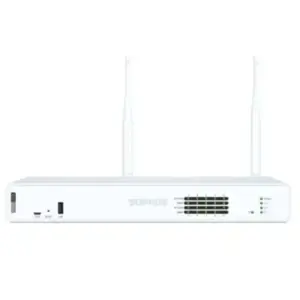
Fortinet FortiSwitch FS-224E Network Switch in Dubai, UAE
The FS-224E gives business networks 24 Gigabit copper access ports and four 1 Gigabit SFP uplinks in a Fortinet-oriented switching platform. It is most relevant when the requirement is straightforward wired access, FortiGate-led network control or standalone switching without Power over Ethernet on the access ports.
Planning a quotation?
Share quantity, existing FortiGate model, uplink media, SFP requirements, management preference and support expectations. FourTeck can help validate the bill of materials before purchase.
Direct answer for buyers evaluating the FS-224E
The Fortinet FortiSwitch FS-224E is a non-PoE 24-port Gigabit access switch with four SFP uplinks. Its main role is to connect wired business endpoints while fitting into a Fortinet-managed LAN design through FortiLink or operating in a standalone switching environment. It can suit branch offices, retail sites, professional offices, workshops and distributed business locations that do not need the switch itself to power phones, cameras or wireless access points. Before proceeding, confirm that 1 Gigabit copper access and 1 Gigabit SFP uplinks are sufficient, identify the required transceiver types, verify the intended FortiGate and firmware combination, and decide whether cloud management, FortiCare support or configuration assistance should be included in the quotation.
What the FS-224E does
The FS-224E provides a wired access layer for computers, printers, servers, network appliances, building systems and other Ethernet devices that connect through standard Gigabit copper ports. Its four SFP interfaces can be used for fibre or compatible optical uplinks where the network design calls for them. The precise transceiver and media choice should be confirmed before purchase because distance, fibre type, connector format and compatibility affect the bill of materials.
Within a Fortinet environment, the switch can be considered as part of a broader secure LAN design rather than as an isolated box. FortiLink allows supported FortiSwitch devices to be integrated with FortiGate management. Standalone operation is also part of the FortiSwitch access portfolio, which gives buyers flexibility when a FortiGate-controlled topology is not required for a particular site.
Who should consider it
This model is most appropriate when a business needs up to 24 local Gigabit copper connections, wants SFP uplink flexibility, does not require PoE from the access switch and is comfortable with 1 Gigabit uplink capability. It can fit smaller access closets, branches, retail operations, administration areas and fixed-user office networks where bandwidth requirements are predictable.
It may be a poor fit if the site expects heavy east-west traffic, high-speed server aggregation, multigigabit wireless access points, 10 Gigabit uplinks or extensive PoE demand. In those cases, buyers should compare a newer or higher-capacity FortiSwitch model rather than selecting the FS-224E simply because the port count looks correct.
Business problems this switch can help address
Port consolidation
A single 24-port access switch can reduce the need for multiple small unmanaged switches scattered around a site. That makes cabling, VLAN planning, documentation and troubleshooting easier to organise.
Managed branch access
Where a business already uses FortiGate, a FortiSwitch deployment can form part of a centrally controlled branch LAN. The management mode and firmware compatibility should be validated during planning.
Copper and fibre mix
The combination of 24 RJ45 access interfaces and four SFP ports supports a common design in which local users connect over copper while uplinks use fibre where distance or cabling architecture requires it.
Clear non-PoE choice
Buyers who deliberately do not need switch-delivered power can avoid selecting a PoE model unnecessarily. If powered endpoints are part of the project, the bill of materials should be revised before ordering.
Capability band: what matters operationally
Twenty-four RJ45 ports provide standard 1 Gigabit access for business endpoints that do not need multigigabit connectivity.
Four 1 Gigabit SFP ports give flexibility for compatible fibre transceivers. Confirm optic type and link distance before purchase.
FortiLink support enables the switch to participate in a FortiGate-managed LAN when the wider platform and software versions are compatible.
FortiSwitch secure-access products can also be deployed as standalone switches where independent administration is preferred.
FS-224E suitability matrix
| Requirement | Suitable when | Confirm before ordering |
|---|---|---|
| 24-port wired access | The site needs up to 24 Gigabit copper endpoints. | Current port count plus growth allowance. |
| Fibre uplinks | Four 1G SFP interfaces meet uplink capacity needs. | SFP type, fibre mode, distance and connector format. |
| FortiGate-managed LAN | FortiLink is part of the intended architecture. | FortiGate model, FortiOS and FortiSwitchOS compatibility. |
| Non-PoE endpoints | Phones, access points and cameras have separate power or are not connected here. | Any present or future PoE requirement. |
| Future bandwidth | 1G access and 1G uplinks are sufficient for the expected lifecycle. | Need for 10G uplinks, multigig access or higher aggregation capacity. |
Verified product information
The table below separates confirmed model facts from items that depend on the final deployment. This matters because the FS-224E has similarly named PoE variants and because management, support and transceiver requirements are not determined by the model number alone.
| Brand | Fortinet |
|---|---|
| Product name | FortiSwitch FS-224E |
| Model / ordering SKU | FS-224E |
| Product type | Secure access Ethernet switch |
| Copper access ports | 24 × Gigabit Ethernet RJ45 |
| Uplink capability | 4 × 1 Gigabit SFP |
| PoE support | N/A on FS-224E; do not confuse with FS-224E-POE |
| FortiLink support | Supported; final FortiGate/FortiOS/FortiSwitchOS compatibility should be checked |
| Standalone operation | Available within the FortiSwitch access deployment model |
| Cloud management | Add-on / license dependent; confirm current FortiEdge Cloud option for this model |
| FortiCare | Support term and entitlement dependent; request current quotation |
| SFP transceivers | Not assumed included; type and compatibility must be confirmed |
| Power and mounting accessories | Confirm current package contents and regional power cord requirements |
| UAE availability | Contact FourTeck for current options, quantity and lead time |
Important dependency notice
The FS-224E itself is the non-PoE hardware model. It should not be described or quoted as the FS-224E-POE, which is a different ordering item. If the project includes wireless access points, IP phones, surveillance cameras or other powered devices, determine whether power will come from injectors, local power supplies, a separate PoE switch or a PoE-capable FortiSwitch model.
Management is also a design decision. A FortiGate-managed deployment using FortiLink requires compatible FortiGate, FortiOS and FortiSwitchOS combinations. A standalone deployment has a different administration model. If an existing standalone configuration will later move into FortiLink management, migration planning is important because mode changes can affect configuration. FourTeck can review the intended topology before hardware is ordered.
A practical purchase and deployment journey
Count current wired endpoints, reserve growth capacity and identify which devices require PoE. A 24-port switch is only a good fit if the usable port plan leaves enough room for changes.
Decide whether the switch uplinks over copper or SFP, where the fibre terminates, and whether 1 Gigabit uplink capacity is sufficient. Confirm optic type and cabling.
Choose FortiGate/FortiLink management, standalone administration or a supported cloud-management option. This choice affects licensing, deployment work and ongoing operations.
Check the current FortiOS and FortiSwitchOS compatibility for the final architecture. Do not assume that an older branch firewall and a switch on a different release should be combined without review.
Include the switch, any SFP modules, fibre patch leads, rack accessories, support entitlement and services. Regional power requirements and shipping destination should be explicit.
Plan VLANs, management addressing, trunks, FortiLink settings and naming before cutover. Record the final configuration and physical port map for future support.
Capability focus: integrated Fortinet management
A major reason to evaluate the FS-224E is not only the number of ports but the way it can participate in a Fortinet-controlled access network. FortiLink is designed to connect FortiSwitch management with FortiGate, helping organisations bring firewall and wired access administration into a more coordinated operational model. For a small IT team, this can reduce the number of separate interfaces used for everyday tasks such as VLAN assignment and switch visibility.
The value depends on the wider architecture. A FortiGate-managed deployment should be planned with current compatibility information, supported firmware paths and an understanding of how the switches are physically connected. It is also important to distinguish configuration convenience from network design: central management does not remove the need to size uplinks, segment traffic correctly, document trunks or plan resilience. FourTeck can help review the intended FortiLink topology and identify configuration work that should be included in the project scope.
Capability focus: predictable Gigabit access
Many business environments still have a large population of devices whose practical interface requirement is 1 Gigabit Ethernet: desktop computers, printers, terminals, controllers, general office servers, small appliances and building systems. For these endpoints, the FS-224E can provide a straightforward managed access layer without paying for multigigabit access interfaces that the connected devices cannot use.
The design question is not whether 1 Gigabit is universally sufficient, but whether it is sufficient for this site during the expected service period. Newer Wi-Fi infrastructure, high-performance workstations, large storage transfers or converged branch traffic may justify faster uplinks. Because the FS-224E uses 1 Gigabit SFP uplinks, buyers should model aggregate traffic rather than looking only at access-port speed. A branch with moderate user traffic can have very different requirements from a media production office or a server-heavy network even when both need 24 copper ports.
Capability focus: fibre uplink flexibility
Four SFP interfaces give the FS-224E a useful separation between access and uplink connectivity. Fibre can be valuable where the switch sits in a remote cabinet, where copper distance is unsuitable, where electrical isolation is preferred or where the structured cabling design already provides fibre between telecommunications rooms.
SFP planning needs precision. The switch port type alone does not tell you which transceiver should be ordered. Fibre mode, wavelength, connector, distance, opposite-end equipment and transceiver compatibility all matter. A wrong optic can delay installation even when the switch itself is correct. Buyers should provide the existing core or firewall model, fibre type and approximate link length so the quotation can include an appropriate optic recommendation. If the site actually needs 10 Gigabit fibre uplinks, a different FortiSwitch model should be evaluated rather than forcing the FS-224E into a role it was not selected to fill.
Ideal business environments and use cases
Branch offices
A branch with a few dozen wired users can use the switch as an access layer, particularly when FortiGate already provides edge security and central network administration is desired.
Retail and service locations
Point-of-sale terminals, back-office systems, printers and management devices can be grouped on managed VLANs. Powered cameras or access points need a separate power plan.
Professional offices
Law, consulting, engineering, accounting and administration teams often need stable wired connectivity with manageable segmentation rather than very high port speeds.
Distributed business sites
Organisations standardising on Fortinet can use a consistent switching approach across remote locations, provided each site is individually sized and software compatibility is maintained.
Non-PoE equipment zones
Work areas dominated by PCs, industrial controllers with local power, printers and appliances may not benefit from a PoE switch, making the non-PoE model easier to justify.
Fibre-linked closets
The SFP uplinks can connect an access cabinet back to the upstream network over supported fibre, subject to correct transceiver and cabling selection.
Integration and operational considerations
The switch should be treated as part of a network system rather than purchased in isolation. Start with the upstream device. If the FS-224E will connect to a FortiGate through FortiLink, verify which FortiGate interface will be used, whether the design requires one or more links, how VLANs will be presented and which software versions are supported together. If it will connect to a third-party core or distribution switch, document the expected trunk configuration, native VLAN behaviour, link aggregation requirements and transceiver compatibility.
Next, consider device classes on the access ports. Users, printers, voice devices, cameras, guest services and building systems often require different VLANs and policy treatment. The FS-224E does not provide PoE, so any powered endpoint needs a separate source of power. That detail should be captured before installation because moving a device from an existing PoE switch to a non-PoE access port can cause an unexpected outage.
Finally, plan lifecycle operations. Decide who will own configuration changes, firmware upgrades, backup procedures, monitoring and support tickets. A switch that is technically suitable can still be a poor operational fit if the management model does not match the organisation’s support process. FourTeck can help separate the hardware requirement from configuration, installation and ongoing support so the quotation reflects the actual project.
Buyer questions to resolve before ordering
Include spare ports, not just today’s device count. Expansion can arrive through new staff, printers, appliances or building systems.
If yes, identify its power standard and budget. The FS-224E itself is non-PoE.
Assess aggregate branch traffic, server access, internet speed and future growth.
Confirm fibre type, link length, wavelength, connector and far-end device before selecting transceivers.
Decide between a FortiGate/FortiLink design, standalone management or a supported cloud option.
FortiCare and cloud-management entitlements should be quoted according to the required support and management model.
Procurement checklist for the FS-224E
- Confirm exact model: FS-224E, not FS-224E-POE.
- State required quantity and delivery destination.
- Count active and planned RJ45 endpoints.
- Identify every device that requires PoE.
- Confirm whether 1G SFP uplinks meet capacity needs.
- Specify fibre type, connector and approximate distance.
- Provide upstream FortiGate, core or distribution model.
- Choose FortiLink, standalone or supported cloud management.
- Validate FortiOS and FortiSwitchOS compatibility.
- Confirm required SFP transceivers and patch leads.
- Decide whether FortiCare should be included.
- Define installation, configuration and documentation scope.
- Confirm rack, power and regional accessory requirements.
- Request current UAE availability and vendor lead time.
How FourTeck can assist with model validation and deployment planning
A useful quotation should do more than repeat the model number. FourTeck can review the intended branch topology, identify whether the non-PoE FS-224E is appropriate and help assemble the related bill of materials. That can include SFP transceivers, fibre patching considerations, FortiCare terms, cloud-management options and configuration services where required. Buyers can start from the wider FourTeck network and security product range or discuss the specific requirement through the FourTeck contact team.
For an existing Fortinet environment, provide the FortiGate model, current FortiOS release, number of switches, physical topology and any planned VLAN or segmentation requirements. FourTeck can use that information to frame a configuration scope rather than treating installation as a generic service. If the project is part of a broader firewall refresh, buyers can also review Fortinet firewall solutions in Dubai so switching and security decisions are coordinated.
Where the buyer is not yet certain that FS-224E is the right model, the priority is to compare requirements, not to force a particular product. Port count, PoE, uplink speed, management, support and expected lifecycle should guide the choice. The FourTeck technology services section provides context for planning, configuration and support assistance that can be added to a hardware project where appropriate.
UAE availability and support guidance
Contact FourTeck to confirm current FS-224E availability in the UAE. Availability may depend on the requested quantity, vendor lead time, support entitlement and whether the order includes transceivers or other accessories. A quotation should also state whether the buyer needs supply only, pre-configuration, installation assistance or a broader FortiGate/FortiSwitch deployment scope.
For Dubai projects, provide the site location, expected delivery window and implementation plan so hardware coordination can be aligned with the customer’s schedule. For organisations operating across the Emirates, the same process can be used to standardise the bill of materials while still accounting for site-by-site differences. Delivery and project coordination should be discussed after the exact requirement is confirmed; no fixed availability or installation date should be assumed until the quotation and project scope are agreed.
Dubai, Abu Dhabi, Sharjah and Ajman project coverage
Businesses with network sites in Dubai, Abu Dhabi, Sharjah and Ajman can approach FourTeck with a combined requirement for the FS-224E or a mixed FortiSwitch bill of materials. The useful starting point is a site list showing switch quantity, upstream equipment, fibre requirements and whether the location needs configuration or installation support. A multi-site project may use the same standard switch at several branches, but each location should still be checked for port count, power requirements and uplink capacity. FourTeck can coordinate quotation and planning around the confirmed destination and scope rather than assuming every branch has identical needs.
GCC Availability
For GCC projects, FourTeck can assist organisations that are assessing the FS-224E for branches, service locations or standardised wired access deployments. Requirement review can cover the switch model, number of units, SFP optics, FortiGate integration, support terms, management preferences and any configuration or installation planning that needs to be included in the commercial scope. This can be relevant for projects across the United Arab Emirates, Saudi Arabia, Kuwait, Qatar, Bahrain and Oman where a common network standard is being considered across several offices.
Product availability, licensing options, delivery schedules, service visits and vendor lead times can vary by country, model, quantity and project requirement. Buyers should provide the destination country, exact product or service required, quantity, desired support term, deployment location and expected timeline. FourTeck can then coordinate a suitable quotation and help identify whether the FS-224E remains the right model for the target site or whether another FortiSwitch should be compared. For Kuwait enquiries, the FourTeck Kuwait resource can also provide regional context.
Africa Availability
Organisations planning Fortinet switching deployments in Africa can share their destination, topology and support expectations with FourTeck for product and project guidance. The FS-224E may be relevant for selected wired-access sites, but procurement should account for destination-specific power arrangements, transceiver needs, vendor lead time, shipping planning and the skills available for local deployment. For multi-country rollouts, the bill of materials should be standardised only after confirming that the same model, optics and management approach are suitable at each site.
Availability and fulfilment may depend on the destination, model quantity, license region, shipping arrangements, support term and local project conditions. Buyers should share the exact requirement, preferred deployment schedule and whether they expect remote configuration assistance or site-level implementation support. FourTeck can help review those inputs and coordinate the quotation without assuming local inventory or fixed delivery. Regional resources are available through FourTeck Africa and, where relevant, FourTeck Kenya for additional project context.
Related options and complementary services
FortiSwitch FS-224E-POE
A related 24-port model with PoE capability on selected ports. Consider it when powered endpoints are part of the access-layer requirement; confirm the power budget and exact model before ordering.
FortiSwitch FS-124F
A 24-port non-PoE option with faster 10 Gigabit SFP+ uplink capability. It can be worth comparing when uplink bandwidth is a concern, subject to current availability and project fit.
FortiGate integration
Where the switch will be FortiLink-managed, the FortiGate model and software release become part of the design. A compatibility and topology review can be included before deployment.
FortiEdge Cloud management
Cloud management can be relevant to standalone distributed sites. Licensing is model and subscription dependent, so confirm the current entitlement and features for the intended deployment.
SFP transceivers
Optics should be selected from the actual fibre design, not by switch model alone. Link distance, fibre mode and far-end compatibility need to be confirmed.
Configuration services
VLAN creation, FortiLink adoption, management addressing, trunk configuration, documentation and handover can be scoped separately from hardware supply.
What buyers are trying to determine before they shortlist this switch
A 24-port switch can look simple on a product list, but the practical buying questions are usually about fit rather than raw port count. The first question is often whether the FS-224E is still relevant for a new project when newer FortiSwitch models also exist. The answer depends on the network’s actual requirements. Fortinet continues to list the FS-224E in its switching portfolio and ordering guidance, but that does not make it the automatic choice for every 24-port deployment. If the site needs only Gigabit user access, 1 Gigabit SFP uplinks, non-PoE operation and Fortinet-oriented management, the model can still match the requirement. If the project expects 10 Gigabit uplinks, multigigabit Wi-Fi, higher access speeds or substantial future growth, compare a newer model before committing.
The exact FS-224E has 24 GE RJ45 ports and four SFP ports, but PoE is not provided. Similar product names can cause buyers to assume otherwise. If cameras, phones or wireless access points need power from the switch, choose a PoE-capable model or plan an external power method.
Four uplink slots add flexibility, but they are not 10 Gigabit SFP+ interfaces. A branch with a 1 Gigabit internet circuit may still be well served, while a high-traffic aggregation role could expose an uplink bottleneck.
Another frequent question is whether a FortiGate is required. The FortiSwitch access portfolio supports both standalone and FortiLink-integrated deployment. If a FortiGate is present, FortiLink can centralise management and allow the switch to operate as part of a coordinated Fortinet LAN design. If no FortiGate is used, standalone operation remains a consideration. Cloud management is another option in the broader FortiSwitch ecosystem, but it is license dependent and should be verified for the exact model and current service plan. Buyers should therefore decide the intended management method before requesting pricing; the hardware price alone may not describe the full operating model.
SFP compatibility is another area where product listings rarely answer enough. The presence of an SFP slot only tells you the physical interface family. It does not tell you whether the link is multimode or single-mode fibre, how far it needs to reach, which wavelength is needed, which connector is present, or whether the optic at the far end is compatible. A useful quotation should identify those items. For a new fibre link, send the approximate distance and fibre type. For an existing link, share the current transceiver model at the other end and any patch-panel details. This prevents a common procurement problem in which the switch arrives but the optical connection cannot be completed.
Buyers also compare the FS-224E with the FS-124F because both can appear in 24-port non-PoE discussions. The important architectural difference is uplink capability: Fortinet lists the FS-124F with four 10 Gigabit SFP+ uplinks, while the FS-224E uses four 1 Gigabit SFP uplinks. That distinction can matter more than the product family name. A site that mainly supports office users and modest branch traffic may not need 10 Gigabit uplinks, but a network that aggregates multiple access switches, large storage transfers or higher-speed wireless traffic may benefit from the additional headroom. Port count should therefore be compared together with uplink bandwidth.
A further purchasing question concerns licenses. The base switch hardware is not the same thing as every optional service. FortiCare support and cloud-management options can be quoted separately depending on the required term and management method. Buyers should identify whether they need hardware support only, cloud management, configuration assistance, installation or a combination. If the switch will be integrated into an existing FortiGate environment, also share the firewall model and current software release. This helps check whether an upgrade or compatibility step should be part of the deployment plan.
Finally, price comparisons should be treated carefully. Market listings can differ by region, condition, support inclusion, tax treatment and seller status. A low advertised hardware figure may exclude support, optics, shipping or local project services. For a UAE business quotation, ask for the exact model, quantity, support term, accessory list and service scope to be shown clearly. That makes competing quotations easier to compare and reduces the chance of purchasing a switch that matches the model name but not the operational requirement.
Questions that change the buying decision
Can the FS-224E power wireless access points or IP phones?
No. The exact FS-224E is the non-PoE model. If the endpoint depends on Ethernet-delivered power, plan an injector, a local power supply or a different PoE-capable switch. This should be decided during equipment counting because replacing an existing PoE switch with a non-PoE model can interrupt devices even when the data interfaces are otherwise compatible.
Is four SFP ports the same as having 10G uplinks?
No. Fortinet lists the FS-224E with four 1 Gigabit SFP uplinks. If the network needs 10 Gigabit SFP+ connectivity, compare a model designed for that speed. This distinction is important in sites where several access segments share a single upstream path or where large local data transfers are common.
Should we manage it from FortiGate or as a standalone switch?
Choose based on operations. FortiLink can make sense when the site already uses FortiGate and the IT team wants coordinated management. Standalone administration can make sense for an independent LAN. The decision affects configuration, upgrade procedures and support, so it is better to settle it before staging.
What information gives FourTeck enough detail for an accurate quote?
Provide the exact FS-224E quantity, destination, upstream switch or FortiGate model, number and type of SFP links, required fibre distance, support term and whether configuration or installation is needed. If there is uncertainty around PoE or uplink speed, describe the endpoints and traffic profile rather than guessing a model.
When is a newer 24-port FortiSwitch worth considering?
Consider a newer model when the network roadmap includes 10G uplinks, multigig access, newer high-throughput wireless systems or substantial growth. The correct comparison is not simply newer versus older; it is whether the interface speeds, management model, support path and budget align with the expected service life.
Do SFP modules come automatically with the switch?
Do not assume that they are included. Optics are usually selected according to the specific fibre link. Confirm the exact quotation contents, because a switch without the required transceivers may be impossible to connect to the intended fibre infrastructure on installation day.
Why businesses contact FourTeck for this type of requirement
The practical value is requirement clarification. A buyer may begin with “FS-224E” but still need to decide whether that exact model is appropriate, which SFPs are needed, whether FortiCare should be included and how the switch will be managed. FourTeck can help turn those questions into a bill of materials and a defined configuration scope. This is particularly useful when the switch is part of a larger branch rollout or a FortiGate refresh, because network design choices should be coordinated instead of quoted independently.
FourTeck can also help structure the information needed for procurement approval: exact model, quantity, support term, related accessories, service scope and destination. That makes it easier for IT and purchasing teams to compare proposals on equivalent terms. Where implementation services are required, configuration objectives such as VLANs, FortiLink adoption, management addressing and documentation can be listed explicitly rather than hidden inside a vague installation line item.
The objective is to reduce preventable purchasing errors, such as selecting the non-PoE model for powered endpoints, assuming SFP means 10 Gigabit, omitting optics from the order or overlooking a software compatibility step. Buyers can learn more about FourTeck through the company information page or move directly to a requirement review through the contact team.
Frequently asked questions about FortiSwitch FS-224E
1. How many network ports does the Fortinet FS-224E provide?
The exact FS-224E is listed with 24 Gigabit Ethernet RJ45 access ports and four 1 Gigabit SFP ports. The SFP interfaces are typically used for compatible uplinks, but the final optical design depends on the selected transceivers and network topology.
2. Does the FS-224E support Power over Ethernet?
No. Fortinet lists PoE as not applicable on the FS-224E. The FS-224E-POE is a separate model. If your project has IP phones, cameras, access points or other powered devices, include their power requirements when selecting the switch.
3. Can the FS-224E be managed through a FortiGate?
Yes, FortiLink support is part of the model’s Fortinet secure-access positioning. The intended FortiGate model and software versions should still be checked for compatibility before deployment.
4. Can it be used without a FortiGate?
Standalone deployment is available in the FortiSwitch access portfolio. The appropriate choice depends on how the organisation wants to administer, monitor and update the switch.
5. Are the four SFP uplinks 10 Gigabit?
No. Fortinet lists the FS-224E uplink capability as four 1 Gigabit SFP interfaces. Buyers needing 10 Gigabit SFP+ uplinks should compare another FortiSwitch model.
6. Which SFP module should I order?
The correct optic depends on the fibre type, wavelength, distance, connector and device at the far end. Share those details with FourTeck so the transceiver can be reviewed as part of the bill of materials.
7. Does the switch require a license?
The hardware purchase and optional services should be treated separately. FortiCare support and cloud-management capabilities can involve separate entitlements or subscription terms. Confirm the management and support model for the quotation.
8. Is the FS-224E suitable for a new office network?
It can be suitable where 24 Gigabit copper ports, non-PoE operation and 1 Gigabit SFP uplinks match the expected requirements. If the office expects 10G uplinks, multigig access or significant growth, compare newer alternatives before purchasing.
9. How do I check current availability in Dubai or the UAE?
Contact FourTeck with the required quantity, destination and support requirements. Availability and vendor lead time can change, so current confirmation is needed before an order is planned.
10. What should be included in a business quotation?
A complete request should state FS-224E quantity, SFP requirements, support term, destination, management method and whether installation, FortiLink adoption, VLAN configuration, documentation or other services are required.
Confirm the FS-224E before you order
Send FourTeck your quantity, upstream FortiGate or switch model, SFP requirements, management preference and support expectations. We can help confirm whether the non-PoE FS-224E fits the project and prepare a quotation around the actual deployment requirement.

Reviews
There are no reviews yet.