

Fortinet FortiSwitch FS-648F Network Switch in Dubai, UAE
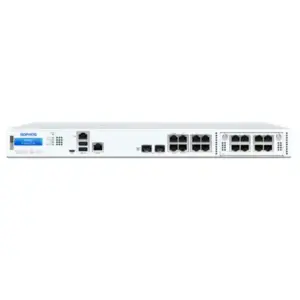
For networks moving beyond 1GbE at the access layer, the FS-648F combines dense 2.5GbE and 5GbE copper connectivity with eight 25GbE-capable SFP28 ports. It is designed for enterprise campus environments where port speed, uplink capacity, controlled segmentation and coordinated Fortinet management need to be considered as one architecture rather than as separate purchasing decisions.
Standard FS-648F is non-PoE.
If the project needs switch-powered Wi-Fi access points, IP cameras or phones, compare the separate FS-648F-FPOE. Also confirm optics, FortiGate sizing, management mode, redundant power and support before finalising the bill of materials.
Up to 2.5GbE
Up to 5GbE
10/25GbE capable
Not on FS-648F
FortiLink capable
Direct answer for buyers
The Fortinet FortiSwitch FS-648F is a high-density 600 Series campus switch for organisations that need multi-gigabit copper access and high-speed fibre uplinks. Its 48 RJ45 access ports are divided between 32 ports rated up to 2.5GbE and 16 ports rated up to 5GbE, with eight SFP28 ports for 10/25GbE connectivity. It is mainly considered for larger campus access layers, aggregation-aware edge designs and networks supporting higher-bandwidth endpoints. Before proceeding, confirm whether PoE is required, how many 25GbE uplinks are needed for normal operation and resilience, which transceivers are compatible, whether the switch will be FortiGate-managed or standalone, and whether advanced switching, cloud management, support or redundant power options belong in the quotation.
What the FS-648F does
The FS-648F provides wired Ethernet connectivity for environments where ordinary 1GbE access switching is becoming a bottleneck. Multi-gigabit copper allows suitable endpoints to negotiate above 1GbE without immediately moving every access connection to fibre. That can be useful where workstations, wireless infrastructure, specialised appliances, high-throughput local services or other capable endpoints need more bandwidth.
The eight SFP28 interfaces give the network designer higher-speed paths for uplinks, inter-switch links, aggregation or redundancy, depending on topology and configuration. FortiSwitch can operate standalone or in Fortinet-managed designs. When FortiLink is used with a suitable FortiGate, switching and security policy can be coordinated from the Fortinet environment rather than treated as unrelated operational domains.
Who should consider it
The model is most relevant to enterprises, education campuses, large offices, hospitality properties, healthcare facilities, multi-floor commercial buildings and technology-intensive environments where many copper endpoints need 2.5GbE or 5GbE capability and where 25GbE uplinks fit the aggregation design. It can also be attractive to Fortinet customers that want the access layer to participate in a broader FortiGate-managed architecture.
It is not automatically the right choice for every 48-port project. A conventional 1GbE model may be more appropriate when endpoint demand is modest. The FS-648F is also not the correct SKU when the access switch itself must power PoE endpoints. In that case, the separate FS-648F-FPOE should be evaluated, with its power and electrical requirements included in the design.
Business challenges this switch can help address
Access links outgrowing 1GbE
A mixed 2.5GbE and 5GbE copper access layer gives selected endpoints additional headroom without requiring fibre to every desk or device. Cabling quality and endpoint NIC capability still need verification.
Uplink congestion pressure
Eight 25GbE-capable SFP28 ports give architects options for higher-capacity uplinks and resilient topologies. Port allocation must account for stacking or peer-link requirements where those designs are used.
Fragmented LAN operations
FortiLink can allow compatible FortiGate infrastructure to manage FortiSwitch devices as part of a coordinated secure LAN. FortiGate model limits and the intended topology should be checked before purchase.
Resilience planning
The model supports architectures that can use stacking and MCLAG features. Redundant power can also be planned with the applicable FS-PSU-350 option. Exact redundancy behaviour depends on topology and configuration.
Core capabilities at a glance
32 × 2.5GbE and 16 × 5GbE RJ45 access interfaces support mixed higher-speed endpoint requirements.
Eight SFP28 interfaces create options for high-bandwidth uplinks, aggregation and resilience.
Suitable for switching and routing roles, with some dynamic routing functions in standalone mode tied to Advanced Switching licensing.
Current FortiSwitchOS documentation includes MACsec support for this model; firmware, mode and design requirements should be validated.
FortiSwitch platforms can be used standalone or with FortiGate, FortiEdge Cloud or FortiSwitch Manager, subject to platform and licensing requirements.
Is the FS-648F a good fit for your requirement?
| Requirement | Suitable when | Confirm before ordering |
|---|---|---|
| 48-port multi-gig access | A meaningful portion of endpoints need 2.5GbE or 5GbE. | Endpoint NICs, cabling condition and port-speed mix. |
| High-speed uplinks | The distribution or core can accept 10/25GbE connections. | Optic/DAC selection, fibre type, distance and resilience topology. |
| FortiGate-managed LAN | Centralised Fortinet management and policy coordination are desired. | FortiGate model, FortiLink topology, switch-count limits and software compatibility. |
| Standalone Layer 3 | The switch will perform local Layer 3 functions without FortiGate control. | Whether dynamic routing requirements call for FS-SW-LIC-600. |
| PoE access | Not suitable when switch-powered endpoints are mandatory. | Compare FS-648F-FPOE and calculate PoE/electrical requirements separately. |
Configuration, licensing and compatibility dependencies
The hardware SKU alone does not define a complete FS-648F deployment. A buyer should first decide whether the switch will be managed through FortiGate using FortiLink, operated as a standalone FortiSwitch, or placed under another supported Fortinet management platform. This choice affects architecture, software planning and sometimes licensing. Fortinet states that a FortiGate does not require an additional license simply to manage FortiSwitches, but FortiGate models have limits on the number and type of managed switches, so controller sizing should be validated rather than assumed.
For standalone designs, requirements for dynamic routing protocols should be checked against the Advanced Switching license. Current Fortinet ordering guidance lists FS-SW-LIC-600 for the 600 Series and notes that Advanced Switching enables dynamic routing protocols in standalone mode. Cloud management is also license dependent. If MACsec is planned, confirm the FortiSwitchOS version, interface design and key-management mode because the feature has evolved across software releases.
Optics are another dependency. The SFP28 ports do not imply that every SFP/SFP+/SFP28 transceiver is supported. Match the desired speed, media, reach and connector to Fortinet’s current transceiver compatibility information. When stacking or MCLAG is part of the design, reserve the necessary ports and understand whether those ports remain available for normal uplinks. FourTeck can help turn these dependencies into an orderable bill of materials rather than leaving them as post-purchase surprises.
A practical purchase and deployment journey
Map endpoint demand
Count devices by expected speed. Separate 1GbE-only endpoints from equipment that can genuinely use 2.5GbE or 5GbE. Identify which endpoints require PoE, because the standard FS-648F does not supply it.
Design uplinks
Decide how many 10/25GbE links are required to distribution, core, peer switches or other infrastructure. Include resilience, LAG, MCLAG or stacking considerations before allocating SFP28 ports.
Select management
Confirm FortiGate-managed, standalone or cloud-managed operation. Check the FortiGate model, FortiSwitchOS/FortiOS compatibility and any licenses needed for the chosen feature set.
Build the BOM
Add supported transceivers or DACs, optional FS-PSU-350 redundancy, rack and patching items, support term and any required software licenses. Confirm power and rack conditions at the site.
Stage and validate
Plan addressing, VLANs, FortiLink or standalone configuration, authentication, uplinks and failure tests. Record the final software version and configuration baseline before production handover.
Multi-gigabit access without turning every edge connection into fibre
The practical value of the FS-648F is not simply that it has forty-eight RJ45 ports; it is the distribution of those ports across two higher-speed tiers. Thirty-two access ports support up to 2.5GbE and sixteen support up to 5GbE. That lets a designer reserve the faster copper interfaces for endpoints that can use them while keeping other devices on the 2.5GbE group. In a real campus, that may include high-performance workstations, local appliances, wireless infrastructure with separate power arrangements, or specialist systems with multi-gigabit NICs.
Multi-gigabit Ethernet can also help protect an existing cabling investment, but cable category alone should not be treated as a guarantee. Link speed depends on cable type, run length, termination quality, interference, patching, endpoint NIC capability and switch configuration. A sensible deployment includes cable certification or at least targeted validation on the runs expected to operate above 1GbE. This is especially important in older buildings where structured cabling may have been installed long before 2.5GbE or 5GbE endpoints were considered.
For procurement teams, the key question is therefore not “Does the switch have 48 ports?” but “How many of our endpoints require each speed now, and how many are expected to require it during the planned lifecycle?” If only a few devices require multi-gigabit access, a different model mix may be more economical. If a large percentage of the floor plate is moving above 1GbE, the FS-648F becomes easier to justify because port density, uplink bandwidth and management can be planned together.
Eight 25GbE-capable ports change the uplink conversation
A multi-gigabit access layer can place considerable demand on upstream links, so the eight SFP28 interfaces are central to the FS-648F design. They can be used to connect the switch toward distribution or core layers at 10GbE or 25GbE where supported, but the right number of active links depends on traffic patterns rather than on a simple ratio of access ports to uplink ports. Most user networks are oversubscribed by design; the objective is to choose an oversubscription level appropriate to application behaviour, business risk and peak demand.
Resilience also consumes interfaces. A pair of uplinks in an aggregation group, MCLAG peer relationships, stacking arrangements or separate northbound paths can reduce the number of ports left for other connections. Fortinet documentation for this model includes specific stack-port arrangements, so the intended topology should be decided before assuming that all eight SFP28 interfaces remain freely assignable. The safest approach is to draw the physical and logical topology first, then map each SFP28 port to its role.
Transceiver selection belongs in that same design stage. Short-range multimode fibre, longer single-mode fibre and direct-attach options solve different physical problems. Matching only “25G” is not enough; confirm the exact Fortinet-supported optic or cable for the model, distance, media and peer device. FourTeck can review the intended uplink path and include the appropriate transceiver quantities in the quotation, reducing the risk of receiving a switch without the components required to connect it.
Management, segmentation and security integration
The FS-648F can participate in a Fortinet secure LAN rather than operating as an isolated access switch. With FortiLink, a suitable FortiGate can manage supported FortiSwitch devices, allowing network and security teams to coordinate switch configuration and policy from the Fortinet environment. This can be particularly useful where organisations already standardise on FortiGate and want consistent operational visibility across the wired edge.
That integration does not remove the need for network design. VLAN architecture, authentication, role-based access, trunking, spanning tree behaviour, routing boundaries and redundancy still require deliberate choices. Fortinet has also added capabilities for the FS-648F across FortiSwitchOS releases, including MACsec support and newer 802.1X-related functions. When a project depends on a feature introduced in a particular release, software compatibility across FortiSwitch, FortiGate and management platforms should be checked before the maintenance window is booked.
Standalone deployment remains possible as well. In that case, teams should identify which Layer 3 functions are required and whether Advanced Switching licensing is necessary. Fortinet’s current ordering guide specifically notes that the Advanced Switching license enables dynamic routing protocols in standalone mode and lists FS-SW-LIC-600 for the 600 Series. This is a good example of why the bill of materials should be based on the intended operating model, not just the hardware part number.
Ideal business environments and use cases
Enterprise campus access
Use the port mix where higher-bandwidth desktops, specialist endpoints and shared services are concentrated on a floor or building. Plan 25GbE uplinks to the distribution layer and ensure the distribution switches can receive them.
Education and research
Labs, media areas and high-density learning spaces can generate traffic patterns that exceed ordinary office access. The switch can provide multi-gig connectivity, while VLAN and authentication policies separate user and device communities.
Hospitality and large properties
Back-of-house systems, local services and network infrastructure may benefit from higher-speed access and resilient uplinks. If wireless access points require power from the switch, the FPOE variant must be considered instead.
Healthcare and professional facilities
Segmentation, predictable wired access and structured operational control can matter as much as raw speed. Validate application dependencies, redundancy and change procedures before replacing an existing switch stack.
Fortinet-standardised networks
Organisations already using FortiGate can evaluate FortiLink management to bring the access layer into the same operational ecosystem. Confirm FortiGate model support and switch-count limits during design.
High-bandwidth local services
Where users regularly transfer large datasets to local storage, media servers or technical platforms, multi-gig access can reduce endpoint bottlenecks if the rest of the path—server NICs, storage and uplinks—is sized accordingly.
Integration and operational considerations
Installing a faster access switch does not automatically make a network faster. The end-to-end path matters: endpoint NICs, cable plant, uplink optics, aggregation capacity, firewall throughput, server interfaces and storage performance can all become the next bottleneck. When the FS-648F is FortiGate-managed, the FortiGate must also be sized for the intended topology and policy functions. Fortinet explicitly notes that FortiGate models have switch-management limits, so the controller model should be part of the switch selection conversation.
Change planning is equally important. Existing VLAN IDs, trunk definitions, spanning-tree priorities, link aggregation groups, authentication policies, DHCP dependencies, voice or guest networks and monitoring integrations should be documented before migration. If MACsec or advanced authentication is planned, include compatibility testing with peer devices and the selected FortiSwitchOS release. If MCLAG is used, validate peer-link design, split-brain behaviour, downstream LAG configuration and failure scenarios rather than relying on a diagram alone.
Physical requirements need attention too. Confirm rack space, cable-management clearances, airflow direction for the supplied hardware, electrical capacity and power-feed resilience. Fortinet lists FS-PSU-350 as the redundant AC power-supply option for FS-624F and FS-648F, but redundant hardware is useful only when it is connected to an appropriately designed power system. Two power supplies on the same single point of failure do not provide the same resilience as independent feeds where the site supports them.
Finally, define how the switch will be monitored and backed up operationally. Decide who owns configuration changes, firmware maintenance, alerting and support escalation. This makes the procurement decision part of an operating model rather than a one-time hardware purchase.
Questions to resolve before requesting a quotation
The answer determines whether the FS-648F port mix aligns with the floor plan or whether a different switch mix would use the budget more efficiently.
The standard FS-648F is non-PoE. If switch-powered access points, cameras or phones are in scope, specify them so the FPOE variant can be assessed.
Allocate uplinks, peer links, stacking links and spare capacity on paper. Then select compatible transceivers or DACs for each physical path.
Choose FortiGate-managed, standalone or another supported Fortinet management approach. This decision influences licensing, software and operational workflows.
For standalone deployments, confirm whether dynamic routing requirements trigger the FS-SW-LIC-600 Advanced Switching license.
Define redundant power, dual uplinks, LAG, MCLAG or stacking needs and test expectations before the bill of materials is approved.
Procurement and evaluation checklist
✓ Confirm exact SKU: FS-648F, not FS-648F-FPOE.
✓ Record required switch quantity and deployment sites.
✓ Count endpoints needing 2.5GbE and 5GbE.
✓ Confirm whether any devices require PoE power.
✓ Map every planned 10/25GbE SFP28 connection.
✓ Select compatible optics or DACs by media and distance.
✓ Confirm FortiGate model and FortiLink design if managed.
✓ Check FortiSwitchOS/FortiOS version compatibility.
✓ Determine whether FS-SW-LIC-600 is required.
✓ Confirm cloud-management licensing if applicable.
✓ Decide whether FS-PSU-350 redundant power is required.
✓ Define stacking, MCLAG or link-aggregation requirements.
✓ Select FortiCare support level and term.
✓ Include installation, configuration, migration and testing scope if required.
How FourTeck can assist with FS-648F planning
A useful switch quotation should answer more than price and quantity. FourTeck can help review whether the FS-648F matches the access-speed profile, whether the project needs the PoE sibling model, how many uplink optics or DACs are required, and whether FortiGate management, standalone Layer 3 features, cloud management or support options affect the bill of materials.
For an existing Fortinet environment, share the FortiGate model, current firmware, approximate switch count and intended topology. For a migration, provide the existing switch models, VLAN and uplink design, critical endpoint types and desired cutover approach. This gives the team enough context to identify questions before ordering rather than during installation.
You can also review related business technology products, discuss deployment and configuration services, or assess the wider Fortinet infrastructure approach when the switch is part of a firewall-led secure LAN design.
Information that speeds up a useful quote
Send the exact model, quantity, required support term, destination, desired timeline and management method. Add the number of 25GbE links, fibre type and approximate link distances if known. Mention whether redundant PSUs, stacking, MCLAG, installation or configuration are required.
If the requirement is still being shaped, FourTeck can help turn a floor plan or device count into a practical switch and uplink discussion before commercial options are finalised.
UAE availability and support guidance
Contact FourTeck to confirm current UAE availability for the FortiSwitch FS-648F. Availability may depend on quantity, vendor lead time, support selections, license requirements and any accessories included in the bill of materials. A quote for the bare switch is not necessarily equivalent to a deployable solution: supported transceivers, patching, redundant power, software licenses, FortiCare and implementation services can all be separate line items depending on the design.
Delivery and project coordination can be discussed after the exact requirement is confirmed. If installation or configuration is needed, include that scope in the quotation request so rack preparation, switch staging, FortiLink or standalone setup, VLAN migration, uplink testing and handover expectations can be reviewed. Warranty and support entitlements should be confirmed against the supplied Fortinet commercial terms rather than assumed from generic online listings.
Dubai, Abu Dhabi, Sharjah and Ajman project coordination
Businesses planning FS-648F deployments across Dubai, Abu Dhabi, Sharjah and Ajman can discuss a combined requirement with FourTeck rather than treating every site as an isolated purchase. Share the site count, switch quantities, expected access-speed mix, FortiGate environment, uplink design and deployment sequence. FourTeck can help coordinate quotation requirements and identify where the bill of materials differs by location. Actual delivery scheduling, installation scope, site access, after-hours work and commissioning activities depend on the confirmed commercial and technical scope, so they should be agreed before implementation dates are set.
GCC Availability
FourTeck can assist organisations planning FortiSwitch FS-648F requirements across GCC markets by reviewing the technical requirement before quotation coordination. That can include validating whether the non-PoE FS-648F or the FPOE variant is appropriate, checking multi-gigabit port needs, identifying 10/25GbE uplink components, discussing FortiGate or standalone management, and adding relevant support, licensing or redundant-power options. Requirements may arise in the United Arab Emirates, Saudi Arabia, Kuwait, Qatar, Bahrain or Oman, but product availability, licensing, service scope, delivery schedules and vendor lead times can vary by destination, model, quantity and project conditions. Buyers should provide the destination country, required quantity, preferred support term, intended deployment location and expected project window. Installation, configuration and regional coordination should be quoted only after the technical scope is understood. FourTeck does not assume local inventory, fixed shipping times or country-specific approvals without verification. For Kuwait-related enquiries, buyers may also review FourTeck Kuwait information before discussing the final requirement.
Africa Availability
Organisations planning campus switching projects in Africa can contact FourTeck for requirement review, product selection and procurement guidance around the FS-648F. The useful starting point is an exact bill of materials: switch quantity, destination country, required support term, management mode, SFP28 link speeds, optic distances, redundant-power needs and any installation or configuration expectations. Availability and fulfilment can vary with destination, product quantity, license region, power and regulatory requirements, shipping arrangements, vendor lead time and local project conditions. In East Africa and other regions, FourTeck can help buyers compare the requested hardware against the intended network design rather than relying on a generic product listing. Buyers should share the preferred deployment schedule and any site-service expectations so the team can identify what can be coordinated. No assumption should be made about local inventory, immediate shipment, customs outcomes or country-wide onsite coverage until the destination and scope are verified. Regional information is available through FourTeck Africa and FourTeck Kenya.
What buyers are really trying to solve with the FS-648F
Choosing this switch usually starts with an access-layer capacity problem, not with a model number. Many organisations reach the FS-648F when a 1GbE access layer is no longer a comfortable fit but they still want conventional copper connectivity to users and devices. The practical attraction is the combination of forty-eight multi-gigabit access ports and eight SFP28 interfaces. That allows network teams to increase endpoint speed while keeping the uplink design in the same planning conversation. The right decision depends on whether actual endpoint demand, cabling and upstream infrastructure can use that capability.
FS-648F or FS-648F-FPOE?
This is one of the most important buying distinctions. The standard FS-648F does not provide PoE. If the design expects the switch to power wireless access points, IP cameras, phones or other powered devices, the FPOE model must be evaluated separately. Choosing the non-PoE model and adding power later can complicate both rack and endpoint design.
Will existing cabling support 2.5GbE or 5GbE?
Often it can, but the answer should come from the actual cable plant. Cable category, distance, connectors, patch panels, installation quality and electromagnetic conditions all affect results. Test representative runs—especially older or longer ones—before assuming every outlet will negotiate at the planned speed.
FortiGate compatibility is another frequent question. FortiSwitch models support FortiLink management, and Fortinet notes that FortiGate does not require an extra license simply to manage FortiSwitches. However, FortiGate models have specific managed-switch limits and the design still needs appropriate FortiLink interfaces and topology. A switch may therefore be “FortiLink compatible” while a particular FortiGate deployment still needs capacity or topology review. For larger installations, share the FortiGate model and the total planned switch count when requesting a quote.
Uplink planning is frequently underestimated. The eight SFP28 ports are not a promise that eight 25GbE links should always be used. Some may be allocated to resilient uplinks, inter-switch links, stacking or MCLAG roles. The right design is based on traffic concentration and failure requirements. A user floor with mostly cloud applications may behave very differently from a media-production floor moving large local files. Build the uplink plan around measured or estimated traffic patterns, then choose optics after port roles and distances are known.
Buyers also ask whether the switch needs a subscription. The physical switching hardware can operate without treating every base function as a subscription, but the management and feature model matters. Fortinet’s current ordering guidance identifies an Advanced Switching license for dynamic routing protocols in standalone mode, and cloud-management services are separately licensed. FortiCare support is also a separate commercial selection. A complete quotation should therefore state the intended management method and required Layer 3 features rather than asking only for “one FS-648F.”
Another common search is whether optics are included. Buyers should assume transceivers and DACs need to be specified unless the quotation explicitly states otherwise. Fortinet’s ordering guide maps supported transceiver families to switch models, including 25GbE SFP28 options for the 624F/648F class. The right optic depends on peer device, link speed, fibre type, connector and reach. Buying a generic SFP28 module because the cage physically accepts it can lead to support or interoperability problems.
Pricing searches should be treated carefully. Public listings vary by region, tax treatment, support bundle, currency, reseller policy and whether the listing is current. Some prices include only hardware while others attach support or regional conditions. For a UAE business, the useful commercial comparison is a like-for-like bill of materials with the same support term, optics, power redundancy and services. FourTeck can prepare a requirement-based quotation after those choices are confirmed rather than presenting a web-market number as a guaranteed selling price.
Lifecycle and software planning matter as much as purchase price. The FS-648F appears in Fortinet’s current 2026 ordering material, but production networks should still document the FortiSwitchOS release, compatibility with FortiOS or other management platforms, support entitlement and maintenance procedure. Feature support can change across releases; for example, Fortinet documentation has added capabilities such as MACsec and newer 802.1X functions to this model over time. A stable deployment plan therefore combines hardware selection with software and operational policy.
Decision questions worth answering before you shortlist the switch
Can the FS-648F be used without a FortiGate?
Yes. FortiSwitch platforms can operate in standalone mode. The important follow-up is which Layer 3 and management capabilities you expect in that mode. If the design needs dynamic routing protocols, verify Advanced Switching licensing; Fortinet’s ordering guide identifies FS-SW-LIC-600 for the 600 Series. Also define how configuration backup, monitoring and firmware management will be handled operationally.
How should we decide between 2.5GbE and 5GbE ports?
Start with endpoint capability and expected application traffic. Put devices that can use 5GbE—and are likely to benefit from it—on the sixteen faster copper ports. Use the thirty-two 2.5GbE ports for endpoints whose traffic profile does not justify 5GbE. Document the mapping during design so the physical patching plan supports the intended speed tier.
What cabling checks are sensible before migration?
Review cable category, length, patch-panel path and existing fault history. Test representative links at the target rate, particularly old runs and those near the maximum distance expected for the installed cable standard. A successful 1GbE link does not prove that the same run will be reliable at 2.5GbE or 5GbE under production conditions.
Do we need all eight SFP28 ports for uplinks?
Not necessarily. Some projects use only two or four uplinks; others reserve additional ports for stacking, MCLAG or future capacity. Decide the topology and failure model first. The important design output is a port-role map showing which interfaces connect upstream, which form peer or stack links and which remain available for expansion.
Should redundant power be included from day one?
If the business requirement calls for power-supply redundancy, include the applicable option in the original bill of materials and confirm how it will be fed electrically. Fortinet lists FS-PSU-350 as the redundant AC power-supply option for the FS-648F. Consider the upstream power path as well; two PSUs connected to one failed circuit may not meet the intended resilience objective.
What information produces the most accurate quote?
Provide the exact SKU, quantity, destination, support term, management method, number and type of SFP28 connections, approximate fibre distances, redundant-power requirement and any installation or configuration scope. If the network is FortiGate-managed, add the FortiGate model and total planned FortiSwitch count. This reduces assumptions and makes commercial options easier to compare.
Related products and services to evaluate
FortiSwitch FS-648F-FPOE
Evaluate this separate model when the same multi-gigabit access concept is needed with PoE 802.3bt capability. Power budgeting, PSU requirements and pricing differ from the standard FS-648F.
FortiSwitch FS-624F
A nearby 600 Series option for projects that need fewer multi-gigabit access ports. Compare port counts, required speeds, PoE needs and uplink design rather than assuming model equivalence.
FortiGate secure LAN control
If FortiLink management is planned, the FortiGate model becomes part of the switch architecture. Review controller capacity, interface design and software compatibility before finalising the switch count.
Transceivers and DACs
SFP/SFP+/SFP28 components should be selected for the exact link speed, media and reach. Compatibility must be confirmed from current Fortinet guidance rather than by connector shape alone.
Installation and migration support
For replacement projects, include staging, VLAN migration, uplink validation, FortiLink adoption or standalone configuration, authentication tests and handover documentation as required.
Why businesses contact FourTeck for this type of requirement
The main value is requirement clarification. A switch project can fail commercially even when the hardware model is correct if the optics, power redundancy, license, support term or management assumptions are wrong. FourTeck can help buyers separate base hardware from optional and deployment-dependent items, review the port-speed plan, and identify questions that should be answered before purchase.
For Fortinet environments, that includes checking whether the FortiGate is expected to manage the switch, whether the proposed switch count fits the controller design, and whether the software versions align. For standalone deployments, the conversation may focus more on Layer 3 functions, Advanced Switching licensing, monitoring and operational ownership. For multi-site rollouts, procurement can be coordinated around quantities and site differences rather than forcing a single identical bill of materials everywhere.
Learn more about FourTeck technology planning or contact the team with the exact FS-648F requirement.
Frequently asked questions about FortiSwitch FS-648F
Is the Fortinet FS-648F a PoE switch?
No. Fortinet lists PoE as not available on the standard FS-648F. If the switch must power compatible endpoints, evaluate the separate FS-648F-FPOE model and its electrical requirements.
How many multi-gigabit copper ports does the FS-648F provide?
It provides 48 copper access ports: 32 ports up to 2.5GbE and 16 ports up to 5GbE. Map endpoints to those speed groups before patching so the 5GbE capacity is reserved where it adds value.
What high-speed uplink ports are available?
The model has eight SFP28 interfaces for 10/25GbE connectivity. Supported transceivers or DACs, link distance, fibre type and topology should be confirmed for each planned connection.
Can the FS-648F be managed by a FortiGate?
Yes, FortiSwitch supports FortiLink management through compatible FortiGate platforms. The FortiGate model, managed-switch limits, topology and software compatibility should be checked as part of the design.
Does the FS-648F support MACsec?
Current FortiSwitchOS documentation includes MACsec support for FS-648F. Confirm the software release, interface design and required mode before relying on it in production.
Which Advanced Switching license applies to the FS-648F?
Fortinet’s current ordering guide lists FS-SW-LIC-600 for the 600 Series and notes that the Advanced Switching license enables dynamic routing protocols in standalone mode.
Is a redundant power supply available?
Fortinet lists FS-PSU-350 as the redundant AC power-supply option for FS-624F and FS-648F. Confirm required quantity, rack power design and feed redundancy in the final bill of materials.
Are SFP28 transceivers included with the switch?
Do not assume they are included. Optics and DACs should be specified as separate bill-of-material items unless the supplier quotation explicitly bundles them. Compatibility must match the exact Fortinet model and link design.
How can I request FS-648F pricing and UAE availability?
Send FourTeck the exact model, quantity, destination, support term, uplink requirements, management mode and any installation or configuration needs. Current availability and commercial terms can then be confirmed for the project.
Build the FS-648F quotation around your actual network
Share your switch quantity, endpoint-speed mix, FortiGate model, uplink distances, redundancy goals and support term. FourTeck can help identify the hardware, optics, licensing, power and service items that belong in the final requirement.

Reviews
There are no reviews yet.