

Fortinet FortiSwitch FS-M426E-FPOE Network Switch in Dubai, UAE
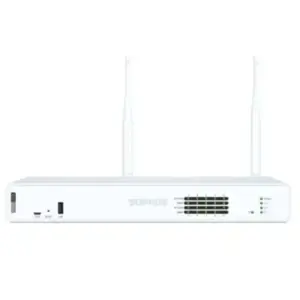
A mixed-speed FortiSwitch access platform for business networks that need ordinary Gigabit ports alongside 2.5GE and 5GE copper, fiber-ready 10GE uplinks and PoE capacity for a varied endpoint population. The value of this model is not simply its port count; it is the ability to combine conventional wired devices, higher-bandwidth wireless access points and uplinks within one rack-mounted access switch.
The FS-M426E-FPOE is especially attractive when one access layer has a mix of 1GE clients, multi-gig devices and powered endpoints. For high-power 802.3bt devices, confirm the exact hardware and PoE requirement because current Fortinet materials contain conflicting statements for this model.
Direct answer: what is the FS-M426E-FPOE used for?
The Fortinet FortiSwitch FS-M426E-FPOE is a managed Layer 2/Layer 3 access switch intended for business networks that need a mixture of standard Gigabit Ethernet, multi-gigabit copper ports, 10GE fiber uplinks and Power over Ethernet. It is particularly relevant when a site must connect ordinary user devices and powered endpoints while also supporting higher-bandwidth equipment such as modern wireless access points. Buyers should consider it when the mixed port profile matches the real endpoint population rather than choosing a switch solely by total port count. Before proceeding, confirm PoE requirements, transceiver type, management mode, FortiGate compatibility, support entitlement, quantity and deployment conditions.
What the switch does
The FS-M426E-FPOE provides access-layer Ethernet connectivity with several port speeds in the same chassis. Sixteen Gigabit Ethernet RJ45 ports address common business endpoints. Eight 2.5GE RJ45 ports are suitable where a device can use more than 1 Gbps over copper cabling, while two 5GE RJ45 ports extend that multi-gig range. Four 10GE SFP+ interfaces support fiber or other compatible transceiver-based uplinks, subject to the chosen modules and cabling.
The switch can operate within Fortinet’s broader secure networking architecture. FortiLink allows compatible FortiGate appliances to manage FortiSwitch units as part of an integrated LAN design, while FortiSwitch Manager and FortiEdge Cloud are other management paths in supported deployments. The correct management model depends on the existing Fortinet environment, site count, operational model and licensing plan.
Who should consider it
This model is relevant for IT teams building or refreshing branch, campus, education, hospitality, healthcare, retail or commercial office networks where endpoint demands are not uniform. A typical deployment could include desktop users, printers, IP phones, surveillance cameras and access-control devices on Gigabit ports, alongside multi-gig wireless access points or specialist devices on faster copper interfaces.
It may be less appropriate when the requirement is simply a large number of identical 1GE ports, when the PoE budget is materially below or above the project need, or when the design requires newer uplink speeds beyond the four 10GE SFP+ interfaces. In those cases, a different FortiSwitch model or series may provide a better technical and commercial fit.
Business challenges this model can address
Mixed endpoint speeds
Many access networks no longer consist entirely of 1GE devices. The mix of GE, 2.5GE and 5GE copper lets a buyer reserve faster ports for endpoints that can actually use them, instead of overspecifying every access port.
Powered edge devices
A 420 W PoE budget can reduce the need for separate power injectors when the switch is correctly sized for the connected phones, cameras, access points and other powered devices. Actual draw must be calculated from the endpoint list.
Uplink bottlenecks
Four 10GE SFP+ uplinks provide options for connecting the access layer to aggregation, core switching or firewall infrastructure. The design still needs to account for oversubscription, redundancy and the optics supported at both ends.
Operational fragmentation
When used with a compatible FortiGate through FortiLink, switching can become part of a more unified management workflow. This can simplify policy and visibility for organisations already standardised on Fortinet, although the exact controller scale must be checked.
Capability band: where the model earns its place
Product-fit matrix
| Requirement | Suitable when | Confirm before ordering |
|---|---|---|
| Standard wired access | A meaningful portion of endpoints need conventional 1GE connectivity. | Required port count, VLAN design and cabling condition. |
| Multi-gig endpoints | The site has APs or devices that can use 2.5GE or 5GE. | Device negotiation, cable category, distance and power draw. |
| PoE-powered access layer | The aggregate connected-device requirement fits within the 420 W budget. | Per-device standard and total wattage, especially 802.3bt expectations. |
| Fiber uplinks | Four 10GE SFP+ uplinks are enough for capacity and resiliency plans. | Transceiver type, fiber type, reach, remote-side compatibility. |
| Fortinet-managed LAN | The organisation wants FortiGate-integrated or supported Fortinet management. | FortiGate controller scale, FortiSwitchOS support and license path. |
Technical information for FS-M426E-FPOE
The table below separates model facts from items that should still be confirmed in a live bill of materials. Fortinet’s current Ethernet-switch overview identifies the mixed copper layout, four 10GE SFP+ uplinks and a 420 W PoE limit. Historical FortiSwitch technical data also publishes 172 Gbps switching capacity, 255 Mpps forwarding performance, 16K MAC address storage, 4K VLAN support and a 1U rack form factor.
| Brand | Fortinet |
|---|---|
| Product name | FortiSwitch M426E-FPOE |
| Model / SKU | FS-M426E-FPOE |
| Product type | Managed Layer 2/Layer 3 multi-gig PoE access switch |
| 1GE copper ports | 16 × GE RJ45 |
| 2.5GE copper ports | 8 × 2.5GE RJ45 |
| 5GE copper ports | 2 × 5GE RJ45 |
| Uplink interfaces | 4 × 10GE SFP+ |
| PoE budget | 420 W maximum published limit |
| 802.3bt guidance | Confirmation required. Fortinet’s current product overview lists eight 802.3bt Class 6 ports, while a Fortinet technical clarification states the hardware is limited to 802.3af/at modes. Validate exact powered-device needs before specifying single-port 802.3bt. |
| Switching capacity | 172 Gbps published model data |
| Forwarding performance | 255 Mpps published model data |
| MAC address storage | 16K published model data |
| VLANs | 4K published model data |
| Form factor | 1U rack mount |
| Management | FortiLink with compatible FortiGate; supported FortiSwitch management options include FortiSwitch Manager and FortiEdge Cloud depending on architecture and licensing. |
| Support | FortiCare options are available; exact level and term should be selected for the project. |
| UAE availability | Contact FourTeck to confirm current model availability, quantity and lead time. |
Important PoE compatibility notice
PoE is one of the strongest reasons buyers shortlist the FS-M426E-FPOE, yet it is also the area that deserves the most careful validation. Fortinet’s current switch overview describes the model with full PoE+ and eight ports identified as 802.3bt Class 6. However, a Fortinet technical clarification published for this exact model states that the FS-M426E-FPOE cannot provide 802.3bt due to hardware limitations and exposes 802.3af and 802.3at modes. These two official statements are not fully aligned.
For normal PoE and PoE+ endpoints, the published 420 W total budget remains an important design parameter. For devices that require a specific 802.3bt power class, a single high-power port, or a vendor-recommended dual-feed arrangement, do not rely on a generic product summary. Confirm the powered device model, maximum draw, acceptable fallback mode and the exact switch hardware revision with FourTeck before procurement. This is especially important for wireless access points with multiple radios, PTZ cameras, digital signage and other devices whose features can be reduced when supplied with less power.
A practical purchase and deployment journey
Map endpoints
List every device, required speed, power standard, expected wattage and cable path. This prevents the switch choice from being driven by a raw port count alone.
Design uplinks
Choose the SFP+ optics, fiber type, link aggregation or redundancy approach, and confirm that aggregation or core devices support the chosen media.
Select management
Decide whether the switch will be FortiGate-managed, handled through another supported Fortinet platform, or operated in a standalone design.
Build the quotation
Add hardware quantity, transceivers, support, power or rack accessories and any requested installation or configuration services to the bill of materials.
Stage and validate
Before production cutover, verify firmware, management adoption, VLANs, trunks, PoE behaviour, uplink resiliency and endpoint connectivity against the agreed design.
Capability focus: using multi-gig ports where they matter
One of the model’s most practical characteristics is that it does not force the same speed across every access port. Most business networks still have a large population of devices that do not need more than 1 Gbps. Desktops, phones, printers, controllers and many cameras often sit comfortably on Gigabit Ethernet. At the same time, newer wireless access points can aggregate traffic from many clients and may benefit from 2.5GE or 5GE copper. The FS-M426E-FPOE creates a middle ground by providing both.
That mixed profile can improve infrastructure efficiency when the endpoint map is known. Rather than purchasing a full bank of higher-speed copper ports that may remain underused, the IT team can reserve the eight 2.5GE and two 5GE interfaces for devices that justify them. This is especially useful during phased wireless upgrades where only part of a building is being refreshed at a time.
Multi-gig capability does not remove the need to review cabling. Negotiated speed depends on the endpoint, switch port, cable category, distance, termination quality and environmental factors. Existing structured cabling may support the required rate, but that should be tested rather than assumed. For a Dubai office renovation, campus refresh or hospitality project, FourTeck can include cabling and endpoint details in the requirement review so the switch selection matches the physical layer instead of being considered in isolation.
Capability focus: PoE budgeting as an engineering exercise
The published 420 W PoE budget is a system-level limit, not a promise that every connected endpoint can draw its maximum requirement simultaneously. A robust design begins with the actual powered-device list. Record the model of each access point, phone, camera, intercom, sensor or controller, then note its power class and worst-case draw. Add design headroom rather than using only typical consumption, because device demand can increase when radios, heaters, infrared illuminators or other features become active.
Port priority can also matter when the total demand approaches the available budget. In a constrained condition, the network team should understand which devices must remain powered and how the chosen FortiSwitchOS configuration handles PoE priorities. For critical endpoints such as security cameras or access-control readers, a resilience plan may also require UPS protection for the switch and upstream network equipment.
The conflicting 802.3bt documentation for this exact model makes endpoint-level verification even more important. If the requirement includes a device that expects 60 W or another specific Type 3/Type 4 behaviour from one port, share that endpoint SKU with FourTeck rather than describing it only as a “high-power AP”. A precise bill of materials allows the powered-device requirement to be checked before hardware is ordered and reduces the risk of discovering power-mode limitations during installation.
Capability focus: Fortinet management and operational control
FortiSwitch is often selected not only for Ethernet functions but also because it can participate in a Fortinet-managed LAN. FortiLink is Fortinet’s management protocol for integrating supported FortiSwitch devices with FortiGate. In that architecture, the switch becomes part of the FortiGate-administered access layer, which can simplify device visibility, VLAN assignment and policy operations for teams already working in the Fortinet ecosystem.
Controller sizing still matters. A FortiGate has platform-specific limits for the number of FortiSwitch units it can manage, and the firewall itself must be sized for the wider security workload. Fortinet’s current Secure LAN guidance explicitly treats controller scale as a design input and recommends that buyers leave capacity for growth. A switch purchase should therefore be reviewed alongside the intended FortiGate rather than assuming any FortiGate can control any number of switches.
For environments that do not want to manage the switch through an onsite FortiGate, Fortinet also documents FortiSwitch Manager and FortiEdge Cloud as supported management options in appropriate deployments. These alternatives have their own software versions, licensing and operational implications. FourTeck can help compare a FortiGate-managed design with standalone or centralised management approaches and include the selected support or subscription items in the quotation.
Ideal business environments and use cases
Wireless refresh projects
A building may retain a large number of 1GE user devices while introducing higher-throughput access points. The mixed copper layout can support both generations in the same access stack, subject to the exact AP power requirements.
Branch and distributed offices
A branch that combines phones, cameras, user ports and wireless can benefit from one managed access platform, especially when the wider design already includes FortiGate and central Fortinet operations.
Education and campus access
Classrooms, labs and shared facilities can require dense Wi-Fi plus ordinary wired endpoints. Fortinet’s current Secure LAN ordering guidance lists the FS-M426E-FPOE among multi-gig access-switch options in larger campus examples, while stressing that these are design examples rather than fixed recipes.
Hospitality and mixed services
Hotels and managed properties often have a varied device population: staff systems, guest wireless, cameras, phones and building systems. The switch can fit where the port-speed and PoE profile matches the actual floor or closet requirement.
Commercial office networks
An office moving toward Wi-Fi 6 or newer wireless while retaining standard user connections can use the multi-gig ports selectively and keep 10GE uplinks toward distribution or firewall layers.
Security and surveillance edge
PoE cameras and related devices can be consolidated onto the access switch when their total power requirement fits the budget. High-draw PTZ devices should be checked individually for power-standard compatibility.
Integration and operational considerations
A switch does not operate in isolation. The FS-M426E-FPOE sits between endpoints and the upstream network, so a successful design must consider VLAN architecture, spanning tree, link aggregation, routing boundaries, DHCP services, authentication, security policy, monitoring, firmware management and change control. If the switch will be FortiGate-managed, the FortiLink topology and controller scale should be documented before deployment. If it will be standalone or managed through another platform, the operations team should define how configuration backups, firmware updates and event visibility will be handled.
Optics are another common source of procurement mistakes. The four SFP+ interfaces provide 10GE uplink capability, but the correct transceiver depends on fiber type, distance and the device at the opposite end. A short multimode link within a building is a different requirement from a long single-mode campus run. Buyers should specify link distance, fiber type and remote port so the quotation can include the right optics.
Power and rack planning should also be completed before delivery. Confirm rack depth, available rack units, power outlets, UPS capacity, grounding practice, cooling and cable-management space. A PoE switch that is heavily loaded can create a different power and thermal profile from a non-PoE access switch. Including these details in the project review helps installation proceed with fewer surprises.
Buyer questions to resolve before ordering
Reserve the 2.5GE and 5GE ports for devices that can use them. If nearly every endpoint needs multi-gig, another switch profile may be more appropriate.
List every powered device, its required standard and maximum draw. This determines whether the 420 W budget is enough and whether any endpoint raises an 802.3bt compatibility question.
Confirm 10GE optics, fiber type, distance and remote-side interface. Do not order transceivers from the switch model alone.
Choose FortiGate/FortiLink, FortiSwitch Manager, FortiEdge Cloud or another supported approach based on the environment and licensing plan.
Consider uplink redundancy, MCLAG architecture where appropriate, controller high availability, power protection and spare strategy rather than treating the switch as a single isolated box.
FortiCare options vary by level and term. Match the support plan to the organisation’s replacement expectations and operational risk.
Procurement checklist for an accurate quotation
✓ Exact model: FS-M426E-FPOE
✓ Required hardware quantity
✓ Deployment site and rack location
✓ Count of 1GE, 2.5GE and 5GE endpoints
✓ Full PoE endpoint list and maximum wattage
✓ Any device specifically requiring 802.3bt
✓ SFP+ optics and fiber distance requirements
✓ FortiGate model if FortiLink management is planned
✓ Preferred management architecture
✓ FortiCare level and term
✓ Installation and configuration scope
✓ VLAN, routing or migration requirements
✓ Power, UPS and rack constraints
✓ Required delivery or project timeline
How FourTeck can support the decision
The most useful support starts before the purchase order. FourTeck can review the endpoint schedule, confirm whether the mixed-speed port layout matches the site, check the PoE budget against powered devices, identify required SFP+ optics and help align the switch with the intended FortiGate or standalone management architecture. For a larger project, this review can be extended into a bill of materials covering switches, support, transceivers and deployment services.
If the project is replacing an existing access layer, provide the current switch models, port utilisation, VLAN list, uplink design and major connected-device types. That information helps distinguish a straightforward hardware refresh from a network redesign. Migration planning can then account for configuration translation, maintenance windows, endpoint dependencies and testing.
For more information about networking and security products, visit the FourTeck product portfolio. Businesses needing implementation help can review technology services and deployment support, or contact FourTeck for a quotation.
UAE availability and support guidance
Contact FourTeck to confirm current UAE availability for the Fortinet FortiSwitch FS-M426E-FPOE. Availability may vary by quantity, vendor lead time, support requirement and the exact accessory list. A quotation can also include SFP+ optics, FortiCare, installation or configuration scope where required. FourTeck does not assume that a particular quantity is immediately available until the requirement has been checked.
For projects in Dubai, Abu Dhabi, Sharjah and Ajman, share the destination, quantity, required delivery window, rack environment and whether onsite deployment assistance is needed. These details allow commercial and technical planning to happen together. If a network refresh spans several branches, include the site list and expected rollout sequence so that procurement and configuration can be coordinated around the wider project rather than treating each switch as a separate purchase.
GCC availability
Organisations planning FortiSwitch deployments across the GCC can ask FourTeck to review the requirement at project level rather than pricing each switch in isolation. For the FS-M426E-FPOE, useful inputs include the destination country, quantity, endpoint mix, PoE requirement, uplink optics, FortiGate model, support term and expected deployment schedule. FourTeck can assist with model review, quotation coordination, accessory planning, configuration scope and regional project discussions for requirements in markets such as the United Arab Emirates, Saudi Arabia, Kuwait, Qatar, Bahrain and Oman. Product availability, licensing, delivery schedules, service visits and vendor lead times can vary by country, model and quantity, so these should be confirmed for each project. If the deployment includes multiple sites, identify which locations need identical designs and which have different port or power needs. For Kuwait-related enquiries, buyers may also visit FourTeck Kuwait resources and then confirm the exact commercial requirement with the team.
Africa availability
For African projects, procurement planning should consider more than the switch SKU. FourTeck can help organisations evaluate the FS-M426E-FPOE against endpoint speeds, PoE demand, management architecture, transceiver requirements, support expectations and site conditions before the bill of materials is finalised. Availability and fulfilment may depend on destination, quantity, vendor lead time, local power requirements, shipping arrangements and the required service scope. Buyers should share the destination country, exact quantity, planned deployment schedule and any installation or configuration expectations so the proposed solution can be reviewed properly. For East African projects, FourTeck Kenya and FourTeck Uganda provide regional contact paths, while FourTeck Africa covers broader product and project enquiries. Local inventory, delivery times and onsite coverage should always be confirmed for the specific destination rather than assumed from another market.
Related products, services and alternatives to evaluate
FortiGate integration
If FortiLink management is part of the design, confirm the FortiGate model, controller scale and security architecture alongside the switch.
Higher-density FortiSwitch
If the project needs more multi-gig ports or substantially more PoE capacity, compare current FortiSwitch 600-series or other campus models rather than forcing the M426E profile into a larger requirement.
FortiCare support
Select the support level and term based on replacement expectations, operational criticality and lifecycle planning. Support SKUs differ by service level and term.
Installation and configuration
For migration or new deployment, include staging, firmware, VLANs, uplinks, FortiLink adoption, PoE checks and testing in the project scope where needed.
Why businesses contact FourTeck for this type of switch
A mixed-speed PoE switch is easy to describe at headline level and easy to mis-size at project level. Buyers typically need help deciding whether the number of multi-gig ports is sufficient, whether the power budget is suitable for the endpoint list, which SFP+ modules are required and how the switch will be managed. FourTeck can turn those questions into an itemised requirement before a quotation is issued.
This approach is also useful for procurement teams that have a hardware SKU but not a complete bill of materials. By checking accessories, support, deployment scope and compatibility before ordering, the project can avoid common omissions such as missing optics, an unsuitable support term or a PoE assumption that does not match the powered devices. For company information, visit about FourTeck.
What buyers are trying to work out before choosing this switch
Most buyers researching the FS-M426E-FPOE are not simply asking whether it is “a good switch.” They are trying to determine whether its particular mixture of ports, PoE capacity and management options matches a real network. That distinction matters because the model sits between ordinary Gigabit access switching and newer high-density multi-gig platforms. It can be a very sensible fit when only a subset of devices needs faster copper, but it is not automatically the right choice for every Wi-Fi refresh or PoE project.
This question appears because the model combines several interface types. The access-side copper layout is 16 GE RJ45 plus eight 2.5GE RJ45 plus two 5GE RJ45, giving 26 copper interfaces. In addition, there are four 10GE SFP+ uplinks. Some product descriptions call it a 24-port PoE switch because the PoE-enabled access grouping is described differently from the complete copper count. For procurement, use the actual interface breakdown rather than a shorthand port label.
Potentially, but only when the access points, cabling and upstream network can use the additional bandwidth. A 2.5GE switch port cannot make a 1GE AP faster, and a multi-gig AP can still be constrained by poor cabling, insufficient PoE or a saturated uplink. The better question is whether each layer—from AP radio capacity to copper link and 10GE uplink—supports the intended traffic profile.
Another common buying issue is the relationship between FortiSwitch and FortiGate. The FS-M426E-FPOE does not need to be treated as a passive accessory to a firewall; it is a managed switch with its own switching functions. However, organisations that already use FortiGate often value FortiLink because it brings the access switch into the Fortinet management model. This can reduce the number of separate operational consoles, but the FortiGate must still be sized for the number of switches and the wider security workload. A small FortiGate should not be assumed to be an unlimited controller.
Buyers also search for differences between PoE, PoE+ and higher-power PoE modes because the switch is often paired with modern access points. The safest approach is to treat PoE as an endpoint compatibility question, not merely a total-wattage question. The 420 W total budget tells you how much aggregate power is available, while the endpoint standard tells you what an individual device expects from a port. The documentation conflict around 802.3bt on the FS-M426E-FPOE is therefore highly relevant: a project with ordinary 802.3af or 802.3at devices may be straightforward, while a project depending on a specific 802.3bt power class needs explicit verification.
Price research for this model can also be confusing. International listings vary considerably because some prices include tax, some exclude it, some bundle support, and some are for used or refurbished hardware. A UAE quotation should therefore not be built by converting a foreign web price alone. The final project cost depends on hardware quantity, support term, transceivers, tax treatment, delivery, and any installation or configuration services. FourTeck can provide a current project quotation once those variables are known.
For organisations deciding between this model and a newer FortiSwitch, the key comparison points are not generation names alone. Look at total copper port count, how many ports support multi-gig speeds, uplink speed, PoE budget, controller support, management method and planned lifecycle. If a site expects the number of multi-gig endpoints to grow significantly over the next few years, buying a platform with more multi-gig headroom may be wiser even if the M426E fits today. If only a limited number of endpoints need more than 1 Gbps, the M426E’s selective multi-gig design can remain commercially attractive.
A strong quotation request therefore looks more like a short network brief than a product-name email. State the number of switches, the approximate endpoint mix, whether wireless APs are included, the PoE requirements, required uplink distance, FortiGate model, support term and desired deployment timeline. This gives the supplier enough information to identify missing components and makes it much easier for technical and procurement teams to compare offers on an equal basis.
Decision questions buyers ask during shortlisting
Do I need the FS-M426E-FPOE if most devices are only 1GE?
Possibly, if the site has a smaller set of important multi-gig endpoints that justify the faster ports. The model’s appeal is the combination of ordinary GE access with eight 2.5GE and two 5GE copper interfaces. If no endpoint needs multi-gig, a simpler FortiSwitch may be more economical. If nearly every endpoint needs multi-gig, compare a denser current model.
Can I connect any 10GE optic to the SFP+ ports?
No assumption should be made from the connector alone. Choose transceivers based on Fortinet compatibility, fiber type, wavelength, distance and the interface at the remote device. A link between two racks in one building may use a different optical specification from a campus or data-centre interconnect.
Does FortiLink require an additional switch license?
Fortinet’s current Secure LAN ordering guidance states that no separate license is required for FortiGate management of FortiSwitch. Support and other management choices still have their own requirements, and cloud-management options are licensed differently. Confirm the intended architecture and support plan in the quotation.
What should I provide for a PoE check?
Provide the exact model of every powered device, quantity, required power standard and maximum draw. If the list includes high-power wireless APs, PTZ cameras or displays, identify them explicitly. FourTeck can then compare the aggregate requirement with the 420 W budget and investigate any per-port compatibility concern.
How do I know whether my FortiGate can manage it?
The switch is supported in current FortiSwitch software documentation, but FortiGate controller scale depends on the firewall model and software release. Provide the exact FortiGate model, firmware target and total number of FortiSwitch units so the controller design can be checked rather than assumed.
Should the quote include installation?
Include installation or configuration if the project involves rack work, uplink changes, VLAN migration, FortiLink adoption, firmware staging, endpoint testing or cutover coordination. A hardware-only quote may be sufficient for an experienced internal team, but it should be a deliberate choice rather than an accidental omission.
Frequently asked questions
What is the Fortinet FS-M426E-FPOE?
It is a managed FortiSwitch access switch with 16 GE RJ45 ports, eight 2.5GE RJ45 ports, two 5GE RJ45 ports and four 10GE SFP+ uplinks, plus a published 420 W PoE budget.
Does the FS-M426E-FPOE support 802.3bt?
Fortinet sources conflict on this point. The current product overview lists eight 802.3bt Class 6 ports, while a Fortinet technical clarification says the hardware is limited to 802.3af/at. Confirm high-power endpoint requirements before ordering.
How much PoE power is available?
Fortinet publishes a maximum PoE budget of about 420 W for the model. The connected-device list should be calculated against this total with suitable design headroom.
Can it be managed by FortiGate?
Yes, it is FortiGate switch-controller compatible and can be managed through FortiLink in a supported architecture. The FortiGate model and controller scale should be checked for the overall deployment.
Are SFP+ transceivers included?
Do not assume optics are included. Required transceivers should be specified according to fiber type, distance, wavelength and remote-device compatibility and added to the quotation where needed.
Is a FortiSwitch license required?
Fortinet states that no separate license is required for FortiGate management of FortiSwitch. FortiCare and cloud-management services are separate choices with their own terms and SKUs.
Is the FS-M426E-FPOE suitable for Wi-Fi access points?
It can be, particularly where APs benefit from 2.5GE or 5GE access. Confirm the AP’s Ethernet speed, PoE requirement, cable capability and expected traffic before finalising the design.
How can I check UAE availability?
Send FourTeck the required quantity, destination and accessory list. Current availability and vendor lead time can then be confirmed for the exact request.
What information is needed for a quote?
Provide quantity, endpoint speeds, powered-device models, uplink requirements, FortiGate model, support term, deployment location and any installation or configuration scope.
Need a model-specific FortiSwitch quotation?
Share the required quantity, endpoint list, PoE details, SFP+ uplink requirements, FortiGate model and deployment location. FourTeck can review the fit, confirm current UAE availability and prepare a quotation with the required support, optics and services.

Reviews
There are no reviews yet.