

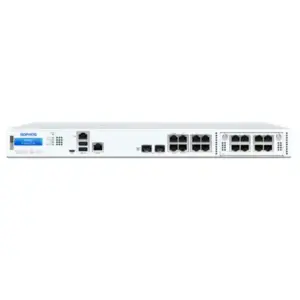
Fortinet FortiWeb 100F in Dubai, UAE
The FortiWeb 100F is a compact physical web application firewall for organisations that want a dedicated control point in front of business websites, portals and APIs. Its role is different from a conventional network firewall: it is designed to understand HTTP and HTTPS application traffic, apply web-security policy, identify suspicious application behaviour and help teams protect exposed digital services. The model is especially relevant when buyers want an on-premises FortiWeb appliance with modest throughput requirements and clear local ownership of the deployment.
Before you request pricing
Share the expected protected traffic, number of applications, HTTPS profile, preferred deployment mode and support term.
FourTeck can then help align the FWB-100F hardware with the appropriate Standard, Advanced or Enterprise service bundle and project scope.
Direct answer: what is FortiWeb 100F?
FortiWeb 100F is Fortinet’s compact hardware web application firewall appliance, identified by part number FWB-100F. It is mainly used to inspect and control application traffic before it reaches protected web servers or APIs. Organisations should consider it when they need a dedicated physical WAF and their expected workload fits a published maximum throughput of 100 Mbps. Before proceeding, a buyer should confirm the real HTTPS traffic profile, number of protected applications, deployment topology, certificate handling, resilience requirements and the service bundle required. The 100F is not automatically the right choice simply because the traffic average appears low; peak traffic, policy depth, encrypted traffic, growth and operational requirements all influence sizing.
What the appliance does
A perimeter firewall decides whether network connections should be allowed based on addresses, ports, users, applications and security policies. A web application firewall goes deeper into the behaviour of web requests. FortiWeb can evaluate web and API traffic for application-layer attacks, protocol violations, suspicious client behaviour, malicious automation and other patterns that are difficult to manage with network-layer controls alone.
Fortinet describes FortiWeb as a WAF and API protection platform that combines traditional security methods with machine-learning-based analysis. Depending on the selected service level and configuration, FortiWeb capabilities can include web security, IP reputation, antimalware, credential-stuffing defence, threat analytics, advanced bot protection, client-side security and data loss prevention. These are not all equivalent bundle entitlements, so the procurement stage must separate what the platform can do from what is included in the selected order.
Who should consider the 100F
The 100F is most logical for a focused physical-appliance deployment where protected traffic is within its capacity and four Gigabit Ethernet interfaces are sufficient. That can include a company portal, a limited group of internet-facing applications, an e-commerce front end with moderate traffic, an API service, a branch-hosted business system or a dedicated WAF segment for a specific application set.
It is less suitable when the design requires substantially more than 100 Mbps of protected throughput, higher interface density, SFP connectivity, rack-native hardware, larger appliance storage or broader growth headroom. In those cases, compare higher FortiWeb models or virtual and cloud options rather than forcing the 100F into a requirement it was not sized to meet.
Business problems the FortiWeb 100F can help address
Exposed web forms and logins
Public forms, account pages and administrative interfaces receive both legitimate user input and hostile requests. A WAF provides application-aware inspection and policy enforcement before traffic reaches the origin server.
Undocumented or changing APIs
Modern applications often add mobile, partner and automation APIs over time. FortiWeb provides API discovery and protection capabilities that can help teams understand and apply controls to exposed endpoints.
Malicious automation
Scraping, repetitive login attempts, credential abuse and automated form activity can consume resources or create fraud risk. FortiWeb includes bot-oriented controls, with advanced bot protection dependent on bundle selection.
Policy tuning and false positives
Application security becomes difficult when legitimate requests look unusual. FortiWeb uses learning and analytics capabilities intended to help administrators distinguish application behaviour and reduce unnecessary blocking when policies are correctly trained and reviewed.
Core capabilities buyers should evaluate
Layered WAF controls for threats such as application exploits, protocol abuse and common OWASP risk categories.
API discovery and schema-aware controls supporting OpenAPI, XML and JSON-based security models where configured.
Controls for automated activity, with advanced bot capabilities associated with higher service bundles.
Visual investigation of traffic, violations and attack activity to support operational tuning and incident review.
FortiWeb 100F product-fit matrix
| Requirement | Suitable when | Confirm before ordering |
|---|---|---|
| Protected throughput | Expected workload is comfortably within the published 100 Mbps maximum. | Peak HTTP/HTTPS traffic, encryption level, policy complexity and future growth. |
| Physical deployment | A compact desktop appliance suits the site and ownership model. | Rack expectations, power layout, physical security and cabling. |
| Connectivity | Four GE RJ45 ports are adequate. | Need for bypass interfaces, SFP/SFP+, additional segmentation or higher-speed links. |
| Resilience | Active/passive or active/active clustering can meet the design. | Second appliance, switch topology, state behaviour, failover test plan and single-power-supply considerations. |
| Security services | The chosen bundle includes the required controls. | Standard, Advanced or Enterprise bundle, subscription term and optional add-ons. |
Verified technical information
The following values are based on current Fortinet FortiWeb documentation that specifically lists the 100F. Fortinet notes that performance figures are maximum values and actual results can vary by system configuration and traffic conditions. Bundle inclusions and service availability should be checked against the current ordering guide when a quotation is prepared.
| Brand | Fortinet |
| Product name | FortiWeb 100F |
| Manufacturer part number | FWB-100F |
| Product type | Web application firewall and API protection appliance |
| 10/100/1000 interfaces | 4 × RJ45 |
| USB interfaces | 2 |
| RAM | 4 GB |
| Storage | 64 GB SSD |
| SSL/TLS processing | Software |
| Form factor | Desktop |
| Power supply | Single |
| Throughput | Up to 100 Mbps |
| Latency | <5 ms |
| High availability | Active/Passive and Active/Active clustering |
| Application licences | Unlimited |
| Dimensions | 216 × 152 × 40.5 mm |
| Weight | 1.55 kg |
| Power input | 100–240V AC, 50–60 Hz |
| Average power consumption | 18 W |
| Operating temperature | 0°C to 40°C |
| Cooling | Fanless |
| Safety certifications listed by Fortinet | FCC Class A Part 15, RCM, VCCI, CE, UL/cUL, CB |
| Availability | Contact FourTeck to confirm current UAE availability, bundle, quantity and vendor lead time. |
Licensing, subscriptions and bundle dependencies
The hardware part number FWB-100F identifies the appliance, but a production procurement decision normally needs a service bundle and support term as well. Fortinet’s current ordering guide presents Standard, Advanced and Enterprise hardware bundles for the FortiWeb appliance family. The key point for a buyer is that security services are tiered rather than automatically identical across every order.
The current guide shows Web Security, IP Reputation and Antimalware in the Standard tier. FortiWeb Cloud Sandbox, Credential Stuffing Defense and Threat Analytics are associated with the Advanced tier. Advanced Bot Protection, Client-Side Security and DLP are associated with the Enterprise tier. FortiAI is shown as an add-on, and SOCaaS is also presented as an add-on. Exact subscription terms, SKU suffixes, support entitlements and regional ordering rules can change, so the quotation should be built from the current Fortinet ordering guide rather than an older online listing.
This matters because two organisations buying the same 100F hardware can have very different protection requirements. One may only need a standard WAF service set for a simple public portal, while another may need client-side security and advanced bot controls for a payment or account platform. FourTeck can help convert the technical requirement into the correct bill of materials before the purchase order is issued.
Deployment and purchase journey
Map applications
List domains, APIs, server pools, certificates, authentication flows and business-critical paths that require protection.
Measure traffic
Use realistic peak HTTP and HTTPS figures. Include seasonal demand and planned growth rather than relying on a quiet-day average.
Select topology
Choose reverse proxy, transparent, WCCP or another supported deployment approach based on routing, application and operational requirements.
Build the bundle
Select the service level, support duration and optional services needed for the application risk and operating model.
Plan migration
Prepare certificate import, DNS or routing changes, test cases, maintenance windows, rollback steps and stakeholder approvals.
Machine-learning-assisted application protection
Web applications do not behave like static network services. A normal customer can enter unexpected characters, use a mobile client, change request order, upload a file or trigger an unusual transaction. At the same time, attackers deliberately craft requests that try to look normal. A WAF therefore needs more than a simple allow-or-block rule set. FortiWeb combines conventional application-security controls with machine-learning-based analysis intended to model application behaviour and identify malicious anomalies.
For a buyer, the operational value is not that the appliance can be installed and forgotten. The value is that security teams have additional context when deciding how tightly to enforce policy. A sensible implementation starts with application discovery, controlled observation and policy tuning. Administrators review which URLs, parameters, methods and client behaviours are expected, then move toward stricter enforcement after genuine traffic has been understood. This helps avoid a situation where the WAF is configured so aggressively that real customers are blocked, or so loosely that it becomes little more than a logging device.
The 100F can be appropriate when an organisation wants this FortiWeb application-security model in a compact appliance. The appliance size does not reduce the importance of good tuning. Even a small portal can contain complex authentication, API and file-upload behaviour, so project planning should allocate time for observation, testing and adjustment.
API discovery and positive security controls
APIs often become the hidden connective tissue of a business. Mobile applications call them, partners integrate through them, internal systems automate workflows with them and development teams create new endpoints as features evolve. The security problem is that an organisation may know the main public API but have less visibility into older versions, undocumented paths or endpoints added during rapid development.
FortiWeb provides API discovery and protection capabilities. Fortinet describes support for OpenAPI, XML and generic JSON schema-based controls, which can be used to build a positive security model around expected API behaviour. Positive security means defining what legitimate requests should look like, rather than relying only on a list of known bad patterns. In practice, this can help reduce exposure when APIs have strict structures and predictable methods.
The buyer should still confirm where API specifications are maintained, who owns them and how frequently they change. A WAF policy cannot compensate for an undocumented development process. If the organisation uses continuous delivery, the deployment plan should include how API changes will be communicated, tested and reflected in security policy. FourTeck can include these questions during sizing and configuration discussions so the appliance is purchased as part of a workable operating model rather than as an isolated control.
Bot mitigation, credential abuse and client-side risk
Not every damaging web request is a classic exploit. Many business applications are harmed by automation: price scraping, inventory checking at abusive rates, fake account creation, repeated password testing, booking abuse, content harvesting or scripted form submissions. These activities can look superficially similar to legitimate user activity, so the policy needs to distinguish useful automation, normal customers and hostile bots.
FortiWeb includes bot-related controls, and Fortinet’s current bundle structure places Advanced Bot Protection in the Enterprise tier. Credential Stuffing Defense appears in the Advanced tier. This distinction is important for procurement because a buyer who specifically needs advanced bot analysis should not assume that every FWB-100F order includes the same capability. The application team should identify where bots create actual business risk and whether the requirement is monitoring, rate control, challenge, blocking or a combination of measures.
Client-side security is another area to evaluate, particularly for sites that handle payments or depend heavily on browser-side JavaScript. Fortinet positions Client-Side Security in the Enterprise bundle. Buyers with payment pages, third-party scripts or strong PCI DSS obligations should discuss this explicitly during quotation rather than treating it as a default appliance feature.
Ideal environments and practical use cases
Corporate customer portal
Protect login, account and self-service pages that are externally reachable but do not generate data-centre-scale throughput.
Moderate-traffic e-commerce
Add application-aware controls around checkout, login, search and API endpoints when measured traffic fits the appliance.
Dedicated API segment
Place a focused WAF control in front of partner or mobile APIs when four GE interfaces and the 100 Mbps performance class are sufficient.
Branch-hosted application
Protect a local web application without deploying a larger rack appliance where physical simplicity is preferred.
Integration and operational considerations
A FortiWeb project touches more systems than the appliance itself. Network teams need to understand traffic paths and failover. Application teams need to identify domains, servers, ports, authentication flows and special functions. Security teams need to define policy and logging. Infrastructure teams need to provide DNS, NTP and administrative access. Certificate owners need to supply valid certificate chains and private keys where SSL termination or inspection requires them. Procurement needs a final bill of materials that reflects the selected service tier and support term.
FortiWeb can integrate with other Fortinet products such as FortiGate and FortiSandbox as part of a broader Security Fabric design. That does not mean such products are required for every 100F installation. The decision should follow the existing architecture and the security outcome required. If logs need to be centralised, the buyer should also decide where they will be stored, how long they must be retained and who will review them.
High availability deserves particular attention on the 100F because the appliance has a single power supply. Fortinet supports active/passive and active/active clustering, but resilient design requires more than enabling an HA setting. A pair of appliances, independent power paths where possible, suitable switching, tested failover behaviour and a maintenance process are part of the complete resilience discussion.
Buyer questions to resolve before ordering
Measure the traffic that will actually pass through FortiWeb, especially HTTPS. Leave practical headroom for campaigns, application growth and changing usage.
Map specific needs such as credential-stuffing defence, threat analytics, advanced bot protection, client-side security or DLP to the current bundle structure.
Clarify certificate ownership, renewal process, key storage and whether FortiWeb will terminate or inspect encrypted sessions.
If application downtime is unacceptable, scope a second appliance and the surrounding network design rather than buying a single unit and planning resilience later.
Procurement and evaluation checklist
✓ Confirm FWB-100F as the required hardware model.
✓ State the required quantity and whether an HA pair is needed.
✓ Provide peak HTTP and HTTPS traffic figures.
✓ List the domains, portals and APIs to be protected.
✓ Confirm whether four GE RJ45 interfaces are sufficient.
✓ Select Standard, Advanced or Enterprise service coverage.
✓ Confirm subscription and support duration.
✓ Identify required add-ons such as FortiAI or SOCaaS where relevant.
✓ Confirm certificate, DNS and routing responsibilities.
✓ Decide whether installation and configuration assistance is required.
✓ Define migration, testing and rollback expectations.
✓ Confirm UAE delivery location and required project timing.
FourTeck consultation and sizing support
A useful WAF quotation starts with application information, not only a product name. FourTeck can help buyers turn traffic estimates, application count, availability requirements and security-service needs into a clearer procurement specification. This is particularly helpful when technical and purchasing teams need one bill of materials that identifies the appliance, bundle, support term and implementation scope.
For related planning, explore FourTeck security and infrastructure services or review the wider technology product portfolio.
UAE availability guidance
Contact FourTeck to confirm current UAE availability. Supply can depend on the exact model, bundle, quantity, subscription term and vendor lead time. Delivery coordination and implementation scheduling should be discussed only after the requirement and commercial offer are confirmed.
Buyers can use the FourTeck contact page to share the required quantity, destination, deployment plan and target timeline.
Dubai, Abu Dhabi, Sharjah and Ajman coverage
FourTeck can coordinate FortiWeb 100F enquiries for organisations in Dubai, Abu Dhabi, Sharjah and Ajman through one requirement-review process. The purpose of the regional discussion is not to assume stock or a fixed delivery date, but to collect the details needed for an accurate quotation: product quantity, service bundle, support term, deployment site, installation expectations and project schedule. A Dubai e-commerce company may be focused on checkout and bot risk, while an Abu Dhabi organisation may prioritise API governance and formal change control. A Sharjah manufacturer may need a protected dealer portal, and an Ajman services company may be securing a customer booking application. The product is the same, but the design and support scope can differ substantially.
For broader company information, buyers can review FourTeck’s business technology profile before discussing the requirement.
GCC Availability
For GCC projects, FourTeck can help businesses review whether FortiWeb 100F is the right appliance for the required application traffic and whether the selected service bundle matches the security outcome. Procurement may involve organisations in the United Arab Emirates, Saudi Arabia, Kuwait, Qatar, Bahrain or Oman, but commercial and technical conditions can differ between destinations. Product availability, licensing rules, delivery schedules, service visits, project scope and vendor lead times can vary by country, model, quantity and requirement.
To prepare a regional quotation, share the destination country, required quantity, protected applications, traffic estimate, bundle or license term, deployment location and expected timeline. If configuration, migration, installation or renewal assistance is required, include that scope from the beginning so the commercial offer can be structured correctly. For Kuwait-facing requirements, FourTeck also maintains a Kuwait technology support presence. Current availability should always be confirmed for the specific order rather than inferred from a general product listing.
Africa Availability
Organisations planning Fortinet application-security projects in Africa can also discuss FortiWeb sizing, service bundles and deployment requirements with FourTeck. The 100F may suit focused workloads where a compact physical WAF is preferred, while higher traffic or more complex architectures may require a different FortiWeb model or deployment format. Availability and fulfilment can depend on the destination, quantity, license region, vendor lead time, power requirements, shipping arrangements and any local project conditions.
Buyers should provide the destination country, exact FortiWeb requirement, quantity, expected protected traffic, desired support term, preferred deployment schedule and any installation or support expectations. FourTeck can then coordinate suitable guidance without assuming local inventory or fixed delivery. For organisations operating in East Africa or across multiple regional markets, see FourTeck Kenya and the broader FourTeck Africa technology portal for regional contact paths and planning support.
What buyers are trying to understand before choosing this model
A common question is whether the FortiWeb 100F is “enough” for a particular website. The answer cannot be based only on monthly visitors or the number of domains. WAF sizing is driven by the traffic that actually crosses the appliance, especially peak encrypted traffic, as well as policy complexity and growth. A site with modest daily traffic can still have intense short peaks during campaigns, ticket releases, payment events or batch API activity. Buyers should therefore obtain interface or server statistics and identify peak periods before committing to the 100 Mbps appliance class.
100F versus 400F
The 100F is a desktop appliance with four GE RJ45 ports and up to 100 Mbps throughput. The 400F moves to a 1U form factor, adds four GE SFP interfaces, increases storage and is rated up to 500 Mbps. The decision is therefore about more than a model number: it includes throughput, interface type, rack requirements and future headroom.
Hardware versus virtual WAF
The 100F gives a self-contained physical appliance and a clear on-premises deployment boundary. A FortiWeb VM can be a better fit when the protected workloads are already virtualised or cloud-hosted and the organisation prefers software-defined capacity. The correct choice depends on infrastructure standards, licensing, operational ownership and resilience design.
Buyers also ask whether the appliance itself includes everything needed for advanced application security. It does not make sense to treat “FortiWeb” as one undifferentiated license. Current Fortinet ordering information separates Standard, Advanced and Enterprise service coverage. If credential stuffing is the main problem, the requirement points toward services in the Advanced tier. If advanced bot protection or client-side security is critical, the Enterprise tier becomes relevant. This is why a quote for hardware only is not always a meaningful comparison with a bundle that includes years of support and security services.
Another frequent concern is whether a WAF can simply be placed in the network without application involvement. A technically correct placement is only the start. The project should identify protected domains, origin servers, certificates, authentication paths, allowed HTTP methods, uploads, APIs and special application behaviour. Application owners need to test core journeys after traffic is moved through the WAF. A useful validation set includes login, logout, password reset, search, payment, file upload, customer registration, API transactions and administrative workflows. These tests make policy tuning safer and shorten troubleshooting when an application behaves differently behind the WAF.
The question “does FortiWeb replace FortiGate?” is also common. These products solve different problems. FortiGate is a network security platform, while FortiWeb is focused on web application and API traffic. A company can therefore have a FortiGate at the perimeter and still need FortiWeb for the application layer. The design can integrate the products, but the decision should follow the application risk rather than a desire to duplicate controls.
For e-commerce and customer-facing portals, buyers increasingly ask about bots rather than only SQL injection or cross-site scripting. Automated traffic can test credentials, scrape content, create fake accounts and abuse checkout flows without looking like a traditional exploit. FortiWeb offers multiple bot-related mechanisms, but the strongest bot features are subscription dependent. The business should describe which automated behaviour is causing harm, how many legitimate bots must remain allowed and whether user challenges are acceptable. This turns “bot protection” from a vague feature request into a policy requirement.
A similar distinction applies to API security. An organisation may say it has three APIs, but each API can contain many endpoints, versions and authentication flows. Teams should identify which APIs are public, partner-only or internal, whether OpenAPI specifications exist, how frequently endpoints change and which development team owns them. FortiWeb’s discovery and schema-aware capabilities are more useful when the organisation has clear API ownership and a process for keeping security policy aligned with releases.
Finally, procurement teams often compare online prices without checking the underlying SKU. Hardware-only FWB-100F pricing is not directly comparable with one-, three- or five-year bundles containing support and security services. The quote request should therefore state whether the organisation wants the base appliance or a full hardware bundle, which service tier is required and how long coverage should run. FourTeck can help normalise these details so procurement receives a like-for-like comparison rather than several prices for materially different packages.
Decision questions buyers should answer in practical terms
How much headroom should I leave below 100 Mbps?
There is no universal percentage because traffic type, encrypted sessions, security policies and future growth differ. The important point is not to size the appliance at the exact measured peak. Use representative peak data, identify planned application launches and discuss a sensible operating margin during sizing. If the expected requirement is already close to the platform maximum, a higher model is usually the safer comparison.
Do I need two appliances?
If the protected application is business critical and WAF downtime would be unacceptable, high availability should be designed from the beginning. FortiWeb 100F supports active/passive and active/active clustering, but resilience requires a second appliance plus suitable switching, cabling, power planning and failover testing. A single appliance can be appropriate for lower-risk workloads, but the downtime impact should be accepted explicitly.
Which bundle should I request?
Start with the business threat, not the bundle name. Basic web security, IP reputation and antimalware map to Standard coverage. Credential-stuffing defence, cloud sandbox and threat analytics point toward Advanced. Advanced bot protection, client-side security and DLP point toward Enterprise. Confirm the current ordering guide and term-specific SKU before purchase.
Can the 100F protect both websites and APIs?
Yes, FortiWeb is designed for both web application and API protection. The design still needs to identify the actual domains and endpoints, authentication mechanisms, expected request structures and traffic profile. If APIs change frequently, include a process for updating security policy alongside application releases.
What should be included in a deployment quote?
Beyond hardware and subscriptions, state whether the project needs design review, installation, firmware preparation, certificate import, protected-server configuration, security policy setup, logging, HA configuration, application testing, migration assistance, documentation or knowledge transfer. This prevents an appliance quote from being mistaken for a complete implementation scope.
What information helps FourTeck prepare a better quotation?
Provide quantity, UAE or regional destination, protected application count, peak HTTP/HTTPS traffic, required availability level, desired service tier, support term, deployment mode if known and any installation or migration requirement. If some of these details are unknown, FourTeck can use a consultation step to clarify them before finalising the bill of materials.
Related FourTeck options and services
Higher FortiWeb appliance sizing
Compare 400F or larger models when throughput, interfaces, rack deployment or growth requirements exceed the 100F profile.
FortiWeb virtual deployment
Consider FortiWeb VM when infrastructure standards favour virtualised or cloud-based security appliances instead of dedicated hardware.
Fortinet perimeter security
Review Fortinet firewall options for Dubai when the project also includes network-edge security.
Installation and configuration
Include deployment assistance where the project needs certificate handling, application onboarding, HA, policy tuning, testing or handover support.
Why businesses contact FourTeck for FortiWeb projects
The practical value of supplier assistance is requirement clarification. A WAF order can fail long before installation if the wrong appliance class is selected, the service tier omits a required feature, high availability is forgotten, certificate responsibilities are unclear or installation expectations are never included in the quote. FourTeck can help procurement and technical teams resolve those points before a purchase order is released.
Typical assistance can include model sizing, bundle selection, bill-of-material review, compatibility discussion, quotation coordination, deployment planning, migration scoping and renewal guidance. These activities are scoped according to the project; they should not be assumed to be included automatically in every hardware quotation.
Frequently asked questions
What is Fortinet FortiWeb 100F used for?
It is a physical web application firewall used to protect websites and APIs by inspecting application-layer traffic, applying WAF policy and identifying malicious or abnormal requests before they reach protected servers.
What is the official model number?
Fortinet lists the base hardware appliance as FWB-100F. Bundle SKUs add service-tier and term information, so buyers should distinguish the hardware part number from a complete hardware-and-services bundle.
How much throughput does the FortiWeb 100F provide?
Fortinet publishes up to 100 Mbps throughput for the 100F. The vendor also states that performance values are maximum figures and actual performance varies with traffic and system configuration, so real sizing should use measured workload data.
Does FortiWeb 100F support high availability?
Yes. Fortinet lists Active/Passive and Active/Active clustering. A resilient deployment still requires a second appliance and appropriate surrounding network, power and failover design.
Which FortiWeb bundle should I choose?
Choose according to the security services required. Current Fortinet ordering information separates Standard, Advanced and Enterprise coverage. Advanced bot protection, client-side security and DLP are examples of capabilities associated with the Enterprise tier, while other services appear in lower tiers. Confirm the current bundle during quotation.
Can the 100F protect APIs as well as websites?
Yes. FortiWeb includes API discovery and protection capabilities. The deployment should identify API endpoints, expected schemas, authentication methods, ownership and release processes so policies remain aligned with the application.
Does FortiWeb replace a FortiGate firewall?
No. FortiWeb is focused on web application and API security, while FortiGate addresses broader network security functions. They can be used together where the architecture requires both perimeter and application-layer controls.
Is FortiWeb 100F rack mountable?
Fortinet lists the 100F as a desktop appliance and marks rack mounting as not applicable in its current data sheet. If the project requires a rack-native platform, compare the physical requirements of higher FortiWeb models.
How can I confirm UAE availability and pricing?
Contact FourTeck with the quantity, destination, required bundle, support term and project timing. Current availability and quotation depend on the exact configuration and vendor lead time, so they should be confirmed for the specific request.
Need a FortiWeb 100F quotation built around your application?
Share the protected applications, traffic estimate, service tier, support term and deployment location. FourTeck can help confirm whether the 100F is the right fit and prepare the commercial requirement around the correct model and bundle.

Reviews
There are no reviews yet.