
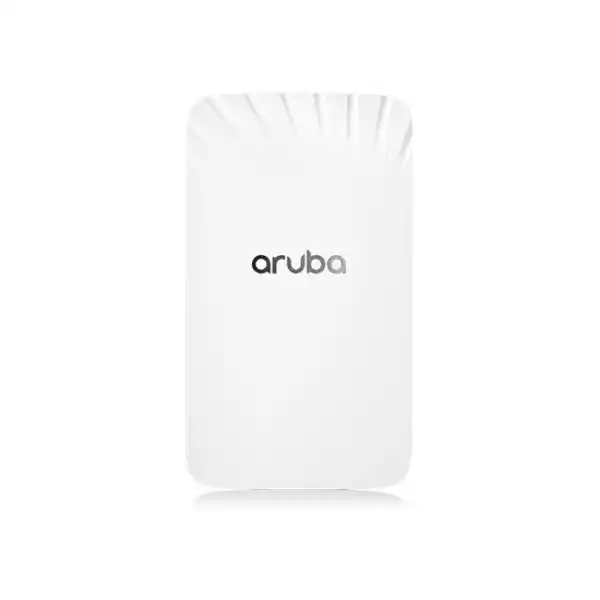
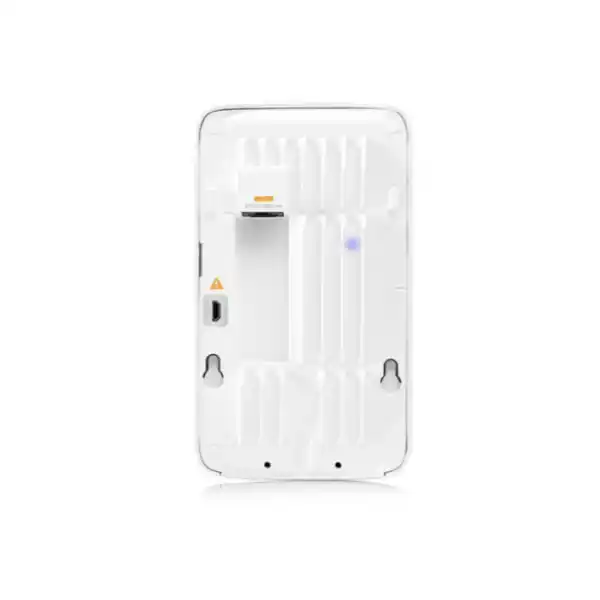
HPE Aruba Networking AP-503H in Dubai, UAE
A compact 500H Series access point for organisations that want managed Wi-Fi 6, two local Gigabit Ethernet ports and flexible wall or desk deployment without moving to the higher-port-count AP-505H. FourTeck can help confirm the correct regional unit, mounting hardware, power method, management approach and project bill of materials before purchase.
Confirm the right AP-503H package
Share quantity, deployment type, mounting preference, power source and management platform so the quotation includes the parts you actually need.
Direct answer for buyers
The HPE Aruba Networking AP-503H is a midrange 500H Series hospitality access point intended for indoor Wi-Fi 6 deployments where a compact wall- or desk-mounted device should provide both wireless coverage and local Ethernet connectivity. It supports two spatial streams on 2.4 GHz and 5 GHz, with two additional Gigabit downlink ports for nearby wired devices. Hotels, residences, small offices, remote-work locations and distributed branches may consider it when three total Gigabit Ethernet interfaces are sufficient. Before proceeding, buyers should confirm the correct regional part number, mount kit, PoE or DC power source, software version, cloud or on-premises management method and any required subscriptions or services.
What the AP-503H does
The AP-503H combines managed wireless access with local Ethernet connectivity in a format suited to rooms and small edge locations. Its dual-radio Wi-Fi 6 platform supports 2.4 GHz and 5 GHz operation concurrently, while the wired interface layout includes one Gigabit Ethernet uplink and two Gigabit Ethernet local ports. This makes the device useful where a single wall position can serve laptops, phones, small appliances, media endpoints or other Ethernet devices alongside wireless clients.
It is also part of an enterprise WLAN ecosystem rather than a standalone consumer access point. Deployment choices can include HPE Aruba Networking Central and other supported Aruba operating models. The practical value comes from matching the unit to the wider network design, including switching, VLANs, authentication, guest access, remote-site policy and support requirements.
Who should consider it
The AP-503H fits buyers who need more than basic room Wi-Fi but do not require the AP-505H’s larger wired-port count, 2.5 GbE uplink, PoE-out capability or USB interface. Hospitality operators may use it where each room benefits from its own access point and wired outlets. Universities and residence operators can use the same form factor in accommodation spaces. Distributed businesses can evaluate it for small offices or managed remote-work locations.
It is less suitable when a site needs Wi-Fi 6E or Wi-Fi 7, multi-gigabit uplink capacity, several PoE-powered local devices, four local Ethernet connections or features specifically tied to newer platforms. Those requirements should trigger a comparison with other Aruba models rather than automatically choosing AP-503H.
Business problems this model can help address
Room-by-room connectivity
Places the wireless radio close to users while retaining two local wired ports, reducing the need to treat Wi-Fi and room Ethernet as completely separate designs.
Distributed-site consistency
Supports enterprise management approaches that can help IT teams apply repeatable WLAN policies across many compact locations, subject to the selected platform and licensing.
Space limitations
Its wall-oriented hospitality form factor is useful where a ceiling access point and a separate small switch would be visually intrusive or operationally unnecessary.
Mixed wireless and IoT needs
Integrated Bluetooth 5 and Zigbee radio support can contribute to IoT-oriented designs when the surrounding Aruba architecture and application requirements are compatible.
Core capability band
OFDMA, target wake time and 802.11ax radio operation are designed to improve efficiency with compatible clients.
Two Gigabit downlink ports can connect nearby wired equipment without requiring a separate room switch in every design.
Supports WPA3 and Enhanced Open, with additional policy capabilities dependent on the wider Aruba deployment architecture.
Can be mounted to supported wall-box arrangements, directly to a wall, or used on a desk with the correct separately ordered accessories.
Is the AP-503H a good fit?
| Requirement | Suitable when | Confirm before ordering |
|---|---|---|
| Room or compact-site Wi-Fi | A 2×2 Wi-Fi 6 AP provides adequate capacity for the intended client profile. | Expected users, device mix, application traffic and RF design. |
| Wired endpoints | No more than two local Gigabit Ethernet ports are required at the AP position. | Whether PoE output, USB or four local ports are needed instead. |
| Power | 802.3af PoE or the correct 12V DC power arrangement is available. | Switch PoE budget, injector or adapter requirements and cabling. |
| Central operations | The organisation wants an Aruba enterprise management workflow. | Central subscription, controller/gateway architecture and software release. |
| Regional procurement | The correct regulatory domain is selected for the destination. | RW part number, quantity, warranty terms, availability and vendor lead time. |
Verified AP-503H specification summary
Figures below are model-specific where confirmed. Regional radio operation remains subject to local regulatory settings.
| Brand | HPE Aruba Networking |
|---|---|
| Product / model | AP-503H, 500H Series Hospitality Access Point |
| UAE-oriented regional variant | RW variant; HPE UAE currently lists ordering SKU R3V36A. Confirm before purchase. |
| Wireless type | Indoor dual-radio 2.4 GHz and 5 GHz 802.11ax, 2×2 MIMO |
| 5 GHz radio | Two spatial streams; up to 1.2 Gbps wireless data rate with HE80-compatible clients |
| 2.4 GHz radio | Two spatial streams; up to 287 Mbps with HE20. HE40 is supported but is not generally recommended for enterprise 2.4 GHz deployments. |
| Associated clients | Up to 256 associated clients per radio; practical design density depends on RF conditions, traffic and application needs. |
| BSSIDs | Up to 16 per radio |
| Uplink | 1 x 10/100/1000BASE-T RJ45, 802.3az EEE, 802.3af PoE-PD Class 3 |
| Local wired ports | 2 x 10/100/1000BASE-T RJ45 with 802.3az EEE; AP-503H does not provide the AP-505H PoE-PSE feature. |
| Power sources | 802.3af PoE or 12V DC. Required power accessories may be separate. |
| Maximum power | 10.0W on DC; 11.4W on 802.3af PoE |
| Integrated IoT radio | Bluetooth Low Energy 5.0 and Zigbee/802.15.4 support |
| Antennas | Two integrated semi-directional Wi-Fi antennas, optimized for vertical wall or desk orientation |
| Dimensions | 86 mm W x 40 mm D x 150 mm H, excluding mount bracket |
| Weight | 290 g, excluding mount bracket |
| Operating environment | 0°C to 40°C; 5% to 93% non-condensing humidity |
| Minimum software reference | ArubaOS / InstantOS 8.7.1.0 for AP-503H; ArubaOS 10.3.0.0 reference for AP-503H. Confirm current supported release for the target architecture. |
| Security / certification highlights | Wi-Fi CERTIFIED 6, WPA3, Enhanced Open (OWE), TPM; additional features can depend on deployment architecture and services. |
| Warranty guidance | HPE’s current warranty reference lists R3V36A under limited lifetime warranty coverage. Confirm the applicable terms, region and support entitlement in the final quotation. |
Configuration, licensing and accessory dependencies
The access point itself is only one part of a deployable solution. HPE’s current ordering information states that a mount kit is not included with the standard AP-503H base model, so the bill of materials should include the correct wall-box, wall or desk mounting accessory. Examples include the AP-500H-MNT1 single-gang adapter, AP-500H-MNTD desk adapter and AP-503H-MNT2 dual-gang wall-box adapter. The right accessory depends on the physical installation, and part numbers should be reconfirmed when quoting.
Power also needs to be designed deliberately. The AP-503H accepts 802.3af PoE through its Gigabit uplink or 12V DC power, but a suitable injector, switch PoE budget or AC/DC adapter may need to be ordered separately. Buyers should not assume that a power supply is bundled with every AP-503H variant.
Management and feature entitlements depend on how the WLAN is built. HPE Aruba Networking Central is one available management path and may require the appropriate subscription. Controller, gateway, policy and advanced service requirements are architecture dependent. FourTeck can help map the requested operating model to the hardware, subscription and service components that should appear on the quotation.
A practical purchase and deployment journey
Map the rooms or sites
List installation points, expected users, wired endpoints and the upstream switch location. This reveals whether AP-503H’s two local ports are sufficient.
Confirm architecture
Decide whether management will use Central, another supported Aruba approach, or a wider gateway/controller design. Check software and subscriptions.
Build the BOM
Include the correct RW device, mount kit, power method, subscriptions, support and installation items instead of quoting only the access point.
Pilot and validate
For larger deployments, validate RF coverage, cabling, authentication, roaming, wired-device behaviour and management workflows before broad rollout.
Document handover
Record serials, switch ports, AP names, locations, VLANs, subscriptions and support information so operations teams can manage the estate efficiently.
Wi-Fi 6 efficiency without oversizing the room AP
The AP-503H is a 2×2 Wi-Fi 6 access point, which is important context for capacity planning. Its 5 GHz radio supports up to a 1.2 Gbps physical-layer data rate with two spatial streams and an 80 MHz channel on compatible clients. The 2.4 GHz radio supports two spatial streams and up to 287 Mbps at HE20 in the enterprise-recommended narrow-channel context. These are radio data rates, not guaranteed application throughput, and real performance depends on client capabilities, contention, RF conditions, channel planning, upstream network capacity and protocol overhead.
For a guest room or small branch, the advantage is often not maximum headline throughput but proximity. A room access point can serve a smaller physical area, helping reduce reliance on distant corridor or ceiling APs. That can be useful in environments with walls, doors, furniture and varied building materials. The correct design still requires an RF plan; installing one AP in every room without considering channel reuse and transmit power can create its own interference problems.
Wi-Fi 6 features such as OFDMA and target wake time can improve efficiency with compatible devices. OFDMA allows channel resources to be divided into smaller units so multiple compatible clients can be scheduled more efficiently. Target wake time can help battery-powered devices coordinate when they need to communicate. The practical benefit depends on the client mix. A site dominated by older Wi-Fi 5 or legacy devices will not gain every Wi-Fi 6 efficiency feature equally.
Buyers should therefore size the AP-503H around the real user profile rather than the theoretical maximum of associated clients. The platform allows up to 256 associated clients per radio, but that figure is not a design target for a hotel room or compact remote office. Application mix, concurrent activity and service expectations matter more. FourTeck can help turn room counts and user assumptions into a more realistic quantity and placement discussion.
Why the two local Ethernet ports matter
Hospitality and residence deployments frequently need more than wireless connectivity. A room may contain an IP phone, IPTV endpoint, workstation, building-system device or other equipment that performs better or is easier to manage over Ethernet. The AP-503H provides two local 10/100/1000BASE-T ports in addition to its Gigabit uplink, allowing the wall position to act as a combined wireless and wired edge point.
This port layout is a meaningful selection factor between AP-503H and AP-505H. The AP-505H offers four local Gigabit ports, a 2.5 GbE uplink, PoE output on supported ports and a USB interface. AP-503H is intentionally simpler. Buyers who only need one or two wired endpoints may prefer to avoid paying for a larger feature set that will not be used. Conversely, if the room must power a VoIP handset or another device from the AP, or if more than two wired connections are required, AP-503H may be the wrong choice because its local ports do not provide the AP-505H’s PoE-PSE function.
The upstream switch design must also be checked. The AP-503H’s uplink is Gigabit Ethernet and supports 802.3af PoE input. That can simplify cabling because data and power share one cable when the switch or injector is suitable. However, the switch needs enough PoE budget for the planned AP count, and cabling quality should support the intended Ethernet distance and reliability. For refurbishments, existing room cabling should be tested rather than assumed to be suitable.
A procurement request that says only “AP-503H, quantity 100” can therefore miss important cost items. The full question is how those 100 units will be mounted, powered, connected, managed and supported. FourTeck can help build a bill of materials that reflects those practical details.
Management, security and IoT fit
Operational management
The AP-503H is designed for enterprise operation and can participate in HPE Aruba Networking management architectures. Central is relevant for organisations that want cloud-based oversight of distributed wireless infrastructure, while other supported deployment modes may suit existing Aruba estates. The key purchasing point is to align the AP with the organisation’s current or planned management platform before the hardware is ordered.
For multi-site estates, consistent templates, site naming, firmware policy, inventory and alerting can be as important as radio capability. Clarify subscription terms, gateway requirements and software support during design rather than treating management as an afterthought.
Wireless protection
The platform supports WPA3 and Enhanced Open, and the hardware includes a trusted platform module for protected storage of credentials, keys and boot code. Additional role-based policy, dynamic segmentation and traffic enforcement capabilities depend on the selected Aruba architecture and associated services. A buyer should therefore distinguish “supported by the platform” from “included automatically in every AP purchase.”
Authentication integration, guest access, VLAN design, RADIUS or ClearPass use, remote access tunnels and logging should be scoped as part of the network design when relevant.
IoT readiness
An integrated Bluetooth Low Energy 5.0 and Zigbee/802.15.4 radio can support IoT-oriented use cases when compatible applications and management components are available. Possible projects may involve sensors, asset-related services or location-aware workflows, but the AP alone does not create an IoT solution.
Buyers should define the IoT devices, protocol, application platform, data path and security policy first. If USB connectivity or PoE output to an IoT peripheral is required, AP-505H or another model may be a better fit.
Ideal environments and realistic use cases
Hotel guest rooms
Suitable where each room needs managed Wi-Fi plus one or two wired endpoints. The design should account for room construction, channel reuse, uplink cabling and the operational model for guest access.
Residence halls
Useful in student or staff accommodation where room-level wireless and Ethernet are required. Capacity planning should consider multiple personal devices per resident and high evening concurrency.
Small branches
Can be evaluated for compact satellite offices where central IT wants an Aruba-managed edge with limited local wired needs. Remote access and WAN architecture remain separate design questions.
Managed home-working sites
May fit enterprise teleworker programmes that provide corporate wireless and wired connectivity. Desktop mounting, power accessories and remote provisioning should be included in the package design.
Integration and operational considerations
The AP-503H should be evaluated as part of a wired and wireless system. Start with the access switch. Confirm that the switch port can provide 802.3af power, that the PoE budget remains adequate at the planned AP count, and that VLAN, trunk or access-port settings match the network architecture. Where a PoE injector is used instead, make sure the injector model and local power arrangement are appropriate.
Then consider identity and policy. Corporate users, guests, IoT devices and room equipment may require different network access policies. Authentication services, captive portal requirements, role mapping, segmentation and DNS/DHCP design should be documented. The AP can support enterprise security features, but the surrounding infrastructure determines how those capabilities are applied.
Finally, establish lifecycle operations: how firmware will be scheduled, who receives alerts, where configuration backups or templates are maintained, how replacement units will be provisioned and how subscription renewals are tracked. These questions are especially important for estates with hundreds of rooms or geographically distributed locations.
Questions to resolve before requesting a quotation
Quantity influences switch PoE budget, subscriptions, staging, delivery planning and support scope.
Knowing the wired endpoints helps verify that AP-503H has enough ports and that PoE output is not required.
The mount kit is a separate ordering item for standard base units and must match the installation method.
The power source affects switch design, injectors, adapters and the final bill of materials.
Central, gateway/controller and software decisions can change subscription and implementation requirements.
Switching, VLANs, authentication, guest access, WAN connectivity and existing Aruba infrastructure all affect deployment scope.
AP-503H procurement checklist
✓ Confirm AP-503H rather than AP-505H or another 500 Series model.
✓ Confirm RW regional version for the UAE destination and the manufacturer part number.
✓ Record required quantity and any pilot quantity separately.
✓ Select single-gang, dual-gang, direct-wall or desk mounting accessories.
✓ Confirm 802.3af PoE budget or 12V DC power accessories.
✓ Check whether two local Gigabit Ethernet ports are sufficient.
✓ Verify that local endpoints do not require PoE output from the AP.
✓ Confirm management platform, software release and subscription term.
✓ Document guest, corporate and IoT authentication or segmentation requirements.
✓ Confirm installation, configuration, staging and testing responsibilities.
✓ Include support or warranty requirements in the commercial review.
✓ Confirm current UAE availability, vendor lead time and delivery coordination.
How FourTeck can assist with sizing and configuration
A useful AP-503H quotation should reflect the deployment, not just a unit price. FourTeck can review the number of rooms or compact sites, expected wireless users, local Ethernet requirements, available wall-box type, switch PoE budget and current Aruba environment. This makes it easier to identify whether the AP-503H is the right model or whether a higher-port-count, multi-gigabit or newer-generation access point should be considered.
For projects that proceed with AP-503H, FourTeck can help coordinate the bill of materials around the regional AP variant, mounting hardware, power method, subscriptions and requested support services. Where configuration assistance is needed, the scope can be defined around WLAN settings, SSIDs, VLANs, authentication, guest access, adoption into the chosen management platform and basic validation. More complex controller, gateway, ClearPass, SD-WAN or multi-site policy work should be scoped separately so responsibilities and deliverables are clear.
You can review additional networking products from FourTeck, explore available technology services, or use the FourTeck contact page to share the project requirement.
UAE availability and support guidance
Contact FourTeck to confirm current UAE availability for the HPE Aruba Networking AP-503H and the exact regional ordering reference required for your project. Availability can depend on quantity, vendor lead time, the requested regulatory variant, mounting accessories, subscriptions and the commercial route used for the quotation. A unit shown on a manufacturer or international reseller website should not be treated as confirmation that the same quantity or variant is immediately available for a UAE project.
For accurate planning, provide the quantity, target deployment date, delivery location, preferred mounting method, power source and management architecture. If installation or configuration is required, include that in the request so it can be scoped separately from hardware supply. FourTeck can then discuss delivery coordination, staging, configuration and support options after the exact requirement is understood. Commercial pricing, warranty coverage and subscription terms should be confirmed in the final quotation rather than inferred from online references.
Dubai, Abu Dhabi, Sharjah and Ajman project coordination
FourTeck can discuss AP-503H requirements for organisations planning wireless deployments across Dubai, Abu Dhabi, Sharjah and Ajman as part of one UAE project. The same technical review should be applied across locations: correct regional hardware, suitable switch power, tested cabling, room or branch mounting, management architecture and a clear configuration scope. Delivery scheduling, site access, installation windows and support expectations may vary between locations, so they should be provided during quotation rather than assumed. Multi-site projects benefit from consistent naming, configuration templates, AP location records and subscription tracking, particularly when the same access point is repeated across accommodation rooms, branches or remote offices.
GCC Availability
Organisations planning AP-503H deployments across the GCC can ask FourTeck to review the requirement at project level rather than assuming that one regional SKU, licensing structure or delivery plan applies identically everywhere. Projects in the United Arab Emirates, Saudi Arabia, Kuwait, Qatar, Bahrain or Oman may involve different regulatory, procurement, logistics and service considerations. FourTeck can assist with requirement review, model selection, quotation coordination, mounting and power planning, subscription scope, configuration requirements and regional delivery discussions. Product availability, licensing, lead times, service visits and implementation scope can vary by country, quantity and project timing. For a useful quotation, provide the destination country, exact product or service requirement, quantity, preferred management platform, mounting method, power approach and expected deployment window. Buyers with requirements in Kuwait may also review FourTeck’s Kuwait technology presence as part of regional planning. Customs, local certification and installation dates should be confirmed through the applicable project route rather than assumed from online availability.
Africa Availability
For organisations sourcing HPE Aruba Networking AP-503H units for African locations, FourTeck can help structure the procurement discussion around the destination, exact regional variant, quantity, power and mounting requirements, management subscriptions and deployment support. Availability and fulfilment may change according to vendor lead time, shipping route, local regulatory requirements, project conditions and whether installation or configuration assistance is requested. A buyer should share the destination country, number of access points, intended use case, required delivery window and any support expectations before a commercial commitment is made. FourTeck can also help compare AP-503H with other Aruba options when local wired-port count, PoE output, multi-gigabit uplinks or newer wireless generations are required. Organisations planning East African deployments can review FourTeck resources for Kenya and Uganda, while broader regional enquiries can be discussed through the FourTeck Africa site. Local inventory, customs outcomes and onsite coverage should always be confirmed for the specific project.
Related options and adjacent services
HPE Aruba Networking AP-505H
Consider when four local Ethernet ports, a 2.5 GbE uplink, PoE output or USB connectivity are important. Do not treat it as a drop-in equivalent without checking power and feature needs.
Mounting accessories
Single-gang, dual-gang and desk mounting choices can be relevant. The correct kit depends on the room construction and AP-503H installation method.
HPE Aruba Networking Central
Cloud management may be part of the design for distributed sites. Subscription scope and supported architecture should be confirmed before purchase.
Installation and configuration
FourTeck can scope mounting, adoption, SSID/VLAN setup, authentication integration and validation where these services are required.
What buyers usually need to know before choosing AP-503H
A buyer researching AP-503H usually reaches the product after narrowing a larger question: how to deliver reliable wireless and wired connectivity into a small room, branch or remote-work space without installing multiple edge devices. The model is attractive because it is compact, uses Wi-Fi 6, provides two local Ethernet ports and can be wall or desk mounted with the appropriate accessory. Those characteristics make it especially relevant when each room or small site is treated as its own access zone.
Is AP-503H still a sensible Wi-Fi 6 choice?
It can be when the project already uses or prefers the Aruba enterprise ecosystem and the requirement is well matched to a 2×2 Wi-Fi 6 hospitality AP. Buyers should not select it merely because it is less expensive than newer models. Check lifecycle expectations, client requirements, desired wireless generation and management roadmap. A new greenfield deployment expected to operate for many years may justify comparing newer Wi-Fi 6E or Wi-Fi 7 options even if AP-503H is technically adequate today.
What is the real AP-503H versus AP-505H decision?
The comparison is not mainly about the Wi-Fi radio rate; both sit in the 500H family and are dual-radio 2×2 Wi-Fi 6 devices. The stronger distinction is wired connectivity and expansion. AP-503H has one Gigabit uplink and two local Gigabit ports. AP-505H has a 2.5 GbE uplink, four local Gigabit ports, PoE output capability and USB. If a room needs to connect and power multiple wired endpoints, AP-505H may justify its higher specification. If two local ports are enough, AP-503H avoids unnecessary complexity.
Another common question concerns licensing. The AP can participate in HPE Aruba Networking Central and other supported Aruba operating models, but buyers should not assume that every management subscription, policy service or gateway feature is included with the hardware. In a Central-managed design, the subscription term should be included in the commercial comparison because it affects lifecycle cost. In an existing Aruba environment, the current controller, gateway, software release and support status should be reviewed before expanding the estate.
Mounting is also frequently overlooked. Standard AP-503H ordering guidance says to add the appropriate mount kit. A hotel renovation might use a single-gang or dual-gang wall box, while a remote-work package may need the desk stand. This changes the per-site material list. The same applies to power: 802.3af PoE can simplify deployment, but only when the upstream switch has capacity. A desk deployment might instead require the correct 12V DC adapter. These accessories need to be priced and sourced with the access point if they are not already available.
Buyers also search for “AP-503H range” or “coverage,” but there is no single reliable distance that applies to every building. Wall composition, furniture, room geometry, channel plan, transmit power, interference and client radio quality change the result. The integrated antennas are designed for the AP’s intended vertical wall or desk orientation. In hospitality, the deployment model often aims to place the AP close to users rather than drive maximum range through multiple walls. A pilot or RF assessment is more useful than a generic distance claim.
For remote office use, the access point’s value extends beyond Wi-Fi. Aruba documentation describes remote access and microbranch-style deployments where policy and connectivity can be centrally orchestrated through the wider Aruba architecture. Whether that applies to a particular organisation depends on gateways, subscriptions, software and network design. If the requirement is simply “give a remote worker corporate Wi-Fi,” the technical team should still decide how authentication, VPN or WAN path, DNS, logging and device support are handled.
Price searches require similar caution. Public online figures can vary substantially by region, part number, reseller and date, and they may exclude VAT, shipping, subscriptions, mounts or power accessories. A price for a US unit should not be treated as the UAE transaction price for an RW variant. The commercial request should therefore identify the exact destination and bill of materials. FourTeck can use that information to provide a project-specific quotation rather than relying on a marketplace-style unit figure.
Finally, consider operational effort. A 100-room deployment is not just 100 APs: it is 100 physical locations, switch ports, serial numbers, configuration records, support references and lifecycle items. Buyers who plan the naming, management groups, subscription dates, firmware process and replacement workflow before rollout generally make the later operational phase easier. AP-503H can be a sound component in that design when its interface count and wireless generation fit the requirement.
Decision questions buyers ask during evaluation
Can I power the AP-503H from a normal PoE switch?
Yes, when the switch provides compliant 802.3af PoE and has sufficient PoE budget. The AP-503H maximum listed PoE power is 11.4W. Check the switch’s per-port standard, total budget and cable path. If no suitable PoE source exists, 12V DC is another supported method with the correct adapter.
Does it replace a small Ethernet switch in the room?
Sometimes, because it provides two local Gigabit Ethernet ports. It does not replace a switch when the room needs more than two local connections, PoE output to endpoints or switching features outside the AP’s role. List every intended wired endpoint before using AP-503H as the room’s only local Ethernet break-out.
Do I need Aruba Central?
Not every deployment is identical, but Central is a common management option and should be evaluated for cloud-managed estates. Existing Aruba controller or gateway environments may follow a different architecture. The correct subscription or licensing requirement depends on the selected operating model, so confirm it with the network design rather than assuming it is bundled.
What should I send for an accurate quote?
Send the number of APs, destination, deployment type, wall-box or desk mounting need, PoE or DC preference, management platform, subscription term, local wired-device count, installation requirement and target schedule. If replacing older Aruba APs, provide those models and the current software/controller details too.
Can it be used in a hotel with IPTV and IP phones?
Potentially, if the two local Gigabit ports meet the endpoint count and those devices do not require PoE output from the AP. Many IP phones require power, so that detail is critical. The network must also support the required VLAN, QoS, authentication and multicast or IPTV design where applicable.
How do I know whether AP-503H is too old for my project?
Compare the project’s expected service life with the wireless roadmap, client devices and Aruba platform strategy. AP-503H remains listed in current HPE material, but a long-life new build may still benefit from comparing newer generations. Selection should balance compatibility, lifecycle, feature need and total project cost rather than generation labels alone.
Why businesses contact FourTeck for this product
The value of assistance is mainly in avoiding incomplete or mismatched procurement. FourTeck can help clarify whether AP-503H fits the room or branch requirement, identify the correct UAE regional variant, confirm mounting and power accessories, review the management model and include required subscriptions or services in the quotation. This is especially useful when the buyer is upgrading from an older hospitality AP or deploying the same design across many rooms.
FourTeck can also help separate hardware supply from implementation scope. Some customers only need procurement and delivery coordination. Others need staging, mounting, adoption into an existing Aruba environment, SSID and VLAN configuration, authentication integration, testing or documentation. Defining those tasks before the purchase makes responsibilities clearer and reduces the risk that important work is omitted from the project plan.
For wider company information, visit About FourTeck. For a product-specific discussion, use the contact page and provide the deployment details listed in the procurement checklist.
Frequently asked questions
1. What type of access point is the HPE Aruba Networking AP-503H?
It is an indoor dual-radio Wi-Fi 6 hospitality access point in the 500H Series, designed for room, branch and remote-work style deployments that benefit from integrated wireless and two local Gigabit Ethernet ports.
2. How many Ethernet ports does AP-503H have?
It has one 10/100/1000BASE-T uplink and two 10/100/1000BASE-T local Ethernet ports. The two local ports do not provide the PoE output capability found on AP-505H.
3. Does the AP-503H support Wi-Fi 6?
Yes. It supports 802.11ax on 2.4 GHz and 5 GHz with 2×2 MIMO. The 5 GHz radio supports up to a 1.2 Gbps PHY rate with compatible HE80 clients.
4. Is a mounting kit included?
HPE’s standard AP-503H ordering guidance states that a mount kit should be added separately. The required kit depends on whether the AP will use a single-gang wall box, dual-gang wall box, direct wall installation or desk placement.
5. How is AP-503H powered?
The model supports 802.3af PoE through its uplink or 12V DC power. Confirm the switch PoE budget or the correct adapter/injector and do not assume the required power accessory is bundled.
6. What is the UAE or RW ordering reference?
HPE’s current UAE and QuickSpecs information lists R3V36A for the AP-503H (RW) Unified Hospitality AP. Confirm the regional variant and current ordering status in the final quotation.
7. Does AP-503H work with HPE Aruba Networking Central?
It can be managed through supported Aruba management architectures including Central. The required subscription, gateway or software arrangement depends on the chosen design and should be confirmed before purchase.
8. When should I choose AP-505H instead?
Consider AP-505H when the project needs four local Ethernet ports, a 2.5 GbE uplink, PoE output on local ports or a USB host interface. The two models should be compared against actual room and endpoint requirements.
9. How can I get a Dubai or UAE quotation?
Send FourTeck the quantity, destination, mounting method, power choice, management platform, subscription term, wired-device requirements and any installation or configuration scope. FourTeck can then confirm current availability and prepare a project-specific quotation.
Plan the AP-503H purchase around the complete room design
Share the site count, local wired endpoints, mount type, PoE or DC power method and management preference. FourTeck can help confirm whether AP-503H is the right model and build a quotation that includes the required accessories and service scope.

Reviews
There are no reviews yet.