
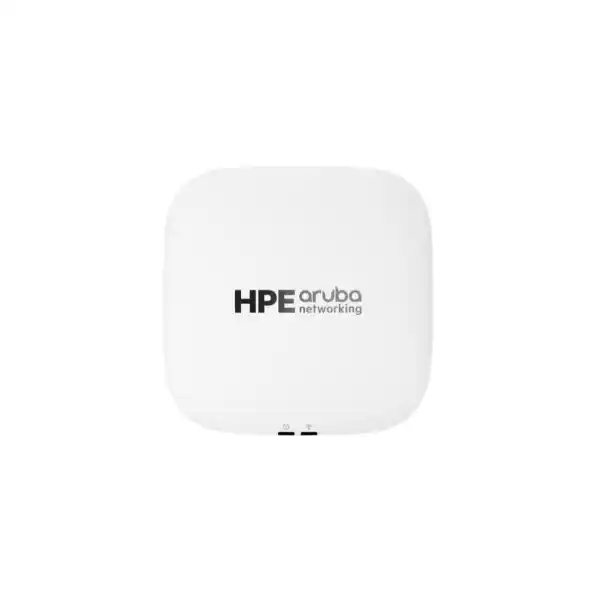
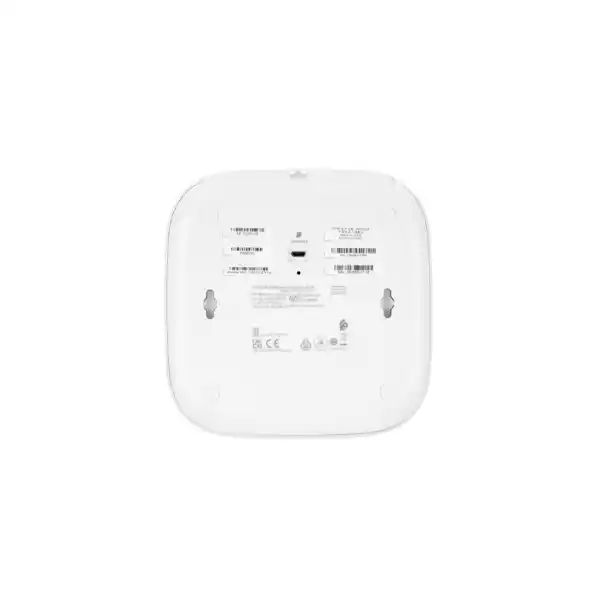

maximum combined peak data rate
one uplink and two downlink ports
dual 2×2 radios on 2.4 and 5 GHz
USB cellular modem is sold separately
R8N04A shown in HPE UAE product listings
Direct answer for buyers
The HPE Aruba Networking AP-503R is a remote access point in the 500R Series for indoor teleworker, small-office, and compact branch deployments. It provides dual-radio 2×2 Wi-Fi 6, one Gigabit Ethernet uplink, two Gigabit Ethernet downlinks, and a USB host interface that can support selected accessories such as the separately purchased HPE Aruba Networking USB LTE modem. Organisations should consider it when they want centrally governed connectivity at distributed sites without installing a larger branch appliance at every location. Before purchasing, confirm the regulatory SKU for the destination, management architecture and licensing, power option, required accessories, broadband or cellular design, and whether the AP-503R has sufficient wired ports and Wi-Fi capacity for the actual site.
What the AP-503R does
The AP-503R extends managed wired and wireless access to locations where users may be relying on consumer broadband, a temporary internet connection, or a small local Ethernet setup. Its role is not simply to create another Wi-Fi network. In the HPE Aruba Networking architecture, the 500R family is positioned for remote work and small branch use, where central policy, provisioning, and visibility are important. The device can serve notebooks, phones, tablets, and other Wi-Fi clients while its two downlink Ethernet ports give a practical connection option for equipment such as a desktop, VoIP endpoint, printer, or another suitable wired device.
HPE also positions the 500R family for zero-touch deployment and microbranch scenarios. That can reduce the need for an engineer to manually configure every remote unit on site. The exact feature set depends on the chosen management platform, software version, licensing, configuration, and broader network design, so buyers should treat the AP as one component of a managed solution rather than an isolated plug-and-play router.
Who should consider it
The AP-503R is most relevant to organisations supporting dispersed employees, micro offices, kiosks, project sites, temporary facilities, and branches with modest density and a limited number of wired endpoints. It is particularly useful when IT wants the remote network to follow corporate policy and management practices rather than leaving each user to operate a standalone consumer access point.
It may be less suitable when the location requires a large number of Ethernet ports, high client density, Wi-Fi 6E or Wi-Fi 7 operation, multi-gigabit access, outdoor installation, ruggedised environmental tolerance, complex local routing, or a dedicated high-performance branch gateway. In those cases, a different HPE Aruba Networking access point, switch, or gateway architecture may be more appropriate. FourTeck can help compare the AP-503R against the actual site requirement rather than selecting it by model name alone.
Business problems this remote access point can help address
Inconsistent home-office networking
Remote users often rely on different consumer routers and locally created wireless settings. A centrally managed remote AP can give IT a more standardised approach to SSIDs, access policy, security posture, and troubleshooting. The benefit depends on how the organisation configures and licenses the wider HPE Aruba Networking environment.
Small sites without local IT
A micro office may need secure corporate connectivity but may not justify an engineer visit for every change. HPE positions the 500R family with zero-touch provisioning, allowing centrally prepared configuration to be applied after the device is connected. Internet reachability, subscriptions, and deployment preparation still need to be planned correctly.
Need for wired and wireless access
Remote environments frequently include a mixture of Wi-Fi devices and fixed equipment. Two 1GbE downlink ports can reduce the need for an extra small switch when only a few wired endpoints are required. Buyers should count actual devices before ordering because the AP is not a substitute for a larger access switch.
Secondary WAN requirement
The supported HPE Aruba Networking USB LTE modem provides an optional cellular path for designs that require LTE connectivity. The modem is sold separately, and mobile service, regional radio support, carrier compatibility, antenna placement, data plans, and failover behaviour must be confirmed for the destination.
Core capabilities at a glance
OFDMA, bidirectional MU-MIMO, target wake time, and 2×2 radio operation support efficient client access in low-to-medium-density remote environments.
The family supports WPA3, Enhanced Open, policy-oriented segmentation features, and a trusted platform module for protection of credentials, keys, and boot code.
The 500R family is designed for deployment and management through HPE Aruba Networking management options, including cloud-native operational models.
Three Gigabit Ethernet ports, USB host connectivity, DC input, USB-C power input, and optional USB LTE support broaden deployment choices for compact sites.
AP-503R fit matrix
| Requirement | Suitable when | Confirm before ordering |
|---|---|---|
| Remote worker or micro office | The site needs managed Wi-Fi plus a few wired connections. | Internet access, tunnel design, user count, security policy and management licensing. |
| Low-to-medium client density | Dual 2×2 Wi-Fi 6 radios and 80 MHz on 5 GHz match expected demand. | Real concurrency, application mix, RF environment and coverage target. |
| Two wired endpoints | No more than two local downlink connections are required directly from the AP. | Whether PoE, VLANs, additional switch ports, or higher Ethernet speeds are needed. |
| Optional cellular path | A supported USB LTE modem is acceptable for the intended design. | Modem SKU, carrier support, SIM/data plan, regulatory region and failover configuration. |
| Centralised operations | IT wants policy, visibility, and lifecycle control across many dispersed locations. | HPE Aruba Networking Central or alternative supported management model, subscription tier, software release and organisation architecture. |
Verified AP-503R technical information
The table below focuses on information published by HPE for the 500R Series and the AP-503R. It separates the base hardware from optional accessories and region-dependent details so that a quotation can be built around the correct deployment rather than assuming every feature is included.
| Brand | HPE Aruba Networking |
|---|---|
| Product | AP-503R Remote Access Point, 500R Series |
| RW manufacturer SKU | R8N04A |
| Deployment | Remote, indoor; desktop orientation is the primary design position. |
| Wireless generation | Wi-Fi 6 (802.11ax) |
| Radios | Dual-radio 2×2, 2.4 GHz and 5 GHz, dual concurrent operation |
| Channel bandwidth | 20/40 MHz at 2.4 GHz; 20/40/80 MHz at 5 GHz |
| Maximum combined peak data rate | 1.49 Gbps |
| Antennas | Integrated omnidirectional antennas for 2×2 MIMO, optimised for horizontal desk mounting |
| Ethernet | E0: 1 × 10/100/1000BASE-T uplink; E1-E2: 2 × 10/100/1000BASE-T downlinks |
| USB host | USB 2.0 Type-A; up to 5W/1A to an attached compatible device |
| Cellular option | HPE Aruba Networking USB LTE modem option, sold separately |
| Console | Proprietary serial console interface using a micro-B USB physical jack; adapters are optional |
| Power input | 12V DC circular input or 5V DC USB-C input; confirm source capability and included local plug for the ordered variant |
| Security certifications/features | Wi-Fi CERTIFIED 6; WPA/WPA2/WPA3 support, WPA3 Enterprise with CNSA option, Personal SAE, Enhanced Open OWE; configuration dependent |
| Supported OS baseline | HPE Aruba Networking Wireless Operating System 10.5.0.0 or later, subject to current platform support documentation |
| Dimensions | 150 × 150 × 39 mm |
| Unit weight | 320 g |
| Operating temperature | 0°C to 40°C |
| Warranty guidance | HPE documentation lists a limited lifetime warranty for the series; exact entitlement, terms, and regional service conditions should be confirmed for the supplied unit. |
| UAE availability | Contact FourTeck to confirm current availability, quantity, lead time, regulatory variant, and quotation. |
Configuration, licensing, compatibility, and regional dependencies
The most important procurement mistake to avoid is treating the AP-503R hardware SKU as the complete remote-network solution. HPE positions the 500R family as centrally managed infrastructure, and the operating experience depends on the chosen HPE Aruba Networking software and management model. HPE Aruba Networking Central is commonly used for cloud-native deployment, policy, monitoring, and microbranch functions. Subscription requirements and feature tiers should therefore be reviewed as part of the bill of materials rather than after the hardware arrives.
The regulatory domain also matters. The AP-503R exists in multiple region-specific variants, including RW, US, IL, JP, EG, RW1, and ID versions. The HPE UAE Store lists the RW R8N04A model, but buyers should still confirm the destination country and any current regulatory-domain guidance before a cross-border project. Available channels and transmit behaviour depend on the configured country. Do not purchase a cheaper region variant from another market simply because the enclosure looks identical.
Accessories are another dependency. LTE requires the supported USB modem and an appropriate cellular service; IoT radio expansion may require a compatible USB module; console access may require an adapter; and power accessories or localisation may vary by order. If the site needs additional Ethernet ports, PoE to downstream devices, an external antenna, multi-gigabit uplinks, 6 GHz, ruggedisation, or outdoor operation, those needs point toward a different architecture. FourTeck can review these dependencies before quotation.
A practical deployment and purchase journey
Define each site
Record user count, client types, wired endpoints, room layout, broadband type, local power, and whether the site is permanent or temporary.
Confirm architecture
Decide how traffic should reach corporate applications, which security policies apply, and whether cloud management, tunnelling, local breakout, or microbranch functions are required.
Build the BOM
Confirm R8N04A or another correct regulatory SKU, management subscriptions, power localisation, LTE modem, cables, console adapters, and any complementary switching.
Stage and provision
Prepare device assignment, groups, SSIDs, network policy, authentication, firmware baseline, and rollout instructions before units are distributed.
Validate operations
Test wireless access, wired downlinks, corporate application reachability, monitoring visibility, upgrade process, and LTE failover if cellular backup is included.
Centralised remote networking without a large branch footprint
The AP-503R makes the most sense when the organisation is solving an operational problem rather than simply adding another access point. A dispersed workforce creates hundreds or thousands of small network edges. Each location may use a different ISP, router, cabling layout, and local user behaviour. Without a managed approach, IT support teams spend time diagnosing unfamiliar home or branch networks and cannot easily separate corporate connectivity from local personal traffic.
HPE positions the 500R Series for remote work and small branches with cloud-managed operation and zero-touch provisioning. In a prepared deployment, the device can be shipped to a user or small site, connected to internet service, and brought under central control without requiring that end user to become the network administrator. This is especially useful for organisations that have standard security, authentication, segmentation, or application-access requirements across many locations. The operational value comes from consistency: a support team can work with a known device, known policy framework, and known telemetry rather than a different retail router at every address.
Remote access design still needs governance. Some organisations want traffic tunnelled back to a data centre, while others prefer direct cloud access with security policy applied through cloud-delivered services. Microbranch functions can support more advanced traffic handling, but the final design is configuration and license dependent. WAN health visibility, route or tunnel orchestration, policy-based routing, and multiple active tunnels are features associated with the HPE Aruba Networking remote branch architecture rather than automatic behaviours of an unconfigured unit.
For procurement teams, the key question is therefore not “Does the AP-503R have Wi-Fi 6?” but “Does this model fit our remote-site operating model?” If the answer includes a small number of clients, one broadband uplink, a few wired devices, central lifecycle management, and optional LTE, the product can be a strong fit. If the site needs local switching capacity, PoE endpoints, redundant wired WANs, complex local services, or substantially higher throughput, FourTeck can help define a more suitable combination of access points, switches, and gateways.
Wi-Fi 6 efficiency, user experience, and security controls
The AP-503R uses two spatial streams on each of its 2.4 GHz and 5 GHz radios. HPE specifies a maximum of 574 Mbps on the 2.4 GHz radio with a compatible two-stream HE40 client and up to 1.2 Gbps on the 5 GHz radio with a compatible two-stream HE80 client. These values describe radio data rates under supported conditions, not an assurance that an end user will obtain the same application throughput. Real results depend on client capability, channel width, interference, distance, WAN speed, security processing, contention, and the applications in use.
Wi-Fi 6 introduces scheduling and efficiency mechanisms that are useful in environments with multiple active clients. OFDMA allows radio resources to be divided into smaller units so several client transmissions can be handled more efficiently. Bidirectional MU-MIMO supports simultaneous multi-user communication where client support and conditions allow. Target wake time can help compatible battery-powered devices coordinate when they wake to communicate, reducing unnecessary airtime use and potentially improving device power efficiency. These capabilities are valuable, but they work best when the RF environment is planned rather than when the AP is hidden under a desk or placed beside sources of interference.
Security is equally important in a remote deployment because the device may sit outside a controlled corporate office. HPE lists WPA3, Enhanced Open, and policy-enforcement capabilities for the 500R family. A trusted platform module is used to protect credentials, keys, and boot code. These platform capabilities give network architects tools for stronger access control, but they do not remove the need for secure identity design, appropriate authentication, certificate management where used, role policy, patching, and monitoring.
The AP-503R’s integrated antennas are optimised for horizontal desk mounting. HPE notes that wall mounting is possible but can compromise RF coverage and range because the antenna pattern is not optimised for that orientation. This is a practical detail that should influence installation. A well-positioned desktop AP with clean RF conditions will usually be more useful than the same AP placed for convenience behind furniture or inside a cabinet. For unusual spaces, ask FourTeck whether a purpose-built ceiling, wall, hospitality, outdoor, or directional-antenna model is more appropriate.
Wired access, USB expansion, and optional LTE
One reason the AP-503R differs from a typical ceiling access point is its combination of remote Wi-Fi and desktop connectivity. The E0 port is the wired uplink, while E1 and E2 provide two Gigabit Ethernet downlinks. This arrangement suits a remote desk or tiny branch where a small number of devices should use wired connections. For example, a corporate laptop dock and a voice endpoint may be connected by Ethernet while mobile devices use Wi-Fi. The exact VLAN, role, or network policy on those ports depends on configuration.
The two downlink ports should not be mistaken for a replacement for a branch access switch. If the site has surveillance equipment, multiple workstations, IP phones, printers, access-control devices, or other wired infrastructure, a proper switch may still be required. The AP’s ports are Gigabit Ethernet; buyers requiring 2.5GbE or higher wired speeds should assess newer or different platforms. Likewise, downstream PoE requirements must be handled with the correct network design rather than assumed from the presence of an RJ-45 connector.
The USB 2.0 Type-A host port can source up to 5W/1A and is intended for compatible peripherals. HPE lists the R8F34A USB LTE modem as an option for access points and gateways, and an R8G76A USB extender cable kit is also listed. The LTE modem provides a practical cellular option, but the full solution includes more than the dongle: a supported cellular network, SIM, data service, suitable signal, carrier compatibility, regional approval, and the correct failover or routing configuration are all necessary. HPE describes the modem as supporting LTE Cat 12 in the 500R context.
USB expansion can also support IoT use cases with compatible modules, including Bluetooth 5 and 802.15.4/Zigbee capability when the appropriate radio dongle is used. Again, the word “optional” matters. The AP-503R itself should not be sold as if every external modem or IoT radio is built in. FourTeck can include the required accessory SKUs in the quotation only after the intended application is clear.
Suitable business environments and use cases
Managed home office
A remote employee can have corporate Wi-Fi and selected wired connections under central IT policy while continuing to use local broadband. This is useful for executives, contact-centre staff, specialist users, or other employees whose connectivity needs are more controlled than a standard consumer-router setup.
Small branch or satellite office
A tiny office with modest client density and only a few wired endpoints may use the AP-503R as the local wireless edge, provided the selected management and WAN architecture meets the organisation’s routing, security, and resilience requirements.
Temporary business location
Project rooms, pop-up work areas, short-term offices, or temporary facilities can benefit from a portable desktop form factor and central provisioning. Availability of local broadband, power, and any LTE backup should be checked before deployment.
Retail or service micro-site
A very small service point that needs a handful of managed wireless and wired endpoints may be a fit. Buyers should validate coverage, endpoint count, payment or compliance requirements, and whether dedicated switching or gateway functions are necessary.
Distributed professional teams
Consulting, engineering, finance, healthcare administration, and other dispersed teams may use remote APs where corporate application access and network policy need to be more consistent across employee locations. Sector-specific compliance requirements must be designed separately.
Business-continuity workspace
A prepared alternate workspace can use a pre-provisioned remote AP so authorised staff have a familiar network configuration when a primary location is unavailable. Cellular backup may add resilience where supported, but it should be tested rather than assumed.
Integration and operational considerations
The AP-503R should be evaluated as part of the complete access architecture. Start with identity: will users authenticate with enterprise credentials, certificates, a captive portal, device profiles, or another approved method? Then define segmentation. Corporate users, guest users, IoT devices, and wired endpoints may need different policy treatment. HPE Aruba Networking supports role-based and dynamic segmentation capabilities in its wider platform, but the intended policy model must be mapped to the selected licenses, software, gateways, and security services.
Next consider WAN behaviour. A remote site may need direct internet access, tunnels to enterprise infrastructure, access to SaaS, and connectivity to private applications at the same time. The route design should account for DNS, latency, bandwidth, failover, security inspection, and user experience. If LTE is included, decide whether it is primary connectivity, emergency backup, or an out-of-band option. Data caps and mobile-network performance may influence which applications are permitted during failover.
Operational ownership should also be clear. Central teams need a process for initial assignment, firmware control, monitoring, alerts, user support, replacement, and decommissioning. If APs are sent to home users, maintain an asset record and provide simple instructions for power, cabling, and placement without exposing unnecessary administrative controls. In regulated environments, agree how configuration logs and security events are retained.
Finally, plan physical placement. The integrated antennas are designed for horizontal desk orientation. Avoid enclosing the AP in metal furniture, placing it behind large displays, or positioning it beside microwave ovens, dense cabling, or other sources of interference. If a remote site has several rooms or reinforced walls, a single AP-503R may not provide the desired coverage. A basic site review or RF assessment can prevent a procurement choice based solely on floor area.
Questions buyers should resolve before requesting a quote
A one-user home office and a fifty-site rollout have different staging, licensing, logistics, and support requirements.
Count concurrent Wi-Fi devices and confirm whether two Ethernet downlink ports are sufficient.
Identify ISP type, router or modem handoff, public/private addressing constraints, and whether LTE is required.
Confirm HPE Aruba Networking Central or another supported approach, subscription duration, and required feature tier.
For UAE procurement, R8N04A RW is a relevant HPE-listed model, but destination and current regional rules still need confirmation.
Decide whether the quotation should include configuration, staging, remote assistance, onsite coordination, knowledge transfer, or ongoing support.
Procurement checklist for the AP-503R
✓ Confirm the exact manufacturer SKU and regulatory domain for each destination.
✓ State the required quantity and whether units will be staged centrally or shipped to users.
✓ Record the number of concurrent Wi-Fi clients expected at each location.
✓ Count wired endpoints and verify that two 1GbE downlink ports are enough.
✓ Confirm the HPE Aruba Networking management platform, license tier, and subscription term.
✓ Define SSIDs, authentication, segmentation, tunnel, and local-breakout requirements.
✓ Confirm broadband handoff and any upstream router, modem, or firewall dependencies.
✓ Decide whether the R8F34A USB LTE modem or other USB option is required.
✓ Verify local cellular carrier, SIM, data plan, and regional modem compatibility if LTE is planned.
✓ Confirm power source, plug localisation, and whether spare power adapters are needed.
✓ Review placement, operating temperature, and indoor-environment suitability.
✓ Include installation, configuration, staging, testing, documentation, and support scope where required.
✓ Confirm current UAE lead time and warranty/service entitlement before purchase.
How FourTeck can assist with AP-503R planning
FourTeck can help turn an AP-503R enquiry into a procurement-ready requirement. The first step is to establish whether the product is being used for a single remote executive, a standardised work-from-home programme, a fleet of micro branches, a temporary-location project, or a mixed use case. That context influences the number of units, the management subscription, the expected configuration template, the WAN approach, and whether accessories such as LTE modems are necessary.
For multi-site projects, FourTeck can help structure a bill of materials that separates the AP hardware from licenses, power options, USB accessories, console accessories, and any switches or gateways needed elsewhere in the design. This is important because the presence of a USB port or central-management capability does not mean the corresponding accessory or subscription is automatically included. A clear BOM makes commercial comparison easier and reduces surprises during deployment.
Configuration assistance can be discussed as part of the quotation. Typical preparation may include device grouping, SSID and role planning, uplink assumptions, remote-site templates, firmware considerations, and test criteria. The actual scope depends on the customer’s existing HPE Aruba Networking environment, credentials, design authority, and support model. For larger transformations, use FourTeck’s networking and technology services to discuss planning, installation, migration, and support requirements.
Buyers can also review FourTeck product options when the AP-503R is only one part of a broader branch or wireless project. For a quotation, provide destination, quantity, deployment type, management requirements, desired subscription term, required accessories, and target schedule through the FourTeck contact team.
UAE availability and support guidance
The HPE UAE Store lists the AP-503R (RW) under manufacturer SKU R8N04A, which makes that regional-worldwide model a relevant starting point for UAE enquiries. That listing does not establish FourTeck stock, delivery date, or a fixed local selling price. Availability can change with quantity, vendor lead time, regulatory requirements, channel supply, and project timing. Contact FourTeck to confirm current UAE availability before treating the model as committed to a rollout.
For a practical quotation, share the number of units, deployment locations, management subscription term, accessory requirements, and whether configuration or installation assistance is needed. Power localisation should also be confirmed because AP-503R ordering options include different regional plugs. Delivery and project coordination can be discussed after the exact requirement is established. If a customer already operates HPE Aruba Networking Central or another supported HPE Aruba management architecture, provide the existing tenant and license context so compatibility and scope can be reviewed.
Dubai, Abu Dhabi, Sharjah, and Ajman project coordination
Organisations planning AP-503R deployments in Dubai, Abu Dhabi, Sharjah, and Ajman can approach the requirement as a single UAE programme rather than a series of disconnected purchases. FourTeck can review site counts, user profiles, connectivity types, subscription requirements, accessories, and rollout priorities so that the same architecture is applied consistently where appropriate. Logistics, installation, configuration, and support scope should be confirmed in the quotation because service requirements can differ between a single device for an executive home office and a coordinated multi-site deployment. For projects that extend beyond the AP itself, FourTeck can also discuss switching, network security, connectivity, and broader infrastructure planning through its UAE technology solutions team.
GCC Availability
For GCC projects, the AP-503R can be evaluated for distributed offices and remote users across markets such as the United Arab Emirates, Saudi Arabia, Kuwait, Qatar, Bahrain, and Oman, but the exact regulatory model and ordering route must be checked for the destination. HPE publishes country-specific regulatory support, and available Wi-Fi channels can vary by configured country. FourTeck can help review the business requirement, model selection, subscription term, accessories, configuration scope, installation planning, and quotation coordination for regional deployments. Buyers should provide the destination country for every unit, the required quantity, deployment type, local power expectations, desired HPE Aruba Networking management model, and whether LTE accessories are part of the design. Product availability, licensing, delivery schedules, vendor lead times, service visits, and project scope can vary by country and quantity. No cross-border rollout should assume that one regulatory SKU, power plug, cellular modem, or delivery schedule applies everywhere without confirmation. For Kuwait-specific project enquiries, organisations may also use FourTeck Kuwait resources while keeping the overall architecture consistent.
Africa Availability
For organisations operating across Africa, AP-503R procurement should begin with the destination and operating conditions rather than with a single global parts list. FourTeck can help businesses assess remote-office use cases, hardware variants, HPE Aruba Networking management subscriptions, USB accessories, power requirements, deployment preparation, configuration scope, and support needs for projects in East Africa and other regions. Availability and fulfilment can depend on the country, regulatory domain, quantity, vendor lead time, shipping arrangement, cellular-network compatibility, local power standards, and the customer’s preferred installation schedule. If LTE is part of the design, confirm modem support, carrier service, SIM provisioning, and signal expectations separately from Wi-Fi planning. Buyers should share the exact destination country, number of units, required management term, wired-client needs, preferred rollout date, and any staging or onsite-support expectations before quotation. FourTeck does not assume local inventory or guaranteed delivery. Organisations can review FourTeck Africa technology support, along with dedicated Kenya project resources where relevant.
Related products, accessories, and project options
HPE Aruba Networking USB LTE Modem R8F34A
A listed optional cellular modem for supported access points and gateways. Confirm regional carrier support, SIM/data service, and whether LTE is intended for primary or backup use.
USB Extender Cable Kit R8G76A
An optional cable kit associated with the USB LTE modem. It may help with physical modem placement where direct attachment is inconvenient; deployment suitability should be checked.
AP-AC18-12B R9D91A
A 12V/18W wall-wart style power adapter option. The ordered AP variant may include an AC adapter and localised plug, so confirm whether a separate or spare adapter is actually required.
AP-503 campus access point
A related Wi-Fi 6 model intended for campus deployment rather than the same remote desktop role. It should not be treated as a drop-in equivalent; mounting, interfaces, and deployment architecture differ.
HPE Aruba Networking Central
Cloud-native management is a key operating option for 500R remote deployments. Confirm subscription tier, term, tenant architecture, and required microbranch features as part of the purchase.
Installation and configuration support
FourTeck can discuss staging, templates, policy planning, rollout coordination, testing, and documentation when the customer wants more than hardware supply.
Why businesses contact FourTeck for this requirement
A remote-access-point project often looks simple until licensing, regional SKUs, internet handoff, LTE, and support are added. FourTeck focuses the discussion on the actual requirement: how many sites are involved, how users connect, which applications must remain available, what network policy already exists, and how the customer wants to manage the devices after deployment. That requirement-first approach helps identify whether the AP-503R is appropriately sized or whether another access point, switch, or gateway is necessary.
FourTeck can also help separate what is standard from what is optional. The AP-503R includes its core Wi-Fi and Ethernet hardware, while items such as the USB LTE modem, extender cable, console adapters, management subscriptions, and certain service activities are distinct choices. For procurement teams, this creates a clearer bill of materials and a better basis for comparing quotations.
Where customers require assistance beyond supply, configuration, staging, installation planning, migration, or support coordination can be defined as a scope rather than implied. This is useful for multi-site rollouts where consistency matters. To understand FourTeck’s broader business and service approach, buyers can visit the FourTeck company information page and then submit the AP-503R requirement for a current quotation.
What buyers usually need to understand before choosing the AP-503R
The AP-503R is often researched by buyers who are comparing three different ideas at once: a normal Wi-Fi access point, a home-office router, and a compact branch platform. It sits closest to the enterprise remote-access role. The device provides Wi-Fi 6 and wired ports, but its value comes from being deployed as part of an HPE Aruba Networking environment where IT can apply policy and manage remote sites consistently. A buyer who only needs inexpensive local Wi-Fi with no central enterprise management may be solving a different problem.
One common question is whether 1.49 Gbps means the user will receive a 1.49 Gbps internet connection. It does not. HPE describes 1.49 Gbps as the maximum combined data rate for the radios. The WAN service might be 100 Mbps, 500 Mbps, or another speed, and actual Wi-Fi throughput will vary with client hardware, signal quality, channel width, interference, contention, and protocol overhead. This distinction matters because upgrading the AP cannot compensate for an undersized internet circuit or poor RF placement.
Another frequent comparison is between the AP-503R and a larger branch gateway. The remote AP can support sophisticated managed networking within the HPE Aruba architecture, including microbranch-related functions, yet its physical connectivity remains compact: one Gigabit uplink and two Gigabit downlinks. A site that needs eight or twenty-four wired ports, PoE phones and cameras, redundant wired uplinks, or complex local services should be designed with appropriate switching and gateway hardware. The AP can still be part of that environment, but it should not be forced into a role beyond its interface capacity.
Licensing is another area where buyers should prepare early. HPE Aruba Networking Central is a prominent management option for 500R remote deployments. The required subscription tier and term depend on which operational features the organisation needs. Procurement should therefore request a quote for the intended managed solution, not only the R8N04A hardware. If the organisation already has HPE Aruba Networking Central, share the existing license model and tenant design so the new APs can be assessed in context.
The RW suffix also causes questions. HPE sells several AP-503R regional variants because wireless regulation differs by country. The R8N04A RW model is shown on the HPE UAE Store and is listed in HPE ordering documentation as a broad regional-worldwide option, subject to exclusions and current vendor rules. This does not mean buyers should freely move the device between countries. Channel availability and regulatory operation are country dependent, so destination must remain part of the order.
Buyers also search for AP-503R pricing, but current transaction prices vary widely by reseller, region, subscription choice, and accessory list. A low hardware-only web price may not include the correct local variant, management subscription, LTE option, installation, or support. For Dubai and UAE procurement, the useful comparison is the total configured requirement. Share quantity, subscription term, accessories, and service scope with FourTeck so the quotation can be compared on a like-for-like basis.
Finally, consider lifecycle and support. The HPE documentation reviewed for the 500R Series remains current and identifies AP-503R support in HPE Aruba Networking Wireless Operating System 10.5.0.0 or later, subject to the current support matrix. Software compatibility should be checked at deployment time because support changes as releases evolve. A central rollout plan should include firmware policy, monitoring, replacement process, and ownership for users who are outside the main office. These operational details often determine whether a remote-network project is easy to maintain long after the hardware purchase.
Decision questions that matter before deployment
How do we know whether one AP is enough for a remote site?
Do not decide from floor area alone. Count active users, client devices, room layout, walls, interference, application demand, and the expected position of the AP. A small open office may be well served by one unit, while a similarly sized location with dense walls or several rooms may need another design. The AP-503R’s antennas are intended for horizontal desk placement, so physical orientation also affects the decision.
What happens if the employee’s broadband router changes?
The AP-503R still depends on a working upstream connection. If the ISP modem, router, addressing method, firewall behaviour, or handoff changes, the remote AP may need to re-establish its connectivity and tunnels according to the configured design. Standard rollout instructions should explain the required Ethernet connection and basic troubleshooting steps. For critical users, optional LTE may be considered as a secondary path, but it requires separate planning.
Should we buy the AP first and add HPE Aruba Networking Central later?
For a managed remote-network project, it is better to decide the management and licensing model before hardware purchase. Central policy, zero-touch preparation, monitoring, and microbranch functions are part of the operating design. Buying only hardware can delay deployment if the subscription, tenant structure, or required feature tier has not been approved. Ask FourTeck to quote the intended subscription term together with the AP where appropriate.
When is the optional LTE modem worth adding?
LTE is most useful when losing the primary wired internet connection would materially disrupt the user or site and mobile coverage is acceptable. It can also support temporary locations where fixed broadband is not yet active. The decision should include mobile data cost, signal quality, carrier support, failover policy, and which applications may run over cellular. A modem alone does not guarantee business continuity.
What information makes an accurate quotation faster?
Provide destination country, required quantity, expected user count, wired endpoints, existing HPE Aruba environment, subscription term, LTE requirement, power-plug preference, rollout schedule, and required configuration or installation services. If the project spans several countries, separate quantities by destination so regional SKUs and logistics can be reviewed correctly.
What would make us choose another model?
Choose another architecture if the site needs outdoor rating, 6 GHz operation, Wi-Fi 7, more spatial streams, multi-gigabit Ethernet, more than two directly connected wired endpoints, PoE to downstream devices, external antennas, or substantial branch-routing capacity. The AP-503R is strongest when its compact remote-access role matches the site rather than when it is stretched into a larger campus or branch design.
Frequently asked questions about HPE Aruba Networking AP-503R
Is the AP-503R designed for home offices or branches?
Yes. HPE positions the 500R Series for teleworker, remote-work, and small-branch environments. It is an indoor desktop platform that combines Wi-Fi 6 with a small number of wired ports and central management options.
What is the UAE-relevant AP-503R SKU?
The HPE UAE Store lists the AP-503R (RW) under manufacturer SKU R8N04A. Current regulatory guidance, availability, plug localisation, and the final bill of materials should still be confirmed for the destination before ordering.
How many Ethernet ports does the AP-503R have?
It has three Gigabit Ethernet ports: E0 is the uplink and E1-E2 are downlink ports. Buyers needing more local wired connections should consider adding an appropriate switch or selecting another design.
Does the AP-503R include a cellular modem?
No. HPE lists the R8F34A USB LTE modem as an optional accessory sold separately. Cellular service, SIM provisioning, regional support, signal, and failover configuration are separate requirements.
Is HPE Aruba Networking Central required?
The 500R Series is strongly associated with cloud-native HPE Aruba Networking Central deployment and management, while current HPE documentation also lists multiple management modes. The exact management architecture, subscription requirement, software release, and feature tier should be confirmed for the planned deployment.
Can the AP-503R be wall mounted?
HPE states that wall mounting is possible, but the integrated antennas are optimised for horizontal desk-mounted orientation. Wall mounting can compromise RF coverage and range, so the placement should be reviewed before installation.
What Wi-Fi performance does the AP-503R support?
HPE specifies a maximum combined peak radio data rate of 1.49 Gbps across the dual 2×2 Wi-Fi 6 radios. Actual user throughput is lower and depends on client capability, RF conditions, channel width, contention, WAN speed, and configuration.
What should be included in an AP-503R quote?
A complete quotation should confirm the regional hardware SKU, quantity, HPE Aruba Networking management subscription where required, power localisation, optional LTE or other accessories, and any staging, configuration, installation, testing, or support services.
How do I check current Dubai or UAE availability?
Contact FourTeck with the required quantity, destination, subscription term, accessories, and target schedule. Availability and lead time can vary by vendor supply, regional model, quantity, and project requirements, so they should be confirmed at quotation time.
Build the AP-503R requirement around your actual sites
Send FourTeck the number of remote users or branches, expected Wi-Fi and wired clients, destination, existing HPE Aruba Networking environment, management subscription preference, LTE requirement, and desired rollout schedule. The team can help confirm whether R8N04A is the correct variant, identify required accessories, define configuration or installation scope, and provide current UAE quotation and availability guidance.

Reviews
There are no reviews yet.