

A direct answer for buyers
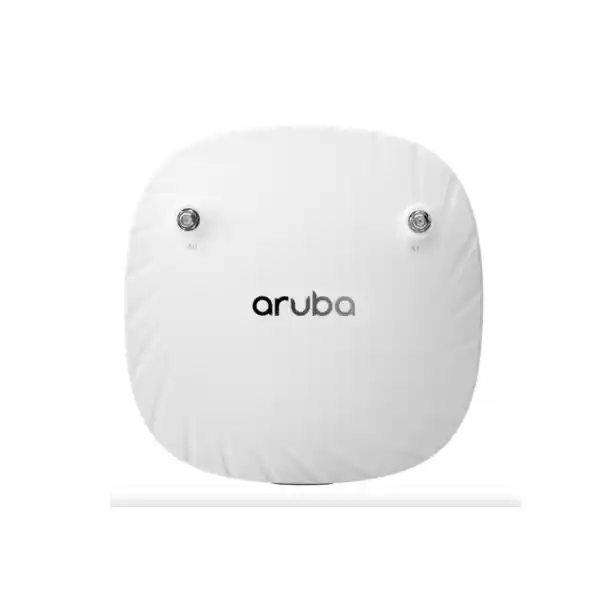
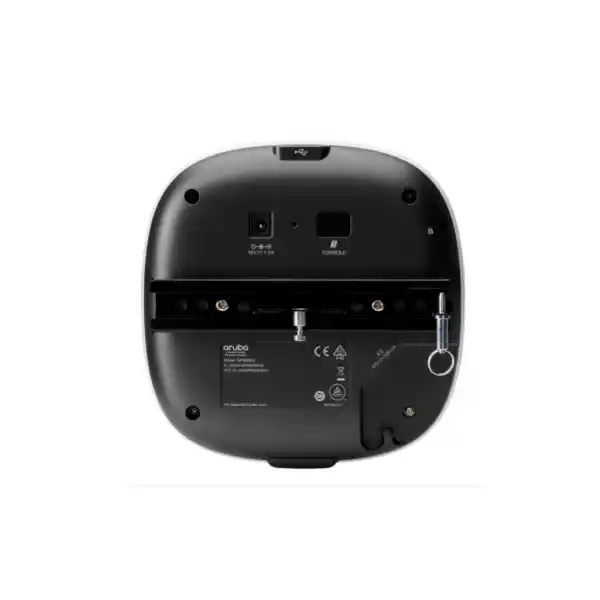
The AP-504 is an indoor HPE Aruba Networking 500 Series Wi-Fi 6 access point with external antenna connectors. It is mainly used where a business needs reliable 2.4 GHz and 5 GHz wireless access but wants freedom to select an antenna pattern for the room, corridor, coverage zone or installation geometry. It should be considered by IT teams planning medium-density wireless environments and by project designers who need Aruba management, policy and IoT capabilities. Before proceeding, confirm the correct regional part number, antenna type, mount, PoE or DC power source, software version, management architecture and any subscription requirement. The AP itself should not be ordered as an isolated line item if the project also needs antennas or installation hardware.
What the AP-504 does
It provides dual-band indoor wireless connectivity using 802.11ax technology. The 5 GHz radio supports two spatial streams and up to a 1.2 Gbps wireless data rate with compatible 2-stream HE80 Wi-Fi 6 clients, while the 2.4 GHz radio supports two spatial streams and up to 574 Mbps with HE40 clients. HPE specifies a maximum combined peak rate of 1.49 Gbps for the 500 Series. Those are radio link capabilities, not a promise of end-user application throughput, because real performance depends on client capability, channel planning, interference, wired uplink, airtime demand and deployment conditions.
Wi-Fi 6 features such as OFDMA and bidirectional multi-user MIMO are intended to improve airtime efficiency when multiple compatible clients are active. The AP also incorporates technologies used for client steering, interference management and power control within the broader Aruba architecture.
Who should consider it
Choose the AP-504 when external antenna flexibility matters more than the convenience of an all-in-one internal antenna design. A network designer may prefer it for spaces where coverage must be directed, where antenna placement is constrained, or where a particular approved Aruba antenna better matches the project geometry.
It is a stronger fit for small to medium-density indoor deployments than for sites demanding the capacity or radio design of higher-end multi-radio access points. Buyers should compare anticipated active client counts, application mix, RF environment, switch PoE budget, management method and expansion plans rather than selecting solely on a headline data rate.
Business challenges the AP-504 can help address
Coverage needs more control
Internal antennas are convenient, but they also fix the radiation pattern to the access point design. The AP-504 uses external antenna connectors, allowing the approved antenna selection to become part of the RF design. This can be useful for corridor coverage, directional zones or installations where the access point body and antenna should not be treated as a single placement decision.
Many users share limited airtime
OFDMA helps a Wi-Fi 6 access point schedule multiple compatible clients more efficiently by dividing channel resources into smaller units. The practical gain depends on the client mix and traffic pattern, but the underlying goal is to reduce unnecessary contention when several devices need airtime at once.
IoT networks need a common platform
The 500 Series integrates Bluetooth 5 and IEEE 802.15.4/Zigbee support, plus a USB 2.0 host interface. This can help organisations build wireless and selected IoT functions on a shared access infrastructure rather than immediately deploying a separate overlay for every use case.
Operations need central visibility
HPE Aruba Networking Central can provide cloud-based management for supported deployments, while on-premises options are also part of the platform. The right choice depends on the organisation’s current Aruba architecture, software release, subscription model and operational preference.
Capability band: what matters in practice
Is the AP-504 the right fit?
| Requirement | Suitable when | Confirm before ordering |
|---|---|---|
| External antenna design | Coverage needs an approved directional, omnidirectional or placement-specific antenna. | Exact antenna model, connector arrangement, mounting hardware and local RF rules. |
| Medium-density Wi-Fi 6 | The site needs dual-band 2×2 802.11ax capacity for business users and devices. | Active user density, application demand, channel plan and client capabilities. |
| Aruba management | The organisation already operates, or intends to adopt, supported Aruba management architecture. | Central subscription, gateway/controller design, OS version and lifecycle policy. |
| IoT connectivity support | Bluetooth 5 or Zigbee integration may be useful alongside Wi-Fi. | Application compatibility, platform integration and any required third-party software. |
| PoE deployment | Existing access switches can provide suitable PoE power. | Per-port class, total switch PoE budget, USB use and cable run quality. |
Verified AP-504 technical information
The following values are drawn from current HPE Aruba Networking 500 Series product documentation for the AP-504. Regional channels and orderable part numbers remain country dependent, and installation items such as mounts, power accessories and external antennas should be confirmed as part of the bill of materials.
| Brand | HPE Aruba Networking |
|---|---|
| Model | AP-504 |
| Product family | 500 Series Campus Access Points |
| Deployment type | Indoor |
| Wireless generation | Wi-Fi 6 (802.11ax) |
| Radio configuration | Dual 2×2 radios for 2.4 GHz and 5 GHz |
| Maximum peak data rate | Up to 1.49 Gbps combined; 5 GHz up to 1.201 Gbps with 2SS HE80 and 2.4 GHz up to 574 Mbps with 2SS HE40 |
| Channel widths | 20/40 MHz at 2.4 GHz; 20/40/80 MHz at 5 GHz |
| External antenna interface | 2 x RP-SMA female, concurrent dual-band connections |
| Wired interface | 1 x 10/100/1000BASE-T RJ-45, auto-sensing, 802.3az EEE |
| PoE | 802.3af/at PoE-PD, class 3 or 4 |
| DC input | 12 V DC nominal; power source sold separately |
| USB | USB 2.0 Type-A host, up to 1A / 5W to attached device |
| IoT radios | Bluetooth 5 and IEEE 802.15.4/Zigbee |
| Location support | 802.11 FTM support |
| Associated clients | Up to 256 associated clients per radio; practical density depends on environment and workload |
| BSSIDs | Up to 16 per radio |
| Operating temperature | 0°C to 50°C |
| Operating humidity | 5% to 93% non-condensing |
| Security features | WPA3, Enhanced Open (OWE), TPM-based protected credential and key storage; policy features depend on Aruba architecture and licensing |
| Management | On-premises and cloud options, including HPE Aruba Networking Central where licensed and supported |
| Regional part number guidance | HPE lists R2H22A as the AP-504 RW Unified AP; confirm the current UAE orderable SKU before quotation |
| Important note | Access point mounts, antennas and power options are separate selection items in HPE configuration guidance. |
Dependencies that can change the final bill of materials
The AP-504 should be evaluated as part of a wireless design, not simply as a device with a model number. HPE configuration information specifically calls for buyers to consider a mount kit and antennas for the AP-504. Power can also be supplied in different ways, and the operating behaviour differs depending on the available PoE class. With DC power or 802.3at class 4 PoE, the AP can operate without the restrictions described for lower-power 802.3af use. With 802.3af class 3 and Intelligent Power Monitoring disabled, the USB port is disabled; with IPM enabled, restrictions can be applied dynamically depending on available power and actual consumption.
Management and software architecture are another dependency. The 500 Series supports Aruba operating environments and cloud or on-premises management, but the right software release, subscription and controller or gateway relationship must be validated against the customer’s existing environment. Buyers should also treat channel availability and transmit operation as regulatory-domain dependent. A part number intended for one regulatory region should not be assumed to be appropriate for another.
From requirement to deployed access point
Define the coverage goal
Share floor plans, room usage, likely user density, application types and areas that need stronger or more directional coverage. This establishes whether AP-504 is appropriate and what antenna pattern should be considered.
Build the hardware list
Confirm AP quantity, regulatory SKU, antenna choice, mounting kit, PoE source or DC adapter, cabling and any console accessories. Avoid assuming that the access point box contains every installation component.
Validate software and management
Check the intended operating mode, supported software, HPE Aruba Networking Central requirements, gateway or controller design, security policies and integration points before the purchase order is finalised.
Plan deployment and handover
Arrange physical installation, cable testing, switch port configuration, AP adoption, RF validation and documentation. Where required, include configuration or rollout assistance as a separate scope in the quotation.
External antennas are the defining AP-504 design choice
The most important difference buyers should understand is that AP-504 is the external-antenna member of the 500 Series pair, while AP-505 uses integrated antennas. That distinction changes procurement and RF design. With AP-504, the access point and the antenna system are separate decisions. HPE documentation identifies two RP-SMA female connections for concurrent dual-band operation and lists multiple compatible antenna families. The correct antenna should be chosen for the physical space and local regulatory requirements rather than selected purely by gain value.
A directional antenna can concentrate energy into a defined zone, while an omnidirectional option can serve more general-area coverage. The design also has to account for cable loss, mounting orientation, ceiling height, wall materials, obstructions and the intended client locations. In a typical office, an internal-antenna AP may be simpler. In a corridor, showroom, warehouse aisle, specialised room or architectural installation, external antennas may provide the flexibility the project needs. That is why the AP-504 should be discussed with the floor plan and use case in mind.
HPE’s ordering guidance also makes it clear that antennas and mount kits are selection items. For procurement teams, this means a quote containing only the AP model may be incomplete. FourTeck can help translate the wireless design into a practical bill of materials so that antenna quantity, mounting approach and power source are not discovered late in the installation stage.
Wi-Fi 6 efficiency for everyday enterprise traffic
The AP-504 is a 2×2 Wi-Fi 6 access point, which places it in a practical part of the portfolio for organisations that need modern wireless efficiency but do not necessarily require the higher radio stream counts of larger campus models. HPE specifies OFDMA, bidirectional MU-MIMO, target wake time and other Wi-Fi 6 features. These functions matter because many business networks are limited less by the maximum speed of one client and more by how efficiently multiple devices share the same airtime.
OFDMA can divide the channel into smaller resource units so compatible clients can be served more efficiently. Target Wake Time can help compatible low-traffic devices schedule communication windows, potentially reducing unnecessary airtime use and improving device power behaviour. ClientMatch is designed to address sticky-client behaviour by helping suitable clients move to a better access point as conditions change. These technologies do not remove the need for RF planning. A badly placed AP, excessive transmit power, poor channel reuse or an overloaded wired edge can still limit experience.
For buyers, the useful question is therefore not simply “Is 1.49 Gbps fast enough?” A better evaluation asks how many active users will be present, what applications they run, how many Wi-Fi 6 clients are actually deployed, whether voice or collaboration traffic is important, and how many APs will share the same environment. FourTeck can use these answers to help determine whether AP-504 is appropriately sized or whether a different Aruba model should be considered.
Management, policy and operational visibility
Wireless hardware is only one layer of an enterprise WLAN. The 500 Series can operate within Aruba architectures that support cloud or on-premises management. HPE Aruba Networking Central is the cloud management platform commonly associated with the family, while other Aruba deployment modes remain relevant depending on the customer’s installed base. The correct architecture should be identified before purchase because subscriptions, gateways, software releases and operational workflows may differ.
HPE also documents security capabilities including WPA3, Enhanced Open and a Trusted Platform Module for protected storage of credentials, keys and boot code. Policy enforcement and dynamic segmentation functions can be part of the wider Aruba solution, but buyers should not assume every policy feature is available solely because an AP-504 is installed. Feature availability can depend on the controller, gateway, Central subscription, ClearPass integration and software configuration.
For an IT team, this is important during migration. Replacing an old access point with AP-504 may require more than mounting new hardware. The team should validate supported versions, SSID and VLAN design, authentication method, certificate requirements, guest access policy, monitoring, logging and the adoption process. FourTeck can help identify these dependencies so the purchase reflects the intended operating model rather than just the radio specification.
Where AP-504 can make sense
Midsize offices
A fit where Wi-Fi 6 client efficiency, guest access, corporate SSIDs and managed roaming are needed, especially when room geometry benefits from antenna flexibility.
Education environments
Suitable for classrooms, administrative zones and shared indoor spaces when density is moderate and the design is based on measured coverage and capacity requirements.
Retail and branch locations
Can support employee devices, selected IoT functions and customer wireless services, with management integrated into the wider Aruba network where appropriate.
Defined indoor coverage zones
External antenna choices can be useful where coverage must be shaped toward a corridor, aisle, room or specific working area rather than radiated from an internal ceiling antenna pattern.
IoT-aware deployments
Built-in Bluetooth 5 and Zigbee support may help projects that want wireless access infrastructure to participate in supported location, sensor or IoT workflows.
Multi-site standardisation
Organisations using Aruba across multiple locations can consider AP-504 where the same management framework is desired but a site-specific external antenna design is needed.
Integration and operational considerations
The AP-504’s Ethernet interface is Gigabit Ethernet, so the switch side should be checked for compatible speed, PoE delivery and the required VLAN design. Cabling quality should support the link reliably, and PoE budget calculations should consider the number of APs across the switch rather than only the power draw of one unit. If USB accessories are part of the design, power-mode behaviour deserves additional attention because lower PoE classes can affect USB availability.
Wireless integration should include the authentication system, DHCP and DNS services, routing, firewall policies, guest access, RADIUS or identity services, monitoring and any Aruba gateways or controllers. If ClearPass or dynamic segmentation is expected, those components should be reviewed as solution dependencies rather than treated as built-in AP-only functions.
For existing Aruba estates, software support is especially important. HPE documentation lists minimum software releases for the 500 Series, but current operational support and lifecycle policy should be checked against the exact software train in use at the customer site. A network upgrade may be required before new APs can be adopted into an older environment.
Questions to resolve before requesting a quotation
Share the area, expected active users, client types and application profile. Quantity should follow design needs, not a simple square-metre rule.
Confirm whether the coverage needs omnidirectional or directional behaviour and whether the antenna can be mounted correctly in the intended space.
The AP-504 exists in multiple country or regional variants. The orderable part number must match the deployment region and current vendor policy.
Check 802.3at availability where unrestricted operation and USB usage are required, or specify a compatible DC option if that is the project design.
Clarify whether HPE Aruba Networking Central, a gateway/controller architecture or another supported Aruba operating model is intended.
If physical mounting, antenna installation, switch configuration, AP adoption, testing or documentation is needed, define it in the project scope rather than assuming it is bundled with hardware.
Procurement checklist for AP-504 projects
How FourTeck can assist with AP-504 planning
FourTeck can help buyers move from a model name to a usable quotation. For the AP-504, that usually means checking whether the external-antenna design is intentional, identifying the likely regulatory variant for the destination, reviewing antenna and mounting needs, and confirming the power approach. Where the customer already has an Aruba environment, the discussion can also include software compatibility and the planned management model.
For a new wireless deployment, buyers can share the floor plan, site type, expected client density, main applications, existing switch model, preferred management approach and any installation constraints. FourTeck can use this information to support product selection and quotation coordination. When configuration or deployment assistance is required, the scope can be discussed separately so that hardware supply and professional services are clearly defined.
You can review additional business technology options through the FourTeck product portfolio, explore deployment and technology services, or contact FourTeck with the AP quantity, deployment location and project requirements.
UAE availability and support guidance
Contact FourTeck to confirm current UAE availability for the HPE Aruba Networking AP-504. Availability can depend on the applicable regional SKU, order quantity, vendor channel status and lead time at the point the quotation is prepared. The presence of AP-504 in current HPE documentation does not by itself confirm local stock or a specific delivery date.
For projects in Dubai, Abu Dhabi, Sharjah and Ajman, FourTeck can coordinate requirement review, quotation preparation and delivery planning after the exact bill of materials is confirmed. If the project needs antenna selection, mounting, switch PoE validation, configuration or installation support, include those requirements in the enquiry so the scope can be assessed together with the hardware request.
GCC Availability
For organisations planning AP-504 deployments elsewhere in the GCC, FourTeck can assist with requirement review, model and regional-SKU clarification, quotation coordination, antenna and mounting selection, power planning and configuration scope. Projects may involve the United Arab Emirates, Saudi Arabia, Kuwait, Qatar, Bahrain or Oman, but the orderable part number and permitted radio operation should always be validated for the actual destination rather than transferred from one country to another without checking.
Product availability, licensing, delivery schedules, service visits, project scope and vendor lead times can vary by country, model, quantity and requirement. Share the destination country, number of access points, intended antenna approach, management platform, license or subscription expectations, deployment location and preferred project timeline. FourTeck can then coordinate the most appropriate quotation path. Buyers in Kuwait can also review regional information through FourTeck Kuwait. Local stock, customs outcomes and fixed delivery times should be confirmed only as part of the specific commercial quotation.
Africa Availability
FourTeck can also support organisations assessing HPE Aruba Networking access points for projects in Africa. For the AP-504, the key first step is to confirm whether the model and its regulatory variant are appropriate for the destination, then identify antennas, mounts, power method, software compatibility, subscriptions and any local deployment requirements. This is especially important when a project spans multiple offices because regulatory domains and fulfilment conditions should not be assumed to be identical across countries.
Availability and fulfilment can depend on destination, product model, quantity, radio region, power and regulatory requirements, shipping arrangements, vendor lead time, installation scope and local project conditions. Buyers can share the destination country, exact requirement, quantity, preferred deployment schedule and support expectations so FourTeck can provide suitable guidance. For regional engagement, see FourTeck Africa, FourTeck Kenya or FourTeck Uganda. Inventory, shipment timing and onsite coverage should be confirmed for each specific request.
What buyers commonly want to know before shortlisting AP-504
AP-504 or AP-505?
The central decision is antenna architecture. AP-504 exposes two RP-SMA connectors for external dual-band antennas, while AP-505 is the integrated-antenna model in the same 500 Series family. If the project wants a conventional ceiling access point with its antenna pattern built in, AP-505 may be simpler. If the RF design needs a separate antenna choice or more placement flexibility, AP-504 is the more relevant model. The radio platform is otherwise closely related, so the antenna requirement should be clarified first.
Does AP-504 include antennas?
HPE configuration guidance treats antennas as separate selection items for AP-504. Buyers should therefore avoid assuming that the access point order line is a complete antenna solution. The correct antenna depends on the desired coverage pattern, mounting method and regional approval. A complete quote should identify both the AP and the selected antenna components where they are required.
Can it run on standard PoE?
The AP supports both 802.3af and 802.3at PoE, but the available feature set can differ by power level. HPE documents unrestricted operation on DC or 802.3at class 4 power. Under 802.3af class 3 conditions, USB use and other functions may be restricted depending on Intelligent Power Monitoring settings. For new deployments, checking the switch’s PoE capability and total budget helps avoid unexpected compromises.
Is 1GbE enough for this AP?
The AP-504 has a 1GbE wired interface. Although the combined wireless peak figure is higher than 1 Gbps, real user traffic does not normally equal the sum of maximum radio link rates. Whether the uplink is appropriate depends on actual workload, client mix and radio utilisation. For a 2×2 medium-density access point, the interface is part of the vendor’s intended platform design, but capacity planning should still consider the full site rather than a theoretical maximum.
Understanding the AP-504 in a real purchase decision
People researching the AP-504 often search for a price first, but price is only useful when the compared offers contain the same regional hardware and project components. The AP exists in region-specific variants, and the external-antenna model may require additional antenna and mounting items. A low hardware-only figure can therefore be misleading if the final project still needs antennas, mounting brackets, PoE upgrades or management subscriptions. Ask for a bill-of-material-based quotation that clearly identifies the AP SKU and separate components.
Compatibility questions are equally important. If the organisation already operates Aruba access points, gateways or Central, provide the existing platform details and software version. The AP-504 belongs to a mature Wi-Fi 6 family, and current HPE support information should be checked against the software train that will manage it. A model being technically capable of a feature does not mean an older controller or unsupported software version can immediately adopt it.
For RF planning, buyers should think about what the external antennas are meant to solve. If the goal is simply ordinary ceiling coverage in an open office, the AP-505 integrated-antenna variant may reduce design complexity. If the access point must feed a directional antenna, serve an unusual room geometry or separate the radio body from the preferred antenna position, AP-504 becomes more interesting. Antenna gain should not be selected in isolation because regulatory power limits, cable loss and physical mounting affect the final result.
Another common question is how many users one AP can handle. HPE states up to 256 associated clients per radio, but that is an association limit, not a recommended design target for active enterprise users. A meeting room with video calls, laptops and phones can consume airtime very differently from a retail area with light client traffic. Capacity design should account for simultaneous activity, application demand, channel reuse and expected client capabilities. In busy spaces, more APs operating at lower power can sometimes be better than a smaller number of high-power cells.
Businesses also ask whether the AP-504 works without a controller. HPE describes unified access points and flexible management choices, including cloud and on-premises options. The correct operating mode depends on the software architecture and organisational requirements. If HPE Aruba Networking Central is planned, the required subscription should be confirmed for the chosen management model. If a gateway or controller is already present, verify software compatibility and policy design before ordering new hardware.
Finally, UAE buyers should separate current product documentation from actual supply status. A model can remain documented and supported while local availability changes by regional SKU, channel and quantity. The safest purchase request includes the exact deployment country, quantity, antenna requirement, mount, power source, management platform and target timeline. FourTeck can use those details to prepare a quote and identify any items that require further confirmation.
Buyer questions that prevent the wrong AP purchase
Why would I choose an external-antenna access point?
Choose one when the RF design benefits from a separate antenna pattern, orientation or mounting location. It can help in corridors, specific zones, architectural constraints or other spaces where the built-in pattern of an internal-antenna AP is not ideal. The trade-off is that antenna selection and installation become additional design tasks.
Do I need to buy a mount separately?
HPE configuration guidance states that access points do not include a mount and provides multiple AP mount kit choices for the 504/505 Series. The correct mount depends on ceiling rail type, solid surface or wall-box installation. Include this choice in the quotation to avoid installation delays.
What should I send for an accurate quote?
Provide quantity, destination country, site type, antenna requirement, mount preference if known, existing switch or PoE information, management platform, current Aruba software version and whether configuration or installation support is required. A floor plan is useful when antenna choice or AP count is not yet final.
Can the AP support IoT devices directly?
It includes Bluetooth 5 and IEEE 802.15.4/Zigbee radio capability and a USB host port. Whether a particular sensor, tag or IoT application can use those interfaces depends on the application platform, software integration and supported workflow. Confirm the actual IoT use case rather than assuming generic compatibility.
How do I know if 2×2 is enough?
Look at active-user density, traffic types and performance expectations. A 2×2 AP can be a practical choice for medium-density spaces, but high-density auditoriums, demanding collaboration zones or environments with greater aggregate capacity targets may justify a different model. Sizing should use the application profile, not just floor area.
Is the RW part number automatically correct for UAE?
HPE QuickSpecs lists an AP-504 RW variant and indicates the RW region covers many countries outside specifically separated regions. However, the current UAE orderable SKU should still be confirmed at quotation time because vendor ordering rules and regulatory handling can change. Do not substitute a US or other country-specific variant without validation.
Related options and services to discuss
HPE Aruba Networking AP-505
The closely related internal-antenna model for buyers who do not need separate antenna selection. It should be compared when installation simplicity is a priority.
Approved external antennas
AP-504 requires an antenna design. Review current HPE-compatible antenna options and choose according to coverage pattern, mounting and regulatory requirements.
AP mount kits
HPE lists ceiling rail, solid surface, wall-box and universal mounting options. The physical mounting environment should be confirmed before the order.
HPE Aruba Networking Central
Consider the applicable cloud-management subscription when Central is part of the operating model. Subscription term and entitlement should be matched to the project.
Wireless installation support
Physical installation, switch preparation, AP adoption, SSID configuration, testing and documentation can be discussed as a separate project scope.
Network assessment
Where AP quantity or antenna design is uncertain, an assessment can help clarify coverage, capacity and infrastructure dependencies before procurement.
Why businesses contact FourTeck
Enterprise wireless projects often involve more decisions than the access point model alone. FourTeck can assist with requirement clarification, model comparison, regional SKU checking, antenna selection discussion, mount and power planning, bill-of-material review, subscription guidance, configuration scope and quotation coordination. This is useful when procurement teams need a commercially clear request while IT teams need confidence that the hardware can fit the intended architecture.
For broader company information, visit About FourTeck. To discuss a specific AP-504 project, use the FourTeck contact page and include the destination, quantity, antenna requirement, existing network details and expected deployment timeline.
Frequently asked questions
What is the HPE Aruba Networking AP-504?
It is an indoor Wi-Fi 6 access point in the HPE Aruba Networking 500 Series. It uses dual 2×2 radios and provides two RP-SMA connectors for external dual-band antennas.
What is the difference between AP-504 and AP-505?
AP-504 is designed for external antennas, while AP-505 uses integrated dual-band antennas. Buyers should choose based mainly on antenna and coverage design requirements.
What wireless speed does AP-504 support?
HPE specifies up to 1.201 Gbps on the 5 GHz radio with 2SS HE80 clients and up to 574 Mbps on 2.4 GHz with 2SS HE40, with a maximum combined peak rate of 1.49 Gbps for the 500 Series. Real application throughput varies.
Does AP-504 support PoE?
Yes. It supports 802.3af and 802.3at PoE, as well as 12 V DC. HPE documents unrestricted operation with DC or 802.3at class 4 power, while 802.3af scenarios can apply feature restrictions.
Does the AP-504 include an external antenna?
HPE configuration guidance lists antennas as separate selection items for AP-504. The appropriate antenna should be chosen for the coverage pattern, mounting method and regulatory region.
Can AP-504 be managed with HPE Aruba Networking Central?
Yes, the 500 Series supports HPE Aruba Networking Central. The applicable subscription, software release and overall deployment architecture should be confirmed for the project.
Does AP-504 support Bluetooth and Zigbee?
Yes. HPE specifies integrated Bluetooth 5 and IEEE 802.15.4/Zigbee radio capability. Actual IoT application compatibility depends on the software platform and use case.
Which AP-504 SKU should be ordered for Dubai?
HPE lists multiple regional SKUs and identifies R2H22A as the RW AP-504 Unified AP. The current UAE orderable part number should still be confirmed at quotation time before purchase.
Is AP-504 suitable for high-density venues?
It is positioned for medium-density indoor use. HPE states a maximum of 256 associated clients per radio, but practical design density depends on applications, environment and client behaviour. Higher-density spaces should be assessed separately.
How can I request a FourTeck quotation?
Send the required quantity, UAE or regional destination, antenna and mounting requirement, current network environment, preferred management method and any installation or configuration scope through the FourTeck contact page.
Confirm the AP-504 configuration before you order
Share your quantity, deployment location, antenna requirement, mounting environment, PoE source and Aruba management platform. FourTeck can help review the requirement and prepare a current UAE quotation.

Reviews
There are no reviews yet.