
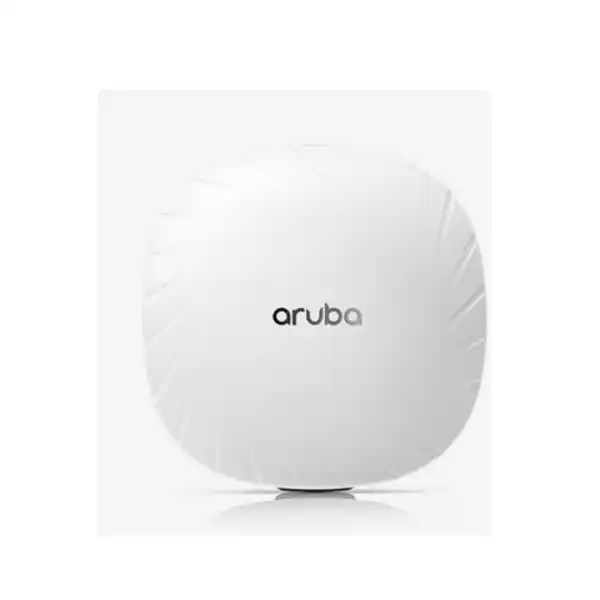
HPE Aruba Networking AP-555 in Dubai, UAE
The HPE Aruba Networking AP-555 is built for indoor wireless environments where density, application concurrency and predictable client experience matter more than simple coverage. Its Wi-Fi 6 radio design, multi-gigabit wired connectivity and integrated IoT radios make it a practical candidate for campuses, large offices, education facilities, healthcare sites, hospitality venues and other busy locations that need more capacity from each access point.
For UAE projects, the important buying decision is not only whether AP-555 has the required radio performance. The regulatory SKU, PoE source, mounting hardware, management architecture, software version, switch uplink capability and project design all need to align. FourTeck can help review these details before a quotation is prepared.
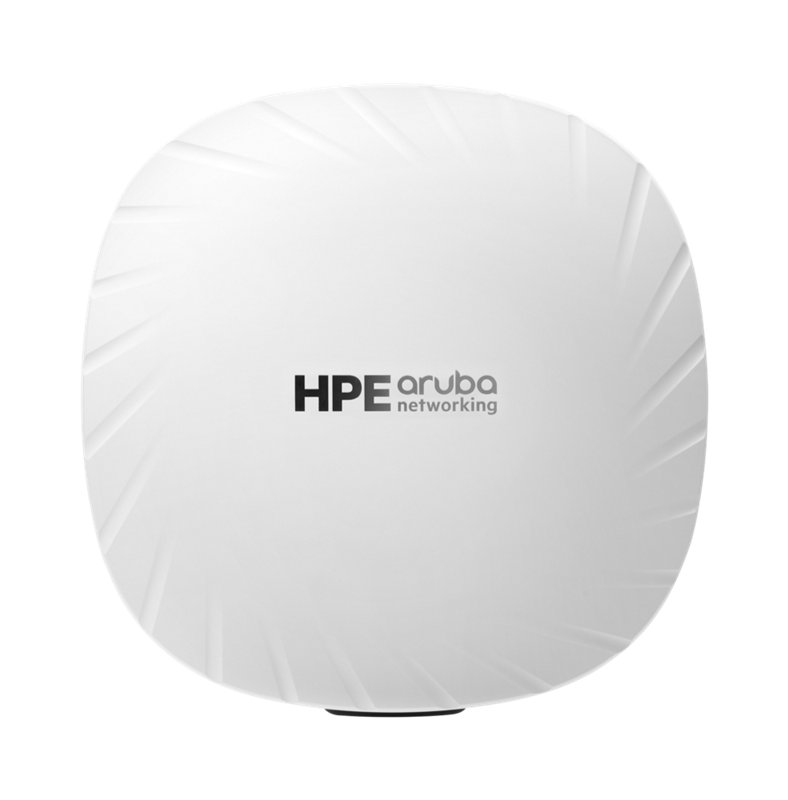
Direct answer for buyers
The AP-555 is a high-density indoor HPE Aruba Networking Wi-Fi 6 access point in the 550 Series. It is mainly used to increase wireless capacity and efficiency in locations with many simultaneous mobile, voice, video and IoT connections. Organisations evaluating it should consider whether they need its 8×8 5 GHz radio, multi-gigabit uplinks and enterprise management options rather than choosing it on coverage alone. Before proceeding, confirm the regional product number, the required PoE method, switch port speeds, mounting kit, software and management architecture, and whether a newer Wi-Fi generation is more appropriate for a greenfield project.
What the AP-555 does
AP-555 provides concurrent 2.4 GHz and 5 GHz Wi-Fi 6 service using a 4×4 MIMO radio on 2.4 GHz and an 8×8 MIMO radio on 5 GHz. HPE specifies up to 5.37 Gbps combined aggregate data rate for the 550 Series and supports Wi-Fi 6 mechanisms such as OFDMA, bidirectional MU-MIMO and target wake time. These capabilities are intended to improve how airtime is shared among many clients rather than simply increasing the headline speed of one device.
The access point also includes two multi-gigabit Ethernet interfaces, integrated Bluetooth 5 and Zigbee support, security functions such as WPA3 and protected credential storage, and flexible enterprise deployment options. The result is an access point designed for busy indoor networks where RF efficiency, uplink capacity, management and policy control all matter together.
Who should consider it
The AP-555 is best evaluated by organisations with high client density, substantial 5 GHz demand, application concurrency or a requirement to consolidate more wireless capacity into each installation area. Typical candidates include larger offices, universities, training centres, conference environments, healthcare facilities, hospitality venues and public-facing spaces where many devices can be active at once.
It may be unnecessary for a small office with light traffic and conventional 1 Gbps switching. It may also be the wrong long-term fit when a new project specifically requires 6 GHz operation or Wi-Fi 7 features. The decision should therefore be based on client mix, RF design, wired infrastructure, software strategy and lifecycle planning rather than on model tier alone.
Business challenges this access point can address
Crowded 5 GHz airtime
An 8×8 5 GHz radio and Wi-Fi 6 multi-user scheduling can help a well-designed WLAN serve dense client populations more efficiently. Real results still depend on client capabilities, channel plan, interference and application behaviour.
Uplink bottlenecks
Two Smart Rate Ethernet ports can negotiate up to 5 Gbps, allowing the wired edge to support traffic levels beyond a traditional 1 Gbps AP connection when the switch and cabling are also capable.
Mixed mobile and IoT estates
Integrated Bluetooth and Zigbee capabilities can support location and IoT use cases without requiring a separate overlay for every scenario. Application design and platform integration must be confirmed.
Policy consistency
WPA3, Enhanced Open, TPM-based credential protection and HPE Aruba Networking policy technologies can support a more controlled access design when they are configured as part of the wider WLAN architecture.
Core capabilities in practical terms
Is AP-555 a good fit for your requirement?
| Requirement | Suitable when | Confirm before ordering |
|---|---|---|
| Dense 5 GHz usage | Many concurrent clients and high airtime demand justify an 8×8 5 GHz radio. | Client capability, channel plan, interference and AP spacing. |
| Multi-gigabit uplink | The access switch supports 2.5/5 GbE and the design can use more than 1 Gbps. | Switch port type, cabling, PoE budget and redundancy design. |
| Integrated IoT services | Bluetooth or Zigbee functions are part of the intended application architecture. | Application integration, software support and operational ownership. |
| Existing Aruba estate | You are extending a compatible controller, Instant or HPE Aruba Networking Central design. | Supported software release, architecture, licensing and migration path. |
| Greenfield Wi-Fi project | Wi-Fi 6 meets the technical and lifecycle target. | Whether Wi-Fi 6E or Wi-Fi 7 and 6 GHz operation are preferable for the new project. |
Verified AP-555 technical information
The table below focuses on details that can be tied to HPE Aruba Networking AP-555 documentation and the JZ356A rest-of-world SKU used for many non-country-specific regulatory domains. Country approval and final bill of materials should still be confirmed for the destination before purchase.
| Brand | HPE Aruba Networking |
| Product | AP-555 indoor unified campus access point |
| Regional product number | JZ356A for AP-555 (RW); confirm regulatory suitability for the deployment country |
| Wireless generation | Wi-Fi 6, IEEE 802.11ax, with legacy 802.11a/b/g/n/ac service support |
| Radio architecture | Concurrent 4×4 MIMO 2.4 GHz and 8×8 MIMO 5 GHz; optional tri-radio mode is supported by the series |
| Combined aggregate data rate | Up to 5.37 Gbps as specified on the current HPE 550 Series product information |
| Wi-Fi efficiency features | OFDMA, bidirectional MU-MIMO and target wake time |
| Ethernet | Two HPE Smart Rate RJ-45 ports, each supporting negotiated wired speeds up to 5 Gbps |
| Additional interfaces | USB 2.0 Type-A host, serial console via micro-B physical jack, Kensington security slot |
| IoT radios | Integrated Bluetooth 5 and 802.15.4 radio with Zigbee support |
| Security capabilities | WPA3, Enhanced Open, TPM-based secure storage and HPE policy features, dependent on architecture and software |
| Power | Direct DC, 802.3bt Class 5 PoE, or 802.3at PoE subject to power-mode considerations; power sources are sold separately |
| Full-feature power guidance | DC, 802.3bt Class 5, or dual 802.3at Class 4 PoE supports unrestricted operation; single 802.3at may introduce feature restrictions depending on IPM configuration |
| Maximum PoE power | Up to 38.2 W in the documented 802.3bt or dual-802.3at operating case, excluding additional USB-device demand |
| Dimensions | Approximately 260 x 260 x 58 mm, excluding mount bracket |
| Weight | Approximately 1.57 kg |
| Operating environment | 0°C to 50°C, 5% to 93% non-condensing humidity |
| Mounting | Mounting bracket is pre-installed on the AP; compatible mount kits are selected separately |
| Availability | Contact FourTeck to confirm current UAE availability, quantity, lead time and required accessories |
Power, management and compatibility dependencies
AP-555 performance depends on the infrastructure around it. HPE documents unrestricted operation when the unit is powered by direct DC, 802.3bt Class 5 PoE, or two 802.3at Class 4 PoE feeds. A single 802.3at feed can cause features to be limited when Intelligent Power Monitoring is disabled; HPE specifically documents restrictions affecting USB, the second Ethernet port, 5 GHz spatial streams and tri-radio operation in that condition. This is why a PoE audit belongs in the bill-of-material review rather than after installation.
Management and software requirements also depend on architecture. AP-555 can participate in supported controller-based, controllerless Instant or HPE Aruba Networking Central designs, but software releases, subscriptions and migration paths differ. A Central subscription should not be assumed to be included with the hardware. Likewise, the correct regional SKU and regulatory domain must be validated for the destination.
For existing networks, confirm switch firmware, Smart Rate port support, VLAN and policy design, cabling capability, controller or cloud-management compatibility, and the AP software train. For a new site, compare AP-555 against current Wi-Fi 6E and Wi-Fi 7 options where 6 GHz access or a longer standards lifecycle is important.
A practical purchase and deployment journey
Define the RF requirement
Document floor plans, expected users, device types, application mix, roaming needs and difficult coverage areas. Density should be estimated by location and peak period rather than as one building-wide average.
Validate the wired edge
Confirm Smart Rate switch ports, PoE class, cable quality, uplink capacity and whether one or two Ethernet connections are planned. A high-end AP cannot compensate for an under-sized switch or power design.
Choose management
Decide whether the AP will join an existing controller, operate in a supported Instant design or be managed through HPE Aruba Networking Central. Licensing and software dependencies should be confirmed here.
Build the bill of materials
Select the exact AP SKU, mounting hardware, power option, licenses or subscriptions, switching changes and any installation services. Do not assume the mount kit or power supply is included.
Stage and verify
Plan software compatibility, naming, network profiles, authentication, policy, radio settings and monitoring. Validate representative clients before wide rollout and keep the design documentation for support.
Capability focus: high-density Wi-Fi 6 operation
The reason to shortlist AP-555 is usually density rather than basic connectivity. In a busy WLAN, many clients may be transmitting small bursts, voice packets, video streams, collaboration traffic and background synchronisation at the same time. Wi-Fi 6 changes how those clients can share a channel by introducing scheduling techniques that let the access point organise transmissions more efficiently when compatible clients are present.
AP-555 combines that Wi-Fi 6 efficiency with a high-order 5 GHz radio. The 8×8 design gives the platform more spatial resources than a conventional 2×2 or 4×4 AP, although client devices usually support fewer spatial streams themselves. The operational value therefore comes from how the AP manages many clients and concurrent traffic, not from expecting an individual laptop to connect as an 8×8 client.
A high-density AP still needs a disciplined RF design. Excess transmit power, oversized cells, poor channel reuse or too many APs can create contention. The AP-555 should be placed according to measured coverage and capacity targets, with channel width chosen to suit the local spectrum and density. For venues with variable occupancy, the design should consider peak events rather than average daily usage.
What to measure before sizing
- Peak concurrent users by zone
- Client radio capabilities and 5 GHz adoption
- Voice, video and real-time application demand
- Expected throughput per active user
- Roaming boundaries and mobility patterns
- Channel availability and external interference
- Ceiling type, height and obstruction profile
- Existing AP locations if this is a refresh
Why the wired edge matters
The AP has two Smart Rate interfaces that can negotiate 100 Mbps, 1, 2.5 or 5 Gbps, depending on the connected device and configuration. To benefit from that capability, the switch must expose compatible multi-gigabit ports and enough PoE. Cabling condition also matters, especially in older buildings.
Where the switch only provides 1 Gbps and limited PoE, the AP may still operate in a supported configuration, but the network designer should understand which capabilities are constrained and whether the high-tier AP is still justified.
Capability focus: multi-gigabit connectivity and power design
Wireless performance is only one half of an enterprise WLAN. The AP must move traffic into the wired network, receive enough power to run its radios and attached functions, and remain manageable during switch maintenance or topology changes. AP-555 addresses the uplink side with two Smart Rate ports that support speeds up to 5 Gbps. This gives architects flexibility when modernising an access layer that already has multi-gigabit switching.
Power planning deserves equal attention. HPE documents unrestricted AP-555 operation with direct DC, 802.3bt Class 5 PoE, or dual 802.3at Class 4 PoE. If only one 802.3at source is available, features can be reduced according to Intelligent Power Monitoring behaviour and configuration. That means the question is not simply “does the switch provide PoE?” but “does each planned switch port provide the right PoE class under worst-case load?”
This becomes especially important when several AP-555 units share one access switch. The project should calculate the switch’s total PoE budget, uplink oversubscription, stacking or redundancy design and power resilience. A site survey that ignores switch capacity can produce a wireless plan that looks correct on a floor map but cannot be supported by the installed infrastructure.
Capability focus: security, segmentation and IoT awareness
AP-555 includes current-generation Wi-Fi security capabilities for its platform, including WPA3 and Enhanced Open support, while HPE documents a trusted platform module for protected storage of credentials, keys and boot-related information. Those hardware and wireless security functions are useful, but enterprise WLAN security is still an end-to-end design involving authentication, identity, policy, network segmentation, switch configuration, gateways, logging and monitoring.
HPE Aruba Networking also positions the 550 Series for dynamic segmentation and policy enforcement. In practice, this can help organisations apply access policy based on identity or device role rather than relying only on a large set of static VLANs and ACLs. The exact behaviour depends on the wider Aruba architecture and software, so buyers should confirm which controller, gateway, Central subscription or policy components are required in their environment.
The integrated Bluetooth 5 and 802.15.4/Zigbee radio can also reduce the need for separate radio overlays in selected IoT and location projects. That does not mean every IoT application works automatically with the AP. The device protocol, application platform, gateway function, security model and software support must align. A useful procurement exercise is to list each intended IoT use case separately and confirm whether the AP acts as a radio endpoint, gateway, location beacon component or simply coexists with the solution.
For regulated or sensitive environments, security design should also include firmware lifecycle, administrative access, certificate management, logging retention and incident response. The access point can contribute strong building blocks, but it does not replace network governance or application-level controls.
Where AP-555 is commonly evaluated
Large offices and headquarters
Open-plan floors, collaboration zones, meeting rooms and staff mobility can create uneven peaks in wireless demand. AP-555 may fit areas where user density and 5 GHz concurrency justify a high-capacity radio, while lower-density zones may use different models.
Education and training
Lecture halls, classrooms, labs and common areas often have hundreds of personally owned devices plus managed endpoints. The design should separate coverage from capacity and account for class-change roaming, online assessment and video demand.
Healthcare environments
Clinical mobility, staff devices, guest access and connected equipment can require dependable wireless service and policy separation. Medical application compatibility, RF constraints and organisational security requirements must be assessed before deployment.
Hospitality and events
Ballrooms, conference areas and guest spaces can produce short periods of extreme density. AP placement, channel width and upstream internet capacity should be planned around those peaks rather than around the average occupancy of the property.
Public-facing facilities
Transport, visitor, civic and large waiting areas may need many simultaneous connections and separate guest, staff and device roles. Captive portal, identity and analytics requirements should be evaluated with the WLAN management design.
Existing Aruba refreshes
AP-555 can be relevant where an organisation is extending or refreshing a compatible Aruba estate and wants Wi-Fi 6 density without redesigning everything around 6 GHz. Software and management compatibility must still be verified by version.
Integration and operational considerations
An AP-555 deployment should be treated as part of the campus network rather than as an isolated wireless purchase. The access switch must provide suitable Smart Rate interfaces and PoE. Authentication services must support the chosen user and device onboarding method. DNS, DHCP, VLAN, routing and firewall policy must be ready for each wireless role. Monitoring and logging should be aligned with the organisation’s operational process so faults are visible after handover.
If the site already uses HPE Aruba Networking controllers or Instant clusters, confirm the supported software train before mixing generations of APs. If the organisation plans to use HPE Aruba Networking Central, confirm the subscription level and architectural requirements separately from the hardware. A migration from controller-based networking to a cloud-managed architecture can change how policy, gateways and operations are structured, so it should not be treated as a simple AP swap.
Physical installation also matters. Ceiling height, mounting surface, plenum requirements, nearby metal, obstructions and orientation affect RF behaviour. The AP includes a bracket interface, but the appropriate mounting kit is selected separately. Before installation, verify the mounting location, cable route, service loop, labelling convention and access for maintenance.
Questions to resolve before asking for a quotation
Quantity should come from RF and capacity design, not from floor area alone. Share plans, occupancy and application expectations if sizing support is required.
JZ356A is the AP-555 (RW) rest-of-world model listed by HPE for the UAE store. Regulatory suitability must still be confirmed for the deployment destination.
State the switch model and available PoE class. If 802.3bt or dual 802.3at is not available, the design should account for documented power restrictions or a suitable injector/DC option.
Identify the existing controller, Instant environment or Central strategy, together with current software versions and any planned migration.
Ceiling grid, hard ceiling, wall and other mounting conditions can require different kits. Include the mounting surface and ceiling type in the request.
For a greenfield network, compare the requirement with Wi-Fi 6E or Wi-Fi 7 if 6 GHz, newer client generations or a longer standards runway are priorities.
Procurement checklist for AP-555
How FourTeck can support the buying process
A useful AP-555 quotation starts with the requirement rather than a hardware quantity. FourTeck can help customers clarify whether this model matches the intended density, existing HPE Aruba Networking environment and wired edge. Where a customer already has switch models, controllers, licenses or Central subscriptions, those details can be reviewed so the proposed bill of materials is aligned with the current network rather than built in isolation.
FourTeck can also assist with identifying the AP regulatory variant, mount requirements, PoE options, relevant accessories, configuration scope and installation considerations. For larger projects, sharing floor plans, device counts and application requirements can make the discussion more useful. The objective is to reduce avoidable mismatches such as selecting high-capacity APs for switches that cannot provide the required PoE, overlooking mounting kits, or assuming a management subscription is included automatically.
For broader technology planning, you can review FourTeck technology products, discuss networking and deployment services, learn more about FourTeck, or contact the FourTeck team with the exact requirement.
UAE availability and support guidance
Contact FourTeck to confirm current UAE availability for the HPE Aruba Networking AP-555. Availability can vary by product number, quantity, regulatory domain, vendor lead time and the accessories included with the request. A quotation should identify whether the requirement is for hardware only or also includes mount kits, PoE injectors or adapters, subscriptions, installation, configuration, migration or post-deployment support.
For projects in Dubai, Abu Dhabi, Sharjah and Ajman, FourTeck can coordinate requirement review and quotation planning based on the destination, quantity and project scope. Delivery and project coordination should be discussed after the exact bill of materials is confirmed. Installation dates, stock status and warranty handling should not be assumed from a generic model listing; ask for the current commercial terms that apply to the requested SKU and destination.
GCC Availability
For organisations planning AP-555 deployments across the GCC, FourTeck can assist with requirement review, model validation, quotation coordination and project planning for locations in the United Arab Emirates and other Gulf markets such as Saudi Arabia, Kuwait, Qatar, Bahrain and Oman. Regional procurement should begin with the destination country because wireless regulatory domains, product numbers, delivery routes and commercial terms can differ. The quantity, software architecture, power method and mount type should also be included in the request so the bill of materials is not limited to the access point alone.
Product availability, licensing, delivery schedules, service visits, vendor lead times and implementation scope can vary by country, model and project conditions. FourTeck can help customers compare the requested AP-555 configuration with the existing switching and HPE Aruba Networking environment, identify whether configuration or installation support is required, and coordinate the next quotation step. For regional enquiries, share the destination country, quantity, expected deployment schedule, management method and any support expectations. Customers in Kuwait can also review FourTeck Kuwait resources for broader local technology planning.
Africa Availability
FourTeck can assist organisations evaluating HPE Aruba Networking AP-555 for projects in Africa by reviewing the exact product requirement, software and management approach, switch and PoE dependencies, accessories, installation scope and support expectations. For multi-site projects in East Africa or other regions, a consistent wireless standard can simplify operations, but the regulatory SKU and fulfilment plan still need to be assessed for each destination. The correct product number, quantity and deployment schedule should therefore be shared before commercial assumptions are made.
Availability and fulfilment can depend on destination, regulatory domain, model quantity, vendor lead time, shipping arrangements, power requirements and local project conditions. On-site services should also be confirmed separately because coverage varies by location and scope. Buyers can use FourTeck Africa for regional technology enquiries, with additional resources for Kenya and Uganda. When requesting guidance, include the destination country, exact model requirement, quantity, preferred deployment timing and any configuration, installation or support needs.
Related products, services and alternatives to evaluate
HPE Aruba Networking 530 Series
A nearby Wi-Fi 6 family to compare when the required density and radio scale do not justify AP-555. Exact model capabilities differ, so choose by design rather than by series name.
HPE Aruba Networking 650 Series
A Wi-Fi 6E option to consider where 6 GHz support is part of the requirement. Client capability, spectrum policy, switching and management should be reviewed before selecting.
Current Wi-Fi 7 campus APs
For greenfield projects with a longer standards horizon, current HPE Aruba Networking Wi-Fi 7 models may deserve comparison. This is especially relevant when 6 GHz and newer client capabilities are strategic.
Multi-gigabit PoE switching
AP-555 can expose a need for Smart Rate switch ports and higher PoE classes. The access-switch design should be reviewed at the same time as the wireless hardware.
Wireless survey and design
A predictive or measured design helps turn an AP quantity into a defensible placement and capacity plan, particularly for high-density areas, unusual ceilings and roaming-sensitive applications.
Configuration and migration support
Controller changes, Central adoption, SSID redesign or policy migration can be larger tasks than installing the APs themselves. Define those services in the quotation if required.
What buyers are trying to clarify before choosing AP-555
A buyer researching AP-555 usually reaches the model after encountering one of three problems: an existing WLAN is struggling in busy areas, a campus is moving from Wi-Fi 5 to Wi-Fi 6, or an organisation already uses HPE Aruba Networking and wants a high-capacity indoor access point that fits the broader platform. The most useful comparison is therefore not a simple checklist of radio numbers. It is a decision about how much wireless capacity is needed, whether the wired edge can support it and whether the AP fits the organisation’s management and lifecycle direction.
AP-555 versus a lower-tier Wi-Fi 6 AP
The strongest reason to choose AP-555 is the combination of an 8×8 5 GHz radio, high-density Wi-Fi 6 functions and multi-gigabit Ethernet. A lower-tier 2×2 or 4×4 model can be more appropriate in private offices, small meeting rooms or ordinary coverage zones where fewer clients are active. Using AP-555 everywhere may add cost and PoE demand without a measurable user benefit. Many enterprise designs therefore mix AP models by zone while maintaining a common management architecture.
AP-555 versus Wi-Fi 6E or Wi-Fi 7
AP-555 operates in 2.4 GHz and 5 GHz bands. Buyers who specifically want 6 GHz capacity should compare it with newer Wi-Fi 6E or Wi-Fi 7 access points. The benefit of newer standards depends on client readiness, regulatory availability of spectrum, switching upgrades and project lifecycle. For an existing Aruba Wi-Fi 6 estate, AP-555 may still be a practical expansion choice. For a new campus expected to remain unchanged for many years, evaluating 6 GHz-capable models can be worthwhile before committing.
Another common question is whether the AP needs a special switch. It does not require a single named switch model, but its capabilities make the access layer important. Both Ethernet ports can run at up to 5 Gbps, so a conventional 1 Gbps access port can become a design limitation in heavy-use areas. Power is equally important. HPE documents full operation with 802.3bt Class 5, dual 802.3at Class 4 or direct DC power. A single 802.3at source can trigger reduced features, depending on Intelligent Power Monitoring settings. Buyers should therefore ask for a switch-port and PoE-budget review when refreshing the WLAN.
Licensing and management are also frequent sources of confusion. The AP hardware can participate in different Aruba architectures, but a cloud-management subscription is not something to assume is bundled with the device. Existing controller-based environments, Instant deployments and HPE Aruba Networking Central designs have different operational models and software requirements. The quotation request should state what the organisation already uses, including controller or Central status and software versions, so any required subscriptions or migration services can be identified.
A useful way to estimate AP-555 quantity
Do not divide floor area by a generic coverage radius. Start with the busiest zones and estimate peak active devices, application demand and the number of available 5 GHz channels. Then check whether coverage holes, roaming paths or building materials require additional APs. A lecture hall and a corridor of the same size can need very different designs. If the project lacks RF data, provide floor plans, ceiling heights, wall types and occupancy information so a predictive design or site survey can be considered.
Buyers also ask whether AP-555 is appropriate for voice and video. It can support these applications as part of a properly engineered WLAN, but application quality depends on more than the access point. Roaming configuration, channel reuse, QoS policy, client drivers, authentication delay, WAN or internet capacity and upstream switching all influence real-time traffic. A wireless refresh should therefore include application testing, especially when the network carries softphones, collaboration platforms, scanning devices or clinical mobility applications.
For IoT projects, the built-in Bluetooth 5 and Zigbee radio is attractive because it can support selected location or gateway functions. The practical question is whether the intended IoT platform integrates with that capability. A generic statement that the AP is “IoT ready” is not enough for procurement. List the sensor or tag technology, application platform, security model and expected workflow, then validate integration before treating the AP as a replacement for a dedicated IoT gateway.
Finally, buyers researching price should distinguish between a bare access point and a deployable solution. Online hardware prices can vary widely by region, age of stock and commercial channel. A project quote may also need mount kits, power injectors or switch upgrades, subscriptions, installation, configuration, survey work and support. For a useful FourTeck quotation, provide the AP quantity, deployment country, existing Aruba environment, switch models, desired management architecture and any installation or configuration scope. That gives procurement a more accurate basis for comparing alternatives than a single hardware price found online.
Detailed buyer questions that shape the right configuration
Can AP-555 use an existing 1 Gbps switch port?
It can negotiate lower Ethernet speeds, but that does not mean 1 Gbps is the right design for every deployment. If the site is buying AP-555 specifically for high-density traffic, a 1 Gbps uplink may limit the benefit. Review actual application demand and whether the access switch can provide 2.5 or 5 GbE together with sufficient PoE.
Does every AP-555 need 802.3bt PoE?
HPE documents unrestricted operation with 802.3bt Class 5, dual 802.3at Class 4, or direct DC. A single 802.3at feed can operate the AP but can introduce feature restrictions depending on Intelligent Power Monitoring behaviour. Confirm whether the design needs both Ethernet ports, USB, full 5 GHz radio capability or tri-radio operation before deciding the power method.
Is HPE Aruba Networking Central mandatory?
Not for every AP-555 architecture. The platform has supported controller-based and controllerless Instant deployments, while Central is available for cloud-based management. The right answer depends on software version and the organisation’s target architecture. If Central is planned, confirm the required subscription separately from the hardware purchase.
What is the most important difference between AP-555 and a Wi-Fi 6E AP?
AP-555 is a 2.4/5 GHz Wi-Fi 6 device; Wi-Fi 6E extends Wi-Fi 6 into the 6 GHz band. If a project requires new 6 GHz spectrum, AP-555 cannot provide it. If the client estate is mainly 2.4/5 GHz and the project is an expansion of an existing Wi-Fi 6 deployment, AP-555 may still be appropriate.
Why does the regional product number matter?
Wireless devices operate under country-specific regulatory rules. HPE lists JZ356A as the AP-555 (RW) rest-of-world version and presents it in the UAE store, but procurement should still confirm the regulatory domain for the installation location. This is especially important for multi-country projects where one SKU should not be assumed to fit every destination.
What information makes a quote more accurate?
Provide the number of APs, destination, floor plans where sizing is needed, existing switch and Aruba controller details, preferred management architecture, mount type, installation scope, configuration expectations and desired project timing. If you are replacing older APs, include the existing model and software version because migration requirements can change the bill of materials.
Why businesses contact FourTeck for AP-555 planning
The practical value is in clarifying the requirement before hardware is ordered. FourTeck can help identify whether AP-555 is suitable for the expected user density, confirm the regional model, review switch and PoE dependencies, check what mounting or power accessories are needed, and define whether the quote should include configuration, installation or migration activity.
For organisations already operating HPE Aruba Networking, the discussion can also include software compatibility, controller or Central strategy, license requirements and the transition from existing AP models. For greenfield projects, FourTeck can help compare AP-555 with newer 6 GHz-capable platforms so the selection reflects the organisation’s lifecycle target instead of simply matching a familiar model number.
If you are planning a wider infrastructure project, FourTeck can also help coordinate switching, wireless, security and deployment requirements. Start with the business locations, expected client load and current network components, then build the bill of materials from those facts.
Frequently asked questions
What is the HPE Aruba Networking AP-555 designed for?
It is a high-density indoor Wi-Fi 6 campus access point designed for busy enterprise environments. It combines a 4×4 2.4 GHz radio, an 8×8 5 GHz radio, Wi-Fi 6 multi-user features and multi-gigabit wired interfaces.
What is the AP-555 (RW) product number?
HPE lists JZ356A for the AP-555 (RW) unified campus access point. It is the rest-of-world SKU shown through the HPE UAE store, but the regulatory domain should be confirmed for the exact deployment country.
Does AP-555 support Wi-Fi 6E or the 6 GHz band?
No. AP-555 is a Wi-Fi 6 access point for 2.4 GHz and 5 GHz operation. Buyers who require 6 GHz should compare HPE Aruba Networking Wi-Fi 6E or Wi-Fi 7 models.
What PoE is recommended for full AP-555 operation?
HPE documents unrestricted operation with 802.3bt Class 5 PoE, dual 802.3at Class 4 PoE, or direct DC power. Single 802.3at can introduce feature restrictions depending on Intelligent Power Monitoring configuration.
Are the AP-555 mounting kit and power supply included?
HPE documents mounting kits and power sources as separately selected items. The required mount and power method should be included in the bill of materials based on ceiling type and switch PoE capability.
Can AP-555 be managed with HPE Aruba Networking Central?
Yes, HPE positions the 550 Series for Central management, but subscriptions and architecture requirements depend on the deployment. Central access should be quoted separately where required rather than assumed to be included with the AP.
Does AP-555 include Bluetooth and Zigbee?
Yes. HPE documents integrated Bluetooth 5 and 802.15.4 radio support for Zigbee-related and other IoT or location use cases. Application compatibility should be checked for the intended platform.
Is AP-555 suitable for a small office?
It can be used there, but it may be more capacity than a small office needs. A lower-tier AP can be more economical when client density and application demand are modest. Sizing should be based on use, not simply on choosing the highest model.
How can I request AP-555 pricing and UAE availability?
Send FourTeck the required quantity, deployment location, existing switch and Aruba environment, preferred management method, mount requirement and any installation or configuration scope. FourTeck can then confirm current UAE availability and prepare a project-specific quotation.
Confirm the AP-555 configuration before ordering
Share your quantity, deployment location, switch model, management architecture and installation scope. FourTeck can help validate the bill of materials and confirm current UAE availability for the required AP-555 configuration.

Reviews
There are no reviews yet.