
Outdoor enterprise wireless
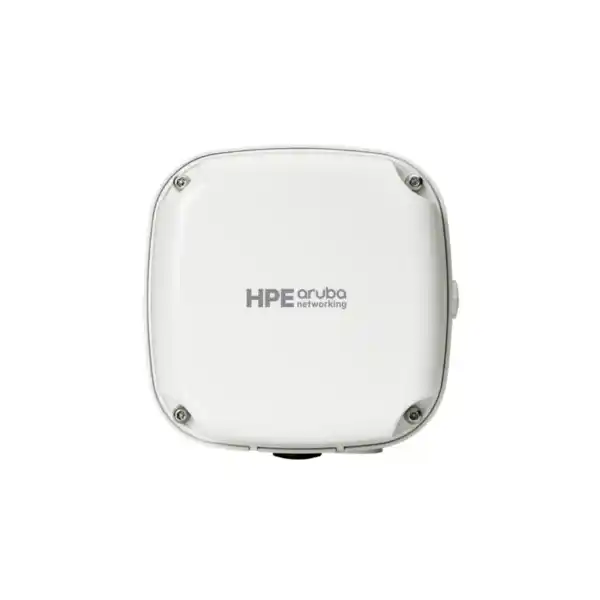
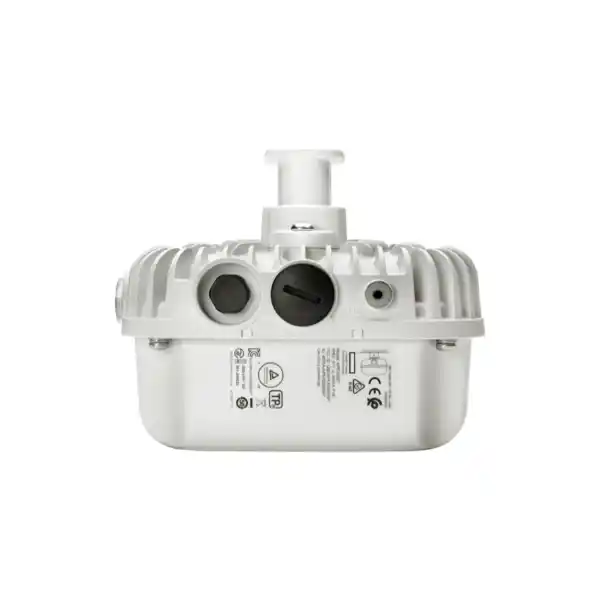
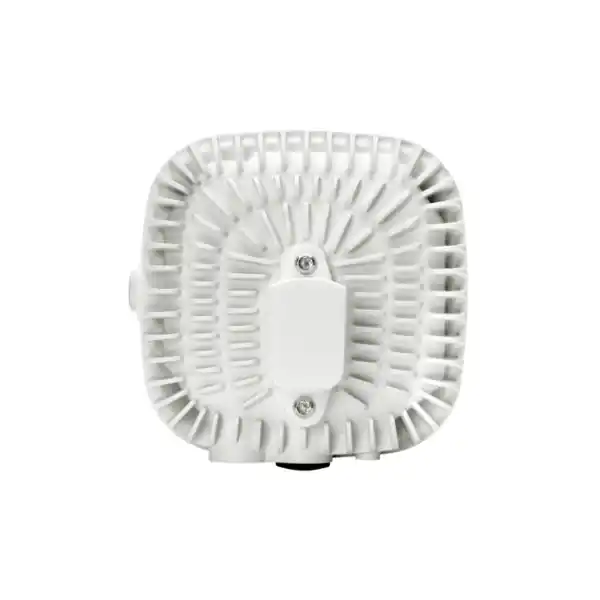
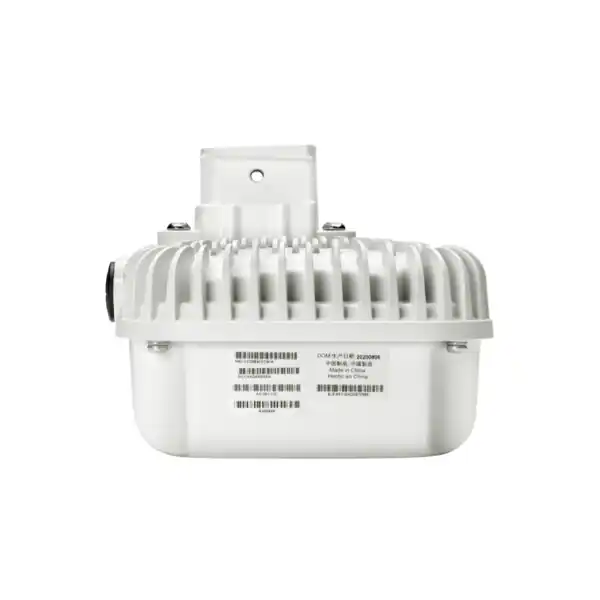
HPE Aruba Networking AP-565 in Dubai, UAE
The AP-565 is a Wi-Fi 6 outdoor access point with integrated omnidirectional antennas for businesses extending managed wireless service into exposed or environmentally challenging areas. It is designed for practical medium-density outdoor and warehouse coverage rather than directional point-focused coverage.
Before requesting a quotation
Confirm quantity, outdoor mounting location, planned cable path, PoE source, management method and the regulatory-domain part number.
For UAE deployments, FourTeck can review the requirement and help validate the worldwide AP-565 ordering variant and required accessories.
Wi-Fi 6 / 802.11ax
Dual radio, 2×2 MIMO
Integrated omnidirectional
Outdoor hardened, IP66/67
PoE; 802.3at recommended
Direct answer: what is the AP-565?
HPE Aruba Networking AP-565 is the omnidirectional model in the 560 Series outdoor Wi-Fi 6 family. It is mainly used to extend enterprise wireless coverage into outdoor areas, warehouses and other locations where a standard indoor access point is not appropriate. Buyers should consider it when they need broad local coverage from an outdoor-hardened access point rather than the directional antenna pattern of the AP-567. Before proceeding, confirm the regulatory-domain SKU, mounting arrangement, PoE budget, cable and surge-protection design, software or cloud-management requirements, expected client density and the physical position of the access point. These choices determine whether the AP-565 is the right fit and what must be included in the bill of materials.
What it does
The AP-565 provides concurrent 2.4 GHz and 5 GHz wireless service using two spatial streams per radio. HPE lists up to 1.2 Gbps on 5 GHz with an 802.11ax HE80 two-spatial-stream client and up to 574 Mbps on 2.4 GHz with HE40. Those are radio-link capabilities under appropriate client, channel and RF conditions, not a guarantee of application throughput for every user.
Its integrated omnidirectional antennas simplify broad-area coverage where an engineer wants energy distributed around the access point. That makes the AP-565 different from the AP-567, which uses integrated directional antennas for more focused coverage.
Who it suits
The product can suit enterprises, education campuses, logistics and warehousing operations, hospitality properties, transport-oriented environments, industrial sites and organisations with courtyards, service yards, perimeter work areas or other outdoor spaces that require managed Wi-Fi.
It is not automatically the right choice for every outdoor requirement. A long narrow yard, point-focused client area, very high-density venue, specialised hazardous location or a project requiring higher-capacity radio architecture may need a different model or design. A short RF and site review should precede purchase.
Business challenges the AP-565 can help address
Outdoor coverage gaps
Indoor access points are not designed for direct weather exposure. The AP-565 brings an outdoor-hardened enclosure and integrated antennas to spaces such as loading zones, courtyards and campus walkways.
Mixed client generations
The access point supports Wi-Fi 6 while retaining support for earlier 802.11 standards. Actual compatibility, performance and feature availability still depend on client devices and software versions.
IoT connectivity planning
An integrated Bluetooth 5 and 802.15.4 radio can support designs that involve compatible IoT use cases. IoT workflows, applications and management features should be confirmed as part of the wider solution.
Centralised operations
HPE Aruba Networking Central can be used to manage the access point as part of an Aruba environment. Subscription, licensing, architecture and supported software must be confirmed for the intended deployment.
Core capabilities that matter to a buyer
OFDMA, MU-MIMO and Target Wake Time are part of the Wi-Fi 6 feature set used by the 560 Series to improve radio efficiency with compatible clients.
HPE specifies IP66/67 protection, operation from -40°C to +55°C with full solar loading, and wind survival up to 165 mph.
AP-565 uses built-in omni antennas rated by HPE at 5.4 dBi for 5 GHz and 3.2 dBi for 2.4 GHz.
The AP is designed for PoE. HPE states unrestricted operation with 802.3at; 802.3af can introduce radio restrictions depending on Intelligent Power Monitoring settings.
Product-fit matrix
| Requirement | Suitable when | Confirm before ordering |
|---|---|---|
| Outdoor Wi-Fi | Coverage is required in weather-exposed business areas. | Mounting location, cable entry, grounding, surge protection and environmental conditions. |
| Broad local coverage | An omnidirectional antenna pattern fits the site geometry. | Whether a directional AP such as AP-567 would better serve the target area. |
| Wi-Fi 6 clients | The organisation wants 802.11ax radio efficiency with compatible devices. | Client mix, channel plan, interference and expected concurrent users. |
| PoE deployment | A suitable Ethernet cable and PoE source are available. | 802.3at budget, switch capacity and distance limits. |
| Central management | The AP will be part of an HPE Aruba Networking managed environment. | Management platform, software release, subscriptions and architecture. |
Verified AP-565 technical information
The following details are based on current HPE Aruba Networking 560 Series QuickSpecs and HPE product information for the AP-565. Regional radio rules and software functionality can change, so the ordering part number and supported software should be checked when the quotation is prepared.
| Brand | HPE Aruba Networking |
|---|---|
| Product | AP-565 outdoor access point |
| Portfolio | HPE Aruba Networking 560 Series Outdoor Access Points |
| UAE-region ordering reference | R4W43A is the RW standard-model AP-565 part number listed by HPE for regions outside the specifically restricted country variants; confirm current UAE applicability at order time. |
| Wireless standard | Wi-Fi 6 (802.11ax), with backward support for listed earlier 802.11 standards. |
| Radio configuration | Dual radio; 5 GHz 2×2 MIMO and 2.4 GHz 2×2 MIMO. |
| 5 GHz radio rate | Up to 1.2 Gbps with a compatible 2SS HE80 802.11ax client under supported conditions. |
| 2.4 GHz radio rate | Up to 574 Mbps with a compatible 2SS HE40 802.11ax client; 287 Mbps at HE20 as specified by HPE. |
| Antennas | Integrated omnidirectional; 5.4 dBi at 5 GHz, 3.2 dBi at 2.4 GHz, and integrated BLE/802.15.4 antenna listed at 3.3 dBi. |
| Ethernet | One E0 10/100/1000BASE-T RJ-45 port with PoE-PD and 802.3az Energy Efficient Ethernet. |
| PoE | 802.3at-compliant PoE+ recommended for unrestricted operation; behavior under 802.3af depends on Intelligent Power Monitoring configuration. |
| Maximum power consumption | 15.6 W worst case; power source sold separately. |
| IoT radio | Bluetooth 5 and 802.15.4 / Zigbee capability. |
| Ingress protection | IP66/67. |
| Operating temperature | -40°C to +55°C with full solar loading. |
| Dimensions | 16.5 cm × 16.5 cm × 13 cm, excluding mount. |
| Weight | 1.03 kg, excluding mount. |
| Regulatory model number | APEX0565. |
| Minimum software noted by HPE | HPE AOS and HPE Networking InstantOS 8.8.0.0 in current QuickSpecs; validate the target management architecture and supported release before deployment. |
| Warranty guidance | HPE QuickSpecs state limited lifetime warranty for the series. Confirm entitlement, terms and regional purchasing-channel coverage for the exact SKU. |
Configuration, licensing and compatibility dependencies
The access point itself is only one part of an outdoor wireless deployment. Management architecture, software level, switch configuration, PoE budget, RF design and physical installation all affect the final result. HPE Aruba Networking Central is a common management option, but cloud-management subscriptions and service entitlements are not assumed to be included with the hardware. If the project uses a controller-based or Instant architecture, the software version and feature support should be reviewed against the wider installed environment.
The power source is sold separately. HPE states that 802.3at operation has no feature restrictions, while an 802.3af source can trigger restrictions depending on Intelligent Power Monitoring settings and available power. That matters when the AP is connected to an older PoE switch or a long cable run. The Ethernet design should also consider surge protection, grounding and outdoor-rated cabling practices appropriate to the site.
Mounting hardware is optional. HPE lists several compatible outdoor mounting kits, including AP-OUT-MNT-V1A and AP-270-series mounting options. The best choice depends on pole or wall installation, orientation and the required adjustment. Do not assume a mount is included in the base access-point carton without checking the exact bill of materials.
A practical purchase and deployment journey
Define the coverage objective
Identify which outdoor areas need service, expected device types, user counts, mobility patterns and applications. Coverage for handheld scanners differs from coverage for guest smartphones or fixed IoT endpoints.
Validate the radio fit
Check whether omnidirectional AP-565 coverage is appropriate. If coverage needs to be projected into a defined sector, a directional model may be a stronger candidate.
Build the bill of materials
Confirm regulatory-domain SKU, mounting kit, PoE source, cabling, protection accessories, management subscription and any installation services.
Plan configuration
Define SSIDs, authentication, VLAN or policy design, RF settings, monitoring, firmware approach and integration with the existing Aruba environment.
Install and validate
After mounting and network connection, validate signal level, roaming behavior, client connectivity, upstream capacity and management visibility rather than relying only on a powered-on check.
Wi-Fi 6 efficiency in outdoor business spaces
A buyer should distinguish the label “Wi-Fi 6” from the practical outcome of a site design. The AP-565 supports 802.11ax capabilities such as OFDMA and multi-user MIMO, but users benefit only when client capabilities, channel availability, RF conditions and network capacity align. Outdoor environments can be deceptively difficult because reflections, open sight lines, heat, neighbouring networks, building materials and moving vehicles can all change how a radio cell behaves.
For a warehouse yard, for example, the desired result may not be the maximum theoretical data rate. The priority may be dependable connectivity for scanners, mobile terminals and tablets as workers move between indoor and outdoor zones. In a hospitality setting, the priority might be guest service in gardens and pool areas without creating excessive overlap with indoor cells. In a campus environment, roaming and policy consistency may be more important than peak speed at a single point.
This is why a quotation request should include the business applications and target areas rather than only an AP quantity. FourTeck can use that information to help determine whether the AP-565 belongs in the design and whether other models should complement it.
Outdoor resilience is more than an IP rating
HPE rates the AP-565 enclosure at IP66/67 and specifies operation from -40°C to +55°C with full solar loading. It also lists salt-spray testing and wind survival up to 165 mph. These are meaningful design characteristics for exposed deployments, but they do not remove the need for correct installation. The overall network can still be compromised by poor cable sealing, unsuitable mounting, inadequate grounding, missing surge protection or a PoE switch placed outside its own environmental limits.
In the UAE, outdoor installations should be planned for high ambient temperatures, direct sunlight, airborne dust and the practical maintenance realities of roofs, yards, poles and façades. The AP rating is only one part of that assessment. Cable type, conduit, junction method, mechanical fixing, access for maintenance and lightning or transient protection may be just as important.
For coastal or industrial locations, environmental exposure should be discussed explicitly. HPE’s salt-spray testing provides useful evidence of product hardening, but the surrounding hardware and mounting system must also be appropriate. A complete installation scope should therefore describe the mounting surface, approximate height, cable route, nearest network cabinet and expected site conditions.
Management, policy and operational control
The AP-565 can form part of an HPE Aruba Networking architecture that is centrally managed and policy driven. HPE positions Aruba Central as a cloud-based management option spanning wired and wireless networking. For a business buyer, the operational question is not simply whether Central exists, but whether the organisation already uses it, which subscription tier is required, how the AP will be onboarded and which roles will manage firmware, RF settings, user policies and monitoring.
HPE also describes Dynamic Segmentation, WPA3, Enhanced Open and policy-enforcement capabilities in the 560 Series feature set. These features can help an organisation build a more consistent access-policy approach, yet design and availability depend on the chosen architecture and software. Procurement teams should avoid assuming that every management or policy feature is usable immediately after buying the hardware.
The practical approach is to identify the existing Aruba environment, current software release, authentication platform, VLAN or role design and desired cloud-management model. FourTeck can then help frame the hardware, subscription and configuration requirement for quotation.
Where the AP-565 is a sensible candidate
Warehousing and logistics
Outdoor loading bays, staging areas and adjacent yards may need broad wireless cells for handheld devices and mobile operations. RF design should account for metal surfaces, vehicles and changing inventory conditions.
Education and campus grounds
Courtyards, walkways and outdoor common areas can be candidates when consistent managed Wi-Fi is required beyond building interiors. Roaming and overlapping indoor cells should be reviewed.
Hospitality and leisure spaces
Gardens, terraces and other external guest areas can benefit from weather-hardened coverage. Mounting aesthetics, guest density and channel planning are important selection factors.
Commercial and industrial sites
Service areas, perimeter work zones and outdoor operational spaces may need managed connectivity. Hazardous-location requirements must be checked separately; do not assume the standard AP-565 replaces a certified hazardous-location model.
Integration and operational considerations
An outdoor AP is often installed at the edge of the physical network, so its uplink and management path deserve the same planning attention as the radio. The AP-565 uses a single Gigabit Ethernet port. If the site expects sustained traffic from many clients, the end-to-end design should consider switch uplink capacity, WAN or internet limits, firewall policy and the application profile. The maximum wireless link rate is not the same as usable aggregate throughput across every network component.
Power design is equally important. A PoE budget should be checked at the individual port and switch level, especially in cabinets that already support phones, cameras and multiple access points. HPE documents unrestricted operation with 802.3at. If 802.3af is used, Intelligent Power Monitoring behavior can reduce radio capability, so a project that relies on legacy PoE should be reviewed before installation.
For management integration, document whether the network uses HPE Aruba Networking Central, a controller architecture or Instant-based operation, and provide relevant software details. For authentication, identify whether users rely on enterprise credentials, guest access, certificates, device roles or other methods. Those answers influence configuration work and help avoid treating the AP as an isolated commodity.
Buyer questions to resolve before ordering
AP-565 is the omnidirectional model. If users are concentrated in a defined sector, compare the design with AP-567 or another directional option.
A medium-density outdoor requirement may align with the 560 Series, while dense public venues or demanding applications may call for a different radio platform.
Confirm Central, controller or Instant architecture, current software release and any subscription requirement.
Check switch model, power budget, cable distance and protection. 802.3at is the preferred unrestricted power source according to HPE.
Mounting, outdoor cable, grounding, surge protection, access equipment and testing may all sit outside a simple hardware quotation.
HPE publishes several country-specific variants. Confirm the UAE regulatory-domain part number when the order is placed.
Procurement checklist for an AP-565 requirement
- Confirm the exact HPE Aruba Networking AP-565 model and regional SKU.
- State the required quantity and deployment sites.
- Describe the target outdoor area and expected client count.
- Confirm whether omnidirectional coverage fits the site geometry.
- Identify the switch model and available PoE standard.
- Specify mounting surface, height and preferred bracket type.
- Confirm outdoor cabling, grounding and surge-protection scope.
- Identify the current HPE Aruba management platform and software release.
- Confirm whether an HPE Aruba Networking Central subscription is required.
- List SSID, authentication and network-policy requirements if configuration is needed.
- State whether installation, configuration and RF validation are part of the quotation.
- Confirm warranty expectations and support-entitlement requirements.
FourTeck assistance for planning, sizing and quotation
A useful AP-565 quotation should answer more than “how many units?” FourTeck can help structure the requirement around the exact regional part number, mounting accessories, PoE design, management platform, subscription needs and configuration scope. For customers replacing older Aruba outdoor access points, the discussion can also include software compatibility, mounting reuse where appropriate, network-policy continuity and whether the existing switch infrastructure provides the required power.
For new deployments, a basic site description can significantly improve the purchasing decision. Share the property type, approximate dimensions of the outdoor coverage area, mounting possibilities, expected users or devices and any known obstacles. If the environment is operationally critical, include expected applications and roaming behavior. FourTeck can then help determine whether AP-565 is a reasonable candidate or whether another model should be evaluated before a bill of materials is finalised.
Businesses can also review related networking products and services through the FourTeck product catalogue and discuss installation or configuration requirements through FourTeck technology services.
UAE availability and support guidance
Contact FourTeck to confirm current UAE availability for the HPE Aruba Networking AP-565. Availability may depend on the regional SKU, required quantity, vendor lead time, commercial channel and whether mounting kits or subscriptions are included in the same requirement. The HPE ordering information currently lists an RW variant intended for many markets outside specific country-only radio domains; the exact UAE applicability should still be checked at quotation stage rather than assumed from a general product code.
For projects that include installation, configuration or migration, state that scope when requesting the quote. This helps separate hardware delivery from engineering work and makes it easier to identify dependencies such as site access, cable readiness, PoE switches and management credentials. FourTeck can coordinate the requirement after the model, quantity and project details are confirmed.
Dubai, Abu Dhabi, Sharjah and Ajman coverage
Businesses planning AP-565 deployments in Dubai, Abu Dhabi, Sharjah and Ajman can use the same requirement-led approach: confirm the exact target area, AP quantity, mounting conditions, PoE source, management architecture and whether onsite work is needed. Project coordination can then be discussed in the quotation. Site conditions vary significantly between warehouses, campuses, hospitality properties, logistics yards and commercial facilities, so the installation scope should be defined for the actual location rather than treated as a standard add-on. For assistance, use the FourTeck Dubai contact page and share the deployment details.
GCC Availability
For GCC projects, FourTeck can help organisations review an AP-565 requirement before a purchase order is raised. The discussion can cover the destination country, expected quantity, regulatory-domain model, mounting accessories, PoE arrangement, management architecture, HPE Aruba Networking Central subscription needs, installation planning and configuration scope. The same hardware family can have country or regional ordering differences, so a part number selected for one market should not automatically be copied into a multi-country project.
Requirements in the United Arab Emirates, Saudi Arabia, Kuwait, Qatar, Bahrain and Oman may also differ in delivery planning, site access and service expectations. Product availability, licensing, vendor lead times, project scope and onsite scheduling can vary by country, quantity and deployment conditions. Buyers should provide the destination, exact product requirement, number of access points, intended installation environment and preferred project timeline. FourTeck can then coordinate quotation and planning based on the confirmed requirement. For regional enquiries, the FourTeck Kuwait resource may also be relevant for Kuwait-based projects.
Africa Availability
Organisations planning outdoor HPE Aruba Networking deployments in Africa can ask FourTeck to review the AP-565 together with its accessories, regional model, software-management requirements and installation scope. This is particularly useful where several sites share a design but operate in different environmental or procurement conditions. A standardised architecture may still require country-level validation for radio rules, power, mounting, shipping and local deployment practices.
Availability and fulfilment can depend on destination, quantity, vendor lead time, regulatory variant, shipping arrangement and any accompanying subscription or support requirement. Buyers in East Africa and other regions should share the destination country, exact product quantity, mounting environment, preferred deployment schedule and whether configuration or onsite assistance is expected. FourTeck can then provide appropriate commercial and technical guidance without assuming local inventory or fixed delivery timing. Customers can review regional resources for FourTeck Kenya, FourTeck Uganda or broader FourTeck Africa coverage.
Related products and services to consider
HPE Aruba Networking AP-567
A related 560 Series model using integrated directional antennas. It may suit layouts where coverage must be aimed into a defined area rather than spread omnidirectionally.
Outdoor mounting kits
HPE lists multiple pole, wall, hanging and tilt mounting options. Select the bracket according to the actual mounting surface and desired AP orientation.
HPE Aruba Networking Central
Cloud-based management can be considered for suitable Aruba networks. Confirm the required subscription and supported architecture rather than assuming it is included with the AP.
Outdoor wireless installation
Installation planning can cover mounting, cable routes, PoE, grounding, protection and post-installation validation when included in the project scope.
What buyers are trying to understand before choosing the AP-565
A common first question is whether the AP-565 is simply an indoor access point placed in a rugged case. It is better understood as a purpose-built outdoor member of the 560 Series. The enclosure, temperature range, water and dust protection, integrated antennas and mounting ecosystem are designed around outdoor or environmentally challenging use. That distinction matters because an outdoor wireless project has mechanical, electrical and RF requirements that do not exist to the same degree in an office ceiling installation.
AP-565 versus AP-567
The most important difference for many buyers is antenna pattern. AP-565 has integrated omni antennas; AP-567 has integrated directional antennas. An omni pattern is useful when devices surround or move around the AP. A directional design is useful when energy should be concentrated toward a particular zone. The better model is determined by site geometry, not by assuming one model is more advanced.
How much speed should you expect?
HPE publishes radio-link maxima for compatible clients: up to 1.2 Gbps on 5 GHz and up to 574 Mbps on 2.4 GHz. End-user throughput will be lower and variable because Wi-Fi is shared airtime. Client radio design, channel width, interference, distance, modulation, uplink capacity and application behavior all influence results.
Another frequent buying concern is whether the AP needs a separate controller. The correct answer depends on the network architecture and software in use. The 560 Series can participate in HPE Aruba Networking environments that use different management approaches, including Central. A customer expanding an existing Aruba deployment should provide the current AP models, management platform and software release. That allows compatibility to be assessed before the quote is finalised. A greenfield customer should decide whether local, controller-based or cloud-oriented management is preferred and what level of operational visibility is required.
Power is also more nuanced than “supports PoE.” The AP-565 has one Gigabit Ethernet uplink and is designed to receive power over Ethernet. HPE states that an 802.3at source allows unrestricted operation. An 802.3af source can still bring the AP online, but power-management behavior may apply feature restrictions. This can become an unexpected issue when a project reuses older access switches. Before ordering, check both the switch PoE standard and its total available power budget across all connected devices.
Buyers also ask whether a mounting bracket is included. The safer procurement assumption is to treat mounting as a separate bill-of-material item until the exact bundle is confirmed. HPE lists several compatible outdoor mounts, and the correct choice depends on pole diameter, wall surface, tilt requirement and installation height. Outdoor-rated Ethernet cable, grounding and surge protection may also be separate from the AP and bracket.
For UAE purchasing, the regulatory-domain SKU matters. HPE lists multiple AP-565 country variants and an RW variant for many other markets. The RW standard model is currently listed as R4W43A. Because regulatory and ordering policies can change, use that as a reference to validate rather than an unconditional guarantee that every UAE quotation must use the same part. FourTeck can confirm the currently appropriate ordering code when the requirement is submitted.
A final area of confusion is the role of cloud management subscriptions. Hardware capability and management entitlement are not the same item. If the project intends to use HPE Aruba Networking Central, the required subscription term and tier should be specified in the quote. This prevents a situation where access points arrive but the intended management service is missing from the order. The same principle applies to support coverage: confirm what entitlement is needed rather than assuming every service is bundled into the hardware purchase.
When preparing an enquiry, buyers will get a more useful answer by sharing the target environment, quantity, approximate coverage area, client count, management platform, PoE switch information and installation expectations. That information turns a basic product-price request into a design-aware quotation and helps reduce the risk of buying the wrong antenna pattern, power arrangement or accessory set.
Decision questions that deserve a clear answer
Will one AP-565 cover my whole outdoor area?
There is no reliable universal coverage radius. Buildings, walls, vehicles, foliage, mounting height, channel conditions, client transmit power and required data rates all change usable coverage. Start with the target applications and site layout, then size the number and placement of APs. A predictive design or onsite validation is more dependable than a fixed-distance assumption.
Can I reuse my existing PoE switch?
Possibly, but verify it. The AP-565 is designed for PoE and HPE specifies unrestricted operation with 802.3at. If the switch provides only 802.3af, power management may reduce radio capability depending on settings. Also check available wattage across the switch, cable length and outdoor surge-protection design.
Do I need Aruba Central?
Central is an important HPE Aruba Networking management option, but the right architecture depends on the customer environment. An existing deployment may use a controller or Instant-based design. If Central is desired, confirm the supported software and subscription requirements. A Central subscription should not be assumed to be included with the hardware.
Is the AP-565 suitable for a warehouse?
HPE specifically positions the 560 Series for outdoor and warehouse environments. Suitability still depends on rack layout, ceiling or wall positions, client devices, interference, roaming and whether an outdoor-hardened model is actually required inside the facility. A warehouse with tall metal racks may need more detailed RF planning than an open yard.
What should I send for an accurate quote?
Provide quantity, destination, approximate coverage area, preferred mounting positions, existing Aruba management platform, switch/PoE details, installation scope and whether subscriptions are needed. If this is a replacement project, include the current AP models. These details allow the bill of materials to include the correct regional SKU and accessories.
Should I choose AP-565 or a higher-capacity model?
Choose based on client density, application demand, RF design and lifecycle strategy rather than product naming alone. The 560 Series is positioned by HPE as an entry-level outdoor Wi-Fi 6 platform for medium-density needs. Large public venues, demanding multimedia usage or aggressive capacity targets may justify evaluating higher-tier outdoor access points.
These questions are best resolved before procurement because they directly affect the hardware count, accessories and project scope. FourTeck can review the answers and help turn them into a quotation and deployment plan. For broader company information, see About FourTeck.
Why businesses contact FourTeck for an AP-565 requirement
The main value is practical requirement clarification. A buyer may begin with only the product name, while the final order requires a regional SKU, quantity, mounting plan, PoE source, management approach, optional subscription and installation scope. FourTeck can help organise those decisions so the quotation reflects the intended deployment rather than a bare access-point line item.
This is especially useful for multi-site projects, replacement programmes and outdoor deployments where the wrong antenna pattern or missing mount can create avoidable rework. FourTeck can also help separate confirmed product facts from configuration-dependent features, coordinate availability checks and discuss whether installation, configuration or migration services should be added to the requirement. Contact support and sales through the FourTeck UAE contact page.
Frequently asked questions
What is the HPE Aruba Networking AP-565 designed for?
It is an outdoor-hardened Wi-Fi 6 access point in the 560 Series, designed for outdoor and environmentally challenging areas where broad omnidirectional coverage is appropriate.
What is the difference between AP-565 and AP-567?
AP-565 uses integrated omnidirectional antennas. AP-567 uses integrated directional antennas. The correct choice depends on the desired RF coverage pattern and site layout.
Does the AP-565 support Wi-Fi 6?
Yes. HPE specifies dual-radio 802.11ax operation with 2×2 MIMO on both 5 GHz and 2.4 GHz, while also supporting earlier listed Wi-Fi standards for compatible clients.
Which PoE standard should be used?
HPE states that 802.3at provides unrestricted operation. The AP can operate from 802.3af, but Intelligent Power Monitoring behavior may introduce feature restrictions depending on available power and configuration.
Is a mounting bracket included?
Do not assume it is. HPE lists optional outdoor mounting kits for different wall, pole, hanging and tilt arrangements. Confirm the required bracket as part of the bill of materials.
Can the AP-565 be managed with HPE Aruba Networking Central?
Yes, Central is a supported management option for the 560 Series. The appropriate Central subscription, software support and architecture should be confirmed separately.
What is the relevant AP-565 part number for UAE projects?
HPE currently lists R4W43A as the RW standard AP-565 variant for many markets outside the specific country-only domains. Confirm the current UAE regulatory-domain SKU with FourTeck before ordering.
Does the AP-565 include a warranty?
Current HPE QuickSpecs state a limited lifetime warranty for the 560 Series. Warranty entitlement and regional terms should still be confirmed for the exact SKU and purchase channel.
How do I request AP-565 pricing in Dubai?
Send FourTeck the required quantity, destination, management platform, PoE details, mounting needs and installation scope. FourTeck can then confirm current UAE availability and prepare a quotation based on the requirement.
Confirm the right AP-565 configuration before ordering
Share the quantity, outdoor area, mounting plan, existing HPE Aruba environment and PoE details. FourTeck can help validate the regional model, accessories, management requirements and quotation scope for your UAE deployment.

Reviews
There are no reviews yet.