
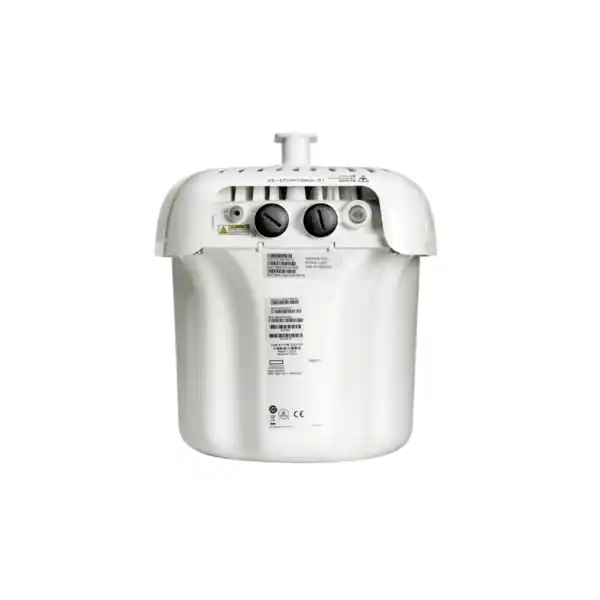
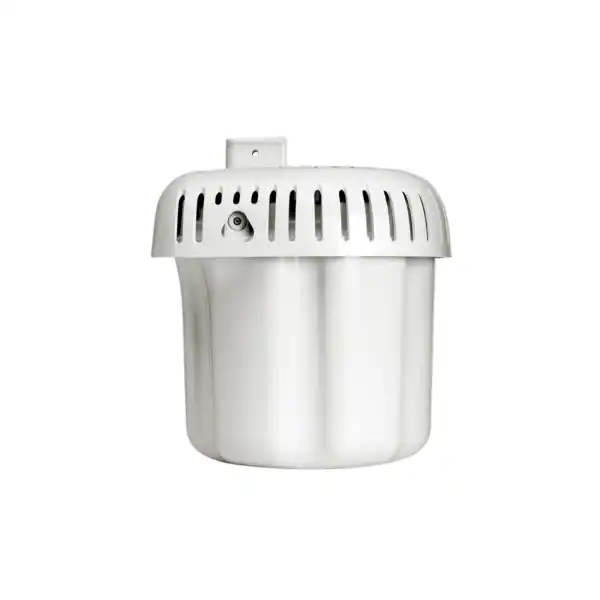
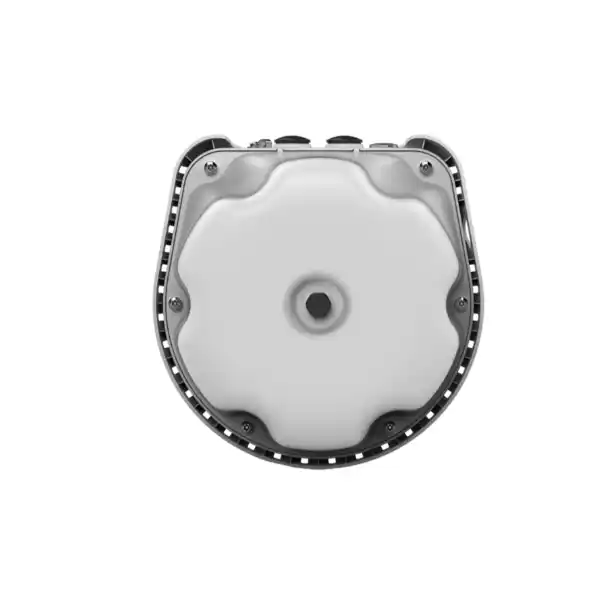
HPE Aruba Networking AP-575 in Dubai, UAE
The AP-575 is built for organisations that need enterprise wireless coverage beyond indoor offices. It brings Wi-Fi 6, integrated omnidirectional antennas, rugged outdoor protection, multigigabit Ethernet and an IoT radio into a single access point intended for exposed locations such as campus paths, public spaces, hospitality grounds, transport areas, industrial yards and outdoor gathering zones. The important buying question is not simply whether the AP is powerful enough, but whether its antenna pattern, regional SKU, mounting position, PoE design, uplink capacity and management architecture match the site.
Direct answer for buyers
HPE Aruba Networking AP-575 is an outdoor-hardened Wi-Fi 6 access point in the 570 Series with integrated omnidirectional antennas. It is mainly used to extend managed enterprise wireless service into exposed outdoor spaces where weather resistance, capacity and centralised control matter. Organisations considering it typically include campuses, resorts, public venues, logistics sites, transport environments, large compounds and industrial facilities. Before proceeding, confirm the correct regional SKU, mounting location, antenna coverage requirement, PoE budget, switch-port capability, management platform, software version and any subscription requirements. The AP-575 is not a generic plug-in outdoor router; it should be planned as part of an enterprise WLAN design so radio coverage, uplink capacity and operational ownership are clear.
What the AP-575 does
The AP-575 provides concurrent 2.4 GHz and 5 GHz Wi-Fi 6 coverage for outdoor environments. Its built-in omnidirectional antenna system is intended to distribute coverage around the access point rather than focus energy into a narrow directional sector. This makes the model suitable where users or connected devices approach from several directions, provided the mounting location and surrounding structures support that coverage pattern.
It also provides wired uplinks through an HPE SmartRate 2.5GbE port and a second 1GbE Ethernet port, while an integrated Bluetooth 5 and 802.15.4 radio can support relevant IoT use cases. Management choices can include supported HPE Aruba Networking operating systems and HPE Aruba Networking Central, depending on the organisation’s architecture and licensing.
Who should consider it
This model is most relevant to buyers who need a managed outdoor AP rather than a consumer-style wireless extender. It may suit corporate campuses with courtyards, educational grounds, hotels with pools or gardens, open-air retail, parking areas, public venues, warehouse exteriors, logistics yards and transportation environments where the network team wants outdoor Wi-Fi to follow the same security and operational model as the indoor WLAN.
The AP-575 may be less suitable when a highly directional coverage pattern is required, when the site needs hazardous-location certification associated with a different product family, or when the available switching infrastructure cannot deliver the required PoE and uplink design. Those cases should be assessed before selecting the final model.
Business problems this outdoor access point can help address
Coverage stops at the building edge
Indoor APs are not designed to be exposed to rain, heat, wind and airborne contaminants. The AP-575 gives network teams a purpose-built outdoor platform when Wi-Fi service has to continue across courtyards, paths, parking zones or other exposed areas.
Outdoor demand is no longer light
Modern outdoor areas may carry voice, collaboration, business applications, mobile transactions, operational devices and guest traffic at the same time. Wi-Fi 6 features such as OFDMA and MU-MIMO help the WLAN use airtime more efficiently when compatible clients and proper RF design are present.
Operations need one management model
The value of an enterprise outdoor AP is not only radio coverage. It can be incorporated into supported HPE Aruba Networking management, policy and monitoring workflows, helping reduce the operational gap between indoor and outdoor wireless infrastructure.
IoT devices need outdoor reach
The integrated Bluetooth 5 and 802.15.4/Zigbee radio provides another design option for suitable IoT use cases. Whether it is used depends on the actual device ecosystem, software architecture, security policy and deployment requirements.
Core capabilities that matter during evaluation
Product-fit matrix
| Requirement | Suitable when | Confirm before ordering |
|---|---|---|
| Omnidirectional outdoor coverage | Users or devices are distributed around the AP rather than concentrated in one narrow sector. | Mounting height, obstacles, desired cell edge and whether AP-577 directional coverage would be more appropriate. |
| Wi-Fi 6 client capacity | The site has a meaningful number of modern Wi-Fi clients and benefits from improved airtime efficiency. | Actual device mix, concurrency, application demand, RF noise and channel plan. |
| Multigigabit switching | The access switch can provide 2.5GbE and appropriate PoE where the design calls for it. | Switch model, port speed, PoE class, cabling and whether the second Ethernet port is needed. |
| Harsh weather exposure | The installation is outdoors and must tolerate dust, moisture, temperature extremes and wind. | Site-specific environmental risks, lightning protection strategy, mounting hardware and cable entry practices. |
| Centralised enterprise management | The organisation already uses or plans a supported HPE Aruba Networking WLAN architecture. | Software version, controller or Central design, licensing/subscription needs and operational ownership. |
Verified technical information for the AP-575
The table below uses current HPE Aruba Networking 570 Series documentation and the UAE product listing for model-level information. Regional part numbers differ. HPE’s UAE store identifies the AP-575 (EG) as R4H14A. The generated FourTeck catalogue SKU for this page is separate from the manufacturer part number.
| Brand | HPE Aruba Networking |
| Product | AP-575 Outdoor Access Point, 570 Series |
| UAE-listed manufacturer part number | R4H14A, AP-575 (EG). Confirm regional SKU for the final destination. |
| Deployment type | Outdoor hardened |
| Wi-Fi generation | Wi-Fi 6 (802.11ax) |
| Radio configuration | 2×2 MIMO at 2.4 GHz and 4×4 MIMO at 5 GHz |
| Channel bandwidth | 20/40 MHz at 2.4 GHz; 20/40/80/160 MHz at 5 GHz, subject to regulatory domain and configuration. |
| Antenna | Built-in omnidirectional antennas; HPE QuickSpecs list 5 dBi for 5 GHz and 3.4 dBi for 2.4 GHz. |
| IoT radio | Bluetooth 5 and 802.15.4/Zigbee support |
| Location capability | 802.11 FTM support |
| Wired interfaces | E0 HPE SmartRate 100/1000/2500BASE-T and E1 100/1000BASE-T, both RJ-45 |
| Link aggregation | LACP support between both network ports for redundancy and increased capacity |
| Power | PoE on E0 and/or E1; HPE specifies 802.3at/bt Class 4 or higher. 802.3af operation is not supported. |
| Maximum power consumption | Up to 26.1 W with a single PoE source in full-function mode and 32.0 W with dual-port PoE, according to current QuickSpecs. |
| Environmental protection | IP66/67 water and dust rating; designed for all-weather operation |
| Operating temperature | -40°C to +65°C with full solar loading |
| Wind survival | Up to 165 mph in HPE specifications |
| Dimensions | Approximately 27 x 23 x 24 cm (H x W x D), excluding mounting bracket, per current UAE data sheet |
| Weight | Approximately 2.4 kg in the current UAE data sheet |
| Management | Supported HPE Aruba Networking operating systems and management options include on-premises, public cloud, VPC and as-a-service models; exact software and licensing should be confirmed. |
| Security features | WPA3, Enhanced Open support, dynamic segmentation capabilities, policy enforcement functions and an installed trusted platform module are documented for the 570 Series. |
| Mounting | Optional outdoor pole, wall, hanging, tilt and flush-mount kits are available; select the kit for the site geometry. |
| Warranty guidance | HPE documentation lists a limited lifetime hardware warranty for the series. Confirm the exact entitlement and regional terms against the purchased SKU. |
| Availability | Contact FourTeck for current UAE availability, regional part number and project lead-time guidance. |
Regional SKU, configuration and license dependencies
AP-575 is a model name, not a complete ordering definition. HPE documents multiple regulatory-domain part numbers, including EG, IL, JP, RW, US and other variants, as well as TAA versions. For Dubai and UAE projects, do not substitute a different regulatory SKU only because the hardware appears visually identical. The permitted channels, transmit settings and regulatory approvals are tied to the destination and configuration. HPE’s UAE store currently lists the AP-575 (EG) as R4H14A, which is the most relevant manufacturer part number to discuss for a UAE requirement unless the project has a different approved basis.
Management capabilities may also depend on the selected HPE Aruba Networking architecture, software release and subscriptions. If HPE Aruba Networking Central is planned, the required subscription and device onboarding model should be included in the bill of materials. If the AP will join an existing controller-based or Instant deployment, confirm version compatibility and migration plans. A technically correct access point can still create a project delay if the regulatory domain, software level or management entitlement is wrong.
Power design is another dependency. The AP can accept PoE on either Ethernet interface and supports power sharing across dual uplinks, but the behaviour differs by available PoE budget and Intelligent Power Monitoring settings. FourTeck can help review the switch model, PoE class, port count and whether the second Ethernet connection is intended for resilience, aggregation or simply reserved for future use.
A practical purchase and deployment journey
Define the outdoor service area
Mark the locations where users or devices need service, not simply the property boundary. Include building materials, landscaping, vehicle areas, poles, rooflines and potential RF obstructions.
Validate AP model and antenna pattern
Confirm that omnidirectional coverage is appropriate. A directional AP can be a better choice for a defined sector, while external-antenna models may be required where antenna placement is specialised.
Check switching and power
Verify cable routes, surge protection approach, 2.5GbE requirements, PoE class, available power budget and whether one or two uplinks are planned.
Confirm management and policy
Decide how the AP will be provisioned, monitored and secured. Include software compatibility, subscription terms, SSIDs, authentication, segmentation and guest access requirements.
Install, validate and tune
After mounting and cabling, validate RF coverage, roaming, client performance, uplink health, PoE state, policy behaviour and monitoring before treating the outdoor area as production-ready.
Capacity is about airtime, not only headline data rate
HPE documentation for the 570 Series highlights Wi-Fi 6 features including OFDMA, bidirectional MU-MIMO and target wake time. These functions can help a properly designed WLAN schedule traffic more efficiently when many compatible clients share an outdoor cell. However, the real business outcome depends on the devices actually connecting, their application behaviour, channel width, interference, signal quality and how many clients are active at the same moment.
For that reason, an AP count should not be based on a maximum client number or theoretical throughput figure alone. A hotel courtyard with video calls and mobile transactions has a different load profile from a parking area used mainly for staff handhelds. A logistics yard with scanners and IoT devices may have modest bandwidth demand but require strong roaming and coverage consistency. Each case can lead to a different AP spacing and channel plan.
The most useful sizing inputs are expected concurrent users, device types, critical applications, minimum usable signal at the edge of the service area, roaming requirements and the physical shape of the site. FourTeck can use those inputs to help determine whether AP-575 is an appropriate fit and how many units should be considered for a more detailed wireless design.
Data-rate note
Current HPE 570 Series documentation presents both a 2.69 Gbps peak aggregate figure and higher maximum radio data-rate values depending on channel width and calculation method. Those numbers should not be treated as guaranteed application throughput.
For procurement, the more useful question is whether the AP, client population, RF design and wired uplink are balanced for the intended workload. FourTeck can help translate the site requirement into a practical design target instead of using a single headline number.
Outdoor resilience and installation quality
The AP-575’s IP66/67 rating and specified -40°C to +65°C operating range are important because an outdoor access point must do more than survive a brief rain shower. It may be exposed to direct sun, dust, wind, humidity, precipitation and large temperature changes over its service life. HPE also publishes salt-spray testing and a wind-survival figure for the 570 Series, which is relevant for coastal or exposed projects. These ratings describe the product platform, but they do not remove the need for correct installation practice.
Mounting hardware must be selected for the surface and orientation. Cable entry, drip loops, grounding and surge-protection design should follow the project standard and local requirements. The cable path back to the network room must also preserve Ethernet performance and PoE delivery. Outdoor AP failures are not always caused by the radio itself; poor mounting, inappropriate connectors, water ingress around cabling or an underspecified power path can create avoidable problems.
For Dubai and UAE sites, direct solar exposure and high ambient temperatures are practical design considerations. The AP is specified for demanding temperatures, yet placement still matters for RF propagation, maintenance access and cable routing. A site review should consider both wireless performance and long-term serviceability.
Secure access, segmentation and operational control
HPE positions the 570 Series with WPA3, Enhanced Open support, an installed trusted platform module and policy enforcement capabilities. These features can support a stronger wireless security model, but the access point does not decide the security outcome by itself. Authentication design, certificate use, guest access, role assignment, segmentation, firewall policy and management-plane controls must be planned across the wider WLAN architecture.
Outdoor coverage often serves a mixed population. Employees may need corporate access, visitors may require an isolated guest service, contractors may need a restricted SSID and IoT devices may require tightly controlled communications to a small set of services. A single physical AP can participate in this policy design, but the exact implementation depends on the chosen HPE Aruba Networking software and network architecture.
FourTeck can help clarify whether the project needs simple SSID extension, identity-based policy, dynamic segmentation, guest onboarding, device profiling or integration with existing authentication services. Defining these requirements before procurement reduces the chance of discovering that additional licensing, gateways, subscriptions or configuration effort is required after the hardware arrives.
Ideal business environments and use cases
Corporate and education campuses
Extend managed Wi-Fi into courtyards, walkways, outdoor meeting zones and connecting areas between buildings, with roaming and policy design aligned to the main campus WLAN.
Hospitality and leisure properties
Serve pools, gardens, terraces, beach approaches and event lawns where guests and staff expect connectivity beyond guestrooms and indoor common areas.
Logistics and warehouse exteriors
Support handhelds, mobile devices and operational systems around loading yards, staging areas and open compounds, subject to site survey and roaming requirements.
Public venues
Add outdoor Wi-Fi capacity for plazas, queues, event approaches and distributed public areas where user density can change significantly during operating hours.
Parking and transport zones
Provide wireless access for operational users, authorised services or passenger-facing connectivity where mounting points and line-of-sight conditions permit.
Industrial outdoor areas
Use the rugged platform in suitable non-hazardous exposed environments. Where hazardous-location certification is required, evaluate the designated 570EX family rather than assuming the standard AP-575 is appropriate.
Integration and operational considerations
Switching and cabling
Check whether the serving switch can deliver 2.5GbE, the required PoE class and enough total power budget for all APs on the switch. Confirm copper cable category, length, outdoor pathway, protection measures and any intermediate surge-protection hardware. If dual Ethernet is required, include two switch ports and appropriate network configuration.
Existing WLAN architecture
An AP-575 added to an existing Aruba environment should be checked for software compatibility, supported management mode, naming and provisioning standards, radio profiles, authentication policy and monitoring requirements. A hardware match is only one part of integration.
RF coexistence
Outdoor cells can overlap with indoor APs near windows, neighbouring wireless systems and non-Wi-Fi RF sources. Channel reuse, transmit power and mounting placement should be planned to avoid creating excessive co-channel contention or coverage that extends farther than intended.
Operations and maintenance
Consider how technicians will safely access the AP, how cables will be inspected, how firmware changes will be managed and how the network team will distinguish wireless faults from uplink, PoE, authentication or environmental issues. Operational planning should begin before installation.
Buyer questions to resolve before ordering
The strongest quotation requests describe the deployment, not just the model name. The questions below help determine whether the AP-575 and its surrounding components are correctly scoped.
Provide approximate height, wall/pole/ceiling structure, exposure and available cable path.
Identify the actual business areas, expected cell edges and whether coverage must pass around corners or through landscaping and structures.
Separate registered devices from clients that will be active at the same time and note bandwidth-sensitive applications.
Confirm that omnidirectional service is wanted rather than a directional sector or an external-antenna design.
Provide model, port speed, PoE standard, available budget and whether dual Ethernet is required.
Specify Central, controller-based, Instant or another supported architecture and current software versions where available.
List staff, guest, contractor and IoT access needs, authentication sources, segmentation and any compliance constraints.
Clarify mounting, cabling, network configuration, RF tuning, testing and handover responsibilities.
Procurement checklist for an AP-575 project
✓ Confirm the exact HPE regional part number for the UAE or destination country.
✓ Confirm quantity and whether spare units are required for the project support model.
✓ Record mounting surface, orientation and mounting-kit requirement for every AP position.
✓ Validate 2.5GbE or 1GbE uplink design against expected traffic and switch capability.
✓ Validate PoE class, per-port capacity and total switch PoE budget.
✓ Confirm whether one or two Ethernet uplinks will be connected.
✓ Check cable type, run length, outdoor route and surge-protection approach.
✓ Confirm HPE Aruba Networking software compatibility and management architecture.
✓ Include any required HPE Aruba Networking Central subscription or related management entitlement.
✓ Define staff, guest and IoT network policies before configuration begins.
✓ Confirm installation, configuration, testing and documentation scope in the quotation.
✓ Confirm current availability, warranty entitlement and vendor lead time before committing to a project date.
How FourTeck can support the buying decision
FourTeck can assist before the order is placed by reviewing the application, expected user density, outdoor environment, switch infrastructure, PoE budget, management platform and mounting needs. This is useful because an outdoor wireless bill of materials may include more than the access points themselves. It can also require mounting kits, switching changes, subscriptions, configuration work, installation coordination and testing.
For an existing Aruba deployment, FourTeck can help collect the details needed to check how the new APs are expected to join the current network. For a new deployment, the discussion can start with coverage areas, critical applications, client population, authentication, guest access, operational ownership and the preferred management model. Where a formal RF survey or detailed design is required, that scope should be identified separately rather than assumed from a product quote.
You can also explore FourTeck’s technology products, discuss installation and configuration services, or learn more about FourTeck before requesting a project-specific quotation.
UAE availability and support guidance
For Dubai and UAE projects, contact FourTeck to confirm current AP-575 availability and the correct regional part number. Availability can change with quantity, vendor allocation and lead time, so the product should not be assumed to be immediately available simply because a model page exists online. The UAE HPE listing currently identifies the AP-575 (EG) as R4H14A, but the final quotation should still confirm the manufacturer part number, quantity and any required accessories or subscriptions.
Delivery coordination, installation and configuration should be discussed after the exact requirement is defined. If FourTeck is asked to include installation, provide the proposed mounting locations, access restrictions, working-hour requirements and cabling status. If configuration is required, share the existing WLAN architecture, management platform, SSID and security policy requirements, IP addressing, authentication method and handover expectations.
For organisations operating across Dubai, Abu Dhabi, Sharjah and Ajman, FourTeck can coordinate a combined requirement review so model selection and configuration standards are consistent across multiple UAE locations. Site conditions and visit scope can differ by branch, therefore the quotation should separate hardware supply from any location-specific installation or support activity.
GCC Availability
FourTeck can assist businesses planning HPE Aruba Networking AP-575 deployments across GCC markets by reviewing the intended destination, regulatory variant, quantity, mounting requirement, management approach and support scope before a quotation is finalised. This is particularly important for wireless hardware because a part number suitable for one market should not automatically be assumed suitable for another. Requirements in the United Arab Emirates, Saudi Arabia, Kuwait, Qatar, Bahrain and Oman may involve different procurement routes, lead times, license considerations or project coordination needs. Share the destination country, required number of access points, preferred project schedule, switch and PoE environment, and whether configuration or installation assistance is expected. Product availability, licensing, delivery schedules, service visits, project scope and vendor lead times can vary by country, model and quantity. FourTeck can help organise the requirement and quotation, while country-specific approvals, shipment arrangements and service scope should be confirmed for each project rather than treated as fixed.
For broader regional technology requirements, buyers can also review FourTeck’s Kuwait technology coverage or use the main FourTeck contact channel to coordinate multi-country discussions.
Africa Availability
Organisations sourcing AP-575 access points for African deployments should begin with the destination country and network design rather than assuming the same regulatory SKU or project model used in the UAE will apply. FourTeck can help review the exact hardware requirement, quantity, mounting accessories, management subscriptions, configuration needs and support expectations for projects in East Africa, West Africa, Southern Africa or other selected markets. Availability and fulfilment may depend on destination, regional part number, vendor lead time, quantity, power and regulatory requirements, shipping arrangements and local project conditions. Buyers should share the destination country, planned deployment sites, target schedule and whether installation or remote configuration assistance is required. This makes it easier to prepare a bill of materials that accounts for both wireless hardware and the operational dependencies around it.
FourTeck’s regional resources include Africa technology solutions, with additional regional presence through Kenya and Uganda resources. Confirm final delivery, service and support scope for the specific country rather than relying on assumptions from another market.
Related products, services and alternatives to consider
HPE Aruba Networking AP-574
A connectorised 570 Series option for projects that require external antennas. Antenna selection and compatibility must be confirmed for the specific design.
HPE Aruba Networking AP-577
A 570 Series model with integrated directional antennas, useful to evaluate when coverage needs to be concentrated into a defined sector rather than distributed around the AP.
HPE Aruba Networking Central
A management option for supported Aruba environments. Subscription structure, software design and operational requirements should be confirmed with the project scope.
Outdoor mounting kits
HPE documents several pole, wall, hanging, tilt and flush-mount options. Select the exact kit according to the AP position and installation surface.
Wireless design and configuration
For multi-AP projects, RF planning, SSID design, authentication, segmentation and validation can be scoped as services instead of treating AP installation as a hardware-only exercise.
What buyers are trying to understand before choosing AP-575
One of the most common points of confusion around the AP-575 is the relationship between the model name and the regional part number. The model name describes the hardware family and antenna style, while HPE publishes different part numbers for regulatory domains. A Dubai buyer therefore should not simply order whichever AP-575 SKU is cheapest on an international marketplace. The correct starting point is the destination country and approved regulatory variant. For the UAE, HPE currently lists the AP-575 (EG) as R4H14A. That does not mean every project will automatically use the same commercial route, but it gives procurement teams a concrete part number to verify when requesting a quote.
Another frequent question is whether the AP-575 is intended for long-distance outdoor links. Its integrated omnidirectional antennas are designed for surrounding coverage, not for behaving like a point-to-point bridge with a narrow high-gain antenna. If the real requirement is to cover a long corridor, road edge, specific outdoor seating block or one side of a building, a directional model may provide a more controlled RF pattern. If the requirement is to place the AP in the middle of an open service zone where clients approach from several directions, AP-575 is more naturally aligned. A site plan makes this distinction much easier than relying on product names.
Buyers also compare AP-575 with AP-574 and AP-577. The useful difference is antenna architecture. AP-574 is connectorised for external antennas, AP-575 uses integrated omnidirectional antennas and AP-577 uses integrated directional antennas. These are not simply good, better and best versions of the same coverage pattern. They solve different physical RF placement needs. Choosing between them should begin with where the AP can be mounted and where the signal needs to go. The number of users, surrounding structures and interference environment then determine the rest of the RF design.
A further procurement question is whether one AP can cover a large outdoor property. Range estimates found online are rarely sufficient because outdoor Wi-Fi coverage depends heavily on mounting height, client transmit power, vegetation, walls, metal structures, vehicles, interference and the minimum data rate needed at the edge of the cell. A smartphone with a small battery and antenna must still be able to transmit back to the AP. That uplink limitation is why a professional design usually focuses on usable two-way coverage rather than the farthest distance at which a beacon can be detected.
For dense public or hospitality environments, buyers often ask how many clients the AP supports. HPE publishes series-level client guidance in selection material, but a practical design should not size an outdoor WLAN to the absolute association limit. An AP serving 80 active users running video calls is carrying a different workload from an AP with 200 mostly idle phones. Concurrency, airtime utilisation and application mix are more useful sizing inputs. FourTeck can help structure these assumptions so procurement is linked to the real operating requirement.
Installation planning should also include the network side of the project. If the AP is mounted high on a pole, the installation team needs safe access, the correct bracket, protected Ethernet cabling and a clear route back to the serving switch. If the project intends to use both Ethernet ports, the switching configuration and PoE behaviour should be designed in advance. If only one uplink is used, confirm that the port provides the required power and speed. This information belongs in the bill of materials and method statement, not as an afterthought on installation day.
Finally, the quotation should separate hardware cost from optional subscriptions, mounting kits and services. Current online prices vary widely by region, seller, stock position and warranty channel, so a web price should be treated as a reference rather than a committed UAE selling price. A useful quote request includes the exact destination, quantity, required installation date, existing switch model, management platform, preferred mounting locations and whether installation or configuration is part of the requirement. That gives FourTeck enough context to confirm the right AP-575 variant and avoid a quote that is technically incomplete.
Questions that lead to a better AP-575 decision
How do I know if omnidirectional coverage is right?
Look at the service area from the proposed mounting point. If users are distributed around the AP, an omni pattern is often logical. If almost all users are in one direction, a directional model may reduce wasted RF energy and make the cell easier to control. A floor plan or outdoor site map can resolve this before purchase.
Should I insist on a 2.5GbE switch port?
Not every deployment will drive more than 1Gbps through a single AP, but the AP-575 provides a 2.5GbE SmartRate interface to avoid a fixed 1GbE ceiling where multigigabit switching is available. Base the decision on expected traffic, switch capability, cabling and the wider refresh strategy rather than using port speed as a checkbox.
What information is needed for accurate quantity sizing?
Provide the outdoor area dimensions, mounting options, construction materials, expected concurrent clients, critical applications, roaming requirement and any minimum signal or data-rate target. A site map with proposed AP points is far more useful than a request for “coverage of the whole compound.”
Can the AP support staff, guest and IoT networks together?
The platform can participate in multiple network and policy designs, but the exact SSID, authentication, segmentation and IoT architecture depends on the chosen software and management environment. Define these traffic groups before configuration so any related subscriptions or gateways are included in the project scope.
What can make an AP-575 deployment underperform?
Common causes include poor AP placement, excessive cell overlap, interference, clients connecting at weak signal levels, an underspecified PoE or uplink path, incorrect RF profiles and unrealistic expectations about client range. Installation quality and radio planning matter as much as choosing the correct hardware.
What should a quote include besides the AP?
Depending on the project, include mounting hardware, switch or PoE requirements, management subscriptions, configuration, installation, testing, documentation and any site-specific cabling or protection items. The exact scope should be confirmed rather than assuming every accessory or service is included with the base hardware.
Why businesses contact FourTeck for this requirement
Translate a broad request for outdoor coverage into locations, client types, applications and operational expectations.
Check whether AP-575 is the right antenna form and confirm the appropriate destination-specific manufacturer part number.
Identify mounting, PoE, switching, management and service items that may need to accompany the AP hardware.
Define onboarding, SSIDs, authentication, segmentation, RF profiles and testing responsibilities where configuration is required.
Prepare a project quotation around confirmed quantities, destination, accessories, subscriptions and service scope rather than a model-only price.
Frequently asked questions
Is the HPE Aruba Networking AP-575 designed for outdoor use?
Yes. The AP-575 is an outdoor-hardened Wi-Fi 6 access point in the 570 Series. HPE specifies IP66/67 protection and an operating temperature range from -40°C to +65°C with full solar loading. Installation still needs the correct mounting, cabling and environmental practices.
Which AP-575 part number should be used for Dubai and the UAE?
HPE’s UAE store currently lists the AP-575 (EG) as manufacturer part number R4H14A. Other regulatory variants exist, so the final quotation should confirm the correct destination-specific SKU rather than substituting a visually similar version.
What antenna type is built into the AP-575?
The AP-575 uses integrated omnidirectional antennas. HPE QuickSpecs list 5 dBi gain for the 5 GHz antennas and 3.4 dBi for 2.4 GHz. Buyers needing directional coverage or external antennas should compare the AP-577 or AP-574 design respectively.
Does the AP-575 require PoE?
The AP supports Power over Ethernet on its Ethernet interfaces and HPE specifies 802.3at/bt Class 4 or higher. Operation from 802.3af Class 3 or lower is not supported. The switch PoE budget and any dual-uplink design should be checked before installation.
Does it have a multigigabit Ethernet port?
Yes. The E0 HPE SmartRate interface supports 100/1000/2500BASE-T, and the second E1 port supports 100/1000BASE-T. LACP can be used between the ports for supported redundancy and capacity designs.
Can the AP-575 support IoT devices?
The platform includes Bluetooth 5 and 802.15.4/Zigbee radio capability. Whether and how those radios are used depends on the IoT devices, management platform, security policy and application architecture.
Is HPE Aruba Networking Central included with the access point?
Do not assume a Central subscription is included with the base AP hardware. Management and subscription requirements depend on the selected architecture and commercial package. Confirm the required licenses or subscriptions in the quotation.
What mounting accessories are required?
The correct mounting kit depends on whether the AP will be fixed to a pole, wall, hanging structure or another supported surface. HPE documents several optional outdoor mounting kits, so the exact site geometry should be known before the bill of materials is finalised.
How can I get a UAE quotation for the AP-575?
Send FourTeck the quantity, deployment location, intended mounting method, serving switch model, PoE capability, management platform and whether installation or configuration is required. FourTeck can then confirm the regional model, current availability and quotation scope.
Plan the AP-575 around your site, not just the model number
Share your outdoor coverage area, expected users, switch and PoE details, management platform, mounting preference and required quantity. FourTeck can help confirm the UAE-relevant AP-575 part number, supporting items and service scope before the quotation is finalised.

Reviews
There are no reviews yet.