
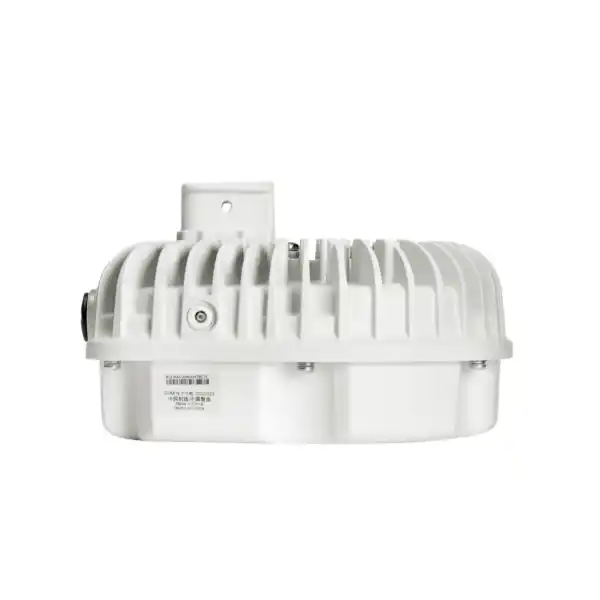
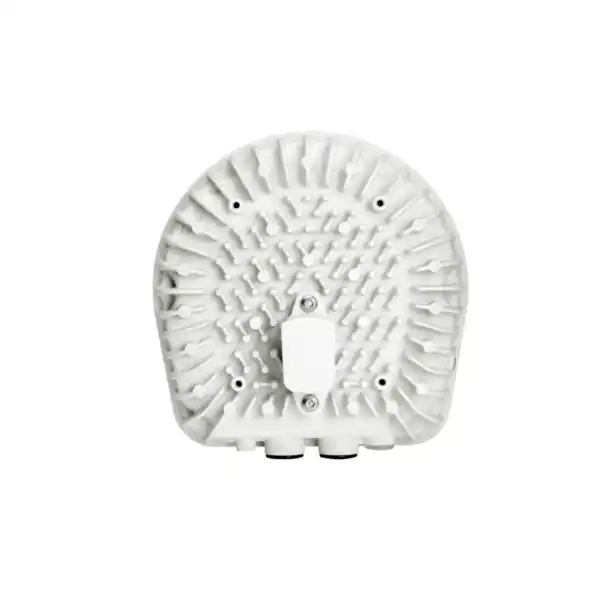
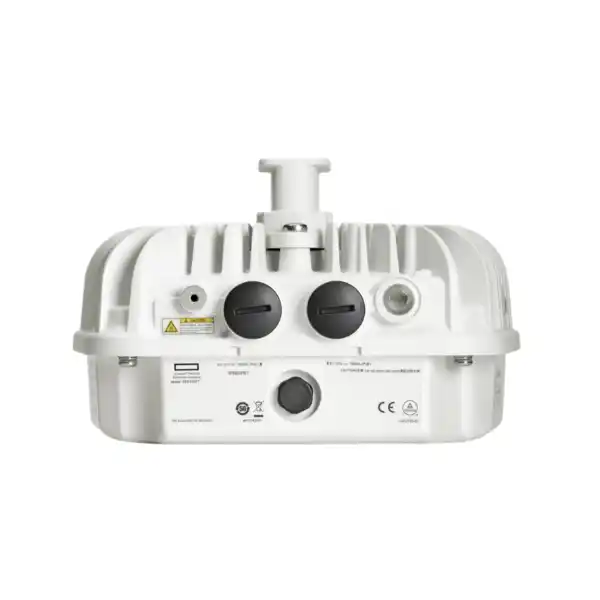
HPE Aruba Networking AP-577 in Dubai, UAE
A rugged, dual-radio Wi-Fi 6 access point for projects that need controlled outdoor coverage rather than an all-around broadcast pattern. The AP-577 combines a built-in 90° horizontal by 90° vertical directional antenna design, outdoor environmental hardening, multi-gigabit uplink capability and HPE Aruba Networking management options for enterprise WLAN deployments.

Direct answer: what is the AP-577 used for?
The HPE Aruba Networking AP-577 is an outdoor-hardened Wi-Fi 6 access point from the 570 Series, designed to direct wireless coverage toward a defined area rather than radiating equally in every direction. It is mainly used where an enterprise needs focused connectivity for courtyards, outdoor seating, building approaches, loading zones, yards, transport areas, stadium sectors, campus paths or similar spaces. Buyers should consider it when directional coverage aligns with the RF design and when 2.4 GHz 2×2 plus 5 GHz 4×4 Wi-Fi 6 radios meet the capacity requirement. Before proceeding, confirm the regional SKU, mounting bracket, PoE budget, Ethernet uplink design, software or cloud-management requirements, regulatory domain and survey-based placement.
What the AP-577 does
The AP-577 extends enterprise WLAN coverage into outdoor and environmentally challenging spaces using Wi-Fi 6 radio technology and an integrated directional antenna system. The device concentrates energy into an approximately 90-degree horizontal and vertical coverage pattern, which can be useful when the wireless design calls for coverage of a specific sector rather than a circular area around the mounting point.
It supports enterprise management architectures including HPE Aruba Networking operating systems and HPE Aruba Networking Central. It also integrates Bluetooth 5 and 802.15.4/Zigbee radio capability for compatible IoT and location-related designs. The exact value of these features depends on software version, licenses, architecture and the surrounding network design.
Who should consider it
The AP-577 is suitable for organisations that already use, or plan to use, enterprise HPE Aruba Networking infrastructure and need a rugged outdoor access point with integrated directional antennas. It may fit campuses, hospitality properties, industrial sites, logistics facilities, education environments, transport operations, public venues and commercial compounds where focused coverage is an important RF design requirement.
It is not automatically the right choice for every outdoor area. A wide open courtyard may suit an omnidirectional model such as the AP-575, while some specialist or hazardous-location installations may need a different product family. A site survey and deployment plan should determine the appropriate antenna pattern, mounting position and quantity.
Business challenges the AP-577 can help address
Coverage needs to face one direction
An outdoor AP placed on a wall, mast or structure may need to serve the space in front of it rather than waste RF energy behind it. The AP-577’s integrated directional antenna pattern is designed for this type of sector-oriented deployment.
Outdoor hardware must withstand weather
The enclosure is rated IP66/67, and HPE specifies operation from -40°C to +65°C with full solar loading. This makes the platform relevant to demanding outdoor conditions, while proper installation and cable protection remain essential.
WLAN capacity is moving beyond legacy Wi-Fi
Wi-Fi 6 features such as OFDMA and multi-user operation can improve airtime efficiency in compatible deployments. Actual performance depends on client capability, spectrum planning, interference, channel widths and backhaul capacity.
Outdoor APs must fit enterprise operations
The AP-577 can participate in Aruba management architectures rather than functioning as an isolated consumer access point. Buyers should align it with their controller, Central, Instant or AOS 10 design before ordering.
Product-fit decision matrix
| Requirement | Suitable when | Confirm before ordering |
|---|---|---|
| Focused outdoor coverage | The RF plan needs a directional 90° × 90° pattern. | Mounting angle, height, target area and obstruction profile. |
| Wi-Fi 6 capacity | Clients can benefit from 802.11ax features and the site needs modern WLAN efficiency. | Client mix, channel plan, interference, expected concurrency and application traffic. |
| Multi-gigabit backhaul | The switching infrastructure can provide a 2.5GbE SmartRate uplink where justified. | Switch port capability, cable grade, PoE class and uplink design. |
| Enterprise management | The AP will be managed within a compatible Aruba architecture. | AOS/Instant/AOS 10 path, Central subscription requirements and software versions. |
| Outdoor resilience | The environment fits the published temperature and weather ratings. | Surge protection, grounding, mounting hardware, cable glands and local site conditions. |
Verified technical information for the HPE Aruba Networking AP-577
The table below is based on current HPE product and QuickSpecs information for the 570 Series and AP-577 variants. HPE publishes multiple regional SKUs, and some vendor documents show different antenna-gain figures for certain AP-577 variants. For final RF calculations, use the data sheet that matches the exact regulatory-domain SKU supplied for the project.
| Brand | HPE Aruba Networking |
| Product | AP-577, HPE Aruba Networking 570 Series Outdoor Access Point |
| Likely UAE ordering reference | R4H22A (RW regional variant), subject to current HPE ordering rules and local regulatory requirements |
| Deployment type | Outdoor hardened |
| Wi-Fi generation | Wi-Fi 6 (802.11ax) |
| Radio configuration | 2.4 GHz 2×2 MIMO and 5 GHz 4×4 MIMO |
| Channel widths | 2.4 GHz: 20/40 MHz; 5 GHz: 20/40/80/160 MHz, subject to regulatory domain and configuration |
| Data-rate guidance | HPE current data lists a 2.69 Gbps peak data rate and a 5.39 Gbps maximum data-rate figure for the 570 Series; practical throughput is lower and environment dependent |
| Integrated antenna | Built-in 90° horizontal × 90° vertical directional antennas. Published gain values vary across current/legacy regional documents; confirm exact regional SKU data sheet for RF design. |
| IoT radio | Bluetooth 5 and 802.15.4/Zigbee support |
| Wired interfaces | E0: HPE SmartRate 100/1000/2500BASE-T; E1: 10/100/1000BASE-T |
| Link aggregation | LACP supported between both network ports for redundancy and increased capacity, configuration dependent |
| Power | PoE on E0 and/or E1; 802.3at/bt class 4 or higher. 802.3af operation is not supported. |
| Maximum power consumption | 32.0 W with dual-port PoE; 26.1 W with single-port PoE at full function |
| Environmental protection | IP66/67; designed for operation in all-weather conditions |
| Operating temperature | -40°C to +65°C with full solar loading |
| Humidity | 5% to 93% non-condensing internal |
| Wind survival | Up to 165 mph, subject to correct mounting and installation |
| Dimensions | Approximately 23 cm × 22 cm × 14 cm, excluding mount |
| Weight | Approximately 2.1 kg, excluding mount |
| Mounting | Mounting bracket is optional. HPE lists outdoor long-arm, short-arm, hanging/tilt, flush-wall and dual-tilt options for the 570 Series. |
| Management | On-premises and HPE Aruba Networking Central options, depending on software architecture and subscription |
| Availability | Contact FourTeck to confirm current UAE availability, regional SKU, quantity and vendor lead time |
Configuration, licensing and compatibility dependencies
The AP-577 should be purchased as part of a defined WLAN architecture rather than as a standalone hardware decision. Management can involve HPE Aruba Networking Central, Aruba Instant, ArubaOS or AOS 10 depending on the network design and software version. Central capabilities generally depend on the applicable subscription and service tier. Buyers should not assume that cloud management, analytics, advanced policy functions or support entitlements are included with the hardware unless the quotation specifically includes them.
Power design also matters. HPE supports 802.3at/bt PoE on the Ethernet interfaces, but the AP’s behavior can vary according to available power, whether Intelligent Power Monitoring is enabled and whether one or both Ethernet ports are used. A single 802.3at source can operate the AP, but feature restrictions may apply in certain configurations. The switch, injector, surge-protection arrangement and cable length should therefore be checked during design rather than after installation.
Regional regulatory domain is another procurement dependency. HPE lists different AP-577 SKUs for worldwide, US, Egypt, Israel, Japan and Indonesia markets, including TAA variants. For a UAE project, FourTeck can help identify the ordering reference that matches the destination, but the exact SKU should be confirmed at quotation stage because vendor availability and regional policy can change.
A practical deployment and purchase journey
Define the coverage objective
Map the area that needs service, likely client locations, mounting points, obstructions and expected traffic. Directional APs work best when the target zone is clearly understood.
Validate RF suitability
Use predictive design and, where appropriate, an on-site survey to confirm whether the 90° × 90° pattern, channel plan, mounting height and AP quantity are suitable.
Confirm the network architecture
Check switches, VLANs, uplink speed, PoE capacity, controller or Central design, software versions, authentication services and security policy.
Build the bill of materials
Include the correct regional AP-577 SKU, quantity, mount, injector if required, surge-protection items, licenses or subscriptions and installation scope.
Quote and coordinate deployment
Confirm current availability, lead time and site schedule. Installation should include safe mounting, cable termination, weather sealing, grounding and final configuration.
Directional RF design is the main reason to choose the AP-577
The defining characteristic of the AP-577 within the 570 Series is its integrated directional antenna system. This matters because outdoor wireless projects often fail when the antenna pattern is treated as an afterthought. An omnidirectional access point distributes energy around the mounting location, while a directional unit is intended to place more RF energy toward a defined sector. In practical terms, the AP-577 can make sense on the face of a building looking across a yard, on a structure serving a specific spectator section, or at the edge of a campus where coverage should project inward rather than beyond the property.
A directional antenna does not automatically create longer useful range, and it does not remove the need for client-side radio planning. Mobile phones, handheld scanners and laptops have their own transmit-power limits and antenna characteristics. The design must work in both directions: the AP needs to hear the client as well as the client hears the AP. For this reason, choosing the AP-577 solely because it has a directional antenna can be a mistake if the target client devices, mounting height, obstructions and interference are not considered.
HPE documents the AP-577 with an integrated 90-degree horizontal by 90-degree vertical pattern. Published gain figures differ between some current and older regional documents, so any project that depends on precise EIRP or link-budget calculations should use the exact regulatory-domain data sheet and applicable local rules. FourTeck can help buyers convert the physical coverage requirement into a product and mounting decision before the bill of materials is finalised.
Wi-Fi 6 capability is useful only when the wider network is ready
The AP-577 uses Wi-Fi 6 radios with 2×2 MIMO at 2.4 GHz and 4×4 MIMO at 5 GHz. HPE also lists OFDMA, bi-directional MU-MIMO, target wake time and RF optimisation features for the 570 Series. These technologies can improve spectrum efficiency and client handling, particularly when a meaningful portion of the client base supports 802.11ax. However, performance should not be judged by theoretical radio-rate numbers alone. Channel width, contention, interference, client capability, encryption overhead, airtime utilisation and upstream congestion all influence user experience.
The AP includes a 2.5GbE SmartRate port as its primary high-speed wired interface and a second 1GbE port. A multi-gigabit uplink can be valuable where aggregate wireless traffic justifies it, but a 2.5GbE port is not a guarantee that real traffic will exceed 1Gbps. The correct switch port should be selected based on expected application demand and the number of clients, not simply because the AP supports the interface.
Power is part of the same design. The AP-577 supports 802.3at and 802.3bt PoE and does not support operation from 802.3af. Maximum worst-case consumption is published as 26.1W on a single PoE source and 32W when dual-port PoE is used. When power is constrained, HPE Intelligent Power Monitoring can apply restrictions depending on the design. Network teams should therefore verify switch power budgets for the complete AP count, not only for a single unit.
Management, policy and IoT integration
Outdoor WLAN hardware should operate as part of the same operational model as the rest of the network. HPE positions the 570 Series for management through HPE Aruba Networking Central as well as supported on-premises and local architectures. This allows organisations to align outdoor access points with existing configuration, monitoring, policy and troubleshooting processes rather than creating a separate management island.
The AP-577 also includes Bluetooth 5 and 802.15.4/Zigbee capability. These radios can support selected IoT and location-related use cases, but buyers should treat them as platform capabilities rather than assume every IoT workflow is available by default. The application may depend on software features, subscriptions, tags, sensors, gateways or third-party integration. The same principle applies to security and segmentation features: WPA3, Enhanced Open, device assurance and Aruba policy functions can form part of a secure WLAN design, but implementation depends on the surrounding architecture and configuration.
Before purchase, confirm whether the AP will operate under Aruba Central, Instant, controller-managed ArubaOS or AOS 10; what authentication system is in use; whether guest access is needed; how VLANs or dynamic segmentation will be applied; and whether monitoring or analytics subscriptions are required. FourTeck can help turn those decisions into a clearer bill of materials and deployment scope.
Where the AP-577 can fit well
Enterprise campuses
Directional coverage can be useful from building facades toward walkways, outdoor meeting zones, internal roads or courtyards where the WLAN should remain aligned with a defined service area.
Logistics and loading environments
Warehouses and distribution operations may need outdoor coverage for handhelds, vehicles, scanners and workforce devices around loading bays, yards or approach areas. RF survey work remains important because metal structures and vehicle movement can change propagation.
Hospitality and public venues
Resorts, event spaces, stadium sectors and outdoor guest areas can use directional APs to shape coverage toward occupied zones while coordinating capacity with the indoor WLAN.
Industrial compounds
The environmental hardening can suit exposed areas where indoor access points are inappropriate. Hazardous locations have separate product requirements; the standard AP-577 should not be treated as a substitute for a HazLoc-rated model.
Transport environments
Depots, platforms, rail-adjacent locations and transport facilities may benefit from rugged WLAN hardware. Check the exact certifications, local regulations and mounting conditions required by the project.
Perimeter-facing service zones
Sites that need connectivity across a controlled sector near a boundary may prefer a directional pattern to an omnidirectional one, provided the RF design accounts for coverage spill, roaming and security policy.
Integration and operational considerations
An outdoor access point should be treated as an infrastructure endpoint, not merely a radio. The AP-577’s Ethernet connection must reach a switch or injector that can supply the required PoE class and support the intended link speed. For 2.5GbE operation, cabling quality and switch interface support should be checked. The outdoor cable path should also include appropriate surge-protection, grounding and weatherproofing measures based on the site design and local standards.
Roaming behavior is another concern. If the AP-577 is part of a larger campus WLAN, its cell size, transmit power and antenna orientation should be coordinated with adjacent APs. Oversized cells can cause sticky-client behavior or poor roaming decisions. Directional coverage can help shape the cell, but only when power levels and adjacent channels are planned correctly.
Security integration can involve enterprise authentication, guest access, segmentation, firewall policy and device profiling. If an organisation already uses ClearPass, Central or Aruba gateways, the AP-577 can be planned within that architecture. If the environment is new to Aruba, the quotation should include the required management, licensing and support elements rather than only the access point hardware.
Operational teams should also document mounting locations, switch ports, AP labels, cable routes and the management group or site assignment for each unit. This makes later troubleshooting and replacement easier, especially for outdoor units mounted in locations that may require access equipment or permit coordination.
Questions to resolve before requesting a quote
Provide a plan, approximate dimensions, mounting options and whether users will be stationary, walking, driving or working with handheld devices.
Confirm that a 90° sector is aligned with the intended service area and compare it with an omnidirectional or connectorised option if the geometry is uncertain.
Specify Central, Instant, ArubaOS or AOS 10 and confirm software versions, subscriptions and controller or gateway requirements.
Check per-port PoE class, total switch power budget, desired uplink speed and whether injectors are required.
Wall, pole, hanging and tilt requirements affect bracket selection and final antenna orientation.
The standard AP-577 is an outdoor hardened model, but hazardous-location projects require separately rated hardware.
AP-577 procurement checklist
How FourTeck can assist with AP-577 planning
FourTeck can help buyers move from a model request to a procurement-ready requirement. That may include reviewing the target outdoor area, clarifying whether a directional AP is appropriate, identifying the regional ordering reference, checking mount and PoE requirements, and aligning the access point with the existing Aruba management architecture. For larger deployments, the same review can be extended to AP quantity, switch capacity, subscriptions, configuration scope and installation planning.
Buyers who already know the exact model can use FourTeck for quotation and availability coordination. Buyers who are still comparing outdoor options can request sizing guidance before committing to the AP-577. FourTeck can also discuss related networking products, technology services and project consultation where installation or configuration is part of the requirement.
The quotation should clearly separate hardware, optional mounts, power accessories, licenses or subscriptions, professional services and delivery coordination so procurement teams can understand what is included and what remains dependent on site scope.
UAE availability and support guidance
For Dubai and UAE projects, contact FourTeck to confirm the current HPE Aruba Networking AP-577 regional SKU, quantity availability and vendor lead time. HPE publishes region-specific variants of the model, so procurement should be based on the correct destination rather than on a part number copied from another market. Availability can also vary with quantity, product lifecycle, ordering policy and the accessories or subscriptions required for the final design.
Delivery and project coordination can be discussed after the exact requirement is confirmed. If installation, mounting, configuration or testing is needed, include that scope in the quotation request so the bill of materials and project responsibilities are clear. FourTeck can also help check whether existing switching and management infrastructure is suitable for the intended AP-577 deployment.
Dubai, Abu Dhabi, Sharjah and Ajman project coverage
FourTeck can coordinate AP-577 requirements for organisations planning wireless projects across Dubai, Abu Dhabi, Sharjah and Ajman. The useful starting point is not the city name but the deployment information: target site, number of access points, required coverage, mounting conditions, switching platform, management method and expected implementation schedule. With those details, FourTeck can help structure the quotation and discuss whether hardware-only supply, configuration assistance, installation planning or a broader networking scope is required. Site access, installation timing and service coverage can vary by project and should be confirmed during quotation.
GCC Availability
For organisations planning HPE Aruba Networking deployments across the GCC, FourTeck can assist with requirement review, regional model selection, quotation coordination, mounting and PoE planning, configuration scope, subscription guidance and delivery planning. Projects may involve the United Arab Emirates, Saudi Arabia, Kuwait, Qatar, Bahrain or Oman, but the correct AP-577 variant and commercial path should be confirmed for the destination rather than assumed from another country.
Product availability, licensing, lead time, service visits and project scope can vary by country, model, quantity and vendor policy. Buyers should provide the destination country, exact access-point requirement, quantity, preferred management platform, required licenses or subscriptions, mounting conditions and target deployment schedule. FourTeck can then help build a more accurate request for quotation. For Kuwait-specific business technology enquiries, buyers can also review FourTeck Kuwait resources. No local stock, fixed delivery time or installation date should be assumed until confirmed for the specific project.
Africa Availability
Organisations in Africa evaluating the AP-577 can use FourTeck for product-selection support, regional SKU review, accessory and power planning, management and subscription guidance, quotation coordination and deployment discussions. The same model name can have different regional ordering references, so the destination country and regulatory requirements should be part of the procurement process from the beginning.
Availability and fulfilment can depend on destination, product quantity, vendor lead time, shipping arrangements, local power and regulatory requirements, installation scope and support expectations. Buyers should share the exact requirement, country, quantity, target site type and preferred schedule before relying on a product quotation. FourTeck maintains regional resources for Africa technology projects and Kenya enquiries. Any onsite service or delivery commitment should be confirmed for the individual project rather than inferred from the product page.
Related options and services to consider
HPE Aruba Networking AP-575
A related 570 Series outdoor Wi-Fi 6 model with integrated omnidirectional antennas. Consider it when coverage should radiate broadly around the access point rather than toward a 90-degree sector.
HPE Aruba Networking AP-574
A connectorised 570 Series option for designs that require external antennas. Antenna selection and regulatory limits should be included in the RF plan.
Aruba Central planning
Where cloud management is required, confirm the applicable Central subscription, service tier and architecture before ordering hardware.
Outdoor mounting and PoE accessories
Mounts and injectors are separate ordering items. Selection depends on mounting surface, tilt requirement, switch capability and outdoor surge-protection design.
Wireless survey and installation planning
For multi-AP or critical projects, RF design, mounting review and post-install validation can reduce the risk of incorrect placement or antenna orientation.
Broader network infrastructure
Switches, gateways, authentication, segmentation and monitoring requirements should be checked as part of the complete WLAN design. Explore FourTeck UAE technology solutions for wider project needs.
Why businesses contact FourTeck before ordering
The product name alone does not define a successful outdoor WLAN purchase. Buyers need the correct regional SKU, quantity, mounting accessories, PoE design, switching capability, management platform, subscription requirements and installation scope. FourTeck can help connect these pieces so the quotation reflects the intended deployment instead of only a single hardware line.
This is particularly useful for AP-577 projects because antenna direction and mounting are central to product suitability. A model that is technically powerful can still be the wrong choice if the RF geometry calls for a different antenna pattern. FourTeck can help clarify that decision, coordinate a bill of materials and discuss configuration or deployment services without making assumptions about stock, delivery or project outcomes before the requirement is reviewed.
What buyers are really trying to decide about the AP-577
Most buyers researching the AP-577 are not simply asking whether it supports Wi-Fi 6. They are trying to decide whether this particular outdoor model matches the shape of their coverage area, whether it can connect to their existing switching and Aruba management platform, which accessories are required and which part number should be ordered for their country. Those questions matter more than comparing one theoretical wireless rate with another.
AP-577 versus AP-575: the antenna pattern is the key difference
Within the 570 Series, the AP-577 is the directional choice and the AP-575 is the omnidirectional choice. If an AP is mounted on an outside wall and should serve the area in front of that wall, the AP-577 may fit the geometry better. If the AP sits near the centre of an open area and users surround it, an omnidirectional pattern may be more appropriate. Neither approach is automatically superior. The right selection depends on where users are, where the AP can be mounted and how adjacent cells are expected to overlap for roaming.
The regional part number matters
HPE lists different AP-577 variants for regulatory domains. The worldwide RW model is commonly referenced as R4H22A, while separate SKUs exist for the US, Egypt, Israel, Japan, Indonesia and TAA requirements. A buyer in the UAE should not assume that a US or another regional SKU is appropriate just because the radio specifications look similar. The destination country and current ordering policy need to be confirmed before the purchase order is raised.
Another frequent question is whether the AP-577 needs an Aruba Central license. The hardware supports several management models. Central is one option, and its cloud-management capabilities depend on the appropriate subscription. Other supported architectures can involve Instant, ArubaOS or AOS 10. The correct answer therefore depends on how the WLAN is being operated. If an organisation already has a Central tenant, the project should confirm the correct subscription and group architecture. If it uses controllers or a local Instant design, software compatibility and the intended migration path should be reviewed instead.
Buyers also search for the mounting kit because the AP does not simply bolt to every wall without accessories. HPE lists multiple outdoor brackets, including long-arm, short-arm, hanging, flush-wall and tilt options. The bracket affects the final antenna orientation, and on a directional product that is a functional design issue rather than a cosmetic one. A bracket that leaves the AP pointing in the wrong direction can undermine the RF plan even when the hardware itself is correct.
Power is another decision that is easy to underestimate. The AP-577 expects 802.3at or 802.3bt PoE, not 802.3af. It can be powered through one or both Ethernet ports. HPE documents intelligent power behavior and possible restrictions when available power is limited. A procurement team should therefore verify not only that a switch supports PoE, but that the specific ports and total switch budget can support the planned AP quantity at the required operating mode. When outdoor injectors are used, surge protection, electrical installation and enclosure placement must also be considered.
Coverage distance is often searched as a single number, but that is not a reliable way to specify an outdoor AP. Useful range changes with client transmit power, antenna orientation, channel selection, interference, local regulatory limits, mounting height, line of sight and the throughput target. A scanner exchanging small transactions may work at a different distance from a laptop running video or a voice device that must roam cleanly. The more useful question is what minimum signal and capacity the application needs across the actual site. That is why predictive design and survey validation remain important even for a high-performance outdoor product.
The published data-rate figures should be interpreted in the same practical way. HPE current material for the 570 Series shows a 2.69 Gbps peak data-rate figure and a 5.39 Gbps maximum data-rate figure under different radio assumptions. Neither number is a promise of end-user throughput. Real traffic is shared among clients and reduced by protocol overhead, airtime contention and the capabilities of each device. The AP’s 2.5GbE uplink is useful for avoiding a simple 1GbE backhaul bottleneck in demanding designs, but it does not mean every deployment needs multi-gigabit switching.
Finally, buyers often want a price before the design is settled. The AP-577 is an enterprise product whose current market price varies significantly by region, reseller, tax treatment, lifecycle status and included services. A useful quotation should therefore identify the exact regional SKU, mounting accessories, management subscription if applicable, power components, delivery location and any installation or configuration scope. FourTeck can prepare that quotation for Dubai and UAE projects once these details are known, rather than presenting an unsupported fixed selling price on the product page.
Decision questions buyers ask before selecting this outdoor AP
Can the AP-577 replace any existing outdoor access point?
Not automatically. Replacement work must compare antenna pattern, mounting location, existing client coverage, radio bands, PoE requirements, management software and the regulatory SKU. A previous omnidirectional AP may not be a like-for-like replacement candidate for the directional AP-577. The safest approach is to review the original coverage objective rather than matching only the mounting point.
Do I need a 2.5GbE switch port?
The AP supports a 2.5GbE SmartRate uplink, but the need for multi-gigabit switching depends on expected aggregate traffic. A site with many active high-throughput clients may benefit from 2.5GbE, while a lower-demand outdoor area may not saturate a 1GbE link. The important point is to avoid creating a backhaul limitation when the wireless design is intended for higher capacity.
Does the AP come with a mounting bracket?
Mounting hardware should be treated as an ordering item to confirm, not assumed to be included. HPE lists several compatible outdoor mount options for wall, pole, hanging and tilt scenarios. The correct bracket depends on the structure and the direction the integrated antenna must face, so it should be chosen during site planning.
Will the AP-577 work with Aruba Central?
Yes, HPE positions the 570 Series for Central management, but the applicable subscription, software architecture and onboarding process must be confirmed. If the existing environment uses Instant, ArubaOS or AOS 10, check the supported version and desired future operating model before adding the AP.
How many AP-577 units will a site need?
There is no reliable quantity based only on square metres. Directional orientation, user density, application traffic, roaming requirements, obstacles, interference and mounting height all affect AP count. A predictive design can provide an initial estimate, while survey validation is advisable for larger or business-critical environments.
What information makes a quotation accurate?
Provide destination country, quantity, expected regional SKU if known, mounting method, management platform, subscription term, switch model or PoE capability, installation requirement and target delivery window. If coverage design is still uncertain, include a site plan so FourTeck can discuss sizing or survey support before the hardware list is finalised.
Frequently asked questions about the HPE Aruba Networking AP-577
1. What type of access point is the AP-577?
It is an outdoor-hardened Wi-Fi 6 access point in the HPE Aruba Networking 570 Series. It uses 2.4 GHz 2×2 MIMO and 5 GHz 4×4 MIMO radios with integrated directional antennas.
2. What is different about the AP-577 compared with the AP-575?
The major practical difference is antenna design. The AP-577 has integrated 90° × 90° directional antennas, while the AP-575 uses integrated omnidirectional antennas. The correct model depends on the coverage geometry.
3. Is the AP-577 suitable for outdoor UAE conditions?
HPE rates the 570 Series for outdoor operation from -40°C to +65°C with full solar loading and IP66/67 protection. Actual site suitability still depends on mounting, cable protection, grounding and local environmental conditions.
4. Which AP-577 part number should be ordered for Dubai or the UAE?
HPE lists R4H22A as the worldwide RW variant and separate SKUs for several other regulatory domains. Confirm the exact UAE-appropriate ordering reference and current vendor policy with FourTeck before purchase.
5. Does the AP-577 require PoE?
Yes. HPE specifies PoE operation on one or both Ethernet ports using 802.3at/bt class 4 or higher. 802.3af operation is not supported, and power availability can influence feature behavior.
6. Can the AP-577 be managed through HPE Aruba Networking Central?
Yes, Central is a supported management option for the 570 Series. The appropriate subscription, service tier and software architecture must be included separately where required.
7. Is a mounting bracket included with the AP-577?
Mounting should be confirmed as a separate bill-of-material item. HPE lists multiple compatible outdoor brackets, and the right option depends on wall, pole, hanging or tilt requirements.
8. How far can the AP-577 cover?
There is no single dependable distance for all projects. Useful range depends on client devices, transmit power, antenna orientation, channel plan, interference, mounting height, obstructions and required throughput. Use an RF design or survey for project sizing.
9. How can I get an AP-577 quotation in Dubai?
Send FourTeck the required quantity, destination, management platform, mounting and PoE requirements, subscription needs and any installation scope. FourTeck can then confirm current UAE availability and prepare a project-specific quotation.
Need to confirm whether the AP-577 fits your outdoor WLAN?
Share the coverage area, quantity, mounting location, switching and management platform. FourTeck can help confirm the regional model, accessories, subscriptions, configuration scope and current UAE quotation options.
Availability, final pricing, licenses, delivery timing and service scope are confirmed only against the specific requirement.

Reviews
There are no reviews yet.