

Wi-Fi 6 / 802.11ax
Dual 4×4 MIMO
Integrated omnidirectional
IP66/67 rated
Confirm region, power and mount
A direct answer for buyers considering the AP-585
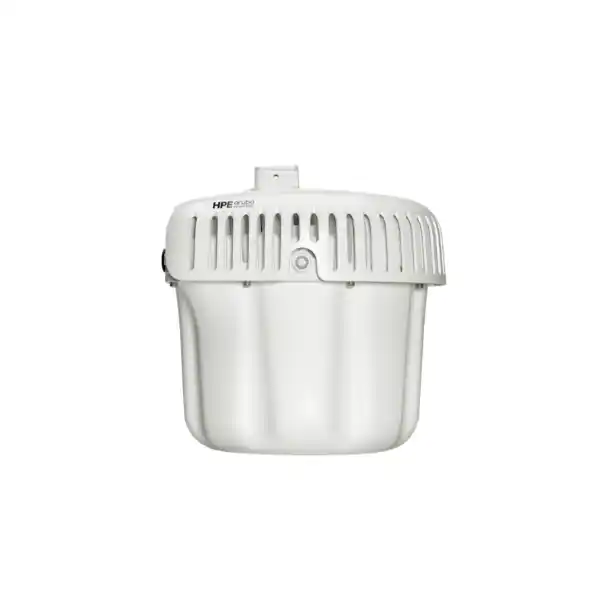
HPE Aruba Networking AP-585 is an outdoor enterprise Wi-Fi 6 access point in the 580 Series. It is mainly used to extend managed WLAN connectivity into campuses, industrial yards, transport areas, hospitality grounds, public spaces and other exposed environments where an indoor AP would not be suitable. The AP-585 is most relevant when omnidirectional coverage is preferred and the project can provide suitable mounting, wired backhaul and power. Before proceeding, buyers should confirm the exact regulatory-region orderable SKU, whether TAA is required, the planned PoE class or AC power method, mounting kit, uplink type, software or cloud-management design, and any subscription or service requirements.
What the AP-585 does
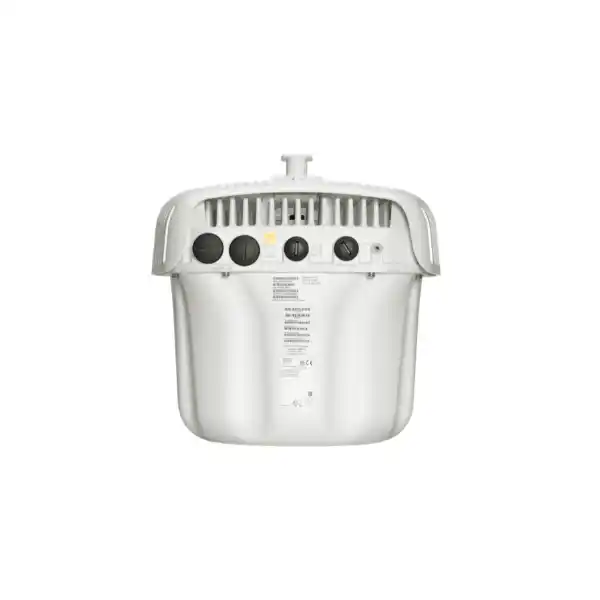
The AP-585 provides concurrent 2.4 GHz and 5 GHz Wi-Fi using 802.11ax radios, with four spatial streams available on each radio when the AP receives sufficient power. Its integrated antenna system is designed for omnidirectional outdoor service, making it suitable for installations where users and devices are distributed around the access point rather than concentrated in a narrow sector. Multi-gigabit copper, SFP+ fibre capability and a separate Ethernet interface with PoE output options give network designers flexibility when connecting the AP to the wider LAN.
Who should shortlist it
It suits medium and large organisations that need outdoor wireless capacity, hardened environmental protection and enterprise management. Typical buyers include IT teams responsible for education campuses, industrial facilities, distribution centres, resorts, large commercial compounds, transportation environments and outdoor public-facing areas. It is less appropriate when a narrow directional coverage pattern is required, when the site cannot provide suitable power or backhaul, or when a simpler small-business outdoor AP would meet the requirement at lower complexity.
Business problems the AP-585 can help address
Outdoor coverage gaps
A weather-hardened access point can extend managed WLAN coverage to external areas where indoor equipment is unsuitable. The actual number and placement of APs still require an RF design based on obstruction, mounting height, client mix and expected throughput.
Dense mobile traffic
Wi-Fi 6 features such as OFDMA, MU-MIMO, BSS colouring and target wake time can improve efficiency when compatible clients share the radio environment. Results depend on channel design, interference levels, client capabilities and upstream network capacity.
Industrial IoT reach
The integrated Bluetooth 5 and 802.15.4/Zigbee radio can support suitable IoT and location-oriented deployments, reducing the need for a separate radio overlay in some designs. Application compatibility and platform integration should be verified before procurement.
Backhaul flexibility
The AP provides 5 Gbps Smart Rate copper and an SFP+ interface that supports up to 10 Gbps. This can help projects where fibre is preferred for distance or electrical isolation, or where existing multi-gigabit Ethernet switching is available.
Core capability band
The 580 Series is specified for up to 2.97 Gbps aggregate wireless data rate under supported radio conditions.
AP-585 uses four integrated dual-band omnidirectional antennas designed for 4×4 MIMO operation.
IP66/67 protection and an operating temperature range specified from -40°C to +65°C support demanding outdoor locations.
5 Gbps Smart Rate copper, 10GBASE-R SFP+ and a 1 GbE interface provide several deployment options.
AP-585 fit matrix
| Requirement | Suitable when | Confirm before ordering |
|---|---|---|
| Outdoor omnidirectional Wi-Fi | Clients are distributed around the AP and integrated antennas are preferred. | Mounting orientation, coverage radius, obstructions and RF plan. |
| High-capacity Wi-Fi 6 | The client population includes modern devices and the site benefits from Wi-Fi 6 efficiency features. | Client capabilities, channel width, interference and upstream capacity. |
| Multi-gigabit copper uplink | A compatible Smart Rate switch port and suitable cabling are available. | PoE class, cable distance, surge protection and switch power budget. |
| Fibre backhaul | Fibre is needed for distance, topology or electrical isolation. | Industrial-temperature SFP/SFP+ choice and outdoor strain-relief requirements. |
| IoT radio integration | Bluetooth or 802.15.4/Zigbee functions align with the intended platform. | Application support, management software and solution architecture. |
Verified technical information for AP-585
The following information is based on current HPE Aruba Networking 580 Series documentation for the AP-585 model. Ordering codes vary by regulatory domain and may also differ for TAA variants, so the exact manufacturer part number should be confirmed for the destination and procurement requirement.
| Brand | HPE Aruba Networking |
|---|---|
| Model | AP-585, regulatory model APEX0585 |
| Product family | HPE Aruba Networking 580 Series Outdoor Access Points |
| Wireless standard | IEEE 802.11ax Wi-Fi 6, backward support for 802.11a/b/g/n/ac services |
| Radio design | Dual radio, 4×4 MIMO in 2.4 GHz and 5 GHz |
| Maximum aggregate wireless rate | Up to 2.97 Gbps under supported conditions; client throughput will be lower and deployment dependent |
| 5 GHz radio | Up to 2.402 Gbps 802.11ax PHY data rate depending on streams and channel width |
| 2.4 GHz radio | Up to 1.147 Gbps 802.11ax PHY data rate depending on streams and channel width |
| Integrated antennas | Four dual-band omnidirectional antennas; peak gain 4.4 dBi at 2.4 GHz and 5.8 dBi at 5 GHz |
| Primary copper interface | 100/1000/2500/5000Base-T Smart Rate, PoE PD on E0 |
| SFP+ interface | 10GBASE-R SFP+ cage; industrial-temperature transceivers recommended for optimal performance |
| Additional Ethernet | 10/100/1000Base-T with PoE PSE support subject to power and thermal conditions |
| IoT radios | Bluetooth 5.0 and 802.15.4/Zigbee |
| Location receiver | GNSS receiver supporting GPS, Galileo, GLONASS and BeiDou signals |
| Power | Direct AC or PoE on E0. Full function is supported with appropriate power; reduced capability applies at lower PoE levels. |
| Full-function PoE guidance | 802.3bt Class 6 supports unrestricted AP operation with documented limits for PSE output; 802.3at reduces radio chains and disables PSE output |
| Environmental rating | IP66/67, operating temperature -40°C to +65°C with full solar loading |
| Dimensions | Approximately 324 mm W × 313 mm D × 320 mm H |
| Weight | Approximately 5.24 kg, AP unit only |
| Minimum software guidance | Wireless Operating System / InstantOS 8.10.0.1 and AOS 10.4.0.0 are listed as minimum versions in current QuickSpecs; verify the planned architecture and supported release before deployment |
| Warranty guidance | HPE lists a hardware limited lifetime warranty for the 580 Series; confirm the exact regional terms, entitlement and support option for the quoted SKU. |
Power, regional SKU and dependency notice
The AP-585 should not be purchased as a stand-alone line item without checking the power and regional-ordering design. HPE documents different orderable SKUs for regulatory domains such as RW, EG, US, IL, JP and ID, with separate TAA variants for some regions. The UAE quotation should therefore specify the intended deployment country and any TAA requirement so FourTeck can coordinate the appropriate manufacturer code rather than assuming that an online SKU from another market is suitable.
Power level changes functionality. With 802.3bt Class 6, the AP can operate without radio restrictions under the documented configuration, while Class 5 can remove downstream PSE capability and 802.3at reduces each radio to two chains and disables PSE output. On 802.3af, the unit can boot but will not enable the radios. This makes switch PoE budget and injector selection part of the wireless design, not a minor accessory decision. Direct AC is also supported but requires the appropriate outdoor AC connector kit.
Management and subscriptions are also architecture dependent. HPE Aruba Networking Central cloud and on-premises subscription options are listed for the platform, while controller-based or controller-less operation depends on the chosen software architecture. Buyers should confirm whether the project will use Central, an existing gateway/controller environment, Instant operation or another supported deployment model before finalising the bill of materials.
A practical purchase and deployment journey
Document the areas that require Wi-Fi, typical user locations, building materials, open spaces, vehicle traffic, potential obstructions and any zones where directional coverage would be preferable.
Estimate concurrent clients, application types, roaming behaviour and throughput expectations. Outdoor coverage should be designed around realistic client devices, not only the AP transmit power.
Choose 5 GbE copper or SFP+ fibre where appropriate, review cable routes and surge protection, and verify that the intended PoE source can provide the functionality required at each AP.
Confirm destination country, regulatory domain, TAA requirement and quantity. The quote should identify the actual manufacturer part number instead of using AP-585 as the only purchasing reference.
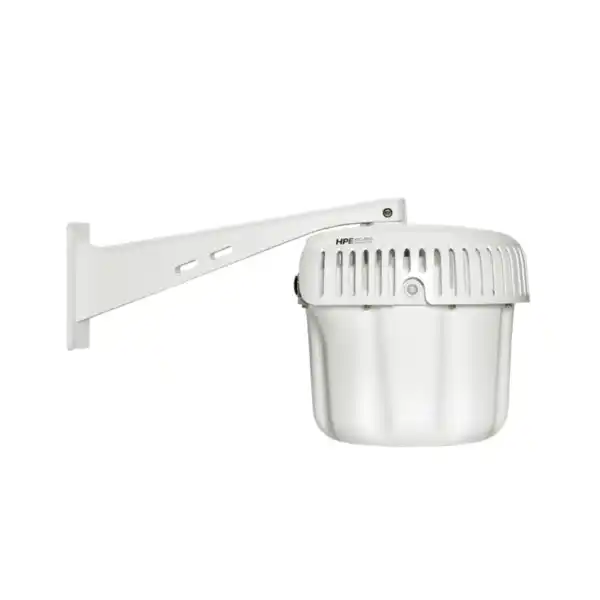
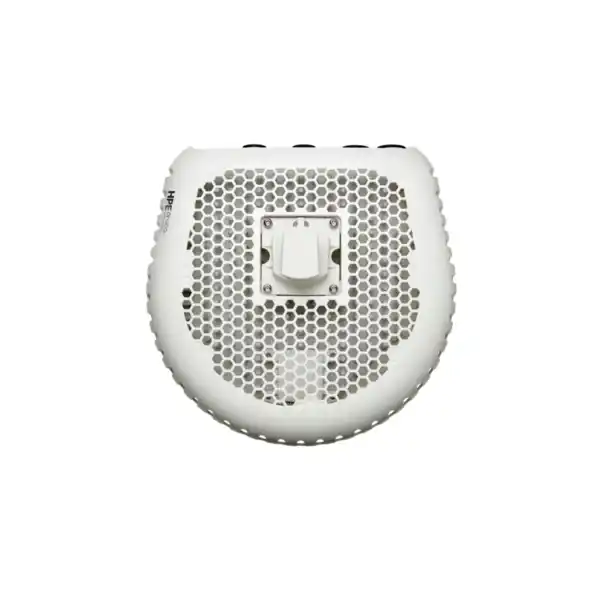
Review pole, wall, flush or tilt mounting, power components, outdoor SFP strain relief where applicable, transceivers, subscriptions and management architecture.
Include safe mounting access, grounding, cable protection, commissioning, configuration, RF validation and documentation in the project scope when those activities are required.
Capability focus: Wi-Fi 6 efficiency in outdoor client populations
Outdoor WLAN performance is often limited by airtime efficiency, interference and client behaviour rather than a single headline speed. The AP-585 supports Wi-Fi 6 mechanisms including uplink and downlink OFDMA, MU-MIMO, BSS colouring, target wake time and transmit beamforming. These functions can help a well-designed network use radio resources more efficiently when compatible devices are present. OFDMA, for example, allows a channel to be divided into resource units so several capable clients can be served more efficiently within the same channel allocation. MU-MIMO can use multiple spatial streams to communicate with supported clients in parallel.
The practical benefit depends on the client mix. A site dominated by older Wi-Fi devices will not obtain the same efficiency gains as one with a significant population of Wi-Fi 6 clients. Channel width matters as well: using very wide channels can raise peak PHY rates but reduces the number of non-overlapping channels available and can be counterproductive in dense deployments. Outdoor spectrum conditions may also be influenced by radar-related DFS requirements, neighbouring networks, cellular systems and the local regulatory domain.
For this reason, the AP-585 should be sized around coverage and airtime demand rather than maximum range. HPE technologies such as ClientMatch and AirMatch can assist with client steering and RF management in supported architectures, but placement, mounting height, channel planning and wired capacity remain fundamental design decisions. FourTeck can help translate a coverage objective into AP quantities and supporting infrastructure rather than treating the peak 2.97 Gbps aggregate figure as a guaranteed application throughput.
Capability focus: integrated omnidirectional antennas and site geometry
The defining difference of the AP-585 within the nearby 580 Series choices is its integrated omnidirectional antenna design. HPE specifies four integrated dual-band antennas for 4×4 MIMO, with peak gain of 4.4 dBi at 2.4 GHz and 5.8 dBi at 5 GHz. The built-in antennas are optimised for horizontal mounting, and the documentation notes a down-tilt angle of roughly ten degrees for maximum gain. This means installation orientation has a direct relationship with intended coverage.
An omnidirectional pattern is useful when users and devices surround the mounting point, such as a courtyard, open campus zone, loading area, resort grounds or broad industrial yard. It may be a less efficient choice for a long corridor-like outdoor route, a point-to-area sector, or a narrow coverage zone where a directional antenna pattern would better focus RF energy. HPE’s AP-587 uses integrated directional antennas, while AP-584 is the connectorised option for external antennas. These neighbouring models should be compared based on geometry rather than assumed to be interchangeable.
Outdoor radio planning should also consider mounting height. Installing an AP too high can create a large visual coverage footprint but poor client performance because handheld and IoT devices transmit at much lower power than the AP. Metallic structures, tinted glass, storage racks, vehicles and landscaping can change propagation. A predictive design or on-site validation is particularly useful when reliable roaming or voice traffic is expected. FourTeck can help buyers decide whether the integrated omni approach is appropriate before committing to hardware quantities.
Capability focus: rugged infrastructure, power choices and operational resilience
The AP-585 is designed for exposed environments, with IP66/67 protection and a documented operating range from -40°C to +65°C under full solar loading. These specifications matter in the UAE, where rooftop, pole, yard and perimeter installations can experience high ambient temperature, direct sun, dust and seasonal moisture. Environmental rating does not eliminate the need for correct installation practice. Cable glands, outdoor-rated cable, surge protection, grounding, mounting hardware and equipment orientation remain part of the overall system design.
Power architecture deserves particular attention. An organisation may prefer 802.3bt Class 6 PoE so the access point can operate with the intended radio capability from the network switch or an injector. If the existing access switch provides only 802.3at, HPE documents a reduced operating mode that limits each radio to two chains and disables downstream PSE output. This may still be useful for a temporary migration path, but it should not be assumed to deliver the same capability as the full-power design.
The AP also supports direct AC power and offers multiple wired interfaces, allowing network architects to separate power and data decisions when appropriate. The SFP+ uplink can be attractive for long cable routes or industrial environments where fibre is preferable, but outdoor use requires the correct weather-tight strain relief and suitable transceiver. Resilience can therefore be designed at several layers: power source, physical path, uplink type, management architecture and RF coverage overlap. The right combination depends on business continuity objectives and the available site infrastructure.
Where the AP-585 can be a strong fit
Education campuses
Courtyards, sports-adjacent areas, walkways and external common spaces may need the same managed wireless policy and roaming experience as indoor campus networks. Capacity planning should account for event peaks and student device density.
Industrial and logistics sites
Outdoor yards, loading zones and warehouse perimeters may use handheld terminals, scanners, tablets, cameras and IoT sensors. The network design should validate coverage at operational heights and around metallic structures and vehicles.
Hospitality and resort grounds
Outdoor guest areas can require high-capacity Wi-Fi while preserving consistent SSIDs and management. Coverage should be planned around landscaping, building edges, pools, cabanas and guest movement rather than simple radius estimates.
Large commercial compounds
Business parks, external reception areas, parking approaches and mixed indoor-outdoor spaces can benefit from an enterprise AP platform when centralised policy and visibility are already part of the network operating model.
Integration and operational considerations
The AP-585 is most valuable when its wireless, switching, power and management requirements are designed together. On the LAN side, the preferred copper uplink is a Smart Rate interface supporting up to 5 Gbps. A project can connect at lower Ethernet speeds, but the switch port speed, PoE capability and cable category should be reviewed as a combined requirement. If fibre is selected, industrial-temperature SFP or SFP+ modules and the documented outdoor strain-relief kit should be included where applicable.
At the management layer, HPE Aruba Networking Central can provide cloud-based visibility and operational control, while the 580 Series can also participate in supported controller-based or controller-less architectures. Subscription terms, feature tiers and software support are not automatically implied by the AP hardware line item. Existing Aruba customers should confirm whether their current management environment supports the AP-585 and whether any subscription capacity or gateway scale needs to be added.
Security policy should be aligned with the rest of the WLAN. The platform supports WPA3 and Enhanced Open capabilities as part of the 580 Series feature set, but authentication architecture, RADIUS integration, certificates, guest access, network segmentation and firewall policy are deployment choices. Organisations with voice, location, industrial automation or safety-related applications may also need to define roaming, latency and redundancy expectations more tightly than a general guest Wi-Fi deployment.
Finally, field installation should account for safe access and maintenance. The AP weighs about 5.24 kg before mounting hardware, so pole or wall structures must be appropriate for the unit and local conditions. The mounting kit, tilt requirement, cable routing and serviceability should be decided before the installer arrives. This planning reduces the risk of buying the correct AP but an incomplete deployment package.
Buyer questions to resolve before ordering
Compare the site geometry with the AP-585 omni design and the directional AP-587 or external-antenna AP-584 where the coverage area is not radial.
Confirm 802.3bt Class 6, Class 5, 802.3at or AC because available power changes supported operation and downstream PoE capability.
The quote should identify the correct destination-region manufacturer code and whether a TAA version is required.
Choose the uplink based on distance, existing switching, cable pathway, surge strategy and the available transceiver or switch interface.
Confirm Central, controller-based, controller-less or other supported architecture, along with subscription term and entitlement where needed.
Clarify mounting, cabling, grounding, commissioning, WLAN configuration, survey validation and documentation instead of assuming hardware supply includes those services.
Procurement checklist for an AP-585 project
- Confirm AP-585 rather than AP-584, AP-587 or AP-585EX.
- Confirm the destination regulatory domain and exact manufacturer SKU.
- State whether TAA compliance is a procurement requirement.
- Provide required quantity and deployment locations.
- Define expected concurrent client count and primary applications.
- Confirm PoE class or direct AC power design.
- Confirm copper versus SFP/SFP+ uplink and transceiver needs.
- Select the correct pole, wall, flush or tilt mounting kit.
- Include outdoor strain relief and surge-protection components where required.
- Confirm Aruba management platform and subscription term.
- Review software version and existing gateway or controller compatibility.
- Define installation, configuration, validation and documentation scope.
- Confirm current availability, lead time, warranty terms and support entitlement in the final quotation.
How FourTeck can support product selection and deployment planning
FourTeck can help convert an outdoor wireless requirement into a clearer bill of materials. This can include reviewing AP model suitability, estimating quantities from the supplied coverage and capacity information, confirming power and uplink assumptions, identifying mounting or transceiver requirements, clarifying Central or other management options and coordinating an installation or configuration scope. For organisations comparing multiple Aruba outdoor APs, the discussion can also separate omni, directional and connectorised antenna requirements before a quotation is prepared.
UAE availability and support guidance
HPE lists several AP-585 orderable variants by regulatory domain, and current supply can vary by region, model code, quantity and vendor lead time. Contact FourTeck to confirm current UAE availability rather than assuming that a part number shown in another country is the right item for a UAE deployment. The quotation should identify the selected regional SKU, required quantity, accessories, power components, management subscriptions and any professional-service scope.
Delivery and project coordination can be discussed after the exact requirement is confirmed. If installation or configuration is required, include that scope in the request so hardware supply, mounting preparation, switch readiness, WLAN configuration and validation activities can be planned together. FourTeck can also help buyers compare the AP-585 with nearby outdoor models when antenna pattern or environmental requirements suggest another option.
Dubai, Abu Dhabi, Sharjah and Ajman project coordination
For projects across Dubai, Abu Dhabi, Sharjah and Ajman, FourTeck can coordinate requirement review, quotation preparation and deployment planning around the same technical checklist: exact AP variant, quantities, intended mounting points, power source, wired backhaul, management architecture and service scope. Site conditions can vary significantly between campuses, warehouses, hospitality environments and industrial compounds, so the quotation should be based on the specific project rather than a generic outdoor Wi-Fi assumption. Current product availability and service scheduling remain subject to the confirmed model, quantity, location and vendor lead time.
GCC Availability
Organisations planning HPE Aruba Networking AP-585 deployments across the GCC can use FourTeck for requirement review, model selection, quotation coordination and project planning. The regulatory-domain SKU, power architecture and management subscription should be checked for the destination rather than copied from a UAE or international quotation. Projects in the United Arab Emirates, Saudi Arabia, Kuwait, Qatar, Bahrain and Oman may have different ordering, delivery, licensing and site-access considerations. Availability, vendor lead time, service visits and deployment scope can vary by country, model, quantity and requirement. To prepare an appropriate quotation, share the destination country, exact product or service requirement, quantity, expected deployment location, preferred timeline, uplink design, PoE or AC power plan and any installation or configuration needs. FourTeck can then coordinate the commercial and technical requirement without promising local stock, fixed delivery dates or country-specific certifications that have not been verified.
Africa Availability
For organisations evaluating the AP-585 for African projects, FourTeck can help review the product model, accessories, power method, subscription needs, mounting design and service expectations before procurement. Outdoor deployments in East Africa, West Africa, Southern Africa or Central Africa can differ in regulatory domain, site power, fibre availability, environmental exposure, shipping arrangements and local implementation conditions. Availability and fulfilment therefore depend on the destination, exact manufacturer SKU, quantity, license region, vendor lead time and installation scope. Buyers in markets such as Kenya and Uganda should share the destination country, required quantity, intended deployment schedule, existing network platform and any on-site or remote support expectations. FourTeck can then assist with product and bill-of-material planning, quotation coordination, renewal or subscription guidance and deployment preparation without implying local inventory, guaranteed shipment timing, customs outcomes or country-wide on-site coverage.
Related Aruba outdoor options and supporting services
HPE Aruba Networking AP-584
Consider the AP-584 when external antenna selection is necessary. It is the connectorised 580 Series option and should be evaluated when the project needs antenna patterns or placement that the AP-585 integrated omni design cannot provide.
HPE Aruba Networking AP-587
The AP-587 uses integrated directional antennas and can be a better fit when RF energy should be focused into a defined sector rather than distributed around the mounting point.
Aruba Central subscription guidance
Central subscription tiers and terms should be selected according to the management architecture and required features. The hardware line item does not by itself define the subscription requirement.
Outdoor mounting and power components
Pole, wall, flush and tilt mounts, 802.3bt injectors, AC connector kits and outdoor SFP accessories may be required depending on the site design. Confirm them as part of the bill of materials.
Why businesses contact FourTeck for AP-585 requirements
Outdoor wireless projects often fail at the interfaces between product selection, site design and procurement. An AP may be technically suitable but ordered with the wrong regulatory code, insufficient PoE, an unsuitable mounting kit or an incomplete management subscription. FourTeck can help resolve those details before the purchase order is finalised. The goal is not to add unnecessary components, but to make the requirement explicit enough that the quotation represents the intended deployment.
Translate coverage, capacity, environment and management needs into a product decision.
Review mounts, power items, transceivers, subscriptions and related components.
Check switching, PoE, software, gateway and management assumptions before ordering.
Define installation, configuration, survey validation and handover scope when required.
What buyers commonly need to know before choosing this outdoor AP
Most buyers researching the AP-585 are not only asking whether it supports Wi-Fi 6. They are trying to determine whether this specific model is the right outdoor radio for their site, whether the network can power it correctly, which part number should be ordered, whether an Aruba subscription is required and how it differs from the other 580 Series outdoor models. Those questions are more useful than a simple feature list because each one can change the final bill of materials.
AP-585 versus AP-587: start with coverage shape
Both models sit in the 580 Series, but the antenna pattern is a key distinction. The AP-585 has integrated omnidirectional antennas, while the AP-587 has integrated directional antennas. A buyer should therefore begin with the geometry of the service area. A courtyard, open gathering area or central outdoor mounting point may align naturally with an omni pattern. A long perimeter, narrow yard or sector-facing application may benefit from directional coverage. Selecting by headline throughput alone misses this physical design difference.
AP-585 versus AP-584: integrated antennas or external antenna freedom
The AP-584 is the external-antenna version in the family. That can be useful when a project has a specialised antenna requirement, needs to position antennas independently of the AP body or must shape coverage using a selected external antenna. The AP-585 simplifies the bill of materials by integrating the Wi-Fi antennas, but the trade-off is less antenna-pattern flexibility. Buyers should not treat the three 580 Series models as different speed tiers; they are primarily different deployment tools within a related platform.
The PoE question can determine whether the AP runs at full capability
A common procurement mistake is to confirm that a device supports PoE without confirming the required PoE class. For the AP-585, HPE documents materially different behaviour at different power levels. 802.3bt Class 6 supports unrestricted AP operation under the documented conditions, while 802.3at reduces each radio to two chains and disables PSE output. 802.3af can boot the AP but does not enable the radios. If existing switches do not provide the required power, an appropriate injector or AC design may be needed.
Copper and fibre uplinks solve different site constraints
The 5 Gbps Smart Rate copper interface is attractive where a suitable access switch and copper route are nearby. The SFP+ interface supports up to 10GBASE-R and can be useful where fibre is already installed, where distance exceeds practical copper limits or where electrical isolation is desirable. Outdoor fibre deployment still needs the correct transceiver, weather-tight strain relief and physical pathway. The choice should be made before ordering because it changes switching, optics and installation requirements.
Does the AP-585 need a license or subscription?
The hardware can participate in different supported management architectures, so there is no single universal answer that applies to every deployment. HPE lists Aruba Central Foundation and Advanced subscriptions in multiple terms, along with on-premises subscription options. Controller-based or controller-less designs are also possible depending on software architecture. The practical buying question is therefore: how will the AP be managed, and which services or subscription entitlements does that architecture require? FourTeck can include the relevant subscription guidance in the quotation after the management design and required term are confirmed.
Is 2.97 Gbps the speed every user will receive?
No. The published figure is a peak aggregate wireless data rate for the series under supported radio conditions. Actual application throughput depends on channel width, signal quality, interference, protocol overhead, client capability, number of active users, wired uplink speed and upstream network performance. A buyer should use the figure as a platform-capacity reference, not as a per-user service guarantee.
Can it be used in very hot UAE outdoor locations?
HPE specifies an operating range up to +65°C with full solar loading and an IP66/67 enclosure for the 580 Series. That makes the platform relevant to demanding outdoor projects, but correct installation remains essential. Mounting position, shade or solar exposure, cable protection, surge protection, grounding, PoE loading and maintenance access should be reviewed for the actual site.
What should be included in a useful quotation request?
Provide the destination country, quantity, coverage area, number and type of users, mounting preference, power source, switch model if known, copper or fibre uplink choice, existing Aruba management platform, required subscription term and whether installation or configuration support is needed. This information helps avoid a quote that contains only the AP and leaves critical supporting items unresolved.
What if the existing network is not Aruba?
The AP can connect to standards-based Ethernet infrastructure, but enterprise WLAN management, authentication, segmentation, monitoring and operational workflows still need to be designed. If the organisation is introducing Aruba wireless into a mixed-vendor LAN, the project should confirm switch PoE, VLANs, DHCP, DNS, firewall policy, RADIUS and management reachability before rollout.
These are the questions that typically determine whether the AP-585 is merely technically compatible or genuinely suitable for a project. A good shortlist considers antenna pattern, RF density, uplink, power, management, regional ordering and service scope together. Buyers can use the FourTeck Firewall Dubai technology site for wider infrastructure guidance or contact the team directly when a site-specific bill of materials is needed.
Decision questions that help prevent the wrong purchase
How many AP-585 units are needed for an outdoor site?
Quantity cannot be derived reliably from a simple square-metre figure. Outdoor AP count depends on mounting height, client transmit power, obstructions, channel plan, capacity demand and the amount of overlap required for roaming. A coverage model or survey input is more useful than a generic range claim. Share a site plan and expected client numbers when requesting sizing assistance.
Should the AP use 5 GbE copper or 10G SFP+?
Choose according to site topology rather than maximum interface speed. Smart Rate copper is convenient when a compatible PoE switch is within cable distance. Fibre can be preferable for longer routes or electrically noisy environments, but then power must be provided separately and the outdoor optical components must be included. The design should also consider the actual traffic expected from the AP.
Can the AP power another device from its Ethernet port?
The E2 interface supports PoE PSE output, but the available capability depends on how the AP itself is powered and on thermal conditions. Full downstream PoE should therefore not be assumed. If a camera, sensor or another network device is intended to receive power from the AP, include its power requirement in the design and verify the planned AP power source.
Does IP66/67 mean no additional outdoor protection is required?
No. The enclosure rating addresses dust and water ingress for the equipment, but the installed system still needs proper cable entry, surge protection, grounding, suitable connectors, weather-resistant accessories and structurally appropriate mounting. Outdoor installation quality can be as important as the AP enclosure rating.
What information is needed to confirm the correct regional part number?
At minimum, provide the destination country and whether procurement requires a TAA variant. HPE publishes separate codes by regulatory domain, and a reseller listing for an RW or US unit should not be assumed to be appropriate for every country. FourTeck can coordinate the orderable code as part of quotation preparation.
What should be tested after installation?
Validation should cover AP adoption and management, PoE state, uplink negotiation, SSID and VLAN operation, authentication, coverage at intended client locations, roaming where relevant, channel assignment, interference and application performance. The depth of testing should match the criticality of the outdoor service and can be included in a professional-service scope.
Frequently asked questions about HPE Aruba Networking AP-585
Is the AP-585 an outdoor Wi-Fi 6 access point?
Yes. The AP-585 is part of the HPE Aruba Networking 580 Series and supports 802.11ax Wi-Fi 6 with dual 4×4 MIMO radios for 2.4 GHz and 5 GHz outdoor service.
What antenna type does the AP-585 use?
It uses four integrated dual-band omnidirectional antennas for 4×4 MIMO. HPE specifies peak antenna gain of 4.4 dBi at 2.4 GHz and 5.8 dBi at 5 GHz.
Does the AP-585 require 802.3bt PoE?
802.3bt Class 6 is the preferred PoE level for unrestricted documented operation. Lower PoE levels can reduce functionality; 802.3at reduces radio chains and disables PSE output, while 802.3af can boot the AP but does not enable the radios.
Can the AP-585 use a fibre uplink?
Yes. The AP includes a 10GBASE-R SFP+ cage. HPE recommends industrial-temperature SFP or SFP+ modules for optimal outdoor performance, and the appropriate weather-tight strain-relief accessory should be used where required.
Is Aruba Central required for every AP-585 deployment?
Not necessarily. The 580 Series supports several management architectures, including cloud-based or on-premises options and supported controller-based or controller-less operation. The required subscription or software design depends on the chosen architecture.
What is the difference between AP-585 and AP-587?
The AP-585 uses integrated omnidirectional antennas, while the AP-587 uses integrated directional antennas. The better choice depends mainly on the shape of the required coverage area and mounting plan.
What is the environmental rating of the AP-585?
The 580 Series is rated IP66/67, and HPE specifies operation from -40°C to +65°C with full solar loading. The installed system still requires proper outdoor cabling, surge protection, grounding and mounting practice.
Which AP-585 part number should be ordered for the UAE?
The correct manufacturer SKU depends on the destination regulatory domain and procurement requirement, including whether TAA is needed. Contact FourTeck to confirm the appropriate UAE orderable code rather than assuming an international reseller SKU is suitable.
What should I send FourTeck for an AP-585 quotation?
Send the destination, quantity, coverage objective, expected client density, mounting preference, available PoE or AC power, uplink choice, management platform, subscription term and any installation or configuration requirement. This helps prepare a more complete quotation.
Request an AP-585 quotation with the supporting items checked
Share the site, quantity, power source, uplink preference, management architecture and installation scope. FourTeck can help confirm the regional AP-585 variant, supporting accessories, subscription requirements and current UAE availability before the order is finalised.

Reviews
There are no reviews yet.