
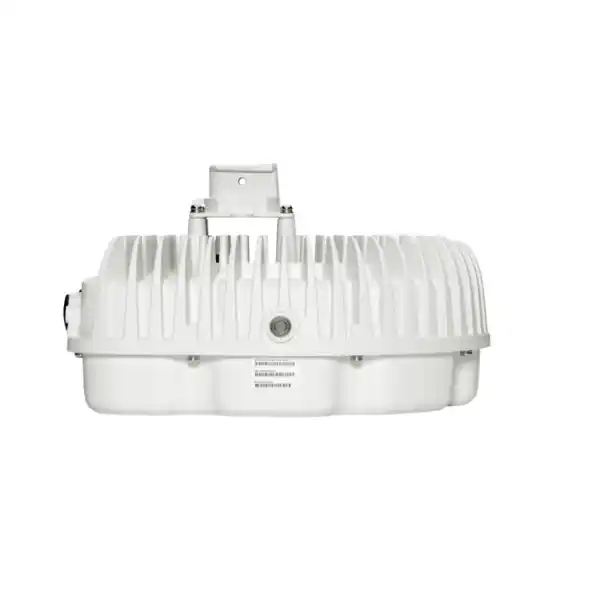
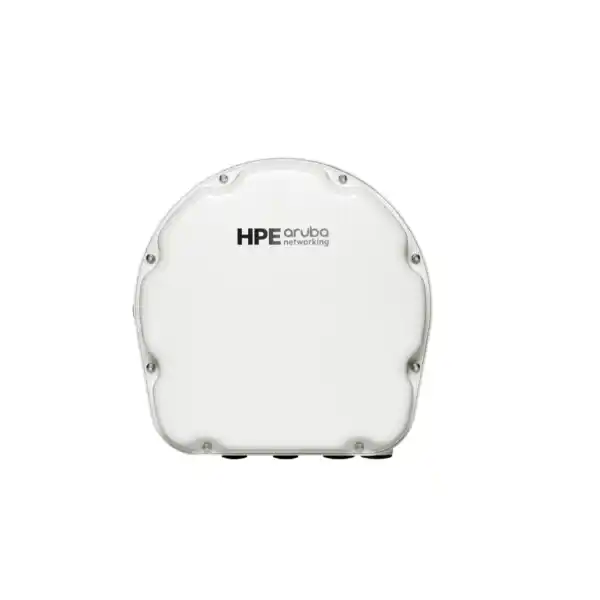
HPE Aruba Networking AP-587EX in Dubai, UAE
The AP-587EX is a weather-hardened Wi-Fi 6 access point with integrated directional antennas for industrial and hazardous-location deployments. It is designed for buyers who need reliable wireless coverage across exposed sites, process areas, transport environments, yards, utilities, and other locations where environmental conditions, mounting, power, safety classification, and regulatory domain all matter to the purchasing decision.

Purchase planning starts with the site
Before a quotation is finalised, confirm the hazardous-area classification, mounting surface or pole, direction of coverage, available power, copper or fibre uplink, management architecture, required accessories, and UAE regulatory-domain requirement. These inputs determine whether the AP-587EX is the correct fit and what must be included in the bill of materials.
Dual-radio 4×4 Wi-Fi 6
Integrated directional
Hazardous indoor and outdoor
5G SmartRate and SFP+
Regional SKU must be confirmed
Direct answer for buyers
HPE Aruba Networking AP-587EX is an outdoor-hardened, hazardous-location Wi-Fi 6 access point in the 580EX series. It is mainly used where business or industrial wireless coverage must operate in difficult environmental conditions and where a directional antenna pattern is useful for focusing coverage toward a defined area. Organisations in oil and gas, industrial manufacturing, transportation, utilities, logistics, and critical infrastructure may consider it when their site design calls for hazardous-area certification and rugged construction. Before proceeding, confirm the exact site classification, regulatory domain, mounting position, antenna direction, power source, uplink medium, management method, required subscriptions, and installation accessories. The access point should be selected as part of a complete engineered wireless design rather than on headline radio specifications alone.
What the AP-587EX does
The AP-587EX provides concurrent 2.4 GHz and 5 GHz 802.11ax wireless service through 4×4 MIMO radios. HPE publishes a maximum aggregate on-air data rate of 2.97 Gbps for the 580EX series. The product is not simply a standard outdoor access point in a heavier enclosure. It is designed for hazardous and demanding environments, with environmental hardening, industrial surge protection, directional integrated antennas, flexible wired uplink choices, and built-in radios that can support Bluetooth and 802.15.4 or Zigbee use cases.
The directional antenna profile is a major selection factor. Compared with an omnidirectional design that spreads RF energy around the access point, a directional pattern is intended to concentrate useful coverage toward a defined zone. That can make the AP-587EX relevant along process lines, roadways, loading areas, storage yards, fenced corridors, platforms, or industrial work zones where a deliberately aimed coverage pattern is preferable. A site survey and RF design are still important because walls, steelwork, equipment, moving vehicles, liquids, reflective surfaces, and local noise can change real-world performance.
Who should consider it
The strongest fit is an organisation that already knows it has a challenging industrial wireless requirement and needs an access point that aligns with hazardous-location rules and outdoor environmental conditions. Typical buyers include OT and IT teams, industrial network architects, EPC contractors, system integrators, plant engineers, project consultants, procurement departments, and operations teams responsible for wireless access in facilities where safety classification and environmental exposure cannot be ignored.
It is usually not the right starting point for a normal office, classroom, retail floor, hotel, or conventional indoor campus area where hazardous-location construction is unnecessary. It can also be the wrong choice where an omnidirectional pattern is needed rather than a focused directional pattern. FourTeck can help compare the AP-587EX with nearby HPE Aruba Networking outdoor and hazardous-location options so the selection is based on antenna pattern, environmental requirement, wired infrastructure, software compatibility, and site design rather than simply choosing the highest specification available.
Business challenges this access point is intended to address
Harsh environmental exposure
Industrial wireless equipment may face heat, cold, moisture, dust, salt exposure, wind, and airborne contamination. HPE specifies the 580EX series for operation from -40°C to +65°C with full solar loading and rates it IP66, which is relevant when the site cannot provide an indoor-controlled environment.
Hazardous-area constraints
A standard outdoor access point may not meet a project safety specification. The 580EX series carries hazardous-location certifications including Class 1 Division 2, ATEX Zone 2 and IECEx. The project team must still verify that the exact certification, installation method, accessories, cable entry, grounding, and local rules match the actual classified area.
Focused wireless coverage
Integrated directional antennas allow the AP-587EX to be aimed toward a planned coverage zone. This can reduce the need to radiate energy equally in all directions and may suit linear, edge, perimeter, process, yard, or corridor-like areas. Proper orientation and mounting are essential to make the antenna design work as intended.
Industrial connectivity choices
Projects may need copper, multi-gigabit Ethernet, fibre, or downstream PoE flexibility. The platform includes a 5 Gbps SmartRate E0 interface, a 10GBASE-R SFP+ E1 interface, and a 1G E2 interface with PoE PSE capability under supported power conditions. The correct topology depends on distance, surge exposure, switch ports, fibre plant, and power budget.
AP-587EX capability overview
Concurrent 2.4 GHz and 5 GHz 802.11ax operation with support for OFDMA, MU-MIMO, beamforming and other modern radio-efficiency features.
Four dual-band directional antennas are built into the AP-587EX, optimised for a vertical wall or pole installation.
Integrated Bluetooth 5.0 and 802.15.4 or Zigbee support can help projects that require IoT connectivity, location-related services, or sensor integration.
The platform supports controller-based and controller-less ArubaOS 8 or Instant environments, while HPE Aruba Networking Central options can provide broader management depending on subscription and software design.
The enclosure and environmental design are intended for severe outdoor and hazardous environments rather than normal office conditions.
Product-fit matrix
| Requirement | Suitable when | Confirm before ordering |
|---|---|---|
| Hazardous-location wireless | The project specifically requires a certified rugged AP for a classified industrial area. | Exact site zone or division, local approval, installation method, cable entry and engineering sign-off. |
| Directional RF coverage | Coverage should be aimed toward a known sector, corridor, platform, yard or process area. | AP orientation, mounting height, downtilt, survey results and obstruction profile. |
| Multi-gigabit wired uplink | The network has suitable copper or fibre infrastructure and wants to avoid an uplink bottleneck. | Switch port capability, cable distance, SFP type, PoE source and surge protection. |
| Industrial IoT support | Bluetooth or 802.15.4/Zigbee radios are useful to the broader project. | Application compatibility, management architecture, security policy and client ecosystem. |
| Centralised operations | The organisation wants Aruba management, visibility and policy controls across the wireless estate. | Software release, architecture, subscription tier, term and existing Aruba environment. |
Verified technical information
The table below concentrates on model-specific information confirmed in current HPE Aruba Networking QuickSpecs and support documentation. Values that depend on regulatory domain, power mode, software, subscription, or project design should be confirmed again when the quotation is prepared.
| Brand | HPE Aruba Networking |
| Product | AP-587EX |
| Product family | 580EX Series Hazardous Location Access Points |
| UAE ordering variant | R7T35A is the listed AP-587EX RW variant; exact UAE regulatory-domain suitability must be confirmed before ordering. |
| Wireless type | Outdoor-hardened Wi-Fi 6, dual radio, 2.4 GHz and 5 GHz 802.11ax, 4×4 MIMO |
| Maximum aggregate on-air data rate | Up to 2.97 Gbps for the 580EX series |
| 5 GHz radio | Up to 2.4 Gbps with supported 802.11ax client and channel configurations |
| 2.4 GHz radio | Up to approximately 1.15 Gbps with supported 802.11ax client and channel configurations |
| Integrated antennas | Four dual-band directional antennas for 4×4 MIMO; peak gain 5.8 dBi at 2.4 GHz and 6.6 dBi at 5 GHz |
| Recommended orientation | Vertically oriented wall or pole installation for the AP-587EX antenna design |
| E0 interface | 100/1000/2500/5000Base-T, 5 Gbps SmartRate, PoE PD support |
| E1 interface | 10GBASE-R SFP+ cage; recommended industrial-temperature SFP or SFP+ optics should be selected for the application |
| E2 interface | 10/100/1000Base-T with PoE PSE capability subject to available input power and policy |
| Power | Direct AC or 802.3bt PoE on E0; power components are sold separately. Lower PoE classes can restrict radio chains or PSE-out capability. |
| AC input | 110-240 V with the specified outdoor Molex AC power connector kit |
| IoT radios | Bluetooth 5.0 and 802.15.4/Zigbee |
| Positioning receiver | Integrated GNSS L1 receiver supporting GPS, Galileo, GLONASS and BeiDou signals |
| Environmental rating | IP66; all-weather operation according to HPE specifications |
| Operating temperature | -40°C to +65°C with full solar loading |
| Operating humidity | 5% to 93% non-condensing internal |
| Operating altitude | Up to 3000 m |
| Salt and wind testing | Salt spray tested to ASTM B117-07A for 200 hours; wind survival listed at 150 mph under GR-487 |
| Dimensions | 302 mm W x 300 mm D x 174 mm H |
| Weight | 4.51 kg for the AP-587EX unit |
| Hazardous-location certifications | Class 1 Division 2, ATEX Zone 2 and IECEx are listed for the 580EX series; project-specific certification and local acceptance must be verified. |
| Management | Controller-based or controller-less ArubaOS 8/Instant environments; HPE Aruba Networking Central support is platform and subscription dependent. |
| Warranty guidance | Current HPE QuickSpecs state hardware limited lifetime warranty. Confirm current regional terms, exclusions and service entitlement for the quoted unit. |
Configuration and dependency notice
The AP-587EX should not be ordered by model number alone. HPE lists several regulatory-domain variants, including US, RW, EG, IL, JP and ID options. The correct variant depends on the country and current regulatory requirements. For a UAE project, FourTeck should confirm the exact applicable regulatory-domain SKU at the time of quotation rather than assuming that a model sold elsewhere is acceptable.
Power design also changes available functionality. With suitable AC or 802.3bt Class 6 power the AP can operate with the intended feature set, while lower PoE levels can reduce radio chains or remove PSE-out capability. Mounting kits are separate accessories, and the HPE installation guide states that the 580EX series does not ship with a mount kit. Fibre deployments require suitable industrial-temperature transceivers and the correct hazardous-location strain-relief accessory. Aruba Central subscriptions, on-premises management choices, controller design, software release, and security policy should all be reviewed against the existing network before procurement.
Hazardous-location certification is only one part of a compliant installation. Site engineering, cable entry, grounding, mounting, power isolation, restricted-access requirements, local authority rules and the facility safety process still apply. FourTeck can help assemble the technology bill of materials, but the final installation must follow the applicable manufacturer documentation and project safety requirements.
A practical purchase and deployment journey
Define the industrial coverage objective
Document the area that needs wireless service, the client types, mobility pattern, expected traffic, process requirements, mounting constraints and whether the directional pattern of the AP-587EX matches the intended geometry. This prevents a rugged access point from being selected for the wrong RF reason.
Validate hazardous-area requirements
Confirm the classified area, required certification, applicable installation standard, local approval process and whether the AP, accessories, glands, cables, power and mounting method collectively meet the project specification. Safety engineering should be involved before equipment is finalised.
Choose power and uplink architecture
Decide between suitable PoE and AC power, then determine whether the primary uplink should use SmartRate copper or fibre through SFP+. Review switch distance, surge exposure, fibre route, grounding, injector requirements and the power class needed for the required feature set.
Confirm management and software compatibility
Check the current Aruba software release, controller or Instant architecture, Central subscription requirements, policy integration, authentication design, VLAN or dynamic segmentation strategy and operational monitoring model. Software support can evolve, so the compatibility check should use the environment that will actually run the AP.
Build and approve the complete bill of materials
Include the exact regulatory SKU, mount, power parts, optics if required, strain relief, cable glands, subscriptions and support services. Add installation, configuration, testing or documentation scope to the quotation if these services are required rather than assuming they are included with the hardware.
Directional RF design: why the AP-587EX is different
The AP-587EX uses four integrated dual-band directional antennas. HPE lists peak antenna gain of 5.8 dBi at 2.4 GHz and 6.6 dBi at 5 GHz, with combined average pattern values of 5.7 dBi and 5.2 dBi respectively. These numbers are useful to the RF designer, but they do not automatically describe the coverage a site will receive. Directional antennas shape energy toward a preferred area, which means the physical orientation of the unit becomes part of the network design.
This characteristic is useful when a project wants to illuminate a defined operational zone rather than every direction around a pole. Examples can include an access road, loading bay, process skids, a line of outdoor equipment, a rail or transport area, a fenced perimeter sector, or a portion of a yard. In each case, the designer must decide where users or machines will be, how far they are from the AP, what obstacles sit in the path, and whether another AP is needed for overlap and roaming.
Metal surfaces common in industrial facilities can create reflections and multipath behaviour that change expected coverage. Containers, pipe racks, heavy machinery, vehicles and tanks can create temporary or permanent shadow zones. The correct response is not simply increasing transmit power. Channel planning, AP placement, client capability, antenna orientation, transmit-power balance and roaming design all influence the result. FourTeck can help review the intended placement and identify when a predictive design or on-site wireless survey should be included in the project scope.
A directional AP can also be misapplied if the coverage requirement is genuinely omnidirectional. HPE places the AP-585EX in the same hazardous-location series with integrated omnidirectional antennas. That does not make one model better than the other. It means the two products address different RF shapes. Buyers should use the site drawing and RF requirement to decide between them rather than comparing only antenna gain or model number.
Power architecture and feature availability
Plan for the required PoE class
The AP supports 802.3bt PoE on the E0 port, but available functionality depends on the power level. HPE states that 802.3bt Class 6 operation supports unrestricted AP functionality with defined PSE-out behaviour, while Class 5 can provide full AP function without PSE support. With 802.3at, radio chains are reduced and PSE-out is disabled. With 802.3af the AP can boot but the radios do not enable. This makes the switch or injector power budget a design requirement, not an afterthought.
When several outdoor APs are connected to one industrial switch, the project team should calculate the total PoE budget at worst case rather than assume that a switch with enough ports has enough power. Cable length, injector location, redundancy, environmental rating and maintenance access should also be included in the plan.
AC is another supported option
The platform can also use direct 110-240 V AC through the specified HPE outdoor Molex connector kit. HPE documentation states that when AC and PoE are both present, AC takes priority. An AC design may be useful where local industrial power is readily available, but the electrical installation, isolation, cable routing, hazardous-area method and maintenance procedure must be engineered for the site.
Power components are sold separately, so procurement should not assume an injector, cable kit or other power accessory arrives automatically with the AP. FourTeck can help identify the required HPE power accessories from the approved configuration and include them in the quotation for review.
Wired uplinks, fibre and industrial network integration
A rugged wireless access point still depends on the wired network behind it. The AP-587EX provides several physical interfaces that let designers adapt the device to different industrial topologies. E0 supports 100 Mbps through 5 Gbps SmartRate Ethernet and is also the PoE input. E1 is a 10GBASE-R SFP+ interface that HPE expects to be the primary uplink when used. E2 provides 10/100/1000Base-T and can provide downstream PoE under supported power conditions.
Copper may be appropriate for shorter runs where PoE delivery is useful and the path can be installed with the required surge protection. Fibre can be attractive for long distances, electrically noisy environments, building-to-field links, or routes where electrical isolation is preferred. HPE lists industrial-temperature 1G and 10G optics among the ordering options, together with an outdoor hazardous-location SFP fibre strain-relief accessory. The correct transceiver depends on link speed, multimode or single-mode fibre, distance and the exact switching platform at the far end.
The installation documentation calls for shielded twisted-pair Ethernet cable on Ethernet interfaces to support proper surge protection. Grounding is also a defined installation step. These points matter in exposed industrial areas because the network path is part of the protection strategy. FourTeck can help translate the site topology into a bill of materials that covers the AP, optics or injectors, mounting accessories, power components and management requirement rather than quoting an isolated chassis.
Industrial IoT and operational visibility
The 580EX platform includes high-power Bluetooth and 802.15.4/Zigbee radios in addition to Wi-Fi. For organisations building industrial IoT systems, this can reduce the need to think of the wireless LAN and low-power device layer as completely separate infrastructures. Potential applications include location-related services, asset tracking, sensor connectivity and other IoT use cases that align with Aruba capabilities and the chosen management architecture.
Wi-Fi 6 Target Wake Time can help compatible low-power Wi-Fi devices coordinate sleep and wake cycles, which is relevant to some battery-operated sensors. The platform also includes HPE Aruba Networking Advanced IoT Coexistence filtering to help Wi-Fi and Bluetooth or Zigbee radios operate together with less mutual interference. These capabilities should still be evaluated against the actual sensor ecosystem because a built-in radio does not guarantee application-level compatibility with every IoT product.
The AP also includes a GNSS receiver supporting GPS, Galileo, GLONASS and BeiDou signals. How that capability is used depends on the Aruba software and operational design. Buyers who intend to use location, asset or IoT features should share the specific use case during design so the required licenses, software features, platform integrations and security controls can be confirmed before procurement.
Security and management considerations
Industrial wireless networks often carry a mixture of employee devices, handheld terminals, scanners, tablets, operational endpoints and IoT equipment. The AP-587EX inherits the security and policy capabilities of the Aruba platform rather than operating as a simple unmanaged bridge. HPE documents support for WPA3 and Enhanced Open, role-based policy approaches, dynamic segmentation, trusted-platform-module storage of credentials and keys, and policy enforcement capabilities that can work with the broader Aruba architecture.
Management can be controller-based or controller-less in ArubaOS 8 or Instant environments. HPE Aruba Networking Central subscriptions are also listed for the platform, with Foundation and Advanced terms available in different durations. Central On-Premises support documentation lists the AP-587EX as an outdoor platform with Aruba Instant software support beginning in the 8.10 generation. The exact software train and architecture should be checked against the existing environment because supported releases, lifecycle policies and validated versions can change over time.
A buyer should therefore treat the AP as one element of the WLAN system. Authentication, certificates, identity integration, VLAN or role design, guest access, IoT policy, monitoring, alerting, firmware governance and change management all influence the operating model. If the project is adding AP-587EX units to an existing Aruba estate, provide FourTeck with current controller or Central details, software release, AP groups, security design and subscription status so compatibility can be reviewed before the order is finalised.
Where the AP-587EX can make business sense
Oil, gas and process facilities
Classified outdoor or semi-outdoor locations may require rugged wireless for field users, maintenance teams, industrial tablets or approved connected devices. The directional antenna can be useful when coverage needs to follow a defined working zone. Site classification and installation compliance must be confirmed by the project safety team.
Manufacturing and industrial yards
Factories with outdoor process areas, loading zones, material handling areas or heavy equipment may need wireless equipment that tolerates environmental exposure and industrial conditions. RF planning should account for moving metal objects and changing obstruction patterns.
Transportation and logistics
Ports, depots, yards, road-side operational areas and logistics facilities can combine large coverage zones, moving clients and harsh conditions. Directional placement may help target a lane, platform or work area while fibre or multi-gigabit uplinks connect the AP into the site backbone.
Utilities and remote infrastructure
Utilities may have outdoor substations, treatment sites, remote process areas or operational compounds where standard indoor equipment is inappropriate. Power availability, lightning protection, cable route, maintenance access and cybersecurity policy can be as important as the Wi-Fi radio specification.
Installation and operational considerations
HPE states that service to the 580EX series should be performed by trained service personnel and that the equipment is intended for restricted-access installation. The AP-587EX is designed for wall or pole mounting using supported mount kits, and the installation guide specifically notes that mount kits are not shipped with the access point. That means the mounting choice must be part of the purchase plan.
The AP weighs approximately 4.51 kg before mount hardware. Structural suitability, wind loading, maintenance access and safe handling should therefore be considered when selecting a wall or pole position. The antenna design is optimised for a vertical orientation, so a mechanically convenient position may not always be an RF-correct position. Installation should follow the exact HPE guide for the selected mount and site environment.
Grounding is required before power is applied, and HPE documentation specifies grounding instructions for the product. Cable glands, covers, fibre strain relief and ingress protection should be handled as part of the enclosure system. The final result depends on correct installation, not simply the device rating printed on the data sheet. After installation, testing should include AP adoption, power state, wired link, radio health, coverage, roaming, authentication, policy enforcement and the actual operational applications used at the site.
Questions the buyer should resolve before requesting a quote
Provide the hazardous-area zone or division and the project certification requirement. This is the first filter for determining whether the 580EX product and installation method are appropriate.
Share a drawing, approximate dimensions, mounting height and client locations. This helps confirm that the AP-587EX directional pattern is a better fit than an omnidirectional alternative.
State whether the site has 802.3bt PoE, requires an outdoor injector, or plans to use AC. The answer affects accessories, switch design and available AP features.
Distance, electrical environment, existing cable plant and required speed determine whether E0 SmartRate or E1 SFP+ is the more practical uplink.
Provide the controller or Instant environment, Central subscription status and software version so the new AP can be checked against the existing platform.
Installation, configuration, survey, testing, migration, documentation and support coordination should be defined before the quote so responsibilities are clear.
Procurement checklist for AP-587EX projects
- Confirm AP-587EX as the required directional hazardous-location model.
- Confirm the UAE regulatory-domain SKU before issuing the purchase order.
- Record required quantity and exact deployment locations.
- Validate hazardous-area classification and project certification requirement.
- Choose the correct wall or pole mounting kit; mount is not included with the AP.
- Confirm AC or PoE power method and required PoE class.
- Select SmartRate copper or SFP+ fibre uplink and any required optics.
- Include outdoor glands, fibre strain relief, grounding and surge-related accessories where applicable.
- Check controller, Instant or Aruba Central management compatibility.
- Confirm Central subscription tier and term if cloud or on-prem Central management is required.
- Define installation, configuration, testing and documentation responsibilities.
- Confirm current UAE availability, vendor lead time and regional warranty terms in the final quotation.
How FourTeck can assist with the requirement
Requirement clarification
FourTeck can review the intended industrial environment, coverage target, client types, management platform and project constraints so the quotation reflects the actual use case.
Bill-of-material review
The team can help identify the AP variant, mount, power option, optics, accessories and subscription items that should be considered together before procurement approval.
Configuration planning
Where required, the quotation can include configuration assistance covering adoption, SSID and security settings, management integration, RF settings, validation and handover scope.
Deployment coordination
Installation planning can address mounting, power, cable path, fibre or copper uplink, access restrictions, site readiness and post-installation testing. The final scope depends on the project location and safety requirements.
For broader network projects, explore FourTeck technology products, review available installation and configuration services, or learn more about FourTeck business technology solutions. Project-specific questions can be sent through the FourTeck contact team.
UAE availability and support guidance
Contact FourTeck to confirm current UAE availability for the HPE Aruba Networking AP-587EX. Availability may depend on the regulatory-domain model, quantity, project timing and vendor lead time. Because this product is used in specialised industrial environments, it is useful to confirm the complete configuration before checking delivery expectations. The requirement should include the number of APs, exact site, preferred mount, power method, uplink method, management platform and any subscription or support needs.
FourTeck can coordinate quotation and project planning for Dubai and across the UAE. Installation and configuration scope should be included in the quotation when required. Delivery dates, site visits and commissioning schedules can only be discussed meaningfully after the technical requirement and project location are clear. Buyers should also confirm the applicable manufacturer warranty terms and any support entitlement for the selected SKU rather than assuming that terms published for another country automatically apply in the UAE.
Dubai, Abu Dhabi, Sharjah and Ajman project coverage
Organisations planning industrial wireless in Dubai, Abu Dhabi, Sharjah and Ajman can use the same procurement process: identify the operational zone, confirm whether the location is classified as hazardous, define the RF coverage geometry, and then validate power, uplink, management and mounting. FourTeck can coordinate requirement review, quotation preparation, configuration scope and deployment planning for projects across these emirates. The exact delivery or site-service arrangement depends on product availability, project access, scope, quantity and site safety conditions. For industrial locations, provide as much information as possible at the start, including site type, installation height, mounting structure, client devices, current Aruba environment, fibre or copper availability and the expected project timeline. This helps avoid a quotation that contains the access point but misses essential mounts, power accessories, subscriptions or implementation tasks.
GCC Availability
FourTeck can assist organisations with AP-587EX requirements across GCC markets where a suitable HPE Aruba Networking regulatory-domain model and project scope can be confirmed. For projects in the United Arab Emirates, Saudi Arabia, Kuwait, Qatar, Bahrain or Oman, the first step is to provide the destination country, exact product requirement, required quantity, hazardous-area details and expected deployment schedule. FourTeck can then help review the model or regulatory variant, mounting accessories, power design, fibre or copper uplink, Aruba Central or controller requirements, quotation coordination and installation planning where requested.
Regional availability should not be assumed from a product listing in another country. Wireless regulatory domains, hazardous-location requirements, vendor lead times, service logistics and subscription terms can vary. Delivery and project coordination therefore depend on the exact country, product SKU, quantity, site requirements and approved bill of materials. If configuration or installation is required, include this in the enquiry so the work can be scoped separately from hardware supply. Current stock, customs outcomes, fixed delivery dates and country-specific certification should always be confirmed for the individual project rather than treated as standard across the GCC.
Africa Availability
For African industrial and infrastructure projects, FourTeck can help buyers assess whether the AP-587EX is technically appropriate before procurement is finalised. Organisations in East Africa, including projects in Kenya and Uganda, as well as buyers in other African regions, can share the intended site environment, hazardous-area classification, required quantity, power method, uplink design, existing Aruba platform and desired support scope. This allows the discussion to cover the complete requirement rather than only the access point model.
Availability and fulfilment can depend on destination, regional wireless rules, model variant, quantity, vendor lead time, shipping route, power requirements, subscription region, installation scope and local project conditions. Buyers should confirm the destination country, exact AP requirement, expected timeline and whether installation, configuration, survey, testing or support coordination is needed. FourTeck can provide procurement and project guidance, but local inventory, immediate shipment, customs results, onsite coverage and certification cannot be assumed without confirmation. For regional enquiries, the FourTeck Africa technology resource and FourTeck Kenya information can provide additional contact pathways.
Related products, accessories and project options
HPE Aruba Networking AP-585EX
A related 580EX hazardous-location model with integrated omnidirectional antennas. It may be more appropriate when the RF design requires broader coverage around the AP rather than the directional pattern of AP-587EX. Exact fit should be determined by RF design.
AP-270 mounting kits
HPE lists AP-270-MNT-H1, H2 and H3 mounting options for AP-587EX wall or pole deployment depending on the required geometry. The correct mount should be chosen from the installation plan and ordered separately.
Outdoor PoE and AC power options
HPE lists 802.3bt SmartRate outdoor injector options and an outdoor Molex AC power connector kit for the 580EX platform. Selection depends on the site power architecture and required AP functionality.
HPE Aruba Networking Central subscriptions
Foundation and Advanced subscription options are listed in multiple terms. The correct tier and duration depend on the management design and features required by the organisation.
Wireless survey and deployment support
For industrial sites, a survey, placement review, implementation plan, configuration and acceptance testing can be included as a separate project scope. Visit the FourTeck services page to discuss the type of assistance required.
Why businesses contact FourTeck for AP-587EX planning
The value of a specialist procurement discussion is not a claim that every project needs more hardware. It is the ability to identify what must be confirmed before the purchase order is placed. With AP-587EX, that includes the regulatory SKU, hazardous-location requirement, directional coverage objective, mounting kit, power source, uplink medium, optics, management software, subscriptions and installation scope. Missing any of these items can delay an industrial wireless deployment even when the correct AP model has been selected.
FourTeck can also help buyers separate required items from optional features. For example, a project that uses copper PoE may not need SFP+ optics, while a fibre-fed remote installation may require the correct industrial-temperature transceiver and strain-relief accessory. A customer using an existing Aruba management platform may already have part of the software architecture in place, while another project may need a new subscription. The purpose of requirement review is to create a cleaner bill of materials and clearer scope, not to force a standard bundle onto every buyer.
What industrial wireless buyers usually need to know
People researching AP-587EX often start with a simple question about range, price or whether the device is suitable for an oil and gas site. Those questions are understandable, but they need context. There is no single distance figure that tells you whether a directional outdoor AP will cover a specific industrial area. Range depends on antenna orientation, channel, transmit power limits, client radio capability, mounting height, obstructions, interference, reflective structures and the required data rate at the edge of coverage. A handheld scanner, industrial tablet and fixed sensor may all behave differently in the same location. The practical way to size the design is to define the coverage objective and validate it through RF planning or survey work.
Another common buying question is whether AP-587EX is simply the rugged version of a normal Aruba outdoor AP. It belongs to the 580EX hazardous-location family, which combines environmental hardening with certifications intended for classified environments. That matters in facilities where electrical equipment must meet a defined hazardous-area requirement. However, the EX designation does not remove the need for engineering review. A compliant project depends on the exact certification accepted by the site, installation method, grounding, cable entries, accessories and local regulations. The AP should therefore be approved as part of the complete installation rather than chosen because the model name includes EX.
Buyers also compare AP-587EX with AP-585EX. The clearest model-level distinction is the antenna design. AP-587EX uses integrated directional antennas and is intended for vertical wall or pole orientation. AP-585EX uses integrated omnidirectional antennas. That difference changes how the RF energy is distributed and therefore changes placement strategy. If a work area lies mainly in one direction from the mount, AP-587EX can be a sensible candidate. If users move all around a centrally located pole or structure, the omnidirectional alternative may align better. Neither decision should be made from antenna gain alone.
Power questions are equally important. The AP can be powered by AC or by PoE, but the PoE class affects available functionality. An organisation that expects all four spatial streams and downstream PSE functionality should not assume that any PoE switch port will provide enough power. The upstream switch or injector needs to be selected for the required class, and the total PoE budget needs to cover the complete AP count. Where an existing industrial switch has limited PoE capacity, the design may need a suitable injector or a different power method.
Fibre is another frequent subject because industrial APs are often located far from network rooms. The presence of a 10GBASE-R SFP+ cage makes fibre integration possible, but optics are not one-size-fits-all. The project must match single-mode or multimode fibre, distance, speed and the far-end switch. HPE lists industrial-temperature optics and a hazardous-location outdoor fibre strain-relief accessory. These items should be reviewed with the cable plant so the fibre path is designed as an environmental and mechanical system, not just a transceiver purchase.
Management and licensing questions should be resolved early. The AP can operate within Aruba controller-based or Instant designs, and HPE Aruba Networking Central subscriptions are available. The correct architecture depends on the customer’s existing network, software release, operational model and required capabilities. A new AP added to an existing Aruba estate should be checked against current software support before the order is placed. A new deployment should define how authentication, policy, monitoring and updates will be managed after commissioning.
For quotation preparation, the most useful information is not simply the model and quantity. A good request includes the deployment country, site type, hazardous classification, number of APs, approximate coverage area, mounting height, expected client devices, available power, copper or fibre preference, Aruba management platform, required subscription term and desired service scope. Sharing these details lets FourTeck check the regulatory-domain option and accessories and reduces the chance that a missing mount or power component delays the project. Current price and availability should then be confirmed against the final configuration and vendor lead time rather than treated as a universal online figure.
Decision questions before you request a quotation
Do I need an EX hazardous-location AP or only a rugged outdoor AP?
Start with the site’s electrical and safety classification. If the installation is inside a classified hazardous area, the project specification may require certifications that a standard outdoor AP does not carry. If the environment is harsh but not classified, a non-EX outdoor model may be sufficient. The decision should come from the project safety requirement and local approval process, not from environmental toughness alone.
How do I know whether directional antennas are appropriate?
Look at the shape of the coverage zone. A directional antenna is useful when most devices are located in a defined sector from the AP. If clients surround the mounting point, an omnidirectional model may fit better. Drawings, mounting height, distance and obstacles help make the decision. A survey is valuable where metal structures or changing industrial conditions make prediction difficult.
Can I power AP-587EX from my existing PoE switch?
Possibly, but the PoE class matters. 802.3bt provides the intended high-power operating modes. Lower PoE classes can restrict AP functionality, and 802.3af does not enable the radios. Check the switch port’s class, total power budget and cable run. If the existing switch cannot supply suitable power, an approved injector or AC design may be considered.
Is Aruba Central mandatory for the AP?
No single management answer fits every deployment. The AP supports Aruba controller-based and controller-less environments, while Aruba Central is an available management platform. The required subscription depends on the architecture chosen by the customer. Existing networks should be checked for software and platform compatibility before adding the AP.
What usually gets missed in the purchase order?
Mounting hardware is a common oversight because the AP does not ship with a mount kit. Power injectors or the AC connector kit, SFP optics, fibre strain relief, Central subscriptions and installation services can also be missed. The final bill of materials should be checked against the site design rather than copied from a basic hardware quote.
What should I send FourTeck to receive an accurate quote?
Send the destination country, quantity, hazardous-area requirement, site drawing or coverage dimensions, mounting preference, available power, copper or fibre uplink, existing Aruba software or Central environment, required subscription term and whether survey, installation, configuration or testing is needed. The more complete the input, the more useful the quotation and bill-of-material review can be.
Frequently asked questions
What is the HPE Aruba Networking AP-587EX designed for?
It is designed as a rugged Wi-Fi 6 access point for hazardous and demanding industrial environments. Typical project types can include outdoor oil and gas areas, industrial manufacturing, transportation and other sites that require environmental hardening and appropriate hazardous-location certification.
Does AP-587EX use directional antennas?
Yes. HPE specifies four integrated dual-band directional antennas for 4×4 MIMO. The product is optimised for a vertically oriented wall or pole installation, so placement and aiming should be included in the RF design.
Is the AP-587EX a Wi-Fi 6 access point?
Yes. It supports concurrent 2.4 GHz and 5 GHz 802.11ax operation with 4×4 MIMO radios and Wi-Fi 6 features including OFDMA and MU-MIMO.
What wired uplinks does the AP-587EX support?
The platform includes a 5 Gbps SmartRate copper E0 interface, a 10GBASE-R SFP+ E1 interface and a 1G E2 interface. The best choice depends on cable distance, switch infrastructure, power design and whether fibre is needed.
Can AP-587EX be powered by AC and PoE?
Yes. HPE supports direct AC and 802.3bt PoE on E0. Power accessories are separate, and lower PoE classes can reduce available functionality, so the required power method should be confirmed in the bill of materials.
Does it support Bluetooth and Zigbee?
Yes. The platform includes Bluetooth 5.0 and 802.15.4 or Zigbee radio capability for supported IoT use cases. Application compatibility and required management features should be checked for the specific IoT deployment.
Is a mounting kit included with AP-587EX?
No. HPE installation documentation states that 580EX access points do not ship with a mount kit. Compatible mounting accessories must be selected and ordered separately according to wall or pole installation requirements.
Which AP-587EX SKU should be ordered for the UAE?
HPE lists multiple regulatory-domain variants, including an RW model identified as R7T35A. The exact SKU permitted for a UAE project should be confirmed at quotation time against current regulatory requirements rather than assumed from another region.
How can I check UAE availability and request a quotation?
Share the quantity, project location, regulatory requirement, mounting preference, power and uplink design, Aruba management environment and service scope with FourTeck. Current availability, lead time and pricing can then be confirmed for the correct configuration.
Build the AP-587EX requirement before you buy
Send FourTeck the deployment country, quantity, classified-area requirement, coverage plan, power method, uplink preference, management platform and service scope. The team can help confirm the correct model variant, accessories and quotation structure for your UAE industrial wireless project.

Reviews
There are no reviews yet.