
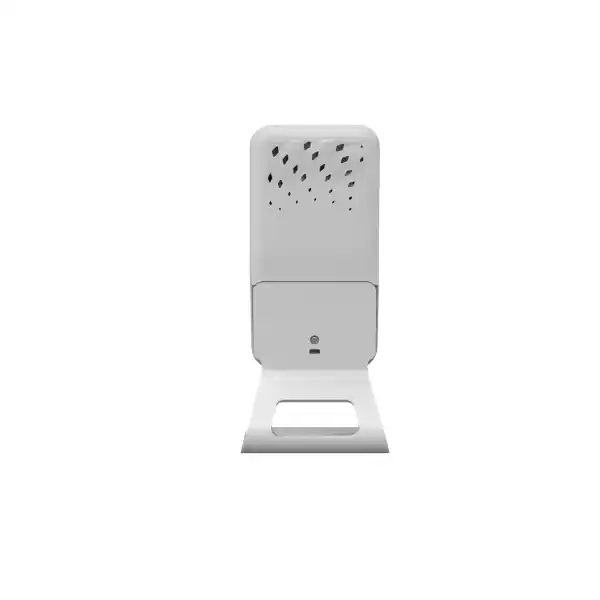
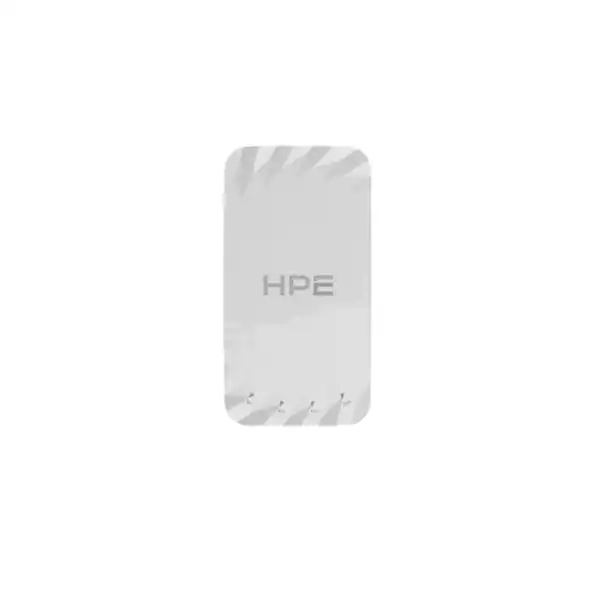
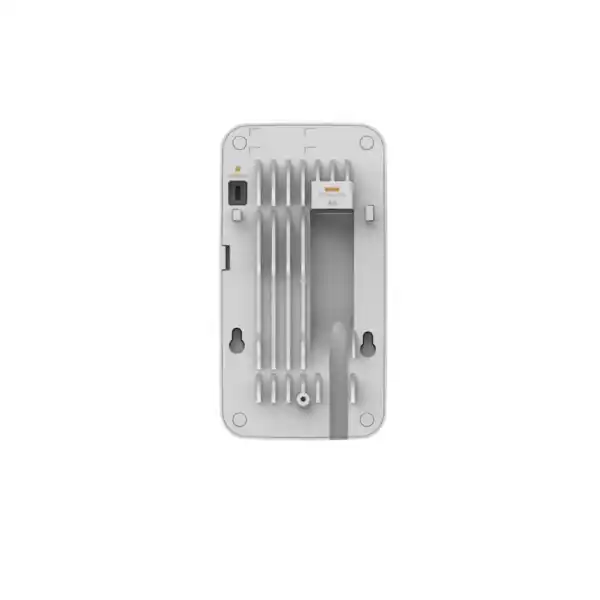
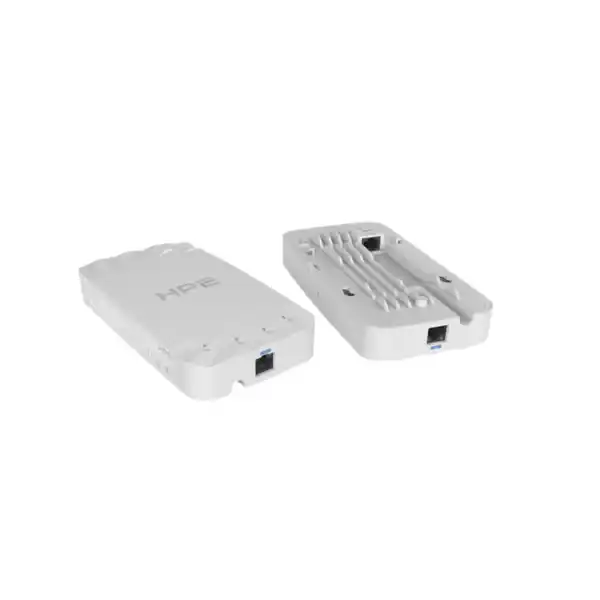
HPE Aruba Networking AP-721H in Dubai, UAE
The AP-721H is the compact dual-radio model in HPE Networking’s 720H hospitality access point family. It is intended for indoor environments that need room-level or localised Wi-Fi 7 coverage together with a practical wired handoff, without stepping up to the larger port count and higher radio capacity of the AP-723H or AP-725H. For buyers planning hotel rooms, residence halls, small branches, remote offices or similar spaces, the main decision is not simply whether Wi-Fi 7 is required; it is whether the AP-721H’s two-radio architecture, one-gigabit uplink, one-gigabit downlink and regional configuration match the site design.

A direct answer for buyers evaluating the AP-721H
HPE Networking AP-721H is an indoor Wi-Fi 7 hospitality access point built for localised coverage in rooms, small work areas and distributed sites. It combines two 2×2 Wi-Fi radios with one 1GbE uplink, one 1GbE downlink, internal antennas, BLE 5.4 and 802.15.4 Zigbee support. It should be considered when a project values a compact wall-plate or desk-style deployment and does not require the extra radios, higher uplink speeds or additional downlink ports available in larger 720H models. Before ordering, confirm the RW regional SKU, radio-band plan, PoE source, mounting choice, management architecture, quantity and any software or support entitlements needed for the target environment.
What the AP-721H actually does
The AP-721H brings wireless access, a local Ethernet connection and IoT radio capability into a compact indoor access point. In a hotel-room design, that can mean placing connectivity near guests and room devices rather than relying only on corridor-mounted access points. In a residence hall, remote office or small branch, it can provide a similarly localised connection point for notebooks, phones, tablets and selected wired endpoints.
Its radio arrangement is important: AP-721H is a dual-radio tri-band-capable design, not a three-radio model operating 2.4 GHz, 5 GHz and 6 GHz simultaneously. The documented configuration choices are 2.4 GHz plus 5 GHz or 2.4 GHz plus 6 GHz. That makes spectrum planning part of the product-selection decision, particularly where a property still has a large base of 5 GHz clients but also wants a path toward 6 GHz Wi-Fi 7 usage.
Who should shortlist it
The model is most relevant to organisations that can align its compact feature set with a repeatable room or branch design. Hotels, serviced apartments, student accommodation, education facilities, small offices, distributed enterprise sites and teleworker environments can all be reasonable candidates when the access point is sized and configured correctly.
It is less suitable where each location needs multiple wired user ports, a multigigabit uplink, concurrent use of all three Wi-Fi bands, USB-based expansion or the higher aggregate wireless capacity of the AP-723H or AP-725H. Those requirements should be identified early, because choosing a smaller access point and trying to compensate later with extra edge hardware can remove the simplicity that hospitality-style APs are meant to provide.
Business problems this access point can help address
Coverage close to the user
Guest rooms and small workspaces can be difficult to serve consistently from distant ceiling or corridor access points because walls, furnishings and room layout affect signal. A hospitality AP allows designers to place the access point closer to the users and devices it serves. The final quantity and placement still depend on RF design, construction materials and expected client density.
Wireless plus a wired handoff
The single 1GbE downlink can support a nearby wired endpoint where appropriate, reducing the need to deploy a separate miniature switch for every room in simple layouts. Buyers should confirm VLAN, authentication and policy requirements for the downstream device and remember that one port is not a substitute for a multiport room switch when several wired devices are expected.
A controlled move toward Wi-Fi 7
Projects can introduce 802.11be capability while continuing to support earlier Wi-Fi generations. The AP-721H is therefore useful when the objective is not maximum per-room throughput but a practical refresh path. The 6 GHz option should be assessed against local regulatory availability, existing client capability and the fact that the AP-721H uses either 5 GHz or 6 GHz alongside 2.4 GHz.
IoT-aware room design
Integrated BLE 5.4 and Zigbee can make the access point relevant to environments that are also planning sensors, location-aware services or other IoT functions. This does not mean every third-party IoT device will automatically integrate. Application compatibility, controller requirements, software support and device-specific workflows must be reviewed as part of the solution design.
AP-721H fit matrix
| Requirement | Suitable when | Confirm before ordering |
|---|---|---|
| Room-level Wi-Fi 7 | A compact dual-radio 2×2 AP meets the coverage and capacity target. | RF plan, channel width, client count and expected traffic mix. |
| 6 GHz adoption | The design can use 2.4 GHz + 6 GHz in locations where 6 GHz clients are expected. | Local regulatory position, client support and whether 5 GHz must remain active on that AP. |
| One wired room endpoint | A single 1GbE downlink is enough for the local wired requirement. | Port policy, VLAN design, endpoint authentication and cable route. |
| PoE-powered deployment | The switching or injector design can provide the required PoE to each AP. | Switch PoE budget, cable length, injector choice and current HPE power guidance. |
| Centralised operations | The organisation plans to operate the AP in a supported HPE Aruba Networking architecture. | Software release, Central subscription or management entitlement, gateway design and support coverage. |
Verified AP-721H technical information
The table below keeps the AP-721H separate from the stronger specifications of the AP-723H and AP-725H. Values are based on current HPE product and 720H Series documentation for the RW model. Where an ordering or deployment detail can vary by region, software or bill of materials, it is marked for confirmation instead of being treated as universally included.
| Brand | HPE Networking / HPE Aruba Networking portfolio |
| Model | AP-721H |
| Manufacturer part number | S6Q67A for AP-721H (RW) single unit |
| Product type | Indoor hospitality access point |
| Wi-Fi generation | Wi-Fi 7 (IEEE 802.11be) |
| Radio architecture | 2-radio, 2×2; 2.4 GHz + 5 GHz or 2.4 GHz + 6 GHz |
| Maximum documented peak data rate | Up to 3.2 Gbps in the documented 2.4 GHz + 6 GHz configuration; real throughput depends on clients, spectrum, configuration and environment |
| Channel bandwidth | 2.4 GHz: 20 MHz; 5/6 GHz support depends on configured band, with 6 GHz documented up to 160 MHz |
| Antennas | Internal |
| Wired interfaces | 1 x 1GbE upstream and 1 x 1GbE downstream |
| IoT support | BLE 5.4 and IEEE 802.15.4 Zigbee |
| Location services | 802.11 FTM support |
| Security standards | WPA2, WPA3 and Enhanced Open (OWE) are documented for the 720H Series |
| Management | HPE documentation lists cloud, on-premises and SaaS management categories; AP-721H is supported in AOS 10.8.1.0. Confirm the intended HPE Aruba Networking Central architecture and entitlement. |
| Dual Central / Mist platform | Not identified for AP-721H. HPE specifically identifies AP-723H as the dual-platform model. |
| USB | No USB Type-A expansion listed for AP-721H |
| Mounting | Hospitality wall-plate style; HPE also lists compatible wall-box and small desk mounting options for the 720H family. Confirm exact kit. |
| Power | PoE-powered design. Model-specific public guidance identifies AP-721H as a Class 3 powered device. Confirm switch or injector budget for the exact deployment. |
| Dimensions | Approximately 170 x 90 x 32 mm in HPE 720H platform guidance |
| Warranty guidance | HPE documentation references a limited lifetime warranty; confirm applicable UAE terms, registration and support coverage before purchase. |
| UAE availability | Contact FourTeck for current regional SKU, quantity, lead time and quotation status. |
Configuration and compatibility points that matter
The AP-721H should not be purchased from the model name alone. First, confirm the regional radio version. HPE lists RW, RW1 and RW10 ordering variants as well as US variants, and regional regulatory rules determine which part number is appropriate. For a UAE project, the RW version S6Q67A is a logical model to review, but the final order code should still be validated against current HPE regional ordering guidance.
Second, confirm the radio plan. Because AP-721H operates with two radios, choosing 2.4 GHz + 6 GHz means the same AP is not simultaneously providing 5 GHz. A mixed property may therefore need a deliberate band strategy rather than a simple one-for-one replacement of older dual-band APs. Client capability, channel reuse, roaming design and local 6 GHz rules should all influence the decision.
Finally, confirm the management and software architecture. Current HPE documentation shows AP-721H support in AOS 10.8.1.0, while the distinct Central-or-Mist dual-platform capability is specifically associated with AP-723H. If the organisation has a preferred HPE Aruba Networking Central deployment model, gateway design, licensing approach or existing estate, those dependencies should be checked before a bill of materials is approved.
A practical purchase and deployment journey
Define the room profile
Document room size, wall construction, expected users, wired endpoints, IoT devices and the applications that matter. A hotel room streaming profile is different from a residence hall room or a small branch office even if the same AP form factor appears suitable.
Validate radio and cabling design
Decide whether 5 GHz or 6 GHz is required on the second radio, confirm existing cable quality, PoE budget and wall-box condition, and determine whether the 1GbE downstream port satisfies local wired needs.
Confirm platform and entitlement
Review AOS 10 version support, HPE Aruba Networking Central design, gateway requirements where applicable, subscription or support needs, and any migration implications for an existing Aruba environment.
Build and verify the order
Confirm the RW part number, quantity, mount kits, injectors if needed, support items and delivery destination. Only then should the quotation be finalised so that hardware, accessories and services align with the actual site.
Wi-Fi 7 without assuming maximum radio capacity
The value of Wi-Fi 7 is not limited to one headline throughput number. For room-centric networks, the upgrade can also be about adopting a newer client ecosystem, making use of 6 GHz where it fits, improving efficiency and creating a platform for the next device refresh cycle. The AP-721H supports Wi-Fi 7 while remaining deliberately smaller in capability than the higher 720H models.
That distinction is useful for procurement. A property does not necessarily need a 5GbE uplink or four wired downlinks in every room. Conversely, buying the AP-721H solely because it has a lower position in the family can be a mistake if the room requires three simultaneous bands or additional wired ports. FourTeck can help map the performance requirement to the correct 720H model rather than treating all Wi-Fi 7 hospitality APs as interchangeable.
A single local Ethernet downlink can simplify some rooms
The downstream 1GbE port is especially relevant in hospitality designs because not every room device is best served over Wi-Fi. A fixed endpoint may still benefit from a wired connection, and the AP can become the local point where wireless and one wired connection meet. This can reduce hardware clutter in simple room designs.
The limitation is equally important: there is only one downstream port. If the room plan includes an IPTV device, a desk phone, a workstation and an IoT gateway, the AP-721H alone will not provide a port for each device. In that situation, a different 720H model or a separate switching approach may be more appropriate. The correct decision should come from the room bill of materials and traffic policy, not from the access point specification in isolation.
IoT radios add options, not automatic compatibility
BLE 5.4 and Zigbee support can be useful where room connectivity is expected to extend beyond guest or employee Wi-Fi. Asset tracking, sensor networks and other IoT workflows may benefit from having these radios integrated into the access point platform. This can support a more consolidated edge design when the surrounding software and device ecosystem is compatible.
Buyers should still validate the complete IoT workflow. A radio being present does not guarantee that a particular sensor, application or building-management platform is supported. Confirm protocol version, vendor integration, management software, security policy, location-service requirements and any required gateways or licenses. Treat the AP as one component in an IoT architecture, not as a replacement for every dedicated IoT controller.
Where the AP-721H can make sense
Hotels and serviced accommodation
Room-level placement can help provide wireless service close to guests while offering one local wired port. This is most useful where the property has a consistent room design and can standardise cabling, mounting and power. The final AP count should come from RF design and room construction, not from room count alone.
Residence halls and student accommodation
A compact access point can suit rooms where occupants have several personal devices but the facility also wants a controlled, centrally managed network. Consider client density, gaming and streaming patterns, peer-to-peer policy, wired endpoint needs and the ability to maintain the AP without excessive disruption.
Small branches and remote offices
The AP-721H can be evaluated for compact branch locations where one access point and one wired handoff are sufficient. In this scenario, management architecture and WAN/gateway design can be just as important as Wi-Fi capability. Confirm whether the branch needs more Ethernet ports, higher uplink capacity or redundancy before standardising the model.
Integration and operational considerations
A hospitality access point lives at the edge of several systems: access switching, PoE, VLAN and policy design, wireless management, authentication, guest access, IoT services and physical room infrastructure. The cleanest deployment happens when these dependencies are designed together. For an existing Aruba estate, check the current software release and whether the intended AP group, gateway architecture and Central environment support the new 720H hardware. HPE’s current support documentation identifies AP-721H from AOS 10.8.1.0, so older environments may need an upgrade plan before hardware rollout.
Cabling is another practical constraint. A new access point cannot correct a damaged copper run, an undersized PoE budget or an unsuitable wall box. During a refresh, test representative rooms, inspect mounting conditions and verify switch power headroom. If the site is replacing older HPE Aruba hospitality APs, current HPE guidance indicates compatibility with existing 600H wall-box mounts for the 720H family, but the exact mounting accessory and physical condition should still be checked.
Operationally, decide how faults will be handled. A room AP may serve guest devices, a wired endpoint and IoT functions at the same time, so a failure can affect several services in one location. Document spares strategy, remote diagnostics, escalation procedures, configuration backup and change control as part of the project rather than treating support as a post-installation issue.
Buyer questions to resolve before a quotation
Confirm whether 2.4 + 5 GHz or 2.4 + 6 GHz is appropriate for the actual client base and spectrum plan.
List every room endpoint that requires Ethernet before deciding that the AP-721H can replace a local switch.
Provide access-switch model, available PoE budget and cabling information, or identify where an injector would be required.
State the current Aruba software version, Central environment, gateway approach and any existing subscriptions or support contracts.
Confirm country, regulatory domain and quantity. Do not assume that a US or another regional SKU can be substituted.
Clarify wall-box reuse, desk mounting, cable testing, configuration, migration, documentation and post-install support expectations.
Procurement checklist for AP-721H projects
- Confirm AP-721H as the intended 720H model, not AP-723H or AP-725H.
- Validate the regional RW part number and destination-country requirements.
- State the required quantity and whether single units or pack options are preferred.
- Choose the 2.4 + 5 GHz or 2.4 + 6 GHz radio strategy.
- Confirm 1GbE uplink capacity is suitable for the expected room traffic.
- Confirm one 1GbE downlink meets the wired-device requirement.
- Review PoE switch capacity or injector requirements.
- Verify wall-box, mount kit or small desk-mount requirement.
- Check AOS 10 / HPE Aruba Networking Central compatibility and entitlement.
- Identify IoT integration requirements for BLE or Zigbee.
- Include configuration, migration and documentation scope if required.
- Confirm warranty and support terms applicable to the UAE purchase.
How FourTeck can assist with sizing and configuration
FourTeck can help turn a model request into a clearer purchasing scope. That can include reviewing whether AP-721H matches the room profile, identifying when AP-723H or AP-725H should also be compared, checking the intended regional order code, discussing mounting and PoE requirements, and preparing the hardware and service elements needed for a quotation.
For a new wireless project, share floor plans, representative room layouts, wall construction, estimated users, device types, wired endpoints, existing switch models and preferred management architecture. For an upgrade, add the current AP models, software release, wall mounts and any existing Aruba Central or gateway details. This helps reduce the risk of buying an access point that fits the product family but not the actual deployment.
You can also review broader business technology products, discuss installation and configuration services, or contact FourTeck with the exact AP requirement.
Information that speeds up a quote
Send the destination country, requested quantity, preferred delivery window, existing switch model, expected mounting method and whether configuration or installation should be included.
If the project is a refresh, include the old access point model and management platform. If 6 GHz is part of the plan, mention the expected client device mix and any regulatory or spectrum requirements already identified.
UAE availability and support guidance
Contact FourTeck to confirm current UAE availability of the HPE Networking AP-721H and the exact regional SKU to be quoted. Availability can vary with product introduction timing, vendor allocation, quantity, regional radio version and project lead time. A web listing for the product does not by itself confirm local stock, so the safe procurement step is to validate the requested quantity and delivery destination before raising a purchase order.
Installation and configuration scope should be included in the quotation when required. For a hospitality refresh, this may involve representative-room testing, checking wall-box compatibility, validating PoE, staging the AP configuration, updating software where necessary and documenting the final deployment. For a greenfield project, wireless design and switching capacity should be reviewed before the AP quantity is fixed. FourTeck can coordinate these discussions as part of the requirement review without assuming that every project needs the same service package.
Dubai, Abu Dhabi, Sharjah and Ajman coverage
Businesses planning AP-721H deployments in Dubai, Abu Dhabi, Sharjah and Ajman can contact FourTeck for requirement review, quotation coordination and project planning. The useful starting point is a single consolidated bill of materials covering access points, regional part numbers, mounting hardware, PoE requirements, software or support items and any installation scope. Delivery and on-site activity should be scheduled only after the exact quantity, locations and service requirements are confirmed.
GCC Availability
For GCC projects, FourTeck can assist organisations that are evaluating the AP-721H for hospitality, accommodation, branch or distributed-office use across markets such as the United Arab Emirates, Saudi Arabia, Kuwait, Qatar, Bahrain and Oman. Regional procurement should begin with the destination country because regulatory domain, product code, software entitlement, delivery route and service scope can differ. Buyers should share the exact model, quantity, required radio plan, mounting preference, PoE environment, deployment location and expected project window. FourTeck can then help review the requirement, coordinate a quotation and discuss configuration or installation planning where needed. Product availability, licensing conditions, delivery schedules, vendor lead times and site-service options vary by country and project. No local stock or fixed delivery commitment should be assumed until the regional bill of materials and destination have been checked.
Africa Availability
Organisations in Africa can also approach FourTeck for AP-721H product evaluation and regional procurement planning, including projects in East Africa and selected markets such as Kenya and Uganda. The main task is to make sure the proposed access point, regional radio version, quantity and deployment design are appropriate for the destination. Power standards, PoE infrastructure, local spectrum rules, shipping arrangements, vendor lead time and installation conditions may all influence the final bill of materials. Buyers should provide the destination country, required quantity, existing switch or network platform, target deployment schedule and whether configuration, staging or support assistance is expected. FourTeck can help compare options and coordinate a quotation, while regional fulfilment and service arrangements remain dependent on the final scope. More regional information is available through FourTeck Africa.
Related options worth comparing
HPE Networking AP-723H
Consider the AP-723H when the project needs three simultaneous Wi-Fi radios, a 2.5GbE uplink, two 1GbE downlinks or the HPE Central / HPE Mist dual-platform capability identified by HPE for that model. Confirm the exact regional SKU and platform choice.
HPE Networking AP-725H
The AP-725H is the stronger 720H option when higher aggregate wireless capacity, a 5GbE uplink, four 1GbE downlinks or PoE-out functions are required. It is not automatically the better choice for every room; switching capacity and room requirements should justify the upgrade.
Mounting and power accessories
HPE lists wall-box mount kits, a small desk mount suitable for AP-721H and PoE injector options within the 720H Series accessory set. Compatibility and required quantity should be verified against the exact installation method rather than added automatically.
Design and configuration support
If the hardware model is only one part of a larger refresh, FourTeck can discuss switching, WLAN configuration, migration and support planning. Review the wider FourTeck technology portfolio for related infrastructure requirements.
Why businesses contact FourTeck for this type of purchase
The practical value is requirement clarification. Hospitality and branch access points are easy to compare by headline Wi-Fi generation, but a successful order also depends on radio design, wired ports, PoE, mounting, software support, regional part number and the rest of the network. FourTeck can help organise these factors into a bill of materials that procurement can review.
That assistance can extend to comparing nearby 720H models, checking whether a planned room design needs more wired ports, discussing software and management dependencies, identifying installation scope and coordinating a quotation. Buyers can also learn more about FourTeck business technology services and company information through the FourTeck profile.
What buyers are really trying to decide about the AP-721H
Current product comparisons around the 720H family repeatedly come back to one question: is the AP-721H enough for the room, or should the project move to AP-723H or AP-725H? The answer is usually found in the design details rather than the Wi-Fi 7 label. The AP-721H is intentionally compact. It uses two 2×2 radios, has a one-gigabit uplink and provides one one-gigabit downlink. That is a sensible profile for many room-level deployments, but it is also a clear boundary. If a room needs several Ethernet connections or the wireless design requires three bands active at the same time, the AP-721H is not the same proposition as its larger siblings.
Is it truly tri-band?
It is tri-band-capable hardware in the sense that it supports 2.4, 5 and 6 GHz bands, but the AP-721H is a two-radio model. HPE documents radio configurations of 2.4 + 5 GHz or 2.4 + 6 GHz. Buyers who want 2.4, 5 and 6 GHz concurrently should compare the three-radio AP-723H or AP-725H instead.
Will a 1GbE uplink bottleneck Wi-Fi 7?
A one-gigabit uplink sets an obvious wired ceiling for traffic leaving the AP, so the project should not treat the maximum radio data rate as equivalent to application throughput. In room-centric designs, that may be completely acceptable because client demand is distributed across many APs. Where higher per-AP throughput is a requirement, compare the AP-723H 2.5GbE or AP-725H 5GbE uplinks.
Can it replace an existing hospitality AP?
HPE guidance for the 720H family highlights compatibility with existing 600H metal wall-box mounts, which can simplify some refresh projects. Physical fit is only one part of the migration. Software support, PoE, switch capacity, cabling, RF design and configuration should be tested in representative rooms before a large rollout.
Another common buyer concern is management. HPE’s current product material highlights a dual-platform capability in the 720H family, but the important detail is that HPE specifically calls out AP-723H as the model supporting either HPE Aruba Networking Central or HPE Mist on the same hardware. That distinction matters. AP-721H buyers should plan around the supported HPE Aruba Networking architecture and confirm the required AOS 10 / Central version and entitlements. HPE’s current supported-device documentation lists AP-721H beginning with AOS 10.8.1.0. A project running an older release may therefore need software planning before the new access points are introduced.
Buyers also search for power and mounting details because these determine whether a room can be upgraded without electrical or construction work. Public HPE platform guidance identifies AP-721H as a PoE-powered Class 3 device and lists a dedicated small desk mount for the model, along with wall-box mounting options for the 720H family. The safe procurement approach is to match the AP to the actual switch PoE budget, cable run and mount method. If injectors are required, add the correct units and power cords to the bill of materials rather than assuming they are included.
Price research also needs context. New models often appear in different markets with different taxes, reseller margins and launch timing. A European reseller may publish a price while another lists the product on request, and an HPE regional catalogue may show a local reference price that is not transferable to the UAE. For that reason, an online figure should be treated only as a market reference. The UAE transaction price should be requested against the exact RW SKU, quantity, software/support requirement and delivery destination.
For procurement teams, the strongest quote request is therefore concise but complete: state AP-721H, destination country, quantity, existing switch model, preferred wall or desk mount, whether 6 GHz will be used, current Aruba management environment and any installation or staging requirement. With that information, FourTeck can identify whether the requested model is a clean fit or whether the project should compare another 720H option before committing to quantity.
Questions that can prevent a wrong AP purchase
Do we need 5 GHz and 6 GHz at the same time?
If the answer is yes, AP-721H needs closer scrutiny because its two-radio design runs 2.4 GHz with either 5 GHz or 6 GHz. A property with many current 5 GHz devices may choose to retain 5 GHz on some or all APs, while a new device estate may make 6 GHz more attractive. A three-radio model may be cleaner when simultaneous coverage on all three bands is a firm requirement.
How many wired devices will each room really have?
Count endpoints instead of assuming Wi-Fi replaces Ethernet. The AP-721H offers one downlink. A room with one fixed device may fit well; a room with several wired devices may require a different access point or separate switching. Include endpoint type, VLAN and security policy because the downstream port is part of the network design, not simply an extra socket.
Is our current Aruba software ready for the 720H family?
Check this before hardware arrives. HPE currently lists AP-721H support from AOS 10.8.1.0. If the network uses an older release or a legacy management design, the migration path should be reviewed. Also confirm the intended Central subscription, gateway architecture and any operational standards used by the organisation.
Can we reuse existing wall hardware and cabling?
Potentially, but verify rather than assume. HPE 720H guidance mentions compatibility with 600H metal wall-box mounts, which can reduce installation effort in some refreshes. Test physical fit, cable condition, negotiated Ethernet speed, PoE delivery and AP placement in a representative room. A mount that fits does not prove the complete network path is ready.
What should be included in the quotation besides the AP?
At minimum, review mounts, injectors if needed, software or management entitlements, support, spare units and any configuration or installation services. For a refresh, include software upgrade effort and decommissioning steps if they are in scope. For a new property, add design work, switch PoE review and acceptance testing. The final bill of materials should reflect the site rather than a generic accessory list.
How do we compare a market price with a UAE quote?
Use online prices only as a broad reference. Country, tax treatment, reseller margin, currency, quantity, regional SKU, support and freight can all change the transaction. Ask FourTeck for a quotation against S6Q67A or the currently appropriate UAE regional code, and make sure the quote states what accessories, services and support are included.
Frequently asked questions
What is the HPE Aruba Networking AP-721H designed for?
It is a compact indoor Wi-Fi 7 hospitality access point for room-level and distributed deployments such as hotels, residence halls, small offices and teleworker environments. Its design combines wireless service, one 1GbE uplink, one 1GbE downlink and integrated BLE/Zigbee capability.
Is the AP-721H a Wi-Fi 7 access point?
Yes. HPE documents AP-721H as an IEEE 802.11be Wi-Fi 7 model in the 720H Series. Actual application throughput depends on client capability, radio configuration, channel plan, interference, uplink capacity and the wider network.
Does AP-721H use 2.4 GHz, 5 GHz and 6 GHz simultaneously?
No. The AP-721H is a dual-radio model. HPE documents radio configuration as 2.4 GHz + 5 GHz or 2.4 GHz + 6 GHz. Buyers requiring simultaneous operation on all three bands should compare the three-radio AP-723H or AP-725H.
What Ethernet ports are available on the AP-721H?
The documented wired interface is one 1GbE upstream port and one 1GbE downstream port. If a room requires more than one local wired endpoint, that requirement should be addressed through another 720H model or a separate switching design.
Does AP-721H support Bluetooth and Zigbee?
Yes. Current HPE documentation lists BLE 5.4 and IEEE 802.15.4 Zigbee support for AP-721H. Compatibility with a specific sensor, application or IoT platform should still be confirmed because integrated radios do not guarantee every third-party workflow.
Can AP-721H be managed by both HPE Aruba Networking Central and HPE Mist?
HPE specifically identifies AP-723H as the dual-platform Central-or-Mist model. AP-721H is supported in HPE Aruba Networking AOS 10.8.1.0, and buyers should confirm the intended Central architecture, software release and management entitlement before ordering.
How is the AP-721H mounted and powered?
It is designed for hospitality-style wall mounting and HPE also lists a small desk-mount option for AP-721H. HPE platform guidance identifies it as a PoE-powered Class 3 device. Confirm the exact wall-box kit, switch PoE budget or injector requirement for the site.
Is S6Q67A the correct AP-721H SKU for a UAE project?
S6Q67A is the AP-721H (RW) single-unit part number in HPE documentation. Because wireless regulatory domains and regional ordering rules matter, the final UAE order code should be confirmed with FourTeck before purchase rather than assumed from another country’s listing.
What information should I send FourTeck for an AP-721H quote?
Provide the destination country, required quantity, preferred deployment date, current switch and WLAN environment, wall or desk mounting requirement, expected use of 5 GHz or 6 GHz, wired endpoint needs and whether configuration, installation or support should be included.
Confirm the AP-721H bill of materials before ordering
Share your quantity, deployment type, room or branch profile, existing switching environment and management platform. FourTeck can help verify whether AP-721H fits the requirement, confirm the regional SKU and coordinate a current UAE quotation with any required mounting, configuration or installation scope.

Reviews
There are no reviews yet.