
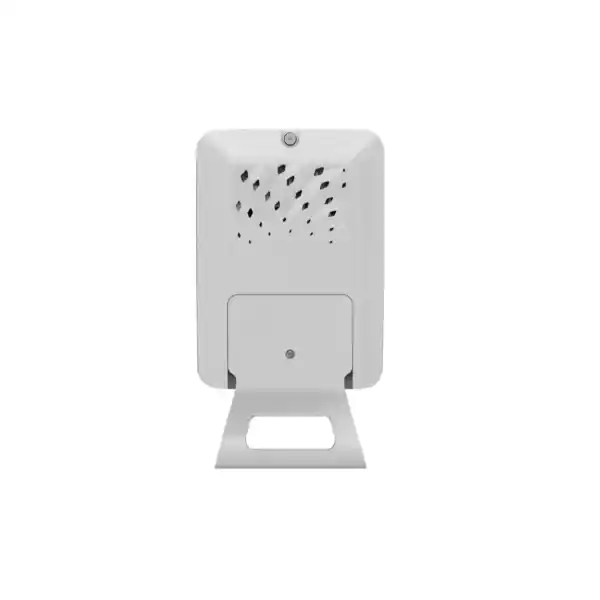
HPE Aruba Networking AP-723H in Dubai, UAE
The AP-723H is a tri-band 2×2 Wi-Fi 7 access point built for rooms, compact work areas and distributed sites where wireless service, wired device connectivity and IoT support need to meet at the edge. Its distinguishing feature is dual-platform operation: buyers can choose HPE Aruba Networking Central or HPE Mist on the same hardware, provided the correct onboarding path and license or subscription are selected.
Before you request a quotation
Confirm whether the deployment will be managed through HPE Aruba Networking Central or HPE Mist.
Confirm the UAE-appropriate regional ordering SKU rather than assuming a US, RW, RW1 or TAA variant.
Check upstream PoE capability, wall-box or desk-mount requirements, wired-device count and 6 GHz client support.
Share quantity, locations and installation scope so the hardware, subscriptions and services can be quoted together.
Direct answer: what is the AP-723H?
The HPE Aruba Networking AP-723H is an indoor Wi-Fi 7 hospitality access point in the HPE Networking 720H Series. It is mainly used where a room, dormitory space, small branch, teleworker location or similar indoor area benefits from a compact access point that can provide tri-band Wi-Fi, local Ethernet downlinks and integrated IoT radios. It should be considered by organisations planning new Wi-Fi 7 deployments or room-level upgrades that want either HPE Aruba Networking Central or HPE Mist management. Before proceeding, buyers should confirm the regional part number, chosen management persona, required Central license or Mist Wi-Fi Assurance subscription, PoE or DC power method, mounting hardware, client 6 GHz readiness, wired port requirements and installation scope.
What it does at the room or branch edge
AP-723H combines three forms of access that are often planned separately. Its three 2×2 Wi-Fi radios operate across 2.4 GHz, 5 GHz and 6 GHz, giving modern Wi-Fi 7 clients access to newer spectrum while older supported clients can continue using established bands. A 2.5GbE uplink avoids forcing the access point onto a 1GbE-only backhaul, while two 1GbE downlink ports can serve local wired devices such as room equipment, workstations or other Ethernet endpoints.
Integrated BLE and Zigbee capabilities extend the device into IoT-oriented environments. A USB 2.0 Type-A interface is also available, although power conditions can affect USB operation. The practical result is a compact edge device that can reduce the number of separate connectivity components needed in a room or small location, provided its performance, power and management model align with the project.
Who should consider it
The AP-723H is particularly relevant to hotels, serviced apartments, student or staff residences, multi-room facilities, education environments, compact offices and distributed branches. It can also suit organisations standardising on a wall-plate or desk-oriented access point where local wired ports are valuable and a conventional ceiling AP would not be the best physical or operational fit.
It is not automatically the right choice for every high-density or high-capacity environment. Projects requiring more downlink ports, higher peak aggregate wireless rate, wider channel capability, or PoE output to downstream devices should compare the AP-725H. Projects with simpler radio and port needs may find the AP-721H sufficient. FourTeck can help map room type, user density, cable layout, management platform and switch power budget to the most appropriate 720H model rather than selecting only by headline generation.
Business problems the AP-723H can help address
Room-level wireless upgrades
Wi-Fi 7 and 6 GHz support give organisations a path to modernise guest-room, residential or branch connectivity while continuing to support established client bands.
Too many edge devices
Local Ethernet, wireless access and IoT radios can be brought together in one access point, reducing the need to plan a separate small switch or dedicated IoT radio in some locations.
Platform transition concerns
The dual-platform hardware allows an organisation to choose Aruba Central or Mist and later re-provision the device if its management strategy changes, subject to the required software, subscriptions and onboarding process.
Existing switch constraints
AP-723H can operate with different power inputs, but available PoE affects features. This makes power-budget planning essential rather than assuming every switch port will expose the same functionality.
Core capabilities that matter to buyers
AP-723H suitability matrix
| Requirement | Suitable when | Confirm before ordering |
|---|---|---|
| Wi-Fi 7 room coverage | You want 2.4, 5 and 6 GHz radios in a room, branch or compact indoor area. | Client support for 6 GHz, channel plan and expected density. |
| Central or Mist management | Your organisation uses one of these platforms or wants a hardware path that can be re-personalised later. | Chosen persona, licensing/subscription and onboarding workflow. |
| Local wired devices | Two 1GbE downlinks are enough for nearby Ethernet endpoints. | Port count, VLAN design and whether downstream PoE is required. |
| USB or IoT peripheral use | You need compatible USB, BLE or Zigbee functionality at the edge. | Peripheral compatibility and PoE power because lower power can disable USB. |
| Wall or desk deployment | The physical site suits 600H-compatible wall-box mounting or the correct large desk stand. | Existing mount, wall box, cable position and accessory SKU. |
Verified product information
The values below are limited to model-specific information confirmed in current HPE material. The AP-723H must not be confused with the AP-725H, which has different port count, channel bandwidth and peak data rate. Regional ordering details and software entitlement should still be checked at quotation stage.
| Brand | HPE Networking / HPE Aruba Networking |
|---|---|
| Product | AP-723H Dual Platform Hospitality Access Point |
| Regional reference SKU | S6Q76A for AP-723H (RW); confirm UAE ordering variant before purchase |
| Product family | HPE Networking 720H Series Hospitality Access Points |
| Deployment | Hospitality, indoor and small-business environments |
| Wireless generation | Wi-Fi 7 (802.11be) |
| Wi-Fi radios | Three 2×2 radios: 2.4 GHz, 5 GHz and 6 GHz |
| Supported channel bandwidths | 20 MHz on 2.4 GHz; 20/40/80 MHz on 5 GHz; 20/40/80/160 MHz on 6 GHz |
| Peak aggregate data rate | Up to 4.7 Gbps for AP-723H |
| Antenna | Internal |
| Wired interface | 1 x 2.5GbE uplink and 2 x 1GbE downlink |
| IoT support | BLE 5.4, 802.15.4/Zigbee, USB 2.0 Type-A |
| Location services | 802.11 FTM support |
| Management options | HPE Aruba Networking Central or HPE Mist persona; entitlement/subscription dependent |
| Security capabilities | WPA2/WPA3, Enhanced Open (OWE), TPM and platform-dependent policy features |
| Power | PoE or 48V DC; AP-723H is designed for Class 4 PoE for unrestricted operation, while lower Class 3 power disables USB by default |
| Dimensions | Approximately 180 x 130 x 32 mm |
| Mounting | Compatible with existing HPE Aruba Networking 600H metal wall-box mounts; large desk mount option available |
| Warranty guidance | Current HPE 720H data sheet states limited lifetime warranty; confirm exact regional terms and eligibility for the quoted SKU |
| UAE availability | Contact FourTeck for current model, quantity, regional variant and vendor lead-time confirmation |
Configuration, license and power dependencies
AP-723H hardware is dual-platform, but the two management environments are not a single combined operating mode. An Aruba-oriented deployment requires the appropriate HPE Aruba Networking Central entitlement and onboarding using the device identity. A Mist-oriented deployment requires the relevant Wi-Fi Assurance subscription and Mist onboarding. HPE states that the management persona is selected during initial boot and that the device can later be factory-reset and re-provisioned for the other persona. That flexibility is valuable for lifecycle planning, but it does not remove the need to license the chosen platform correctly.
Power is another practical dependency. The AP-723H is designed to operate without feature restrictions on 802.3at Class 4 PoE or suitable 48V DC power. With lower 802.3af Class 3 PoE, USB functionality is disabled by default. Intelligent Power Monitoring can be used to manage feature restrictions according to available power. Buyers intending to attach a USB peripheral should therefore confirm the upstream switch power budget and the actual negotiated PoE class, not merely that the switch supports “PoE.”
The AP-723H has two 1GbE downlink ports but does not provide the dual downstream PoE sourcing capability associated with the higher AP-725H. If the project expects the access point to power room phones, cameras or other Ethernet endpoints, the requirement should be checked carefully before the bill of materials is finalised.
A practical purchase and deployment journey
Map the room or site
Record user density, device types, wall construction, current cabling, switch location, wired endpoints and whether a wall plate or desk position is preferred.
Choose management
Decide whether the site belongs in HPE Aruba Networking Central or HPE Mist, then identify the matching license or subscription and onboarding method.
Validate power and mounting
Check the switch PoE class, available power budget, cable path, existing 600H mount compatibility and any desk-mount accessory requirement.
Build the quotation
Include the exact regional AP variant, management entitlement, accessories, quantity, installation labour, configuration, testing and documentation required.
Tri-band Wi-Fi 7 without using AP-725H specifications
A common buying mistake is to read the 720H family headline and assume every model delivers the same radio bandwidth or aggregate data rate. The AP-723H does not use the AP-725H’s 320 MHz 6 GHz channel capability and does not share its 9.3 Gbps peak figure. For AP-723H, HPE specifies 20 MHz operation on 2.4 GHz, up to 80 MHz on 5 GHz, up to 160 MHz on 6 GHz, and a maximum peak aggregate data rate of 4.7 Gbps. That is still a substantial step for room-oriented deployments, but it needs to be compared against expected client capabilities and backhaul.
Wi-Fi 7 value also depends on client mix. A property may install Wi-Fi 7 infrastructure before a large proportion of users arrive with Wi-Fi 7 devices. The AP still provides service to supported earlier generations, while the 6 GHz band can serve compatible clients that benefit from additional spectrum. The real design question is not simply “does it have Wi-Fi 7?” but “how many clients can actually use 6 GHz, what channel plan is practical in the building, and what traffic needs to stay on 2.4 or 5 GHz?”
For hospitality, residence and branch environments, placement matters as much as headline rate. In-room wall placement can reduce the number of walls between the AP and the user, but construction materials, neighbouring rooms, channel reuse and transmit-power planning still affect experience. FourTeck can discuss survey, placement and configuration scope when the project requires more than a product-only quote.
Why the dual-platform design changes procurement planning
The AP-723H is unusual within the 720H line because HPE positions it as the dual-platform model. The buyer does not have to choose different hardware solely because the organisation manages wireless through Aruba Central instead of Mist, or vice versa. For organisations that have acquired businesses, operate mixed estates, or are evaluating a longer-term management-platform strategy, this can reduce the risk that the physical access point immediately becomes tied to one management direction.
That flexibility should not be interpreted as simultaneous management by both systems. During onboarding, the device takes on an Aruba persona or a Mist persona. Aruba Central customers need the appropriate Central licensing and add the device using its identity information. Mist customers require Wi-Fi Assurance and claim the device into Mist. If the management direction changes, HPE documents a reset and re-provision process rather than a live dual-management state.
Procurement teams should therefore include the operating model in the bill of materials. A quote that lists only access-point hardware is incomplete when the intended environment depends on cloud management, subscriptions, service level, configuration or migration work. FourTeck can help separate hardware cost from management entitlement, implementation effort and future renewal responsibilities so the purchasing team can evaluate total project scope rather than the AP unit alone.
Wired and IoT connectivity at the room edge
The AP-723H is more than a wireless radio endpoint. Its 2.5GbE uplink gives the access point a multigigabit path to the upstream switch, while two 1GbE downlink ports can attach local wired devices. In a hotel room, residence room or branch workspace, that can be useful where a fixed endpoint still benefits from Ethernet even though most user traffic is wireless. Examples may include a workstation, room equipment or another Ethernet device, provided the network design, VLAN policy and power requirements are compatible.
The integrated IoT radios support BLE 5.4 and 802.15.4/Zigbee. These radios can reduce the need for a completely separate IoT radio layer in some projects, but the presence of BLE or Zigbee does not guarantee interoperability with every lock, sensor, tracking tag or automation system. The project team should confirm the application architecture, vendor integration method, required gateway functions and whether the specific IoT platform is supported by the selected management environment.
USB 2.0 Type-A can supply up to 5W to a compatible peripheral when power conditions permit. This is another reason to design PoE deliberately. If the access point negotiates only Class 3 power, USB is disabled by default; with Class 4 or suitable DC power, the AP can operate without that restriction. A procurement request that includes “USB needed” should therefore also include “confirm Class 4 PoE or appropriate DC power.”
Where the AP-723H can fit well
Hotels and serviced accommodation
Room-level Wi-Fi, local Ethernet and IoT support make the AP relevant to properties planning modern guest connectivity while considering smart-room devices and centralised management.
Student or staff residences
A wall or desk-oriented AP can serve private rooms where users need reliable wireless plus one or two wired connections for fixed devices.
Small branches and distributed offices
The compact form factor and dual-platform management option can suit repeatable branch designs where wireless and wired edge connectivity need to be managed consistently.
Temporary or non-traditional spaces
With the correct large desk mount, AP-723H can be placed on a desk where wall mounting is impractical, subject to cabling, power and physical-security planning.
Integration and operational considerations
Start with the switching layer. A 2.5GbE uplink only provides value if the upstream switch port can negotiate the required Ethernet speed and provide the necessary power. The PoE budget must be checked at switch level, especially in a large property where dozens or hundreds of APs share chassis or stack power resources. The AP’s two 1GbE downlinks should also be mapped into the intended segmentation and policy design rather than treated as unmanaged room ports.
Next, plan wireless security and authentication. The 720H series supports WPA3 and Enhanced Open (OWE), while enterprise authentication, guest access and segmentation design depend on the surrounding network architecture and selected management platform. If the project uses dynamic segmentation, gateways, policy enforcement, RADIUS, captive portals or identity integrations, these dependencies should be designed as part of the network rather than assumed to be contained entirely inside the AP.
Finally, consider operational handover. Wireless deployments benefit from a documented naming scheme, site hierarchy, AP location records, switch-port mapping, licence assignments, firmware policy, RF settings and support ownership. For a single branch this may be simple. Across a hotel or multi-site estate, it becomes a repeatable operating standard. FourTeck can include configuration and documentation scope in the quotation when required.
Buyer questions to resolve before ordering
Central and Mist require different onboarding and entitlement choices, even though the hardware is shared.
The RW reference is commonly relevant outside the US, but UAE ordering and regulatory requirements should be confirmed for the final quote.
Class 4 allows unrestricted AP-723H operation; Class 3 disables USB by default.
If more ports or downstream PoE are needed, compare the requirement with other 720H models or a separate switching design.
Client mix influences how quickly the organisation benefits from 6 GHz capacity and Wi-Fi 7 features.
Confirm existing 600H wall-box compatibility, cable entry and whether the large desk-mount accessory is required.
Procurement checklist for an accurate AP-723H quote
✓ Exact quantity of AP-723H units by site or room type
✓ UAE regional SKU or ordering variant to be confirmed
✓ HPE Aruba Networking Central or HPE Mist persona
✓ Required management licence or Wi-Fi Assurance subscription term
✓ Upstream switch model, 2.5GbE capability and available PoE class
✓ Wall-box, existing 600H mount or large desk-mount requirement
✓ Number and type of wired devices using the two downlink ports
✓ Need for USB peripheral and its power/compatibility requirements
✓ BLE or Zigbee application and integration expectations
✓ SSID, VLAN, authentication and guest-access design requirements
✓ Installation, configuration, testing and documentation scope
✓ Delivery destination, project schedule and support expectations
How FourTeck can assist with the AP-723H
FourTeck can help turn a model name into a complete procurement requirement. That starts with confirming whether AP-723H is the right 720H choice, how many units are needed, whether Central or Mist will manage the site, what licences or subscriptions belong in the bill of materials, and whether the existing switching layer can provide suitable 2.5GbE and PoE.
Where a project includes physical installation, FourTeck can discuss the mounting method, structured-cabling interface, switch-port preparation and room-by-room deployment sequence. Configuration scope can include agreed SSIDs, security settings, VLAN mapping, onboarding to the selected management platform, firmware policy and basic validation. The exact service scope should be written into the quotation because a hardware-only supply requirement is different from an installation and commissioning project.
For broader networking requirements, buyers can review FourTeck technology products, discuss networking and implementation services, or contact the team through the FourTeck contact page with the room count, location and management preference.
UAE availability, quotation and support guidance
Contact FourTeck to confirm current UAE availability for the HPE Aruba Networking AP-723H. Availability can vary with the regional ordering variant, quantity, management entitlement, accessory requirements and vendor lead time. A quotation should identify the exact hardware model, quantity, management platform, licence or subscription term, mounting accessories and any implementation services required.
For projects in Dubai, Abu Dhabi, Sharjah and Ajman, FourTeck can coordinate requirement review, quotation planning and deployment discussions as one UAE scope instead of creating separate product assumptions for each city. Delivery timing and installation scheduling should be agreed only after the exact bill of materials and site requirements have been confirmed. Buyers requiring staging, configuration or onsite assistance should include that need when requesting the quote so the service scope can be assessed alongside the product supply.
GCC Availability
Organisations planning HPE Aruba Networking AP-723H deployments across the GCC can use FourTeck to coordinate requirement review, model selection, management-platform choice and quotation preparation across multiple project locations. The same AP model may be relevant to hospitality rooms, residences, distributed offices and branch environments in the United Arab Emirates, Saudi Arabia, Kuwait, Qatar, Bahrain or Oman, but the final ordering details should be checked for each destination. Regional SKU, licensing rules, subscription terms, delivery schedules, power environment and vendor lead times can vary by country and project.
For a regional request, share the destination country, AP quantity, preferred Central or Mist management platform, required subscription term, deployment location, switch and PoE details, mounting method and target project timeline. FourTeck can then help structure the bill of materials and discuss configuration or installation planning where required. Product availability, service visits, logistics and project scope remain dependent on the specific country, quantity and requirement, so they should be confirmed in the quotation rather than assumed from another GCC deployment. Buyers in Kuwait can also review FourTeck Kuwait resources for regional contact context.
Africa Availability
For organisations evaluating the AP-723H for African hospitality, education, residential or distributed-office projects, FourTeck can assist with product evaluation, regional variant checks, licence or subscription planning, accessory selection and deployment scoping. The destination country matters because fulfilment can depend on vendor lead time, local power and regulatory requirements, quantity, shipping arrangements, installation expectations and the management platform chosen for the access points. A configuration that is practical in one market should not automatically be treated as the correct bill of materials for another.
Buyers should provide the destination country, exact number of APs, building or branch type, Central or Mist preference, desired subscription term, switch and PoE information, mounting requirements and planned deployment schedule. FourTeck can use these details to prepare more appropriate guidance for East Africa, West Africa, Southern Africa or other regional projects without promising local inventory or fixed delivery dates. For projects in selected markets, buyers can also review FourTeck Africa, FourTeck Kenya and FourTeck Uganda for additional regional contact pathways.
Related options and services to compare
HPE Networking AP-721H
Consider the lower 720H model when project requirements are simpler and do not need AP-723H’s simultaneous three-radio operation, dual-platform capability or two wired downlinks. Exact suitability depends on the room design.
HPE Networking AP-725H
Compare the higher model where more downlink ports, higher peak aggregate rate, broader channel capability or downstream PoE features are required. Do not assume AP-725H features are present on AP-723H.
Central or Mist entitlement
The AP hardware must be paired with the correct management licence or subscription for the chosen persona. Include the term and support expectation in the procurement request.
Installation and configuration
For multi-room or multi-site projects, include mounting, switch-port preparation, onboarding, RF configuration, testing and documentation as explicit service items where needed.
Why businesses contact FourTeck for this product
The main value of assistance is not a generic product claim; it is reducing uncertainty in the bill of materials. AP-723H buyers need to connect the access point to a real design: a room count, a switch stack, a power budget, a mounting method, a management platform, a licensing term and a set of wired or IoT requirements. FourTeck can help clarify those variables before the purchase request becomes fixed.
Typical assistance can include checking whether AP-723H is the right model, comparing it with nearby 720H options, confirming the regional ordering variant, identifying the Central or Mist requirement, reviewing accessory needs, discussing installation and configuration scope, and coordinating quotation details. Organisations planning a broader infrastructure project can also learn more about FourTeck or send the project brief through FourTeck UAE contact.
What buyers are usually trying to work out about the AP-723H
Many AP-723H searches begin with a simple question about whether it is “an Aruba AP” or “a Mist AP.” The most useful answer is that the hardware is designed for either management persona, not both at the same time. That makes the AP especially relevant to organisations comparing the two HPE networking management paths or standardising after a merger, acquisition or platform transition. The decision that matters at purchase time is which environment will manage the device first, because that determines the licence or subscription and onboarding workflow.
Another frequent question is how the AP-723H differs from the AP-725H. Both are Wi-Fi 7 hospitality models with three 2×2 radios, but their model-specific capacities are not interchangeable. AP-723H tops out at 4.7 Gbps aggregate peak data rate, uses up to 160 MHz channels on 6 GHz and provides two 1GbE downlinks from a 2.5GbE uplink. AP-725H is positioned above it with additional wired and radio capability. A buyer should therefore compare the number of wired endpoints per room, expected client density, required spectrum width and whether downstream PoE is necessary before choosing between them.
Power is also a common source of confusion. The access point can be powered by PoE or 48V DC, but “PoE supported” does not mean every switch provides the same result. On AP-723H, Class 4 PoE supports unrestricted operation. If only Class 3 is negotiated, the USB interface is disabled by default. This matters for properties that intend to use a USB-based peripheral, LTE accessory or another supported USB device. The correct question for the network team is therefore not simply whether a switch has PoE, but whether it can deliver the required class across the number of access points planned.
Buyers also ask whether the AP can replace a small in-room switch. In some room designs, its two 1GbE downlinks may reduce the need for an additional device, but it is not a general-purpose substitute for every switch. The ports must still fit the VLAN and security design, and AP-723H does not provide the same downstream PoE sourcing capability as AP-725H. If a room has three or four wired devices, phones that require PoE, or specialised segmentation needs, a separate switching decision may still be necessary.
The AP includes a 6 GHz radio, but the user benefit depends on compatible client devices, local regulatory support, security configuration and the RF design.
No. Client capability, RF conditions, uplink speed, switching, WAN capacity and application traffic all influence real performance.
HPE states that 720H models can work with existing 600H metal wall-box mounts. The actual installed mount and cable position should still be checked.
Do not assume so. Central licensing or Mist Wi-Fi Assurance is a separate procurement consideration unless a specific bundle states otherwise.
For quotation planning in Dubai, buyers usually need more than a unit price. A practical request includes quantity, room or branch count, chosen management platform, licence term, upstream switch model, PoE class, mounting method and service expectations. These details help distinguish a straightforward hardware supply from a project that needs site validation, installation, configuration, testing or documentation. They also reduce the risk of ordering the wrong regional variant or overlooking accessories.
The product’s hospitality label should not be read as a restriction to hotels only. HPE also positions the 720H series for branch and teleworker deployments, and AP-723H can make sense in student housing, staff accommodation, multi-dwelling environments and small offices where a wall or desk access point is physically appropriate. Suitability is driven by the room-level connectivity pattern: how many users and devices are present, how many require Ethernet, what the upstream cable can support, and which management platform the IT team operates.
A final question is whether buying Wi-Fi 7 now is worthwhile when some clients remain Wi-Fi 6 or older. For organisations refreshing infrastructure on a multi-year lifecycle, newer radios can create room for future client adoption while continuing to serve supported earlier devices. The decision should still be based on lifecycle, density, spectrum and budget rather than a generation label alone. FourTeck can help compare AP-723H with nearby models and build a project-specific quote instead of treating every room or branch as identical.
Questions to answer before you shortlist, deploy or switch platforms
Do we need AP-723H or the AP-725H?
Choose based on actual room needs, not only model hierarchy. AP-723H provides a 2.5GbE uplink, two 1GbE downlinks and up to 4.7 Gbps peak aggregate wireless rate. If you need more wired ports, downstream PoE or higher radio capacity, compare AP-725H. If your design is simpler, AP-721H may also be worth evaluating.
What changes if we select Mist instead of Central?
The physical AP remains the AP-723H, but onboarding, operating software, cloud workflow and subscription are different. A Mist deployment requires Wi-Fi Assurance; a Central deployment requires the appropriate Central licence. Decide this before staging so devices are claimed, licensed and configured in the intended system.
Can we change management platforms later?
HPE documents that AP-723H can be factory-reset and re-provisioned with the other management persona. Treat this as a planned migration task, not a zero-effort toggle. Licences, configuration, site hierarchy and operational processes still need to be prepared in the destination platform.
Will our existing PoE switch be enough?
Possibly, but check the exact switch model, port speed and available power. AP-723H is designed for unrestricted operation with Class 4 PoE; Class 3 restricts USB. A large deployment can also run into total switch power-budget limits even if an individual port supports the required standard.
What information improves quotation accuracy?
Provide quantity, destination, preferred regional variant if known, management platform, subscription term, switch and PoE details, mounting method, wired-device count, IoT or USB needs and whether FourTeck should include installation, configuration, testing or documentation. These details reduce rework in the bill of materials.
What should be tested after installation?
Validation should cover AP onboarding, expected radio operation, SSID and authentication behaviour, VLAN and policy assignment, uplink negotiation, downlink ports, PoE state, client roaming where relevant, and any approved IoT or USB peripheral. The exact acceptance test should match the project scope.
These questions matter because an access point is only one component of a working wireless service. A correct AP can still underperform when it is mounted poorly, powered below the intended class, connected to a 1GbE-only switch where multigigabit was expected, licensed for the wrong management environment, or configured with an RF and security plan that does not match the building. The buying process should therefore connect product selection with the design and operating model.
For UAE buyers, FourTeck can help review these dependencies before the purchase order is finalised. A short requirement discussion can determine whether the quote should include only AP hardware or also licences, mounts, power accessories, switching updates, installation, configuration or documentation. That is especially useful for multi-room deployments where a small assumption repeated across dozens of rooms can become a substantial project issue.
Frequently asked questions about HPE Aruba Networking AP-723H
Is the AP-723H a Wi-Fi 7 access point?
Yes. HPE specifies the AP-723H as an 802.11be Wi-Fi 7 access point with three 2×2 radios operating across 2.4 GHz, 5 GHz and 6 GHz.
What is the AP-723H peak aggregate data rate?
HPE specifies up to 4.7 Gbps peak aggregate data rate for the AP-723H. The 9.3 Gbps figure belongs to the higher AP-725H and should not be applied to this model.
Can AP-723H be managed by HPE Aruba Networking Central and HPE Mist?
The same AP-723H hardware supports either management persona. The device is onboarded to one platform at a time, with the appropriate Central licence or Mist Wi-Fi Assurance subscription.
Can the management persona be changed later?
HPE states that AP-723H can be factory-reset and re-provisioned for the other management persona. The destination platform still needs the correct subscription, configuration and onboarding process.
How many Ethernet ports does AP-723H provide?
It has one 2.5GbE uplink and two 1GbE downlink interfaces. Buyers needing more room ports or downstream PoE should compare the requirement with other designs or models.
Does AP-723H support BLE and Zigbee?
Yes. HPE lists BLE 5.4 and 802.15.4/Zigbee support. Application compatibility depends on the specific IoT solution and management design.
What PoE level should be planned?
Class 4 PoE is the preferred planning point for unrestricted AP-723H operation. If only Class 3 power is available, USB is disabled by default. The switch power budget should be confirmed before deployment.
Can AP-723H reuse older hospitality wall mounts?
HPE states that the 720H family is compatible with existing HPE Aruba Networking 600H metal wall-box mounts. The actual installed mount and wall-box condition should be verified before rollout.
How do I request an AP-723H quote in Dubai?
Send FourTeck the quantity, deployment type, Central or Mist preference, required subscription term, switch/PoE details, mounting requirements and whether installation or configuration is needed. FourTeck can then confirm current UAE availability and prepare the appropriate quotation.
Plan the AP-723H around your real room or branch requirement
Share the number of rooms or sites, preferred management platform, switch and PoE details, mounting requirement and service scope. FourTeck can help confirm the correct regional AP-723H variant, management entitlement and project bill of materials before quotation.

Reviews
There are no reviews yet.