
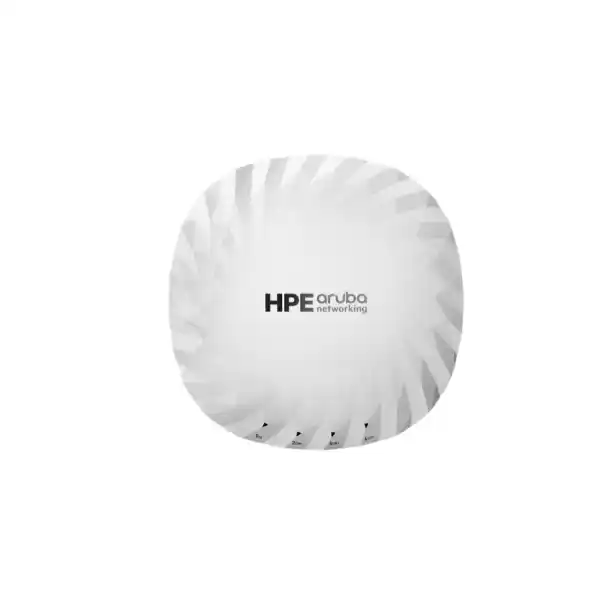
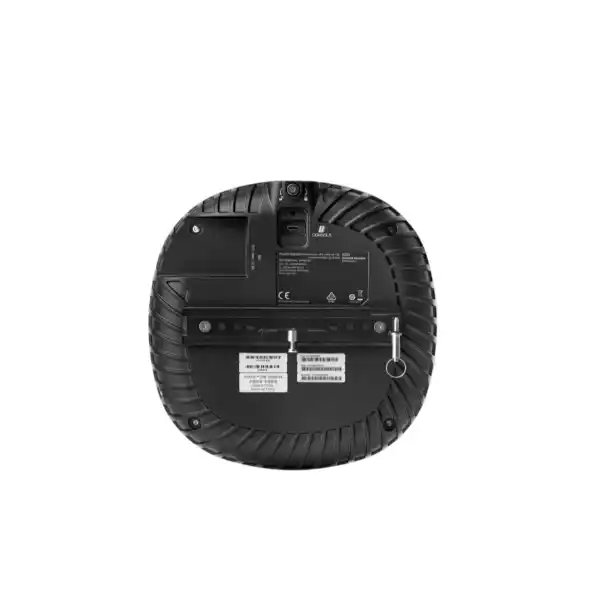
HPE Aruba Networking AP-725 in Dubai, UAE
The AP-725 is a compact HPE Aruba Networking 720 Series access point for organisations that want to introduce Wi-Fi 7 without moving immediately to the higher radio counts and uplink speeds of larger campus models. Its three concurrent 2×2 radios cover 2.4 GHz, 5 GHz and 6 GHz, while a 2.5 GbE uplink, PoE power, integrated IoT radio and HPE Aruba Networking Central support make it a practical option for planned indoor wireless refresh projects.
Buying snapshot
Wireless: Wi-Fi 7, tri-band 2×2 MIMO
Peak aggregate rate: up to 4.7 Gbps
Wired uplink: one 2.5 GbE port
Power: 802.3at preferred for unrestricted operation
Regional note: confirm RW/RW1 variant and 6 GHz rules before ordering
2.4, 5 and 6 GHz
Suitable for modern access switching
802.3af/at supported
BLE 5.4 or 802.15.4/Zigbee
A direct answer for buyers evaluating the AP-725
HPE Aruba Networking AP-725 is an indoor Wi-Fi 7 campus access point in the 720 Series, aimed at organisations that need modern tri-band connectivity with a single 2.5 GbE wired interface and three 2×2 radios. It is mainly used to refresh or expand enterprise WLAN coverage for offices, education, retail, healthcare and similar indoor environments. Buyers should confirm the correct regional SKU, whether 6 GHz operation is permitted and appropriate at the deployment location, available PoE class, required mounting hardware, HPE Aruba Networking Central design, client mix and support needs before placing an order. FourTeck can help turn those inputs into a practical bill of materials and quotation.
What the AP-725 does
The AP-725 provides concurrent wireless service in the 2.4 GHz, 5 GHz and 6 GHz bands using Wi-Fi 7 technology. HPE specifies a maximum aggregate data rate of 4.7 Gbps across the three radios: up to 344 Mbps at 2.4 GHz, up to 1.44 Gbps at 5 GHz and up to 2.88 Gbps at 6 GHz under the stated channel-width and client conditions. Those values are theoretical radio data rates, not a promise of application throughput for every client or site.
The access point also connects to the LAN through a single 100/1000/2500 Base-T interface, receives power through PoE, supports HPE Aruba Networking Central and AOS 10, and includes a flexible IoT radio that can be configured for Bluetooth Low Energy or 802.15.4/Zigbee operation.
Who should consider it
The model is worth evaluating when a business wants Wi-Fi 7 capability in a cost-conscious campus access point rather than a higher-capacity model with dual multi-gigabit interfaces, additional IoT radios or 4×4 radio chains. It can fit floor-by-floor refreshes, branch or campus standardisation, classroom areas, clinical administration spaces, meeting zones, retail back-office areas and other indoor environments where the design calls for 2×2 radios.
It is not automatically the right choice for every high-density venue. Sites with unusually high client concurrency, demanding multi-gigabit user traffic, complex RF conditions, external-antenna needs, redundant wired uplinks or specialised location features should compare the AP-725 with other HPE Aruba Networking campus models before standardising.
Business challenges the AP-725 can help address
Wireless refresh decisions are usually driven by several operational issues at once. The AP-725 is most useful when its hardware profile lines up with a clear network design rather than when it is selected only because it carries the Wi-Fi 7 label.
Crowded legacy bands
The addition of 6 GHz gives compatible clients another spectrum option, subject to local regulation and client support. This can give wireless designers more flexibility than a dual-band deployment built only around 2.4 and 5 GHz.
Growing device diversity
The AP combines Wi-Fi access with an integrated IoT radio that can be configured for BLE or 802.15.4/Zigbee. That can reduce the need to treat every IoT requirement as a separate radio-overlay project.
Operational consistency
HPE Aruba Networking Central can provide a unified management context for wireless operations. The value depends on the wider Aruba design, licensing and operational model selected by the organisation.
PoE constraints
The AP-725 is designed for PoE operation and can work with 802.3af or 802.3at. Full unrestricted operation requires 802.3at; lower available power can trigger feature restrictions, so switch budgets should be reviewed before rollout.
Core capability band
AP-725 fit matrix
| Requirement | Suitable when | Confirm before ordering |
|---|---|---|
| Wi-Fi 7 indoor refresh | The WLAN design benefits from tri-band 2×2 coverage and 6 GHz client support. | Client capability, RF plan and local 6 GHz rules. |
| Multi-gigabit uplink | One 2.5 GbE interface is sufficient for the AP design. | Switch port speed, cabling and PoE class. |
| IoT coexistence | A single integrated BLE or Zigbee radio supports the intended use case. | Protocol choice, application requirements and Central integration. |
| Centralised operations | The organisation is using or planning HPE Aruba Networking Central/AOS 10. | Licensing, architecture, tenant design and existing Aruba environment. |
| Higher-density areas | The RF design validates that 2×2 radios and one 2.5 GbE uplink meet demand. | Compare AP-725 with higher-capacity 730/740/750 Series options where needed. |
Verified HPE Aruba Networking AP-725 specifications
The following details are based on HPE Aruba Networking 720 Series QuickSpecs and product documentation current in 2026. Regional radio rules and orderable SKUs vary, so the precise UAE bill of materials should be confirmed before purchase.
| Brand | HPE Aruba Networking |
|---|---|
| Product | AP-725 indoor campus access point, 720 Series |
| Regional orderable examples | S4A22A (RW), S4A23A (RW1); exact UAE variant should be confirmed |
| Regulatory model | APIN0725 |
| Wireless standard | Wi-Fi 7 / IEEE 802.11be, backward Wi-Fi support as documented by HPE |
| Radio configuration | Three concurrent 2×2 MIMO radios: 2.4 GHz, 5 GHz and 6 GHz |
| Maximum radio data rates | Up to 344 Mbps (2.4 GHz), 1.44 Gbps (5 GHz), 2.88 Gbps (6 GHz) |
| Maximum aggregate data rate | Up to 4.7 Gbps |
| Channel widths | 2.4 GHz up to 20 MHz; 5 GHz up to 80 MHz; 6 GHz up to 160 MHz |
| Associated devices | Up to 512 associated client devices per radio; design capacity should be based on application needs, airtime and RF conditions |
| BSSIDs | Up to 16 per radio |
| Wired interface | One 100/1000/2500 Base-T auto-sensing RJ45 port |
| PoE | 802.3at Class 4 for unrestricted operation; 802.3af Class 3 supported with restrictions depending on IPM configuration |
| Power consumption | Maximum worst-case 17.1 W without USB device / 22.8 W with USB device; deep-sleep maximum 3.5 W |
| IoT radio | Single integrated radio configurable for Bluetooth 5.4 or IEEE 802.15.4/Zigbee |
| USB | Single USB 2.0 host interface, up to 5 W for attached USB device |
| Security platform | WPA2/WPA3, Enhanced Open (OWE), secure boot and TPM 2.0; policy features depend on the wider Aruba architecture |
| Management / OS | HPE Aruba Networking Central; AOS 10 support, minimum AOS 10.7.2.0 listed by HPE |
| Dimensions | Approx. 200 mm × 200 mm × 48 mm without mount bracket, per current QuickSpecs |
| Weight | Approx. 910 g without mount bracket |
| Operating environment | Indoor; 0°C to +40°C operating temperature; plenum-rated for air-handling spaces |
| Mounting | AP bracket is preinstalled; compatible mount kit is sold separately and must match the installation surface |
Dependencies that can change the final AP-725 design
The hardware model alone does not define the finished WLAN. HPE sells different regional variants, and 6 GHz channel availability is country dependent. HPE also notes that regulatory software restrictions can differ by location and may change as local rules evolve. For a UAE project, the correct orderable SKU and enabled band plan should therefore be confirmed for the deployment country rather than copied from a US or European bill of materials.
Power also affects operation. With 802.3at Class 4 PoE, HPE documents unrestricted AP-725 operation. With 802.3af Class 3 PoE and Intelligent Power Monitoring disabled, the AP disables the USB port and reduces maximum transmit power by 3 dB on all radios. With IPM enabled, restrictions can be applied dynamically according to available power and current consumption. This makes PoE switch budget review an important procurement step, especially in larger rollouts.
The mounting kit is another separate line item. A bracket is attached to the AP, but the specific ceiling, solid-surface, wall-box or universal mounting kit is ordered separately. Buyers should also confirm HPE Aruba Networking Central licensing, support coverage, configuration scope and whether any USB modem, IoT peripheral or other accessory is needed.
A practical purchase and deployment journey
Define the coverage objective
Identify floor area, user density, application mix, device generations, voice/video use, roaming expectations and any areas where 6 GHz is particularly valuable.
Validate switching and cabling
Check that access-switch ports provide the intended 2.5 GbE link speed, sufficient PoE budget and suitable structured cabling for the planned AP locations.
Confirm regional SKU and mounts
Select the correct UAE orderable variant and mounting kit for the ceiling or wall environment. Do not assume the AP carton includes the required mount kit.
Plan management and policy
Confirm Central/AOS 10 architecture, SSIDs, authentication, segmentation, guest access, IoT policy and operational ownership before large-scale onboarding.
Survey, install and validate
Use an RF design and post-install validation appropriate to the building. Confirm real client experience, roaming, capacity, interference and coverage rather than relying only on theoretical data rates.
Tri-band Wi-Fi 7 without over-sizing the access layer
The AP-725 occupies a useful position in HPE Aruba Networking’s Wi-Fi 7 campus portfolio. It brings 6 GHz support and three simultaneous radios to a 2×2 design, which can be a better fit than a higher-end AP when the client population and application profile do not justify additional spatial streams, dual uplinks or substantially higher aggregate radio rates. That distinction matters in multi-floor deployments because AP choice affects not just hardware cost but also switch port requirements, PoE budget, cabling, density planning and lifecycle operations.
For the 2.4 GHz radio, HPE lists up to 344 Mbps using two spatial streams and EHT20. The 5 GHz radio supports up to 1.44 Gbps with two spatial streams and EHT80, while the 6 GHz radio reaches up to 2.88 Gbps with two spatial streams and EHT160. The published 4.7 Gbps aggregate figure is the combination of those maximum radio data rates. Real user throughput will be lower because Wi-Fi is a shared medium and performance depends on protocol overhead, signal quality, channel reuse, client radio design, application behaviour, interference and network architecture.
Wi-Fi 7 adds capabilities such as multi-link operation and 4K QAM at the standard level, but a buyer should not assume that every client device supports every feature. A mixed estate may include Wi-Fi 5, Wi-Fi 6, Wi-Fi 6E and Wi-Fi 7 devices for several years. The practical design question is therefore not simply whether the AP is Wi-Fi 7; it is how the access point will serve the actual device population and whether enough 6 GHz-capable clients exist to justify the channel plan today while allowing room for future refresh cycles.
FourTeck can help review the proposed AP count, user profile, existing switches and deployment zones so the AP-725 is used where its capacity profile makes sense. High-density auditoriums, large event spaces or locations with unusually heavy wireless traffic may require a different design, additional AP density or higher-tier campus access points rather than a one-for-one replacement strategy.
Management, policy and security in the wider Aruba architecture
The AP-725 is supported by HPE Aruba Networking Wireless Operating System AOS 10, with HPE documentation listing AOS 10.7.2.0 as the minimum operating system software version. HPE Aruba Networking Central is the primary management environment associated with the 720 Series and can provide automation, operational insight and unified management across wired and wireless components where the customer architecture supports those functions.
For buyers, this means the access point should be evaluated as part of a managed network rather than as an isolated radio. SSID design, authentication sources, role assignment, segmentation, guest access, roaming behaviour, telemetry and operational workflows all influence the result. The hardware supports WPA2 and WPA3 modes, Enhanced Open, secure boot and a TPM 2.0 module. HPE also describes policy enforcement and dynamic segmentation capabilities in the 720 Series context, but the exact policy behaviour depends on the Aruba architecture, gateways, Central services and licenses selected for the deployment.
A new AP purchase is a useful time to review whether the organisation wants cloud-based management, on-premises elements, or another supported operational model. It is also a good point to document who owns WLAN changes, how configuration is backed up, what alerts matter, what user or device identity sources are used, and how support escalation will work. Hardware procurement without those operational decisions can lead to delays even when the AP itself is correctly specified.
FourTeck can assist with requirement clarification, Central licensing discussions, configuration scope and implementation planning. Where a customer already operates an Aruba environment, the review can focus on version compatibility, group architecture, site standards and migration sequencing. Where the deployment is new, the design should include management and policy decisions from the beginning instead of treating them as post-install tasks.
IoT, location and power-aware operations
The integrated IoT radio is one of the AP-725 features that can influence broader infrastructure planning. HPE lists a single flexible radio that can operate for Bluetooth Low Energy or IEEE 802.15.4/Zigbee use. This can support organisations that want to incorporate location, sensor or operational-technology use cases into the wireless infrastructure without automatically deploying a separate overlay everywhere. The correct value depends on the actual application, the protocol used by devices and the way data is integrated into the management platform.
HPE also documents Wi-Fi Fine Timing Measurement support, including 802.11mc/802.11az, and positions the platform for location-aware use cases. Buyers considering indoor positioning should still treat location accuracy as a design outcome rather than a guaranteed figure. AP placement, client support, calibration, physical environment and software services matter. The AP-725 does not include an integrated GNSS receiver or the additional sensors found on some higher-tier models, so projects with specialised location requirements should compare the full campus portfolio.
Power management is equally practical. The AP continuously monitors energy use, and HPE documents dynamic power-saving functions for the 720 Series. At the hardware level, maximum worst-case consumption is listed as 17.1 W without an attached USB device and 22.8 W with a USB device drawing up to 5 W. Deep-sleep maximum power is listed at 3.5 W. These figures help when calculating switch PoE budgets across many access points, although actual consumption varies by load and configuration.
The most important planning point is PoE class. An 802.3at Class 4 source allows unrestricted operation. If the installed switch only offers 802.3af Class 3, the AP can still operate, but restrictions apply. A project that reuses older access switches should therefore calculate total power availability per switch and per port before finalising AP quantities. FourTeck can include this check in bill-of-material and deployment discussions.
Where the AP-725 can fit well
Corporate offices
Meeting rooms, open office floors and collaborative workspaces can benefit when the WLAN refresh is built around a realistic client mix, structured roaming and sufficient PoE switching.
Education
Classrooms, administration zones and shared learning spaces may be suitable when capacity planning accounts for simultaneous student devices, assessments, video and device-management traffic.
Retail and branch sites
The AP can support mixed business, staff and IoT wireless needs where the environment is indoor and the design does not require specialised external antennas or ruggedised hardware.
Healthcare administration
Non-clinical and approved clinical wireless areas can be evaluated with attention to application criticality, device certification, roaming and local healthcare network standards.
Hospitality back-office and common areas
Indoor staff and guest connectivity can be considered when the RF design, captive-portal requirements and operational management model have been defined.
Multi-site standardisation
Organisations with repeatable branch layouts may use the AP-725 as one standard model where site surveys confirm it fits, while retaining higher-capacity alternatives for exceptional locations.
Integration and operational considerations
A wireless access point rarely fails as a purchasing decision because of one missing headline feature. Problems more often appear when the wired network, authentication, RF plan, mounting, licensing or support model is not prepared. The AP-725’s 2.5 GbE port is a good example: buying a multi-gigabit AP does not guarantee a 2.5 GbE uplink if the access switch is limited to 1 GbE, the cable run is unsuitable, or the switch port cannot provide the intended PoE class at the same time.
Authentication should also be planned before deployment. Businesses using 802.1X, certificate-based access, guest services or segmented IoT roles need to confirm the RADIUS, identity and policy components that sit behind the WLAN. Migrating from an older Aruba deployment may require configuration translation, software-version review and staged cutover. A greenfield deployment requires decisions about naming standards, site and group hierarchy, firmware policy, admin roles and change-control practices.
For 6 GHz, remember that client eligibility and security requirements can differ from older bands, and the useful channel plan depends on local regulatory rules. It is better to treat 6 GHz as part of a deliberate RF design than simply enable every available option. Post-deployment validation should measure actual coverage, roaming and application behaviour at representative locations.
Finally, document mounting and physical access. The AP ships with a preinstalled bracket that attaches to a separately purchased mount kit. Choosing the correct ceiling rail, solid-surface, wall-box or universal kit avoids installation-day delays. Projects should also account for safe ladder access, ceiling type, cabling pathways, port labelling and asset identification.
Questions to resolve before requesting an AP-725 quote
Use floor plans, expected device density, application needs and RF survey data rather than a simple square-metre rule.
HPE lists RW and RW1 variants among several regional models. Confirm the correct UAE variant and current regulatory status.
Unrestricted operation depends on 802.3at Class 4 power, so check per-port and total switch PoE budget.
Confirm switch port speed and cabling so the wired side does not unintentionally constrain the design.
Define Central licensing, AOS 10 versions, administrator roles, policy architecture and support ownership.
Ceiling rail, wall-box and solid-surface installations use different mount kits that are sold separately.
Procurement checklist
✓ Confirm exact AP-725 regional model/SKU
✓ State required quantity and site count
✓ Share floor plans and expected client density
✓ Confirm 2.5 GbE switch-port availability
✓ Check 802.3at PoE budget per switch
✓ Select the correct mounting kit
✓ Review 6 GHz regulatory and client readiness
✓ Define Central/AOS 10 management requirements
✓ Identify IoT, USB or location use cases
✓ Clarify installation and configuration scope
✓ Confirm support and warranty requirements
✓ Agree delivery destination and target project window
How FourTeck can assist with AP-725 planning
FourTeck can support the procurement process by turning a general request for “AP-725 access points” into a clearer requirement. This can include confirming the intended regional SKU, reviewing quantities, discussing mounting options, checking whether the existing switch estate can provide 2.5 GbE and 802.3at PoE, and identifying whether HPE Aruba Networking Central licensing or additional implementation services should be included in the quotation.
For refresh projects, it is useful to share the current access-point models, switch models, floor plans, authentication method and management platform. This helps identify migration dependencies and areas where a simple hardware swap may not be appropriate. For new sites, the discussion can focus on WLAN design, user density, SSID and policy requirements, guest access, IoT usage and the operational responsibilities after handover.
You can review more business technology options through the FourTeck products area, discuss installation or configuration requirements through FourTeck technology services, or contact FourTeck with the exact project requirement.
UAE availability and support guidance
Contact FourTeck to confirm current UAE availability for the HPE Aruba Networking AP-725. Availability can vary by regional SKU, quantity, vendor allocation and current lead time. The HPE UAE store lists both RW and RW1 orderable variants, but that does not mean every variant is continuously available from local channels. A quotation should therefore identify the exact model, quantity and delivery destination rather than relying on a generic AP-725 description.
For Dubai projects, FourTeck can coordinate requirement review, quotation, mounting and accessory planning, and installation or configuration scope where requested. Delivery timing should be discussed after the bill of materials is confirmed. If the project involves a wider wireless refresh, include switch, PoE, cabling and Central requirements in the same review so dependencies are visible before purchasing decisions are made.
Dubai, Abu Dhabi, Sharjah and Ajman project coverage
Businesses planning HPE Aruba Networking AP-725 deployments in Dubai, Abu Dhabi, Sharjah and Ajman can discuss a combined requirement with FourTeck instead of treating each office as an isolated purchase. A multi-site request should specify the AP quantity per location, delivery address, existing switch model, installation environment, mounting requirement, management architecture and target deployment window. Site conditions may differ even when the same AP model is used, so RF planning and PoE checks should remain location specific. FourTeck can help coordinate the quotation and identify where configuration, installation, migration or support tasks should be included. Current product availability and project scheduling remain dependent on the exact SKU, quantity, vendor lead time and agreed service scope.
GCC Availability
FourTeck can assist organisations that are assessing the AP-725 for projects across the GCC, including the United Arab Emirates, Saudi Arabia, Kuwait, Qatar, Bahrain and Oman. Regional wireless projects should begin with the destination country because radio regulation, permitted 6 GHz operation, available regional SKUs, licensing arrangements and fulfilment routes may differ. FourTeck can review the requirement, help identify the correct HPE Aruba Networking orderable model, discuss Central and support needs, and coordinate a quotation that reflects the required quantity, mounting hardware and any configuration or installation scope. Product availability, license terms, delivery schedules, service visits and vendor lead times can vary by country and project. Buyers should provide the destination country, AP quantity, intended deployment sites, switch and PoE environment, preferred project window and any support expectations. For Kuwait requirements, additional regional contact options are available through FourTeck Kuwait.
Africa Availability
Organisations planning AP-725 deployments in Africa can use FourTeck for requirement review, product selection guidance and procurement coordination. The correct approach is to confirm the destination and project conditions before assuming that a regional model, license or delivery arrangement used elsewhere will apply. Availability may depend on the exact AP-725 SKU, quantity, 6 GHz regulations, power requirements, shipping route, vendor lead time, installation scope and local site conditions. Buyers should share the destination country, number of access points, mounting needs, required deployment schedule, existing switching environment and whether configuration, installation or post-deployment support is expected. FourTeck can also help compare the AP-725 with alternative Aruba campus models if higher capacity or different physical characteristics are required. For regional enquiries, see FourTeck Africa, FourTeck Kenya or FourTeck Uganda.
Related products and services to consider
HPE Aruba Networking 730 Series
Consider when a project needs higher campus Wi-Fi 7 capacity, additional radio flexibility or a different wired-interface profile. Exact model comparison should be based on current HPE specifications.
HPE Aruba Networking 740 Series
A higher-capacity Wi-Fi 7 family that may suit locations where the AP-725’s 2×2 profile or single 2.5 GbE interface is not enough.
HPE Aruba Networking Central
Management, monitoring and policy requirements should be included in the design rather than treated as an afterthought. Licensing and service terms should be confirmed for the specific project.
AP mounting kits
The AP-725 uses a separately ordered mount kit. Ceiling rail dimensions, wall-box needs or solid-surface installation determine the correct accessory.
Wireless installation and configuration
FourTeck can discuss survey, installation, configuration and validation tasks where they are required as part of the project scope.
Why businesses contact FourTeck for an AP-725 project
The most useful procurement support is often not a claim about having the lowest price or the largest stock. It is the ability to clarify what should actually be ordered. For the AP-725, that means checking the regional variant, quantities, mount kits, PoE and switching environment, Central requirements, support needs and deployment scope before the bill of materials is finalised.
FourTeck can help customers compare the AP-725 against nearby HPE Aruba Networking options when the requirement is uncertain. A buyer may discover that the AP-725 is appropriate for most standard office areas but that a higher-capacity AP is justified in selected high-density spaces. Another project may find that existing access switches need a PoE or multi-gigabit upgrade before the WLAN refresh. Identifying those dependencies early reduces the risk of ordering hardware that cannot be used as intended.
For company background and technology coverage, visit about FourTeck. For a specific AP-725 requirement, use the contact channel with your site count, quantities and current network details so the quotation discussion can begin with practical information.
What AP-725 buyers are really trying to decide
People comparing the AP-725 usually arrive with a broader question than “what are the specifications?” They want to know whether this model is the sensible point to enter HPE Aruba Networking’s Wi-Fi 7 campus range, whether it can reuse existing switches, whether 6 GHz will materially help their users, and what else must be ordered to make the deployment complete. Those questions are more useful than a simple feature list because they expose the dependencies that can change cost and project scope.
Is the AP-725 a high-density access point?
HPE positions the 720 Series for enterprise campus deployments and lists up to 512 associated clients per radio, but that number is not a design target for busy production WLANs. Airtime, application behaviour, channel reuse and client capability determine useful capacity. A lecture hall full of active video clients is different from an office floor where most devices are lightly used. Use a capacity design, not the association limit, to determine AP count.
Can it run on existing PoE switches?
Possibly. The AP supports 802.3af and 802.3at, but HPE specifies 802.3at Class 4 for unrestricted operation. On 802.3af with IPM disabled, the USB port is disabled and maximum radio transmit power is reduced. With IPM enabled, restrictions can be applied dynamically. That makes an accurate switch inventory and PoE budget more valuable than simply checking whether a port displays “PoE”.
Another common concern is whether 2.5 GbE is necessary. The AP has a 2.5 GbE interface because a modern tri-band radio platform can generate more traffic than a traditional 1 GbE design in some conditions. That does not mean every AP will continuously exceed 1 Gbps. The decision should consider simultaneous users, local application patterns, wired backhaul utilisation, and whether the access-switch upgrade is already part of the infrastructure roadmap. Where switches support 2.5 GbE and sufficient PoE, using the full interface capability avoids creating an unnecessary ceiling on a new Wi-Fi 7 deployment.
Buyers also ask whether the AP-725 needs a controller. In an AOS 10 deployment, HPE Aruba Networking Central is central to management and operational workflows, and the exact architecture can include gateways and other components depending on design. This is different from treating the AP as a consumer device configured independently through a simple local web page. A quotation discussion should therefore include the current Aruba environment, Central subscription status, desired policy model and whether the project is a migration from an older controller-based design.
The 6 GHz band is another reason buyers look at Wi-Fi 7, but the benefit depends on both regulation and endpoints. A business with many Wi-Fi 6E or Wi-Fi 7 laptops can obtain more immediate value from 6 GHz than an organisation whose fleet is mostly older dual-band devices. Even when the current client mix is older, deploying a 6 GHz-capable AP can support a longer refresh horizon. The important point is to avoid assuming that a new AP automatically upgrades every device; the endpoint must support the band and appropriate security requirements.
The mount kit is easy to overlook
HPE’s order information notes that the mount kit is not included with the AP. The AP has a preinstalled bracket, but the bracket must connect to a compatible mount kit selected for the ceiling rail, wall box, solid surface or universal requirement. For a project with dozens of APs, missing this accessory can stop installation even when every access point has arrived. Include mount type and quantity in the original bill of materials.
Regional model selection deserves similar attention. HPE lists multiple AP-725 orderable SKUs, including RW and RW1 versions, alongside country-specific models. HPE’s UAE store exposes both RW and RW1 product entries, while its QuickSpecs include ordering rules and country restrictions. A Dubai buyer should therefore ask for the exact regional SKU on the quotation rather than accept a generic “AP-725” line with no part number. This becomes especially important if the project is part of a wider GCC or Africa rollout where country rules may differ.
Price comparisons also need context. Search-visible market prices can vary substantially by regional SKU, reseller, tax treatment, support entitlement and availability. A lower hardware price from another country may not represent a usable UAE procurement option once regional model rules, logistics, warranty handling and project support are considered. FourTeck quotations should be evaluated on the confirmed bill of materials: exact AP SKU, mount kit, required licenses or subscriptions, support, configuration and installation services if applicable.
The strongest AP-725 buying decision is therefore a fit decision. Choose it when its tri-band 2×2 radio design, 2.5 GbE uplink, PoE profile, management architecture and IoT capabilities align with the site. Compare upward in the Aruba Wi-Fi 7 portfolio when client density, uplink needs, radio capacity or specialised features justify it. If you send FourTeck floor plans, current switch models, user estimates and deployment locations, the discussion can focus on those fit questions rather than only on a unit price.
Decision questions worth answering before the shortlist is final
Will Wi-Fi 7 clients actually use the 6 GHz radio?
Only compatible clients can use 6 GHz, and available channels are governed by local regulation. Review the device estate by laptop, phone, scanner and IoT class. A refresh may still be justified for lifecycle reasons, but the immediate 6 GHz benefit depends on endpoint readiness.
Is one 2.5 GbE uplink enough?
For many office and campus zones it can be, provided the RF and traffic design fits the 2×2 AP profile. If the site requires dual wired links, higher uplink speed or substantially greater radio capacity, compare other HPE Aruba Networking Wi-Fi 7 models before standardising.
What happens if only 802.3af is available?
The AP can power up, but HPE documents restrictions. With IPM disabled, USB is disabled and transmit power is reduced by 3 dB. With IPM enabled, the AP can apply restrictions dynamically. A switch refresh may be a better long-term choice than accepting reduced capability across a new WLAN.
Do we need a separate IoT gateway?
The AP’s integrated radio can support BLE or 802.15.4/Zigbee use cases, and a USB port can extend device connectivity. Whether that replaces a separate gateway depends on the IoT application, protocol, data flow, management platform and vendor integration. Confirm the intended sensor or asset-tracking solution before assuming equivalence.
Can the AP-725 simply replace an older AP one-for-one?
Not safely as a rule. A new radio design, different band plan, PoE requirements and client behaviour can change coverage and capacity. A predictive design or site survey should validate spacing. Existing switch ports, cabling and mounts should also be checked rather than assumed compatible.
What information makes an accurate quote faster?
Provide quantity, country and city, floor plans if available, current AP and switch models, required mount type, Central status, expected installation scope, desired support and target project timing. This allows the quote to include dependencies instead of listing only the access point.
These questions are useful because they separate hardware capability from deployment success. The AP-725 can be a strong fit for a modern enterprise WLAN, but the right model is the one that matches the building, switching layer, management platform, endpoint estate and operational expectations. FourTeck can use the answers above to guide sizing, configuration scope and quotation preparation.
Frequently asked questions
Is the HPE Aruba Networking AP-725 a Wi-Fi 7 access point?
Yes. HPE lists the AP-725 as an indoor Wi-Fi 7 / IEEE 802.11be campus access point with concurrent 2.4 GHz, 5 GHz and 6 GHz 2×2 MIMO radios.
What is the maximum aggregate wireless data rate?
HPE specifies up to 4.7 Gbps aggregate across the three radios. This is a theoretical maximum radio data rate, not a guaranteed application throughput figure for individual users.
Does the AP-725 require PoE+?
802.3at Class 4 PoE is the documented source for unrestricted operation. The AP also supports 802.3af Class 3, but feature restrictions can apply depending on Intelligent Power Monitoring settings.
Does it include a mounting kit?
The AP has a preinstalled bracket, but HPE ordering information states that the mount kit is sold separately. The correct kit depends on the ceiling rail, wall-box or solid-surface installation.
Which AP-725 SKU should be used in the UAE?
HPE lists several regional variants and the UAE store currently shows RW and RW1 entries. The exact SKU should be confirmed for the deployment country and current regulatory status before ordering.
Can the AP-725 be managed with HPE Aruba Networking Central?
Yes. HPE positions Central as the management platform for the 720 Series, and the AP is supported by AOS 10. Licensing and architecture should be confirmed for the specific deployment.
Does the AP-725 support Bluetooth or Zigbee?
Yes. HPE lists one flexible integrated IoT radio that can be configured for Bluetooth 5.4 or IEEE 802.15.4/Zigbee operation, along with a USB 2.0 host interface.
Is the AP-725 suitable for every high-density venue?
No single AP model should be selected for every density level. The AP-725 uses 2×2 radios and a single 2.5 GbE uplink. Very demanding locations should be capacity-planned and may justify a higher-tier Aruba campus AP.
How can I request an AP-725 quotation in Dubai?
Send FourTeck the required quantity, deployment location, existing switch details, mount type, management requirements and any installation or support scope. FourTeck can then confirm the appropriate regional model and current UAE availability.
Plan the AP-725 around your actual network
Share your AP quantity, site locations, switch and PoE details, mounting environment, Central requirements and deployment target. FourTeck can help confirm the model, bill of materials and quotation scope before you commit to the purchase.

Reviews
There are no reviews yet.