
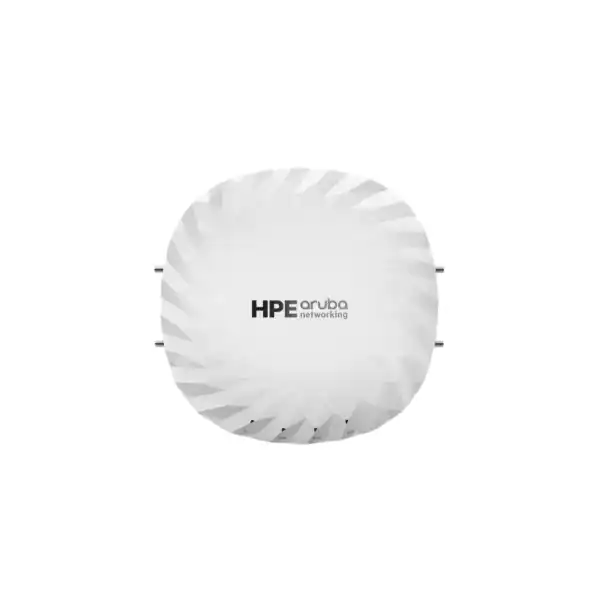
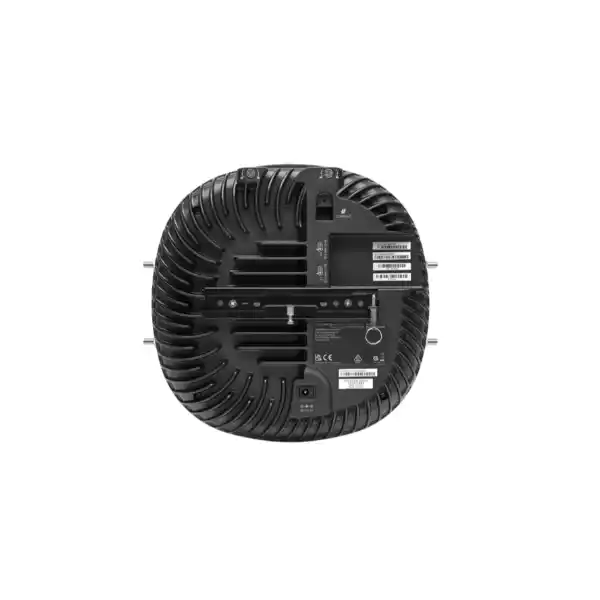
HPE Aruba Networking AP-734A Wi-Fi 7 Campus Access Point in Dubai
The AP-734A is the external-antenna model in HPE Aruba Networking’s 730 Series Wi-Fi 7 campus access point family. It is intended for enterprise indoor wireless projects where antenna choice, RF design, multigigabit uplinks, resilient power and centralized management must be planned together rather than treated as separate purchasing decisions.
Direct answer for buyers evaluating the AP-734A
The HPE Aruba Networking AP-734A is an indoor Wi-Fi 7 campus access point built for enterprise environments that require external antennas and controlled RF coverage. It is mainly considered for offices, education, healthcare, retail, industrial or high-density sites where antenna pattern selection and placement are important to the wireless design. The most important item to confirm before ordering is not only the access point itself, but the complete regional configuration: exact AP-734A variant, approved external antennas, mounting, available PoE budget, software level and locally permitted 2.4 GHz, 5 GHz and 6 GHz operation. FourTeck can help a buyer validate these dependencies, prepare the required bill of materials and align the quotation with installation and configuration scope.
What the HPE Aruba Networking AP-734A does
The AP-734A extends enterprise WLAN connectivity with IEEE 802.11be Wi-Fi 7 while retaining support for earlier 802.11a/b/g/n/ac/ax client generations. The 730 Series radio design uses three 2×2 MIMO radios and is built to operate across 2.4 GHz, 5 GHz and 6 GHz where the configured regulatory domain permits those bands. In standard tri-band operation, the platform supports channel widths up to 40 MHz on 2.4 GHz, 160 MHz on 5 GHz and 320 MHz on 6 GHz, with headline radio rates of up to 688 Mbps, 2.9 Gbps and 5.8 Gbps respectively.
For a buyer, the value of those radio capabilities depends on the rest of the design. Client device support, channel availability, RF conditions, switch uplink capacity, PoE power, antenna selection and current AOS software all influence the usable result. The AP-734A should therefore be selected as part of a designed WLAN rather than solely from peak data-rate figures.
Why the AP-734A uses external antennas
Two antenna connector groups
The AP-734A has two sets of two female RP-SMA connectors. A0 and A1 serve the 2.4 GHz and 5 GHz radio chains, while B0 and B1 serve the 6 GHz radio chains. This connectorized approach allows the RF design to use approved external antenna choices instead of relying on a fixed built-in antenna pattern.
Professional RF planning matters
HPE requires external antennas for this device to be installed by a professional installer using manufacturer-approved antennas. Antenna gain must be recorded in the management system, and total EIRP must remain within the limits of the host country or regulatory domain. Antenna type and gain therefore belong in the procurement checklist, not as an afterthought.
Verified AP-734A and 730 Series technical details
| Manufacturer | HPE Aruba Networking |
|---|---|
| Model | AP-734A; regulatory model name APIN0734A |
| Product family | HPE Aruba Networking 730 Series Campus Access Points |
| Wireless standard | IEEE 802.11be Wi-Fi 7; backward support for 802.11a/b/g/n/ac/ax services |
| Radio design | Indoor tri-radio 2×2 MIMO platform for 2.4 GHz, 5 GHz and 6 GHz operation, subject to regulatory-domain rules |
| Peak radio rates | Up to 688 Mbps at 2.4 GHz, 2.9 Gbps at 5 GHz and 5.8 Gbps at 6 GHz under supported channel configurations |
| Associated devices | Up to 512 associated client devices per radio; up to 16 BSSIDs per radio |
| External antenna interfaces | Four female RP-SMA connectors: A0/A1 for 2.4 GHz and 5 GHz; B0/B1 for 6 GHz |
| Ethernet | Two RJ-45 ports, auto-sensing 100/1000/2500/5000BASE-T |
| Power | 802.3at or 802.3bt PoE on E0/E1, or 12 V DC; power source sold separately |
| Unrestricted PoE operation | 802.3bt Class 5 or compatible DC power; 802.3at Class 4 can impose feature restrictions depending on IPM configuration |
| Worst-case power | Up to 24 W PoE / 20 W DC without attached USB loads; up to 36 W PoE / 31 W DC with supported USB loads |
| USB | Two USB 2.0 host interfaces; up to 10 W total to attached devices where power mode permits |
| Management/software | Supported in HPE Aruba Networking Central; AP-734A minimum AOS-10 software support begins with 10.7.2.0 |
| Operating environment | 0°C to +50°C; 5% to 95% relative humidity |
| UAE radio operation | Must be confirmed for the exact regulatory domain, software release and approved channel set before deployment |
Power and uplink planning
The AP-734A has two multigigabit Ethernet ports and can use PoE on either port. The dual-port design supports link aggregation and can also provide resiliency for data and power when the network design supports it. For unrestricted operation, HPE documents 802.3bt Class 5 PoE or compatible DC power. When the access point is powered from 802.3at Class 4 with Intelligent Power Monitoring disabled, the USB interfaces are disabled; with IPM enabled, restrictions can be applied dynamically according to available power.
Where the AP-734A fits compared with the AP-735A
| Buyer requirement | AP-734A | AP-735A |
|---|---|---|
| Antenna design | External antenna connectors for project-specific RF coverage | Integrated antennas for simpler ceiling-oriented deployments |
| Installation planning | Requires approved antenna selection and professional installation | No external WLAN antenna set to select |
| Best fit | Sites where antenna pattern, gain or placement must be designed around a specific environment | Sites suited to the integrated antenna coverage pattern |
The AP-734A is not automatically the stronger choice simply because it accepts external antennas. If a site can be served correctly by the integrated antenna pattern of the AP-735A, the AP-735A may reduce antenna procurement and installation complexity. The right choice should come from RF requirements and site design.
When the AP-734A may fit — and when to evaluate another option
AP-734A may fit when
- The indoor WLAN design specifically calls for external antennas.
- Wi-Fi 7 capability and multigigabit uplinks are part of the network roadmap.
- The switching layer can provide suitable 2.5/5 GbE and PoE capacity.
- Centralized HPE Aruba Networking management aligns with the existing architecture.
- The project can accommodate professional antenna and RF planning.
Evaluate another option when
- Integrated antennas would meet the coverage requirement with less installation complexity.
- The existing switch fabric cannot support the required PoE or uplink capacity.
- A lower-capacity access point would satisfy the client-density and application requirement.
- The project needs a different form factor, outdoor rating or environmental specification.
- The required radio bands or channels are not permitted for the intended regulatory domain.
Management, IoT and location-aware capabilities
The 730 Series is managed through HPE Aruba Networking Central with AOS-10. HPE lists AP-734A support beginning with AOS 10.7.2.0, so projects running older releases should confirm the upgrade path before hardware deployment. The platform also includes enterprise features such as ClientMatch and AirMatch for client and RF optimization, together with a Trusted Platform Module for device assurance.
For IoT and location use cases, the 730 Series includes Bluetooth 5.4 and 802.15.4/Zigbee radio capabilities, USB extension options, GNSS reception and a barometric pressure sensor. These features can be valuable for location services, sensors and asset-related applications, but buyers should verify the exact software, licensing, device integration and project requirements rather than assuming every IoT workflow is enabled by default.
What to confirm before ordering the AP-734A in the UAE
- Exact AP-734A regional/orderable SKU required for the UAE project.
- Quantity and intended indoor deployment locations.
- Approved external antenna model, gain and coverage pattern for each AP location.
- Permitted 2.4 GHz, 5 GHz and 6 GHz operation for the configured UAE regulatory domain.
- HPE Aruba Networking Central and AOS software version compatibility.
- Switch port speed, PoE class and available PoE budget.
- Single or dual Ethernet uplink and power-resiliency requirement.
- Mount kit and mounting surface details.
- Whether USB or IoT peripherals are part of the design.
- Cabling category, route length and existing network readiness.
- Installation, RF survey, configuration and testing scope.
- Support and warranty terms applicable to the exact quoted SKU.
FourTeck assistance for AP-734A projects
FourTeck can help turn the model request into a complete procurement and deployment scope. This can include regional model validation, external antenna and mount review, switch/PoE compatibility, bill-of-material preparation, quotation coordination, installation planning and configuration requirements. For projects migrating from earlier Aruba AP generations, the existing Central/AOS environment, switching capacity and RF design should be reviewed before replacement quantities are finalized.
Explore FourTeck technology products, review installation and configuration services, or contact FourTeck for AP-734A sizing and quotation support.
UAE availability and regulatory confirmation
Contact FourTeck to confirm current UAE availability for the exact AP-734A regional SKU. Availability can depend on the regulatory variant, quantity, approved antenna choice and vendor lead time. Because 6 GHz rules and channel permissions vary by country and can change with regulatory updates, the permitted UAE radio configuration should be verified before ordering and deployment. Delivery, installation and configuration scope can then be aligned with the confirmed bill of materials.
Common buyer questions
Does the AP-734A include integrated WLAN antennas?
No. The AP-734A is the external-antenna model. It provides RP-SMA connectors and requires compatible manufacturer-approved external antennas selected for the project.
Can the AP-734A use 6 GHz in the UAE?
The hardware platform supports 6 GHz, but permitted bands and channels are regulatory-domain dependent. The exact UAE regulatory status and software configuration should be confirmed before ordering or enabling 6 GHz operation.
What software version is required?
HPE lists AP-734A support from AOS 10.7.2.0. Existing Aruba environments should be checked for Central and AOS compatibility before deployment.
What PoE should be planned?
HPE documents unrestricted operation with 802.3bt Class 5 PoE or compatible DC power. 802.3at Class 4 can impose restrictions depending on Intelligent Power Monitoring configuration.
Does the AP-734A require a separate mount?
The AP has a pre-installed bracket that attaches to a compatible mount kit, while the appropriate mount kit is selected according to the installation surface and is typically ordered separately.
What information helps FourTeck prepare an accurate quote?
Provide quantity, deployment location, antenna requirement, switch and PoE details, mount type, software environment, installation scope and any USB/IoT requirements. These details reduce the risk of missing accessories or incompatible infrastructure.
Confirm the AP-734A configuration before purchase
Share the project quantity, site type, antenna requirement and switching environment so FourTeck can review the AP-734A bill of materials, UAE suitability and deployment scope.

Reviews
There are no reviews yet.